- Product Description Description
- Table of Contents TOC
- List of Table & Figure LOT
- Get Free Sample PDF Sample PDF
Market Size, 2025
$1434 MnMarket Estimate, 2026
$1517 MnMarket Forecast, 2034
$2376 MnCAGR, 2026–2034
5.77%Europe Agricultural Testing Market Size, Growth, Trends & Forecast (2025–2033)
The Europe agricultural testing market size was valued at USD 1434.27 million in 2025, is anticipated to reach USD 1517.03 million in 2026, and is projected to scale up to USD 2376.26 million by 2033, registering a compound annual growth rate (CAGR) of 5.77% during the forecast period from 2025 to 2033. Driven by strict European Union compliance rules, precision farming, and food safety mandates, the regional market continues to experience steady growth across pre-harvest and farm-to-fork sectors.
Key Executive Metrics (At-a-Glance)
- 2025 Base Valuation: USD 1434.27 Million
- 2026 Current Valuation: USD 1517.03 Million
- 2033 Forecast Valuation: USD 2376.26 Million
- Compound Annual Growth Rate (CAGR): 5.77% (2025–2033)
- Dominant Sample Segment: Water & Seed Testing (capturing 38.3% of the market in 2025)
- Fastest-Growing Bio-solids Segment: Biosolids Testing (projected at a 9.8% CAGR due to the Circular Economy Action Plan)
- Dominant Application Segment: Chemical Residues (holding a 44.4% share backed by EU pesticide monitoring regimes)
- Fastest-Growing Application Segment: Mycotoxin & Phytotoxin Testing (projected at a 10.3% CAGR driven by climate-induced fungal proliferation)
- Dominant Country Market: Germany (holding a 24.3% market share due to stringent environmental regulations and high lab density)
Core Market Drivers
- Stringent Regulatory Compliance: Strict legal frameworks like Regulation (EC) No 396/2005 governing maximum agrochemical residue limits and mycotoxin thresholds.
- Precision Farming Expansion: Rapid adoption of digital sensors, drone imaging, and real-time plant tissue analysis to optimize fertilizer and water efficiency.
- Sustainability & Circular Economy Initiatives: Re-use mandates for treated sewage sludge and soil health tracking tied to Common Agricultural Policy (CAP) green payments.
Primary Market Restraints & Challenges
- High Laboratory Costs: Substantial capital and operational expenditures required to maintain ISO 17025 accredited facilities with advanced LC-MS/MS and GC-MS/MS systems.
- Human Capital Deficits: A persistent shortage of skilled personnel and specialists trained in advanced chromatographic and molecular diagnostic techniques.
Europe Agricultural Testing Market Segmentation Breakdown
| Segment Category | Leading Sub-Segment | Fastest-Growing Sub-Segment |
|---|---|---|
| By Sample | Water & Seed Testing (38.3% share in 2025) | Bio-solids (9.8% CAGR driven by the Circular Economy Action Plan) |
| By Application | Chemical Residues (44.4% share backed by MRL enforcement) | Mycotoxin & Phytotoxin Testing (10.3% CAGR due to climate-driven fungal risks) |
| By Quality Assurance | Chemical Quality Assurance (nutrient profiling & fertilizer standards) | Physical Quality Assurance (8.7% CAGR for grain sizing and grading) |
| By Region / Country | Germany (24.3% share, leading lab density) and France (17.4% share) | United Kingdom (post-Brexit sovereign regulatory and domestic food safety focus) |
Major Industry Players Profiled
Key enterprises shaping the competitive European agricultural testing market include Eurofins Scientific, Bureau Veritas S.A., Agilent Technologies, Inc., ALS Limited, SCS Global Services, and R J Hill Laboratories Ltd.
Europe Agricultural Testing Market Size
The Europe agricultural testing market size was valued at USD 1434.27 million in 2025 and is anticipated to reach USD 1517.03 million in 2026 to reach USD 2376.26 million by 2034, growing at a CAGR of 5.77% during the forecast period from 2025 to 2033.
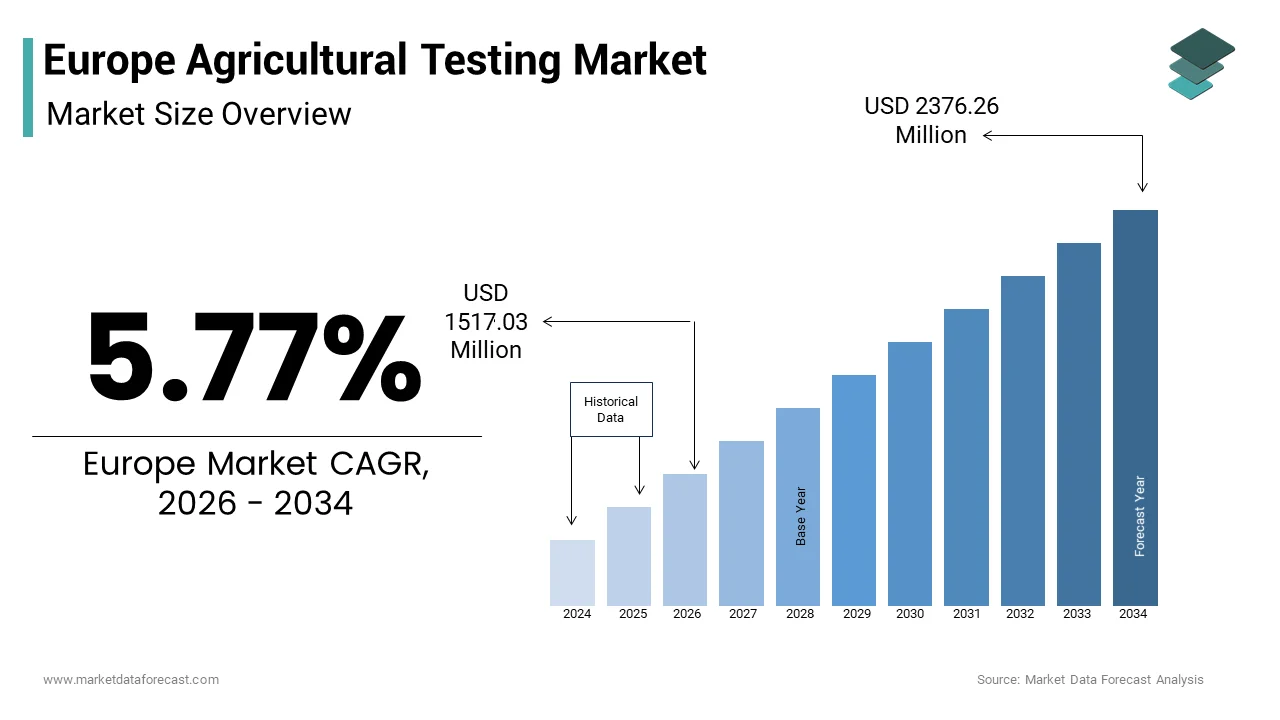
Agricultural testing refers to the analytical services and diagnostic protocols employed to assess the safety, quality, and compliance of agricultural inputs and outputs across the food and farming value chain. These tests evaluate soil health, seed viability, pesticide residues, mycotoxin contamination, nutrient composition, and genetically modified organism presence in crops, feed, and fertilizers. Unlike generic food safety frameworks, agricultural testing begins at the pre-harvest stage, ensuring agronomic integrity before produce enters processing or export channels. Agricultural land continues to be the predominant land use category across the European Union, although areas of unused and abandoned land have been increasing in some regions. The European Union maintains a large agricultural sector, with a significant number of farms operating across its member states. EU agricultural imports are substantial and are consistently subject to rigorous phytosanitary and residue standards as defined under existing EU regulations, such as Regulation (EC) No 396/2005, to ensure consumer safety. The European Food Safety Authority (EFSA) and the European Commission monitor food safety risks through systems like the Rapid Alert System for Food and Feed (RASFF), and notifications for non-compliant consignments, including those with pesticide residue violations, are regularly documented and addressed. The EU has observed a long-term upward trend in agricultural income per worker, even as the total agricultural labour input has contracted. Efforts are ongoing to reduce the risks associated with pesticide use, and harmonised risk indicators show a general downward trend in pesticide risk over the last decade. These regulatory and operational realities establish a non-discretionary demand for precision testing long before market entry, positioning agricultural diagnostics as a foundational pillar of Europe’s farm-to-fork sovereignty and trade compliance infrastructure.
MARKET DRIVERS
Stringent EU Regulatory Frameworks Mandate Preemptive Compliance Testing
The continent’s exhaustive and legally binding regulatory regime governing agrochemical residues and contaminant thresholds fuels the expansion of the Europe agricultural testing market. European Union legislation, specifically Regulation (EC) No 396/2005, continues to establish comprehensive maximum residue limits for numerous pesticides across a wide range of food and feed commodities. Consignments found to be non-compliant with these strict limits face significant regulatory consequences. The European Union's monitoring reports consistently indicate a lower rate of maximum residue level exceedances in produce originating from within the EU when compared to imported agricultural products, highlighting differing compliance trends between internal and external suppliers. Moreover, the EU's firm commitment to pesticide safety continues, with stringent controls on individual chemicals, leading to bans and regular reviews (like for glyphosate), even after the main sustainability proposal's withdrawal. Apart from these, the European Union upholds among the world's most stringent mycotoxin regulations, setting very low maximum levels for contaminants like aflatoxin B1 in certain foodstuffs, a framework now managed under the updated and consolidated Commission Regulation (EU) 2023/915. These enforceable standards generate recurring demand for chromatography-based residue screening, immunoassay kits, and mass spectrometry validation across the supply chain. The legal consequence of non-compliance, product destruction, trade suspension, or financial penalties ensures that testing is not optional but an embedded operational prerequisite, anchoring sustained market activity irrespective of commodity price cycles.
Expansion of Precision Farming Practices Fuels On-Site Diagnostic Demand
The rapid adoption of precision agriculture across the regional farms is also propelling the growth of the Europe agricultural testing market. This transforms agricultural testing from a periodic compliance exercise into a dynamic, data-driven management tool. As per sources, the adoption of digital farming technologies within the EU agricultural sector is on an upward trend, with various initiatives promoting the use of tools like precision agriculture systems and soil sensor networks to enhance efficiency and sustainability. These technologies rely on real-time soil and plant tissue analysis to optimize fertilizer and water use, directly increasing demand for portable and rapid testing solutions. Under the reformed Common Agricultural Policy, there is a growing emphasis on soil health and sustainable nutrient management, with some Member States integrating soil testing requirements or incentives into their national eco-schemes to qualify for green payments. The EU CAP Network (formerly the ENRD) facilitates the exchange of knowledge and good practices across the EU regarding sustainable farming, including methods to improve soil health and qualify for CAP support. Participation in related programs is increasing as part of the broader push for sustainability. Furthermore, the European Innovation Partnership for Agricultural Productivity and Sustainability, along with related Horizon Europe initiatives like the Mission Soil Deal, supports numerous innovative projects and living labs focused on developing and deploying advanced technologies, such as drone-based imaging and various sensors, for detailed crop and soil analysis. This shift from reactive to proactive diagnostics, driven by sustainability mandates and yield optimization, expands the testing market beyond regulatory labs into field-based, high-frequency monitoring, which creates new revenue streams for providers of rapid kits, mobile labs, and agronomic data platforms across Northern and Western Europe.
MARKET RESTRAINTS
High Operational Costs of Accredited Testing Laboratories Limit Accessibility
Requirement of substantial capital and operational expenditures to maintain ISO 17025 accredited laboratories capable of delivering legally defensible results continues to be a major obstacle to the Europe agricultural testing market. Establishing a facility for comprehensive pesticide and mycotoxin analysis involves substantial initial investment, particularly for advanced equipment like liquid chromatography tandem mass spectrometry (LC-MS/MS) and gas chromatography systems (GC-MS/MS). The ongoing operation of such testing laboratories, including the acquisition of necessary certified reference materials, personnel costs, and participation in proficiency testing programs, requires significant annual expenditure. These financial barriers restrict the density of accredited facilities, particularly in Eastern and Southern Europe. Some European regions face infrastructure challenges, leading to a limited number of accredited testing laboratories. This situation can necessitate sending samples to facilities in other countries or result in extended processing times for agricultural producers. Consequently, small and medium-sized farms often forego comprehensive testing due to cost and logistics, relying instead on visual inspection or unverified rapid kits. This gap between regulatory expectations and practical access undermines food safety objectives and suppresses market penetration, especially for comprehensive contaminant screening services that require sophisticated instrumentation and certified personnel.
Fragmented National Implementation of EU Testing Protocols Creates Inconsistency
The decentralized enforcement and interpretation of agricultural testing requirements across member states generate operational inefficiencies and compliance uncertainty to ultimately restrain the growth of the Europe agricultural testing market. This occurs despite overarching EU regulations. According to research, significant disparities exist in sampling frequency, analytical methods, and enforcement rigor among national authorities. These differences include variations in mandatory mycotoxin testing for imported cereal shipments and the frequency of soil testing in vulnerable zones. Inconsistent implementation reduces the effectiveness of the single market for agricultural goods. This lack of harmonization forces multinational agribusinesses and exporters to navigate divergent testing protocols when operating across borders, increasing compliance complexity and cost. The testing market's growth and standardization are hampered by administrative fragmentation; this constraint will persist until analytical standards, sampling plans, and result interpretation are fully aligned, either through centralized guidance or mutual recognition agreements.
MARKET OPPORTUNITIES
Integration of Blockchain for Traceability Creates Demand for Verified Test Data
The emergence of blockchain-enabled traceability systems in the regional agri-food supply chains is opening new opportunities for the Europe agricultural testing market expansion. This integration is generating new demand for tamper-proof and digitally anchored test results. Multiple pilot projects across Europe connect on-farm activities to systems that enhance consumer transparency. Agricultural test certificates serve as key verification points within these new systems. In the Netherlands, major dairy cooperatives require specific soil health and feed contaminant test data to be uploaded directly to digital ledgers before milk deliveries are accepted. France has an initiative collaborating with testing providers to embed residue and nutrient information into QR codes on fresh produce packaging. The use of blockchain technology in agriculture is experiencing continued growth. Future adoption of this technology depends on the availability of analytical reports that are machine-readable and cryptographically signed. This digital transformation turns testing laboratories into data gatekeepers whose outputs directly influence product provenance, premium pricing, and export eligibility. Companies offering API integrated reporting, digital certificates, and real-time data feeds are thus positioned to capture value beyond traditional analysis, particularly in organic, protected designation of origin, and carbon-neutral product segments where verifiable inputs are commercially differentiating.
Rise of Urban and Vertical Farming Demands Novel Testing Protocols
The proliferation of controlled environment agriculture, including vertical farms, hydroponic systems, and urban greenhouses, is creating specialized testing requirements unmet by conventional agronomic diagnostics, which is expected to further drive the growth of the Europe agricultural testing market. According to research, across Europe, commercial urban farms are increasing in number and predominantly cultivate produce like leafy greens, herbs, and microgreens for local markets. These systems rely on nutrient solution recirculation and artificial substrates, introducing new contamination vectors such as heavy metals from recycled water and microbial biofilms in irrigation lines. Standard soil-based testing protocols are irrelevant here. Instead, demand is rising for water chemistry panels, pathogen screening in nutrient reservoirs, and LED spectrum impact assessments on phytonutrient profiles. In Sweden and Denmark, guidelines are being drafted for regular water quality testing in commercial hydroponic operations. Scientific opinions suggest that aeroponic systems may have unique mycotoxin risks linked to their high-humidity environments. This niche but fast-growing sector necessitates the development of purpose-built test kits, reference materials, and certification schemes, which opens a high-margin opportunity for agile testing providers capable of innovating beyond traditional field crop paradigms.
MARKET CHALLENGES
Shortage of Skilled Personnel in Advanced Analytical Techniques Constricts Capacity
A serious human capital gap in chromatographic and molecular diagnostic expertise is slowing down the expansion of the Europe agricultural testing market. This is limiting the scalability of high-complexity agricultural testing across the region. As per various studies, there is a persistent need for highly skilled laboratory professionals with expertise in advanced analytical techniques, such as liquid chromatography tandem mass spectrometry (LC-MS/MS), across the European Union. The application of LC-MS/MS technology in diagnostic and food safety laboratories is increasing due to its high accuracy and specificity, which necessitates ongoing training and development of technical staff. This shortage is most acute in Central and Eastern Europe, where vocational training programs have not kept pace with technological adoption. According to research, the availability of specialized, accredited educational programs in niche fields like food and agricultural analytical chemistry varies significantly across different European member states. Demand for qualified professionals in specialized analytical fields often outpaces the current supply of graduates from relevant training programs, highlighting a skills gap in the workforce. The resulting bottleneck forces laboratories to outsource complex analyses or extend turnaround times, undermining the reliability of time-sensitive decisions such as harvest or export clearance. Moreover, the rapid evolution of testing standards requires continuous upskilling that many labs cannot support. The persistent skills gap, stemming from a disconnect between academia and industry requirements, acts as a structural limitation on market expansion, especially in highly regulated and specialized service sectors.
Lack of Standardized Methods for Emerging Contaminants Hinders Reliable Monitoring
The absence of harmonized analytical protocols for newly identified agricultural hazards, such as pesticide transformation products, microplastics in soil, and novel mycotoxins, poses a significant scientific and operational challenge, which in turn hampers the growth of the Europe agricultural testing market. According to sources, the assessment of pesticide residues and their toxicological relevance in the EU is ongoing, with some analytical methods continually being re-evaluated for current validation criteria. Similarly, there are increasing efforts by bodies like the Joint Research Centre to harmonize the measurement process for microplastics across various environmental matrices, though a widely accepted, fully standardized method for soil analysis is a developing area. This methodological vacuum creates uncertainty for both testers and regulators: laboratories risk investing in non-compliant techniques, while authorities cannot mandate testing without official protocols. European standardization bodies are actively working on developing and refining harmonized analytical methods for various emerging chemical contaminants across different media. In the interim, inconsistent data quality and legal defensibility suppress commercial demand for proactive screening, especially among risk-averse stakeholders. The market for next-generation contaminant testing will remain fragmented and underutilized because essential standards, such as reference materials, validation criteria, and inter-laboratory proficiency schemes, are not yet established, despite the clear environmental and health imperatives.
REPORT COVERAGE
| REPORT METRIC | DETAILS |
| Market Size Available | 2024 to 2033 |
| Base Year | 2024 |
| Forecast Period | 2025 to 2033 |
| CAGR | 5.77% |
| Segments Covered | By Sample, Application Contaminants, Quality Affirmation, and Region. |
| Various Analyses Covered | Global, Regional, and Country Level Analysis, Segment-Level Analysis, DROC, PESTLE Analysis, Porter’s Five Forces Analysis, Competitive Landscape, Analyst Overview of Investment Opportunities |
| Regions Covered | UK, France, Spain, Germany, Italy, Russia, Sweden, Denmark, Switzerland, Netherlands, Turkey, Czech Republic & Rest of Europe |
| Market Leaders Profiled | R J Hill Laboratories Ltd., Eurofins Scientific, SCS Global Services, Bureau Veritas S.A., Agilent Technologies, Inc., ALS Limited, etc. |
SEGMENTAL ANALYSIS
By Sample Insights
The water seed testing segment held the leading share of 38.3% of the Europe agricultural testing market in 2025. The leading position of the water seed testing segment is driven by the EU’s dual focus on input safety and seed certification rigor. Seed health testing, including screening for pathogens, viability, and genetic purity, is mandatory under EU Directive 2002/55/EC for all commercial seed lots. According to research, the number of applications for Community Plant Variety Rights submitted to the CPVO has shown a generally stable trend or slight growth in recent years. The EU's Nitrates Directive requires member states to monitor groundwater and surface water for nitrate concentrations from agricultural sources and implement action programs to reduce pollution, which remains a persistent challenge in many regions. As per sources, a significant proportion of Europe's groundwater bodies continue to face challenges in achieving good chemical status due to diffuse pollution, with nitrate contamination from agricultural practices remaining a widespread concern. In the Netherlands and Denmark, where precision irrigation is widespread, weekly water analysis is standard practice on intensive horticultural farms. The convergence of regulatory compulsion, export requirements for seed exports to non-EU countries, and rising awareness of waterborne pathogen risks ensures sustained dominance of this segment as the foundational layer of agricultural biosecurity.
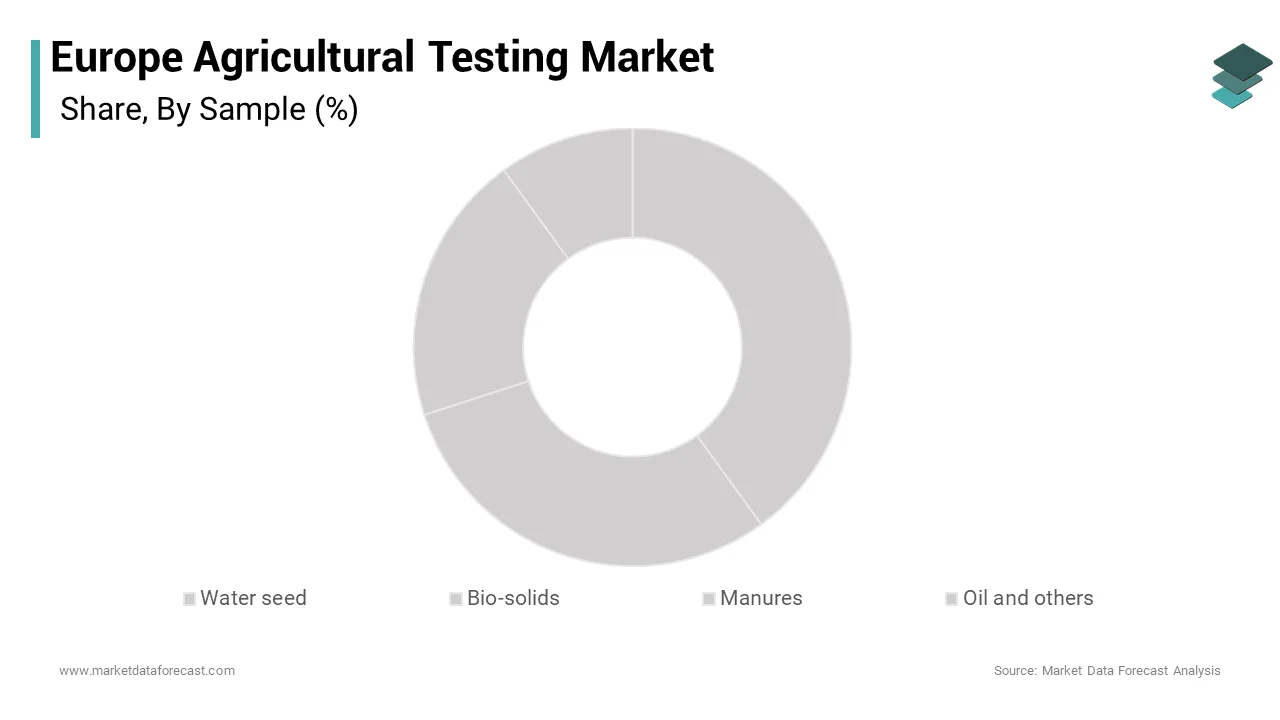
The bio-solids segment is likely to experience the fastest CAGR of 9.8% from 2025 to 2033 due to the EU’s Circular Economy Action Plan, which promotes the agricultural reuse of treated sewage sludge as a nutrient source. However, EU regulations, notably the Sewage Sludge Directive and Circular Economy Action Plan, mandate strict limits for heavy metals like cadmium (often <20 mg/kg) and address emerging substances like PFAS in biosolids, with growing focus on reporting standards. According to sources, European Environment Agency data suggests significant biosolids use, with large volumes applied in major EU nations like Germany, France, and the UK, consistent with land application trends. Sweden has implemented stricter 2024 guidelines, requiring more frequent testing of biosolids for microplastics and antibiotic residues, setting a precedent for advanced monitoring. Eurostat data anticipates continued growth in biosolids available for land application, driven by increasing urban populations and treatment capacity, reflecting a positive trend for resource recovery. This regulatory and sustainability-driven trend positions biosolid testing as a high-growth niche where analytical demand scales directly with circular economy policy implementation.
By Application Insights
The chemical residues segment dominated the Europe agricultural testing market by capturing a 44.4% share in 2024. The dominance of the chemical residues segment is propelled by the EU’s expansive pesticide residue monitoring regime. Regulation (EC) No 396/2005 establishes maximum residue limits for more than 1,250 pesticides across hundreds of agricultural commodities. According to multiple sources, EU member states conduct extensive annual monitoring of food and feed samples for pesticide residues, consistently finding that a large majority of products on the market comply with established legal limits. A smaller proportion of samples, particularly among imports, is found to exceed these legal thresholds, prompting enforcement actions. This enforcement machinery generates a massive routine demand for multi-residue screening using liquid chromatography tandem mass spectrometry. Besides, efforts to enhance the monitoring of various pesticide-related substances, including metabolites and co-formulants, are ongoing within EU scientific and regulatory bodies, indicating a trend toward more stringent oversight of all components of plant protection products. In addition, Germany has a history of pursuing national policies aimed at reducing and eventually phasing out the use of glyphosate due to environmental and health concerns; however, national-level actions must align with broader, evolving European Union approval decisions and legal frameworks. The rise of organic farming further amplifies demand, as organic certification requires proof of the absence of synthetic chemical traces. The legal and commercial consequences of non-compliance, product rejection, brand damage, or subsidy loss ensure that chemical residue testing remains the most voluminous and institutionalized segment in agricultural diagnostics.
The mycotoxin and phytotoxin testing segment is on the rise and is expected to be the fastest-growing segment in the market by witnessing a CAGR of 10.3% during the forecast period. The rapid growth of the mycotoxin and phytotoxin testing segment is fueled by climate change-induced fungal proliferation and tightening EU regulatory thresholds. According to sources, Climate change conditions, specifically prolonged periods of drought and heat stress, are leading to an increased risk and occurrence of aflatoxin contamination in maize grown in Southern Europe. Commission Regulation (EU) 2023/915 lowered the permissible level of deoxynivalenol in wheat for human consumption from 1,250 to 1,000 micrograms per kilogram, effective January 2024. EU regulations require that food and feed business operators implement robust sampling and analysis procedures to ensure mycotoxin levels comply with established maximum limits, driving widespread testing practices across member states, including Italy and Spain. Following scientific opinions from EFSA, the European Union has established new binding maximum levels for T-2 and HT-2 toxins in various cereals and cereal products, while other emerging toxins like enniatins and beauvericin remain under monitoring recommendations. There is a general increase in awareness and demand within the scientific and commercial communities for comprehensive multi-mycotoxin analysis to better understand co-contamination trends and associated health risks. The necessity for high-sensitivity, preemptive toxin screening continues to ensure double-digit growth in this vital food safety segment, a trend reinforced by climate models anticipating more extreme weather events in the Mediterranean region.
By Quality Affirmation Insights
The chemical quality assurance segment held the majority share of the Europe agricultural testing market in 2024. The supremacy of the chemical quality assurance segment is driven by its centrality to fertilizer efficacy, soil health, and regulatory compliance. Farmers across Europe are required under the Common Agricultural Policy’s eco schemes to document nutrient application rates, necessitating precise analysis of nitrogen, phosphorus, and potassium content in fertilizers and manures. According to sources, EU farms consumed millions of metric tons of mineral fertilizers, each batch subject to quality verification under Regulation (EU) 2019/1009 on EU fertilizing products. This regulation mandates testing for cadmium content, which has spurred widespread adoption of inductively coupled plasma spectrometry in commercial labs. The European Union’s comprehensive agricultural strategy includes an ambitious objective to significantly decrease nutrient losses. Furthermore, achieving sustainability goals requires a focus on precision nutrient management and careful chemical profiling of fertilizer inputs. The convergence of subsidy eligibility, environmental regulation, and input optimization ensures that chemical quality assurance remains the analytical backbone of modern European agronomy.
The physical quality assurance segment is expected to exhibit a noteworthy CAGR of 8.7% from 2025 to 2,033 owing to rising demand for seed and grain grading based on size, density, moisture content, and mechanical integrity—parameters critical for planting efficiency and milling yield. Seed testing is experiencing an ongoing shift toward exploring and validating modern, high-throughput technologies, including various types of imaging and artificial intelligence tools, for improved efficiency and objectivity in quality analysis, in addition to traditional methods. Potato handling within the EU, particularly among major exporters like the Netherlands and Denmark, increasingly incorporates robust quality management protocols to minimize all forms of physical damage during harvest, storage, and transport to maintain product quality and meet demanding market standards, including those outlined in private certification schemes like GLOBALG.A.P. Apart from these, the expansion of vertical farming has created new demand for substrate particle size distribution and water retention capacity testing, parameters previously irrelevant in field agriculture. Global buyers are increasingly willing to pay a premium for produce that is physically uniform and durable, shifting the emphasis from basic quality control to a key value-added differentiator, especially in high-value horticulture and export markets.
COUNTRY ANALYSIS
Germany Agricultural Testing Market Analysis
Germany outperformed other countries in the Europe agricultural testing market and captured a 24.3% share in 2024. The growth of agricultural testing in Germany is attributed to its stringent enforcement of environmental and food safety regulations, combined with advanced agritech adoption. The country operates numerous accredited agricultural testing laboratories, the highest in Europe, and all farms with significant hectares must submit annual soil and manure nutrient analyses to qualify for Common Agricultural Policy subsidies. Germany also leads in pesticide residue monitoring. The nation’s strong biotech sector supports rapid adoption of molecular pathogen detection, with a portion of seed potato lots now tested via PCR for Clavibacter michiganensis. Furthermore, Germany’s National Action Plan on Antimicrobial Resistance mandates testing of manure for antibiotic residues before field application. These overlapping regulatory layers, coupled with high farmer compliance awareness and dense lab infrastructure, establish Germany not only as the market volume leader but also as the standard setter for analytical stringency across the EU.
France Agricultural Testing Market Analysis
France followed closely in the Europe agricultural testing market by accounting for a 17.4% share in 2024, with demand heavily influenced by its global leadership in seed production and viticulture. France has a prominent position in seed certification within the European Union, necessitating mandatory pathogen and genetic purity testing. The nation’s extensive vineyards create a substantial demand for copper and sulfur residue analysis to meet regulatory limits. In addition, a national plan aims for a significant reduction in pesticide use, which is encouraging the adoption of residue tracking practices on farms. Moreover, a large volume of agricultural water samples is regularly tested for substances like nitrates and pesticides in designated vulnerable zones. The country is home to a major seed testing facility that processes tens of thousands of samples each year. This blend of export-oriented specialty crops, aggressive chemical reduction targets, and centralized certification infrastructure sustains France’s position as a high-value and regulation-intensive testing market.
The Netherlands Agricultural Testing Market Analysis
The Netherlands grew steadily in the Europe agriculture testing market because of its role as Europe’s top agricultural exporter and pioneer in controlled environment farming. Dutch farms shipped a substantial amount of agricultural food products in 2024, according to various studies, each consignment subject to pre-export contaminant screening. The nation’s greenhouse sector, producing a notable share of EU tomatoes and peppers, relies on daily water and nutrient solution testing to maintain closed-loop hydroponic systems. The Netherlands also leads in biowaste reuse. A significant metric tons were applied to farmland in 2023, requiring quarterly heavy metal and microplastic testing under new national guidelines. Wageningen University’s diagnostic labs collaborate with commercial providers to validate rapid field kits for Phytophthora and Fusarium, accelerating on-site decisions. This ecosystem of export dependency, technological intensity, and circular agriculture creates one of the highest per-hectare testing frequencies in Europe.
Italy Agricultural Testing Market Analysis
Italy is another key player in the Europe agricultural testing market due to Mediterranean climate risks and staple crop safety concerns. Maize and wheat crops in agricultural areas cover a significant expanse of land and are frequently subject to heat stress conditions. Fungal contamination issues related to maize have prompted increased monitoring measures. Pre-harvest mycotoxin screening has become a mandatory practice in certain agricultural regions to manage contamination risks effectively. Olive oil production, particularly for products under specific quality designations, involves mandatory chemical authenticity testing. Testing is conducted for specific quality indicators like polyphenol content and to identify any potential signs of adulteration. Investments have been made in modernizing soil testing procedures to ensure compliance with nutrient balance guidelines. Southern regions face acute water salinity issues. These overlapping pressures of climate adaptation, export protection, and subsidy compliance sustain steady demand for both contaminant and quality assurance diagnostics across the peninsula.
United Kingdom Agricultural Testing Market Analysis
The United Kingdom is predicted to expand notably in the Europe agricultural testing market from 2025 to 2033 because of a transformed regulatory environment following Brexit, while prioritizing domestic food security. The UK's post-Brexit monitoring program for agricultural imports found that a small percentage of samples had pesticide residues exceeding legal maximum levels. In addition, the UK government, via the Department for Environment, Food & Rural Affairs (Defra), continues to independently monitor pesticide residues in the food supply, with a general increasing trend in the frequency of MRL breaches in imported foods over recent years. Moreover, the Agriculture Act 2020 is the legislative basis for new farming subsidy schemes, such as the Sustainable Farming Incentive, which link financial support to improved soil health management and assessment, encouraging practices like soil organic matter testing. The UK's departure from EU seed certification schemes has led to a greater reliance on domestic laboratory testing and certification processes managed by agencies like the Animal and Plant Health Agency (APHA) to meet new regulatory requirements. Furthermore, the National Food Strategy emphasizes contaminant monitoring in domestically produced grains, with mycotoxin screening now standard in all Defra-funded cereal trials. Though smaller than its EU peers, the UK’s shift toward sovereign regulatory control, environmental land management, and import scrutiny is recalibrating testing priorities toward resilience and traceability, solidifying its role as a distinct and evolving market within the European context.
COMPETITIVE LANDSCAPE
The Europe agricultural Testing Market is characterized by a mix of global testing giants and specialized regional laboratories operating under stringent regulatory oversight. Competition is driven less by price and more by technical accuracy, accreditation scope, turnaround speed, and digital service integration. The EU’s harmonized yet complex framework—including pesticide residue limits, soil nutrient rules, and circular economy mandates for biosolids—requires laboratories to maintain broad analytical capabilities and constant method updates. Large players leverage economies of scale and international networks to serve multinational agribusinesses, while niche labs focus on local crops or emerging contaminants. Regulatory convergence under ISO 17025 and EU reference laboratories ensures high-quality standards but raises entry barriers. The market is witnessing consolidation as smaller providers struggle with capital costs for advanced instrumentation such as high-resolution mass spectrometers. Simultaneously, demand for rapid field-based diagnostics is creating space for agile innovators offering portable solutions aligned with precision agriculture trends.
KEY MARKET PLAYERS
Key players in the agricultural testing market are
- R J Hill Laboratories Ltd.
- SGS SA
- Eurofins Scientific
- SCS Global Services
- Bureau Veritas S.A.
- Agilent Technologies, Inc
- ALS Limited, etc.
Top Players In The Market
- Eurofins Scientific is a global leader in bioanalytical testing with extensive capabilities in agricultural diagnostics across Europe. The company offers comprehensive services for pesticide residues, mycotoxins, soil health, and seed purity from numerous laboratories in the region. Eurofins supports compliance with EU regulations, including Regulation (EC) No 396/2005 and the Fertilizing Products Regulation through accredited methodologies.
- SGS SA operates as a premier global testing, inspection, and certification body with a robust agricultural testing footprint across Europe. The company provides end-to-end analysis for chemical residues, pathogens, nutrient content, and physical grain qity. It serves cooperative, food processors, and government agencies. SGS integrates its testing services with sustainability verification, including carbon footprint assessments for farm inputs.
- Bureau Veritas is a key international provider of testing and compliance solutions with deep engagement in Europe’s agricultural sector. The company delivers accredited testing for cocontaminationrops, water, manbiosolidso solids while supporting organic and geographical indication certifications. Bureau Veritas emphasizes integration of laboratory data with farm management systems to enable proactive decision making.
Top Strategies Used By The Key Market Participants
Leading players in the European agricultural Testing Market pursue innovation through digital integration, regulatory alignment, and geographic specialization. They invest heavily in automation and artificial intelligence to accelerate high-throughput residue screening while ensuring compliance with evolving EU standards such as the Sustainable Use of Pesticides Regulation. Companies expand service portfolios to include sustainability metrics, including soil carbon and water footprint analyses, responding to Farm to Fork Strategy mandates. Strategic partnerships with agritech firms and cooperatives enable embedded testing within precision farming workflows. Additionally, they establish mobile on-site testing units to reduce turnaround time, particularly in remote or high-intensity production zones. These approaches collectively enhance responsiveness, credibility, and value beyond basic compliance testing.
MARKET SEGMENTATION
This research report on the Europe Europe agricultural testing market is segmented and sub-segmented into the following categories.
By Sample
- Water seed
- Bio-solids
- Manures
- Oil and others
By Application Contaminants
- Toxins
- Chemical Residues
- Pathogens
- Others
By Quality Affirmation
- Chemical quality assurance
- Physical quality assurance
By Country
- UK
- France
- Spain
- Germany
- Italy
- Russia
- Sweden
- Denmark
- Switzerland
- Netherlands
- Turkey
- Czech Republic
- Rest of Europe