Europe Agricultural Ventilation Fans Market Size, Share, Trends & Growth Forecast Report – Segmented By Product Type (Circulation Fans, Duct Fans, Exhaust Fans, Portable Fans, and Others), Application, and Country (UK, France, Spain, Germany, Italy, Russia, Sweden, Denmark, Switzerland, Netherlands, Turkey, Czech Republic & Rest of Europe), Industry Analysis From 2026 to 2034
Europe Agricultural Ventilation Fans Market Report Summary
The Europe agricultural ventilation fans market was valued at USD 335.11 million in 2025, is estimated to reach USD 360.86 million in 2026, and is projected to reach USD 652.12 million by 2034, growing at a CAGR of 7.68% during the forecast period from 2026 to 2034. The growth of the Europe agricultural ventilation fans market is driven by increasing adoption of precision livestock farming, rising focus on animal welfare, and growing demand for climate-controlled agricultural facilities. Agricultural ventilation fans play a vital role in maintaining optimal temperature, humidity, and air quality in livestock barns and greenhouses, thereby improving productivity and reducing animal stress. Additionally, advancements in energy-efficient ventilation technologies and expanding investments in modern farming infrastructure are supporting market growth across Europe.
Key Market Trends
-
Rising adoption of precision livestock farming is driving demand for advanced agricultural ventilation systems across Europe.
-
Increasing focus on animal health, welfare, and productivity is supporting the installation of high-performance ventilation fans.
-
Growing investments in energy-efficient and automated ventilation technologies are improving farm sustainability and operational efficiency.
-
Expansion of modern dairy farms and greenhouse cultivation is creating new growth opportunities for ventilation equipment manufacturers.
-
Increasing emphasis on reducing heat stress and improving indoor air quality is accelerating the adoption of smart ventilation solutions.
Segmental Insights
-
Based on product type, the exhaust fans segment dominated the Europe agricultural ventilation fans market in 2025. The segment's leadership is attributed to its effectiveness in removing excess heat, moisture, dust, and harmful gases while maintaining optimal air circulation in livestock and greenhouse facilities.
-
Based on application, the dairy segment held the largest share of the Europe agricultural ventilation fans market in 2025. The segment's dominance is driven by the high sensitivity of dairy cattle to temperature and humidity fluctuations, increasing adoption of intensive dairy farming practices, and the need to improve milk production and animal welfare.
Regional Insights
-
The Europe agricultural ventilation fans market is witnessing strong growth due to increasing modernization of agricultural facilities, rising investments in livestock farming, and growing emphasis on sustainable farming practices.
-
Germany dominated the Europe agricultural ventilation fans market in 2025. The country's leadership is supported by its advanced dairy and livestock farming sector, widespread adoption of precision agriculture technologies, and strong investments in energy-efficient farm infrastructure.
Competitive Landscape
The Europe agricultural ventilation fans market is moderately competitive, with manufacturers focusing on energy-efficient fan technologies, automation, and smart climate control solutions to strengthen their market positions. Companies are investing in research and development, product innovation, and strategic partnerships to meet the growing demand for advanced ventilation systems across dairy farms, poultry houses, livestock facilities, and greenhouses. Key players operating in the Europe agricultural ventilation fans market include Systemair AB, Zehnder Group AG, Munters Group AB, Mitsubishi Electric Corporation, SODECA, Rosenberg Nord GmbH, Zitron, Panasonic Holdings Corporation, VORTICE, Xinruifeng Technology (Dongguan) Co., Ltd., S&P Deutschland GmbH, Vostermans Ventilatie BV, Halifax Fan Ltd., RHF Fans Ltd., ZIEHL-ABEGG SE, Dantherm Group A/S, and Venture Industries Group.
Europe Agricultural Ventilation Fans Market Size
The Europe agricultural ventilation fans market size was valued at USD 335.11 million in 2025 and is projected to reach USD 652.12 million by 2034 from USD 360.86 million in 2026, growing at a CAGR of 7.68%.
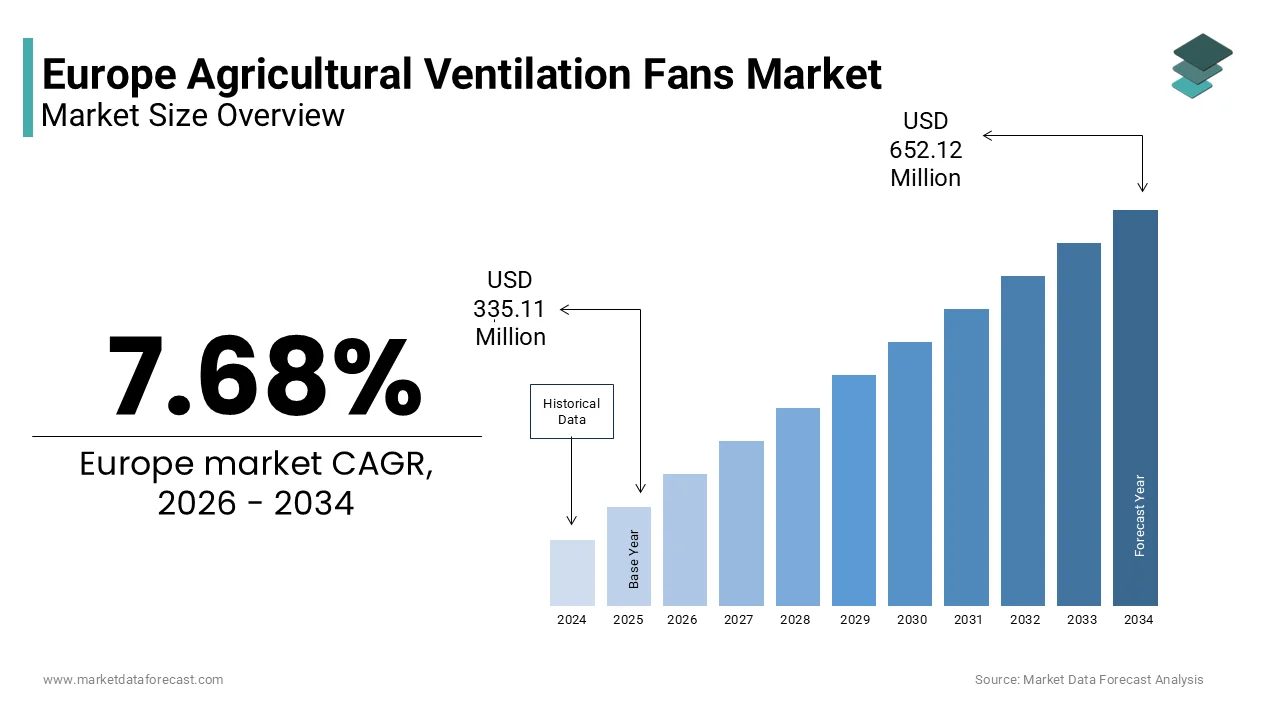
Agricultural ventilation fans are specialized air circulation systems, designed to regulate temperature, humidity, and air quality within livestock housing, greenhouses, and storage facilities. These mechanical devices are critical for maintaining optimal environmental conditions that ensure animal welfare, crop health, and product preservation. According to Eurostat, the European Union held approximately 71.6 million bovine animals, 131.5 million pigs, and significant poultry populations in 2025, creating a substantial infrastructure demand for climate control solutions. The intensification of livestock production, particularly in countries like Germany, France, and the Netherlands, has necessitated advanced ventilation systems to manage heat stress and airborne pathogens. As per the European Environment Agency, agriculture contributes significantly to ammonia emissions, which proper ventilation helps mitigate by ensuring adequate air exchange rates. The region faces increasing climatic volatility, with the Copernicus Climate Change Service noting that Europe has warmed twice as fast as the global average since the 1980s, driving the need for cooling and air movement technologies. Furthermore, the European Green Deal emphasizes sustainable farming practices, encouraging the adoption of energy efficient fans that reduce the carbon footprint of agricultural operations. With millions of farms operating across the continent, the scale of potential adoption is vast, yet varied depending on farm size and specialization. This context positions agricultural ventilation fans not merely as auxiliary equipment, but as essential components of modern, biosecure, and productive farming ecosystems in Europe.
MARKET DRIVERS
Stringent Animal Welfare Regulations Mandating Enhanced Air Quality Control
The European Union enforces rigorous animal welfare standards that directly drive the demand for advanced agricultural ventilation fans to ensure healthy living conditions for livestock, which is one of the major factors propelling the expansion of the European agricultural ventilation fans market. The Council Directive 2008/120/EC, laying down minimum standards for the protection of pigs, mandates adequate ventilation to prevent respiratory diseases and heat stress, which are major causes of mortality and reduced productivity. According to the European Food Safety Authority, poor air quality in livestock buildings is linked to increased incidences of respiratory infections, leading to higher veterinary costs and antibiotic usage. Modern ventilation fans enable precise control of airflow, humidity, and temperature, ensuring compliance with these welfare directives. Data from the German Agricultural Society indicates that farms installing automated ventilation systems reported significant improvements in animal weight gain due to reduced thermal stress. The EU’s Farm to Fork Strategy further aims to reduce antibiotic use by 50% by 2030, making preventive measures like proper ventilation crucial for disease management. Additionally, consumer pressure for ethically produced meat and dairy products encourages farmers to invest in infrastructure that guarantees high welfare standards. Retailers increasingly require certification from schemes such as GlobalGAP, which include strict criteria for indoor climate control. This regulatory and market driven push transforms ventilation from an optional utility into a mandatory investment for legal compliance and brand reputation. Consequently, the market experiences sustained growth as farmers upgrade outdated systems to meet evolving legislative and ethical benchmarks.
Expansion of Controlled Environment Agriculture Boosting Greenhouse Ventilation Needs
The rapid growth of controlled environment agriculture, including greenhouses and vertical farms is further boosting the European agricultural ventilation fans market growth. As urbanization reduces arable land availability, farmers are turning to indoor cultivation to produce high value crops year round. According to the European Protected Cropping Association, greenhouse production accounts for approximately 8% of total vegetable output in the EU, with major hubs in the Netherlands, Spain, and Italy. These enclosed environments require precise climate management to optimize photosynthesis and prevent fungal diseases, which thrive in stagnant, humid air. Data from industry reports shows that the vast majority of commercial greenhouses utilize automated ventilation systems to regulate carbon dioxide levels and temperature. The rise in consumer demand for locally grown organic produce further accelerates the construction of new greenhouse facilities. Ventilation fans play a pivotal role in these systems by facilitating natural and mechanical air exchange, ensuring uniform distribution of heat and humidity. The European Commission’s support for sustainable food systems under the Green Deal encourages investments in energy efficient greenhouse technologies. Additionally, the shift toward hydroponic and aeroponic systems, which are highly sensitive to environmental fluctuations, necessitates reliable ventilation infrastructure. This structural shift toward intensive indoor farming ensures a robust and growing demand for specialized ventilation solutions tailored to horticultural needs.
MARKET RESTRAINTS
High Energy Costs Restricting Adoption of Advanced Ventilation Systems
The volatile and elevated cost of energy that impacts the operational expenditure of running continuous ventilation systems is a significant impediment to the European agricultural ventilation fans market growth. Agriculture is an energy intensive sector, and ventilation fans often operate 24/7, particularly in livestock housing and greenhouses, leading to substantial electricity bills. According to the European Central Bank, energy costs for industrial users have seen extreme volatility in recent years following geopolitical tensions and supply disruptions. This surge directly affects the profitability of farms, forcing many operators to delay upgrades to more efficient but expensive variable speed drives or smart controllers. Data from various agricultural surveys reveals that a significant portion of small and medium sized farms have postponed infrastructure investments due to rising utility costs. While energy efficient fans offer long term savings, the high initial capital outlay remains a barrier for cash constrained operators. The uncertainty of future energy prices makes it difficult for farmers to calculate return on investment accurately. Additionally, older farms with inefficient insulation require higher fan capacity to maintain desired temperatures, further exacerbating energy consumption. Without targeted subsidies or stable energy pricing mechanisms, the adoption of advanced ventilation technologies remains sluggish among price sensitive segments. This economic pressure limits market expansion, particularly in regions with lower profit margins such as Eastern Europe.
Complex Installation Requirements and Lack of Technical Expertise
The complexity of integrating modern ventilation systems into existing agricultural infrastructure poses a significant restraint due to the lack of technical expertise among traditional farmers. Advanced ventilation setups require precise calculation of air exchange rates, static pressure, and fan placement to be effective, which often exceeds the knowledge base of typical farm operators. According to the European Centre for the Development of Vocational Training, a large percentage of farmers report feeling unprepared to install and maintain sophisticated climate control equipment. Improper installation can lead to inefficient airflow, drafts, and hot spots, negating the benefits of the system and potentially harming livestock or crops. Data from agricultural chambers indicates that a notable portion of ventilation related complaints stem from incorrect setup rather than equipment failure. The shortage of qualified technicians in rural areas further complicates maintenance and repair, leading to prolonged downtime. Additionally, the fragmentation of farm structures in countries like Italy and Greece makes standardized installation difficult, requiring customized solutions that increase costs. Many farmers rely on general contractors who may lack specific expertise in agricultural aerodynamics. This skills gap creates hesitation in adopting complex systems, favoring simpler, less effective alternatives. Until comprehensive training programs and professional support networks are established, the full potential of advanced ventilation technology will remain underutilized.
MARKET OPPORTUNITIES
Integration of IoT and Smart Climate Control Technologies
The integration of Internet of Things (IoT) sensors and artificial intelligence into agricultural ventilation systems presents a substantial opportunity for European agricultural ventilation fans market growth through enhanced efficiency and automation. Smart ventilation fans equipped with connectivity features can adjust speed and direction in real time, based on data from temperature, humidity, and gas sensors. According to the European Innovation Partnership for Agricultural Productivity and Sustainability, farms using smart climate control systems significantly reduce energy consumption while improving animal welfare metrics. This technology enables remote monitoring and predictive maintenance, allowing farmers to address issues before they escalate. As per the data from the European Commission, the adoption of IoT enabled agricultural devices is growing consistently, driven by the need for precision management. Manufacturers are developing platforms that integrate ventilation data with overall farm management software, providing actionable insights for better decision making. The rise of 5G connectivity in rural areas facilitates the seamless transmission of large data sets required for AI algorithms. Government initiatives under the Digital Europe Programme support the deployment of smart farming technologies, making them more accessible. This technological evolution transforms ventilation from a passive mechanical function into an active, intelligent system. Farmers who adopt these solutions gain competitive advantages through lower operational costs and higher productivity. This segment offers significant growth potential as digital literacy improves across the agricultural sector.
Government Subsidies for Energy Efficient and Sustainable Farming Equipment
Significant public funding and sustainability incentives provided by European governments create a strong tailwind for the agricultural ventilation fans market in Europe, particularly for energy efficient models. The Common Agricultural Policy (CAP) allocates billions of euros to support investments in environmentally friendly technologies, including upgraded ventilation systems that reduce ammonia emissions and energy use. According to the European Commission, substantial funding is dedicated to rural development and green transition projects in the current budget period. Member states have launched national schemes offering grants for replacing old fans with high efficiency models that meet Eco Design Directive standards. For instance, subsidies frequently cover a significant percentage of the cost for new ventilation installations in livestock barns. The EU’s Renovation Wave strategy also includes agricultural buildings, promoting improvements in energy performance. These financial incentives lower the barrier to entry for farmers, encouraging the adoption of premium products. Additionally, tax deductions for green investments further enhance the economic viability of upgrading ventilation infrastructure. Public private partnerships are emerging to develop standardized efficient solutions that qualify for funding. This supportive policy environment de risks investment and accelerates market penetration of advanced ventilation technologies. As sustainability becomes a core metric for agricultural success, these subsidies will continue to drive demand.
MARKET CHALLENGES
Supply Chain Disruptions Affecting Component Availability and Lead Times
The ongoing supply chain disruptions that affect the availability of critical components is one of the significant challenges to the Europe agricultural ventilation fans market growth. The European market relies heavily on global supplies of steel, copper, and semiconductors, which have been subject to volatility due to geopolitical tensions and logistical bottlenecks. According to the European Agricultural Machinery Industry Association, lead times for specialized agricultural fans have frequently faced extended delays compared to pre-pandemic levels. The shortage of electronic chips has particularly impacted the production of smart fans equipped with variable speed drives and sensors. As per the data from the European Commission, industrial production costs for electrical equipment have risen periodically due to raw material inflation. Manufacturers struggle to maintain inventory levels, leading to delayed installations for farmers during critical seasons. The dependency on single source suppliers for specialized parts exacerbates the risk of production stoppages. Additionally, the energy crisis in Europe has raised manufacturing costs, affecting pricing strategies. Farmers facing uncertain delivery schedules may postpone purchases or opt for repairs of old equipment, slowing down market turnover. Resolving these supply chain fragilities requires diversification of sourcing and increased local production capabilities, which take time to implement. This instability undermines customer confidence and hampers the timely adoption of new technologies.
Harsh Operating Conditions Leading to Premature Equipment Failure
Agricultural ventilation fans operate in extremely harsh environments, characterized by high humidity, corrosive gases, dust, and organic matter, which pose a major challenge to the regional market growth. Ammonia from livestock waste and sulfur from certain crops can rapidly corrode metal components and degrade plastic housings, leading to premature failure. According to the European Federation of Animal Science, improper maintenance due to corrosive damage can result in significant efficiency reductions within the first few years of operation. Dust accumulation on blades and motors increases energy consumption and overheating risks, requiring frequent cleaning and servicing. For instance, a large percentage of ventilation breakdowns are attributed to environmental wear and tear rather than mechanical defects. The lack of robust protective coatings in lower cost models exacerbates this issue, forcing farmers to replace units more frequently. High maintenance requirements increase the total cost of ownership and disrupt farm operations. Manufacturers face difficulties in balancing cost effectiveness with durability in such aggressive conditions. Additionally, the variability in farm hygiene practices affects equipment lifespan, making it hard to guarantee performance standards. This operational challenge necessitates continuous innovation in materials and design but remains a persistent hurdle for market satisfaction and reliability.
REPORT COVERAGE
| REPORT METRIC | DETAILS |
| Market Size Available | 2025 to 2034 |
| Base Year | 2025 |
| Forecast Period | 2026 to 2034 |
| CAGR | 7.68% |
| Segments Covered | By Product Type, Application, and Region |
| Various Analyses Covered | Global, Regional, & Country Level Analysis; Segment-Level Analysis; DROC, PESTLE Analysis; Porter’s Five Forces Analysis; Competitive Landscape; Analyst Overview of Investment Opportunities |
| Regions Covered | UK, France, Spain, Germany, Italy, Russia, Sweden, Denmark, Switzerland, Netherlands, Turkey, and the Czech Republic |
| Market Leaders Profiled | Systemair AB, Zehnder Group AG, Munters Group AB, Mitsubishi Electric Corporation, SODECA, Rosenberg Nord GmbH, Zitron, Panasonic Holdings Corporation, VORTICE, Xinruifeng Technology (Dongguan) Co., Ltd., S&P Deutschland GmbH, Vostermans Ventilatie BV, Halifax Fan Ltd., RHF Fans Ltd., ZIEHL-ABEGG SE, Dantherm Group A/S, and Venture Industries Group |
SEGMENTAL ANALYSIS
By Product Type Insights
The exhaust fans segment led the market by capturing the highest share of the European market in 2025. The dominance of exhaust fans segment in the European market can be credited to their critical role in removing stale air, moisture, and harmful gases such as ammonia from livestock buildings. The dominance of this segment is further driven by stringent European Union regulations regarding animal welfare and indoor air quality, which mandate minimum air exchange rates to prevent respiratory diseases. According to the European Food Safety Authority, inadequate ventilation is a primary cause of poor health in intensive pig and poultry farms, necessitating robust exhaust systems. Industry data indicates that the majority of new livestock housing constructions in Western Europe are equipped with high capacity exhaust fans to comply with Stage V emission and welfare standards. These fans create negative pressure that draws fresh air through inlets, ensuring uniform distribution and preventing hot spots. The intensification of livestock production, particularly in countries like the Netherlands and Denmark where farm density is high, further amplifies the need for efficient gas removal to meet environmental discharge limits. Additionally, the rise in biosecurity concerns has increased the demand for sealed environments where exhaust fans control airflow direction to prevent pathogen entry. The reliability and necessity of exhaust fans for basic operational compliance ensure their continued market leadership across diverse agricultural sectors.
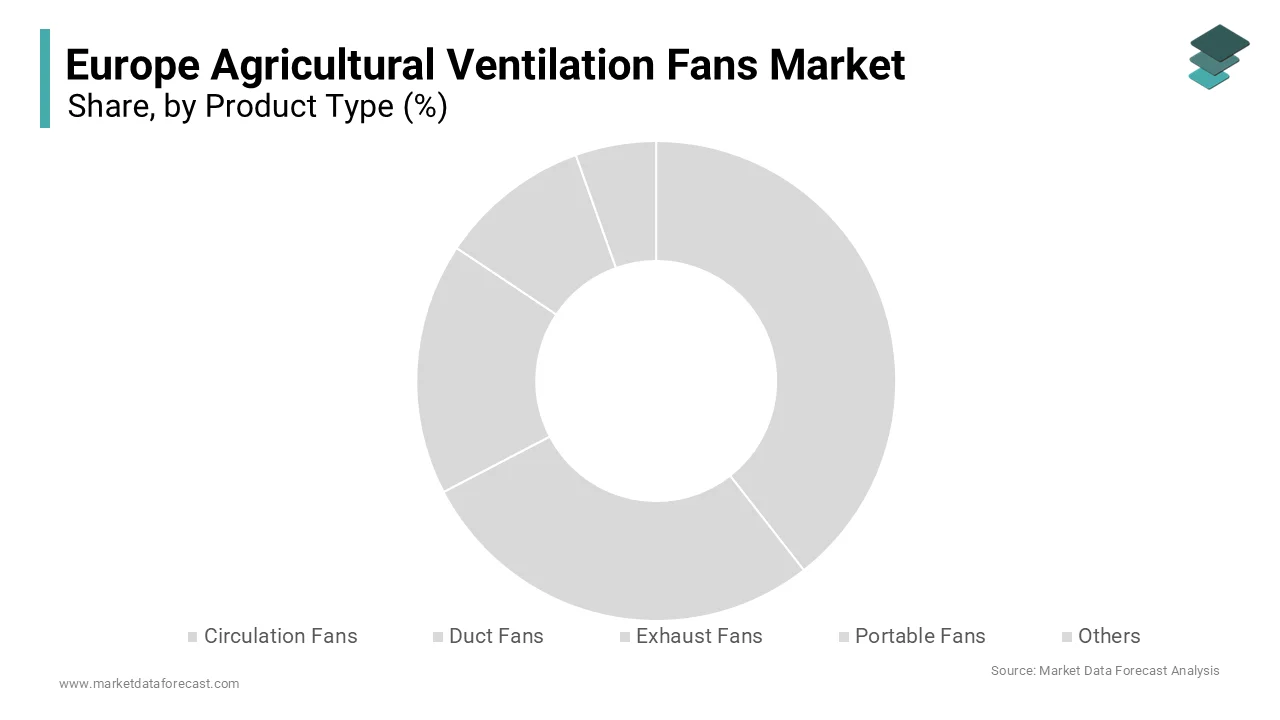
On the other end, the circulation fans segment is a promising segment and is expected to record a CAGR of 8.2% over the forecast period owing to the increasing frequency of heat waves and rising summer temperatures, which pose severe stress to livestock and reduce productivity. According to the Copernicus Climate Change Service, Europe has experienced an increase in heat wave days, leading to significant drops in milk yield and feed intake in cattle. Circulation fans help mitigate this by creating a wind chill effect that lowers the perceived temperature for animals without changing the ambient air temperature. For instance, dairy cows exposed to continuous air movement from circulation fans can produce significantly more milk during heat stress periods compared to static conditions. The adoption of these fans is also growing in greenhouses to ensure uniform temperature and humidity distribution, preventing fungal outbreaks. Farmers are increasingly installing large diameter low speed fans which offer high air volume with low energy consumption. Government advisories on heat stress management further encourage the installation of cooling infrastructure. This combination of climate adaptation needs and proven productivity benefits drives the accelerated adoption of circulation fans.
By Application Insights
The dairy segment occupied the major share of the European market in 2025. The growth of the dairy segment in the European market is primarily attributed to the high sensitivity of dairy cattle to environmental conditions and the intensive nature of modern milk production. Dairy cows generate significant body heat and moisture, requiring constant air exchange to maintain optimal health and milk yield. According to Eurostat, the European Union maintains a massive bovine population, with a significant portion housed in barns for substantial parts of the year. According to the data from the European Dairy Association, heat stress can reduce milk production by a significant percentage, making ventilation a critical economic investment for farmers. Strict animal welfare laws in countries like Germany and Sweden mandate specific indoor climate conditions, driving the installation of advanced ventilation systems. The trend toward larger herd sizes increases the concentration of animals per square meter, necessitating powerful exhaust and circulation fans to manage air quality. Additionally, the push for reduced antibiotic use under the Farm to Fork Strategy relies on preventive measures such as proper ventilation to minimize respiratory infections. The high value of milk production justifies the capital expenditure for sophisticated climate control systems. This economic and regulatory imperative ensures the dairy sector remains the primary consumer of agricultural ventilation technology.
On the other side, the greenhouse segment is the fastest growing category in the Europe agricultural ventilation fans market and is predicted to expand at a CAGR of 8.5% over the forecast period owing to the expansion of controlled environment agriculture, which requires precise climate management to optimize crop growth and prevent disease. According to the European Protected Cropping Association, greenhouse vegetable production has increased in recent years as farmers seek to extend growing seasons and improve yields. Ventilation fans are essential for regulating humidity levels which, if left unchecked, lead to infections like botrytis and powdery mildew that can devastate crops. Data from industry associations shows that modern greenhouses use complex ventilation networks to manage carbon dioxide levels and temperature gradients. The shift toward organic farming in protected cultivation also relies on mechanical ventilation rather than chemical fungicides for disease control. Urban farming initiatives and vertical farms in cities like Berlin and Paris further boost demand for compact and efficient ventilation units. Government subsidies for sustainable food production support the construction of energy efficient greenhouses equipped with smart ventilation systems. This structural shift toward intensive, high value crop production drives the rapid growth of the greenhouse segment.
COUNTRY LEVEL ANALYSIS
Germany had the dominant share of the European market in 2025 and is likely to maintain its lead in the Europe agricultural ventilation fans market over the next few years as it continues to modernize its intensive livestock sector with smart ventilation technologies. The country has one of the highest densities of pig and poultry farms in the EU, requiring advanced air management systems to comply with emission limits. According to the German Federal Ministry of Food and Agriculture, strict laws on ammonia emissions mandate the use of efficient exhaust systems in all new livestock buildings. Data from the German Agricultural Society shows that over 70% of modern barns are equipped with automated ventilation controls to optimize energy use and animal welfare. The government’s focus on sustainability drives the adoption of energy efficient fans with variable speed drives. High labor costs encourage automation, reducing the need for manual window operation. Germany’s strong manufacturing base supports the development of high quality, durable ventilation equipment. The presence of major research institutions fosters innovation in climate control technologies. This combination of regulatory pressure, technological advancement, and market size sustains Germany’s leadership in the regional ventilation market.
The Netherlands is expected to leverage its expertise in high-tech horticulture to export advanced, automated climate control systems across Europe in the coming years. Despite its small size, the country is a global hub for horticultural technology where precise climate control is paramount. According to Statistics Netherlands, the vast majority of commercial greenhouses use sophisticated ventilation systems integrated with computer climate controllers. Data from the Dutch Greenhouse Horticulture Association indicates that ventilation is key to managing humidity and CO2 levels for optimal crop growth. The dense population and strict environmental laws necessitate minimal odor and ammonia emissions from livestock farms, driving demand for high efficiency exhaust fans with air scrubbers. The Netherlands serves as a test bed for new ventilation innovations, including energy recovery systems. High energy costs drive the adoption of fans with superior aerodynamic efficiency. This concentration of expertise and infrastructure makes the Netherlands a pivotal player. Its influence extends beyond its borders through technology export and consulting services.
France is anticipated to focus on integrating AI-driven ventilation solutions into its medium-sized farm infrastructure to boost productivity and sustainability over the next few years. As a major agricultural producer, France has a critical need for ventilation to maintain animal health and productivity. According to the French Ministry of Agriculture, the Ecophyto plan and animal welfare regulations drive the modernization of farm infrastructure. Data from the French Farmers Union indicates that a majority of new dairy barns are built with enhanced ventilation systems to prevent heat stress. The country’s large greenhouse sector in regions like Brittany and Provence also contributes to demand for humidity control fans. Government subsidies for energy efficient equipment encourage the replacement of old fans with modern EC motor models. The prevalence of medium sized farms favors versatile and scalable ventilation solutions. France’s commitment to high quality food production ensures steady investment in farm infrastructure. This broad agricultural base ensures consistent demand for various types of ventilation equipment.
Spain is likely to see an increase in demand for large-scale, high-capacity cooling ventilation as it continues to intensify its poultry production to meet growing export targets over the coming years. The country’s warm climate necessitates robust cooling and ventilation systems to prevent heat stress in livestock. According to the Spanish Ministry of Agriculture, poultry production has increased in recent years, requiring high capacity exhaust fans for large houses. Data from the Spanish Fruit and Vegetable Federation shows that greenhouse area in regions like Almeria continues to expand, driving demand for precise climate control fans. The arid climate makes humidity management less critical than temperature control, but dust management remains important. Government initiatives promote the modernization of farms to meet EU standards. The export oriented nature of Spanish agriculture demands high efficiency and reliability from ventilation equipment. Rising energy costs drive the adoption of solar powered ventilation options. This focus on intensity and climate adaptation sustains market growth.
Italy is expected to shift toward modular and IoT-enabled ventilation systems to cater to its fragmented small-holder farming community over the next few years. The country’s diverse topography requires tailored ventilation solutions for both valley and mountain farms. According to the Italian National Institute of Statistics, the dairy sector in the Po Valley is highly intensive, requiring effective ammonia removal systems. Data from the Italian Agricultural Confederation shows that greenhouse production of vegetables and flowers is significant in the south, driving demand for humidity control fans. Small holder farms often prefer modular and easy to install ventilation units. Government support for organic farming boosts demand for mechanical ventilation over chemical treatments. The rich tradition of high quality food production justifies investment in animal welfare and crop quality. Italy’s focus on aesthetics and functionality in farm design influences product preferences. This unique profile ensures steady demand for specialized ventilation solutions.
The United Kingdom is anticipated to invest in data-driven smart ventilation infrastructure to offset rising energy costs and align with post-Brexit welfare standards over the next few years. The country has a strong livestock sector, particularly in poultry and pigs, which require precise climate control. According to the UK Department for Environment, Food and Rural Affairs, strict welfare codes mandate adequate ventilation to prevent respiratory issues. Data from the Agriculture and Horticulture Development Board shows that farmers are investing in energy efficient fans to reduce operational costs amidst high energy prices. The wet climate increases the need for moisture removal to prevent mold and disease. Post Brexit regulations maintain high standards for farm infrastructure. The rise of vertical farming in urban areas creates new demand for compact ventilation units. The UK’s focus on data driven farming supports the adoption of smart ventilation systems. This adaptive strategy ensures continued relevance in the market.
COMPETITIVE LANDSCAPE
The Europe agricultural ventilation fans market features moderate competition among specialized manufacturers and general HVAC companies expanding into agriculture. Established players leverage their technical expertise and brand recognition to dominate the high end segment focused on precision climate control. These companies compete on energy efficiency durability and integration with digital farm management systems. The stringent regulatory environment in Europe creates barriers to entry favoring incumbents with robust compliance frameworks for emissions and noise. Smaller specialized firms differentiate themselves through niche products tailored to specific livestock needs such as poultry or dairy. Price competition is moderate as farmers prioritize long term operational savings over initial purchase price. Collaborative efforts between fan manufacturers and construction companies drive integrated barn design solutions. The shift toward sustainable farming opens opportunities for providers of energy efficient and solar powered ventilation options. Continuous investment in smart technology further distinguishes leading players. Regulatory changes and climate variability require agile responses from all market participants. This dynamic environment encourages constant innovation and strategic adaptation to maintain relevance.
KEY MARKET PLAYERS
Some of the notable key players in the Europe agricultural ventilation fans market are
- Systemair AB
- Zehnder Group AG
- Munters Group AB
- Mitsubishi Electric Corporation
- SODECA
- Rosenberg Nord GmbH
- Zitron
- Panasonic Holdings Corporation
- VORTICE
- Xinruifeng Technology (Dongguan) Co., Ltd
- S&P Deutschland GmbH
- Vostermans Ventilatie BV
- Halifax Fan Ltd
- RHF Fans Ltd.
- ZIEHL-ABEGG SE
- Dantherm Group A/S
- Venture Industries Group
Top Players in the Market
- Munters Group AB is a leading provider of climate solutions that plays a significant role in the European agricultural ventilation market through its specialized air handling systems. The company focuses on developing energy efficient fans and dehumidification units designed for livestock housing and greenhouses. Munters recently expanded its product portfolio with smart ventilation controllers that integrate with farm management software to optimize air quality automatically. Their strategic partnerships with local distributors ensure widespread availability and technical support across key agricultural regions. The company invests heavily in research to create corrosion resistant materials that withstand harsh agricultural environments. Munters actively collaborates with farmers to demonstrate the benefits of precise climate control on animal welfare and crop yield. This commitment to sustainability and innovation strengthens their reputation as a reliable partner for modern European agriculture.
- Systemair AB contributes significantly to the Europe agricultural ventilation market by offering a comprehensive range of high performance fans and air distribution products. The company leverages its expertise in aerodynamics to develop quiet and efficient ventilation solutions suitable for sensitive livestock environments. Systemair has recently launched new series of EC motor driven fans that reduce energy consumption by up to 50 percent compared to traditional models. These innovations address critical challenges faced by European farmers dealing with rising electricity costs and strict environmental regulations. The company emphasizes sustainable manufacturing practices and recyclable materials to support eco friendly farming. Systemair works closely with engineering firms to design customized ventilation systems for large scale dairy and poultry operations. Their technical support services help growers optimize airflow patterns for better health outcomes. By focusing on efficiency and durability Systemair maintains a strong competitive position in the market.
- Vostermans Ventilatie BV is a specialized manufacturer known for its robust agricultural ventilation fans and climate control systems. The company provides tailored solutions for pig poultry and cattle housing that ensure optimal indoor air quality and temperature regulation. Vostermans recently invested in expanding its production facilities in the Netherlands to meet the growing demand for automated ventilation equipment. Their products are designed to withstand corrosive gases and high humidity levels common in intensive farming operations. The company prioritizes innovation in noise reduction technologies to minimize stress on animals. Vostermans collaborates with research institutions to validate the performance of their fans in real world conditions. Their global supply chain ensures consistent product quality and availability for European customers. This strategic focus on reliability and animal welfare reinforces their leadership in the industry.
Top Strategies Used by Key Market Participants
Key players in the Europe agricultural ventilation fans market primarily focus on energy efficiency and digital integration to maintain competitive advantage. Companies invest heavily in research and development to create fans with EC motors that significantly reduce electricity consumption. Strategic partnerships with software developers enable the integration of ventilation systems into smart farm platforms for real time monitoring. Expanding production capabilities for corrosion resistant materials ensures durability in harsh agricultural environments. Educational programs for farmers help demonstrate the economic benefits of improved air quality on livestock health. Compliance with stringent environmental regulations remains a central strategy to avoid market entry delays. Developing customizable solutions for specific livestock types allows companies to differentiate their offerings. These approaches collectively strengthen market presence and drive long term growth.
MARKET SEGMENTATION
This research report on the Europe agricultural ventilation fans market has been segmented and sub-segmented based on categories.
By Product Type
- Circulation Fans
- Duct Fans
- Exhaust Fans
- Portable Fans
- Others
By Application
- Dairy
- Equine
- Greenhouse
- Others
By Country
- UK
- France
- Spain
- Germany
- Italy
- Russia
- Sweden
- Denmark
- Switzerland
- Netherlands
- Turkey
- Czech Republic
- Rest of Europe
Frequently Asked Questions
1. What is driving the Europe Agricultural Ventilation Fans Market growth?
The market is driven by increasing demand for livestock welfare, rising greenhouse farming, growing adoption of precision agriculture, and the need for efficient climate control systems.
2. What is the forecast for the Europe Agricultural Ventilation Fans Market?
The Europe Agricultural Ventilation Fans Market is expected to witness steady growth during the forecast period, supported by advancements in agricultural infrastructure and smart farming technologies.
3. What are the key trends in the Europe Agricultural Ventilation Fans Market?
Major trends include energy-efficient ventilation systems, IoT-enabled climate control, automated fan technologies, and sustainable livestock farming practices.
4. What opportunities exist in the Europe Agricultural Ventilation Fans Market?
Growth opportunities are emerging from greenhouse expansion, smart farming adoption, government support for sustainable agriculture, and increasing investment in modern livestock facilities.
5. What challenges affect the Europe Agricultural Ventilation Fans Market?
The market faces challenges such as high installation costs, rising energy prices, equipment maintenance requirements, and fluctuating raw material costs.
6. Which country leads the Europe Agricultural Ventilation Fans Market?
Germany leads the market due to its advanced agricultural sector, widespread adoption of precision farming, and strong investments in modern livestock and greenhouse infrastructure.
7. Which application drives demand for agricultural ventilation fans?
Livestock farms, particularly poultry and dairy operations, account for a significant share of demand due to the need for effective temperature, humidity, and air quality control.
8. How does greenhouse farming boost the ventilation fans market?
Greenhouse farming increases demand for ventilation fans by requiring controlled airflow, temperature regulation, humidity management, and improved crop-growing conditions.
9. What factors restrain the Europe Agricultural Ventilation Fans Market?
Market growth may be restrained by high initial investment costs, volatile energy prices, limited awareness among small-scale farmers, and maintenance expenses.
10. Who are the major players in the Europe Agricultural Ventilation Fans Market?
Leading companies focus on developing energy-efficient ventilation systems, expanding product portfolios, investing in smart fan technologies, and strengthening their distribution networks.
Related Reports
Access the study in MULTIPLE FORMATS
Purchase options starting from
$ 2000
Didn’t find what you’re looking for?
TALK TO OUR ANALYST TEAM
Need something within your budget?
NO WORRIES! WE GOT YOU COVERED!
Call us on: +1 888 702 9696 (U.S Toll Free)
Write to us: sales@marketdataforecast.com