- Product Description Description
- Table of Contents TOC
- List of Table & Figure LOT
- Get Free Sample PDF Sample PDF
Market Size, 2025
$627.32 BnMarket Estimate, 2026
$832.14 BnMarket Forecast, 2034
$7,997.27 BnCAGR, 2026–2034
32.65%Europe AI in Telecommunication Market Report Summary
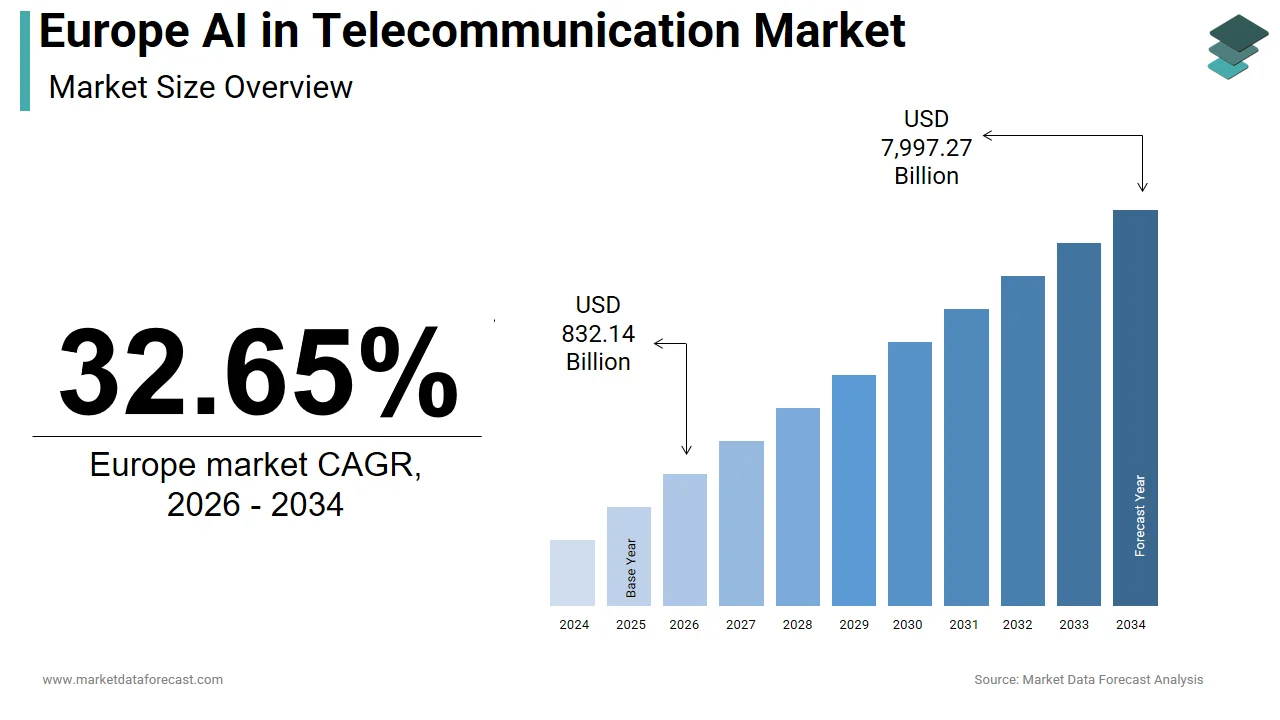
The Europe AI in telecommunication market was valued at USD 627.32 billion in 2025, is estimated to reach USD 832.14 billion in 2026, and is projected to reach USD 7,997.27 billion by 2034, growing at a CAGR of 32.65% from 2026 to 2034. Market growth is driven by increasing adoption of artificial intelligence technologies in telecom networks, rising demand for automated network management, and the expansion of 5G infrastructure across Europe. AI solutions enable telecom operators to optimize network performance, enhance customer experience, detect fraud, and improve predictive maintenance capabilities. The growing integration of machine learning, data analytics, and automation into telecom operations is further accelerating the digital transformation of the telecommunications industry across the region.
Key Market Trends
- Increasing adoption of AI-driven network optimization and automation solutions.
- Rising integration of machine learning and predictive analytics in telecom operations.
- Expansion of 5G infrastructure and intelligent network management systems.
- Growing use of AI-powered customer experience and service management tools.
- Increasing investments in cloud-based AI deployment for telecom applications.
Segmental Insights
- Based on application, the network optimization segment dominated the Europe AI in telecommunication market by capturing 34.7% share in 2025, driven by increasing demand for automated traffic management and improved network efficiency.
- Based on technology, the machine learning segment held the largest share of 42.8% in 2025, supported by its ability to analyze large telecom data sets and enable predictive network management.
- Based on end use, the mobile operators segment led the market by accounting for 58.7% share in 2025, driven by the growing need for intelligent network operations and advanced service delivery platforms.
- Based on deployment mode, the cloud deployment segment is expected to register a strong CAGR of 26.8% between 2026 and 2034, supported by increasing enterprise adoption of scalable and flexible AI-based telecom solutions.
Regional Insights
The Europe AI in telecommunication market is witnessing rapid growth across major countries due to increasing investments in advanced telecom infrastructure and AI-driven network technologies.
- Germany led the regional market in 2025 with 23.8% share, supported by strong telecom infrastructure and early adoption of AI-based network optimization technologies.
- The United Kingdom followed with 19.1% share in 2025, driven by the rapid deployment of 5G networks and strong digital innovation ecosystems.
- France maintains a significant position in the market due to its state-led initiatives promoting digital sovereignty and strategic autonomy in advanced technologies.
Competitive Landscape
The Europe AI in telecommunication market is characterized by strong competition among telecom equipment manufacturers, network service providers, and technology companies developing AI-driven telecom solutions. Market players are focusing on integrating artificial intelligence with telecom infrastructure to enhance network efficiency, automate operations, and improve service quality. Strategic collaborations, technology partnerships, and investments in 5G and AI technologies are shaping competitive dynamics across the region.
Prominent companies operating in the Europe AI in telecommunication market include AT&T, Verizon, Deutsche Telekom, China Mobile, Nokia Corporation, Ericsson, Huawei Technologies Co. Ltd., Cisco Systems, and Qualcomm.
Europe AI in Telecommunication Market Size
The Europe AI in telecommunication market was valued at USD 627.32 billion in 2025, is estimated to reach USD 832.14 billion in 2026, and is projected to reach USD 7,997.27 billion by 2034, growing at a CAGR of 32.65% from 2026 to 2034.
AI in telecommunications is defined as the integration of artificial intelligence and machine learning into the core infrastructure and operations of a communication network. This ecosystem empowers network operators to autonomously manage complex 5G architectures, optimize spectrum utilization, and deliver hyper-personalized customer experiences while adhering to stringent regional regulatory frameworks. The deployment of artificial intelligence is no longer optional but a fundamental necessity for managing the sheer density of connected devices and the latency requirements of next-generation applications. Internet connectivity is now a baseline utility for nearly all European households, transitioning from a growth phase to a maintenance phase focused on high-speed gigabit performance and ubiquitous 5G coverage. Furthermore, the European Commission has identified telecommunications as a key sector for its Digital Decade policy, aiming for all main terrestrial paths to be covered by very high-capacity networks by 2030, a goal that relies heavily on AI-driven automation for cost-effective rollout and maintenance. The telecommunications industry is moving toward "green by design" network operations, using artificial intelligence to optimize power usage in real-time as data traffic volumes continue to reach record highs. As per the Body of European Regulators for Electronic Communications, the push towards gigabit connectivity requires sophisticated network slicing capabilities that only artificial intelligence can orchestrate efficiently across diverse national borders. This market thus functions as the cognitive layer enabling the resilience, efficiency, and sustainability of Europe's digital backbone.
MARKET DRIVERS
Imperative for Autonomous Network Optimization in 5G Standalone Architectures
The deployment of 5G standalone architectures across Europe serves as a primary growth enabler for the Europe AI in telecommunication market. This is because the sheer complexity of these networks exceeds human operational capabilities. Unlike previous generations, 5G introduces network slicing, massive machine type communications, and ultra-reliable low latency requirements that demand real-time, autonomous decision-making to maintain service level agreements. European mobile operators are managing a rapid surge in network data as 5G adoption grows, requiring real-time automated analysis to maintain service quality and handle increasing traffic loads. Traditional manual configuration and rule-based automation are insufficient for managing the dynamic traffic patterns and interference issues inherent in dense urban 5G deployments. AI algorithms enable self-organizing network capabilities that can predict cell congestion, automatically reroute traffic, and heal faults before they impact users, reducing downtime significantly. The transition to AI-native air interfaces is enabling more efficient use of limited frequency bands, allowing operators to support higher data rates and more connected devices without acquiring additional spectrum. Furthermore, the requirement to support diverse use cases ranging from industrial IoT to augmented reality within the same physical infrastructure forces operators to adopt AI for intelligent network slicing management. This technological imperative ensures that AI integration becomes the standard operating procedure for maintaining the reliability and performance of next-generation European telecommunications infrastructure.
URGENT NEED FOR ENERGY EFFICIENCY AND CARBON FOOTPRINT REDUCTION
The urgent need for energy efficiency and substantial carbon footprint reduction acts as a powerful driver for the Europe AI in telecommunication market. This surge is driven by both economic pressures and strict environmental regulations. The telecommunications industry is energy-intensive, with base stations and data centers consuming vast amounts of electricity, a situation exacerbated by the higher power demands of 5G equipment compared to 4G. Emissions from Europe's digital sector are steadily decreasing even as the industry grows, largely due to major investments in renewable energy and the improved climate efficiency of economic production. Artificial intelligence provides the granular control necessary to optimize energy consumption by dynamically switching off unused radio components, adjusting cooling systems in data centers based on real-time thermal loads, and predicting traffic surges to scale power usage accordingly. Network operators are increasingly deploying AI-driven "green" software to automatically adjust power consumption based on real-time traffic demand, significantly lowering operational costs and carbon footprints. Additionally, the volatile energy prices experienced across Europe in recent years have made operational expenditure related to power a top priority for chief financial officers, accelerating the return on investment for AI solutions. The EU's Energy Efficiency Directive further mandates large enterprises to conduct regular energy audits and implement cost-effective measures, making AI-driven monitoring and optimization tools a compliance necessity. This dual pressure of regulatory mandates and financial prudence ensures that energy-focused AI applications remain a dominant growth engine in the market.
MARKET RESTRAINTS
Stringent Data Privacy Regulations and GDPR Compliance Complexities
The stringent data privacy regulations embodied by the General Data Protection Regulation (GDPR) pose a significant restraint on the Europe AI in telecommunication market. This is because they limit the volume and granularity of data available for training machine learning models. Telecommunications operators possess vast amounts of sensitive user data, including location history, call records, and browsing habits, which are invaluable for developing accurate AI algorithms for churn prediction, network planning, and personalized marketing. However, the GDPR imposes strict limitations on data processing, requiring explicit consent, purpose limitation, and the right to be forgotten, which complicates the aggregation of large datasets necessary for deep learning. Stringent European data privacy laws are compelling companies to prioritize legal safety over rapid data experimentation, leading to a more conservative AI development environment compared to other global regions. The requirement for data minimization means that operators often cannot collect the extensive behavioral data needed to train highly specific models, leading to less accurate predictions compared to counterparts in regions with more lenient privacy laws. Furthermore, the cross-border nature of telecom operations clashes with data sovereignty requirements, forcing companies to maintain fragmented data silos within individual member states rather than utilizing a unified European dataset. The introduction of multiple, overlapping digital regulations in Europe is creating a "compliance fatigue" that slows down the adoption of new technologies as firms wait for clearer guidance from regulators. This regulatory friction creates a structural headwind that constrains the speed and scope of AI adoption across the continent.
Legacy Infrastructure Integration and Technical Debt Burdens
The prevalence of legacy infrastructure and the burden of technical debt are major hurdles for the Europe AI in telecommunication market. Integrating advanced AI solutions with aging network elements proves technically challenging and costly. Many European operators manage hybrid networks that combine state-of-the-art 5G cores with decades-old copper lines, 2G, and 3G radio access networks that lack the digital interfaces required for real-time data extraction and AI control. Europe is facing a massive "funding gap" for its digital backbone, where current private and public investment levels are insufficient to build the high-speed infrastructure required to support a continent-wide AI economy. The heterogeneity of vendor equipment across these legacy systems creates interoperability issues, making it difficult to deploy unified AI platforms that can orchestrate end-to-end network management. European telecom providers are struggling to "turn off" old technologies, which traps a large portion of their budget in maintenance and prevents them from fully investing in the next generation of intelligent networks. Furthermore, the lack of standardized data formats in older equipment prevents the seamless flow of information to AI engines, resulting in data silos and incomplete visibility. The complexity of retrofitting AI capabilities onto non-digital or partially digital infrastructure often leads to prolonged implementation timelines and higher failure rates. This technological inertia slows the transition from pilot projects to enterprise-wide AI deployment, restraining the overall market growth despite the clear strategic benefits.
MARKET OPPORTUNITIES
Expansion of Generative AI for Enhanced Customer Experience and Operations
The expansion of generative artificial intelligence paves the way for the growth of European AI in telecommunication market. It does this by revolutionizing customer interactions and internal operational workflows. Unlike traditional AI, which focuses on prediction and classification, generative models can create human-like text, code, and synthetic data, enabling telecom operators to deploy sophisticated virtual assistants that resolve complex queries without human intervention. Beyond customer-facing applications, generative AI offers opportunities for network engineers by automatically generating code for network configurations, simulating potential failure scenarios, and designing optimized network topologies based on natural language prompts. The ability of these models to synthesize realistic training data also addresses the data scarcity issues caused by privacy regulations, allowing operators to train robust models without exposing real user information. Furthermore, the integration of generative AI into knowledge management systems allows field technicians to access instant, context-aware troubleshooting guides, reducing mean time to repair. As per industry analysis, the market for generative AI solutions in European enterprises is projected to grow exponentially, with telecom providers positioned to be early beneficiaries due to their high volume of unstructured data and customer touchpoints. This technological leap opens new revenue streams through enhanced service offerings and drives significant efficiency gains across the value chain.
Development of AI-Driven Network Slicing for Vertical Industries
The development of AI-driven network slicing capabilities offers a lucrative opportunity for the Europe AI in telecommunication market. It enables operators to monetize their 5G infrastructure through specialized services for vertical industries. Network slicing allows the creation of multiple virtual networks on a single physical infrastructure, each tailored to the specific latency, bandwidth, and reliability requirements of different use cases such as autonomous driving, remote surgery, or smart manufacturing. Artificial intelligence is essential for the dynamic orchestration and lifecycle management of these slices, ensuring that resources are allocated in real time to meet strict service level agreements. The automotive sector, in particular, presents a massive opportunity, as connected and autonomous vehicles require ultra-reliable low-latency communication that only AI-optimized slices can guarantee amidst fluctuating network conditions. Similarly, the manufacturing industry's shift towards Industry 4.0 relies on private 5G networks with guaranteed performance metrics that AI can continuously monitor and adjust. By moving beyond consumer connectivity to become platform providers for critical industrial applications, telecom operators can diversify their revenue streams and escape the commodity trap. This shift towards high-value B2B services driven by AI orchestration represents a fundamental growth vector for the European telecom ecosystem.
MARKET CHALLENGES
Acute Shortage of Specialized AI and Data Science Talent
The acute shortage of specialized AI and data science talent is a limiting factor in the Europe AI in telecommunication market. This hinders the ability of operators to develop, deploy, and maintain sophisticated artificial intelligence systems. The rapid evolution of AI technologies requires a workforce proficient in machine learning engineering, data analytics, and ethical AI governance, skills that are in critically short supply across the continent. Europe is facing a massive and widening talent gap in high-tech roles, where the demand for specialized intelligence and data skills is growing several times faster than the rate of new graduates. Telecom operators often find themselves competing with big tech giants and agile startups for this limited pool of talent, driving up salary costs and leading to high turnover rates that disrupt long-term AI projects. The complexity of telecom networks further exacerbates the issue, as it requires professionals who possess a rare combination of domain-specific telecommunications knowledge and advanced AI expertise. The majority of large European organizations are struggling to secure in-house technical talent, leading to a heavy reliance on third-party experts and a potential loss of long-term operational autonomy. This talent gap slows down the innovation cycle, delays the scaling of pilot projects, and limits the ability of operators to fully leverage the potential of their AI investments. A concerted effort to upskill the existing workforce and attract new talent is needed. Without it, the human capital constraint will remain a significant barrier for market advancement.
Risks of Algorithmic Bias and Lack of Explainability in Critical Networks
The risks associated with algorithmic bias and the lack of explainability in AI decision-making processes are key impediments that slow down the expansion of European AI in telecommunication market. This is particularly true given the sector's role as critical national infrastructure. Telecommunications networks manage essential services, and decisions made by AI algorithms regarding traffic prioritization, fault management, or customer credit scoring must be transparent and fair to avoid discriminatory outcomes and systemic failures. New European regulations are mandating a shift from opaque "black box" algorithms toward transparent, auditable systems to ensure that critical infrastructure decisions remain safe and legally compliant. If an AI system inadvertently discriminates against specific demographic groups in service provisioning or fails to explain why a critical network component was shut down, operators face severe reputational damage and legal liabilities. The complexity of neural networks often obscures the logic behind specific outputs, making it challenging for engineers to troubleshoot errors or validate safety in real-time scenarios. There is a growing awareness that automated network management can inadvertently widen regional inequalities, prompting a move toward "bias-aware" algorithms that ensure fair digital access for all citizens regardless of location. Ensuring explainability and fairness requires additional layers of software and rigorous testing protocols, increasing the cost and complexity of deployment. Robust frameworks for interpretable AI must be established and widely adopted. Until then, the opacity of these systems will remain a significant barrier to their unrestricted use in critical telecom operations.
REPORT COVERAGE
| REPORT METRIC | DETAILS |
| Market Size Available | 2025 to 2034 |
| Base Year | 2025 |
| Forecast Period | 2026 to 2034 |
| Segments Covered | By Application, Technology, End-Use, Deployment Mode, and Country. |
| Various Analyses Covered | Global, Regional, and Country-Level Analysis, Segment-Level Analysis, Drivers, Restraints, Opportunities, Challenges; PESTLE Analysis; Porter’s Five Forces Analysis, Competitive Landscape, Analyst Overview of Investment Opportunities |
| Countries Covered | UK, France, Spain, Germany, Italy, Russia, Sweden, Denmark, Switzerland, Netherlands, Turkey, Czech Republic, and the Rest of Europe. |
| Market Leaders Profiled | AT&T, Verizon, Deutsche Telekom, China Mobile, Nokia Corporation, Ericsson, Huawei Technologies Co Ltd, Cisco, Qualcomm. |
SEGMENTAL ANALYSIS
By Application Insights
In 2025, the Network Optimization segment captured the majority share of 34.7% of the Europe AI in telecommunication market. This dominance of the segment is driven by the critical need to manage the escalating complexity of 5G standalone networks and the dense heterogeneity of multi-vendor environments across the continent. As operators deploy massive MIMO antennas and network slicing capabilities, manual configuration becomes impossible, necessitating AI-driven self-organizing networks that can dynamically adjust parameters in real time. Furthermore, the imperative to reduce operational expenditures related to energy consumption forces operators to adopt AI solutions that intelligently switch off idle network components without compromising service quality. The ability of these systems to predict traffic congestion and proactively reroute data flows ensures consistent Quality of Service, which is paramount for retaining enterprise customers relying on SLAs. Consequently, the immediate ROI provided by enhanced efficiency and reduced downtime cements Network Optimization as the primary application area for AI investment in the region. The intricate architecture of 5G standalone networks, combined with acute spectrum scarcity, acts as the primary growth accelerator for the dominance of the Network Optimization segment. Unlike previous generations, 5G introduces dynamic spectrum sharing, ultra-dense small cell deployments, and network slicing, creating a management environment too complex for human engineers to handle manually. AI algorithms analyze terabytes of telemetry data to identify interference patterns and automatically adjust beamforming angles and power levels, ensuring optimal coverage in congested areas like stadiums or transport hubs. As European operators race to monetize their 5G investments, the reliance on AI for squeezing maximum performance out of limited spectral resources becomes the defining factor in their operational strategy. The urgent requirement for energy efficiency and the subsequent reduction of operational costs serve as a powerful driver sustaining the leadership of the Network Optimization segment. With energy prices in Europe remaining volatile and sustainability regulations tightening under the European Green Deal, telecom operators are under immense pressure to lower the carbon footprint of their networks. Artificial intelligence provides the granular control necessary to implement "sleep modes" for radio units during low-traffic periods and optimize cooling systems in data centers based on real-time thermal loads. Furthermore, the rising cost of electricity has shifted the focus of CFOs toward technologies that offer immediate utility savings, with AI-driven optimization delivering payback periods often shorter than twelve months. Data from major European operators reveals that energy bills constitute one of the fastest-growing line items in their OPEX, making AI not just a technical upgrade but a financial survival tool. This dual pressure of regulatory compliance and economic prudence ensures that network optimization remains the most heavily funded application of AI in the telecommunications sector.
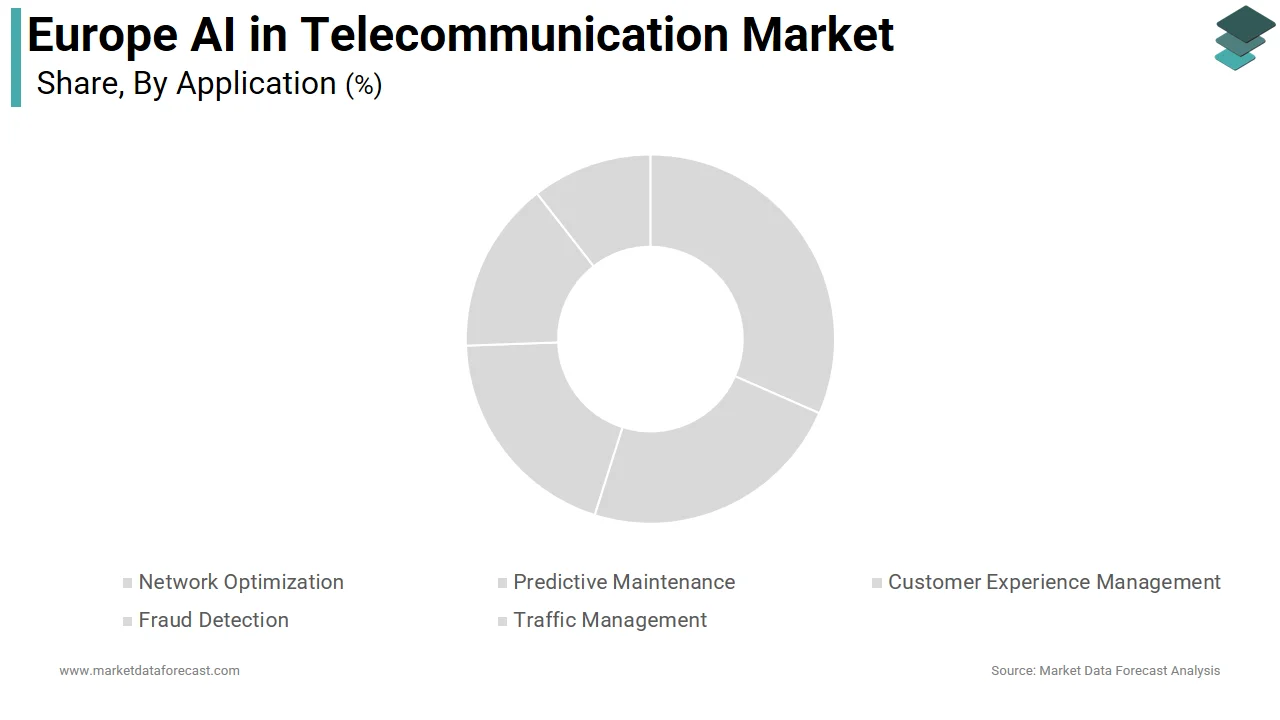
The Customer Experience Management (CEM) segment is likely to experience the fastest CAGR of 28.5% from 2026 to 2034. Moreover, the accelerated growth of this segment is fueled by the transformative impact of Generative AI and Large Language Models, which enable hyper-personalized interactions and autonomous resolution of complex customer queries. The main factor propelling this expansion is the shifting consumer expectation for instant, context-aware support across multiple channels, which traditional rule-based chatbots fail to deliver. Telecom operators are increasingly deploying generative AI agents capable of understanding natural language nuances, sentiment, and intent, allowing them to resolve issues without human intervention and significantly reducing call center volumes. The European Commission's Digital Decade policy emphasizes user-centric digital services, encouraging operators to invest in AI tools that enhance satisfaction and loyalty in a highly competitive market. Additionally, the ability of AI to predict churn by analyzing usage patterns and sentiment in real time allows operators to proactively offer tailored retention incentives, directly impacting revenue. The integration of these advanced capabilities into CRM systems creates a virtuous cycle of improved service and reduced costs, positioning CEM as the most dynamic growth engine in the market. The rapid adoption of Generative AI for autonomous customer support stands as the foremost driver propelling the exceptional growth rate of the Customer Experience Management segment. Traditional automated systems were limited to rigid scripts and often frustrated users, whereas new Generative AI models can engage in fluid, human-like conversations, troubleshoot technical issues, and even execute account changes autonomously. These advanced systems can access real-time network data to inform customers about local outages or signal issues instantly, providing a level of transparency that builds trust. The capability of these models to learn from every interaction means they continuously improve their accuracy and empathy, offering a personalized experience that scales effortlessly. Furthermore, the multilingual nature of the European market makes Generative AI particularly valuable, as it can fluently switch between dozens of languages and dialects without requiring separate training sets for each. This technological leap transforms customer service from a cost center into a strategic differentiator, driving massive investment and rapid segment expansion. Predictive churn modeling and the delivery of hyper-personalized marketing offers set the stage for the surging growth of the Customer Experience Management segment in the Europe AI market. In a saturated market where acquiring new customers is significantly more expensive than retaining existing ones, telecom operators rely on AI to identify at-risk subscribers before they decide to leave. Machine learning algorithms analyze vast datasets, including call drop rates, billing disputes, browsing behavior, and competitor promotions to calculate a precise churn probability score for each user. By leveraging these insights, operators can automatically trigger personalized retention campaigns, such as offering specific data top-ups or device upgrades that match the individual's usage profile. The effectiveness of AI-driven personalization is evident in conversion rates, which are reported to be higher than generic mass marketing efforts. Furthermore, the ability to segment customers micro-granularly allows for the creation of bespoke tariff plans that meet unique needs, fostering deeper loyalty. The strategic advantage gained through AI-powered retention and personalization is becoming indispensable as competition intensifies among MVNOs and traditional carriers. Consequently, this is fueling the rapid adoption of CEM solutions.
By Technology Insights
The Machine Learning segment maintained dominance in the Europe AI in telecommunication market and occupied a 42.8% share in 2025. A key factor contributing to the dominance of this segment is the foundational role ML algorithms play in almost every aspect of modern telecom operations, from predictive network maintenance to dynamic resource allocation and fraud detection. Unlike other technologies that serve specific functions, Machine Learning provides the core computational engine that enables systems to learn from historical data and make autonomous decisions without explicit programming. The versatility of ML allows it to be applied across diverse domains, including radio access network optimization, core network security, and customer behavior analysis, making it the most widely adopted technology. Furthermore, the maturity of open-source ML frameworks and the availability of specialized hardware accelerators have lowered the barrier to entry, enabling operators of all sizes to implement these solutions. As networks become increasingly software-defined, the reliance on ML for automating complex decision-making processes ensures its continued dominance as the backbone of AI in telecommunications. The unparalleled versatility of Machine Learning in enabling predictive maintenance and preventing network faults is the main reason for its market dominance. Telecom networks consist of millions of components, and unexpected failures can lead to significant revenue loss and reputational damage, making proactive intervention critical. ML algorithms analyze historical failure data, environmental conditions, and real-time performance metrics to predict equipment malfunctions days or even weeks before they occur. These systems can identify subtle anomalies in signal strength, temperature fluctuations, or power consumption that human operators would miss, allowing for scheduled repairs during off-peak hours. The ability of ML to continuously refine its predictions based on new data ensures that maintenance strategies become increasingly accurate over time. Research indicates that operators using ML for predictive maintenance have seen a reduction in emergency repair costs, alongside a significant extension in the lifespan of network assets. This capability to transform reactive maintenance into a proactive, data-driven strategy makes Machine Learning an indispensable tool for ensuring network reliability and operational efficiency across Europe. The critical role of Machine Learning in dynamic resource allocation and real-time security threat detection acts as a potent driver sustaining the leadership of this technology segment. As network traffic patterns become increasingly volatile due to video streaming, IoT devices, and cloud applications, static resource allocation methods are no longer sufficient to ensure optimal performance. ML models process real-time traffic data to dynamically allocate bandwidth, adjust routing paths, and balance loads across the network, ensuring consistent Quality of Service for all users. These algorithms can identify unusual traffic patterns indicative of DDoS attacks, fraud attempts, or intrusions, and automatically implement countermeasures faster than any human team could. The ability of ML to adapt to evolving attack vectors and traffic behaviors makes it the only viable solution for securing modern, open architectures like 5G. Furthermore, the integration of ML into Software Defined Networking allows for automated policy enforcement that optimizes both performance and security simultaneously. This dual capability of enhancing efficiency while safeguarding the network cements Machine Learning as the most essential and widely deployed technology in the European telecom AI landscape.
The Natural Language Processing (NLP) segment is on the rise and is expected to be the fastest-growing segment in the market by witnessing a CAGR of 31.2% over the forecast period, owing to the breakthrough advancements in Generative AI and Large Language Models, which have revolutionized how telecom operators interact with customers and manage internal knowledge. The primary factor accelerating this expansion is the shift from rigid, menu-driven voice response systems to conversational AI agents capable of understanding context, sentiment, and complex queries in multiple European languages. NLP technologies enable operators to automate a vast majority of customer support interactions, extract actionable insights from unstructured feedback, and streamline internal communication processes. The multilingual nature of the European market further amplifies the need for advanced NLP solutions that can handle code-switching and regional dialects effectively. Additionally, the integration of NLP into network operations allows engineers to query complex databases using natural language, speeding up troubleshooting and decision-making. This convergence of customer experience imperatives and operational efficiency gains positions NLP as the most rapidly advancing technology segment in the market. The revolutionizing impact of Conversational AI powered by advanced Natural Language Processing stands as the primary engine driving the rapid growth of the NLP segment. Traditional Interactive Voice Response systems have long been a source of frustration for customers, but modern NLP-enabled virtual assistants can engage in natural, context-aware dialogues that resolve issues efficiently and empathetically. These AI agents can handle everything from billing inquiries and plan changes to technical troubleshooting, operating 24/7 across web, mobile, and voice channels. The ability of NLP to analyze sentiment in real time allows the system to escalate emotionally charged interactions to human agents immediately, preventing churn and enhancing brand loyalty. Furthermore, the deployment of Generative AI has enabled these bots to generate personalized responses and summaries, reducing handling time significantly. As the technology matures and becomes more affordable, its adoption is spreading from large incumbents to smaller operators, fueling the segment's exceptional growth trajectory. The critical need for robust multilingual capabilities and the ability to derive insights from unstructured data act as a key driver for the surging growth of the Natural Language Processing segment in Europe. The European continent is characterized by immense linguistic diversity, with 24 official languages and countless regional dialects, making it impossible for operators to maintain separate support teams for every language variant. Advanced NLP models, particularly those based on transformer architectures, can seamlessly process and respond in multiple languages, breaking down communication barriers and ensuring inclusive service delivery. Beyond customer-facing applications, NLP is instrumental in analyzing vast amounts of unstructured data generated from social media, customer reviews, and technician logs, converting this noise into actionable business intelligence. Operators use these insights to identify emerging network issues, gauge public sentiment regarding new tariffs, and improve product offerings. The ability to automatically summarize lengthy technical documents or regulatory updates also enhances internal productivity. As the volume of unstructured data continues to explode, the value proposition of NLP for extracting meaning and facilitating communication across linguistic borders becomes increasingly compelling, driving rapid market expansion.
By End Use Insights
The Mobile Operators segment was the largest segment in the Europe AI in telecommunication market and held a share of 58.7% in 2025 because of the sheer scale of their infrastructure, the complexity of managing 5G networks, and the intense competitive pressure to differentiate through superior customer experiences and operational efficiency. Mobile operators are the primary owners of the radio access network and spectrum assets, making them the biggest beneficiaries of AI applications in network optimization, predictive maintenance, and traffic management. The high capital expenditure associated with 5G rollout forces operators to maximize the return on every asset, a goal achieved through AI-driven automation that reduces energy costs and extends equipment life. Furthermore, the saturation of the mobile subscriber market in Europe means that growth must come from ARPU improvement and cost reduction, both of which are directly addressed by AI initiatives. Their central role in the digital ecosystem and their extensive data repositories make them the natural leaders in adopting and deploying artificial intelligence technologies. The urgent imperative to monetize substantial 5G investments while simultaneously reducing both capital and operational expenditures serves as the fundamental force driving the dominance of the Mobile Operators segment. The rollout of 5G networks has required billions of euros in investment, yet revenue growth from consumer plans has remained flat, creating a pressing need to find new efficiency levers and revenue streams. AI provides the tools to automate network planning, reduce site rental costs through better utilization, and lower energy bills, directly impacting the bottom line. Operators use AI to identify the most profitable locations for new cell sites and to optimize the configuration of existing ones, ensuring maximum coverage with minimum hardware. The ability to predict traffic demand allows for dynamic scaling of resources, preventing over-provisioning and wasted capital. Furthermore, AI-driven predictive maintenance reduces the need for costly emergency repairs and extends the lifecycle of expensive radio equipment. The financial necessity ensures that mobile operators remain the largest and most active adopters of AI solutions. Intense market competition and the critical need for differentiated customer experiences act as a powerful driver sustaining the leadership of the Mobile Operators segment in the Europe AI market. With multiple operators competing in almost every European country and the rise of low-cost Mobile Virtual Network Operators, distinguishing oneself through service quality is paramount. AI enables operators to offer hyper-personalized plans, proactive customer support, and guaranteed Quality of Service for premium users, creating a competitive moat. Operators utilize AI to analyze customer behavior in real time and offer tailored upsells or resolve issues before the customer even notices them, fostering loyalty. The ability to provide network slicing with guaranteed SLAs for enterprise customers is another differentiator that relies heavily on AI orchestration. Furthermore, the integration of AI into billing and fraud detection systems protects revenue and enhances trust. This relentless competitive pressure ensures that mobile operators remain at the forefront of AI adoption to protect and grow their market share.
By Deployment Mode Insights
The Cloud deployment mode segment is expected to exhibit a noteworthy CAGR of 26.8% between 2026 and 2034 due to the inherent scalability, flexibility, and cost-efficiency of cloud-native AI platforms, which align perfectly with the dynamic needs of modern telecom networks. The main factor driving this growth is the shift towards Cloud-Native Network Functions and the need to process massive datasets without the constraints of on-premises hardware. The cloud model allows operators to experiment with new AI algorithms and scale them up or down based on traffic demands without significant upfront capital investment. Furthermore, the availability of pre-trained AI models and managed machine learning services from major cloud providers reduces the time to deployment and the need for specialized in-house expertise. The European Commission's push for a sovereign cloud infrastructure also encourages operators to adopt compliant cloud solutions for their AI initiatives. This combination of economic benefits, technological agility, and regulatory support positions the Cloud segment as the highest growth engine in the market. The unmatched scalability and elasticity offered by cloud deployment modes stand as the primary engine driving the rapid growth of the Cloud segment in the Europe AI telecom market. Telecommunications networks generate petabytes of data daily from billions of connected devices, requiring computing resources that can expand and contract instantly to process this information effectively. Cloud platforms provide the ability to spin up thousands of virtual machines in minutes to train complex AI models or process real-time analytics during traffic surges, ensuring consistent performance without over-provisioning. This elasticity allows operators to pay only for the resources they consume, optimizing costs and avoiding the sunk costs associated with buying and maintaining physical servers. The ability to rapidly deploy AI updates and new features across a distributed cloud infrastructure also accelerates innovation cycles. As network complexity and data volumes continue to explode, the need for a scalable, flexible computing environment makes the cloud the preferred deployment mode for AI in telecommunications. Access to advanced pre-trained AI models and comprehensive managed services acts as a critical driver for the surging growth of the Cloud deployment segment in the European market. Developing state-of-the-art AI models from scratch requires immense computational power, vast datasets, and highly specialized talent, resources that are often scarce or prohibitively expensive for telecom operators to maintain internally. Cloud providers offer a rich ecosystem of pre-trained models for speech recognition, image analysis, and predictive maintenance that operators can customize and deploy immediately, significantly reducing development time and cost. These managed services handle the underlying infrastructure, security, and updates, allowing telecom teams to focus on applying AI to business problems rather than managing servers. The continuous innovation by cloud vendors ensures that operators always have access to the latest algorithms and tools without needing to perform complex upgrades. Furthermore, the collaborative nature of cloud platforms facilitates the sharing of best practices and models across the industry. This democratization of advanced AI capabilities through the cloud lowers the barrier to entry and accelerates adoption, driving the segment's rapid expansion.
COUNTRY-LEVEL ANALYSIS
Germany AI in Telecommunication Market Analysis
Germany led the Europe AI in telecommunication market and captured a 23.8% share in 2025. This leading position of Germany is propelled by the "Industry 4.0" initiative, which relies heavily on low-latency, high-reliability telecom networks optimized by AI to automate manufacturing processes. The country's market has a robust industrial base that drives demand for advanced private 5G networks and IoT solutions, coupled with a strong regulatory framework promoting digital sovereignty. The presence of major equipment vendors and a dense network of research institutions fosters a vibrant ecosystem for developing and testing AI-driven telecom solutions. Furthermore, the stringent energy efficiency regulations in Germany push operators to adopt AI for dynamic power management in their networks. The high penetration of broadband and mobile services creates a massive data pool for training AI models, while the skilled workforce supports complex implementations. This convergence of industrial demand, government support, and technological expertise secures Germany's position as the largest and most innovative market for AI in telecommunications in Europe.
United Kingdom AI in Telecommunication Market Analysis
The United Kingdom followed closely behind in the Europe AI in telecommunication market and accounted for a 19.1% share in 2025 by serving as a global hub for fintech and AI innovation that heavily influences telecom strategies. The market status in the UK is defined by aggressive government initiatives to become an AI superpower and a mature telecom sector eager to adopt cutting-edge technologies to boost productivity. A key accelerator for the UK market is the "AI Strategy" published by the government, which identifies telecommunications as a critical sector for AI applications to enhance national infrastructure resilience and economic growth. The presence of leading universities and a thriving startup ecosystem specializing in AI and machine learning provides a steady stream of talent and innovative solutions for telecom operators. Additionally, the post-Brexit regulatory environment has encouraged the UK to develop its own standards for AI safety and deployment, fostering a distinct market dynamic. The strong focus on Open RAN architectures in the UK also drives the adoption of AI for interoperability and management of multi-vendor networks. This blend of policy support, traffic growth, and innovation capacity ensures the UK remains a pivotal market for AI in telecom.
France AI in Telecommunication Market Analysis
France maintains a significant position in the Europe AI in telecommunication market due to its strong state-led approach to digital sovereignty and strategic autonomy in technology. The market position is greatly influenced by the "France 2030" investment plan, which prioritizes the development of trusted AI and secure telecommunications infrastructure to reduce dependency on non-European technologies. The country's large geographic area and diverse terrain require sophisticated AI-driven network planning and optimization to ensure universal coverage, a key political objective. French operators are also at the forefront of adopting AI for customer experience management, leveraging the country's strong mathematical and engineering heritage to develop advanced algorithms. The regulatory environment, guided by ARCEP, encourages experimentation with AI in spectrum management and network slicing. Furthermore, the growing demand for smart city solutions in Paris and other major cities drives the integration of AI in telecom networks to support IoT applications. This combination of strategic government funding, geographic challenges, and a focus on sovereignty drives the steady growth of the AI telecom market in France.
Italy AI in Telecommunication Market Analysis
Italy is moving ahead steadfastly in the Europe AI in telecommunication market, owing to a rapidly modernizing telecom sector focused on bridging the digital divide between north and south. The country’s market is evolving as Italian operators accelerate their digital transformation journeys to cope with legacy infrastructure challenges and meet EU connectivity targets. A major driving factor is the National Recovery and Resilience Plan, which includes substantial funding for the deployment of 5G networks and the adoption of AI technologies to improve network efficiency and service quality. The country's vibrant tourism industry also drives demand for reliable, high-speed connectivity in coastal and historical areas, prompting operators to use AI for dynamic resource allocation during peak seasons. Additionally, the growing interest in smart agriculture and industrial automation in northern Italy creates opportunities for private 5G networks managed by AI. The push towards cloud-native architectures by major Italian telcos further facilitates the deployment of scalable AI applications. This mix of government investment, usage growth, and sector-specific demands fuels the expansion of the AI telecom market in Italy.
Sweden AI in Telecommunication Market Analysis
Sweden is predicted to expand notably in the European market during the forecast period due to its status as a global pioneer in telecommunications innovation and home to major equipment manufacturers. The market status is robust, supported by a highly digitized society, early adoption of 5G, and a strong culture of research and development in AI and connectivity. A primary driver for the Swedish market is the presence of global telecom giants headquartered in the country, which act as testbeds for new AI-driven network solutions before global rollout. The Swedish government's proactive stance on digitalization and its support for green tech initiatives encourage operators to use AI for energy efficiency and sustainable network operations. The collaboration between academia, industry, and government in Sweden fosters a unique ecosystem where AI research is quickly translated into commercial telecom applications. Furthermore, the early deployment of standalone 5G networks in Stockholm and other cities provides a real-world laboratory for AI-driven network slicing and automation. This leadership in technology and sustainability ensures that Sweden remains a critical and influential market for AI in telecommunications despite its smaller population size.
COMPETITIVE LANDSCAPE
The competition in the Europe AI in telecommunication market is intense and characterized by a rivalry between established global infrastructure vendors and agile software specialists who compete on technological sophistication and integration capabilities. Large incumbents leverage their extensive installed base of network hardware to bundle AI software solutions, creating high switching costs for operators seeking comprehensive automation. In contrast, niche players differentiate themselves through specialized algorithms for specific use cases such as fraud detection or predictive maintenance that offer superior accuracy and faster deployment times. The market sees frequent collaborations between telecom operators and technology providers to co-develop custom AI models tailored to unique regional requirements and regulatory constraints. Price competition is moderate as buyers prioritize reliability, scalability, and compliance with data sovereignty laws over initial cost savings, given the critical nature of network operations. Innovation speed and the ability to demonstrate tangible return on investment through pilot programs are becoming key differentiators in this rapidly evolving sector. Regulatory adherence to the European Union AI Act acts as a significant barrier to entry for non-compliant foreign vendors, favoring local or well-adapted global providers who can navigate complex legal landscapes effectively.
KEY MARKET PLAYERS
The leading companies operating in the Europe AI in telecommunication market include:
- AT&T
- Verizon
- Deutsche Telekom
- China Mobile
- Nokia Corporation
- Ericsson
- Huawei Technologies Co. Ltd.
- Cisco
- Qualcomm
TOP PLAYERS IN THE MARKET
- Nokia Corporation stands as a pivotal force in the Europe AI in telecommunication market by integrating advanced machine learning directly into its radio access network and core infrastructure solutions. The company contributes globally by pioneering autonomous network capabilities that enable operators to self-optimize and self-heal without human intervention. Nokia recently strengthened its market position by launching its AVA AI platform updates, which utilize generative artificial intelligence to enhance customer service automation and network energy efficiency. Their strategic focus includes developing cloud native software that allows telecom providers to deploy AI models at the edge for ultra-low latency applications. Nokia continues to collaborate with major European carriers to test and implement AI-driven network slicing for industrial use cases. These initiatives solidify their role as a primary enabler of intelligent connectivity while addressing critical sustainability goals through smart power management technologies across global networks.
- Ericsson operates as a leading innovator in the Europe AI in telecommunication market by embedding artificial intelligence into every layer of its fifth-generation infrastructure and managed services portfolio. The firm influences the global sector by providing cognitive software solutions that automate complex operational tasks and predict network failures before they impact users. Ericsson has recently accelerated its strategy by introducing new AI-powered analytics tools designed to optimize spectrum usage and reduce carbon emissions in real time. Their commitment to research is evident through partnerships with European universities to develop next-generation algorithms for massive machine-type communications. The company also focuses on securing AI supply chains against emerging cyber threats while ensuring compliance with strict regional regulations. Ericsson empowers communication service providers to achieve superior operational efficiency and deliver differentiated digital experiences to enterprise and consumer segments worldwide. They do this by continuously refining their automation engines and expanding their ecosystem of AI partners.
- Huawei Technologies Co Ltd maintains a significant presence in the Europe AI in telecommunication market despite regulatory headwinds by offering highly integrated artificial intelligence solutions for network optimization and maintenance. The company contributes globally through its IntelligentRAN architecture, which leverages deep learning to dynamically adjust network parameters and improve user experience in dense urban environments. Huawei recently focused on strengthening its position by enhancing its Autonomous Driving Network framework to level four maturity, allowing for near-zero wait times and zero faults. Their approach involves deploying AI chips directly into base stations to enable localized decision-making and reduced latency for critical applications. The firm also invests heavily in green AI technologies that intelligently manage energy consumption across heterogeneous networks. By providing cost-effective and technically advanced AI tools, Huawei continues to support operators in achieving high-performance targets while navigating the complex geopolitical landscape of the European telecommunications sector.
TOP STRATEGIES USED BY KEY MARKET PARTICIPANTS
Key players in the Europe AI in telecommunication market primarily focus on developing cloud native artificial intelligence platforms that enable scalable and flexible deployment of machine learning models across distributed network architectures. Companies are increasingly investing in generative artificial intelligence capabilities to automate customer support interactions and streamline internal operational workflows for faster problem resolution. Strategic partnerships with hyperscale cloud providers and specialized AI startups are essential to accelerate innovation cycles and integrate cutting-edge algorithms into existing telecom infrastructure. Vendors are also prioritizing the creation of energy-efficient AI solutions that dynamically optimize power consumption to meet stringent European Union sustainability targets and reduce operational expenditures. Furthermore, market participants are actively engaging in standardization bodies to shape regulations regarding AI ethics and data privacy, ensuring their technologies comply with evolving legal frameworks. These collective strategies aim to drive network autonomy and enhance service quality in a highly competitive digital landscape.
MARKET SEGMENTATION
This research report on the Europe AI in telecommunication market has been segmented and sub-segmented into the following categories.
By Application
- Network Optimization
- Predictive Maintenance
- Customer Experience Management
- Fraud Detection
- Traffic Management
By Technology
- Machine Learning
- Natural Language Processing
- Computer Vision
- Data Analytics
By End-Use
- Mobile Operators
- Internet Service Providers
- Enterprises
By Deployment Mode
- Cloud
- On-Premises
- Hybrid
By Country
- United Kingdom
- France
- Spain
- Germany
- Italy
- Russia
- Sweden
- Denmark
- Switzerland
- Netherlands
- Rest of Europe