- Product Description Description
- Table of Contents TOC
- List of Table & Figure LOT
- Get Free Sample PDF Sample PDF
Market Size, 2025
$2.29 BnMarket Estimate, 2026
$2.61 BnMarket Forecast, 2034
$7.42 BnCAGR, 2026–2034
13.95%Europe Almond Drinks Market Size, Growth, Trends & Forecast (2026–2034)
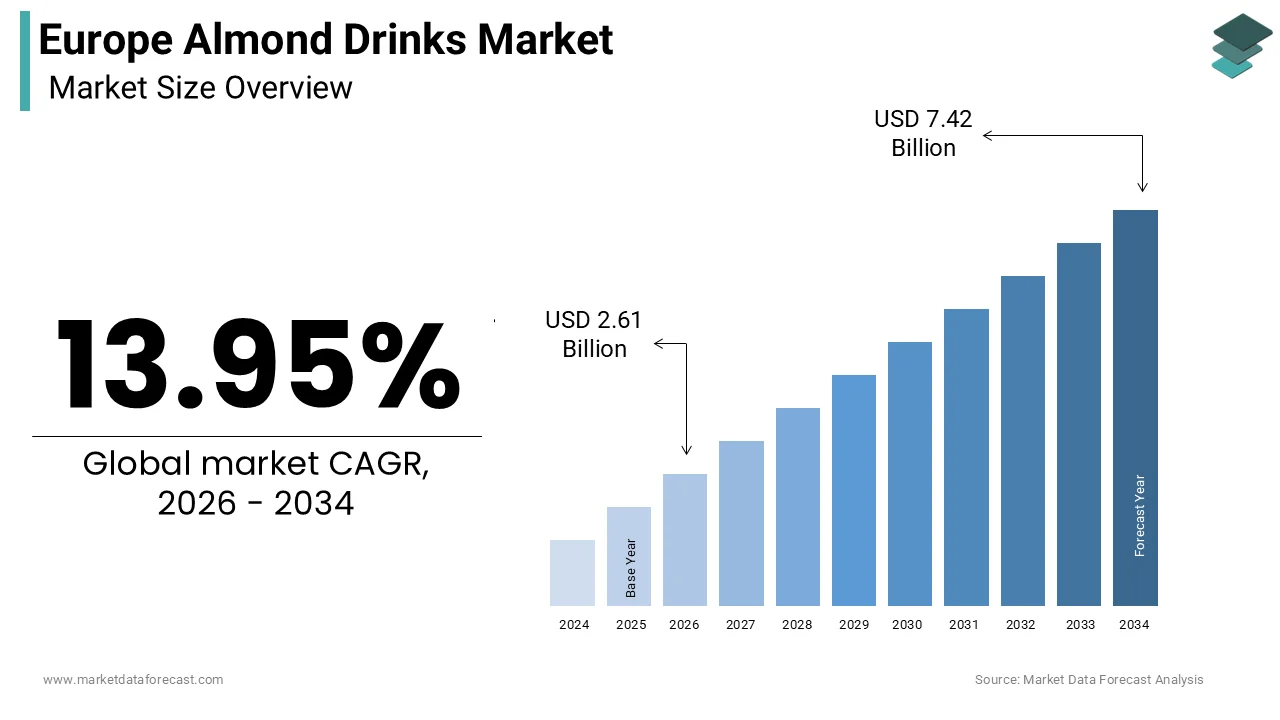
The Europe almond drinks market size was valued at USD 2.29 billion in 2025, reached USD 2.61 billion in 2026, and is projected to scale up to USD 7.42 billion by 2034, registering a compound annual growth rate (CAGR) of 13.95% during the forecast period from 2026 to 2034. Driven by rising lactose intolerance diagnoses, a profound shift toward environmental sustainability, expanding specialty coffee culture, and robust local agricultural output in countries like Spain, the market continues to expand rapidly across the European region.
Key Executive Metrics (At-a-Glance)
- 2025 Base Valuation: USD 2.29 Billion
- 2026 Current Valuation: USD 2.61 Billion
- 2034 Forecast Valuation: USD 7.42 Billion
- Compound Annual Growth Rate (CAGR): 13.95% (2026–2034)
- Leading Regional Market: United Kingdom (UK)
- Key Agricultural Hub: Spain (Primary EU almond producer)
Core Market Drivers
- Health & Medical Demographics: Escalating medical diagnosis of lactose intolerance, cow milk protein allergies, and growing demand for metabolic health and sugar-reduction alternatives.
- Sustainability & Ethics: Shift toward animal-free nutrition, lower carbon footprints compared to traditional dairy, and ethical consumerism.
Primary Market Restraints & Challenges
- Environmental & Nutritional Pressures: Intensive water requirements for almond cultivation in drought-prone regions (e.g., Iberian Peninsula) and inherently low natural protein concentrations.
- Competitive Landscape: Market dominance of localized oat and soy beverages, alongside strict EU labeling directives regarding dairy nomenclature.
Europe Almond Drinks Market Segmentation Highlights
| Segment Category | Largest Segment | Fastest-Growing Segment |
|---|---|---|
| By Form | Unsweetened (56.5% share in 2025) | Sweetened (8.2% CAGR) |
| By Application / Category | Beverages (64.3% share in 2025) | Cosmetics (9.2% CAGR) |
| By Flavor / Variant | Plain (54.6% share in 2025) | Vanilla (9.5% CAGR) |
| By Region | United Kingdom | Germany & France |
Major Industry Players Profiled
Key dairy alternatives manufacturers and market participants shaping the European almond drinks sector include Pressery, Blue Diamond Growers, Fuerst Day Lawson, Alpro, The Luz Almond Company Pty Ltd, Malk Organics, Provamel, Nutriops S.L., Dream, and Rude Health.
Europe Almond Drinks Market Size
The Europe Almond Drinks Market size was at US$ 2.29 billion in 2025, and is anticipated to be worth USD 7.42 billion by 2034, from USD 2.61 billion in 2026, growing at a CAGR of 13.95% during the forecast period.
Almond drinks are liquid beverages derived from finely ground almonds and water, often fortified with essential vitamins and minerals. This specific category of botanical milk has become a cornerstone of the European dietary landscape, driven by shifting consumer preferences toward sustainable and animal-free nutrition. According to the European Food Safety Authority, approximately 15% to 20% of the European population experiences some degree of lactose maldigestion, creating a massive demographic actively seeking alternative calcium sources. Furthermore, the agricultural framework within the continent supports this growing sector, as Spain remains the leading almond producer within the European Union. As per the United States Department of Agriculture, European Union almond production recently reached approximately 200,000 metric tons, providing a solid domestic foundation for local processing facilities. The transition away from traditional bovine milk is further evidenced by changing consumption patterns across the continent. According to the International Dairy Federation, per capita fluid milk consumption in Western Europe has declined by nearly 10% over the past decade, reflecting a profound cultural shift in breakfast and beverage habits. Consequently, these botanical alternatives have seamlessly integrated into daily culinary routines, serving as essential ingredients in coffee preparation, cereal consumption, and modern plant-based cooking across diverse European nations.
MARKET DRIVERS
Escalating Medical Diagnosis of Lactose Intolerance and Milk Protein Allergies Drives Consumer Adoption
The escalating medical diagnosis of lactose intolerance and milk protein allergies is one of the major factors propelling the expansion of the European almond drinks market. A significant portion of the European demographic lacks the necessary enzymes to properly digest the sugars found in traditional bovine milk, which leads to severe gastrointestinal discomfort when consuming standard dairy products. According to the European Society for Pediatric Gastroenterology, Hepatology and Nutrition, cow milk protein allergy affects approximately 2% to 3% of infants and young children across the continent, necessitating immediate dietary substitutions. As these children transition into adulthood, and as adults receive formal medical diagnoses, they permanently eliminate standard dairy from their daily routines. Furthermore, as per the National Health Service in the United Kingdom, up to 65% of the global human population has a reduced ability to digest lactose after infancy, with substantial representation across Southern and Eastern European regions. This biological reality forces millions of consumers to seek out easily digestible and naturally lactose-free nutritional beverages. Almond drinks perfectly fulfill this medical requirement by providing a soothing, hypoallergenic liquid base that can be safely consumed without triggering adverse immune responses or digestive distress. Consequently, the continuous identification of these dietary restrictions guarantees a steady and expanding consumer base that relies entirely on botanical milk alternatives for their daily calcium and vitamin requirements.
Profound Shift Toward Environmental Sustainability Influences Modern Purchasing Behaviors
The profound shift toward environmental sustainability and the desire to reduce personal carbon footprints heavily influence modern European purchasing behaviors, which further contribute to the almond drinks market expansion in Europe. Contemporary consumers are increasingly aware of the ecological impact of their dietary choices and actively seek products that align with their ethical and environmental values. According to the University of Oxford's comprehensive analysis of global food systems, the production of traditional dairy milk requires approximately nine times more land and generates three times the greenhouse gas emissions compared to the production of botanical milk alternatives. This stark environmental contrast drives eco-conscious shoppers to abandon animal-derived products in favor of botanical options that require significantly fewer natural resources. Furthermore, as per the European Environment Agency, the agricultural sector is responsible for over 10% of total greenhouse gas emissions within the European Union, prompting widespread public campaigns to reduce meat and dairy consumption. Almond cultivation, while requiring specific water conditions, generally maintains a much lower overall ecological burden than intensive livestock farming. According to the World Wildlife Fund, transitioning to plant-based diets is one of the most effective ways for individuals to reduce their environmental impact. Consequently, European consumers proudly integrate these sustainable botanical beverages into their daily routines, knowing that their purchasing decisions directly contribute to global conservation efforts and climate change mitigation strategies.
MARKET RESTRAINTS
Intensive Water Requirements for Almond Cultivation Restrict Market Expansion
The intensive water requirements for almond cultivation and the associated ecological concerns in drought-prone regions severely restrict market expansion in Europe. While botanical alternatives generally possess a lower environmental impact than dairy, the specific cultivation of almonds demands a disproportionately high volume of irrigation compared to other crops like oats or soybeans. According to the Water Footprint Network, the global average water footprint of almonds is approximately 16,000 liters of water per kilogram of produced nuts, making it one of the most water-intensive agricultural commodities available. This biological reality creates significant friction with environmentally conscious consumers, who are increasingly scrutinizing the irrigation practices of their favorite botanical beverages. Furthermore, as per the European Drought Observatory, the Iberian Peninsula, which includes major European almond-producing regions like Spain, has experienced severe and prolonged drought conditions over the past several years, drastically reducing available water reserves for agricultural use. According to the Joint Research Centre, climate change will continue to exacerbate water scarcity in Southern Europe, threatening the long-term viability and yield stability of local almond orchards. As environmental organizations and media outlets heavily publicize these irrigation demands, a growing subset of eco-aware consumers actively boycotts almond products in favor of more water-efficient botanical alternatives, thereby capping the overall growth potential of this specific liquid category.
Inherently Low Natural Protein Concentration Limits Appeal to Nutrition-Focused Consumers
The inherently low natural protein concentration of almond beverages limits their appeal to nutrition-focused consumers seeking direct dairy replacements, which further hinders the regional market expansion. When formulating botanical milks, manufacturers simply blend ground nuts with water, which results in a final liquid that contains only a fraction of the macronutrients found in the original whole nut. According to the United States Department of Agriculture, a standard serving of unsweetened almond beverage typically provides merely 1 gram of protein, whereas the exact same volume of traditional bovine milk delivers approximately 8 grams of high-quality, complete protein. This massive nutritional deficit makes almond drinks an inadequate substitute for athletes, bodybuilders, and individuals relying on milk as a primary source of daily muscular sustenance. Furthermore, as per the European Food Information Council, protein is an essential macronutrient required for tissue repair and immune function, prompting health-conscious buyers to seek out more nutritionally dense alternatives. According to nutritional data, soy beverages naturally contain around 7 grams of protein per serving, making them a far superior choice for those prioritizing macronutrient intake. Consequently, the inability of almond processors to naturally replicate the protein profile of dairy forces many nutritionally driven consumers to abandon the category entirely in favor of soy, pea, or specialized high-protein botanical blends, thereby restricting the overall market penetration of pure almond beverages.
MARKET OPPORTUNITIES
Rapid Expansion of Specialty Coffee Culture Presents Lucrative Avenues for Product Differentiation
The rapid expansion of specialty coffee culture and the demand for premium, barista-specific formulations present a highly lucrative avenue for the European almond drinks market. Traditional almond beverages often separate or curdle when exposed to the high acidity and extreme heat of freshly brewed espresso, creating an unappealing visual and textural experience for café patrons. To overcome this technical limitation, innovative manufacturers are developing specialized barista editions that utilize advanced emulsifiers and precise acidity regulators to ensure perfect microfoam generation and seamless integration into complex coffee beverages. According to the Specialty Coffee Association, the European specialty coffee sector has experienced exponential growth, with the number of independent, artisanal cafés increasing by over 15% annually across major metropolitan areas. This booming café culture creates an immense commercial channel for premium botanical milks that can withstand rigorous steaming processes without losing their structural integrity. Furthermore, as per the International Coffee Organization, European coffee consumption remains exceptionally high, with the region importing over 16 million bags of coffee annually, providing a massive foundational market for complementary milk alternatives. By successfully capturing the lucrative foodservice and specialty coffee sector, manufacturers can command significantly higher retail price points and build intense brand loyalty among affluent urban consumers, who view their daily coffee ritual as an essential premium experience.
Integration of Advanced Functional Ingredients Offers Massive Opportunities for Premium Positioning
The integration of advanced functional ingredients and adaptogenic compounds offers a promising opportunity for the European almond drinks market. Modern European consumers are increasingly viewing their daily beverages as proactive medical tools rather than simple hydration sources, driving a massive demand for functional enhancements. Manufacturers can capitalize on this trend by infusing their almond bases with highly valued bioactive compounds, such as collagen peptides, probiotics, ashwagandha, and lion's mane mushroom extracts. According to industrial data, consumer expenditure on cognitive and immune-supporting products exceeds 40 billion euros annually. This intense consumer willingness to pay premium prices for targeted health benefits allows beverage companies to completely reposition their almond drinks from basic grocery staples to high-margin wellness supplements. Furthermore, as per the International Probiotics Association, global awareness of gut microbiome health has reached unprecedented levels, creating a massive commercial opening for probiotic-enriched botanical milks. By leveraging advanced encapsulation technologies to maintain the viability of these delicate functional ingredients within a liquid matrix, companies can capture the highly profitable niche of biohackers and health enthusiasts, thereby unlocking entirely new revenue streams and elevating the overall prestige of the almond beverage category.
MARKET CHALLENGES
Overwhelming Market Dominance of Oat and Soy Beverages Creates Fiercely Competitive Landscape
The overwhelming market dominance and rapid proliferation of oat and soy beverages create a fiercely competitive landscape that continuously threatens almond market share, which is a significant challenge for the regional market expansion. In recent years, oat milk has emerged as the undisputed favorite among European consumers, primarily because oats are natively cultivated across the continent, ensuring a highly sustainable and localized supply chain. According to the International Grains Council, Europe produces approximately 60 million metric tons of oats annually, making it an incredibly abundant and cost-effective raw material for local beverage manufacturers. This geographical advantage allows oat milk producers to market their products as hyper-local and environmentally superior to almonds, which must often be imported from warmer climates or require intensive irrigation in Southern Europe. Furthermore, as per the European Plant-Based Foods Association, oat beverage sales have surged by over 20% in major Western European markets recently, easily outpacing the growth rate of traditional almond alternatives. The superior natural creaminess and neutral flavor profile of oat milk also make it inherently more appealing for baking and coffee applications, without the need for heavy processing. Consequently, almond drink manufacturers face the immense challenge of defending their historical market position against these highly localized, nutritionally dense, and aggressively marketed botanical competitors that perfectly align with current European sustainability trends.
Implementation of Rigorous European Union Labeling Directives Imposes Significant Compliance Burdens
The implementation of rigorous European Union labeling directives and strict nutritional advertising standards imposes significant compliance burdens on beverage manufacturers, which further challenges the European almond drinks market expansion. The European legal framework strictly prohibits the use of the term "milk" for purely plant-based products unless they are explicitly exempted or traditionally recognized, which forces almond beverage companies to constantly navigate complex naming conventions and marketing restrictions. According to the European Court of Justice, strict enforcement of dairy terminology protects traditional farmers but severely limits the promotional vocabulary available to botanical beverage brands attempting to attract mainstream consumers. Furthermore, the widespread adoption of the Nutri-Score front-of-pack labeling system across multiple European nations forces manufacturers to meticulously balance their formulations to avoid receiving poor nutritional grades. As per the World Health Organization, over 50% of major European food and beverage corporations are actively reformulating their products to achieve better front-of-pack ratings to avoid consumer backlash. When almond drinks are heavily sweetened to improve palatability, they frequently receive unfavorable nutritional scores, which visibly deters health-conscious shoppers at the retail level. Navigating this complex web of legal terminology restrictions and mandatory nutritional grading systems requires massive legal and research investments, thereby squeezing profit margins and complicating the commercialization of new, innovative products across the diverse European regulatory landscape.
REPORT COVERAGE
| REPORT METRIC | DETAILS |
| Market Size Available | 2025 to 2034 |
| Base Year | 2025 |
| Forecast Period | 2026 to 2034 |
| CAGR | 13.95% |
| Segments Covered | By Form, Flavor, Application, Distribution Channel, and Region |
| Various Analyses Covered | Global, Regional & Country Level Analysis; Segment-Level Analysis; DROC, PESTLE Analysis; Porter’s Five Forces Analysis; Competitive Landscape; Analyst Overview of Investment Opportunities |
| Regions Covered | UK, France, Spain, Germany, Italy, Russia, Sweden, Denmark, Switzerland, Netherlands, Turkey, and the Czech Republic |
| Market Leaders Profiled | Pressery, Blue Diamond Growers, Fuerst Day Lawson, Alpro, The Luz Almond Company Pty Ltd, Malk Organics, Provamel, Nutriops S, L, Dream, and Rude Healthy |
SEGMENTAL ANALYSIS
By Form Insights
The unsweetened segment dominated the market by commanding the highest share of 56.5% of the regional market in 2025. The growth of the unsweetened segment in the European market can be credited to the profound European consumer shift toward metabolic health and strict sugar reduction initiatives. Modern shoppers are actively scrutinizing nutritional labels and avoiding products with added sucrose or artificial sweeteners to manage weight and prevent chronic diseases. According to the World Health Organization, European health authorities are aggressively campaigning for a reduction in free sugar intake, recommending that it constitute less than 10% of total daily energy intake. This medical consensus directly translates into massive retail demand for pure and unadulterated botanical beverages. Furthermore, as per the European Food Information Council, over 60% of consumers are actively trying to reduce their sugar consumption, reflecting a permanent behavioral shift in grocery purchasing habits. Unsweetened almond drinks perfectly align with this dietary mandate by providing essential hydration and fortified vitamins without the caloric burden of added sugars. Beverage manufacturers capitalize on this trend by prominently displaying zero-added-sugar claims on their packaging, which serves as a powerful psychological trigger for health-conscious buyers. Consequently, the unsweetened variant has become the default choice for daily consumption, ensuring its absolute dominance in the European retail landscape.
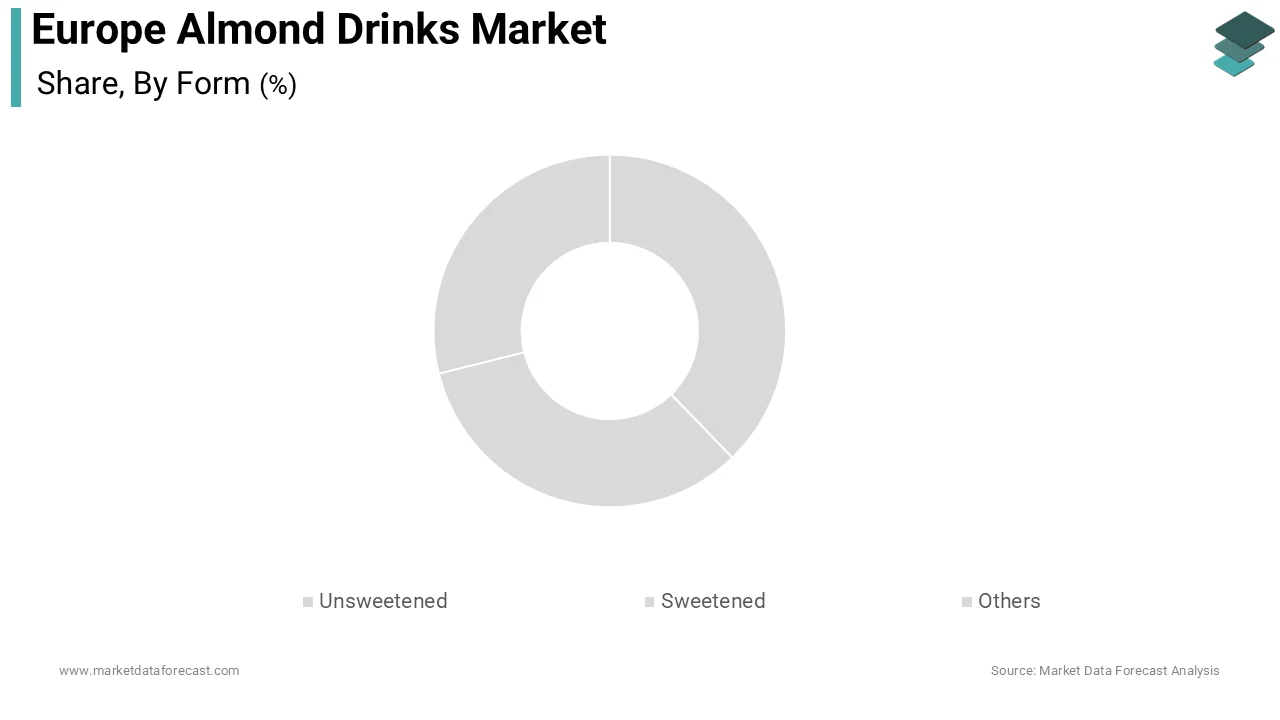
However, the sweetened segment is experiencing the fastest expansion and is estimated to record a CAGR of 8.2% during the forecast period, owing to the critical need for enhanced palatability among consumers transitioning away from traditional dairy. Standard bovine milk contains natural lactose, which provides a distinct sweetness that many consumers expect from their morning beverages and cereals. When switching to botanical alternatives, the naturally bland and slightly bitter profile of pure almond extract can be highly unappealing to uninitiated palates, especially children and those with a strong preference for sweet flavors. According to the International Food Information Council, approximately 70% of consumers state that taste is the primary factor influencing their food and beverage purchases, often overriding nutritional considerations. By incorporating natural sweeteners like agave nectar, cane sugar, or monk fruit, manufacturers can perfectly replicate the comforting sweetness of dairy milk, thereby reducing the friction associated with dietary transitions. Furthermore, as per the European Plant-Based Foods Association, flavored and sweetened botanical beverages consistently outperform plain variants in blind taste tests conducted across major Western European markets. This strategic focus on sensory optimization ensures that sweetened almond drinks successfully capture the loyalty of mainstream consumers, who prioritize immediate gustatory pleasure alongside their health objectives.
By Flavor Insights
The beverages segment led the market by holding 64.3% of the regional market share in 2025. The dominance of the beverages segment in the European market is attributed to the direct consumption habits of millions of Europeans and the seamless integration of almond drinks into daily coffee and cereal routines. For the vast majority of consumers, botanical milk is primarily purchased as a direct liquid refreshment or an essential pour-over breakfast food. According to the International Coffee Organization, European coffee consumption remains exceptionally robust, with the region importing over 16 million bags of coffee annually, creating a massive parallel demand for complementary liquid creamers and milk alternatives. Almond drinks have successfully captured a significant portion of this coffee culture, particularly among urban professionals who frequent artisanal cafés and invest in premium home espresso machines. Furthermore, as per the European Breakfast Association, over 40% of European consumers regularly consume cold cereal or porridge, requiring a substantial volume of liquid base daily. By positioning their products as the perfect companion for morning rituals and afternoon coffee breaks, beverage manufacturers ensure continuous and high-volume repeat purchases. The sheer frequency of these daily consumption occasions guarantees that the beverage application remains the undisputed leader in the European almond drinks market.
On the other hand, the cosmetics segment is experiencing the fastest expansion and is estimated to witness a CAGR of 9.2% during the forecast period, owing to the surging European demand for clean beauty products and natural emollients. Modern consumers are increasingly scrutinizing the ingredient lists of their personal care products, actively avoiding synthetic chemicals, parabens, and petroleum-derived moisturizers in favor of botanical and food-grade alternatives. Almond extract and almond oil are highly prized in the cosmetic industry for their exceptional emollient properties, rich vitamin E content, and ability to soothe and hydrate dry or sensitive skin. According to the European Cosmetic and Perfumery Association, the market for natural and organic personal care products has grown by over 15% annually, reflecting a profound societal shift toward holistic wellness and chemical-free beauty routines. Beverage manufacturers are uniquely positioned to supply the cosmetic sector with highly purified and sterile almond liquid bases that meet the stringent safety and purity requirements of topical formulations. Furthermore, as per the International Society of Cosmetic Chemists, the incorporation of food-grade botanical extracts significantly enhances the marketing appeal and consumer trust of premium skincare lines. By leveraging their existing agricultural supply chains and extraction technologies, almond drink producers can seamlessly pivot into the highly lucrative cosmetics sector, driving rapid and profitable expansion.
By Application Insights
The plain segment held the largest share of 54.6% of the regional market in 2025. The growth of the plain segment in the global market is attributed to its indispensable role as a foundational base ingredient in diverse culinary and baking applications across Europe. Professional bakers, pastry chefs, and food manufacturers require unadulterated botanical milks to maintain precise control over the sweetness, texture, and flavor profile of their final products. According to the European Bakery and Pastry Association, the integration of neutral liquid bases into artisanal bread doughs, vegan pastries, and gluten-free formulations has increased by over 30%, as commercial bakeries seek to accommodate diverse dietary restrictions without compromising traditional recipes. Plain almond drinks provide the necessary moisture, fat content, and emulsification properties required for high-quality baking, while allowing the primary flavors of cocoa, nuts, and spices to remain completely unaltered. Furthermore, as per the International Association of Culinary Professionals, the demand for clean-label and minimally processed ingredients in professional kitchens has reached unprecedented levels. By offering a completely neutral and versatile canvas for culinary innovation, plain almond beverages secure a permanent and essential place in both domestic pantries and commercial food preparation facilities, thereby reinforcing their absolute market dominance.
On the other hand, the vanilla segment is experiencing the fastest expansion and is predicted to register a CAGR of 9.5% during the forecast period, owing to the profound nostalgic comfort and universal appeal of this classic flavor profile. Vanilla is consistently ranked as one of the most beloved and widely consumed flavors globally, offering a soothing and familiar taste that perfectly complements both hot and cold beverages. According to the Global Flavor and Fragrance Association, the European demand for natural vanilla flavorings has expanded by over 14% annually, reflecting a massive consumer desire for comforting and indulgent sensory experiences in their daily routines. Vanilla almond drinks perfectly replicate the nostalgic taste of traditional flavored milks, making them an incredibly appealing option for children and adults seeking a sweet and satisfying treat without the heavy caloric burden of dairy cream. Furthermore, as per the International Food Information Council, familiar and comforting flavors significantly increase the repeat purchase rate of new food and beverage products among cautious consumers. By leveraging the universal appeal of vanilla, manufacturers can successfully transition dairy drinkers to the botanical category, ensuring rapid and sustained volume growth across the continent.
REGIONAL ANALYSIS
United Kingdom Almond Drinks Market Analysis
The UK dominated the market in Europe in 2025 and is poised to strengthen its leading position in the regional landscape over the next few years. The UK is serving as a primary driver for botanical beverage consumption across the continent. The massive cultural shift toward veganism and ethical consumption is propelling the UK market expansion. According to the Vegan Society, the number of vegan citizens in the country quadrupled over the past decade, reaching approximately 600000 individuals who actively seek out cruelty-free nutritional alternatives. This demographic expansion directly fuels the continuous procurement of almond drinks for daily consumption and culinary applications. Furthermore, as per the Food Standards Agency, over 20% of the population identifies as flexitarian, regularly substituting traditional dairy with botanical options during their weekly grocery shopping. Retailers respond to this massive demand by dedicating extensive refrigerated shelf space to premium and private-label almond beverages. The aggressive marketing campaigns launched by major supermarket chains further normalize the consumption of these botanical liquids, ensuring that the nation remains the most lucrative and dynamic hub for botanical beverage innovation and commercial success in the entire European theater today.
Germany Almond Drinks Market Analysis
Germany is anticipated to expand its highly influential position in the regional sector over the coming years, as consumer dedication to organic agriculture and sustainable food sourcing deepens. The strict European organic certifications and a massive domestic preference for environmentally friendly agricultural practices are boosting the German market growth. According to the Federation of the Organic Food Industry, the national organic food and beverage market recently surpassed 15 billion euros in annual retail value, demonstrating the immense financial power of eco-aware shoppers. German consumers actively scrutinize supply chains and heavily favor almond drinks produced from sustainably farmed nuts bearing recognized ecological labels. Furthermore, as per the Robert Koch Institute, a significant portion of the population actively manages their dietary intake to prevent metabolic diseases, driving the demand for unsweetened and fortified botanical milks. Beverage manufacturers capitalize on this trend by launching premium, organic almond variants that guarantee zero synthetic pesticides and complete traceability. This unwavering commitment to ecological purity and nutritional transparency allows German producers to command premium pricing and maintain a highly competitive edge across all major retail environments today.
France Almond Drinks Market Analysis
France is expected to witness substantial market growth over the next few years, fueled by an expanding flexitarian movement and an increasing awareness of digestive health among the general population. The rising demand for lactose-free alternatives, particularly among younger demographics and urban professionals seeking lighter dietary options, is further contributing to the French market expansion. According to the national agricultural observatory FranceAgrimer, retail sales of plant-based drinks have grown by more than 25% over the last three years, reflecting a permanent shift in morning beverage and coffee consumption habits. French consumers are increasingly integrating almond drinks into their daily routines, utilizing them in artisanal coffee preparations and traditional baking recipes. Furthermore, as per the National Institute of Health and Medical Research, nearly 20% of the adult population experiences some degree of lactose maldigestion, creating a substantial medical rationale for dietary substitution. Beverage companies respond by introducing sophisticated, barista-specific almond formulations that perfectly complement the renowned French café culture. This strategic alignment with local culinary traditions and medical needs ensures sustained commercial growth and deep market penetration across all major French retail and foodservice channels today.
Italy Almond Drinks Market Analysis
Italy is projected to experience a steady upward trajectory over the next few years, driven by a profound cultural appreciation for high-quality food ingredients and a rising awareness of dietary intolerances. The market status here is heavily influenced by the high prevalence of lactose intolerance, which forces millions of consumers to seek out easily digestible botanical alternatives for their daily nutritional requirements. According to the Italian Society of Human Nutrition, approximately 50% of the population suffers from some form of lactose malabsorption, creating a massive and permanent demographic reliant on plant-based milks. Italian consumers specifically favor premium almond drinks that offer a rich and creamy texture suitable for traditional culinary applications and espresso beverages. Furthermore, as per the Ministry of Health, the national consumption of functional and fortified beverages has increased by over 15% annually, as citizens actively seek products that support bone health and immune function. Manufacturers capitalize on this medical necessity by heavily fortifying their almond beverages with essential calcium and vitamins, while maintaining the authentic and natural flavor profiles expected by discerning local palates. This strategic focus on health and culinary excellence guarantees continuous market expansion across the Italian peninsula today.
Spain Almond Drinks Market Analysis
Spain is well-positioned to fortify its highly strategic market presence over the coming years, supported by its status as the premier agricultural hub for almond cultivation within the entire European Union. The robust integration of almond beverages into traditional dietary habits and a massive, export-oriented manufacturing infrastructure are driving the Spanish market expansion. According to the Ministry of Agriculture, Fisheries and Food, national almond production consistently exceeds 200,000 metric tons annually, providing an abundant and cost-effective foundation for local beverage producers. Spanish manufacturers leverage this geographical advantage to produce highly fresh and sustainable botanical drinks that require minimal transportation and preserve maximum nutritional integrity. Furthermore, as per the Spanish Federation of Food and Beverage Industries, domestic consumption of plant-based refreshments has surged by over 18% recently, driven by intense summer heat and a cultural preference for light and hydrating beverages. By capitalizing on their massive agricultural output, local companies can offer highly competitive pricing while maintaining superior quality standards. This seamless integration from orchard to bottle ensures that Spain remains a critical powerhouse in both the production and consumption of premium almond drinks across the European continent today.
COMPETITION OVERVIEW
The competition within the European sector is characterized by intense rivalry among multinational dairy conglomerates and specialized plant-based producers worldwide today. Major corporations leverage their extensive distribution networks and massive research budgets to dominate supermarket shelves and convenience stores globally. These industry leaders continuously invest in product innovation to capture health-conscious consumers by introducing fortified and low-sugar variants. Meanwhile, regional players compete aggressively by emphasizing local sourcing and artisanal production methods that resonate deeply with cultural preferences. The market also witnesses a surge in craft manufacturers who focus on premium botanical beverages, targeting niche demographics willing to pay higher prices for organic and sustainable products. Strategic mergers and acquisitions remain a prevalent tactic as companies seek to consolidate their supply chains and acquire emerging artisanal brands. Furthermore, sustainability initiatives have become a critical competitive differentiator, with firms adopting eco-friendly packaging and carbon-neutral manufacturing processes to appeal to environmentally aware buyers. Ultimately, the competitive landscape demands continuous adaptation to shifting dietary trends, ensuring that only the most agile and consumer-centric organizations maintain their long-term profitability and brand loyalty across all international retail markets today and tomorrow globally. This relentless pursuit guarantees exceptional industry profitability.
KEY MARKET PLAYERS
A few major players of the Europe almond drinks market include
- Pressery
- Blue Diamond Growers
- Fuerst Day Lawson
- Alpro
- The Luz Almond Company Pty Ltd
- Malk Organics
- Provamel
- Nutriops S, L, Dream
- Rude Healthy
Top Strategies Used by the Key Market Participants
Key players in the market employ several strategic approaches to reinforce their competitive standing and capture evolving consumer preferences. Product diversification remains central as companies develop specialized botanical beverages tailored for specific applications such as barista formulations, pediatric nutrition, and functional health drinks. Vertical integration is another common tactic with major firms controlling everything from agricultural nut sourcing to final product distribution to ensure quality and cost efficiency. Investment in sustainable production methods, including water recycling and renewable energy adoption, helps meet strict environmental regulations and consumer expectations. Geographic expansion, particularly into emerging health-conscious demographics, allows access to new markets and diversified supply chains. Lastly, strategic partnerships and technical collaborations with agricultural suppliers enable the creation of innovative solutions that address emerging trends like clean label demands and advanced fortification, ensuring long-term commercial viability.
Leading Players in the Europe Almond Drinks Market
- Alpro operates as a pioneering force in the European botanical beverage sector with a profound commitment to producing high-quality plant-based nutritional alternatives. The company leverages its extensive agricultural partnerships to source premium almonds, ensuring exceptional taste and environmental sustainability across its product lines. Recently, the corporation announced a massive investment in localized European processing facilities to reduce transportation emissions and secure its supply chain against global disruptions. This strategic pivot not only guarantees product freshness but also deeply resonates with environmentally conscious consumers. By continuously innovating its portfolio to include barista-specific and fortified variants, the organization successfully reinforces its industry leadership and drives substantial volume growth across international retail environments today.
- Rude Health functions as a premier artisanal brand actively transforming the premium botanical beverage landscape through uncompromising ingredient quality and innovative flavor profiling. The organization focuses heavily on creating organic and naturally sweetened almond drinks that cater to discerning consumers seeking clean-label nutritional solutions. Recently, the enterprise completed the expansion of its dedicated manufacturing infrastructure equipped with advanced gentle extraction technologies designed to preserve the maximum nutritional integrity of the raw nuts. This massive operational upgrade significantly enhances product creaminess and taste while maintaining strict organic certifications. By prioritizing ecological responsibility and sensory excellence, the enterprise successfully attracts a highly loyal consumer base and maintains a competitive edge in premium retail sectors.
- Califia Farms stands as a monumental entity in the international plant-based landscape, dedicating significant resources toward the expansion of super premium almond beverages. The corporation utilizes its distinctive packaging and aggressive branding strategies to introduce sophisticated botanical drinks that cater to the rising mindful drinking and health optimization demographics. In a recent strategic move, the enterprise unveiled a new line of probiotic-enriched almond drinks designed to support gut health and digestive wellness. This technological breakthrough enables the brand to capture highly profitable functional beverage segments without compromising on exceptional taste. Through aggressive digital marketing campaigns, the company continues to solidify its formidable presence across European markets.
MARKET SEGMENTATION
This research report on the Europe almond drinks market has been segmented and sub-segmented based on form, flavor, application, distribution channel, and region.
By Form
- Unsweetened
- Sweetened
- Others
By Flavor
- Desserts
- Cheese and Snacks
- Beverages
- Cosmetics
By Application
- Chocolate
- Vanilla
- Plain
- Others
By Distribution Channel
- Supermarket/hypermarket
- Retail stores
- Online stores
By Region
- UK
- France
- Spain
- Germany
- Italy
- Russia
- Sweden
- Denmark
- Switzerland
- Netherlands
- Turkey
- Czech Republic
- Rest of Europe