- Product Description Description
- Table of Contents TOC
- List of Table & Figure LOT
- Get Free Sample PDF Sample PDF
Market Size, 2025
$3.47 BnMarket Estimate, 2026
$3.67 BnMarket Forecast, 2034
$5.73 BnCAGR, 2026–2034
5.73%Europe Almond Market Size, Growth, Trends & Forecast (2026–2034)
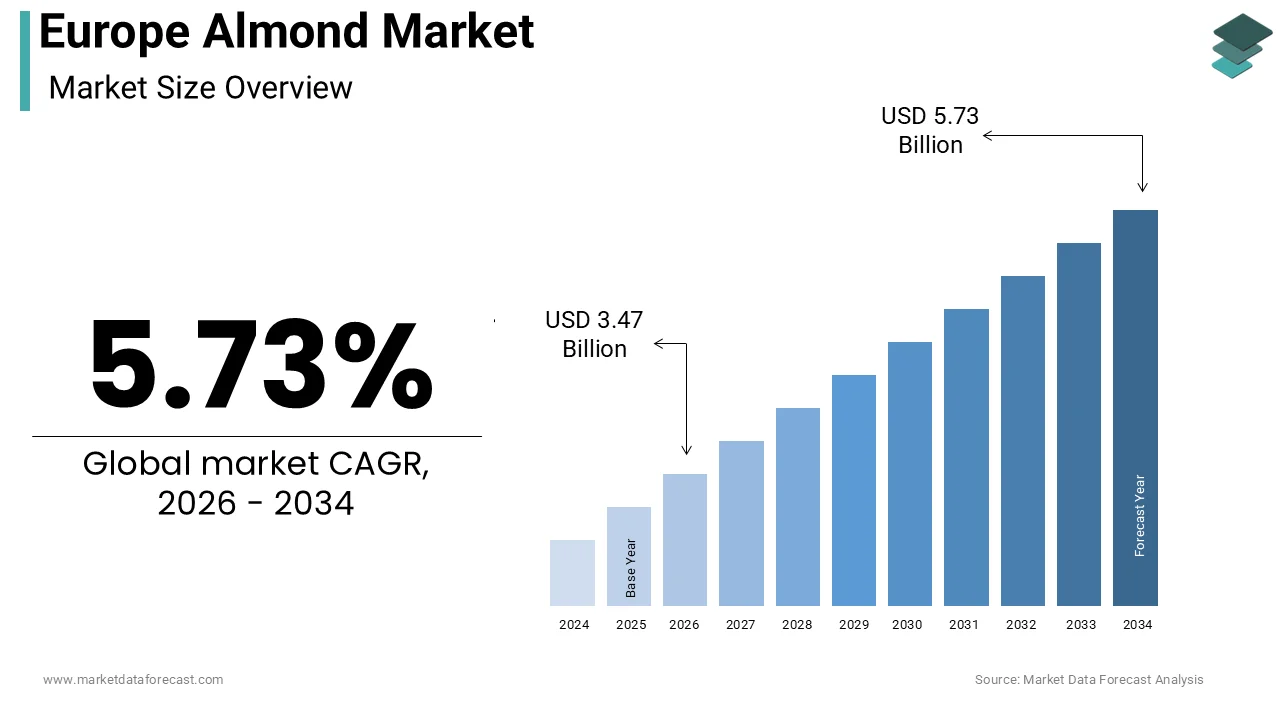
The Europe almond market size was calculated to be USD 3.47 billion in 2025, is anticipated to reach USD 3.67 billion in 2026, and is projected to scale up to USD 5.73 billion by 2034, registering a compound annual growth rate (CAGR) of 5.73% during the forecast period from 2026 to 2034. Driven by the surging demand for plant-based dairy and food alternatives, cardiovascular and metabolic health awareness, and expansion in cosmetics, the almond industry continues to expand steadily across the European continent.
Key Executive Metrics (At-a-Glance)
- 2025 Base Valuation: USD 3.47 Billion
- 2026 Current Valuation: USD 3.67 Billion
- 2034 Forecast Valuation: USD 5.73 Billion
- Compound Annual Growth Rate (CAGR): 5.73% (2026–2034)
- Dominant Application Segment: Food and Beverages (capturing a substantial share in 2025, driven by confectionery, bakery, and dairy alternatives)
- Fastest-Growing Application Segment: Cosmetics and Personal Care (projected to experience the fastest CAGR of 6.5% during the forecast period, fueled by clean beauty trends)
- Dominant Distribution Channel: Offline Distribution Channel (led the market in 2025 via supermarkets, hypermarkets, and specialty food stores)
- Fastest-Growing Distribution Channel: Online Distribution Channel (witnessing the fastest CAGR of 13.9% from 2026 to 2034 due to e-commerce adoption and grocery subscription models)
- Dominant Region: Spain (accounting for 29.5% of the market share in 2025, anchored by vast commercial production and processing capacity)
Core Market Drivers
- Surging Demand for Plant-Based Dairy and Food Alternatives: Accelerating consumer shift toward vegan and plant-based diets propelling almond milk, yogurt, and cheese substitutes.
- Growing Awareness of Cardiovascular and Metabolic Health Benefits: Scientific validation and dietary recommendations supporting regular almond consumption for heart health and glycemic control.
Primary Market Restraints & Challenges
- Climate Change and Water Scarcity: Prolonged droughts and irrigation limitations in Southern Europe threatening orchard yields and production stability.
- Stringent European Food Safety Regulations: Rigorous maximum residue limits for aflatoxins and pesticides increasing compliance burdens and import inspection delays.
- Price Volatility and Global Dependencies: Heavy reliance on imports from non-European origins exposing buyers to exchange rate fluctuations and freight cost swings.
Europe Almond Market Segmentation Breakdown
| Segment Category | Leading Sub-Segment (2025 Base) | Fastest-Growing Sub-Segment |
|---|---|---|
| By Application | Food and Beverages (substantial share in 2025, driven by confectionery, bakery, and dairy-free alternatives) | Cosmetics and Personal Care (6.5% CAGR driven by clean beauty and natural skincare ingredients) |
| By Distribution Channel | Offline (led in 2025 via hypermarkets, supermarkets, and specialty food stores) | Online (13.9% CAGR from 2026 to 2034 due to e-commerce adoption and quick commerce) |
| By Region | Spain (29.5% market share in 2025, anchored by commercial cultivation and processing infrastructure) | Europe-wide expansion backed by organic agriculture and value-added product innovation |
Major Industry Players Profiled
Key enterprises shaping the competitive Europe almond market include Blue Diamond Growers, Olam Group, Barry Callebaut AG, Borges Agricultural & Industrial Nuts, Select Harvests Limited, Treehouse California Almonds LLC, Mariani Nut Company, Wonderful Pistachios & Almonds LLC, Harris Woolf California Almonds, The Wonderful Company, Savencia Fromage & Dairy, Döhler Group, ADM (Archer Daniels Midland Company), Kanegrade Ltd., and Royal Nut Company.
Europe Almond Market Size
The Europe almond market size was calculated to be USD 3.47 billion in 2025 and is anticipated to be worth USD 5.73 billion by 2034, from USD 3.67 billion in 2026, growing at a CAGR of 5.73% during the forecast period.
Almonds serve as a nutrient-dense ingredient rich in vitamin E, magnesium, and monounsaturated fats, aligning with evolving European dietary preferences toward functional and plant-based nutrition. Spain is the leading almond producer in Europe, with a vast cultivation area primarily concentrated in Andalusia and other Mediterranean regions like Catalonia and Murcia. The European Union relies on substantial annual almond imports to bridge the gap between local production and consumption, with a significant majority of these volumes arriving from major global suppliers like California. Almonds are a dense source of plant-based protein and dietary fiber, making them an essential ingredient in modern nutritional products according to European health and food safety standards. Regulatory frameworks governing pesticide residues, aflatoxin limits, and labeling requirements shape market access and product development strategies across member states. The convergence of health-conscious consumer behavior, culinary innovation in plant-based alternatives, and sustainability imperatives defines the contemporary operational landscape for almond stakeholders throughout Europe. This intricate interplay between agricultural capacity, import dependency, and value-added processing establishes the foundation for market evolution in the region.
MARKET DRIVERS
Surging Demand for Plant-Based Dairy and Food Alternatives
The accelerating consumer shift toward plant-based diets is a primary enabler for the growth of the Europe almond market. This trend is propelling almond demand across the region’s food and beverage sectors. Almonds serve as a foundational ingredient in dairy alternatives, including milk, yogurt, and cheese substitutes, due to their creamy texture, neutral flavor profile, and nutritional density. The European market for plant-based foods has reached a multi-billion-dollar valuation, with almond-derived alternatives representing a major portion of the dairy-free segment. Retail performance shows that almond-based beverages continue to gain ground in major European economies, driven by consistent consumer preference for nut-based dairy substitutes. Manufacturers leverage almond protein and fat content to formulate products that mimic the sensory attributes of dairy while meeting vegan and lactose-free labeling claims. The versatility of almond derivatives extends to bakery fillings, confectionery coatings, and snack bars, enabling broad application across multiple food categories. A clear majority of European consumers now prioritise plant-based selections when purchasing food, ensuring a steady and reliable demand for almond-based ingredients. This structural shift in dietary preferences ensures that almonds remain a cornerstone ingredient in the formulation of next-generation plant-based products throughout the region.
Growing Awareness of Cardiovascular and Metabolic Health Benefits
The expanding body of scientific evidence supporting almond consumption for cardiovascular health, weight management, and glycemic control further encourages the expansion of the European almond market. This evidence influences European consumer purchasing decisions and dietary guidelines. Clinical studies indicate that regular almond intake can reduce low-density lipoprotein cholesterol levels by approximately 5% and improve endothelial function, according to European Journal of Clinical Nutrition publications. Health authorities in several European nations have incorporated nuts, including almonds, into national dietary recommendations, encouraging daily consumption as part of balanced eating patterns. Under European food regulations, manufacturers can highlight the high unsaturated fat content of almonds, which is recognized as a factor in maintaining healthy cholesterol levels. Consumer research shows that over 70% of European adults recognize nuts as heart-healthy foods, driving increased incorporation into daily snacks and meals as per nutrition awareness surveys. Food manufacturers respond by developing fortified products, portion-controlled snack packs, and functional food formats featuring almonds to capitalize on health-conscious demand. The alignment between scientific validation, regulatory endorsement, and consumer perception creates a powerful demand driver that sustains almond consumption growth across diverse demographic segments throughout Europe.
MARKET RESTRAINTS
Climate Change and Water Scarcity Impacting Supply Stability
The vulnerability of almond cultivation to climate variability and water resource limitations is the most significant constraint hindering the Europe almond market. This is particularly critical in Spain, which accounts for nearly all European production. Almond trees require substantial irrigation, with estimates suggesting thousands of liters of water are needed to produce one kilogram of almonds, according to agricultural water use assessments. Prolonged drought conditions in Southern Europe have reduced orchard yields and increased production costs, with some Spanish regions experiencing notable rainfall deficits. Climate models project increased frequency of extreme weather events, including heat waves and unseasonal frosts, that threaten blossom development and nut maturation. The reliance on imported almonds from California exposes European supply chains to similar climate risks in major producing regions, creating compound vulnerability to global weather disruptions. Water allocation policies in drought-prone areas increasingly prioritize human consumption and critical agriculture over nut cultivation, potentially constraining future expansion of European almond acreage. These environmental pressures elevate production costs, introduce supply volatility, and challenge the long term sustainability of almond sourcing strategies for European manufacturers dependent on consistent kernel availability.
Stringent European Food Safety Regulations on Contaminant Levels
Persistent regulatory complexity impedes the expansion of the Europe almond market. This is because European authorities enforce rigorous maximum residue limits for aflatoxins and pesticide residues in almond imports, which increase compliance burdens and operational costs. European food safety regulations establish specific maximum levels for aflatoxin B1 and total aflatoxins in almonds destined for direct consumption, with these standards being slightly more flexible than those applied to general cereal products. Import inspections and laboratory testing requirements create delays and potential rejection risks for shipments that fail to meet stringent purity standards, disrupting supply chain continuity for processors. Research indicates that border enforcement records show that while a small fraction of imported almond shipments are detained or reprocessed due to contaminant levels, the majority of global trade successfully meets the required safety standards for entry into the common market. Compliance with evolving pesticide maximum residue levels necessitates close coordination with growers and exporters to ensure agricultural practices align with European expectations, adding layers of supply chain management complexity. Small and medium-sized importers often lack dedicated regulatory affairs resources to navigate these requirements, creating disproportionate barriers to market participation. These regulatory demands, while essential for consumer protection, can limit supply flexibility and increase costs that may be passed to end users, potentially dampening demand in price-sensitive market segments.
MARKET OPPORTUNITIES
Expansion of Organic and Regenerative Agriculture Sourcing Models
The growing consumer preference for organic and sustainably produced almonds offers a transformative opportunity for the Europe almond market. Through this, European brands can differentiate products and command premium pricing using verified environmental and social credentials. Almond producers adopting regenerative agriculture practices such as cover cropping, reduced tillage, and integrated pest management can enhance soil health, sequester carbon, and improve biodiversity while meeting certification standards. Retailers across Germany, France, and the Netherlands have expanded shelf space dedicated to organic almond products, recognizing their contribution to sustainability goals and customer retention. Studies show that organic almond imports into the European Union have increased over recent years, reflecting intensifying demand from health-conscious and environmentally aware consumers, as per trade flow analyses. Brand owners leveraging traceability technologies to communicate farm-level stories and environmental impact metrics can build deeper consumer engagement and loyalty. This innovation pathway enables market participants to capture incremental value from consumers willing to pay premiums for products aligned with planetary health values while supporting agricultural resilience in producing regions.
Innovation in Almond-Derived Functional Ingredients and Value-Added Formats
Specialized almond-based ingredients tailored for specific food technology applications are seeing rising demand, which is expected to boost the European almond market expansion. European processors willing to invest in research and development can capitalize on this lucrative growth avenue. Almond flour, protein isolates, oil fractions, and fiber extracts offer unique functional properties, including emulsification, texture enhancement, and nutritional fortification that appeal to food manufacturers developing clean-label and free-from products. The European food ingredient sector increasingly seeks plant-based alternatives to dairy proteins and synthetic additives, creating opportunities for almond derivatives to displace conventional inputs, according to sources. Companies developing proprietary extraction and fractionation techniques can command premium pricing and establish defensible market positions through intellectual property protection. Academic research institutions across Europe actively support the commercialization of novel almond applications, providing pathways for rapid market entry of innovative ingredients. Strategic partnerships between almond processors and food manufacturers can integrate optimized ingredients into turnkey product formulations, enhancing user convenience and driving adoption. These innovation pathways enable suppliers to differentiate beyond commodity pricing and capture value in high-growth food technology segments.
MARKET CHALLENGES
Price Volatility Driven by Global Supply Chain Dependencies and Currency Fluctuations
Mounting pressure from price instability due to a heavy reliance on imports from non-European origins, particularly the United States, inhibits the growth of the almond market in Europe. This reliance exposes buyers to significant geopolitical risks, logistics disruptions, and exchange rate volatility. A substantial portion of the almonds consumed across Europe is sourced from a single primary geographic region, which creates a concentrated supply chain vulnerable to localized weather patterns, labor availability, and shifting international trade policies, according to a study. Variations in the exchange rate between the Euro and the US Dollar significantly influence the final cost for importers, potentially causing large-scale shifts in procurement budgets for European food businesses, as per sources. Freight cost volatility, exacerbated by global shipping capacity constraints and fuel price swings, adds another layer of unpredictability to total landed costs. Wholesale market prices for almonds have experienced notable volatility recently, making long-term financial forecasting and pricing strategies challenging for manufacturers and retailers. Smaller processors with limited hedging capabilities face disproportionate margin pressure during price spikes, potentially consolidating market share among larger players with greater financial buffers. Sustained input cost inflation may necessitate consumer price increases that could dampen demand in price-sensitive segments, creating additional strategic complexity for market participants navigating this volatile landscape.
Intensifying Competition from Alternative Nuts and Plant-Based Ingredients
A diverse array of alternative nuts and plant-based ingredients is a significant competitor to the European almond market. These alternatives offer comparable nutritional profiles, functional properties, or more favorable cost structures for specific applications. Several other tree nuts and seeds possess well-established supply chains and serve as viable alternatives in the confectionery, bakery, and dairy-free sectors, depending on the desired end-product characteristics. Food producers are increasingly exploring a wider variety of plant-based ingredients to reduce their dependency on any single raw material and better manage potential disruptions in the supply chain. Innovations in oat, pea, and rice-based ingredients provide additional alternatives that challenge almond dominance in dairy alternative applications, particularly where allergen considerations or pricing sensitivity influence formulation decisions. High sensitivity to ingredient costs leads many food processors to transition toward more affordable alternatives whenever supply constraints or unfavorable currency movements cause a sharp rise in almond prices. Furthermore, some competitors offer superior performance in specific applications, such as spreadability for hazelnuts or neutral flavor for cashews, limiting the applicability of almonds in specialized formulations. The presence of blended nut and seed systems that combine multiple ingredients to achieve desired textures and cost targets further dilutes demand for pure almond inputs. To maintain market relevance, almond suppliers must continuously demonstrate unique value propositions and invest in application-specific research to differentiate their product from this crowded field of substitutes.
REPORT COVERAGE
| REPORT METRIC | DETAILS |
| Market Size Available | 2025 to 2034 |
| Base Year | 2025 |
| Forecast Period | 2026 to 2034 |
| CAGR | 5.73% |
| Segments Covered | By Application, Distribution Channel, And Region |
| Various Analyses Covered | Global, Regional & Country Level Analysis; Segment-Level Analysis; DROC, PESTLE Analysis; Porter’s Five Forces Analysis; Competitive Landscape; Analyst Overview of Investment Opportunities |
| Regions Covered | UK, France, Spain, Germany, Italy, Russia, Sweden, Denmark, Switzerland, Netherlands, Turkey, and the Czech Republic |
| Market Leaders Profiled | Blue Diamond Growers, Olam Group, Barry Callebaut AG, Borges Agricultural & Industrial Nuts, Select Harvests Limited, Treehouse California Almonds LLC, Mariani Nut Company, Wonderful Pistachios & Almonds LLC, Harris Woolf California Almonds, The Wonderful Company, Savencia Fromage & Dairy, Döhler Group, ADM (Archer Daniels Midland Company), Kanegrade Ltd., Royal Nut Company |
SEGMENTAL ANALYSIS
By Application Insights
The Food and Beverages application segment was the largest in the Europe almond market and accounted for a substantial share in 2025. This prominence of the segment is attributed to the ubiquitous use of almonds in confectionery, bakery products, dairy alternatives, and direct snacking across European dietary habits. Among these, the main driver of the food and beverage sector is the deep integration of almonds into traditional and modern European confectionery and bakery recipes, where they serve as a critical textural and flavor component. Almonds are indispensable in producing marzipan, nougat, pralines, and premium chocolates, with countries like Germany and Italy consuming vast quantities for seasonal specialties such as Stollen and Panettone. The European chocolate industry alone utilizes substantial metric tons of nuts annually, with almonds representing a significant portion due to their ability to withstand high processing temperatures without losing crunch or flavor profile. Bakeries across the continent incorporate almond flour and sliced almonds into breads, pastries, and cakes to meet consumer demand for nutrient-dense ingredients that enhance sensory appeal. The versatility of almonds allows manufacturers to create diverse product formats ranging from whole roasted snacks to fine powders, ensuring their presence in nearly every aisle of the grocery store. This entrenched position in staple food categories ensures that the food and beverage segment remains the volumetric leader, driving the majority of import and domestic production flows throughout the region. An additional pivotal factor sustaining the leadership of this segment is the rapid expansion of the plant-based milk and yogurt sector, where almonds have emerged as a preferred base ingredient due to their creamy texture and neutral taste. Major food corporations and private label retailers have aggressively expanded their almond milk portfolios, launching flavored variants, barista editions, and fortified options to capture shifting consumer demand away from bovine dairy. The functional properties of almonds allow for stable emulsification and a pleasant mouthfeel without the need for excessive additives, aligning with clean-label trends dominating the European food landscape. Furthermore, the application of almond protein in meat analogues and ready-to-eat meals is gaining traction, broadening the scope of food usage beyond traditional sweets and drinks. This dynamic growth in alternative dairy and savory applications reinforces the overwhelming dominance of the food and beverage sector in the overall almond market structure.
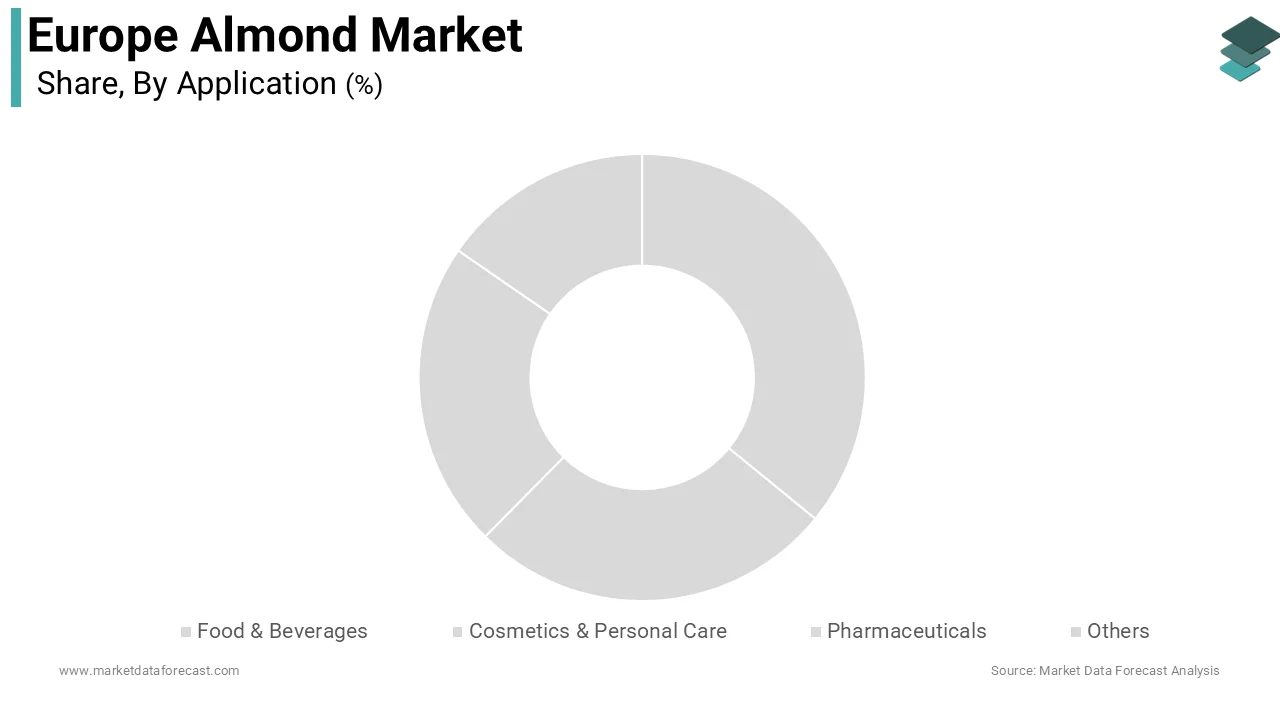
The Cosmetics and Personal Care segment is likely to experience the fastest CAGR of 6.5% during the forecast period. This accelerated growth is fuelled by the rising demand for natural, organic, and sustainably sourced ingredients in skincare and haircare formulations across the European beauty industry. Also, the rapid expansion of the cosmetics segment is largely propelled by the intensifying consumer preference for clean beauty products that exclude synthetic chemicals and prioritize botanical extracts derived from renewable sources. European consumers are increasingly scrutinizing ingredient lists, with a notable share stating a willingness to pay a premium for cosmetics containing natural oils and butters, according to studies. Almond oil, rich in vitamin E, fatty acids, and antioxidants, has become a staple ingredient in moisturizers, serums, and massage oils due to its proven efficacy in improving skin elasticity and reducing inflammation. Regulatory support for organic certification under the COSMOS standard has further validated the use of almond derivatives, encouraging brands to reformulate products to meet these rigorous criteria. Brands are leveraging the heritage and gentle nature of almond oil to market products suitable for sensitive skin and baby care, expanding the addressable demographic. This cultural shift toward transparency and natural efficacy ensures that almond-based ingredients will see sustained double-digit growth within the personal care sector. A further key aspect for the high growth rate of the cosmetics segment is the industry's commitment to sustainability and circular economy principles, which have spurred innovation in using upcycled almond byproducts for cosmetic applications. Cosmetic chemists are increasingly utilizing almond shell powders as natural exfoliants in scrubs and almond protein hydrolysates in hair-strengthening treatments, transforming what was once waste into high-value ingredients. The European Green Deal and associated regulations on plastic reduction have pushed manufacturers to seek biodegradable and naturally derived alternatives to microplastics, positioning almond shell granules as an ideal substitute in rinse-off products. Major beauty conglomerates are launching specific lines dedicated to zero-waste formulations that highlight the use of whole almond extracts, appealing to environmentally conscious consumers. Technical advancements in extraction methods have improved the purity and stability of almond actives, enabling their use in high-performance anti-aging and reparative formulations. This convergence of sustainability mandates and technological innovation creates a robust growth trajectory for the cosmetics and personal care application of almonds.
By Distribution Channel Insights
The offline distribution channel segment led the Europe almond market and captured a significant share in 2025. In addition, the leading position of this segment is credited to the established infrastructure of supermarkets, hypermarkets, discounters, and specialty food stores that serve as the primary procurement points for household staples across the continent. The foremost driver for offline dominance is the pervasive presence of large-format retail chains and discount supermarkets that act as the main gateway for almond purchases for the majority of European households. Chains such as Aldi, Lidl, Carrefour, and Tesco operate tens of thousands of stores across Europe, offering extensive assortments of raw, roasted, and flavored almonds at competitive price points that drive high volume turnover. The ability of offline retailers to offer bulk purchasing options, promotional discounts, and immediate availability makes them the preferred channel for routine stocking of nuts. Private label strategies by these retailers have further consolidated their hold on the market, with store brand almonds capturing significant shelf space and loyalty from cost-conscious shoppers. The tactile experience of selecting specific grades of almonds, such as checking for uniformity or aroma, remains a valued aspect of the shopping journey for many consumers, particularly in Southern European markets where culinary quality is paramount. This deep-rooted reliance on physical retail networks ensures that the offline channel remains the primary engine for almond distribution volume. A major factor that aids this segment is the enduring relevance of specialty food shops, delicatessens, and traditional open-air markets that cater to discerning consumers seeking premium and artisanal almond varieties. In countries like Spain, Italy, and Greece, local markets and neighborhood grocers play a vital role in the distribution of high-quality regional almonds, such as Marcona or Sicilian varieties, which are often sold loose or in small batches. These channels provide expert advice, sampling opportunities, and a level of personal service that online platforms struggle to replicate, fostering strong customer relationships and repeat business. The trust built through face-to-face interactions allows specialty retailers to command higher margins for organic, single-origin, or freshly roasted almonds. Furthermore, the integration of almond products into bakery counters and prepared food sections within physical stores drives impulse purchases that contribute to overall volume. The cultural significance of visiting local markets for fresh ingredients ensures that the offline channel retains its dominant position in the European almond landscape.
The online distribution channel segment is on the rise and is expected to be the fastest-growing segment in the market by witnessing a CAGR of 13.9% from 2026 to 2034, owing to the rapid adoption of e-commerce for grocery shopping, the rise of subscription models, and the increasing availability of niche and specialized almond products on digital platforms. Moreover, the swift growth of the online segment is largely fueled by the structural shift in consumer behavior toward digital grocery shopping, accelerated by pandemic induced habits and the subsequent refinement of last-mile delivery logistics. Online platforms offer unparalleled convenience, allowing shoppers to compare prices, read detailed nutritional information, and access a wider variety of almond products than typically available in local stores. The emergence of quick commerce services promising delivery within minutes has further reduced friction for impulse buys and top-up shopping of snack nuts. Retailers are investing heavily in optimized packaging and cold chain solutions to ensure product quality during transit, addressing previous consumer concerns about freshness. This seamless integration of digital convenience with reliable fulfillment is driving a sustained migration of almond purchases to online channels. A further reason for the high growth rate of the online segment is the ability of digital platforms to aggregate and distribute niche, specialized, and direct-to-consumer almond brands that lack the scale for widespread offline distribution. Online marketplaces enable small batch roasters, organic farms, and innovative snack startups to reach a pan-European audience without the barrier of securing shelf space in major supermarket chains. The subscription economy has gained substantial traction, with consumers signing up for recurring deliveries of curated nut boxes, flavored almond snacks, and almond butter bundles to ensure a consistent supply and often receive cost savings. Digital marketing tools allow brands to target specific demographics such as vegans, athletes, or keto dieters with tailored almond product offerings, driving higher conversion rates compared to generic offline displays. The wealth of user reviews and social proof available online also influences purchasing decisions, building trust in new and emerging almond brands. This democratization of access and the rise of recurring revenue models position the online channel as the fastest-growing distribution avenue.
REGIONAL ANALYSIS
Spain Almond Market Analysis
Spain dominated the almond market in Europe and accounted for a 29.5% share in 2025. The demand for almonds in Spain is supported by its status as the only significant commercial producer within the European Union. The country's position is also driven by its vast orchards in regions like Andalusia, Aragon, and Catalonia, which collectively produce substantial metric tons of almonds annually, according to research. A key driving factor is the deep cultural integration of almonds into Spanish cuisine, where they are essential for traditional desserts like turrón and polvorones, driving massive seasonal demand during holidays. The domestic processing industry is highly developed, with numerous facilities dedicated to shelling, roasting, and blanching almonds for both local consumption and export to neighboring countries. Government subsidies and modernization programs have encouraged the transition to intensive irrigation systems and mechanized harvesting, improving yield efficiency despite water scarcity challenges. The presence of protected geographical indications for varieties such as Almendra de Mallorca adds value and protects local farmers from global price volatility. Furthermore, Spain serves as a logistical hub for importing raw almonds from the United States for reprocessing and redistribution across Europe, leveraging its strategic location and port infrastructure. This combination of robust domestic production, culinary heritage, and processing capacity solidifies Spain's dominance in the regional almond market.
Germany Almond Market Analysis
Germany was the next prominent country in the European almond market and captured a 18.9% share in 2025 because of its massive import volumes, sophisticated food processing industry, and high per capita consumption of healthy snacks. The German market status is defined by its role as a central distribution and manufacturing node, where raw almonds are imported in bulk and transformed into value-added products for domestic and export markets. A primary driver is the strong health consciousness among German consumers, who consistently rank nuts as a top choice for daily snacking, with notable per capita nut consumption annually. The country hosts some of the world's largest confectionery and bakery manufacturers, including those producing marzipan and premium chocolates, which require steady supplies of high-quality almonds. The organic food sector in Germany is the largest in Europe, driving significant demand for certified organic almonds that command premium pricing in retail channels. Retail giants like Aldi and Lidl have expanded their private label nut ranges, offering diverse almond formats that appeal to budget-aware yet quality-focused shoppers. Additionally, Germany's central location and efficient logistics network facilitate the rapid movement of almond products to other European destinations, reinforcing its status as a critical market influencer.
France Almond Market Analysis
France is a major player in the European market due to its renowned pastry industry, gourmet food culture, and growing demand for plant-based alternatives. The French market is characterized by a strong preference for premium and specialty almond products, particularly those used in high-end patisserie and chocolate making. France is home to iconic almond-based confections such as macarons, calissons, and nougat, which sustain consistent demand from both artisanal bakeries and industrial food producers. The rise of the flexitarian and vegan movements in France has spurred innovation in almond milk and cheese alternatives, with major dairy companies launching dedicated plant-based lines to capture this growing segment. Consumer trends indicate a shift toward snacking on natural and unprocessed foods, boosting sales of raw and lightly roasted almonds in supermarkets and health food stores. The government's support for local agriculture and sustainable sourcing encourages the use of almonds from Provence, although domestic production remains limited compared to imports. The strong emphasis on gastronomic excellence and ingredient quality ensures that France remains a high-value market where premium almond varieties thrive alongside mass market offerings.
United Kingdom Almond Market Analysis
The United Kingdom expanded steadily in the Europe almond market by leveraging its dynamic retail sector, vibrant snack innovation ecosystem, and high adoption of health-focused diets. The UK market status is defined by the dominance of major supermarket chains that drive volume through aggressive promotion and private label development of almond products. A key driving factor is the widespread popularity of almonds as a convenient, portable, and nutritious snack, with sales of packaged nut mixes and flavored almonds growing steadily in convenience stores and online platforms, according to multiple studies. The UK is a pioneer in the free-from and allergen-friendly food sectors, leading to increased formulation of gluten-free and dairy-free products using almond flour and milk. The influence of celebrity chefs and food media has elevated the profile of almonds in home cooking and baking, expanding usage beyond traditional snacking. Furthermore, the UK's departure from the EU has led to diversified sourcing strategies, with importers seeking direct trade relationships with global suppliers to ensure supply security. The presence of numerous health food startups and innovative food tech companies developing almond-based proteins and ingredients further stimulates market activity. This blend of retail power, culinary trends, and innovation keeps the UK a pivotal market for almond growth.
Italy Almond Market Analysis
Italy is predicted to grow notably in the European market over the forecast period due to its rich culinary traditions, substantial confectionery industry, and increasing focus on Mediterranean diet principles. The Italian market is unique due to the integral role of almonds in regional cuisines, particularly in the South, where they are used in desserts, sauces, and savory dishes. Italy produces a small but highly prized quantity of almonds, notably the Pizzuta variety from Sicily, which enjoys protected status and commands high prices in gourmet markets, according to research. The industrial demand for almonds is robust, fueled by the production of torrone, amaretti cookies, and gelato, which are staples of Italian food culture and significant export products. The adherence to the Mediterranean diet, which emphasizes the consumption of nuts for cardiovascular health, supports steady household demand for almonds as a daily dietary component. Recent trends show a surge in the popularity of almond milk and plant-based yogurts among younger Italians, mirroring broader European shifts away from dairy. The strong network of small to medium-sized food enterprises ensures a diverse demand base for various almond formats, from whole kernels to pastes. This deep cultural embedding, combined with industrial utilization, positions Italy as a stable and influential market in the European almond landscape.
COMPETITION OVERVIEW
The Europe almond market features a competitive landscape characterized by global ingredient suppliers, regional processors, and local producers competing across diverse product categories and distribution channels. Market dynamics reflect a balance between large multinational corporations offering comprehensive almond portfolios and specialized regional players providing artisanal products with authentic provenance and traditional processing methods. Competition intensifies in premium segments where quality certifications, sustainability credentials, and traceability capabilities create significant differentiation opportunities. European consumers prioritize natural ingredients, ethical sourcing, and nutritional benefits over price alone, which encourages suppliers to invest in transparent supply chains and responsible agricultural practices. Innovation in value-added formats, including flavored snacks, functional ingredients, and convenient packaging, increasingly influences competitive positioning as health-conscious consumers seek versatile almond options. The market also sees strategic collaborations between almond suppliers, food manufacturers, and retailers to co-create products that meet emerging dietary trends and regulatory requirements. This competitive environment drives continuous improvement in product quality, sustainability performance, and supply chain transparency as companies strive to secure partnerships with leading brands and retail chains across the region while navigating evolving consumer preferences and environmental challenges.
KEY MARKET PLAYERS
A few major players of the Europe almond market include
- Blue Diamond Growers
- Olam Group
- Barry Callebaut AG
- Borges Agricultural & Industrial Nuts
- Select Harvests Limited
- Treehouse California Almonds LLC
- Mariani Nut Company
- Wonderful Pistachios & Almonds LLC
- Harris Woolf California Almonds
- The Wonderful Company
- Savencia Fromage & Dairy
- Döhler Group
- ADM
- Kanegrade Ltd
- Royal Nut Company
Top Strategies Used by Key Market Participants
Key players in the Europe almond market employ strategic approaches centered on sustainable sourcing, product innovation, and supply chain resilience to strengthen competitive positioning. Companies prioritize investments in organic and regenerative agriculture programs that align with European consumer values and regulatory expectations for environmental stewardship. Strategic partnerships with growers and processors enable firms to secure consistent raw material supplies while promoting quality standards and traceability across production networks. Manufacturers increasingly focus on value-added product development, including flavored snacks, functional ingredients, and convenient formats that address evolving consumer preferences for health and convenience. Quality certification pursuits such as organic non GMO and geographical indication protections help suppliers access premium market segments and build trust with discerning customers. Digital transformation initiatives, including e-commerce platforms and traceability technologies, enhance customer engagement and operational efficiency. Capacity expansion through facility upgrades and process optimization ensures a reliable supply while maintaining cost competitiveness in a dynamic market environment.
Leading Players in the Europe Almond Market
- Borges Agricultural and Industrial Nuts operates as a leading European almond processor with headquarters in Spain and extensive operations across the continent. The company supplies premium almond kernels, flours, and oils to food manufacturers, confectioners, and retailers throughout Europe. Borges has strengthened its market position through strategic investments in sustainable sourcing programs and advanced processing technologies that ensure product quality and traceability. Recent actions include expanding organic almond certification portfolios and launching innovative value-added formats like roasted and flavored almonds for retail channels. The company actively collaborates with European growers to promote regenerative agriculture practices and maintains strong distribution partnerships that enhance market reach across diverse regional territories.
- Blue Diamond Growers functions as a global almond cooperative with significant European operations focused on supplying high-quality almond products to food service and retail customers. The organization leverages its California sourcing base to provide consistent almond supplies while investing in European distribution infrastructure to serve regional demand efficiently. Blue Diamond has reinforced its market position through product innovation, including ready-to-eat snack packs and almond beverage formulations that align with European health trends. Recent strategic initiatives include expanding partnerships with European retailers for private-label almond products and enhancing sustainability commitments through water conservation programs. The company emphasizes consumer education campaigns that highlight almond nutritional benefits to drive category growth across European markets.
- Olam Food Ingredients serves as a major global supplier of almond ingredients with dedicated European operations supporting food and beverage manufacturers across the region. The company provides customized almond solutions, including pastes, flours, and protein isolates that meet specific technical requirements for industrial applications. Olam has strengthened its European presence through investments in local processing facilities and quality assurance systems that ensure compliance with stringent food safety standards. Recent actions include launching traceability platforms that enable customers to verify almond origin and sustainability credentials and developing novel almond-based ingredients for plant-based product formulations. The organization prioritizes long-term supplier relationships and responsible sourcing practices that align with European environmental and social governance expectations.
MARKET SEGMENTATION
This research report on the Europe almond market has been segmented and sub-segmented based on application, distribution channel & region.
By Application
- Food & Beverages
- Cosmetics & Personal Care
- Pharmaceuticals
- Others
By Distribution Channel
- Offline
- Online
By Region
- UK
- France
- Spain
- Germany
- Italy
- Russia
- Sweden
- Denmark
- Switzerland
- Netherlands
- Turkey
- Czech Republic
- Rest of Europe