- Product Description Description
- Table of Contents TOC
- List of Table & Figure LOT
- Get Free Sample PDF Sample PDF
Market Size, 2025
$3 BnMarket Estimate, 2026
$3.20 BnMarket Forecast, 2034
$5.31 BnCAGR, 2026–2034
6.54%Europe Antiseptics and Disinfectants Market Size, Growth, Trends & Forecast (2026–2034)
The Europe antiseptics and disinfectants market size was valued at USD 3.00 billion in 2025, is estimated to reach USD 3.20 billion in 2026, and is projected to scale up to USD 5.31 billion by 2034, registering a compound annual growth rate (CAGR) of 6.54% during the forecast period from 2026 to 2034. Driven by the escalating burden of healthcare-associated infections, rigorous institutional hygiene standards, and post-pandemic public health awareness, the microbial control industry continues to expand steadily across the region.
Key Executive Metrics (At-a-Glance)
- 2025 Base Valuation: USD 3.00 Billion
- 2026 Current Valuation: USD 3.20 Billion
- 2034 Forecast Valuation: USD 5.31 Billion
- Compound Annual Growth Rate (CAGR): 6.54% (2026–2034)
- Dominant Product Type Segment: Quaternary Ammonium Compounds (accounting for 28.3% of the market share in 2024 due to broad-spectrum activity and hard water stability)
- Fastest-Growing Product Type Segment: Alcohol and Aldehyde (projected at a 7.2% CAGR during the forecast period driven by hand hygiene protocols)
- Dominant End-User Segment: Institutional User (holding 64.3% market share in 2024 anchored by hospitals and healthcare facilities)
- Fastest-Growing End-User Segment: Domestic User (expanding at an anticipated 6.8% CAGR bolstered by e-commerce expansion)
- Dominant Country: Germany (accounting for 19.3% market share in 2024 backed by rigorous Robert Koch Institute hygiene mandates)
Core Market Drivers
- Escalating Burden of Healthcare-Associated Infections: Mandated use of sporicidal disinfectants and standardized cleaning protocols in operating rooms across Europe.
- Rising Consumer Awareness in Post-Pandemic Europe: Persistent hygiene consciousness and demand for transparent, eco-labeled sustainable formulations.
Primary Market Restraints & Challenges
- Stringent Biocidal Products Regulation: Rigorous risk assessments and high compliance costs constraining small and medium-sized enterprises.
- Environmental and Ecotoxicological Concerns: Regulatory pushback against conventional biocides linked to aquatic toxicity and antimicrobial resistance.
- Supply Chain Volatility: Logistical instability and geopolitical tensions disrupting raw material flow for chemical intermediates.
Europe Antiseptics and Disinfectants Market Segmentation Breakdown
| Segment Category | Leading Sub-Segment (2025 Base) | Fastest-Growing Sub-Segment (2026–2034) |
|---|---|---|
| By Type | Quaternary Ammonium Compounds (28.3% share in 2024 for stable surface cleaning) | Alcohol and Aldehyde (projected at a 7.2% CAGR) |
| By End-User | Institutional User (64.3% share anchored by healthcare facilities) | Domestic User (6.8% CAGR driven by retail and e-commerce) |
| By Country | Germany (19.3% market share driven by robust clinical standards) | France / Italy (steady expansion backed by eco-labeling and high household consumption) |
Major Industry Players Profiled
Key enterprises shaping the competitive European antiseptics and disinfectants market include 3M Company, ABC Compounding, Advanced Sterilization Products, American Biotech Labs, Angelini Pharma Inc., Becton, Dickinson and Company, Bio-Cide International Inc., Cardinal Health, CareFusion Corp., alongside prominent market leaders like Reckitt Benckiser Group and Ecolab Inc..
Europe Antiseptics and Disinfectants Market Size
The antiseptics and disinfectants market size in Europe was valued at USD 3 billion in 2025. The European market is estimated to be worth USD 5.31 billion by 2034 from USD 3.20 billion in 2026, growing at a CAGR of 6.54% from 2026 to 2034.

The antiseptics and disinfectants are chemical and non-chemical agents engineered to suppress or eradicate pathogenic microorganisms on biological surfaces and inanimate objects. Antiseptics are applied to living tissues such as skin or mucous membranes for preoperative preparation or wound management while disinfectants are used to sanitize non-living surfaces in healthcare institutions, household,s and public infrastructure.
MARKET DRIVERS
Escalating Burden of Healthcare-Associated Infections Drives Demand
The healthcare-associated infections, with growing public health challenges across European hospitals and long-term care facilities, are majorly propelling the growth of the Europe antiseptics and disinfectants market. Furthermore, national infection prevention protocols in Germany, France, and the United Kingdom now mandate the routine use of sporicidal disinfectants like hydrogen peroxide vapor systems in operating theaters and isolation rooms. This institutionalized reliance on evidence-based antiseptic and disinfectant protocols has entrenched consistent procurement patterns within public healthcare systems. The sustained incidence of multidrug-resistant organisms such as methicillin-resistant Staphylococcus aureus and carbapenem-resistant Enterobacteriaceae further amplifies demand for broad-spectrum agents.
Rising Consumer Awareness and Hygiene Consciousness in Post-Pandemic Europe
Public perception of hygiene has undergone a structural shift across European households following the global health emergency, which is driving the growth of the Europe antiseptics and disinfectants market. This behavioral change has persisted due to recurrent respiratory virus seasons and media coverage of emerging pathogens. Moreover, consumer preference has gravitated toward products with transparent ingredient labeling and eco certifications such as the EU Ecolabel, which saw a 28 % increase in certified disinfectant applications between 2021 and 2023, according to the European Commission. This shift reflects a dual demand for efficacy and sustainability, compelling manufacturers to reformulate products with biodegradable active ingredients like lactic acid and thymol.
MARKET RESTRAINTS
Stringent Regulatory Compliance Under the Biocidal Products Regulation Constrains Market Entry
The European Union’s Biocidal Products Regulation imposes rigorous scientific and administrative requirements that significantly hinder the growth of Europe's antiseptics and disinfectants market. The regulation mandates comprehensive risk assessments for each active substance, including environmental fate studies and endocrine disruption screening, which can cost manufacturers more than 1.5 Billion Euros. Small and medium-sized enterprises, particularly those from non-EU countries, often lack the technical infrastructure to navigate this complex authorization process, leading to market consolidation in favor of multinational corporations.
Environmental and Ecotoxicological Concerns Limit Use of Conventional Biocides
The growing scientific evidence linking conventional disinfectants to aquatic toxicity and antimicrobial resistance has prompted regulatory and consumer pushback against widely used active ingredients. This factor is solely attributed to hampering the growth of the Europe antiseptics and disinfectants market. Similarly, chlorine-based disinfectants generate adsorbable organic halogens during wastewater treatment, which are classified as probable human carcinogens by the International Agency for Research on Cancer.
MARKET OPPORTUNITIES
Expansion of Green and Sustainable Disinfectant Formulations Presents Growth Potential
The accelerating demand for environmentally benign antiseptics and disinfectants is creating a substantial opportunity for the growth of the Europe antiseptics and disinfectants market. According to the European Commission, the number of biocidal products bearing the EU Ecolabel rose by 34 % between 2020 and 2023, reflecting heightened institutional and consumer preference for certified sustainable solutions. Additionally, advances in nanoemulsion technology have enabled the stabilization of essential oils like thymol and eucalypto,l yielding products with log four reductions against enveloped viruses while maintaining low aquatic toxicity.
Integration of Digital Monitoring and Smart Dispensing Systems Offers Strategic Advantage
The emergence of infection control protocols with digital health infrastructure is also posing new opportunities for the growth of the Europe antiseptics and disinfectants market. The European Commission’s Digital Europe Programme has allocated 120 million euros to support the deployment of such infection prevention technologies in public buildings through 2025. This digitization trend enables manufacturers to transition from commodity suppliers to integrated solution providers by bundling consumables with data analytics platforms.
MARKET CHALLENGES
Antimicrobial Resistance Threatens Long-Term Efficacy of Current Antiseptics
The emergence and spread of antimicrobial resistance challenges the sustained effectiveness of widely used antiseptic agents across Europe is challenging the growth of the Europe antiseptics and disinfectants market. Regulatory bodies are responding cautiously, with the European Medicines Agency initiating a review of antiseptic resistance implications under its One Health Action Plan, though no binding restrictions have been imposed. The lack of standardized surveillance for antiseptic resistance further complicates risk assessment, as most national monitoring programs focus exclusively on antibiotic resistance.
Supply Chain Volatility for Critical Raw Materials Disrupts Production Continuity
The persistent operational challenges stemming from geopolitical and logistical instability affecting the supply of essential raw materials are additionally hampering the growth of the Europe antiseptics and disinfectants market. These disruptions cascade through the value chain, causing formulation delays and inventory shortages, particularly for small batch manufacturers lacking long-term procurement contracts. The war in Ukraine intensified this risk by disrupting rail freight corridors used for transporting chemical intermediates from Eastern Europe.
REPORT COVERAGE
| REPORT METRIC | DETAILS |
| Market Size Available | 2025 to 2034 |
| Base Year | 2025 |
| Forecast Period | 2026 to 2034 |
| Segments Covered | By Type, End User, and Country. |
| Various Analyses Covered | Global, Regional and Country-Level Analysis, Segment-Level Analysis, Drivers, Restraints, Opportunities, Challenges; PESTLE Analysis; Porter’s Five Forces Analysis, Competitive Landscape, Analyst Overview of Investment Opportunities |
| Countries Covered | UK, France, Spain, Germany, Italy, Russia, Sweden, Denmark, Switzerland, Netherlands, Turkey, Czech Republic, and the Rest of Europe. |
| Market Leaders Profiled | 3M Company, ABC Compounding, Advanced Sterilization Products, American Biotech Labs, Angelini Pharma Inc., Becton, Dickinson and Company, Bio-Cide International Inc., Cardinal Health, and CareFusion Corp. |
SEGMENTAL ANALYSIS
By Type Insights
The Quaternary ammonium compounds segment accounted in holding 28.3% of the Europe antiseptics and disinfectants market share in 2024 with their broad spectrum antimicrobial activity, stability in hard water, and compatibility with a wide range of surfaces, making them indispensable in institutional cleaning protocols. Their adoption is further reinforced by regulatory acceptance under the Biocidal Products Regulation, where several quaternary ammonium substances such as benzalkonium chloride and didecyldimethylammonium chloride are listed in Annex I for use in product types two and four. The food service and hospitality sectors rely heavily on these compounds, with the European Food Safety Authority acknowledging their efficacy against Listeria monocytogenes on food contact surfaces when used at concentrations of 200 to 400 parts per million.

The alcohol and aldehyde segment is projected to grow with a CAGR of 7.2 % during the forecast period, with the widespread adoption of alcohol based hand rubs in healthcare settings. The post-pandemic reinforcement of infection control protocols has further institutionalized alcohol based surface disinfectants in public transport and retail environments.
By End User Insights
The institutional user segment accounted for 64.3% of the Europe antiseptics and disinfectants market in 2024, with its central role in healthcare, public health, and commercial hygiene infrastructure. Also, stringent regulatory mandates and standardized infection prevention protocols across hospitals, long-term care facilities, and public institutions. Public procurement frameworks in countries like Sweden and the Netherlands prioritize bulk purchasing of certified disinfectants, reinforcing institutional dominance.
The domestic user segment is lucratively growing with an anticipated CAGR of 6.8 % during the forecast period. E-commerce channels have expanded access with online sales of antiseptics and disinfectants rising by 55 % across Western Europe. This confluence of behavioral change, product innovation, and digital retail accessibility underpins the domestic segment’s accelerated expansion.
COUNTRY LEVEL ANALYSIS
Germany Antiseptics and Disinfectants Market Analysis
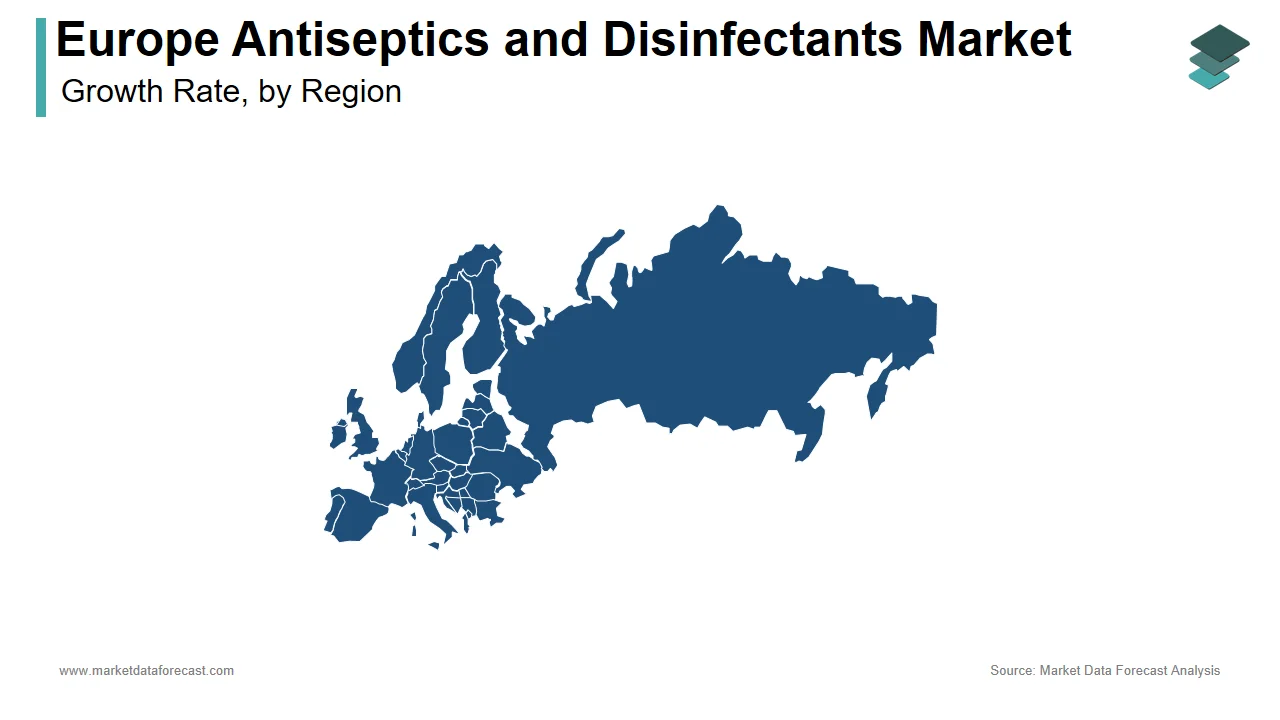
Germany was the top performer of the Europe antiseptics and disinfectants market by occupying 19.3% of share in 2024 with its robust healthcare infrastructure, advanced manufacturing base, and stringent hygiene regulations. The Robert Koch Institute mandates the use of disinfectants with proven efficacy against enveloped and non-enveloped viruses in all public health facilities, a requirement that drives consistent demand for alcohol based and quaternary ammonium formulations.
France Antiseptics and Disinfectants Market Analysis
France was positioned second by holding 15.4% of the Europe antiseptics and disinfectants market share in 2024. The country also enforces strict labeling requirements under the French Environmental Code, mandating full ingredient disclosure for all consumer biocidal products, a policy that has accelerated the reformulation of domestic disinfectants toward plant-derived actives. This regulatory rigor, combined with institutional scale, ensures France’s prominent market standing.
United Kingdom Antiseptics and Disinfectants Market Analysis
The United Kingdom antiseptics and disinfectants market growth is likely to be driven by the institutionalization of enhanced hygiene practices following public health emergencies.
Italy Antiseptics and Disinfectants Market Analysis
Italy antiseptics and disinfectants market growth is likely to grow with the exceptionally high domestic consumption patterns and seasonal surges in disinfectant use. Additionally, the Italian Medicines Agency maintains a national registry of approved antiseptics, ensuring product safety while allowing rapid market access for compliant formulations.
Spain Antiseptics and Disinfectants Market Analysis
Spain antiseptics and disinfectants market growth is propelled by healthcare system modernization and tourism-related hygiene requirements.
COMPETITIVE LANDSCAPE
The Europe antiseptics and disinfectants market features intense competition among multinational corporations, regional specialists, and niche innovators. Multinationals dominate through extensive distribution networks, brand recognition, and regulatory expertise, enabling compliance across diverse national frameworks. Regional players compete by offering cost-effective solutions tailored to local procurement policies, especially in Southern and Eastern Europe. Innovation is a key battleground with companies investing in green chemistry, enzymatic disinfectants, and digital hygiene platforms to differentiate offerings. The market is further characterized by high entry barriers due to stringent Biocidal Products Regulation requirements, which favor established firms with robust regulatory affairs capabilities. Price competition is moderate in institutional segments where efficacy and certification outweigh cost, but more pronounced in the domestic channel where private label products exert downward pressure.
KEY MARKET PLAYERS
Some of the companies that are playing a dominating role in the Europe antiseptics and disinfectants market include
- 3M Company
- ABC Compounding
- Advanced Sterilization Products
- American Biotech Labs
- Angelini Pharma Inc.
- Becton, Dickinson and Company
- Bio-Cide International Inc.
- Cardinal Health
- CareFusion Corp.
Top Players in the Market
- Reckitt Benckiser Group is a prominent participant in the Europe antiseptics and disinfectants market through its Dettol and Lysol brands, which are widely recognized for household and clinical hygiene solutions. The company has reinforced its position by investing in sustainable formulations and expanding its product portfolio to include plant-based disinfectants compliant with EU Ecolabel standards. In recent years, Reckitt has enhanced its digital engagement strategies and partnered with European public health agencies to promote hand hygiene awareness, particularly in schools and community centers across Germany and France. These initiatives align with evolving consumer preferences for transparency and environmental responsibility while strengthening brand loyalty in both domestic and institutional segments.
- Ecolab Inc. plays a critical role in the European market by supplying advanced disinfection technologies to the healthcare, food service, and hospitality sectors. It also launched a cloud-based compliance platform for hospitals, enabling real-time tracking of disinfection protocols across the United Kingdom and Scandinavia.
- 3M Company contributes significantly to the Europe antiseptics and disinfectants landscape through its healthcare division, which offers antiseptic skin preparations and surface disinfection wipes used in surgical and wound care environments. Additionally, it collaborated with university hospitals in Germany to validate the efficacy of its iodophor formulations against emerging multidrug-resistant pathogens, reinforcing its clinical credibility and innovation focus.
Top Strategies Used by the Key Market Participants
Key players in the Europe antiseptics and disinfectants market employ a range of strategic initiatives to reinforce their competitive standing. Product innovation remains central with companies reformulating offerings to meet EU sustainability mandates and consumer demand for eco-friendly ingredients. Regulatory compliance is prioritized through proactive alignment with the Biocidal Products Regulation and national authorization frameworks. Strategic partnerships with public health institutions enhance credibility and facilitate large-scale adoption in healthcare settings. Geographic expansion within Europe is pursued via localized manufacturing and distribution networks to ensure supply chain resilience.
MARKET SEGMENTATION
This Europe antiseptics and disinfectants market research report is segmented and sub-segmented into the following categories.
By Type
- Alcohol and Aldehyde
- Phenols and Derivatives
- Biguanides and Amides
- Quaternary Ammonium Compounds
- Iodine Compounds
- Others
By End-User
- Domestic User
- Institutional User
By Country
- UK
- France
- Spain
- Germany
- Italy
- Russia
- Sweden
- Denmark
- Switzerland
- Netherlands
- Turkey
- Czech Republic
- Rest of Europe