Global Antiseptics and Disinfectants Market Size, Share, Trends & Growth Forecast Report By Type (Alcohol and Aldehyde, Phenols and Derivatives, Biguanides and Amides, Quaternary Ammonium Compounds, Iodine Compounds and Others), End User (Domestic User and Institutional User) and Region (North America, Europe, Asia-Pacific, Latin America, Middle East and Africa), Industry Analysis From 2026 to 2034.
Market Size, 2025
$9.21 BnMarket Estimate, 2026
$9.84 BnMarket Forecast, 2034
$16.64 BnCAGR, 2026–2034
6.79%Executive Summary: Antiseptics and Disinfectants Market
- Market Scope: Comprehensive global market analysis covering product types, end-users, regional leadership frameworks, and hygiene adoption metrics for antiseptics and disinfectants.
- Market Valuation: Valued at USD 9.21 billion (2025), estimated at USD 9.84 billion (2026), and projected to reach USD 16.64 billion by 2034, registering a robust CAGR of 6.79% (2026–2034).
- Primary Growth Drivers: Escalating prevalence of healthcare-associated infections (HAIs), expansion of home healthcare services, and a rise in self-administered medical procedures. Market challenges include regulatory standards and supply chain costs, while opportunities lie in eco-friendly formulations, IoT hygiene monitoring, and localized manufacturing in emerging markets.
Key Market Segment Metrics (2026–2034)
| Category | Leading Segment (2025 Position) | Fastest-Growing Segment |
|---|---|---|
| By Type | Alcohol and aldehyde (dominated with a 37.3% share in 2025 due to rapid efficacy) | Quaternary ammonium compounds (projected to grow at the fastest CAGR of 9.3%) |
| By End-User | Institutional users (held the largest share in 2025, driven by strict hygiene protocols) | Domestic user segment (expected to expand at a CAGR of 10.7%, fueled by home hygiene routines) |
| By Region | North America (led the market with a 35.3% share in 2025, supported by advanced infrastructure) | Asia Pacific (emerging as the fastest-growing region due to urbanization and hospital network expansions) |
Major Market Players & Market Structure
Market Structure: Highly competitive global landscape centering on eco-friendly and biodegradable formulations, integration of AI and IoT for hygiene monitoring, strategic healthcare partnerships, and expansion into emerging markets through localized manufacturing.
Key Companies: 3M Company, Reckitt Benckiser Group plc (Dettol), Ecolab, STERIS PLC, Becton Dickinson and Company, The Clorox Company, Advanced Sterilization Products, Cardinal Health, Nufarm Limited, and Bio-Cide International Inc.
Global Antiseptics and Disinfectants Market Size
The size of the global antiseptics and disinfectants market was worth USD 9.21 billion in 2025. The global market is anticipated to grow at a CAGR of 6.79% from 2026 to 2034 and be worth USD 16.64 billion by 2034 from USD 9.84 billion in 2026.
The Antiseptics and Disinfectants Market is a spectrum of chemical agents designed to inhibit or destroy pathogenic microorganisms on living tissues (antiseptics) and inanimate surfaces (disinfectants), playing a pivotal role in infection control across healthcare, domestic, and industrial environments. These agents include alcohol-based solutions, chlorhexidine, iodophors, hydrogen peroxide, quaternary ammonium compounds, and sodium hypochlorite, each selected based on the spectrum of activity, contact time, and application context.
MARKET DRIVERS
Rising Incidence of Healthcare-Associated Infections (HAIs) in Hospitals and Clinics
The escalating prevalence of healthcare-associated infections (HAIs) is a primary factor driving the growth of the Antiseptics and Disinfectants Market. HAIs not only prolong hospital stays but also increase mortality and healthcare costs, compelling institutions to strengthen infection prevention protocols. According to the U.S. Centers for Disease Control and Prevention, approximately 1.7 million HAIs occur annually in U.S. hospitals, resulting in nearly 99,000 associated deaths. Surgical site infections, central line-associated bloodstream infections, and catheter-associated urinary tract infections are among the most common, many of which are preventable through proper skin antisepsis and surface decontamination.
Expansion of Home Healthcare and Self-Administration of Medical Procedures
The growing shift toward home-based medical care and patient self-management of chronic conditions is significantly amplifying the growth of the Antiseptics and Disinfectants Market. With advancements in portable medical devices and telemedicine, patients are increasingly administering injections, managing wound care, and performing dialysis at home, necessitating reliable infection control measures. According to the American Academy of Homecare Medicine, over 12 million Americans received some form of home healthcare in 2023, a 28% increase from 2019. Diabetic patients, who frequently perform self-injections and glucose monitoring, are particularly reliant on antiseptic swabs; the International Diabetes Federation reports that each insulin-dependent patient uses an average of 1,460 antiseptic wipes annually. Similarly, in the UK, the National Health Service observed a 33% rise in home dialysis cases between 2020 and 2023, requiring strict skin preparation protocols to prevent bloodstream infections. In low-resource settings, antiseptics are vital for safe childbirth and neonatal care; UNICEF estimates that chlorhexidine application to the umbilical cord prevents 24% of neonatal deaths in rural Africa.
MARKET RESTRAINTS
Regulatory Restrictions on Certain Active Ingredients Due to Toxicity and Environmental Impact
The use of specific antiseptics and disinfectants is increasingly constrained by regulatory agencies due to concerns over human toxicity, environmental persistence, and ecological damage, which is hampering the growth of the Antiseptics and Disinfectants Market. A 2023 report by the European Chemicals Agency found that quaternary ammonium compounds (quats), commonly used in surface disinfectants, have been linked to respiratory irritation and potential reproductive toxicity, prompting stricter workplace exposure limits in Germany and Sweden. Additionally, chlorine-based disinfectants like sodium hypochlorite degrade into harmful byproducts such as trihalomethanes, which the World Health Organization classifies as probable carcinogens when present in drinking water. In aquatic environments, these compounds contribute to the formation of chlorinated organic pollutants; the United Nations Environment Programme notes that disinfectant runoff has been detected in 60% of urban waterways in Southeast Asia, affecting aquatic biodiversity.
Shortage and Volatility in Supply of Raw Materials for Key Antiseptic Agents
The production of antiseptics and disinfectants is increasingly vulnerable to disruptions in the supply of raw materials, which is negatively impacting the growth of the Antiseptics and Disinfectants Market. During the 2020–2022 pandemic, global ethanol demand surged by over 40% for hand sanitizer production, leading to shortages that affected antiseptic manufacturing in countries like Brazil and South Africa, as reported by the International Council of Chemical Associations. In 2022, drought conditions in Europe reduced corn and sugarcane yields, primary feedstocks for bioethanol, by 15% and 12% respectively, according to the Food and Agriculture Organization, directly impacting alcohol-based antiseptic output.
MARKET OPPORTUNITIES
Development of Eco-Friendly and Biodegradable Disinfectant Formulations
The innovation of environmentally sustainable formulations that maintain efficacy while minimizing ecological harm is creating new opportunities for the growth of the antiseptics and disinfectants market. For example, thymol (from thyme oil), lactic acid, and peroxyacetic acid are gaining traction as green disinfectants with broad-spectrum antimicrobial activity. According to the European Environment Agency, over 70% of EU healthcare facilities are now required to use eco-labeled cleaning products under the Green Public Procurement guidelines, creating a structured demand for sustainable disinfectants. In the United States, the Environmental Protection Agency’s Safer Choice program has certified more than 120 disinfectant products since 2020 for low environmental impact. A 2023 study by the University of California, Davis found that peroxyacetic acid-based disinfectants degrade into oxygen, water, and acetic acid, leaving no persistent residues, and are effective against 99.9% of pathogens, including Clostridioides difficile spores.
Integration of Antiseptics into Smart Healthcare Devices and Wearable Technology
The integration of antiseptic technology with digital health innovations for proactive infection prevention in medical devices and wearable systems is expected to substantially enhance the growth of the antiseptics and disinfectants market. Manufacturers are exploring the incorporation of antimicrobial coatings and self-disinfecting surfaces into catheters, ventilators, and wearable sensors to reduce biofilm formation and device-related infections. According to a 2023 report by the National Institutes of Health, over 500,000 bloodstream infections annually in the U.S. are linked to central venous catheters, many of which could be mitigated by antiseptic-impregnated materials. Companies like Becton Dickinson and Medtronic have developed chlorhexidine-silver sulfadiazine-coated catheters, which the CDC states reduce infection rates by up to 40%. In the wearable sector, researchers at MIT have engineered textiles embedded with slow-release antiseptic polymers that remain effective for over 30 washes, suitable for smart bandages and hospital gowns.
MARKET CHALLENGES
Emergence of Microbial Resistance to Common Antiseptic Agents
The growing incidence of microbial resistance to widely used antiseptics is expected to degrade the growth of the antiseptics and disinfectants market. According to a 2023 surveillance study by the U.S. National Antimicrobial Resistance Monitoring System, Staphylococcus aureus isolates with reduced susceptibility to chlorhexidine increased by 18% between 2018 and 2022 in hospital settings with high antiseptic usage. In the UK, Public Health England reported that 12% of ICU-acquired infections in 2022 were caused by biocide-tolerant organisms, complicating infection control protocols. A 2023 genomic analysis published in The Lancet Microbe revealed that resistance genes such as qacA/B and smr are increasingly co-located with antibiotic resistance markers on mobile genetic elements, enabling cross-resistance. In India, a multicenter study by the Indian Council of Medical Research found that 27% of Acinetobacter baumannii isolates from intensive care units exhibited multidrug and antiseptic resistance.
Inconsistent Quality and Counterfeit Products in Emerging Markets
The proliferation of substandard and counterfeit products that fail to meet microbial efficacy standards is a challenging factor for the growth of the antiseptics and disinfectants market. These products often contain diluted or incorrect concentrations of active ingredients, rendering them ineffective against pathogens. According to the World Health Organization, up to 20% of medical products in sub-Saharan Africa and South Asia are falsified or substandard, including antiseptics used in hospitals and clinics. A 2023 investigation by the Nigerian National Agency for Food and Drug Administration and Control (NAFDAC) found that 31% of alcohol-based hand sanitizers sampled in Lagos markets contained less than 30% ethanol, far below the WHO-recommended 60–80% threshold.
REPORT COVERAGE
| REPORT METRIC | DETAILS |
| Market Size Available | 2025 to 2034 |
| Base Year | 2025 |
| Forecast Period | 2026 to 2034 |
| Segments Covered | By End User, Type, and Region. |
| Various Analyses Covered | Global, Regional and Country-Level Analysis, Segment-Level Analysis, Drivers, Restraints, Opportunities, Challenges; PESTLE Analysis; Porter’s Five Forces Analysis, Competitive Landscape, Analyst Overview of Investment Opportunities |
| Regions Covered | North America, Europe, Asia Pacific, Latin America, Middle East & Africa |
| Market Leaders Profiled | 3M Company, Abc Compounding, Advanced Sterilization Products, American Biotech Labs, Angelini Pharma Inc., Becton, Dickinson, And Company, Bio-Cide International Inc., Cardinal Health, Nufarm Limited, Carefusion Corp, and Others. |
SEGMENTAL ANALYSIS
By Type Insights
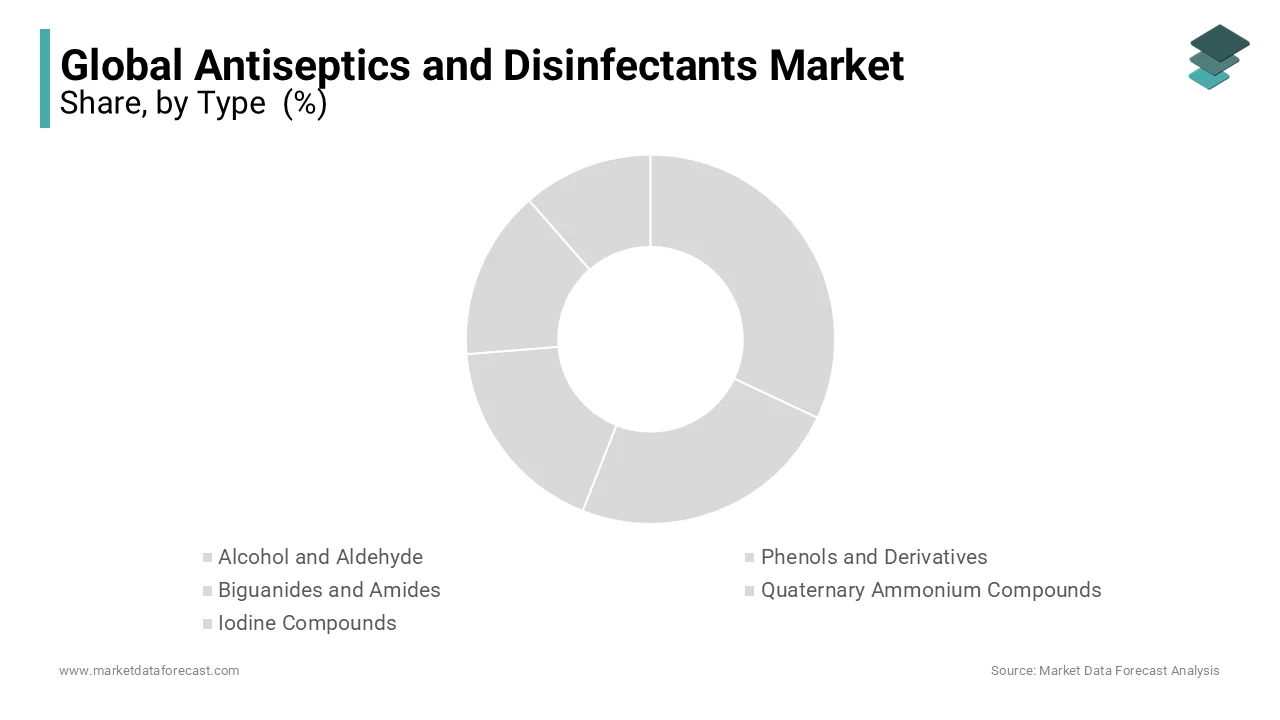
The alcohol and aldehyde segment dominated the global antiseptics and disinfectants market by capturing 37.3% of share in 2025, with the unparalleled efficacy and rapid action of ethanol and isopropyl alcohol against a broad spectrum of pathogens, including enveloped viruses, bacteria, and fungi. According to the World Health Organization, alcohol-based formulations with concentrations between 60% and 80% are capable of inactivating 99.9% of microorganisms within 30 seconds, making them ideal for hand hygiene and surface disinfection in high-turnover environments. In healthcare settings, the U.S. Centers for Disease Control and Prevention recommends alcohol-based hand rubs as the gold standard for infection contro,l with a 40% reduction in healthcare-associated infections when compliance exceeds 80%. The widespread adoption of alcohol gels and wipes surged during the pandemic, but sustained use continues due to integration into routine protocols. According to the National Centre for Disease Control in India, over 90% of public hospitals now stock alcohol-based hand sanitizers as part of mandatory infection prevention bundles.
The quaternary ammonium compounds (quats) segment is swiftly emerging with a CAGR of 9.3% from 2025 to 2033, with the increasing use in commercial, institutional, and domestic cleaning products due to favorable safety profiles, low odor, and residual antimicrobial activity. According to a 2023 study by the American Journal of Infection Control, surfaces treated with quat-based disinfectants maintained 90% pathogen reduction for up to 24 hours post-application, which is significantly outperforming alcohol-only wipes.
By End User Insights
The institutional user segment accounted in holding a prominent share of the antiseptics and disinfectants market in 2025, with the stringent hygiene protocols mandated across hospitals, clinics, laboratories, and long-term care facilities, where infection control is a regulatory and operational imperative. According to the U.S. Centers for Disease Control and Prevention, healthcare institutions use an average of 1.2 liters of disinfectant per patient bed per week, with higher volumes in intensive care and surgical units. Additionally, the rise of antimicrobial-resistant organisms has intensified cleaning frequency and chemical usage; a 2023 audit by the UK’s National Health Service found that hospital disinfectant consumption increased by 22% over two years in response to C. difficile and MRSA outbreaks. In China, the National Health Commission implemented a national infection control campaign in 2022, resulting in a 28% rise in institutional antiseptic procurement, as per the Chinese Hospital Association.
The domestic user segment is projected to expand at a CAGR of 10.7% during the forecast period, with the heightened public awareness of hygiene, accelerated by the post-pandemic normalization of home-based disinfection routines. Households are increasingly adopting antiseptic wipes, sprays, and liquid disinfectants for routine surface cleaning, hand hygiene, and food preparation areas. According to a 2023 survey by the Australian Institute of Health and Welfare, 74% of households now use disinfectants at least weekly, up from 48% in 2019. In Brazil, the Brazilian Ministry of Health launched a national “Clean Home, Healthy Family” campaign in 2022, distributing over 15 million antiseptic kits to low-income families, significantly expanding domestic access. E-commerce has further fueled growth; in Southeast Asia, online sales of disinfectant products increased by 62% in 2022, as reported by the ASEAN Digital Economy Report. In South Korea, smart home devices integrated with UV-C disinfection and automated spray systems are gaining traction, with 18% of urban households adopting such technologies by 2023, according to the Korea Consumer Agency.
REGIONAL ANALYSIS
North America Antiseptics and Disinfectants Market Analysis
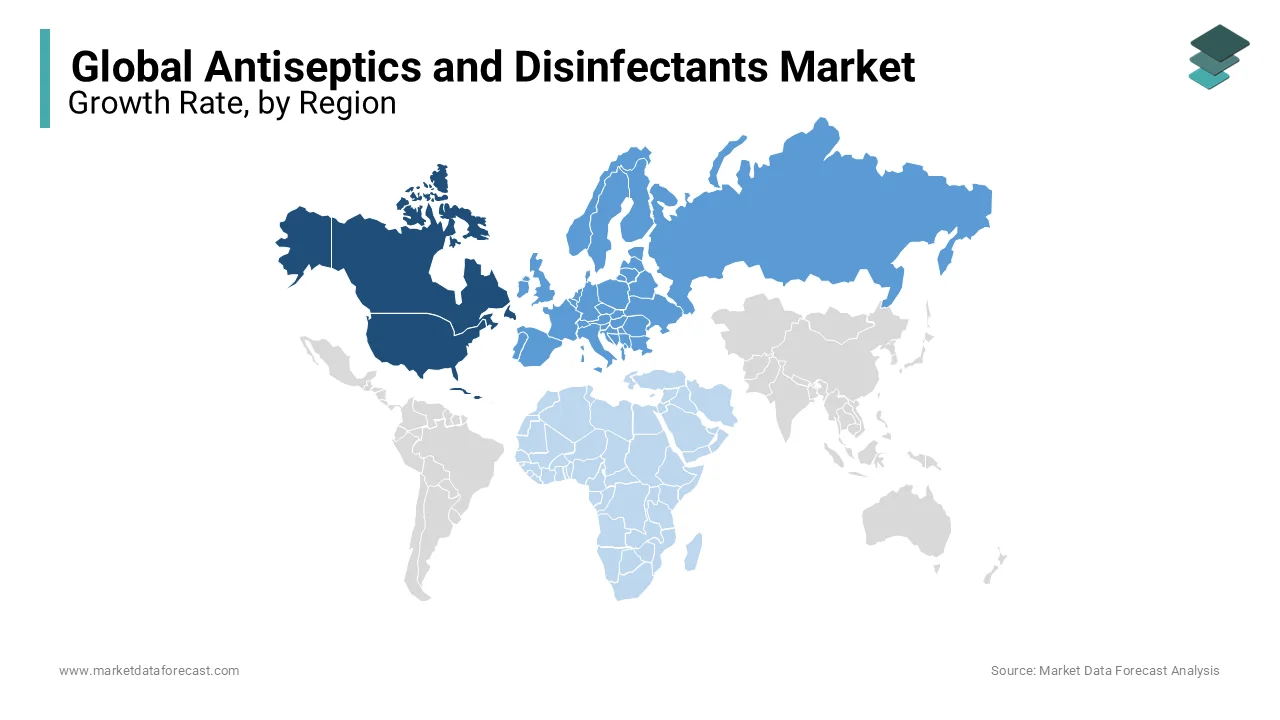
North America was the top performer in the global antiseptics and disinfectants market with 35.3% of share in 2025, witha highly regulated healthcare system, advanced infection control standards, and widespread public health awareness. The Centers for Disease Control and Prevention enforces strict guidelines for antiseptic use in medical facilities, with over 95% of hospitals employing WHO-recommended hand hygiene protocols. The Food and Drug Administration maintains a rigorous approval process for over-the-counter antiseptics, ensuring product efficacy and safety. According to the American Hospital Association, U.S. hospitals spend an average of $28,000 annually per facility on disinfectants, reflecting institutional prioritization. As per the Public Health Agency of Canada, 21% increase in hospital-grade disinfectant procurement between 2020 and 2023. The region also leads in innovation, with companies like Ecolab and PDI Healthcare pioneering next-generation formulations and delivery systems.
Europe Antiseptics and Disinfectants Market Analysis
Europe antiseptics and disinfectants market was positioned second by accounting for 29.3% of the share in 2025, with the stringent biocidal regulations, universal healthcare systems, and a strong emphasis on environmental and human safety. The EU’s Biocidal Products Regulation (BPR) mandates comprehensive testing and authorization for all disinfectants, ensuring high product standards and consumer confidence.
Asia Pacific Antiseptics and Disinfectants Market Analysis
The Asia Pacific antiseptics and disinfectants market is rapidly growing with a significant CAGR throughout the forecast period, owing to the rising healthcare infrastructure, urbanization, and increasing awareness of hygiene in densely populated nations. China has launched a national hospital accreditation program that includes mandatory disinfection audits, driving institutional demand. Japan, with its aging population and high hospitalization rates, consumes over 15 million liters of disinfectants annually, according to the Japanese Society of Infection Prevention and Control.
Latin America Antiseptics and Disinfectants Market Analysis
Latin America antiseptics and disinfectants market growth is driven by uneven healthcare access, with significant disparities between urban centers and rural areas. Brazil and Mexico are the primary contributors, driven by public health campaigns and hospital modernization. In Brazil, the Ministry of Health implemented the National Program for Healthcare Quality Improvement, which includes mandatory antiseptic protocols in all public hospitals, leading to a 26% rise in institutional purchases since 2020. Mexico’s Institute for Health of the Wellbeing reports that over 70% of IMSS hospitals now use alcohol-based hand rubs as standard. However, access remains limited in remote regions; a 2023 study by the Latin American Society of Infectious Diseases found that only 40% of rural clinics in Bolivia and Guatemala have consistent antiseptic supplies.
Middle East and Africa Antiseptics and Disinfectants Market Analysis
The Middle East and Africa antiseptics and disinfectants market growth is steadily growing, with the Gulf Cooperation Council (GCC) nations leading in adoption due to advanced healthcare infrastructure and high public health spending. In the UAE, the Ministry of Health mandates infection control protocols in all healthcare facilities, with hospitals using an average of 10,000 liters of disinfectant annually, according to the Emirates Medical Association. Saudi Arabia’s Vision 2030 includes a healthcare modernization initiative that has increased antiseptic procurement by 29% since 2021, as per the Saudi Commission for Health Specialties.
COMPETITIVE LANDSCAPE
The competition in the antiseptics and disinfectants market is intensifying as multinational corporations, regional manufacturers, and specialty chemical firms vie for dominance in global health security. Established players like Ecolab, Reckitt, and 3M leverage scientific credibility, regulatory expertise, and extensive distribution networks to maintain their dominance in institutional settings. However, regional brands are gaining traction by offering cost-effective, locally adapted formulations that meet basic hygiene needs in price-sensitive markets. The battleground extends beyond efficacy to include sustainability, digital integration, and consumer trust, with increasing demand for transparent labeling and eco-friendly products. Private-label disinfectants are expanding in retail chains across Europe and Asia, challenging branded players on value. The rise of antimicrobial resistance and regulatory scrutiny on chemical safety is forcing companies to invest heavily in R&D and clinical validation. Startups are entering with niche innovations such as light-activated disinfectants, antimicrobial textiles, and AI-driven hygiene monitoring systems. Meanwhile, public health emergencies continue to influence procurement patterns, favoring suppliers with rapid scalability and emergency response capabilities.
KEY MARKET PLAYERS
The major players operating in the global antiseptics and disinfectants market profiled in this report are3M Company
- Abc Compounding
- Advanced Sterilization Products
- American Biotech Labs
- Angelini Pharma Inc.
- Becton, Dickinson, and Company
- Bio-Cide International Inc.
- Cardinal Health
- Nufarm Limited
- CareFusion Corp
- Others
TOP LEADING PLAYERS IN THE MARKET
- Ecolab has established a significant presence in the Asia Pacific antiseptics and disinfectants market through its science-driven hygiene solutions tailored for healthcare, food service, and hospitality sectors. The company has expanded its footprint in India, China, and Southeast Asia by partnering with major hospital networks and pharmaceutical manufacturers to implement infection control protocols. In 2023, Ecolab launched its OptiSolve™ disinfectant monitoring system in Singapore, enabling real-time verification of surface sanitation efficacy in clinical environments. The company also invested in localized R&D centers in Shanghai and Bangalore to develop formulations suited to regional pathogen profiles and water conditions. Ecolab strengthened its distribution by collaborating with government health programs in Thailand and Indonesia to supply hospital-grade disinfectants for public facilities. Its digital platform, EcoSure, integrates microbial testing with antiseptic application data by enhancing compliance tracking for institutional clients.
- Reckitt Benckiser has its influence in the Asia Pacific antiseptics and disinfectants market through its globally recognized brand Dettol, which has become synonymous with household hygiene across India, Indonesia, and Vietnam. The company has leveraged deep cultural penetration to promote daily antiseptic use, launching targeted campaigns on maternal and child health, wound care, and surface sanitation. In 2022, Reckitt introduced Dettol Rapid Sanitizer Spray in Japan, formulated for fast-drying, non-sticky application on electronics and high-touch surfaces, capturing urban consumer demand. The company expanded production capacity in Gujarat, India, to meet rising institutional and domestic needs, while also donating millions of antiseptic units during regional disease outbreaks. Reckitt has partnered with local NGOs and health ministries to distribute hygiene kits in rural communities, enhancing brand trust and accessibility. Its digital outreach, including AI-powered chatbots for hygiene education, has strengthened consumer engagement.
- 3M has emerged as a key innovator in the Asia Pacific antiseptics and disinfectants market by integrating advanced materials science with infection prevention technologies. The company’s focus on healthcare applications is exemplified by its ChloraPrep™ skin antiseptic, widely adopted in surgical centers across South Korea, Australia, and India for its rapid and persistent antimicrobial action. In 2023, 3M launched a next-generation antimicrobial wound dressing in Japan that combines polyhexamethylene biguanide (PHMB) with nanofiber technology, reducing infection risk in chronic wounds. The company has expanded its technical service teams in Thailand and Malaysia to support hospital compliance with sterilization standards. 3M also collaborated with the National University Hospital in Singapore to evaluate the efficacy of its disinfectant-impregnated wipes in intensive care units, resulting in a 38% reduction in surface contamination.
TOP STRATEGIES USED BY KEY MARKET PARTICIPANTS
Key players in the antiseptics and disinfectants market are deploying a range of strategic initiatives to consolidate their market presence and respond to evolving public health demands. A primary strategy is product innovation through advanced formulations that enhance efficacy, safety, and environmental compatibility, including alcohol-free, biodegradable, and residue-free options. Companies are increasingly investing in digital integration, incorporating IoT-enabled monitoring systems to track disinfection compliance in hospitals and industrial facilities. Strategic partnerships with healthcare providers, government agencies, and NGOs are being leveraged to expand access in underserved regions and align with public health campaigns. Localization of manufacturing and R&D enables adaptation to regional regulatory standards, pathogen profiles, and consumer preferences, particularly in emerging markets. Expansion into e-commerce and retail channels has accelerated direct-to-consumer engagement, supported by digital marketing and educational content. Sustainability is a growing focus, with firms reformulating products to meet eco-certification standards and reduce plastic packaging. Mergers and acquisitions are being utilized to strengthen portfolios in high-growth segments such as antimicrobial coatings and smart hygiene devices. Additionally, companies are enhancing technical support services, offering training and audits to ensure proper application and regulatory adherence.
GLOBAL ANTISEPTICS AND DISINFECTANTS MARKET NEWS
- In February 2022, Reckitt Benckiser launched Dettol Rapid Sanitizer Spray in Japan, a fast-drying, non-residue formula designed for electronics and high-touch surfaces by expanding its premium antiseptic portfolio in the Asia Pacific region to meet urban consumer hygiene demands.
- In June 2022, Ecolab inaugurated a new R&D center in Bangalore, India, focused on developing region-specific disinfectant formulations for tropical climates and water conditions by enhancing product efficacy and regulatory compliance across South and Southeast Asia.
- In January 2023, 3M introduced its next-generation PHMB-based antimicrobial wound dressing in Japan, combining nanofiber technology with sustained-release antiseptics to reduce infection rates in chronic wounds, strengthening its position in advanced clinical care.
- In August 2023, Reckitt partnered with the Indonesian Ministry of Health to distribute 2 million antiseptic hygiene kits across rural communities, which is supporting national infection control efforts and reinforcing brand trust in underserved domestic markets.
- In November 2023, Ecolab launched OptiSolve™ in Singapore, a real-time disinfectant monitoring system that uses colorimetric indicators to verify surface sanitation by providing hospitals with data-driven compliance tools and advancing digital hygiene management in Asia Pacific healthcare facilities.
MARKET SEGMENTATION
This research report on the global antiseptics and disinfectants market has been segmented and sub-segmented based on type, end-user, and region.
By Type
- Alcohol and Aldehyde
- Phenols and Derivatives
- Biguanides and Amides
- Quaternary Ammonium Compounds
- Iodine Compounds
- Others
By End-User
- Domestic User
- Institutional User
By Region
- North America
- Europe
- Asia Pacific
- Latin America
- Middle East & Africa
Frequently Asked Questions
1. What is the Antiseptics and Disinfectants Market?
The market involves products used to kill or inactivate microorganisms on living tissues (antiseptics) and non-living surfaces (disinfectants) to control infections across healthcare, home, and industrial environments
2. Which regions dominate the Antiseptics and Disinfectants Market?
North America and Europe lead due to advanced healthcare infrastructure; however, Asia Pacific is the fastest-growing region driven by expanding hospitals and rising infection control awareness
3. What are the major product types in the Antiseptics and Disinfectants Market?
Key types include quaternary ammonium compounds, chlorine compounds, alcohols and aldehydes, enzymes, phenolics, and iodine derivatives
4. What are the main applications of antiseptics and disinfectants?
They are used as enzymatic cleaners, medical device disinfectants, surface disinfectants, and for general hygiene in hospitals, clinics, and households
5. Who are the key players in the global Antiseptics and Disinfectants Market?
Major companies include 3M Company, Reckitt Benckiser Group plc, Steris PLC, Becton Dickinson and Company, and The Clorox Compan
6. What factors are driving growth in the Antiseptics and Disinfectants Market?
Drivers include rising hospital-acquired infections, increased surgical procedures, higher hygiene awareness, government infection control programs, and innovative formulations
7. How has COVID-19 impacted the Antiseptics and Disinfectants Market?
The pandemic significantly increased demand for antiseptics and disinfectants globally, accelerating market growth and public hygiene practices
8. Why are enzymes important in this market?
Enzymes break down protective biofilms on pathogens, improving the efficacy of disinfectants without harsh chemical use
9. What challenges does the Antiseptics and Disinfectants Market face?
Challenges include regulatory restrictions, supply chain disruptions, counterfeit products, and stringent safety and efficacy testing
10. How do regulations affect the Antiseptics and Disinfectants Market?
Compliance with standards from agencies like FDA, EPA, and equivalent regulatory bodies globally shapes product approval, safety, and labeling
Related Reports
Access the study in MULTIPLE FORMATS
Purchase options starting from
$ 2500
Didn’t find what you’re looking for?
TALK TO OUR ANALYST TEAM
Need something within your budget?
NO WORRIES! WE GOT YOU COVERED!
Call us on: +1 888 702 9696 (U.S Toll Free)
Write to us: sales@marketdataforecast.com