- Product Description Description
- Table of Contents TOC
- List of Table & Figure LOT
- Get Free Sample PDF Sample PDF
Market Size, 2025
$0.55 BnMarket Estimate, 2026
$0.59 BnMarket Forecast, 2034
$1.02 BnCAGR, 2026–2034
7.12%Europe Articaine Hydrochloride Market Summary
The Europe articaine hydrochloride market is experiencing steady growth, driven by the high prevalence of dental caries and periodontal diseases, rising demand for outpatient and minimally invasive procedures, and strong clinical preference for fast-acting, high-penetration local anesthetics. Articaine’s rapid onset, favorable safety profile, and compatibility with modern anesthesia delivery systems continue to support its widespread adoption across dental, aesthetic, and minor surgical applications in Europe.
Market Size & Growth:
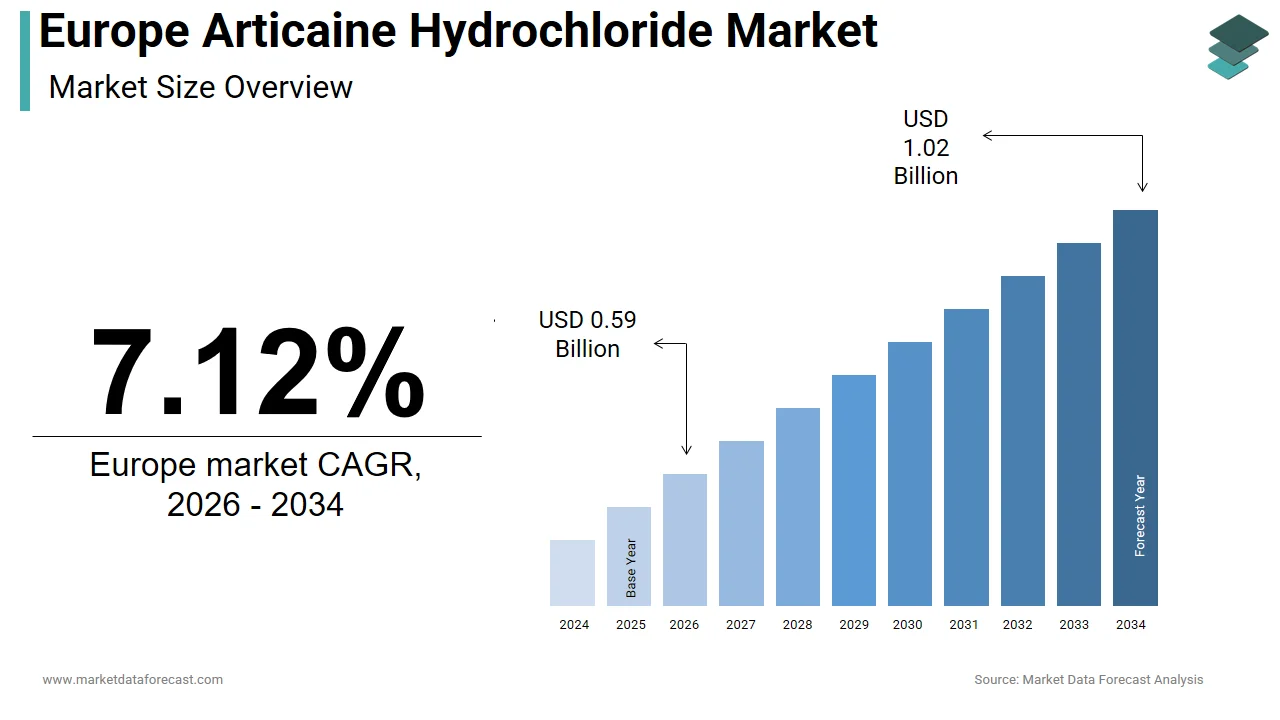
- Valued at USD 0.55 billion in 2025, with projected growth to USD 0.59 billion in 2026 and USD 1.02 billion by 2034.
- CAGR estimated at 7.12% for the 2026 to 2034 period.
Key Drivers:
- High Prevalence of Oral Diseases: Widespread dental caries and periodontal conditions across Europe require frequent restorative and surgical procedures, sustaining strong demand for effective local anesthetics.
- Shift to Outpatient Care: Growing preference for ambulatory and minimally invasive treatments increases the need for fast-acting, short-duration anesthetics like articaine.
- Clinical Effectiveness: Superior bone penetration and rapid onset improve anesthesia success, especially in mandibular nerve blocks.
- Technological Integration: Compatibility with computer-controlled anesthesia systems enhances precision and patient comfort.
Leading Segments:
- Application: Nerve Block, Infiltration – Nerve block dominates due to its effectiveness in complex dental and surgical procedures requiring profound anesthesia across multiple teeth or anatomical regions. Infiltration is gaining traction in minimally invasive dental and aesthetic procedures because of its precision, faster recovery, and suitability for localized pain management.
- End Users: Dental Clinics, Hospitals – Dental clinics account for the largest share due to the high volume of routine restorative, surgical, and cosmetic dental procedures performed daily. Hospitals are the fastest-growing end users, driven by the expansion of outpatient surgical units, emergency dental services, and integrated oral–maxillofacial care within hospital systems.
Key Trends:
- Expanded Medical Use: Increasing adoption in dermatology, aesthetics, and podiatry for minor surgical and cosmetic procedures.
- Digital Dentistry: Rising use of computer-controlled anesthesia delivery devices to reduce pain and improve accuracy.
- Patient-Centric Care: Greater focus on minimizing injection discomfort and procedural anxiety.
- Formulation Optimization: Development of device-compatible and age-specific anesthetic variants.
Major Players
- 3M, Dentsply Sirona, Inibsa Dental, Aspen Pharmacare, STADA Arzneimittel AG, Pfizer, Sanofi, Septodont, B. Braun, Siegfried AG.
Europe Articaine Hydrochloride Market Size
The size of the Europe articaine hydrochloride market was valued at USD 0.55 billion in 2025. This market is expected to grow at a CAGR of 7.12% from 2026 to 2034 and be worth USD 1.02 billion by 2034 from USD 0.59 billion in 2026.
Articaine hydrochloride is a potent amide-type local anesthetic widely used in dental and minor surgical procedures across Europe due to its rapid onset, high tissue penetration, and favorable safety profile. Chemically distinct from other amide anesthetics by its thiophene ring and ester group, articaine enables effective nerve blockade with lower systemic toxicity and faster metabolic clearance primarily via plasma esterases. It is commonly formulated with epinephrine to prolong duration and enhance vasoconstriction, making it especially valuable in outpatient settings where precision and patient comfort are paramount. Articaine hydrochloride is widely available for use across the European Union following an EU-wide marketing authorization process, ensuring its consistent use in dental care throughout the region. Independent surveys and market data consistently indicate that articaine is the most popular and preferred first-line local anesthetic agent for routine dental procedures in countries such as Germany, France, and the Netherlands. Articaine hydrochloride is a fundamental component of routine clinical practice and public oral health infrastructure due to its extensive use in a high volume of dental procedures requiring local anesthesia across the EU.
MARKET DRIVERS
High Prevalence of Dental Caries and Periodontal Disease Drives Clinical Demand
The widespread burden of oral diseases across the region sustains consistent demand for effective local anesthetics like articaine hydrochloride in routine dental care, which in turn drives the growth of the Europe articaine hydrochloride market. According to research, a substantial proportion of the adult population across the WHO European Region experiences major oral diseases, with untreated dental decay being a widespread condition and severe gum disease remaining a significant public health challenge for many individuals. These conditions necessitate frequent restorative surgical and endodontic interventions where pain control is non-negotiable. National oral health surveys reinforce this reality. Recent national oral health surveillance in Germany indicates that periodontal health among middle-aged adults has improved significantly over the past decades as preventive dental care has become more integrated and effective. French healthcare reforms have increasingly focused on improving financial and physical access to dental care, leading to a high volume of professional dental interventions and procedures aimed at strengthening oral disease prevention nationwide. Articaine’s superior diffusion through dense cortical bone makes it particularly effective for mandibular blocks, a common challenge in posterior dental work. The European Academy of Paediatric Dentistry also endorses its use in children due to rapid metabolism and lower risk of systemic accumulation. This epidemiological imperative ensures articaine remains deeply embedded in daily clinical workflows across public and private dental practices.
Preference for Outpatient and Minimally Invasive Procedures Amplifies Usage
European healthcare systems have undergone a strategic shift toward outpatient care and minimally invasive interventions, which propels the expansion of the Europe articaine hydrochloride market. This transition has elevated the role of articaine hydrochloride as a cornerstone of procedural anesthesia. EU health systems are increasingly shifting a significant number of surgical procedures to ambulatory settings as part of efforts to enhance healthcare efficiency and manage resources effectively. Articaine’s rapid onset, typically within one to three minutes, and short half-life align perfectly with this model, enabling efficient patient turnover and same-day discharge. In dermatology and minor plastic surgery, articaine with epinephrine is increasingly favored for excisions, biopsies, and filler corrections due to its vasoconstrictive properties that minimize bleeding and bruising. The use of specific local anesthetics for facial procedures is a subject of ongoing discussion and variation in practice among members of the European Society of Aesthetic Surgery and related professional bodies. Furthermore, its compatibility with computer-controlled anesthesia devices such as The Wand enhances precision and reduces injection anxiety, particularly in pediatric and geriatric populations. This operational synergy with modern ambulatory care protocols solidifies articaine’s clinical indispensability.
MARKET RESTRAINTS
Stringent Regulatory Classification as a Prescription-Only Medication Limits Access Channels
The regulation of dental anesthetics within the European Union mandates that Articaine hydrochloride remains accessible exclusively through professional medical channels, and thereby hampers the growth of the Europe articaine hydrochloride market. Member states align their national safety protocols with overarching European pharmaceutical standards to ensure administration is restricted to qualified clinicians. This classification prevents over-the-counter availability and prohibits direct sales to patients or non-clinical entities such as cosmetic spas without medical supervision. The regulatory framework, though aimed at safe use, establishes significant logistical and administrative hurdles, especially in rural or underserved areas with limited access to dentists or physicians. Additionally, the requirement for controlled storage temperature monitoring and batch traceability increases handling complexity for small clinics. These constraints, though justified from a safety standpoint, suppress market fluidity and hinder rapid deployment in emerging aesthetic or telehealth integrated care models where decentralized access is expanding.
Risk of Paresthesia and Safety Concerns in Specific Populations
The infrequent possibility of either transient or persistent paresthesia after administering articaine hydrochloride, particularly in inferior alveolar nerve blocks, acts as a clinical restraint influencing European prescriber practices. This further hinders the expansion of the Europe articaine hydrochloride market. Ongoing discussion and research within the scientific community have led to a greater awareness of the potential, though generally low, risk of neurosensory disturbances associated with the use of 4% articaine formulations, particularly when administered via specific techniques like the inferior alveolar nerve block. While most cases resolve within weeks, a small subset experience prolonged symptoms leading to patient anxiety and medico-legal scrutiny. This risk is amplified in elderly patients with reduced nerve resilience and in children, where dosing precision is critical. National dental associations have responded with updated injection guidelines. Dental professionals continue to emphasize appropriate local anesthetic administration techniques and dosage considerations when treating vulnerable populations, such as pediatric and geriatric patients. Furthermore, articaine is contraindicated in patients with known thiophene hypersensitivity, though such cases are exceptionally rare. These safety considerations prompt cautious adoption in risk-averse settings and drive preference for alternative anesthetics in specific subpopulations despite articaine’s overall efficacy advantages.
MARKET OPPORTUNITIES
Expansion of Aesthetic and Non-Dental Medical Applications Creates New Indications
The growing use of articaine hydrochloride beyond dentistry, particularly in dermatology, minor plastic surgery, and podiatry, exhibits a significant opportunity for the Europe articaine hydrochloride market. According to sources, a portion of cutaneous procedures, including mole excisions, laser treatments, and dermal filler injections, now utilize articaine with epinephrine due to its superior tissue diffusion and hemostatic effect. Aesthetic clinics in Spain, Italy, and Sweden increasingly prefer articaine for facial nerve blocks during non-surgical rhinoplasty or lip augmentation, citing faster onset and reduced swelling compared to lidocaine. In podiatry, articaine is gaining traction for ingrown toenail avulsion and bunionette corrections where dense tissue penetration is essential. Regulatory acceptance supports this diversification. The growing field of minimally invasive aesthetics highlights articaine's versatility, establishing it as a favored cross-specialty anesthetic far beyond its original use in dental procedures.
Integration with Computer-Controlled Local Anesthesia Systems Enhances Precision and Adoption
The adoption of computer-controlled local anesthesia devices such as The Wand or STA Single Tooth Anesthesia system is creating new prospects for the Europe articaine hydrochloride market. This is happening because the devices improve procedural accuracy and patient experience. These systems deliver an anesthetic at a constant low pressure mimicking natural tissue diffusion, which significantly reduces injection pain and tissue trauma. Specialized dental practices in parts of Europe have increasingly adopted computer-aided systems for administering local anesthesia. Articaine has become a preferred anesthetic for practitioners using these systems. This shift corresponds with a noticeable decrease in patient apprehension and a higher likelihood of patients returning for subsequent care. The integration of technology in anesthetic delivery appears to influence the overall patient experience and their perception of clinical comfort. Manufacturers have responded by optimizing articaine formulations for compatibility with these devices, ensuring consistent flow rates and cartridge fit. The expansion of digital dentistry across Europe is enhanced by the synergy between advanced delivery technology and articaine’s pharmacokinetic profile, improving clinical efficacy and patient care innovation.
MARKET CHALLENGES
Supply Chain Vulnerability Due to the Limited Number of Active Pharmaceutical Ingredient Manufacturers
Significant supply chain fragility due to high concentration of active pharmaceutical ingredient production among a small number of manufacturers primarily located in Germany, Italy, and India constrains the growth of the Europe articaine hydrochloride market. The production of articaine hydrochloride API is concentrated among a select group of global manufacturers, with a significant portion of these high-quality sources located within European borders. This limited base creates vulnerability to disruptions such as regulatory inspections, plant shutdowns, or raw material shortages. Past regulatory interventions at regional manufacturing sites due to quality standard failures have led to notable interruptions in the availability of local anesthetics across the Mediterranean region. European health regulators have officially designated articaine as a critical medicine, citing its vulnerability to supply chain disruptions because its global availability depends on a narrow network of specialized producers. Unlike widely produced generics, articaine’s niche status discourages new entrants due to high validation costs and complex synthesis involving controlled precursors. This structural dependency undermines supply resilience and complicates continuity planning for hospitals and dental networks across the region.
Lack of Standardized Dosage Guidelines Across European Member States
Articaine hydrochloride lacks harmonized dosage and concentration guidelines across European Union member states, despite its widespread use, which leads to clinical variability and potential safety risks, and consequently challenges the expansion of the Europe articaine hydrochloride market. Recommended maximum dosages for adult dental patients vary internationally when calculated based on body weight. Guidelines for pediatric patients exhibit a higher degree of inconsistency across different regions than those for adults. Local anesthetic preferences vary by country, with some regions utilizing specific concentrations for a wide range of procedures. Certain regulatory frameworks impose age-based restrictions on the concentration of specific anesthetic agents used in children. This inconsistency complicates cross-border care and medical tourism. A patient receiving treatment in Spain may receive a higher concentration than permitted in their home country of Finland. Furthermore, educational curricula for dental students vary significantly. The absence of consistent guidelines for physicians and dentists can lead to fragmented best practices, which in turn heightens the danger of medical errors and adverse outcomes for vulnerable populations. This regulatory and educational fragmentation impedes optimal and safe utilization across the European healthcare continuum.
REPORT COVERAGE
| REPORT METRIC | DETAILS |
| Market Size Available | 2025 to 2034 |
| Base Year | 2025 |
| Forecast Period | 2026 to 2034 |
| Segments Covered | By Application, End-user, and Country. |
| Various Analyses Covered | Global, Regional, and Country-Level Analysis, Segment-Level Analysis, Drivers, Restraints, Opportunities, Challenges; PESTLE Analysis; Porter’s Five Forces Analysis, Competitive Landscape, Analyst Overview of Investment Opportunities |
| Countries Covered | UK, France, Spain, Germany, Italy, Russia, Sweden, Denmark, Switzerland, Netherlands, Turkey, the Czech Republic, and the rest of Europe |
| Market Leaders Profiled | 3M, Anhui BBCA Pharmaceutical Co., Ltd., Dentsply Sirona, Inibsa Dental S.L.U, Jinan Chenghui Shuangda Chemical Co., Ltd, Aspen Pharmacare Holdings Limited, Jinan Ruixing Pharmaceutical Technology Co., Ltd, STADA Arzneimittel AG, Manus Aktteva Biopharma LLP, Pfizer Inc, Pierrel S.p.A, B. Braun SE, Sanofi, Septodont, Siegfried AG, and Sigma Aldrich. |
SEGMENTAL ANALYSIS
By Application Insights
The nerve block segment dominated the Europe articaine hydrochloride market by accounting for a 58.2% share in 2024. The dominance of the nerve block segment is driven by its essential role in achieving profound anesthesia for complex dental and minor surgical procedures. Unlike infiltration, which targets localized tissue, nerve blocks anesthetize entire nerve pathways, enabling pain-free intervention across multiple teeth or anatomical regions. Dentists in many Western European countries, influenced by professional consensus and practice trends, commonly select 4% articaine with epinephrine for regional nerve blocks in various surgical and endodontic procedures. The European Federation of Conservative Dentistry is a recognized body that, along with other dental organizations, acknowledges the prevalent use of articaine in the region. The technique’s efficacy is particularly critical in the mandible, where dense cortical bone limits diffusion of infiltration anesthetics. National clinical guidelines reinforce this preference. In Germany, the use of articaine-based local anesthetics is highly popular among practitioners and is often the standard initial choice for mandibular posterior procedures, consistent with general professional guidance in the country. Additionally, the rise of dental implants requires reliable nerve blockade for flap elevation and osteotomy. This entrenched clinical necessity ensures nerve block remains the dominant application across specialist and general practice settings.
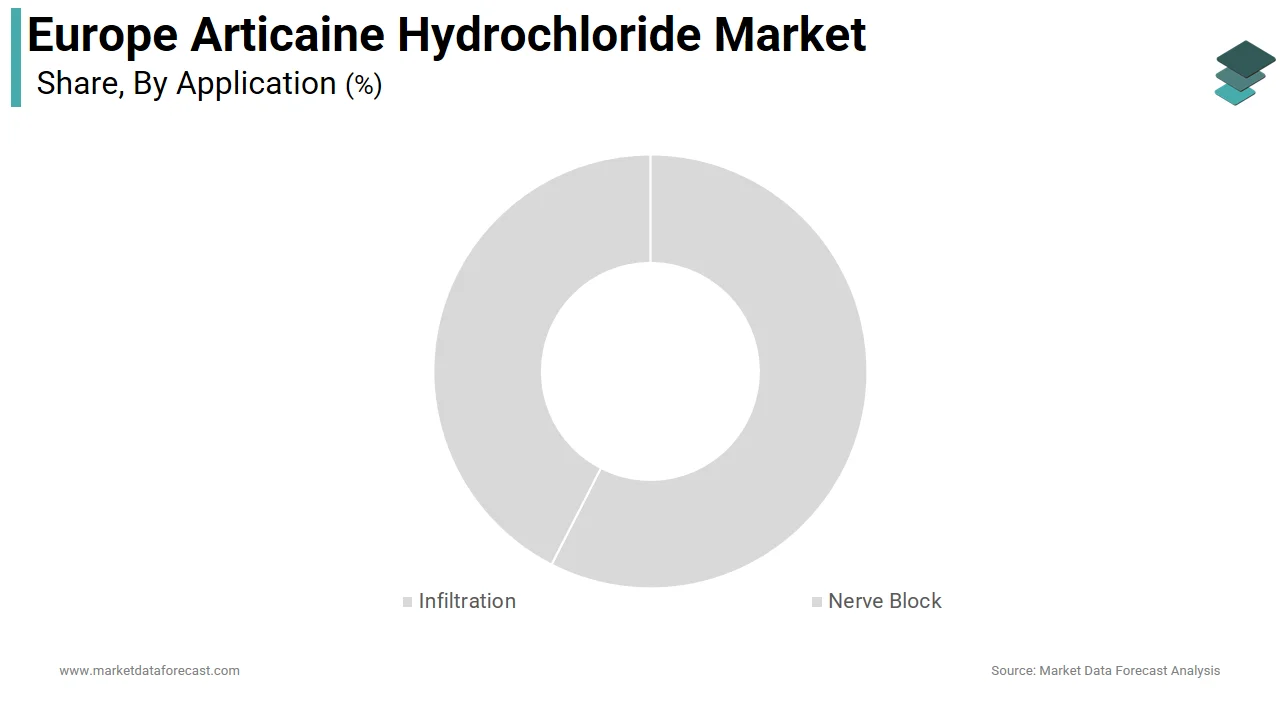
The infiltration segment is predicted to witness the highest CAGR of 6.9% from 2025 to 2033 due to the rising volume of minimally invasive anterior dental procedures and the increasing adoption of articaine in non-dental aesthetic applications where localized anesthesia suffices. According to sources, the use of local anesthesia, including infiltration techniques, in routine dental treatments varies considerably across different European nations, with some countries like Sweden and the Netherlands demonstrating widespread adoption within the scope of dental hygienist practice, while others have differing regulations. Beyond dentistry, infiltration is gaining traction in dermatology and cosmetic medicine. Articaine infiltration is increasingly used in certain superficial aesthetic procedures due to its effectiveness; however, the choice of local anesthetic for a wide variety of non-surgical skin treatments generally depends on the specific procedure and clinical practice guidelines, which can differ among European practitioners. Computer-controlled delivery systems further enhance precision, reducing pain and anxiety, particularly in pediatric and geriatric patients. The rising demand for computer-assisted medical devices and less invasive care has secured infiltration’s status as a high-growth modality in both standard and innovative clinical practices.
By End User Insights
The dental clinics segment was the largest in the Europe articaine hydrochloride market by holding a substantial share in 2024. The supremacy of the dental clinics segment is attributed to the routine reliance on articaine for pain management across millions of restorative, surgical, and preventive procedures performed annually in private and public dental practices. The European Union is seeing a consistent increase in its dental workforce, with practitioners across Member States managing a substantial volume of patient consultations annually. National oral health strategies amplify demand. France’s specialized healthcare reform has successfully broadened the availability of high-quality dental prosthetics and other essential medical equipment by eliminating personal costs for a large segment of the population. There is a notable upward trajectory in the utilization of specialized dental and medical procedures in France, reflecting a broader post-pandemic recovery in surgical and outpatient healthcare activities. Articaine’s rapid metabolism and high success rate in mandibular anesthesia make it the preferred choice in most clinics, according to research. Additionally, digital dentistry tools like The Wand are predominantly deployed in outpatient settings, further entrenching articaine’s use. The decentralized nature of dental care solidifies clinics as the primary consumption channel.
The hospitals segment is estimated to register the fastest CAGR of 7.3% during the forecast period, owing to the expansion of day surgery units, minor oral maxillofacial procedures, and emergency dental care within integrated hospital systems. A significant portion of healthcare facilities within the region have established specialized units for outpatient surgical procedures. The use of specific local anesthetics has become a standard component in managing minor interventions such as tissue sampling and wound care. Changes in healthcare regulations have required major medical institutions to ensure continuous availability for urgent oral health treatments. The expanded availability of emergency dental services has led to a notable rise in the acquisition of pharmaceutical supplies necessary for pain management. There is an observable trend toward integrating dental trauma care more comprehensively into the general hospital environment. Additionally, hospitals serve as referral centers for medically complex patients, such as those on anticoagulants or with cardiac conditions, who require monitored anesthesia administration. Hospital-based care is becoming institutionalized rather than incidental as healthcare systems consolidate services and expand same-day surgery models.
COUNTRY-LEVEL ANALYSIS
Germany Articaine Hydrochloride Market Analysis
Germany led the Europe articaine hydrochloride market and held a 25.3% share in 2024. The prominence of the German market is credited to its advanced dental infrastructure, high treatment frequency, and stringent quality standards. The country’s S3 clinical guidelines explicitly recommend 4 percent articaine with epinephrine for all mandibular nerve blocks, ensuring standardized adoption. Germany also hosts leading manufacturers such as Aspen Pharma and STADA, which produce EU GMP-certified articaine formulations distributed across the continent. Statutory health insurance covers routine dental anesthesia, reducing out-of-pocket barriers and sustaining high volume usage. This combination of clinical protocolization, manufacturing capacity, and universal access cements Germany’s leadership in both consumption and innovation.
France Articaine Hydrochloride Market Analysis
France followed closely in the Europe articaine hydrochloride market by capturing a 18.1% share in 2024. The growth of the French market is propelled by its universal dental coverage policy and high dentist density. National health initiatives have reduced financial barriers for patients seeking fundamental dental services. Following the removal of out-of-pocket costs, there has been a noticeable rise in the frequency of dental operations that require anesthesia. The high concentration of dental professionals relative to the general population facilitates the broad availability of specialized pain management methods. A specific local anesthetic has become the standard choice across both governmental and private dental facilities. Consistent regulatory classifications reinforce the widespread adoption and availability of this primary anesthetic in various medical settings. Additionally, French dental schools mandate articaine training in undergraduate curricula, ensuring generational continuity of preference. This policy-driven accessibility and professional consensus sustain France as a high-volume and high-compliance market.
United Kingdom Articaine Hydrochloride Market Analysis
The United Kingdom is another key player in the Europe articaine hydrochloride market owing to its National Health Service dental framework and growing private aesthetic sector. Large volumes of dental procedures requiring local anesthesia are performed regularly in the United Kingdom. A notable shift in clinical preference has emerged as certain anesthetic agents gain broader use over traditional options. Professional dental bodies have revised their clinical recommendations to favor specific local anesthetics for nerve blocks. The transition toward alternative anesthetics is driven by observations of improved efficacy in achieving successful numbness. Beyond dentistry, UK aesthetic clinics, particularly in London and Manchester, use articaine infiltration for dermal filler and laser procedures, with the British College of Aesthetic Medicine recognizing its safety in superficial anesthesia. Despite NHS constraints, private dental practices account for a notable share of articaine sales, reflecting patient willingness to pay for enhanced comfort. This dual public-private dynamic creates resilient and diversified demand across clinical and cosmetic applications.
Italy Articaine Hydrochloride Market Analysis
Italy is moving ahead steadfastly in the Europe articaine hydrochloride market due to high rates of dental service utilization and a strong tradition of oral surgery. The frequency of adults seeking dental care has shown an upward trend. There has been an increase in the proportion of the adult population in Southern Europe reporting a dental visit. A specific anesthetic has become widely preferred in dental settings, especially for complex procedures like implantology. The country’s aging population drives demand for complex dental rehabilitation requiring reliable nerve blocks. Additionally, Italy’s pharmaceutical regulatory agency AIFA includes articaine in its national therapeutic formulary, ensuring reimbursement in both hospital and outpatient settings. Regional health authorities in Lombardy and Emilia Romagna have also invested in digital anesthesia training programs, enhancing clinical adoption. This integration of demographic need, clinical tradition, and public health support positions Italy as a stable and high-engagement market.
Sweden Articaine Hydrochloride Market Analysis
Sweden is likely to expand in the Europe articaine hydrochloride market from 2025 to 2033, owing to its evidence-based dentistry model and early adoption of innovative anesthesia delivery. Articaine is favored within the national reimbursement system for all dental procedures. The mandatory use of a particular delivery technology in public clinics influences the consumption patterns of this anesthetic. A centralized system monitors patient outcomes related to anesthetic use, and national guidelines differentiate anesthetic concentrations based on patient age demographics. This data-driven regulatory approach ensures optimal risk-benefit balance and high clinical trust. As a result, Sweden achieves some of the lowest rates of anesthetic failure and patient anxiety in Europe, solidifying its role as a benchmark for safe and effective articaine utilization.
COMPETITIVE LANDSCAPE
The Europe articaine hydrochloride market is characterized by a concentrated yet competitive landscape dominated by a few multinational pharmaceutical companies with established sterile injectables expertise. Competition is primarily based on product quality, regulatory compliance, formulation stability, and compatibility with modern delivery systems, rather than price, due to the specialized nature of the application. Incumbents benefit from long-standing relationships with dental distributors, hospital pharmacies, and national health systems, which create high barriers to entry for new players. The market is further shaped by stringent EU regulations governing anesthetic use prescription requirements and pharmacovigilance reporting, which favor companies with robust compliance infrastructure. While generic status limits pricing power, innovation in delivery formats, concentration variants, and digital integration offers differentiation. Smaller regional players struggle with API sourcing and validation costs, leading to market consolidation. Overall, the competitive environment rewards reliability, safety, and clinical collaboration over aggressive marketing, with trust and consistency being the decisive factors for sustained market presence.
KEY MARKET PLAYERS
The leading companies operating in the Europe articaine hydrochloride market include:
- 3M
- Anhui BBCA Pharmaceutical Co., Ltd.
- Dentsply Sirona
- Inibsa Dental S.L.U
- Jinan Chenghui Shuangda Chemical Co., Ltd.
- Aspen Pharmacare Holdings Limited
- Jinan Ruixing Pharmaceutical Technology Co., Ltd.
- STADA Arzneimittel AG
- Manus Aktteva Biopharma LLP
- Pfizer Inc.
- Pierrel S.p.A
- Braun SE
- Sanofi
- Septodont
- Siegfried AG
- Sigma-Aldrich
TOP PLAYERS IN THE MARKET
- Aspen Pharmacare is a leading supplier of articaine hydrochloride in Europe through its extensive portfolio of generic anesthetics marketed under various brand names. Headquartered in South Africa, the company operates EU GMP-certified manufacturing facilities in Germany and the Netherlands, ensuring compliance with stringent European pharmacopoeia standards. Aspen has strengthened its position by securing national reimbursement approvals for its articaine cartridges in multiple European countries. It also launched a ready to use pre filled cartridge system compatible with computer-controlled anesthesia devices, enhancing precision and reducing waste. These initiatives reinforce Aspen’s role as a reliable and innovative provider of essential local anesthetics across the European healthcare landscape.
- STADA Arzneimittel AG is a major German pharmaceutical company with a strong presence in the Europe articaine hydrochloride market through its high-quality generic injectables. The company leverages its integrated manufacturing and distribution network across Central and Eastern Europe to ensure consistent supply to dental clinics and hospitals. In recent years, STADA has focused on regulatory harmonization by aligning its articaine formulations with updated European Medicines Agency safety guidelines. It also introduced child-specific dosing variants with reduced concentrations to address safety concerns in pediatric dentistry. These actions demonstrate its commitment to clinical excellence, patient safety, and professional education alongside product supply.
- Braun SE, a globally recognized German medical technology and pharmaceutical company, plays a critical role in the Europe articaine hydrochloride market through its certified injectable anesthetics used in both dental and minor surgical settings. The company emphasizes pharmaceutical purity and traceability with end-to-end quality control from active ingredient to final cartridge. It also integrated its anesthetic delivery systems with digital documentation platforms, enabling real-time usage tracking in compliance with EU pharmacovigilance requirements. By aligning its products with digital health infrastructure and hospital safety protocols, B. Braun strengthens its position as a trusted partner in institutional and advanced outpatient care environments across Europe.
TOP STRATEGIES USED BY THE KEY MARKET PARTICIPANTS
Key players in the Europe articaine hydrochloride market focus on achieving and maintaining EU GMP and pharmacopoeia compliance to ensure uninterrupted supply to regulated healthcare settings. They invest in specialized cartridge formats compatible with computer-controlled anesthesia systems to meet demand from modern dental practices. Companies actively pursue national reimbursement approvals and inclusion in public health formularies to enhance accessibility and adoption. Strategic partnerships with dental associations and training institutions build clinical trust and promote safe usage protocols. Additionally, firms are developing age-adjusted formulations, such as lower concentration variants for children, to address safety concerns and expand eligible patient populations. These strategies collectively strengthen regulatory standing, product differentiation, and professional engagement across diverse European healthcare systems.
MARKET SEGMENTATION
This Europe articaine hydrochloride market research report is segmented and sub-segmented into the following categories.
By Application
- Infiltration
- Nerve Block
- Others
By End User
- Dental Clinics
- Hospitals
- Academic
- Research Institutes
By Country
- UK
- France
- Spain
- Germany
- Italy
- Russia
- Sweden
- Denmark
- Switzerland
- Netherlands
- Turkey
- Czech Republic
- Rest of Europe