- Product Description Description
- Table of Contents TOC
- List of Table & Figure LOT
- Get Free Sample PDF Sample PDF
Market Size, 2025
$921.65 MnMarket Estimate, 2026
$1,010 MnMarket Forecast, 2034
$2,101 MnCAGR, 2026–2034
9.59%Europe Epinephrine Market Report Summary
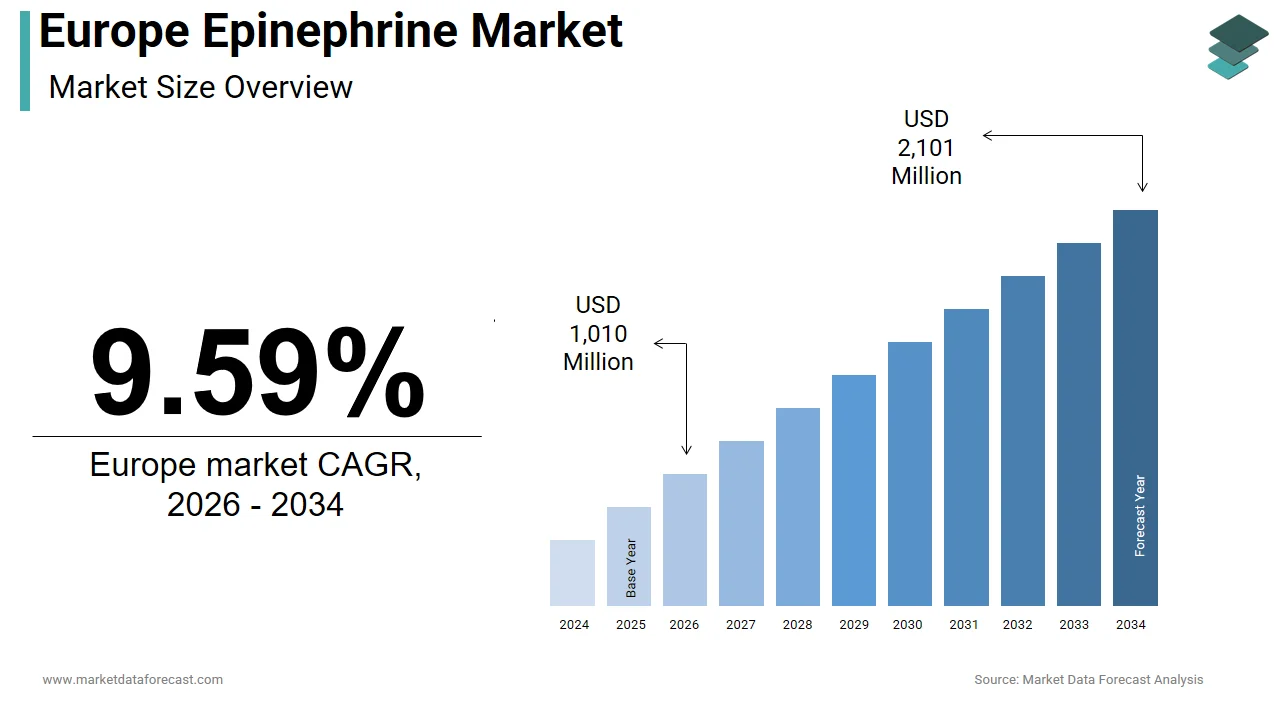
The Europe epinephrine market was valued at USD 921.65 million in 2025, is anticipated to reach USD 1,010 million in 2026, and is projected to reach USD 2,101 million by 2034, growing at a strong CAGR of 9.59% from 2026 to 2034. Market growth is driven by the rising prevalence of severe allergies, increasing incidence of anaphylaxis, and expanding awareness regarding emergency allergy management. Epinephrine remains the first-line, life-saving treatment for acute allergic reactions, leading to sustained demand across healthcare settings. Growing prescription rates, school and workplace stocking policies, and advancements in user-friendly auto-injector designs are further accelerating market expansion.
Key Market Trends
- Rising prevalence of food allergies and anaphylactic reactions.
- Increasing adoption of auto-injector devices for rapid self-administration.
- Growing implementation of public access and emergency stock programs.
- Expansion of patient education and awareness initiatives.
- Strengthening focus on generic auto-injector availability and cost accessibility.
Segmental Insights
- Based on type, the auto-injector segment dominated the market in 2025, driven by ease of use, portability, and widespread physician preference for emergency self-administration.
- Based on application, the anaphylaxis segment held the largest share in 2025, supported by epinephrine’s status as the sole first-line treatment for acute systemic allergic reactions.
- Based on distribution channel, the retail pharmacies segment accounted for 65.3% share in 2025, driven by prescription-based dispensing, refill demand, and strong retail pharmacy networks across Europe.
Regional Insights
The Europe epinephrine market is witnessing strong growth across major economies, supported by increasing allergy awareness, strong regulatory oversight, and expanded healthcare access.
- Germany led the regional market in 2025 with 20.3% share, driven by strong healthcare infrastructure, high prescription rates, and robust reimbursement systems.
- The United Kingdom followed closely with 18.6% share in 2025, supported by public health initiatives and increasing school-based emergency preparedness policies.
- France holds a significant position, supported by its strong regulatory framework and cultural emphasis on preventive healthcare and allergy management.
Competitive Landscape
The Europe epinephrine market is characterized by strong competition among global pharmaceutical companies and specialty drug manufacturers. Market players are focusing on developing cost-effective generic auto-injectors, enhancing device usability, and expanding distribution networks. Strategic partnerships, regulatory approvals, and investments in patient education programs are shaping competitive dynamics across the region.
Prominent companies operating in the Europe epinephrine market include Mylan N.V., ALK-Abelló A/S, Teva Pharmaceutical Industries Ltd, Viatris Inc, Adamis Pharmaceuticals Corporation, Pfizer Inc, and Lincoln Medical Limited.
Europe Epinephrine Market Size
The size of the Europe epinephrine market was valued at USD 921.65 million in 2025. This market is expected to grow at a CAGR of 9.59% from 2026 to 2034 and be worth USD 2,101 million by 2034 from USD 1,010 million in 2026.
Epinephrine, also known as adrenaline, is a powerful chemical that acts as both a hormone and a neurotransmitter. It acts rapidly to constrict blood vessels, relax airway muscles, and stimulate the heart, making it the first line and only effective emergency treatment for anaphylaxis. The market’s current dynamics are shaped not by commercial trends but by a public health imperative driven by rising allergy prevalence and evolving regulatory mandates. The European Academy of Allergy and Clinical Immunology emphasizes that food allergies are a major, growing health issue affecting millions across Europe, with the number of pediatric cases rising significantly. This growing at-risk population has triggered policy responses across the region. Following safety recommendations from the European Medicines Agency to improve access to epinephrine, national authorities in countries like the UK have enabled schools to maintain emergency adrenaline auto-injectors on-site for immediate use. This shift from individual to institutional preparedness is fundamentally reshaping demand patterns and access protocols for this essential medicine.
MARKET DRIVERS
Escalating Prevalence of Life-Threatening Allergies Across All Age Groups
The documented and accelerating rise in the incidence of severe allergies, particularly food-induced anaphylaxis, is among the key drivers of the Europe epinephrine market. This trend creates a direct and non-discretionary demand for emergency treatment. Epidemiological trends across Europe indicate a significant, ongoing rise in hospital admissions for severe allergic reactions (anaphylaxis) over the last decade, with children and teenagers experiencing the most rapid increase in hospitalization rates. This trend is attributed to complex factors, including changes in dietary patterns, reduced early-life microbial exposure, and environmental influences. The clinical consensus, reinforced by the World Allergy Organization, is unequivocal: immediate epinephrine administration is the single most critical factor in preventing anaphylactic fatalities. Consequently, this rising disease burden translates directly into a larger population requiring prescribed epinephrine auto-injectors. National health systems are responding by expanding prescription criteria and public awareness campaigns, ensuring that more individuals at risk are equipped with this essential medication, thereby sustaining robust and inelastic demand.
Mandatory Institutional Stocking Policies in Public and Educational Settings
The legislative and policy shift toward mandating the availability of epinephrine auto injectors in public spaces, particularly schools and childcare facilities, further propels the growth of the Europe epinephrine market. This move represents a paradigm change from reliance on individual possession to community-based preparedness. Following initial regulatory changes permitted by the UK government several years ago, schools in England have been encouraged to adopt a policy of maintaining a supply of emergency adrenaline auto-injectors for pupils with severe allergies, a trend that aligns with similar preventative initiatives seen in other European nations like France. Across the European Union, there is a growing trend of national health authorities and advocacy groups piloting or implementing policies to enhance the availability of emergency, non-personalized epinephrine auto-injectors in educational settings to manage severe allergic reactions. This institutional approach creates a new, large-scale, and recurring procurement channel that is independent of individual prescriptions. It ensures that epinephrine is available for first-time reactions or for individuals who may not have their personal device, effectively broadening the safety net and significantly amplifying the total addressable market volume beyond the patient level.
MARKET RESTRAINTS
Stringent Regulatory Pathways and Complex Reimbursement Landscapes
The highly fragmented and rigorous regulatory and reimbursement environment varies markedly between member states, which restricts the growth of the Europe epinephrine market. The European Medicines Agency provides centralized marketing authorization, but national bodies independently decide on reimbursement and pricing. This process can be lengthy and unpredictable, often requiring extensive health economic data to justify the cost of newer auto-injector devices. For instance, divergent national reimbursement processes in Italy and Spain create significant delays in patient access to new epinephrine delivery technologies. Fragmented national frameworks in the European Union introduce high administrative barriers for manufacturers, restricting the swift adoption of innovative epinephrine products and potentially reducing the quality of patient care.
High Cost of Advanced Auto Injector Devices and Patient Affordability Issues
The high out-of-pocket cost associated with branded epinephrine auto-injectors presents a persistent barrier to consistent patient access and adherence, and thereby affects the expansion of the Europe epinephrine market. This issue is particularly pronounced in countries with limited or no public reimbursement. Even in systems with partial coverage, co-payments can be substantial, leading to situations where patients ration their supply or carry expired devices. Research indicates that allergy patients in Southern and Eastern Europe frequently struggle to afford necessary second or replacement epinephrine auto-injectors, leading to increased safety risks. In various European markets, the cost of an epinephrine auto-injector imposes a significant financial burden on families managing chronic conditions, particularly when the devices are not fully covered by national health insurance. This affordability gap is exacerbated by the need for multiple devices to be kept at home, school, and work, creating a financial strain that directly impacts public health outcomes and constrains the full realization of market potential.
MARKET OPPORTUNITIES
Development and Adoption of Next Generation User-Friendly Delivery Systems
The innovation of next-generation epinephrine delivery devices prioritizes ease of use, reduced anxiety, and enhanced reliability, which offers a compelling opportunity for the Europe epinephrine market. Current auto injectors, while effective, can be intimidating for users, especially children and the elderly, due to their needle mechanism and audible activation. There is a clear unmet need for devices with features such as voice guidance, hidden needles, and simpler one-step operation. Companies investing in human-centered design can capture significant market share by addressing the psychological barrier to use, which is a known factor in treatment delays. Adrenaline administration for anaphylaxis is frequently delayed or improperly administered in community settings, largely driven by fear, lack of confidence in identifying the reaction, or failure to follow established emergency protocols. A device that demonstrably reduces this error rate would not only improve survival outcomes but also gain strong endorsement from clinicians and patient advocacy groups, creating a powerful competitive advantage in a market where trust and usability are paramount.
Expansion of Pharmacist-Led Anaphylaxis Preparedness and Training Programs
Utilizing the community pharmacy network shows strong promise to bolster anaphylaxis preparedness, which is anticipated to fuel the expansion of the Europe epinephrine market. This can be achieved through extended training and broadened device dispensing authority. Pharmacists are among the most accessible healthcare professionals in Europe, and their role is evolving beyond dispensing to include public health services. In several EU countries, pilot programs have demonstrated that pharmacists can effectively train patients and caregivers on auto-injector use and even administer epinephrine in emergencies under specific protocols. As per sources, integrating pharmacists into national anaphylaxis response strategies can dramatically improve device accessibility and user competency. Manufacturers can improve emergency responses to allergies by partnering with pharmacy associations to standardize training and expand legal practice scopes, creating a reliable support network that boosts device adoption and proper use.
MARKET CHALLENGES
Persistent Shortages and Fragile Supply Chain for a Critical Medicine
The recurrent occurrence of supply shortages, which jeopardize patient safety and undermine public health initiatives, is one of the challenges to the European epinephrine market. These shortages are often caused by manufacturing complexities, stringent quality control requirements for sterile injectables, and the concentration of active pharmaceutical ingredient production among a limited number of suppliers. European health authorities identified temporary supply constraints for specific, crucial allergy-emergency devices, prompting warnings and management strategies to address the scarcity of epinephrine auto-injectors in several countries. As per a study, such disruptions are particularly dangerous for a medication with no therapeutic substitute and a narrow window for effective intervention. The just-in-time inventory models used by many public health systems offer little buffer against these shocks, leaving patients and institutions vulnerable. Building a more resilient and diversified supply chain is a systemic challenge that requires coordinated action from regulators, manufacturers, and health authorities to ensure uninterrupted access to this life-saving drug.
Inadequate Public Awareness and Training Leading to Suboptimal Use
A widespread lack of public knowledge and practical training on its use slows down the expansion of the Europe epinephrine market. This compromises the effectiveness of the epinephrine, despite its life-saving potential. Many individuals who possess an auto injector have never practiced with a trainer device and are unsure of the correct procedure during a high-stress emergency. A 2024 study published in the journal Children revealed that a minority of parents of children with food allergies could correctly demonstrate all required steps for administering an adrenaline auto-injector in a simulated emergency. The research highlighted that, despite having prescriptions, most caregivers struggled with proper usage procedures, indicating a need for improved training. This knowledge gap extends to teachers, restaurant staff, and other potential first responders in public settings. The consequence is a dangerous delay in treatment, which is the primary modifiable risk factor for anaphylaxis-related death. Bridging this education gap requires sustained, large-scale public health campaigns and mandatory training, but the fragmented nature of European healthcare systems makes coordinated implementation difficult, representing a persistent and deadly challenge to the market’s ultimate purpose.
REPORT COVERAGE
| REPORT METRIC | DETAILS |
| Market Size Available | 2025 to 2034 |
| Base Year | 2025 |
| Forecast Period | 2026 to 2034 |
| Segments Covered | By Type, Application, Distribution Channel, and Country. |
| Various Analyses Covered | Global, Regional, and Country-Level Analysis, Segment-Level Analysis, Drivers, Restraints, Opportunities, Challenges; PESTLE Analysis; Porter’s Five Forces Analysis, Competitive Landscape, Analyst Overview of Investment Opportunities |
| Countries Covered | UK, France, Spain, Germany, Italy, Russia, Sweden, Denmark, Switzerland, Netherlands, Turkey, Czech Republic, and the Rest of Europe. |
| Market Leaders Profiled | Mylan NV, ALK-Abelló A/S, Teva Pharmaceutical Industries Ltd, Viatris Inc, Adamis Pharmaceuticals Corporation, Pfizer Inc, and Lincoln Medical Limited. |
SEGMENTAL ANALYSIS
By Type Insights
The auto injector segment dominated the Europe epinephrine market by accounting for a substantial share in 2025. The dominance of the auto injector segment is driven by its critical role as the standard of care for out of hospital anaphylaxis management, where speed and simplicity of use are paramount. One more reason for growth here is the widespread adoption of auto-injectors as the prescribed emergency treatment for individuals at risk of severe allergic reactions. National health authorities across Europe have issued clear guidelines recommending auto-injectors over manual injection methods due to their ease of use by non-medical personnel. According to guidelines and reports associated with the European Academy of Allergy and Clinical Immunology, auto-injector devices have become the predominant method for community-based epinephrine administration in Western Europe. This preference is rooted in their pre-measured dose, spring-loaded needle mechanism, and voice or visual instructions on newer models, which collectively minimize the risk of dosing errors and administration delays during a high-stress emergency, making them the indispensable tool for public and personal safety.
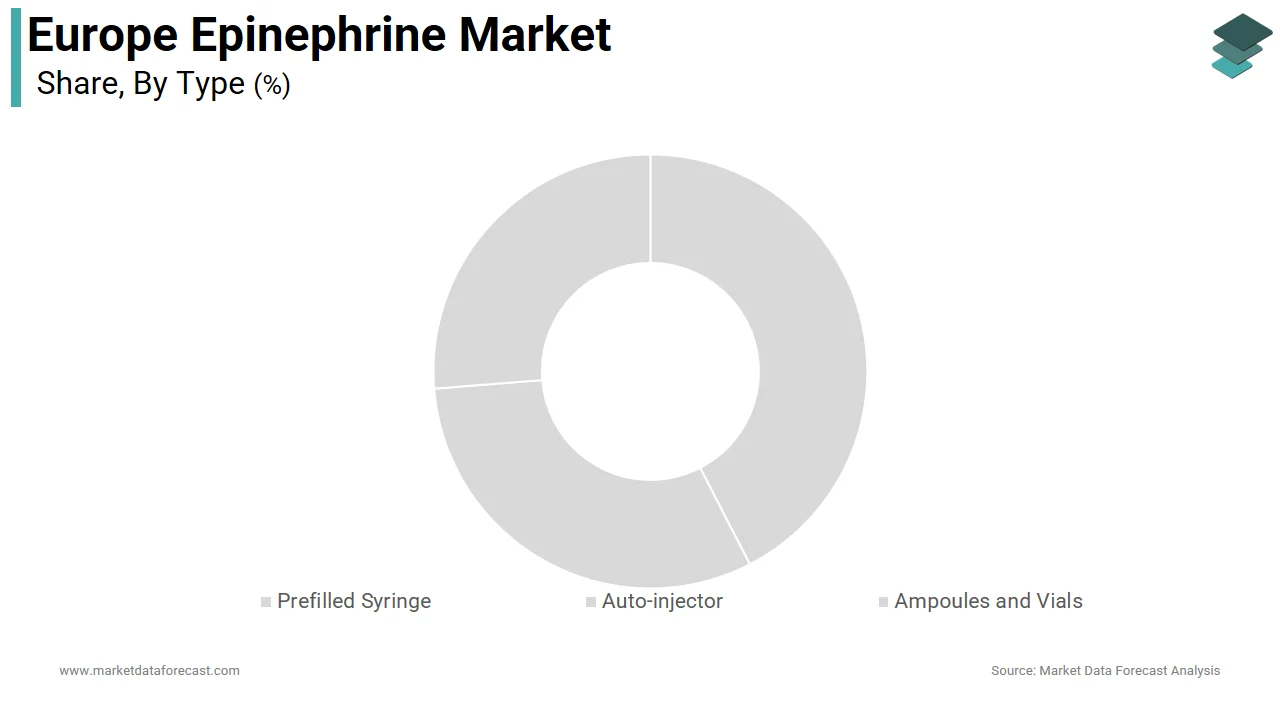
The prefilled syringe segment is likely to experience the fastest CAGR of 6.2% from 2026 to 2034 due to a strategic shift in clinical settings toward ready-to-use, error-reducing medication formats. Hospitals and emergency medical services are increasingly replacing traditional ampoules and vials with prefilled syringes to streamline resuscitation protocols and enhance patient safety. Also helping this segment is the reduction in preparation time and the elimination of potential calculation and drawing errors during critical cardiac arrest or anaphylaxis events. To improve the efficacy of advanced life support, current resuscitation standards encourage using ready-to-use adrenaline syringes to reduce preparation time and minimize breaks in high-quality chest compressions. Furthermore, the European Medicines Agency has been promoting the adoption of ready-to-use parenteral products to improve medication safety, a policy that directly benefits the prefilled syringe format. This institutional push, combined with the inherent advantages of reliability and speed, positions prefilled syringes as the future standard in professional emergency care.
By Application Insights
The anaphylaxis application segment led the Europe epinephrine market by occupying a significant share in 2025 because of epinephrine’s status as the sole first-line and life-saving treatment for this acute, systemic allergic reaction. In addition, this segment is helped by the unequivocal clinical consensus, reinforced by all major European medical societies, that immediate intramuscular epinephrine administration is the single most critical intervention to prevent fatality. This medical imperative translates into a large and growing patient population requiring prescribed epinephrine, driven by the rising prevalence of food, insect, and drug allergies. Data from developed countries indicate that emergency department visits for severe allergic reactions (anaphylaxis) have shown a marked upward trend over the past decade, with significant increases observed in children and adults. This epidemiological trend, coupled with public health policies mandating epinephrine availability in schools and public venues, creates a sustained and inelastic demand that firmly anchors the market to the anaphylaxis indication.
The cardiac arrest application segment is on the rise and is expected to be the fastest-growing segment in the market by witnessing a CAGR of 5.8% during the forecast period. While epinephrine’s role in anaphylaxis is well established, its use in advanced cardiac life support is being re-evaluated and optimized, driving renewed focus and protocol adherence. The European Resuscitation Council’s 2021 guidelines reaffirmed the administration of epinephrine every three to five minutes during resuscitation for non-shockable rhythms, solidifying its place in the algorithm. A key driver of growth is the ongoing training and certification of a vast network of healthcare professionals and first responders across Europe. Educational initiatives supported by European resuscitation bodies focus on training a large volume of international healthcare professionals in advanced life support, with a specific, standardized emphasis on the precise timing and delivery of adrenaline during resuscitation attempts. This continuous education cycle ensures consistent demand from hospitals and emergency services. Moreover, the increasing deployment of automated external defibrillators in public spaces is often accompanied by the stocking of emergency drug kits containing epinephrine, further expanding their application footprint in the pre-hospital setting.
By Distribution Channel Insights
The retail pharmacies segment held the majority share of 65.3% of the Europe epinephrine market in 2025. The supremacy of the retail pharmacies segment is credited to its role as the primary point of access for patients who have been prescribed an epinephrine auto-injector for personal use. The key driver is the direct link between a physician’s prescription and the patient’s ability to obtain the device quickly and conveniently. In most European countries, a prescription for an auto injector is filled at a local community pharmacy, which also provides essential counseling on its use and storage. As per the European Healthcare Distribution Association (GIRP), the extensive, interconnected network of community pharmacies across Europe ensures comprehensive geographic availability of medication to the public. This channel is further reinforced by national health systems that often provide partial or full reimbursement for the device through pharmacy claims, making it the most practical and accessible route for the vast majority of at-risk individuals and their families.
The online pharmacies segment is expected to exhibit a noteworthy CAGR of 9.4% from 2026 to 2034. This rapid expansion is propelled by a confluence of digital health adoption, convenience, and the need for discreet access to a stigmatized medical device. Many patients, particularly adolescents and young adults, find it easier to reorder their epinephrine auto-injectors through a trusted online platform rather than visiting a physical store. Digital pharmaceutical delivery is becoming a standard component of European healthcare, particularly for consumers in urban areas managing long-term conditions. This rising trend is primarily driven by the convenience of receiving medication at home and the time-saving benefits compared to traditional, in-person pharmacy visits. Regulatory frameworks in countries like Germany and the Netherlands have evolved to allow licensed online pharmacies to dispense prescription medications like epinephrine, provided they adhere to strict verification and counseling protocols. This regulatory clarity, combined with the post-pandemic acceleration of e-commerce in healthcare, has created a robust and rapidly scaling channel that offers a seamless, private, and efficient alternative to traditional retail.
COUNTRY-LEVEL ANALYSIS
Germany Epinephrine Market Analysis
Germany outperformed other countries in the European epinephrine market by accounting for a 20.3% share in 2025. The leading position of the German market is driven by a highly developed healthcare infrastructure, a strong emphasis on patient safety, and proactive public health policies regarding allergy management. A key driver is the country’s comprehensive school health program, which mandates that all schools in most federal states must have access to epinephrine auto-injectors for emergency use. German public health authorities, in collaboration with state educational entities, have established widespread, high-adoption health and hygiene protocols across school systems, which have fostered consistent, structured procurement opportunities for protective and preventive materials. Furthermore, Germany’s statutory health insurance system provides broad reimbursement for prescribed auto-injectors, ensuring high patient access. The presence of a large and well-informed patient advocacy community, supported by organizations like the German Allergy and Asthma Association, also drives awareness and consistent device carriage, solidifying Germany’s role as a cornerstone market.
United Kingdom Epinephrine Market Analysis
The United Kingdom followed closely in the Europe epinephrine market by capturing a 18.6% share in 2025. The growth of the UK market is attributed to decisive government action and a centralized healthcare approach. The UK’s market status was significantly elevated by the passage of legislation requiring all state-funded schools in England to hold at least two epinephrine auto-injectors. This nationwide mandate, as reported by the UK Department of Health and Social Care, created an immediate and substantial new demand stream. The National Health Service provides free prescriptions for epinephrine auto-injectors to all patients diagnosed with a risk of anaphylaxis, removing a major financial barrier to access. This combination of institutional preparedness and universal patient coverage ensures a high level of device availability across the population. The UK’s robust pharmacovigilance system and active allergy research centers, such as those at Imperial College London, further contribute to a well-informed clinical and public understanding of the critical need for epinephrine.
France Epinephrine Market Analysis
France is another major player in the Europe epinephrine market due to its strong regulatory framework and a cultural emphasis on preventive healthcare. The French National Authority for Health has issued clear and widely disseminated guidelines that position the epinephrineauto-injectorr as an essential component of the “Allergy Action Plan” for at-risk individuals. A primary driver of the market is the mandatory inclusion of this plan in the medical records of all children with known severe allergies, which is shared with schools and childcare facilities. The French health and education ministries, through their formal, individualized care plans, aim to ensure that most diagnosed children with severe allergies possess prescribed epinephrine auto-injectors and that school personnel are trained in emergency management, with an emphasis on improving access to and education on these lifesaving devices. This system, which encourages the availability of non-personalized auto-injectors in schools, is designed to support, not guarantee, a comprehensive, nationwide protective environment for at-risk students. The French social security system covers a significant portion of the device cost, and the presence of a dense network of community pharmacies guarantees accessibility. This systematic, top-down approach to anaphylaxis management underpins France’s stable and mature market.
Italy Epinephrine Market Analysis
Italy witnessed a steady growth in the Europe epinephrine market owing to a growing awareness of allergy risks and a gradual harmonization of regional health policies. Historically, access to epinephrine auto-injectors varied significantly between Italy’s autonomous regions, but recent national initiatives have begun to standardize care. A key driver is the 2022 decree from the Italian Medicines Agency that simplified the prescription process and expanded the list of authorized prescribers to include pediatricians and allergists. Following recent reforms to the national health system and primary care, Italian health data indicate a rising trend in the availability and prescription of epinephrine auto-injectors for pediatric populations. The Italian Society of Allergology has also launched nationwide educational campaigns for teachers and parents, improving recognition of anaphylaxis symptoms and confidence in using the device. Italy is emerging as a major growth market due to rising accessibility, even if reimbursement remains inconsistent. This shift is being accelerated by unified policies and better public education.
Spain Epinephrine Market Analysis
Spain is predicted to expand in the Europe epinephrine market from 2026 to 2034 and is notable for its recent and ambitious public health interventions to address anaphylaxis. The Spanish Agency of Medicines and Medical Devices has been actively promoting the use of epinephrine auto-injectors through national allergy strategies. A major catalyst for market growth was the Royal Decree that empowers school nurses and trained staff to administer epinephrine in emergencies, even without a specific student prescription. Educational institutions in major Spanish regions are increasingly adopting safety protocols to enhance the availability of emergency medication for severe allergic reactions, aiming to improve prompt treatment for students experiencing anaphylaxis in school settings. The public healthcare system provides full coverage for the device for all diagnosed patients, ensuring that cost is not a barrier. The combination of this progressive institutional policy and universal patient access is transforming Spain from a historically underpenetrated market into one of the most dynamic and responsive in Southern Europe.
COMPETITIVE LANDSCAPE
The competitive landscape of the Europe epinephrine market is defined by a delicate balance between innovation, public health responsibility, and supply chain integrity. Competition is not driven by price alone but by a manufacturer’s ability to guarantee uninterrupted supply, demonstrate superior device usability, and actively contribute to anaphylaxis awareness and education. The market features a mix of originator brands and authorized generics, with differentiation centered on device design, patient support services, and reliability of delivery. Regulatory scrutiny from the European Medicines Agency is intense, given the life-critical nature of the product, which raises the barrier to entry and favors established pharmaceutical companies with proven quality systems. Recent years have seen increased collaboration between manufacturers, patient advocacy groups, and government bodies to standardize training and expand access, creating a unique ecosystem where competitive success is closely tied to societal impact and public trust rather than traditional marketing tactics.
KEY MARKET PLAYERS
The leading companies operating in the Europe epinephrine market include:
- Mylan NV
- ALK-Abelló A/S
- Teva Pharmaceutical Industries Ltd
- Viatris Inc
- Adamis Pharmaceuticals Corporation
- Pfizer Inc
- Lincoln Medical Limited
TOP PLAYERS IN THE MARKET
- Viatris is a key global player with a significant footprint in the Europe epinephrine market, primarily through its authorized generic version of the leading auto injector. The company contributes to global accessibility by offering a cost-effective alternative that maintains the same efficacy and safety profile as the branded product. In Europe, Viatris has strengthened its position by securing reimbursement approvals in multiple countries and partnering with national health agencies to support public anaphylaxis preparedness programs. Its recent actions include expanding its European logistics network to ensure reliable supply and launching comprehensive patient education initiatives in collaboration with allergy associations to improve device usage confidence among caregivers and school staff.
- Pfizer plays a critical role in the Europe epinephrine market through its strategic partnership with a leading auto injector developer, enabling broad distribution of a next-generation epinephrine delivery system across the continent. The company leverages its extensive pharmaceutical infrastructure to ensure high-quality manufacturing and regulatory compliance in all EU member states. To reinforce its market presence, Pfizer has invested in digital training platforms that simulate real-world anaphylaxis scenarios, helping users master correct administration techniques. It has also engaged in policy advocacy, working with European health ministries to promote legislation for institutional epinephrine stocking in schools and public venues.
- Teva is a major supplier of epinephrine in both auto injector and vial formats across Europe, known for its robust generic portfolio and commitment to medication affordability. The company’s global contribution lies in its ability to produce high-volume, reliable epinephrine products that serve both community and hospital settings. In recent years, Teva has enhanced its European operations by upgrading its sterile injectables manufacturing facilities to meet stringent EMA standards and by introducing a new trainer device for its auto injector to support widespread user education. These efforts have solidified its reputation as a dependable partner in emergency allergy care.
TOP STRATEGIES USED BY THE KEY MARKET PARTICIPANTS
Key players in the Europe epinephrine market are primarily focused on three strategic pillars to enhance their impact and reliability. First, they are investing in user-centric device innovation to simplify administration, reduce anxiety, and minimize errors during emergencies. Second, they are actively engaging in public health partnerships to support national anaphylaxis action plans, school stocking initiatives, and caregiver training programs. Third, they are strengthening their supply chain resilience through diversified manufacturing and advanced logistics to prevent shortages of this critical medicine. These strategies collectively address the core challenges of accessibility, usability, and availability, ensuring that life-saving epinephrine reaches those who need it when every second counts.
MARKET SEGMENTATION
This European epinephrine market research report has been segmented and sub-segmented into the following categories.
By Type
- Prefilled Syringe
- Auto-injector
- Ampoules and Vials
By Application
- Anaphylaxis
- Cardiac Arrest
- Superficial Bleeding
- Respiratory Disorders
- Others
By Distribution Channel
- Hospital Pharmacies
- Retail Pharmacies
- Online Pharmacies
By Country
- UK
- France
- Spain
- Germany
- Italy
- Russia
- Sweden
- Denmark
- Switzerland
- Netherlands
- Turkey
- Czech Republic
- Rest of Europe