- Product Description Description
- Table of Contents TOC
- List of Table & Figure LOT
- Get Free Sample PDF Sample PDF
Market Size, 2025
$136.71 MnMarket Estimate, 2026
$167.19 MnMarket Forecast, 2034
$836.81 MnCAGR, 2026–2034
22.3%Europe Platelet Aggregation Devices Market Size, Growth, Trends & Forecast (2026–2034)
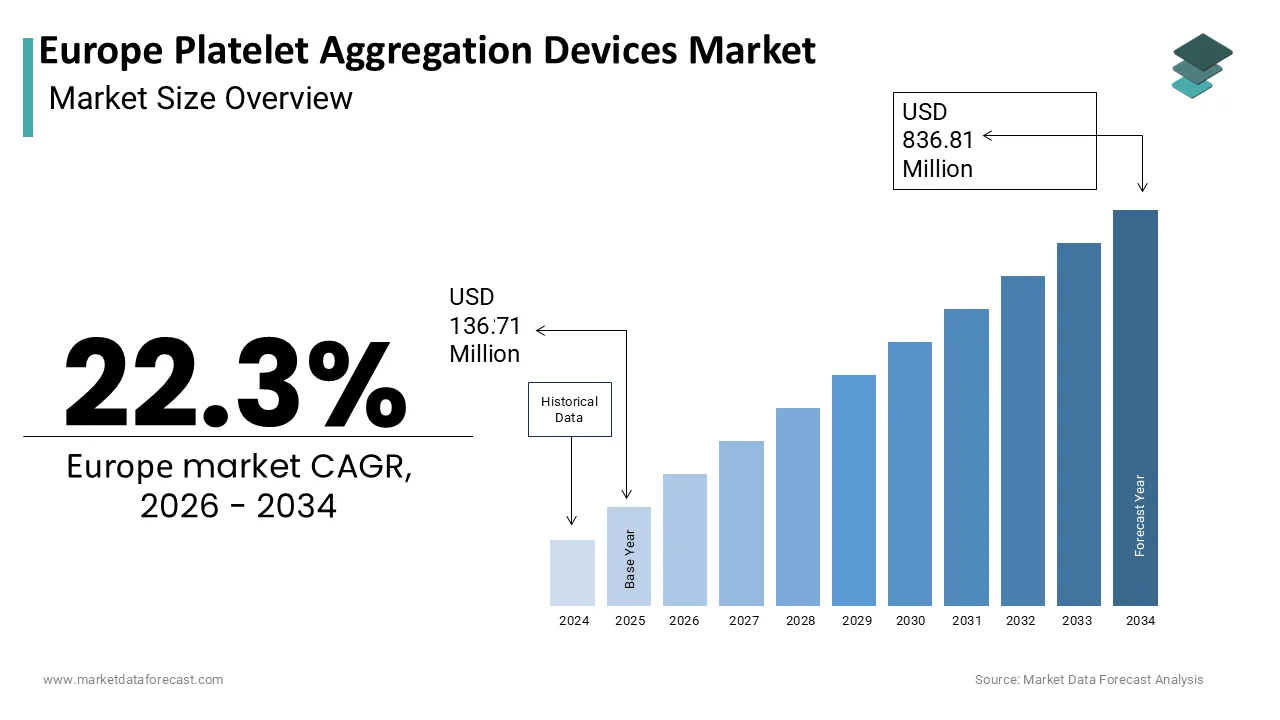
The Europe platelet aggregation devices market size was valued at USD 136.71 million in 2025, is anticipated to reach USD 167.19 million in 2026, and is projected to scale up to USD 836.81 million by 2034, registering a compound annual growth rate (CAGR) of 22.3% during the forecast period from 2026 to 2034. Driven by an aging population, rising cardiovascular disease and ischemic heart disease incidence, extensive antiplatelet therapy monitoring needs, and a structural expansion toward point-of-care (PoC) testing infrastructure, the regional market continues its rapid expansion across European clinical and research institutions.
Key Executive Metrics (At-a-Glance)
- 2025 Base Valuation: USD 136.71 Million
- 2026 Current Valuation: USD 167.19 Million
- 2034 Forecast Valuation: USD 836.81 Million
- Compound Annual Growth Rate (CAGR): 22.3% (2026–2034)
- Dominant Product Segment: Reagents (holding a 48.5% market share in 2025 due to recurring agonist consumption and multi-agonist panel requirements)
- Fastest-Growing Product Segment: Consumables and Accessories (projected at a 7.2% CAGR from 2025 to 2033 driven by cartridge-based point-of-care test adoption)
- Dominant Application Segment: Clinical Applications (leading via entrenched cardiovascular management protocols and perioperative bleeding risk assessments)
- Fastest-Growing Application Segment: Research Applications (projected at a 6.8% CAGR fueled by pharmaceutical innovations and academic platelet phenotype studies)
- Dominant End-User Segment: Standalone Hospitals (accounting for a 63.4% market share in 2025 owing to acute care needs and hybrid operating room deployments)
- Fastest-Growing End-User Segment: Research and Academic Institutes (projected at a 6.5% CAGR from 2025 to 2030 driven by consortium funding and specialized training platforms)
- Dominant Country Market: Germany (accounting for a 22.4% market share in 2025 backed by advanced healthcare infrastructure, high PCI volumes, and statutory reimbursement)
Core Market Drivers
- Cardiovascular Disease Prevalence: High mortality and morbidity from cardiovascular disorders requiring routine platelet reactivity monitoring post-percutaneous coronary intervention.
- Point-of-Care Diagnostics Expansion: Shift toward decentralized outpatient care and rapid whole-blood testing units across regional emergency departments and chest pain clinics.
Primary Market Restraints & Challenges
- IVDR Regulatory Hurdles: Strict compliance demands under the EU In Vitro Diagnostic Regulation extending approval timelines and increasing clinical validation costs.
- Operational Constraints & Interdevice Variability: High operational costs, skilled personnel shortages, restrictive national reimbursement caps, and a lack of pan-European standardization across testing platforms.
Europe Platelet Aggregation Devices Market Segmentation Breakdown
| Segment Category | Leading Sub-Segment | Fastest-Growing Sub-Segment |
|---|---|---|
| By Product | Reagents (48.5% share in 2025) | Consumables and Accessories (7.2% CAGR from 2025–2033) |
| By Application | Clinical Applications (Cardiovascular & Orthopedic) | Research Applications (6.8% CAGR) |
| By End User | Standalone Hospitals (63.4% share in 2025) | Research and Academic Institutes (6.5% CAGR from 2025–2030) |
| By Country | Germany (22.4% share in 2025) | France & United Kingdom (driven by structured pathways and modernization) |
Major Industry Players Profiled
Key enterprises shaping the European platelet aggregation devices market include Werfen, Sysmex Corporation, Siemens Healthineers, Accriva Diagnostics, Helena Laboratories Corporation, BioData Corporation, Haemonetics Corporation, Sentinel CH. S.p.A., Tem Group, and Aggredyne, Inc.
Europe Platelet Aggregation Devices Market Size
The Europe Platelet Aggregation Devices Market is projected to grow from USD 136.71 million in 2025 to USD 167.19 million in 2026 and reach USD 836.81 million by 2034, registering a CAGR of 22.3% during the forecast period from 2026 to 2034.
Platelet aggregation devices are specialized in vitro diagnostic instruments that evaluate the functional capacity of platelets to aggregate in response to physiological or pharmacological agonists such as adenosine diphosphate, collagen, or arachidonic acid. These systems are pivotal in diagnosing inherited or acquired platelet dysfunction, monitoring antiplatelet therapy efficacy, and assessing perioperative bleeding risk. In Europe, the clinical relevance of these devices is amplified by the continent’s high prevalence of cardiovascular disorders, aging demographics, and rigorous standards for hemostasis management. According to the European Society of Cardiology (ESC), cardiovascular disease is the leading cause of death in the European Union (EU), and ischemic heart disease (IHD) is a major contributor, causing approximately 1.8 million deaths annually in the EU or in the broader Europe region. Concurrently, the European Haemophilia Consortium (EHC) estimates that more than 130,000 individuals in Europe live with inherited bleeding disorders, which are primarily treated by replacing the missing coagulation factors. As per the Eurostat data published in a 2025 interactive report, as of January 1, 2023, 21.3 percent of the European Union population was aged 65 or over. Unlike general coagulation assays, platelet aggregometry provides dynamic, functional insights that inform precision therapeutic decisions, making it an indispensable tool in modern cardiovascular and hematology practice across European tertiary care institutions.
MARKET DRIVERS
Rising Prevalence of Cardiovascular Diseases Intensifies Diagnostic Demand
Cardiovascular diseases are the leading cause of growth of the European platelet aggregation devices market. The adoption of these devices is driven by extensive antiplatelet therapy use and the need for therapeutic monitoring. These conditions account for a notable share of all deaths in the EU, with millions of individuals diagnosed with ischemic heart disease. A significant proportion of these patients receive dual antiplatelet therapy post percutaneous coronary intervention, necessitating regular assessment of platelet reactivity to prevent stent thrombosis or hemorrhagic complications. Research points out that a significant number of individuals on clopidogrel remain at high risk of adverse cardiovascular events. Consequently, there is a recognized medical need to identify these high-risk patients, leading major medical associations to recommend specific tests for platelet function in certain high-risk groups. This evidence-based shift toward personalized antithrombotic strategies has entrenched aggregometry within cardiology workflows in Germany, France, and the Nordic countries, where healthcare systems prioritize secondary prevention and therapeutic optimization.
Expansion of Point of Care Testing Infrastructure Enhances Accessibility
The proliferation of decentralized diagnostic models across the region fuels the expansion of the European platelet aggregation devices market. This has accelerated the uptake of compact and rapid platelet aggregation systems, particularly in emergency and ambulatory settings. Traditional laboratory-based aggregometers, while accurate, are often incompatible with time-sensitive clinical decisions due to lengthy processing times and centralized location constraints. Point-of-care diagnostics are getting faster. Aggregometers deliver quick results using whole blood. Healthcare is moving away from hospitals. More outpatient care is happening outside of hospitals. In addition, demand for portable diagnostics is growing. This is a direct result of more care being delivered outside of hospitals. Besides, more point-of-care devices are being bought. Healthcare services like the NHS are procuring more of these devices. Regulation changes are making approvals faster. The EU's medical device rules have clarified requirements, which help get new point-of-care devices approved more quickly. As a result, countries like the Netherlands and Sweden are integrating these devices into chest pain units and preoperative clinics, significantly broadening access beyond academic centers and enhancing real-time clinical decision making in thrombosis management.
MARKET RESTRAINTS
Stringent Regulatory Requirements Impede Product Commercialization Timelines
The implementation of the EU In Vitro Diagnostic Regulation has introduced significant compliance hurdles that have negatively affected the European platelet aggregation devices market. These hurdles delay the market entry of new platelet aggregation technologies. Unlike the previous directive, the new regulation mandates rigorous clinical evidence, post-market surveillance, and notified body scrutiny for most device classes. As per sources, average approval timelines have extended by several months under the updated framework. For platelet aggregometers, which depend on complex biological interactions and multi-agonist validation, this translates into extensive clinical validation studies and documentation burdens. Small and medium-sized enterprises, which constitute a notable share of Europe’s diagnostics sector per Eurostat, often lack the capital and regulatory expertise to meet these demands. Consequently, innovation cycles have slowed, and next-generation devices featuring impedance or microfluidic enhancements face prolonged market entry delays, which limit clinician access to advanced tools and dampen competitive dynamics in the sector.
High Operational Costs and Skilled Personnel Dependency Limit Adoption in Resource-Constrained Settings
The effective operation of these systems demands significant financial and human resources, which restricts the expansion of the European platelet aggregation devices market. This creates adoption barriers in regions with constrained healthcare budgets. Light transmission aggregometry, the clinical gold standard, requires freshly prepared platelet-rich plasma, temperature-controlled reagents, and frequent instrument calibration. Reagent costs a notable amount per multi-agonist test, rendering routine monitoring economically unviable in public hospitals under tight reimbursement caps. Furthermore, accurate interpretation necessitates trained hematology technologists, a workforce in short supply across the EU. There is a shortfall of medical laboratory professionals, with hemostasis specialists among the most scarce. Countries such as Romania, Bulgaria, and Greece, which allocate a smaller share of GDP to healthcare, struggle to sustain aggregometry services outside major urban centers. Even in Germany, the Federal Joint Committee restricts reimbursement to narrowly defined high-risk scenarios, discouraging broader implementation. These operational and staffing challenges create a pronounced urban-rural diagnostic divide, ultimately limiting the real-world impact of platelet function testing despite its clinical merit.
MARKET OPPORTUNITIES
Integration of Artificial Intelligence in Platelet Function Analytics Unlocks Precision Diagnostics
Artificial intelligence is emerging as a transformative enabler of key opportunities in the European platelet aggregation devices market. Platelet aggregation diagnostics is changed by converting complex aggregometry waveforms into actionable clinical insights. Machine learning models can detect subtle patterns in aggregation kinetics, such as slope, lag time, and amplitude, that correlate with drug resistance or bleeding propensity. Apart from these, the European Medicines Agency has launched a dedicated AI task force to evaluate algorithm-based decision support tools, signaling regulatory openness. Pilot programs in Sweden and the Netherlands are already integrating AI-driven aggregometry with electronic health records to generate real-time therapeutic alerts. AI-empowered aggregometers are set to become central to personalized antithrombotic care across Europe, thanks to expanding validation datasets and improved interoperability under the European Health Data Space (EHDS) framework.
Growing Emphasis on Personalized Antiplatelet Therapy Fuels Demand for Comprehensive Monitoring Solutions
The region’s evolving clinical paradigm, centered on individualized cardiovascular treatment, is driving demand for functional platelet testing beyond generic prescribing protocols, which offers a major potential for the expansion of the European platelet aggregation devices market. Pharmacogenetic variability renders standard antiplatelet dosing ineffective in up to a portion of patients, as per studies. This variability has prompted national cardiology societies to advocate for routine platelet reactivity assessment in high-risk cohorts. Specific countries have incorporated functional testing into conditional treatment guidelines for percutaneous interventions. Furthermore, Clinical guidelines developed by medical societies like the European Society of Cardiology (ESC) and the American Society of Clinical Oncology (ASCO) do address baseline cardiovascular risk assessment for patients on potentially cardiotoxic therapies, including those in hemato-oncology. As per research, avoiding a single thrombotic event saves notable euros in downstream care costs, strengthening the case for proactive monitoring. As payers increasingly recognize these long-term savings, reimbursement policies are gradually adapting, creating a sustainable growth corridor for advanced platelet aggregation systems.
MARKET CHALLENGES
Interdevice Variability Compromises Standardization and Clinical Utility
Lack of methodological harmonization across platforms poses a serious impediment to the European platelet aggregation devices market. Devices based on light transmission, multiple electrode impedance, or cartridge-based systems produce non-interchangeable results due to differences in agonist concentration, sample handling, and signal interpretation. This inconsistency undermines the establishment of universal therapeutic thresholds and complicates the application of international trial data in local settings. Despite ongoing efforts by the International Council for Standardization in Haematology to define reference methods, no pan-European standard has been implemented in routine practice. Clinicians in some countries frequently express uncertainty in correlating local aggregometer outputs with published guidelines. Alignment on calibration protocols and performance benchmarks is essential among manufacturers, regulators, and professional societies; without it, the reliability and comparability of platelet function testing will remain compromised, which will limit its integration into standardized care pathways.
Limited Reimbursement Coverage Restricts Routine Clinical Implementation
Inconsistent and restrictive reimbursement policies across the regional healthcare systems constitute a major barrier to the routine use of platelet aggregation testing, which further slows down the expansion of the European platelet aggregation devices market. Most national payers cover the procedure only in narrowly defined circumstances, such as prior stent thrombosis or participation in clinical trials, excluding its application in moderate risk or preventive settings. In Italy, aggregometry is reimbursed exclusively within tertiary centers or research protocols, effectively excluding community hospitals. This fragmentation discourages institutional investment in equipment and training, particularly in regions with already limited diagnostic budgets. The European Federation of Clinical Chemistry and Laboratory Medicine has criticized this policy gap as inconsistent with the EU’s objective of equitable access to diagnostic innovation. Moreover, health technology assessment bodies often require long-term outcome data before approving coverage, creating a paradoxical cycle where limited use prevents the generation of necessary evidence. The full clinical potential of platelet aggregation devices will remain unrealized in Europe unless unified reimbursement frameworks and health economic validation are established across diverse care settings.
REPORT COVERAGE
| REPORT METRIC | DETAILS |
| Market Size Available | 2025 to 2034 |
| Base Year | 2025 |
| Forecast Period | 2026 to 2034 |
| Segments Covered | By Product, Application, End User, and Region. |
| Various Analyses Covered | Global, Regional, and Country-Level Analysis, Segment-Level Analysis, Drivers, Restraints, Opportunities, Challenges; PESTLE Analysis; Porter’s Five Forces Analysis, Competitive Landscape, Analyst Overview of Investment Opportunities |
| Countries Covered | UK, France, Spain, Germany, Italy, Russia, Sweden, Denmark, Switzerland, Netherlands, Turkey, Czech Republic, Rest of Europe |
| Market Leaders Profiled | Accriva Diagnostics, Helena Laboratories Corporation, BioData Corporation, Haemonetics Corporation, Siemens AG, Sysmex Corporation, Sentinel CH. S.p.A., Tem Group, Aggredyne, Inc. |
SEGMENTAL ANALYSIS
By Product Insights
The reagents segment held the largest share of 48.5% of the European platelet aggregation devices market in 2025. The dominance of the reagents segment is driven by the recurring nature of reagent consumption and the dependency of aggregometry on agonist-specific kits for accurate functional assessment. The repeated need for platelet function testing, especially in chronic cardiovascular care, ensures sustained demand for reagents. Patients on dual antiplatelet therapy typically undergo aggregometry every few months to assess therapeutic efficacy and adjust dosing. According to studies, a large number of percutaneous coronary interventions are performed annually in Europe, with many requiring post-procedural platelet reactivity monitoring. Each test consumes multiple reagent vials for agonists such as adenosine diphosphate, collagen, and epinephrine, with notable costs for a panel. Besides, the shift toward multi-agonist panels, recommended in updated European guidelines to capture comprehensive platelet phenotypes, has further amplified reagent utilization per test, reinforcing this segment’s market leadership. European regulatory standards under the In Vitro Diagnostic Regulation mandate high batch-to-batch consistency and traceability for diagnostic reagents, which compels laboratories to source from certified manufacturers. This regulatory rigor limits in-house preparation and increases reliance on commercial kits from established suppliers. Consequently, the combination of regulatory stringency and clinical reliance on standardized agonist panels sustains premium pricing and volume growth in the reagents segment.
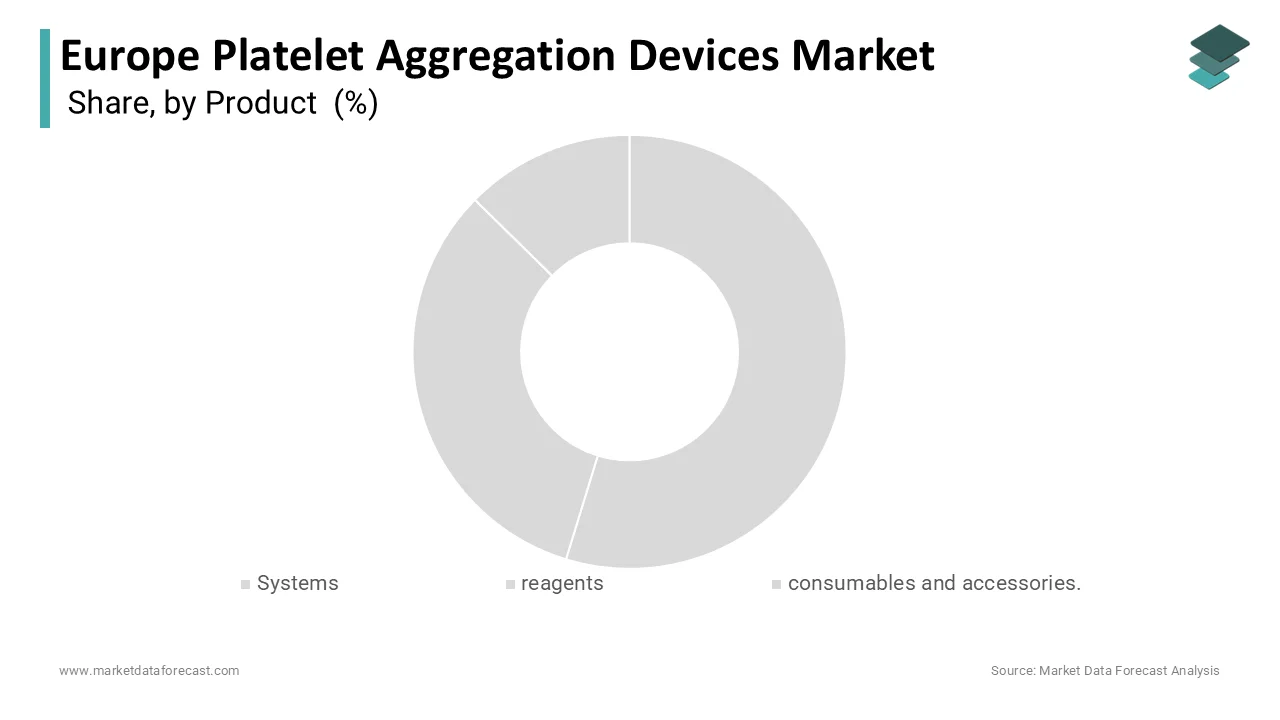
The consumables and accessories segment is anticipated to witness the fastest CAGR of 7.2% from 2025 to 2033. The swift acceleration of the consumables and accessories segment is propelled by technological integration and operational necessity. The adoption of cartridge-based point-of-care aggregometers, such as those utilizing impedance or optical detection in whole blood, has surged across European emergency departments and catheterization labs. These systems rely entirely on proprietary, single-use consumables that integrate sample handling, reagent storage, and detection in one unit. According to research, point-of-care diagnostics in European hospitals grew annually, with hemostasis being a key application area. Each test requires a new cartridge, priced considerably, which drives high consumable turnover. This shift away from reusable cuvettes and pipettes toward integrated disposables is fundamentally reshaping procurement patterns and fueling segment growth. Post-pandemic infection prevention standards have intensified the preference for single-use accessories across European clinical laboratories. Hospitals in some countries mandate disposable accessory kits for all platelet function assays as part of national biosafety directives. This institutional shift, combined with rising procedure volumes, ensures consistent demand for consumables, making this segment the fastest-expanding component of the product landscape.
By Application Insights
In 2025, the clinical applications segment led the European platelet aggregation devices market by capturing a substantial share. The integration of aggregometry into routine cardiovascular management protocols largely contributes to the expansion of the clinical applications segment. The overwhelming prevalence of atherosclerotic disorders across Europe necessitates systematic platelet function assessment as part of secondary prevention strategies. Furthermore, the European Society of Cardiology’s guidelines conditionally recommend platelet function-guided therapy in high-risk percutaneous coronary intervention cases, embedding aggregometry into standard clinical pathways. This institutional entrenchment ensures consistent device and reagent utilization across cardiology, hematology, and preoperative units. Beyond cardiology, orthopedic centers across Europe are adopting platelet aggregation testing to mitigate perioperative bleeding risks, especially in elderly patients on chronic antiplatelet regimens. This precautionary approach has expanded aggregometry’s utility into surgical specialties, which further supports the clinical segment’s dominance through multidisciplinary adoption.
The research applications segment is likely to experience the fastest CAGR of 6.8% over the forecast period due to factors such as academic and pharmaceutical innovation. European universities and research hospitals are intensifying investigations into platelet biology, drug resistance mechanisms, and novel antiplatelet compounds. The European Research Council allocated funds to cardiovascular and hemostasis-related projects under its Horizon Europe funding stream. Institutions have established dedicated platelet phenotyping cores equipped with high-throughput aggregometers. This academic momentum translates into sustained demand for research-grade systems and specialized reagents not used in clinical settings. Unlike clinical diagnostics, the studies demand flexible, customizable aggregometry platforms capable of testing novel agonists and inhibitors under varied conditions. Companies collaborate with academic labs across Denmark and Switzerland to validate drug efficacy using aggregometry as a primary endpoint. The R and D dependency ensures robust and growing demand in the research application segment.
By End User Insights
The standalone hospitals segment was the prominent segment in the European platelet aggregation devices market by accounting for a 63.4% share in 2025 because of its central role in acute and chronic cardiovascular care. Hospitals across Europe serve as primary sites for percutaneous coronary interventions, stent placements, and management of acute coronary syndromes, all scenarios requiring immediate platelet function assessment. Moreover, the rise of hybrid operating rooms, equipped with point-of-care aggregometers, has further embedded these devices into intraoperative decision-making, particularly in cardiac and neurosurgical departments. National surgical guidelines increasingly require platelet function evaluation before major procedures, especially in patients with cardiovascular comorbidities. Standalone hospitals, which perform most of these surgeries, naturally lead in device procurement and utilization, thus reinforcing their dominant market position.
The research and academic institutes segment is on the rise and is expected to be the fastest-growing segment in the market by witnessing a CAGR of 6.5% from 2025 to 2030, which is driven by scientific and collaborative initiatives.
Large-scale European research consortia, such as those under the Innovative Medicines Initiative, routinely deploy standardized platelet aggregation platforms across partner institutions to ensure data comparability. This coordinated approach drives bulk procurement by academic networks, elevating institutional demand beyond isolated laboratory use. European universities are expanding postgraduate training in hemostasis and thrombosis, necessitating hands-on access to aggregometry platforms. Institutions have invested in dual-mode systems that support both teaching and research. This dual utility, combined with rising student enrolment in life sciences, fuels sustained capital expenditure in academic settings, which accelerates segment growth.
COUNTRY LEVEL ANALYSIS
Germany Platelet Aggregation Devices Market Analysis
Germany dominated the European platelet aggregation devices market by accounting for a 22.4% share in 2025. The demand for these systems in Germany is due to its advanced healthcare infrastructure, high procedural volumes, and robust reimbursement framework. Germany performs a substantial number of percutaneous coronary interventions annually. The country’s statutory health insurance system fully reimburses platelet function testing for patients with acute coronary syndromes and stent thrombosis, ensuring widespread adoption. Moreover, Germany hosts leading diagnostic manufacturers, which maintain extensive R and D and service networks. So, Germany’s integrated care model sustains consistent demand across urban and rural settings.
France Platelet Aggregation Devices Market Analysis
France was the next-prominent country in the European platelet aggregation devices market and held a share of 16.2% in 2025. The growth of the French market is driven by centralized healthcare policies and high cardiovascular disease prevalence. According to research, cardiovascular conditions affect millions of people, with ischemic heart disease responsible for a large number of deaths annually. The French Health Authority mandates platelet reactivity testing in all university hospitals for high-risk stent recipients, a policy implemented nationwide. France also leads in orthopedic applications, performing hip and knee replacements, many requiring preoperative hemostasis screening. Public hospitals, which handle most of the inpatient care, are primary aggregometry users. Apart from these, the country’s strong academic network supports both clinical implementation and research innovation, creating a dual demand engine that solidifies its second position.
United Kingdom Platelet Aggregation Devices Market Analysis
The United Kingdom is also significant and growing in the European platelet aggregation devices market, with structured diagnostic pathways and post-Brexit regulatory autonomy. It performed a significant number of platelet function tests in 2025, with several concentrated in tertiary cardiology centers. The UK’s Medicines and Healthcare products Regulatory Agency has fast-tracked approvals for novel aggregometers, accelerating adoption. Furthermore, the NHS Long Term Plan emphasizes reducing cardiovascular mortality through precision diagnostics, allocating funds for hemostasis infrastructure upgrades. These coordinated policy and procurement efforts sustain the UK’s strong market presence despite broader fiscal constraints.
Italy Platelet Aggregation Devices Market Analysis
Italy is steadily expanding its share in the European platelet aggregation devices market due to an aging population and rising cardiovascular morbidity. A share of Italians are aged 65 or older, making them susceptible to thrombotic events. Regional health authorities in Lombardy and Emilia Romagna have introduced mandatory preoperative platelet testing for patients on antiplatelet drugs undergoing major surgery. Italy also hosts a dense network of public hospitals, many of which have upgraded hemostasis labs. These investments, combined with a high disease burden, position Italy as a key and steadily growing market in Southern Europe.
Spain Platelet Aggregation Devices Market Analysis
Spain is moderately growing in the European platelet aggregation devices market owing to healthcare modernization and expanding cardiology services. Spain’s National Health System covers most of the population and performs thousands of percutaneous coronary interventions. Public hospitals in Madrid, Barcelona, and Valencia have integrated point-of-care aggregometers into chest pain units, reducing time to therapeutic decisions. Additionally, Spain’s participation in EU-funded thrombosis research networks has elevated academic demand. So, Spain’s market trajectory remains upward despite historical underinvestment in diagnostics.
COMPETITIVE LANDSCAPE
The European platelet aggregation devices market features a moderately concentrated competitive landscape dominated by a few global diagnostic leaders alongside niche hemostasis specialists. Competition is primarily centered on technological differentiation, regulatory readiness, and service excellence rather than price. Established players leverage their extensive distribution channels and brand reputation to maintain strong hospital relationships, while newer entrants focus on point of care or AI-enhanced platforms to carve out specialized niches. The implementation of the EU In Vitro Diagnostic Regulation has raised entry barriers, favoring companies with robust quality management systems and clinical validation capabilities. Intense rivalry exists in reagent innovation, with firms racing to develop stable, multi-agonist kits that meet evolving clinical guidelines. Strategic emphasis is also placed on interoperability with hospital IT systems and compliance with European data privacy standards. Overall, the market rewards sustained investment in clinical evidence generation, regulatory alignment, and post-sale support infrastructure.
KEY MARKET PLAYERS
Promising Companies leading the europe platelet aggregation devices market are
- Accriva Diagnostics,
- Helena Laboratories Corporation,
- BioData Corporation,
- Haemonetics Corporation,
- Siemens AG,
- Sysmex Corporation,
- Sentinel CH. S.p.A.,
- Tem Group
- Aggredyne, Inc.
TOP LEADING PLAYERS IN THE MARKET
- Werfen is a global diagnostics company with a strong foothold in the hemostasis space, offering a comprehensive portfolio of platelet aggregation systems and reagents under its Hemostasis business unit. The company’s PAP 8E and newer automated aggregometers are widely used across European hospitals for their precision and reproducibility. In recent years, Werfen has intensified its focus on digital integration, launching software that enables remote monitoring and data analytics for platelet function testing. The company also expanded its European service network to reduce instrument downtime and enhance customer support. These initiatives demonstrate Werfen’s commitment to advancing hemostasis diagnostics through innovation and operational excellence in the European market.
- Sysmex Corporation has established itself as a key player in the European platelet aggregation devices market through its acquisition of the hemostasis assets of Instrumentation Laboratory, including the widely adopted Multiplate analyzer. This impedance-based aggregometer is particularly valued in European intensive care and cardiology units for its whole blood testing capability. Sysmex has reinforced its European presence by investing in localized training centers in Germany and the Netherlands to support clinical adoption. These strategic enhancements underscore Sysmex’s dedication to delivering integrated and user-centric hemostasis solutions across the region.
- Siemens Healthineers contributes to the European platelet aggregation devices market through its advanced hemostasis portfolio, which includes specialized reagents and analyzer platforms compatible with coagulation and platelet function testing. The company leverages its broad diagnostic ecosystem to embed platelet aggregation assays into comprehensive cardiovascular diagnostic workflows. The firm also strengthened its regulatory compliance capabilities to align with the EU In Vitro Diagnostic Regulation, ensuring uninterrupted product availability. Through continuous product refinement and ecosystem integration, Siemens Healthineers maintains a significant and evolving role in Europe’s precision hemostasis landscape.
TOP STRATEGIES USED BY THE KEY MARKET PARTICIPANTS
Key players in the European platelet aggregation devices market prioritize strategic product innovation by enhancing assay accuracy and integrating digital connectivity features into their platforms. They actively pursue regulatory compliance with the EU In Vitro Diagnostic Regulation to ensure market access and build trust among healthcare providers. Companies invest in localized customer support networks, including training programs and technical service teams, to improve user adoption and retention. Strategic collaborations with academic institutions and cardiology societies help validate clinical utility and influence guideline inclusion. Additionally, firms focus on expanding their reagent and consumable portfolios to drive recurring revenue and strengthen customer lock-in through proprietary consumable ecosystems across the region.
MARKET SEGMENTATION
This research report on the europe platelet aggregation devices market has been segmented and sub-segmented into the following categories
By Product
- Systems
- reagents
- consumables and accessories.
By Application
- Clinical applications (Cardiovascular applications, Orthopedic applications)
- Research applications
By End User
- Standalone hospitals
- Diagnostic laboratories
- Research and academic institutes.
By Country
- UK
- France
- Spain
- Germany
- Italy
- Russia
- Sweden
- Denmark
- Switzerland
- Netherlands
- Turkey
- Czech Republic & Rest of Europe