- Product Description Description
- Table of Contents TOC
- List of Table & Figure LOT
- Get Free Sample PDF Sample PDF
Market Size, 2025
$3.98 BnMarket Estimate, 2026
$4.39 BnMarket Forecast, 2034
$9.55 BnCAGR, 2026–2034
10.2%Executive Summary: Global Coagulation/Hemostasis Analyzer Market
- Market Scope: Comprehensive global coagulation/hemostasis analyzer market analysis covering test types, product formats, technologies, end-user settings, regional landscapes, and adoption metrics.
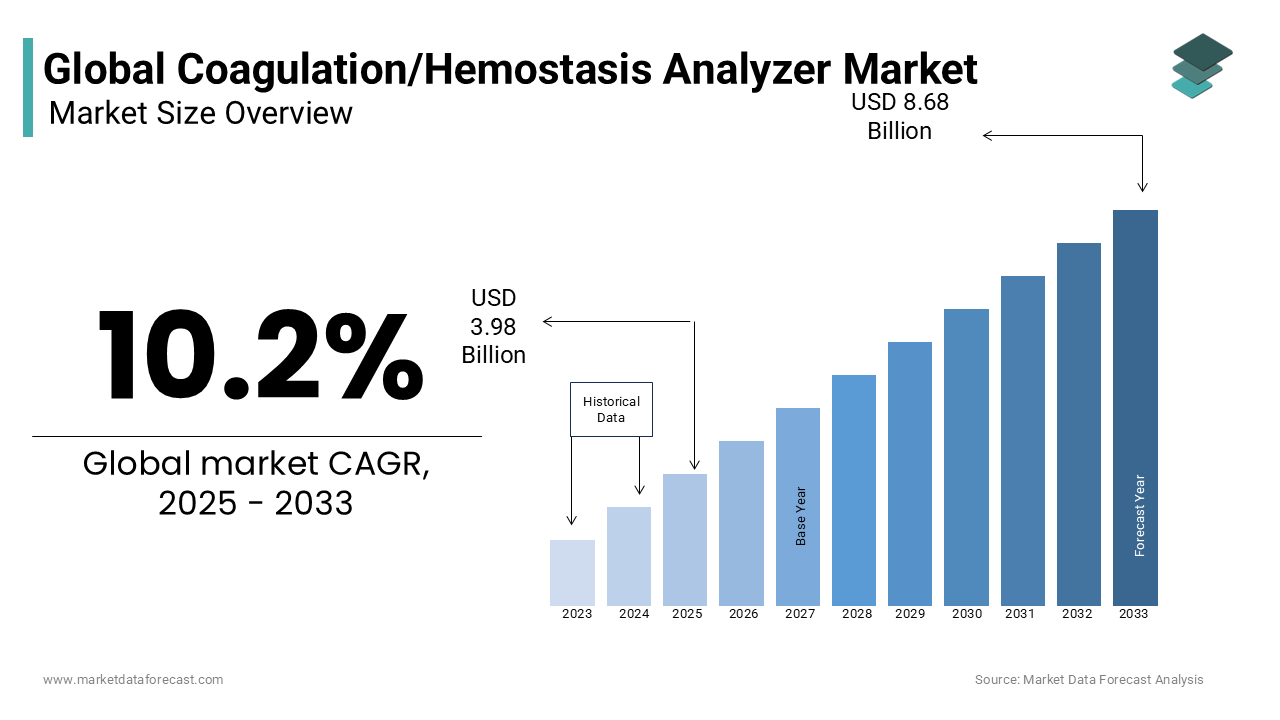
- Market Valuation: Valued at USD 3.98 billion (2025), estimated at USD 4.39 billion (2026), and projected to reach USD 9.55 billion by 2034, registering a robust CAGR of 10.20% from 2026 to 2034.
- Primary Growth Drivers: Rising prevalence of cardiovascular diseases and lifestyle-related obesity, escalating incidence of blood disorders, growing geriatric population, rising demand for laboratory automation, and increased healthcare investments. Key market restraints include high equipment installation/maintenance costs, lack of standardization, stringent regulatory approvals, and limited rural awareness.
Key Market Segment Metrics (2026–2034)
| Category | Leading Segment (2025 Position) | Fastest-Growing Segment |
|---|---|---|
| By Test | Prothrombin Time (PT) Testing (largest share driven by pre-surgical checks and lab automation) | Fibrinogen Testing (expanding rapidly due to blood loss and coagulation disorder diagnostics) |
| By Product | Clinical Laboratory Analyzers (dominated in efficiency, credibility, and high-volume demand) | Point-of-Care (POC) Testing Analyzers (accelerating due to personalized care and remote monitoring) |
| By End User | Clinical Laboratories (largest share attributed to heavy patient influx and trusted access) | Point-of-Care Systems / Home Care (gaining popularity through remote care shifts) |
| By Technology | Optical Segment (largest share and fast-growing via automated optical density O.D. measurements) | Mechanical Analyzers (growing at a fast pace closely following optical systems) |
| By Region | North America (accounts for a major 35.0% regional share backed by lifestyle and chronic disorders) | Asia-Pacific (fastest-growing region with China projecting high growth momentum) |
Major Market Players & Market Structure
Market Structure: Highly competitive medical diagnostics market featuring major international enterprises competing through technological innovations, automated lab solutions, and strategic regulatory compliance.
Key Companies: Siemens AG, Thermo Fisher Scientific Inc., Roche Diagnostics, Alere Inc., Sysmex Corporation, Helena Laboratories, Instrumentation Laboratory, International Technidyne Corporation, Nihon Kohden Corporation, and Diagnostica Stago.
Global Coagulation/Hemostasis Analyzer Market Size
The global coagulation/hemostasis analyzer market size was valued at USD 3.98 billion in 2025 and is estimated to reach USD 9.55 billion by 2034 from USD 4.39 billion in 2026, registering a CAGR of 10.2% from 2026 to 2034.
The coagulation and hemostasis analyzer are diagnostic instruments designed to evaluate the blood clotting process and identify disorders related to bleeding or thrombosis. These devices are crucial in clinical laboratories hospitals and point of care settings for monitoring patients on anticoagulant therapy diagnosing hemophilia and managing surgical risks. The global burden of cardiovascular diseases and bleeding disorders necessitates precise and rapid diagnostic capabilities to ensure patient safety and optimal therapeutic outcomes. According to the World Health Organization, cardiovascular diseases remain the leading cause of death globally accounting for an estimated 17.9 million deaths annually, which drives the extensive use of anticoagulants and subsequent need for regular coagulation monitoring. Furthermore, the prevalence of inherited bleeding disorders, such as hemophilia affects approximately 400000 individuals worldwide as per the World Federation of Hemophilia requiring lifelong monitoring of clotting factors. The aging population is particularly susceptible to thrombotic events with the United Nations Department of Economic and Social Affairs projecting that the number of people aged 65 years or older will reach 1.6 billion by 2050. This demographic shift increases the incidence of atrial fibrillation and venous thromboembolism conditions that require strict coagulation management. Technological advancements have enabled the development of automated high throughput analyzers that reduce manual errors and provide faster turnaround times. The integration of these systems into hospital information networks facilitates real time data access for clinicians enhancing decision making accuracy and improving overall patient care standards in complex medical scenarios.
MARKET DRIVERS
Rising Prevalence of Cardiovascular Diseases and Anticoagulant Therapy Drives Demand for Regular Monitoring
The escalating incidence of cardiovascular conditions, such as atrial fibrillation, deep vein thrombosis, and pulmonary embolism is fuelling the growth of the coagulation and hemostasis analyzer market. Patients undergoing treatment with vitamin K antagonists like warfarin or direct oral anticoagulants require frequent monitoring of their international normalized ratio to prevent adverse bleeding or clotting events. According to the Centers for Disease Control and Prevention more than 12 million people in the United States are expected to have atrial fibrillation by 2030 by creating a substantial patient base requiring consistent coagulation testing. The stroke prevention through effective anticoagulation management reduces mortality rates, significantly emphasizing the role of accurate diagnostic tools. As healthcare providers strive to maintain therapeutic ranges for patients, the demand for reliable and user friendly coagulation analyzers increase in both hospital and home care settings. The growing adoption of point of care testing devices allows for immediate results enabling timely dose adjustments and reducing the risk of complications. Additionally, the rising number of orthopedic surgeries, such as knee and hip replacements, which carry a high risk of postoperative thrombosis further amplifies the need for pre and post-surgical coagulation screening.
Increasing Number of Surgical Procedures and Trauma Cases Necessitates Rapid Hemostasis Assessment
The growing volume of surgical interventions and trauma cases globally to manage perioperative bleeding risks is additionally elevating the growth of the coagulation and hemostasis analyzer market. Surgeons rely on real time hemostasis data to make decisions regarding blood product transfusions and hemostatic agent administration during complex procedures. Trauma centers also depend heavily on viscoelastic testing methods, such as thromboelastography to diagnose coagulopathy in emergency situations where time is of the essence. The rise in minimally invasive surgeries and organ transplants further increases the complexity of hemostatic management requiring specialized testing capabilities. Hospitals are investing in high throughput automated systems to handle the increasing workload and ensure quick turnaround times for samples. The integration of these analyzers into surgical workflows enhances patient safety by minimizing excessive blood loss and reducing the need for reoperations.
MARKET RESTRAINTS
High Cost of Advanced Analyzers and Reagents Limits Adoption in Resource Limited Settings
The substantial financial burden associated with purchasing and maintaining advanced coagulation analyzers, particularly in low and middle income countries is limiting the growth of the coagulation and hemostasis analyzer market. High end automated systems often require significant capital investment along with recurring costs for proprietary reagents calibration materials and maintenance contracts. The cost of reagents, which are often sold exclusively by the manufacturer creates a locked in ecosystem that increases long term operational expenses. In many developing nations, laboratories rely on manual or semi-automated methods due to affordability issues, despite the superior accuracy and efficiency of fully automated systems. The Global Fund notes that access to essential diagnostic technologies remains uneven with rural areas frequently lacking basic coagulation testing capabilities. This disparity results in delayed diagnoses and suboptimal management of bleeding disorders in underserved populations. Additionally, the lack of trained personnel to operate complex instruments exacerbates the issue as improper usage can lead to inaccurate results and equipment damage. Manufacturers face difficulties in penetrating these markets due to price sensitivity and infrastructure limitations.
Shortage of Skilled Laboratory Personnel Hinders Effective Utilization of Complex Instruments
The scarcity of trained laboratory professionals capable of operating and interpreting is limiting the growth of the coagulation and hemostasis anlyzer market. Advanced instruments, such as those utilizing viscoelastic testing or multi parameter analysis require specialized knowledge to ensure accurate performance and troubleshootin. This gap is particularly acute in rural and remote areas where access to specialized training programs is minimal. The proper quality control and maintenance of coagulation analyzers are important skills that are not universally possessed by general laboratory technicians. The learning curve associated with new technologies demands time and resources that many underfunded healthcare systems cannot spare. Furthermore, high turnover rates among laboratory staff in developing regions lead to a loss of institutional knowledge and expertise. This skills mismatch results in suboptimal device usage reducing clinical confidence and discouraging further investment. Educational institutions struggle to keep pace with technological advancements leading to a workforce that is ill equipped to leverage modern diagnostic tools. Bridging this gap requires intensified training initiatives and partnerships between manufacturers and academic bodies to ensure effective device integration.
MARKET OPPORTUNITIES
Integration of Artificial Intelligence and Automation Creates New Avenues for Efficiency
The emergence of coagulation analyzers with artificial intelligence and automation technologies manufacturers to enhance diagnostic accuracy and operational efficiency is solely to create new opportunities for the growth of the coagulation and hemostasis analyzer market. Smart analyzers equipped with machine learning algorithms can detect anomalies in clotting curves and predict potential instrument failures before they occur ensuring uninterrupted service. This capability allows for proactive maintenance and minimizes downtime, which is important in emergency and surgical settings. The growing acceptance of total laboratory automation has accelerated the adoption of integrated coagulation modules that streamline sample processing from receipt to result reporting. Manufacturers can capitalize on this trend by developing interoperable devices that seamlessly connect with laboratory information systems and electronic health records. The ability to analyze large datasets generated by these devices fosters predictive analytics approaches allowing for better resource planning and inventory management. Additionally, remote monitoring capabilities enable technical support teams to assist laboratories in real time reducing the need for on-site visits.
Expansion of Point of Care Testing in Home Care and Ambulatory Settings Offers Untapped Potential
The rapid expansion of point of care testing in home care and ambulatory settings is also to enhance the growth of the coagulation and hemostasis analyzer market. Patients on long term anticoagulant therapy increasingly prefer self-monitoring at home to avoid frequent hospital visits and improve their quality of life. Portable coagulation meters that provide rapid international normalized ratio results empower patients to manage their therapy, independently under remote physician guidance. The aging population particularly benefits from these devices, as they facilitate aging in place while maintaining strict medical supervision. Insurance providers and government healthcare programs are increasingly reimbursing home-based coagulation testing recognizing its cost effectiveness compared to clinic based monitoring. Manufacturers respond by innovating compact battery-operated devices with intuitive interfaces that minimize user error and ensure reliable results. The rise of telemedicine platforms that integrate with point of care devices further accelerates adoption by enabling real time data sharing with healthcare providers.
MARKET CHALLENGES
Regulatory Heterogeneity and Stringent Approval Processes Delay Product Launches
The fragmented regulations for manufacturers seeking to introduce new analyzers is to impede the growth of the coagulation and hemostasis analyzer market. Regulatory bodies, such as the Food and Drug Administration in the United States and the European Medicines Agency in Europe enforce rigorous standards for safety efficacy and quality control. These stringent requirements ensure patient safety but also increase development costs and delay revenue generation for companies. The complexity of compliance is further compounded by varying standards across different jurisdictions requiring manufacturers to tailor submissions for each region. Additionally, recent updates to cybersecurity regulations for connected diagnostic devices impose additional design and testing constraints. The inconsistent regulatory frameworks in emerging countries further complicate compliance due to evolving standards and limited oversight mechanisms. Delays in approval hinder the timely introduction of innovative products reducing competitive advantage. Small and medium sized enterprises often struggle to meet these demanding regulatory hurdles due to limited resources and expertise.
Supply Chain Vulnerabilities and Reagent Availability Issues Impact Operational Continuity
Volatility in the global supply chain and shortages of raw materials by affecting production stability and reagent availability is another factor to inhibit the growth of the coagulation and hemostassis analyzer market. The manufacturing of these devices and their associated consumables relies on specialized components, such as enzymes, antibodies, plastics, and electronic sensors, which are subject to global fluctuations. The global supply chain disruptions have led to increased lead times and higher costs for medical device manufacturers, particularly during periods of heightened demand. The reliance on single source suppliers for key reagents increases vulnerability to disruptions caused by geopolitical tensions or natural disasters. The trade barriers have increased significantly in recent years, affecting the availability of medical supplies across borders. Laboratories face pressure to maintain adequate stock levels of reagents to avoid service interruptions, which can be difficult when supply chains are unpredictable. Manufacturers face challenges in balancing inventory costs with the need for just in time delivery to prevent expiration of sensitive biological materials.
REPORT COVERAGE
| REPORT METRIC | DETAILS |
| Market Size Available | 2026 to 2034 |
| Base Year | 2025 |
| Forecast Period | 2026 to 2034 |
| Segments Covered | By Tests, Products, End Users, Technology, and Region |
| Various Analyses Covered | Global, Regional & Country Level Analysis, Segment-Level Analysis; DROC, PESTLE Analysis; Porter's Five Forces Analysis, Competitive Landscape, Analyst Overview of Investment Opportunities |
| Regions Covered | North America, Europe, APAC, Latin America, Middle East & Africa |
| Market Leaders Profiled | Siemens AG (Germany), Thermo Fisher Scientific Inc. (U.S.), Roche Diagnostics (Switzerland), Alere Inc. (U.S.), Sysmex Corporation (Japan), Helena Laboratories (U.S.), Instrumentation Laboratory (U.S.), International Technidyne Corporation (U.S.) |
SEGMENTAL ANALYSIS
By Test Insights
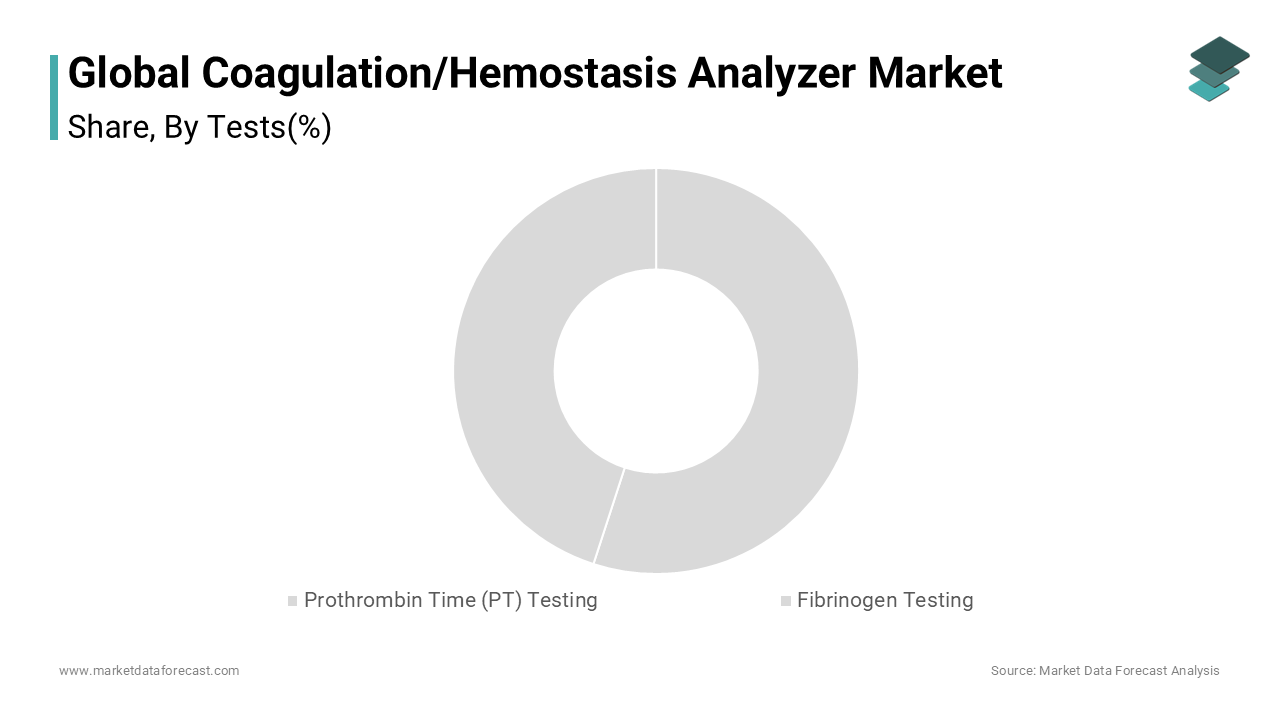
The prothrombin time testing segment was the largest by accounting for 36.2% of the coagulation and hemostasis analyzer market share in 2025 due to its fundamental role in evaluating the extrinsic pathway of blood coagulation and monitoring warfarin therapy. This test is routinely performed for patients with liver disease vitamin K deficiency or those undergoing anticoagulant treatment making it a staple in clinical laboratories worldwide. Millions of patients globally are prescribed oral anticoagulants requiring regular prothrombin time assessments to ensure therapeutic efficacy and prevent bleeding complications. The cardiovascular diseases remain a leading cause of mortality driving the widespread use of anticoagulants and consequently the demand for reliable PT testing. The simplicity and standardization of the prothrombin time test allow for high throughput analysis in busy hospital laboratories ensuring rapid turnaround times for critical care decisions. Furthermore, preoperative screening protocols universally include PT testing to assess surgical bleeding risks contributing to its consistent volume. The integration of PT results into the international normalized ratio calculation further enhances its clinical utility providing a standardized measure across different laboratories. As healthcare systems prioritize patient safety and accurate medication management the reliance on prothrombin time testing remains unwavering.
The d-dimer testing segment is likely to grow at a fastest CAGR of 8.5% from 2026 to 2034 with its role in ruling out venous thromboembolism and pulmonary embolism in emergency settings. The increasing incidence of thrombotic events, particularly among hospitalized patients and those with chronic conditions has elevated the clinical importance of rapid D-dimer assessment. D-dimer levels are highly sensitive markers for fibrin degradation making them indispensable for excluding deep vein thrombosis in low-risk patients. The American College of Chest Physicians guidelines recommend D-dimer testing as a first line diagnostic tool, which has significantly increased its utilization in emergency departments and outpatient clinics. The aging population is more susceptible to thrombotic disorders with the United Nations projecting a substantial rise in individuals over 65 years, who are at higher risk for clotting events. Additionally, the post pandemic awareness of thrombotic complications associated with severe infections has further boosted demand for D-dimer assays. Hospitals are investing in high sensitivity analyzers that provide quick results to facilitate timely clinical decisions and reduce unnecessary imaging studies.
By Product Insights
The clinical laboratory analyzers segment was the largest by capturing 48.2% of the coagulation and hemostasis analyzer market share in 2025 due to their ability to perform high volume comprehensive coagulation profiles with superior accuracy and reproducibility. These systems are integral to central laboratories in hospitals and reference labs, where large batches of samples require processing for various coagulation parameters including PT APTT and fibrinogen. The central laboratories handle the majority of complex diagnostic tests ensuring standardized quality control and regulatory compliance. The need for detailed coagulation profiles in managing critically ill patients undergoing surgery or receiving intensive care drives the demand for these robust instruments. Clinical laboratory analyzers offer multi parameter capabilities by allowing simultaneous assessment of multiple clotting factors, which is essential for diagnosing complex bleeding disorders. Their integration with laboratory information systems facilitates seamless data management and result reporting enhancing operational efficiency. The reliability and throughput of these analyzers make them indispensable for institutions prioritizing diagnostic precision and workflow optimization. As healthcare facilities continue to consolidate testing services into central labs to reduce costs and improve quality, the dominance of clinical laboratory analyzers remains strong.
The Point of care testing analyzers segment is significantly growing at a fastest CAGR of 9.2% during the forecast period with the shift toward decentralized healthcare and immediate result availability. These portable devices enable rapid coagulation monitoring at the bedside in emergency rooms operating rooms and intensive care units reducing turnaround time significantly. According to the Society of Thoracic Surgeons intraoperative coagulation monitoring using point of care devices improves surgical outcomes by allowing real time adjustments to hemostatic therapies. The convenience of obtaining results within minutes rather than hours supports critical decision making in acute care scenarios. The rising prevalence of home-based anticoagulation therapy has also expanded the use of point of care devices among patients, who self-monitor their international normalized ratio levels. The patient empowerment through self-testing improves adherence and reduces hospital visits. Technological advancements have made these devices smaller more accurate and easier to use encouraging broader adoption in both clinical and home settings. Insurance reimbursement policies increasingly cover point of care testing recognizing its cost effectiveness in preventing complications.
By End Users Insights
The clinical laboratories segment was accounted in holding 36.2% of the coagulation and hemostasis analyzer market in 2025 due to their central role in processing large volumes of diagnostic tests for hospitals and healthcare networks. These facilities are equipped with advanced automated analyzers capable of handling high throughput workloads, while maintaining strict quality standards. The independent and hospital based laboratories perform the vast majority of coagulation tests ensuring consistent and reliable results for clinicians. The complexity of coagulation disorders often requires comprehensive profiling which is best achieved in centralized settings with specialized expertise and equipment. The central laboratories provide essential oversight for quality assurance and regulatory compliance, which is important for accurate diagnosis. The integration of laboratory information systems with hospital electronic health records facilitates efficient data sharing and clinical decision support. Clinical laboratories also serve as reference centers for rare coagulation disorders requiring specialized testing not available in smaller facilities. The economies of scale achieved in central labs allow for cost effective testing while maintaining high diagnostic accuracy.
The point of care settings segment is swiftly emerging at a fastest CAGR of 12.3% from 2026 to 2034 with the increasing demand for immediate diagnostic results in emergency and critical care environments. Hospitals, clinics, and ambulatory surgery centers are adopting point of care coagulation analyzers to streamline workflows and enhance patient safety. The rapid coagulation testing in emergency departments reduces time to treatment for patients with suspected thrombotic or bleeding disorders. The ability to obtain results at the bedside minimizes delays in administering life-saving interventions, such as blood transfusions or reversal agents. The rise in minimally invasive surgeries and interventional procedures has further increased the need for intraoperative coagulation monitoring to manage bleeding risks effectively. The point of care testing for guiding hemostatic management during complex cardiac surgeries. Additionally, the expansion of home healthcare services has led to greater use of point of care devices by patients managing chronic anticoagulation therapy. Reimbursement policies supporting point of care testing encourage healthcare providers to invest in these technologies.
By Technology Insights
The optical technology segment was the largest by holding 44.5% of the coagulation and hemostasis analyzer market due to its widespread adoption and proven reliability in detecting clot formation through light transmission or scattering changes. This method is considered the gold standard in many clinical laboratories for its accuracy and consistency in measuring coagulation parameters. The optical methods provide precise endpoint detection, which is crucial for accurate prothrombin time and activated partial thromboplastin time results. The majority of high throughput automated analyzers utilize optical detection systems enabling simultaneous processing of multiple samples with minimal interference. The optical technology offers superior sensitivity for detecting subtle changes in plasma turbidity associated with clot formation. Its compatibility with various reagent types and test formats makes it versatile for comprehensive coagulation profiling. Established infrastructure and familiarity among laboratory personnel further reinforce the dominance of optical technology. Manufacturers continue to refine optical sensors to enhance precision and reduce maintenance requirements. The extensive validation data supporting optical methods ensures confidence in diagnostic results among clinicians.
The electrochemical technology segment is likely to grow at a fastest CAGR of 7.8% from 2026 to 2034 with its suitability for point of care and portable devices. This method detects clot formation through changes in electrical impedance or current offering advantages in terms of miniaturization and resistance to sample interference. The electrochemical sensors are less affected by sample turbidity or hemolysis making them ideal for use in emergency and critical care settings, where sample quality may vary. The compact size of electrochemical components allows for the development of handheld and battery-operated analyzers facilitating bedside and home testing. The World Health Organization promotes the use of robust portable diagnostic tools in resource limited settings where optical systems may be impractical. Advances in microelectronics have improved the sensitivity and reliability of electrochemical detectors enabling accurate measurement of coagulation parameters with small sample volumes. The growing demand for decentralized testing solutions supports the adoption of electrochemical technology in diverse clinical environments.
REGIONAL ANALYSIS
North America Coagulation/Hemostasis Analyzer Market Analysis
North America was the top performer in the global coagulation analyzer market by holding 32.4% of share in 2025 with the advanced healthcare infrastructure high prevalence of cardiovascular diseases and robust reimbursement policies. The United States coagulation and hemostasis analyzer market growth is driven by the large aging population and widespread use of anticoagulant therapies. Millions of Americans suffer from atrial fibrillation and other thrombotic conditions requiring regular coagulation monitoring. The presence of major medical device manufacturers and extensive research activities fosters continuous innovation in diagnostic technologies. Regulatory frameworks enforced by the Food and Drug Administration ensure high quality standards promoting consumer trust. High healthcare expenditure enables hospitals and laboratories to invest in state of the art automated analyzers. Educational initiatives by professional societies promote best practices in coagulation management enhancing adoption of advanced tools. As the population ages and chronic disease prevalence rises, North America remains the dominant market for sophisticated coagulation solutions.
Europe Coagulation/Hemostasis Analyzer Market Analysis
Europe coagulation and hemostasis analyzer market was ranked second by holding 35.4% of share in 2025 with the stringent regulatory standards, universal healthcare coverage, and a strong emphasis on quality diagnostics. Countries, such as Germany, France, and the United Kingdom, are key contributors driven by well-established laboratory networks and high awareness of bleeding disorders. The standardized coagulation testing is widely implemented across member states ensuring consistent patient care. The implementation of the Medical Device Regulation has accelerated the adoption of safe and efficient analyzers meeting rigorous performance criteria. Government funded healthcare systems provide equitable access to diagnostic services although procurement processes may vary by country. The region is a hub for manufacturing and innovation with several leading companies headquartered there. Aging demographics in Europe contribute to rising demand for anticoagulation monitoring and surgical coagulation screening. Collaborative research initiatives support the development of new testing methodologies and biomarkers. Patient advocacy groups promote early diagnosis and management of hemophilia and other bleeding disorders.
Asia Pacific Coagulation/Hemostasis Analyzer Market Analysis
Asia Pacific coagulation and hemostasis analyzer market growth is expected to witness a fastest CAGR during the forecast period with the improving healthcare infrastructure, rising disposable incomes, and increasing awareness of thrombotic diseases. Countries, such as China, Japan, and India, are witnessing a surge in demand for diagnostic services due to urbanization and lifestyle changes. The burden of non-communicable diseases, including cardiovascular conditions is rising rapidly in the region creating urgent need for coagulation monitoring. Government initiatives aim to strengthen laboratory capacities in public hospitals enhancing access to essential diagnostic tests. The growing middle class is increasingly willing to pay for premium healthcare services, including advanced coagulation analysis. Local manufacturing capabilities are expanding reducing costs and improving supply chain efficiency. Awareness campaigns educate healthcare professionals about the importance of standardized coagulation testing. The adoption of international quality standards ensures product reliability and safety. Partnerships between global manufacturers and local distributors facilitate market entry and expansion.
Latin America Coagulation/Hemostasis Analyzer Market Analysis
Latin America coagulation and hemostasis analyzer market growth is driven by increasing healthcare investments and rising prevalence of chronic diseases. Brazil and Mexico are the primary contributors owing to their large populations and efforts to modernize public health systems. The cardiovascular diseases are a leading cause of mortality in the region driving demand for diagnostic tools. Economic improvements have enabled more hospitals to acquire automated coagulation analyzers, although budget constraints persist in some areas. Private healthcare sectors are expanding offering better access to advanced diagnostic technologies. Educational programs train laboratory personnel in modern coagulation testing techniques improving service quality. The shift toward centralized laboratory services in major cities enhances efficiency and standardization. Challenges, such as uneven distribution of resources and regulatory hurdles remain but the overall trend is positive.
Middle East And Africa Coagulation/Hemostasis Analyzer Market Analysis
The Middle East and Africa region coagulation analyzer market growth is esteemed to grow with the varying levels of healthcare development. Gulf countries, such as Saudi Arabia and the United Arab Emirates have advanced healthcare systems and high spending on medical technologies driving demand for sophisticated analyzers. In contrast, many African nations face challenges related to limited infrastructure and funding restricting access to advanced diagnostic tools. Initiatives by international organizations aim to improve laboratory capacities through training and equipment donations. Private healthcare sectors in wealthier nations drive adoption of premium devices, while public systems struggle with basic provisions. Growing awareness of bleeding disorders and surgical safety promotes demand for reliable testing.
COMPETITIVE LANDSCAPE
The coagulation and hemostasis analyzer market features a moderately consolidated landscape characterized by the presence of established multinational corporations and specialized diagnostic companies. Leading players compete through continuous innovation product differentiation and strategic expansions to capture greater market influence. The competition is driven by the need to provide high precision reliable and efficient instruments that cater to diverse laboratory and point of care settings. Major companies leverage their strong brand reputation and extensive distribution networks to maintain dominance, while smaller firms focus on niche segments such as viscoelastic testing or specialized reagents. Price competitiveness remains a critical factor particularly in emerging markets where budget constraints influence purchasing decisions. Companies increasingly invest in research and development to introduce smart connected devices that integrate with digital health platforms. Strategic acquisitions and partnerships are common tactics used to expand product portfolios and enter new geographic regions
KEY MARKET PLAYERS
Some of the companies that are playing a dominating role in the Global Coagulation/Hemostasis Analyzer Market include
- Siemens AG
- Thermo Fisher Scientific Inc.
- Roche Diagnostics
- Alere Inc.
- Sysmex Corporation
- Helena Laboratories
- Instrumentation Laboratory
- International Technidyne Corporation
- Nihon Kohden Corporation
- Diagnostica Stago
Top Players in the Global Market
Sysmex Corporation
Sysmex Corporation stands as a global leader in hematology and coagulation diagnostics providing advanced analyzers that ensure high precision and reliability. The company focuses on developing automated systems that streamline laboratory workflows and enhance diagnostic accuracy for complex clotting disorders. Recent initiatives, include launching next generation coagulation platforms with enhanced connectivity features that integrate seamlessly with laboratory information systems. Sysmex has strengthened its market position by expanding its reagent portfolio to support a wider range of specialized tests including viscoelastic hemostasis assays. The firm actively collaborates with healthcare institutions to provide comprehensive training and technical support ensuring optimal device utilization.
Siemens Healthineers
Siemens Healthineers leverages its extensive expertise in medical technology to offer robust coagulation analyzers designed for high throughput clinical laboratories. The company integrates digital health solutions into its devices enabling remote monitoring and predictive maintenance to minimize downtime. Recent actions involve introducing compact point of care instruments that deliver rapid results for emergency and surgical settings. Siemens Healthineers has strengthened its presence through strategic partnerships with hospital networks to implement total laboratory automation solutions. The firm invests heavily in research to develop novel assays that improve sensitivity and specificity for thrombotic risk assessment.
Werfen Group
Werfen Group is a specialized provider of hemostasis and transfusion diagnostics, a comprehensive suite of coagulation analyzers and reagents. The company distinguishes itself through innovative technologies such as optical and mechanical detection methods that cater to diverse laboratory needs. Recent developments, include the expansion of its point of care portfolio with user friendly devices for bedside monitoring in critical care units. Werfen Group has reinforced its market position by acquiring complementary technologies that enhance its capabilities in viscoelastic testing and platelet function analysis. The firm prioritizes customer education and clinical support to ensure effective implementation of its solutions. Through continuous innovation and a strong focus on patient outcomes, Werfen Group drives advancements in coagulation management and supports healthcare providers in delivering superior care.
Top Strategies Used by Key Market Participants
Key players in the coagulation analyzer market primarily employ product innovation and strategic partnerships to maintain competitive advantage. Companies focus on developing automated and point of care devices that offer rapid accurate results and seamless integration with laboratory information systems. Investing in research and development allows firms to introduce novel assays and technologies such as viscoelastic testing that address unmet clinical needs. Strategic collaborations with healthcare providers and academic institutions help promote best practices and expand market reach. Expanding distribution networks in emerging markets enables broader access to affordable diagnostic solutions. Additionally, manufacturers prioritize regulatory compliance and quality assurance to build trust and meet stringent safety standards globally. Offering comprehensive training and support services ensures effective device utilization and strengthens customer loyalty
RECENT MARKET DEVELOPMENTS
-
In August 2022, future research examined aberrant coagulation markers and how they related to clinical outcomes in hospitalized, severely ill COVID-19 patients. The predictive significance of the aberrant coagulation parameters in COVID-19 is receiving increasing attention. Therefore, prothrombin concentration (P.C.), activated Partial thromboplastin time (aPTT), D-Dimer (D.D.), Anti Thrombin III (ATIII), and fibrinogen (Fg) along with hematological and biochemical parameters were investigated for their potential role in predicting COVID-19 patient severity and estimating their relationship to clinical outcomes in hospitalized and severe COVID-19 patients.
-
In January 2021, HemoSonics Appreciates FDA Support for Viscoelastic Coagulation Analyzers for COVID-19 Patients and Highlights Quantra's Hemostasis Analyzer's Benefits. In response to COVID-19, HemoSonics appreciates FDA advice issued on January 14th that expands the use of viscoelastic coagulation analyzers in hospital patient healthcare settings. The FDA recommendation aims to increase the accessibility of coagulation equipment for measuring whole blood viscoelastic characteristics to evaluate hemostasis during the COVID-19 public health emergency. In individuals with COVID-19, hypercoagulability—an abnormally elevated risk for blood clotting—has been noted. 2 Clinical findings have demonstrated that the acute inflammatory response in individuals with severe COVID-19 infection most likely brings on blood coagulation problems.
-
In March 2020, The Yumizen G200 hemostasis device from HORIBA Medical was approved for use with UK NEQAS BC samples. Research has demonstrated that lyophilized plasma samples from the U.K.'s National External Quality Assessment Scheme for Blood Coagulation (NEQAS BC) may be examined using HORIBA UK Ltd.'s Yumizen G200 hemostasis device. This demonstrates that the portable Yumizen G200 is reliable and appropriate for NEQAS BC testing, enabling laboratories to utilize the device for external quality evaluation.
MARKET SEGMENTATION
This research report on the global coagulation/hemostasis analyzer market has been segmented and sub-segmented into the following categories.
By Test
- Prothrombin Time (PT) Testing
- Fibrinogen Testing
- Activated Partial Thromboplastin Time (APTT) Testing
- D-Dimer Testing
- Thrombin Time (TT) Testing
- Platelet Function Testing
- International Normalized Ratio (INR) Testing
By Product
- POC Testing Analyzers
- Clinical Laboratory Analyzers
By End Users
- Clinical Laboratories
- PoC
By Technology
- Electrochemical
- Optical
- Mechanical
By Region
- North America
- Europe
- Asia-pacific
- Latin America
- The Middle East and Africa