- Product Description Description
- Table of Contents TOC
- List of Table & Figure LOT
- Get Free Sample PDF Sample PDF
Market Size, 2025
$1.02 BnMarket Estimate, 2026
$1.30 BnMarket Forecast, 2034
$9.27 BnCAGR, 2026–2034
27.84%Europe Artificial Intelligence in Energy Market Size
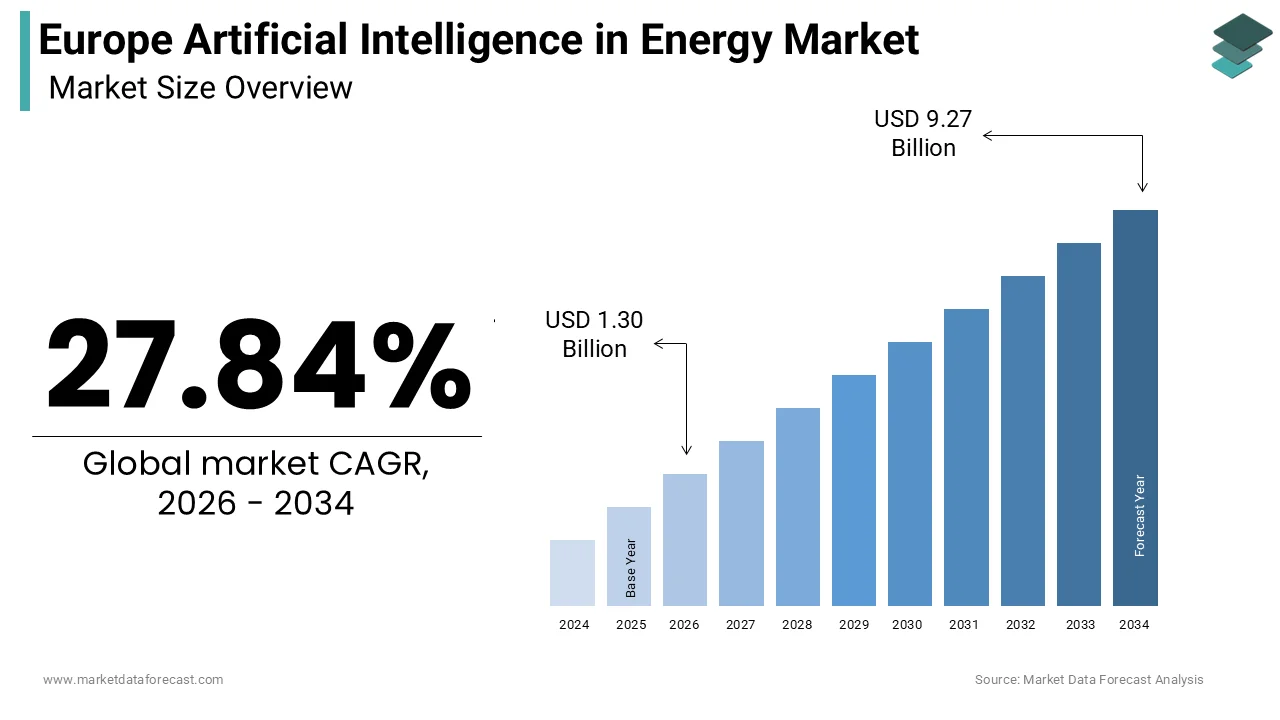
The Europe artificial intelligence in energy market size was calculated to be USD 1.02 billion in 2025 and is anticipated to be worth USD 9.27 billion by 2034, from USD 1.30 billion in 2026, growing at a CAGR of 27.84% during the forecast period.
Artificial Intelligence (AI) in energy refers to using machine learning, data analytics, and autonomous algorithms to optimize how energy is generated, transmitted, and consumed. This technological convergence enables real-time decision-making, predictive maintenance, and optimized grid stability amidst a rapidly decarbonizing landscape. European nations are rapidly transitioning toward renewable energy. This shift makes managing the intermittent supply from wind and solar assets so complex that it requires intelligent automation. The European Union has set a binding target to achieve at least 42.5% renewable energy by 2030, as stated in the revised Renewable Energy Directive, which intensifies the need for smart grid solutions powered by artificial intelligence. Furthermore, according to Eurostat, the share of renewables in the EU’s gross final energy consumption reached 25.2% in 2024, demonstrating a steady acceleration that requires robust digital oversight of growing energy infrastructure. The deployment of smart meters is also expanding. The European Commission reported that approximately 54% of EU electricity consumers were equipped with smart meters by the end of 2022, with regional penetration reaching 63% by late 2024 as second-generation rollouts progress in Western Europe. These devices generate vast amounts of data that artificial intelligence systems analyze to enhance efficiency and reduce losses. The market is thus defined not merely by software adoption but by the critical operational reliance on data-driven insights to maintain grid resilience and meet stringent climate objectives established by the European Green Deal.
MARKET DRIVERS
Escalating Integration of Intermittent Renewable Energy Sources Necessitates Advanced Predictive Capabilities for Grid Stability
The profound shift toward variable renewable energy sources is a primary driver for the Europe artificial intelligence energy market. Traditional power grids were designed for steady, predictable output from fossil fuel plants, whereas wind and solar generation fluctuate based on weather conditions. This intermittency creates significant challenges for grid operators who must balance supply and demand in real time to prevent blackouts. Artificial intelligence algorithms excel at processing vast datasets, including historical weather patterns, satellite imagery, and real-time sensor inputs, to forecast energy production with high precision. According to the European Commission's Solar Energy Strategy, the European Union aims to install 600 GW of solar photovoltaic capacity by 2030, a goal supported by the REPowerEU plan to reduce fossil fuel dependency. To manage this influx, grid operators rely on machine learning models that can predict output variations minutes or hours in advance, allowing for proactive adjustments in storage dispatch or backup generation. The European Network of Transmission System Operators for Electricity emphasizes that digital tools are essential for maintaining system security as the share of inverter-based resources grows. Without these intelligent forecasting tools, the cost of balancing the grid would rise substantially due to the need for excessive reserve capacity. Consequently, energy companies are investing heavily in AI-driven platforms to optimize the integration of renewables, ensuring that the transition to clean energy does not compromise the reliability of electricity supply for millions of consumers across the continent.
Stringent Regulatory Frameworks and Carbon Neutrality Mandates Compel Operational Efficiency Through Digitalization
Rigorous environmental regulations and ambitious carbon reduction targets imposed by the European Union further contribute to the growth of European artificial intelligence in the energy market. The European Green Deal sets forth a legally binding objective to achieve climate neutrality by 2050, requiring member states to drastically reduce greenhouse gas emissions from the power sector. Compliance with these mandates demands unprecedented levels of operational efficiency and minimal energy waste, which traditional manual management systems cannot adequately deliver. Artificial intelligence enables utilities to identify inefficiencies, detect leaks, and optimize asset performance, thereby reducing overall carbon footprints. As per the European Environment Agency (EEA), total energy-related activities are responsible for over 75% of the EU's greenhouse gas emissions, though direct emissions from the electricity and heat sector have already fallen significantly due to renewable expansion. AI-driven solutions facilitate predictive maintenance, which prevents equipment failures and extends the lifespan of critical infrastructure, thus avoiding the carbon intensity associated with manufacturing replacement parts. Additionally, the recast Energy Efficiency Directive (EED) requires EU Member States to achieve an average annual energy savings rate of 1.49% between 2024 and 2030, pushing industries toward real-time monitoring and smart technology adoption. By leveraging AI, energy providers can dynamically adjust loads and integrate demand response programs that align consumption with periods of high renewable availability. This regulatory pressure transforms artificial intelligence from a competitive advantage into a compliance necessity, driving widespread investment in digital infrastructure to meet the legal and ethical obligations of the European climate agenda.
MARKET RESTRAINTS
Complexities Surrounding Data Privacy and Cybersecurity Vulnerabilities Impede Widespread AI Deployment
Significant concerns regarding data privacy and cybersecurity restrict the expansion of European artificial intelligence in the energy market. The integration of AI systems requires the collection and analysis of massive volumes of sensitive data, including consumer usage patterns, grid topology, and operational parameters. This extensive data aggregation creates attractive targets for cybercriminals seeking to disrupt critical infrastructure or steal proprietary information. The European Union General Data Protection Regulation imposes strict guidelines on how personal data must be handled, requiring explicit consent and robust protection measures, which can complicate the deployment of AI algorithms that rely on large datasets. According to the European Union Agency for Cybersecurity, the energy sector experienced a notable increase in cyberattacks in recent years, with ransomware incidents targeting utility providers becoming more sophisticated. These security threats necessitate substantial investments in protective measures, which can delay project timelines and increase implementation costs. Furthermore, the interconnected nature of modern smart grids means that a breach in one part of the system can have cascading effects across the entire network. Utilities are often hesitant to fully automate critical decision-making processes due to the fear of algorithmic manipulation or failure during a cyber incident. The need to ensure absolute data integrity and system resilience against evolving threats creates a cautious environment where adoption rates may be slower than technically feasible. Companies must navigate this complex landscape by implementing rigorous security protocols, which can act as a barrier to rapid innovation and scaling of AI solutions in the energy domain.
High Initial Capital Expenditure and Integration Challenges with Legacy Infrastructure Limit Market Penetration
The substantial financial burden associated with implementing AI solutions and the technical difficulties of integrating them with existing legacy infrastructure serve as major impediments for the Europe artificial intelligence in energy market. Many European energy utilities operate on aging grid systems that were not designed for digital connectivity or real-time data exchange. Upgrading these outdated assets to support AI applications requires significant capital investment in sensors, communication networks, and computing hardware. The European Commission estimates that reaching the EU's 2030 energy transition goals will require an annual investment of approximately €660 billion between 2026 and 2030. However, the European Investment Bank notes that many smaller electricity grid operators face liquidity constraints that limit their capacity for the necessary digital and infrastructure upgrades. The process of retrofitting old equipment with smart capabilities is often complex and disruptive, leading to prolonged downtime and increased operational risks. Moreover,r there is a scarcity of skilled professionals who possess both domain expertise in energy systems and advanced knowledge of artificial intelligence technologies. This talent gap forces companies to incur additional costs for training or hiring specialized personnel, which further strains budgets. The return on investment for AI projects can also be uncertain in the short term as benefits such as improved efficiency and reduced maintenance costs accrue over time. Consequently, some market participants remain reluctant to commit to large-scale AI deployments, preferring incremental upgrades instead. This financial and technical hesitation slows the overall pace of market growth, particularly among smaller regional players who form a significant part of the European energy landscape.
MARKET OPPORTUNITIES
Expansion of Vehicle-to-Grid Technologies Presents Lucrative Avenues for AI-Driven Load Management
The rapid electrification of the transport sector and the subsequent development of vehicle-to-grid technologies offer significant opportunities for AI applications in the regional energy landscape, which is likely to boost the growth of the Europe artificial intelligence in energy market. More people are driving electric vehicles, which is great for the energy grid. This accelerating trend means EVs can now realistically serve as distributed energy storage units. Artificial intelligence plays a crucial role in managing the bidirectional flow of electricity between electric vehicles and the grid, optimizing charging schedules to align with periods of low demand or high renewable generation. According to the European Alternative Fuels Observatory (EAFO), the number of public charging points in the EU reached 825,000 by early 2025, with the Alternative Fuels Infrastructure Regulation (AFIR) now mandating fast-charging hubs every 60km along core corridors to support the projected 30 million electric vehicles by 2030. AI algorithms can analyze driving patterns, grid conditions, and electricity prices to determine the most efficient times for charging and discharging, thereby providing valuable grid services such as frequency regulation and peak shaving. This capability allows utilities to defer costly infrastructure upgrades by leveraging the aggregated battery capacity of electric vehicles. Furthermore, automakers and energy providers are forming partnerships to develop integrated platforms that use machine learning to enhance user experience and grid stability. The ability to monetize flexible demand through AI-driven vehicle-to-grid systems creates new revenue streams for both consumers and utilities. As regulatory frameworks evolve to support decentralized energy resources, the demand for intelligent management systems will surge. This convergence of mobility and energy sectors opens a vast market for AI solutions that can handle the complexity of millions of connected devices contributing to a more resilient and sustainable energy ecosystem.
Advancements in Edge Computing Enable Real-Time Decision Making for Decentralized Energy Resources
The proliferation of edge computing technologies opens up strong possibilities for European artificial intelligence in the energy market. This is achieved by enabling real-time data processing at the source of generation or consumption. Traditional cloud-based AI models often suffer from latency issues, which can be critical in fast-changing grid environments. Edge computing allows AI algorithms to run directly on local devices such as smart inverters, substation,s or home energy management systems, facilitating instantaneous responses to grid fluctuations. This capability is particularly valuable for managing distributed energy resources like rooftop solar panels and small-scale wind turbines, which are abundant in Europe. As per the European Commission, the number of prosumer households that both produce and consume energy is rising steadily, creating a highly decentralized grid structure. Edge AI empowers these prosumers to optimize their energy usage and participate in local energy markets without relying on centralized control systems. This decentralization enhances grid resilience by reducing dependency on single points of failure and improving response times to local disturbances. Moreover, edge computing reduces the bandwidth required for data transmission, lowering operational costs and enhancing data privacy since sensitive information does not need to be sent to remote servers. The integration of edge AI with 5G networks further amplifies these benefits by providing high-speed, low-latency connectivity. As European cities become smarter and more connected, the demand for localized intelligent energy management solutions will grow. This technological synergy offers a robust pathway for market expansion, allowing providers to deliver more responsive and efficient energy services to a diverse range of customers.
MARKET CHALLENGES
Shortage of Specialized Workforce with Dual Expertise in Energy Systems and Artificial Intelligence Hinders Innovation
The acute shortage of skilled professionals who possess comprehensive knowledge in both energy engineering and data science is a critical challenge to the Europe artificial intelligence and energy market. The successful deployment of AI solutions requires a deep understanding of physical grid dynamics alongside advanced programming and machine learning capabilities. However, the current educational and professional landscape often treats these disciplines separately, resulting in a talent gap that impedes innovation. According to Eurostat, despite the EU employing 10.3 million ICT specialists as of 2023, the region faces a critical talent gap, with current growth rates insufficient to reach the Digital Decade target of 20 million specialists by 2030. Energy companies struggle to find employees who can interpret complex grid data and develop robust AI models that account for physical constraints and safety regulations. This skills mismatch leads to longer development cycles, increased reliance on external consultants, and higher labor costs. Furthermore, the rapid evolution of AI technologies means that existing staff require continuous upskilling, which demands substantial investment in training programs. The competition for top talent is intense, with tech giants often offering more attractive compensation packages than traditional utility firms. This disparity makes it difficult for energy companies to attract and retain the necessary expertise. Without a sufficient pool of qualified professionals, the industry risks falling behind in adopting cutting-edge solutions. Collaborative efforts between academia, industry, and government are required to develop specialized training programs and interdisciplinary courses. These programs aim to equip the next generation of workers for the intersection of energy and artificial intelligence.
Interoperability Issues Among Diverse Hardware and Software Platforms Complicate System Integration
The lack of standardized protocols and interoperability among various platforms poses a significant limitation to European artificial intelligence in the energy market. This fragmentation hinders the seamless integration of artificial intelligence across the sector. The energy ecosystem comprises a wide array of devices from different manufacturers, including smart meters, inverters, sensors, and control systems, each potentially using proprietary communication standards. This fragmentation creates silos of data that are difficult to aggregate and analyze using unified AI models. While the European Committee for Electrotechnical Standardization (CENELEC) continues to harmonize technical specifications, the Implementing Act on Interoperability of Access to Data now legally requires Member States to adopt common data standards by 2025, shifting the challenge from "standard definition" to the cross-border integration of legacy utility systems. Incompatible systems hinder the ability of AI algorithms to access comprehensive real-time data, which is essential for accurate predictions and optimal decision-making. Utilities often face technical hurdles when attempting to integrate new AI solutions with legacy infrastructure or third-party applications, leading to increased complexity and cost. The absence of universal interoperability also limits the scalability of AI deployments, as solutions tailored for one specific vendor may not work effectively with others. This vendor lock-in reduces flexibility and innovation as companies become dependent on a single provider for their digital needs. Furthermore, cybersecurity risks are exacerbated when multiple disparate systems interact without standardized security protocols. Overcoming these interoperability barriers requires strong industry collaboration and regulatory support to enforce open standards. The full potential of artificial intelligence in optimizing the European energy grid remains constrained. This limitation is caused by ongoing technical incompatibilities and integration inefficiencies until a cohesive framework is established.
REPORT COVERAGE
| REPORT METRIC | DETAILS |
| Market Size Available | 2025 to 2034 |
| Base Year | 2025 |
| Forecast Period | 2026 to 2034 |
| CAGR | 27.84% |
| Segments Covered | By Type, Application, and Region |
| Various Analyses Covered | Global, Regional & Country Level Analysis; Segment-Level Analysis; DROC, PESTLE Analysis; Porter’s Five Forces Analysis; Competitive Landscape; Analyst Overview of Investment Opportunities |
| Regions Covered | UK, France, Spain, Germany, Italy, Russia, Sweden, Denmark, Switzerland, Netherlands, Turkey, and the Czech Republic |
| Market Leaders Profiled | Siemens AG, ABB Ltd, General Electric, Schneider Electric, Atos SE, Alpiq AG, C3.ai, AppOrchid Inc., Flex Ltd., Uptake Technologies, Origami Energy Ltd., SmartCloud Inc., EDF, Shell, National Grid, Siemens Energy |
SEGMENTAL ANALYSIS
By Type Insights
The solutions segment dominated the Europe artificial intelligence in energy market and accounted for a 62.1% share in 2025. This dominance of the segment is mainly driven by the urgent need for advanced software platforms that can process complex grid data and automate decision-making processes. Energy utilities are increasingly prioritizing the deployment of AI-powered analytics tools, predictive maintenance systems, and smart grid management software to enhance operational efficiency. The sheer volume of data generated by smart meters and renewable energy assets necessitates robust computational solutions that can handle real-time processing without human intervention. According to the International Energy Agency (IEA), the widespread deployment of digital technologies in the power sector could reduce total annual power generation costs by 5%, while advanced AI-driven maintenance and production monitoring can cut specific operational costs by 10 to 20%. Furthermore, the European Commission’s Digital Decade policy aims to ensure that 75% of EU companies use cloud computing, big data, and artificial intelligence by 2030, creating a favorable regulatory environment for solution providers. The integration of these solutions allows for better asset utilization and reduced downtime, which are critical metrics for energy providers facing margin pressures. As the grid becomes more decentralized, the reliance on standalone software solutions to manage distributed energy resources intensifies. This structural shift ensures that the solutions segment remains the primary revenue generator as organizations seek to build the foundational digital infrastructure required for a modernized energy system. A key factor sustaining the dominance of the solutions segment is the critical requirement to integrate legacy energy infrastructure with modern advanced analytics platforms. Many European utility companies operate aging infrastructure that lacks inherent digital capabilities, necessitating the installation of overlay AI solutions to extract value from existing assets. These software solutions act as a bridge, enabling older hardware to communicate with central control systems and provide actionable insights. According to Eurostat, 55% of large enterprises in the EU reported using artificial intelligence in 2025 (up from 30.4% in 2023), with approximately 32% of enterprises in the utility sector (electricity, gas, and water) utilizing AI for ICT security and predictive operational management. The ability of AI solutions to predict equipment failures before they occur reduces maintenance costs. This financial incentive drives continuous investment in software licenses and platform subscriptions. Additionally, the complexity of managing mixed energy sources, including nuclear, wind, and solar, requires sophisticated algorithms that can balance load variations instantly. Solutions providers offer customized modules that address specific grid challenges such as voltage regulation and frequency control. The scalability of software solutions allows utilities to start with pilot projects and expand gradually, reducing initial risk. This flexibility, combined with the tangible return on investment through improved reliability and efficiency, cements the solutions segment as the cornerstone of the AI in energy market landscape across Europe.
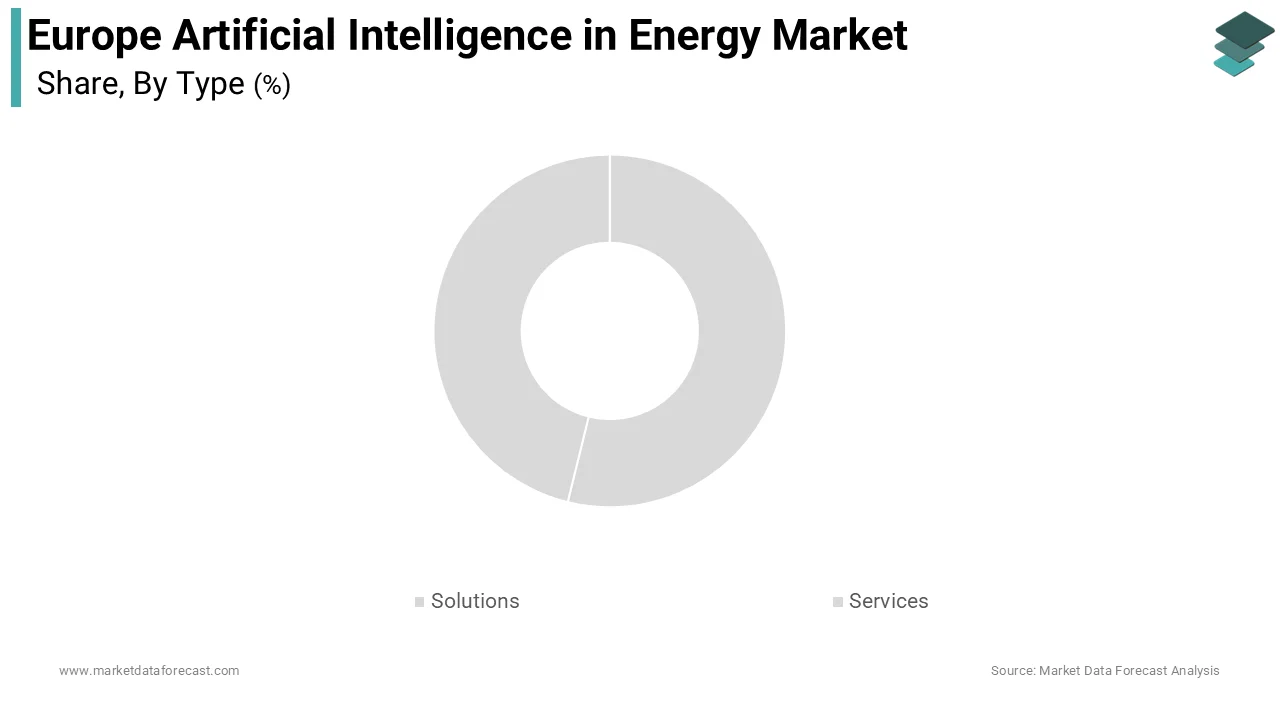
The services segment is anticipated to witness the fastest CAGR of 18.5% from 2026 to 2034 due to the increasing complexity of AI implementations, which require specialized expertise for deployment integration, and ongoing management. Energy companies often lack the internal technical capacity to develop and maintain sophisticated AI models, leading to a surge in demand for consulting managed services and technical support. The transition from simple software installation to comprehensive service agreements reflects a strategic shift towards outsourcing non-core competencies. These services include data labeling model training and system optimization, which are essential for maintaining the accuracy and relevance of AI applications over time. Furthermore, the need for continuous updates to comply with evolving cybersecurity standards and regulatory requirements drives recurring revenue for service providers. As AI systems become more integral to grid operations, the risk of failure increases, making professional support services indispensable. Utilities are willing to pay premium prices for guaranteed uptime and performance assurance, which further fuels the expansion of the services segment. This trend indicates a maturing market where value creation shifts from product sales to long-term operational partnerships. A key driver behind the rapid expansion of the services segment is the critical need for continuous model optimization and rigorous cybersecurity monitoring in dynamic energy environments. AI models are not static entities; they require constant retraining with new data to maintain their predictive accuracy as grid conditions and consumption patterns change. Service providers offer specialized expertise in monitoring model drift and implementing corrective measures to ensure consistent performance. Managed security service providers utilize AI to detect anomalies and respond to threats in real time offering a layer of protection that internal teams may struggle to maintain. Additionally, the regulatory landscape in Europe is becoming increasingly stringent regarding data handling and algorithmic transparency, requiring expert guidance to ensure compliance. Service firms assist utilities in navigating these complex legal frameworks, reducing the risk of penalties and reputational damage. The complexity of integrating AI with emerging technologies such as blockchain for energy trading also necessitates specialized consulting services. As energy markets become more decentralized and interactive, the demand for agile, responsive service models grows. This reliance on external expertise for maintaining system integrity and compliance ensures that the services segment experiences sustained high growth rates, outpacing the initial software acquisition phase.
By Application Insights
The renewable energy management segment led the Europe artificial intelligence in energy market and captured a 35.2% share in 2025. This leading position of the segment is attributed to the aggressive expansion of wind and solar capacity across the continent, which introduces significant variability into the power grid. AI technologies are essential for forecasting generation output, optimizing storage usage, and ensuring grid stability amidst fluctuating renewable inputs. The European Union’s REPowerEU plan aims to accelerate the rollout of renewable energy to reduce dependence on fossil fuels, creating a massive demand for intelligent management systems. AI algorithms analyze weather data, turbine performance, and grid constraints to maximize energy yield and minimize curtailment. This optimization is crucial for maintaining the economic viability of renewable projects, which often operate on thin margins. Furthermore, the intermittent nature of renewables necessitates real-time balancing services, which AI provides through automated dispatch of battery storage and flexible demand. The ability to predict maintenance needs for remote offshore wind farms also reduces operational costs and enhances reliability. As the share of renewables in the energy mix continues to rise towards the 2030 targets, the reliance on AI-driven management tools becomes indispensable. This structural dependency ensures that renewable energy management remains the dominant application segment driving innovation and investment in the sector. A major factor driving the dominance of the renewable energy management segment is the extensive use of AI for optimizing offshore wind farm operations through predictive maintenance algorithms. Offshore wind installations are located in harsh environments where access for repairs is difficult and expensive. AI systems utilize data from sensors embedded in turbines to monitor vibration, temperature, and performance metrics, identifying potential failures before they occur. This cost reduction improves the competitiveness of offshore wind against conventional energy sources, encouraging further investment in the sector. AI models also optimize the scheduling of maintenance crews based on weather windows and vessel availability, maximizing operational efficiency. The scale of offshore wind projects in Europe, with several gigawatt-scale parks in development in the UK, Germany, and the Netherlands, creates a vast market for these specialized AI applications. Furthermore, the integration of digital twins, virtual replicas of physical assets, allows operators to simulate various scenarios and test maintenance strategies without risking actual equipment. This technological advantage enhances the lifespan of turbines and ensures consistent energy production. Europe leads the world in offshore wind deployment, driving up demand for AI-powered operational tools. This trend solidifies the segment's market leadership.
The robotics application segment is likely to experience the fastest CAGR of 21.2% during the forecast period, owing to the increasing adoption of autonomous drones and ground robots for inspection and maintenance tasks in hazardous or hard-to-reach energy infrastructure. Traditional manual inspections are time-consuming, costly, and pose safety risks to workers, particularly in high-voltage substations and offshore platforms. AI-enabled robots equipped with computer vision and thermal imaging capabilities can perform detailed inspections with greater accuracy and speed. These robots can detect heat leaks, corrosion, and structural defects that may be missed by human inspectors, enabling early intervention and preventing catastrophic failures. The integration of AI allows robots to navigate complex environments autonomously and make real-time decisions based on sensor data. This capability is particularly valuable for nuclear power plants where radiation levels restrict human access. As energy infrastructure ages, the need for frequent and thorough inspections increases, driving demand for robotic solutions. Furthermore, advancements in battery technology and wireless communication enhance the operational range and endurance of these robots. The combination of improved safety, reduced costs, and enhanced inspection quality makes robotics a highly attractive application for energy companies seeking to modernize their maintenance practices. The primary factor for the rapid growth of the robotics segment is the automation of hazardous inspection tasks in nuclear and high-voltage facilities where human safety is paramount. Nuclear power plants remain a significant source of low-carbon electricity in Europe, with countries like France relying heavily on this energy source. Inspecting reactor components and containment structures involves radiation exposure, which poses severe health risks to human workers. AI-driven robots can operate in these high radiation environments for extended periods, collecting precise data without endangering human life. These robots are equipped with AI algorithms that allow them to identify cracks, leaks, and other anomalies with high precision. In high voltage substations, robots can perform live line inspections, detecting partial discharges and thermal hotspots that indicate impending equipment failure. The ability to conduct these inspections without shutting down operations minimizes downtime and maintains grid reliability. Regulatory bodies are increasingly mandating the use of remote inspection technologies to enhance worker safety standards. This regulatory push, combined with the technological maturity of AI robotics, creates a strong growth trajectory for the segment. Energy providers are increasingly prioritizing safety and operational continuity. Consequently, the adoption of autonomous inspection robots will accelerate, driving substantial market expansion in this critical application area.
REGIONAL ANALYSIS
Germany Artificial Intelligence In Energy Analysis
Germany was the top performer in the Europe artificial intelligence in energy market and accounted for a 22.7% share in 2025. This supremacy of the German market is propelled by a robust industrial base and a strong commitment to the Energiewende or energy transition policy, which prioritizes renewable energy and grid modernization. Germany is home to numerous leading technology providers and utility companies that are actively investing in AI solutions to manage the complexities of a decentralized energy system. The federal government has launched the AI Strategy of the German Federal Government, which aims to strengthen research and application of artificial intelligence in key sectors, including energy. According to the German Federal Ministry for Economic Affairs and Climate Action (BMWK), Germany aims to source 80% of its electricity from renewables by 2030, a transition currently ahead of schedule with renewables reaching 59% of generation in 2024. The presence of major automotive and manufacturing industries also drives demand for smart energy management systems to optimize industrial consumption. Germany’s well-developed digital infrastructure and high broadband penetration facilitate the deployment of IoT devices and AI platforms. Furthermore, the country hosts several research institutes focused on energy informatics, fostering innovation and collaboration between academia and industry. The strong regulatory framework supporting data privacy and cybersecurity provides a stable environment for AI adoption. As Germany continues to phase out nuclear and coal power, the reliance on AI to balance fluctuating renewable inputs will intensify. This strategic focus on digitalization and sustainability ensures that Germany remains the dominant force in the European AI in energy landscape, driving both domestic innovation and regional export opportunities.
United Kingdom Artificial Intelligence In Energy Analysis
The United Kingdom was the second largest country in the Europe artificial intelligence in energy market and held a 18.3% share in 2025. This growth of the UK market is fuelled by its ambitious net-zero targets and a highly liberalized energy market that encourages innovation and competition. The UK government has identified artificial intelligence as a key technology for achieving climate goals and has invested significantly in smart grid infrastructure. According to the Department for Energy Security and Net Zero (DESNZ), the UK has accelerated its target to deliver clean power by 2030 (previously 2035), necessitating a rapid upgrade in grid flexibility and the deployment of AI-driven balancing tools. The UK maintains its goal to expand offshore wind capacity to 50 GW by 2030, requiring advanced operational optimization tools to manage the integration of large-scale variable power. The presence of leading fintech and tech companies in London facilitates the development of innovative energy trading platforms and demand response solutions. The UK’s regulatory body Ofgem supports innovation through funding mechanisms such as the Network Innovation Allowance, which encourages utilities to trial new technologies. Furthermore, the country has a strong academic ecosystem with universities conducting cutting-edge research in machine learning and energy systems. The integration of AI in the UK energy sector is also driven by the need to enhance consumer engagement through smart meters and home energy management systems. As the UK seeks to maintain its position as a global leader in clean energy technology, the adoption of AI solutions will continue to grow rapidly. This supportive policy environment and technological prowess ensure that the UK remains a key contributor to the European market.
France Artificial Intelligence In Energy Analysis
France is another key player in the Europe artificial intelligence in energy market owing to its significant reliance on nuclear power and the ongoing efforts to modernize this infrastructure while expanding renewable energy sources. The French government has launched the France 2030 investment plan, which includes substantial funding for green technologies and digital innovation in the energy sector. As per the French Ministry of Ecological Transition, the country targets a 40% renewable share in its electricity mix by 2030, supported by the widespread Linky smart meter network, which currently serves over 95% of French households. Electricité de France EDF the state-owned utility giant, is actively deploying AI solutions for predictive maintenance of nuclear reactors and optimization of hydroelectric dams. The company’s digital transformation strategy focuses on leveraging data analytics to improve efficiency and safety across its diverse asset portfolio. France is also a leader in smart meter deployment. The country’s strong engineering tradition and presence of major technology firms support the development of specialized AI tools for the energy sector. Furthermore, France is committed to European energy independence, which drives investment in grid resilience and storage solutions powered by artificial intelligence. The combination of nuclear modernization and renewable expansion creates a unique market dynamic that favors sophisticated AI solutions. This strategic approach ensures that France remains a pivotal player in the European AI in energy market, contributing to regional stability and innovation.
Italy Artificial Intelligence In Energy Analysis
Italy is moving ahead steadfastly in the European AI in energy market. It is emerging as one of the region’s major contributors. The market status in Italy is characterized by a high dependence on imported energy and a strong push towards solar photovoltaic adoption to enhance energy security. The Italian National Recovery and Resilience Plan allocates significant funds for digitalization and ecological transition, including investments in smart grids and energy efficiency. According to the Ministry of Environment and Energy Security (MASE), Italy’s updated PNIEC targets 72% of electricity consumption from renewable sources by 2030, a significant increase from the previous 55% goals. Italy has one of the highest penetrations of rooftop solar panels in Europe, creating a complex decentralized grid that requires intelligent coordination to prevent instability. AI solutions are essential for managing prosumer behavior and optimizing local energy communities. The country is also investing in hydrogen technologies where AI plays a role in optimizing production and distribution processes. Italian utilities such as Enel are global leaders in digital innovation, actively deploying AI for grid automation and customer engagement. The geographical diversity of Italy, with varying solar and wind resources across regions, necessitates localized AI models for effective energy management. Furthermore, the government’s incentives for energy efficiency in buildings drive the adoption of smart home technologies powered by AI. As Italy seeks to reduce its carbon footprint and enhance grid reliability, the adoption of artificial intelligence in the energy sector will continue to expand. This focus on decentralization and efficiency ensures Italy’s significant role in the European market.
Spain Artificial Intelligence In Energy Analysis
Spain is likely to expand notably in the Europe artificial intelligence in energy market during the forecast period due to its exceptional solar and wind resources, which have made it a leader in renewable energy generation in Europe. The Spanish government has implemented the Integrated National Energy and Climate Plan, which sets ambitious targets for renewable energy deployment and grid digitalization. According to the Institute for Diversification and Saving of Energy (IDAE), Spain’s revised 2030 target aims for 81% of electricity generation to be renewable-based, driven by aggressive solar and wind expansion. The country has seen a surge in large-scale solar and wind projects, which rely on AI for predictive maintenance and output forecasting to maximize profitability. Spanish utilities such as Iberdrola are at the forefront of adopting AI technologies for smart grid management and electric vehicle charging infrastructure. The integration of AI helps balance the grid during periods of high renewable generation and low demand, preventing curtailment. Spain is also developing green hydrogen hubs where AI optimizes electrolyzer operations based on renewable energy availability. The country’s favorable climate and regulatory support attract significant foreign investment in clean energy technologies. Furthermore, the deployment of smart meters across Spain provides valuable data for AI-driven demand side management programs. As Spain continues to leverage its natural advantages in renewable energy, the demand for intelligent management solutions will grow. This strategic focus on renewables and digitalization ensures Spain’s prominent position in the European AI in energy market.
COMPETITION OVERVIEW
The competition in the Europe AI in energy market is characterized by intense rivalry among established industrial giants, specialized technology firms, and emerging startups. Major multinational corporations leverage their extensive resources and broad product portfolios to offer comprehensive end-to-end solutions that integrate hardware, software, and services. These incumbents benefit from long-standing relationships with utility providers and a deep understanding of regulatory frameworks. However, specialized AI startups challenge this dominance by introducing niche innovations and agile development cycles that address specific grid management issues. The market sees frequent mergers and acquisitions as larger entities seek to absorb novel technologies and talent. Competitive differentiation increasingly relies on the ability to demonstrate tangible return on investment through improved operational efficiency and reduced carbon emissions. Companies also compete on the basis of cybersecurity robustness and data privacy compliance, which are critical concerns for European customers. The presence of strong government incentives for digitalization and decarbonization further intensifies competition as more players enter the market. This dynamic environment fosters continuous innovation but also creates pressure on pricing and profit margins. Strategic alliances and ecosystem building become essential for sustaining competitive advantage in this rapidly evolving landscape where technological superiority and customer trust are paramount.
KEY MARKET PLAYERS
A few major players in the Europe AI in energy market include
- Siemens AG
- ABB Ltd
- General Electric
- Schneider Electric
- Atos SE
- Alpiq AG
- C3.ai
- AppOrchid Inc
- Flex Ltd
- Uptake Technologies
- Origami Energy Ltd
- SmartCloud Inc
- EDF
- Shell
- National Grid
- Siemens Energy
Top Strategies Used by the Key Market Participants
Key players in the Europe AI in energy market primarily employ strategic partnerships and collaborations to expand their technological capabilities and market reach. Companies frequently join forces with local utilities and technology startups to co-develop innovative solutions tailored to specific regional grid challenges. Another prevalent strategy is the acquisition of specialized AI firms which allows established corporations to integrate advanced machine learning algorithms into their existing portfolios rapidly. Investment in research and development remains a cornerstone strategy as firms strive to enhance the accuracy and efficiency of their predictive models. Additionally, key participants focus on expanding their cloud computing infrastructure to support the massive data processing requirements of AI applications. They also prioritize compliance with European data privacy regulations to build trust with customers and regulatory bodies. Marketing efforts emphasize the sustainability benefits of AI-driven energy management, aligning with the European Green Deal objectives. These multifaceted strategies enable companies to maintain competitive advantages and drive widespread adoption of artificial intelligence technologies across the diverse and evolving European energy sector.
Leading Players in the Europe AI in Energy Market
- Siemens AG stands as a pivotal force in the European artificial intelligence in the energy sector by leveraging its extensive portfolio of digital grid solutions and industrial automation technologies. The company actively integrates AI into its MindSphere platform to enable predictive maintenance and real-time grid optimization for utility providers across the continent. Siemens has recently strengthened its market position by expanding partnerships with renewable energy developers to enhance the stability of wind and solar integration through advanced algorithms. Their commitment to decarbonization is evident in the deployment of AI-driven energy management systems that reduce operational costs and improve efficiency for industrial clients. By focusing on digital twins and smart infrastructure, Siemens continues to drive innovation in grid resilience and sustainability. This strategic emphasis on holistic digital transformation allows Siemens to maintain a competitive edge while supporting the European Union’s ambitious climate goals through robust technological interventions.
- International Business Machines Corporation significantly influences the Europe AI in the energy market through its powerful Watson AI platform and specialized industry clouds designed for utilities. The company provides advanced analytics and machine learning tools that help energy providers forecast demand, optimize asset performance, and manage complex distributed energy resources. IBM has recently enhanced its offerings by integrating quantum computing capabilities with AI to solve intricate grid optimization problems more efficiently. Their collaborations with major European energy firms focus on accelerating the transition to clean energy by improving the accuracy of renewable generation forecasts. IBM’s emphasis on open source technologies and hybrid cloud solutions enables seamless integration of AI into existing legacy systems. This approach empowers utilities to achieve greater operational agility and sustainability. IBM ensures long-term adoption of its intelligent energy solutions across Europe by prioritizing ethical AI and data security. These measures build essential trust with both regulators and consumers.
- General Electric Company plays a crucial role in the Europe AI in energy market by offering sophisticated digital solutions for power generation and grid management through its GE Vernova subsidiary. The company utilizes its Predix platform to deliver AI-powered insights that enhance the reliability and efficiency of gas, wind, and hydroelectric assets. GE has recently focused on advancing its digital twin technology, which allows operators to simulate and optimize plant performance in real time, reducing downtime and maintenance costs. Their strategic initiatives include partnerships with European grid operators to implement AI-driven stability controls that support higher penetrations of renewable energy. GE’s commitment to innovation is further demonstrated by its investment in cybersecurity measures to protect critical energy infrastructure from digital threats. By combining deep domain expertise with cutting-edge artificial intelligence, GE enables energy providers to navigate the complexities of the modern grid. This comprehensive approach ensures that GE remains a key contributor to the digitalization and decarbonization of the European energy landscape.
MARKET SEGMENTATION
This research report on the European artificial intelligence in energy market has been segmented and sub-segmented based on type, application & region.
By Type
- Solutions
- Services
By Application
- Renewable Energy Management
- Demand Forecasting
- Robotics
- Safety, Security & Infrastructure
- Other Application
By Region
- UK
- France
- Spain
- Germany
- Italy
- Russia
- Sweden
- Denmark
- Switzerland
- Netherlands
- Turkey
- Czech Republic
- Rest of Europe