- Product Description Description
- Table of Contents TOC
- List of Table & Figure LOT
- Get Free Sample PDF Sample PDF
Market Size, 2025
$4.81 BnMarket Estimate, 2026
$4.94 BnMarket Forecast, 2034
$6.11 BnCAGR, 2026–2034
2.69%Europe Athletic Apparel Market Size, Growth, Trends & Forecast (2026–2034)
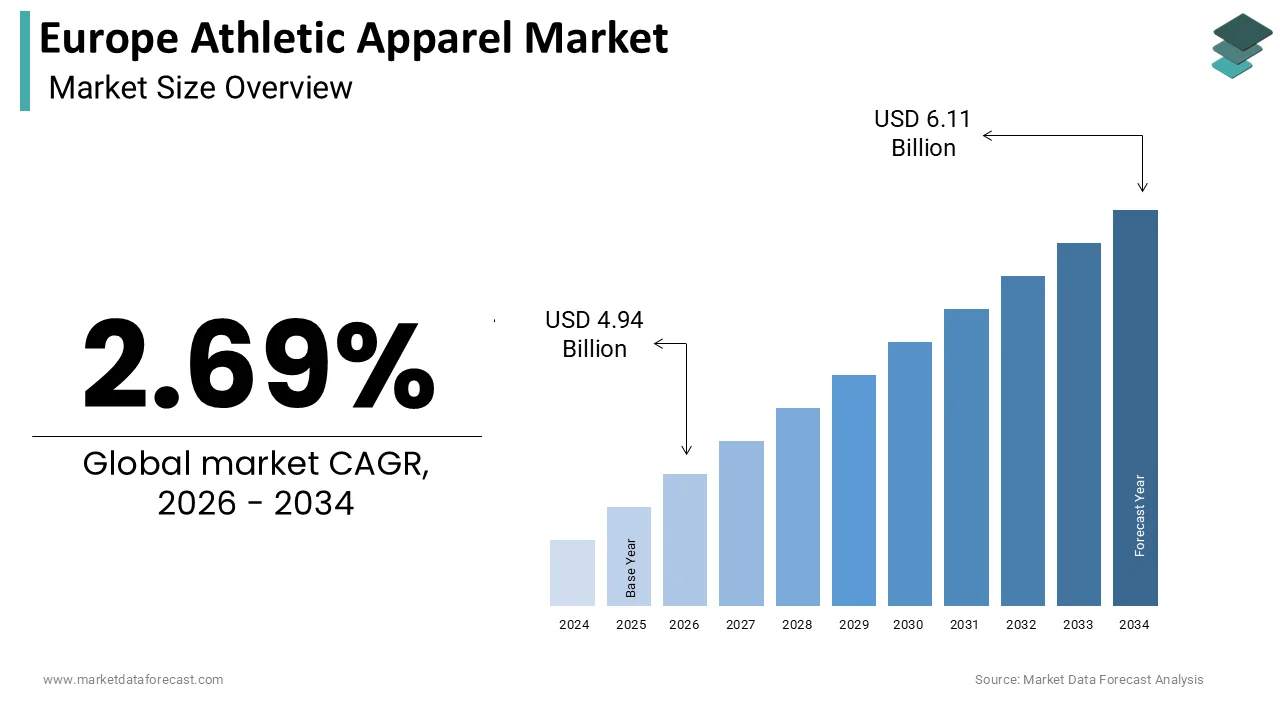
The Europe athletic apparel market size was calculated to be USD 4.81 billion in 2025, is anticipated to be worth USD 4.94 billion in 2026, and is projected to reach USD 6.11 billion by 2034, expanding at a compound annual growth rate (CAGR) of 2.69% during the forecast period from 2026 to 2034. Driven by escalating health consciousness, the mainstream adoption of athleisure, and a robust fitness infrastructure, the European market demonstrates steady growth and increasing integration of smart textiles and sustainability principles.
Key Executive Metrics (At-a-Glance)
- 2025 Base Valuation: USD 4.81 Billion
- 2026 Current Valuation: USD 4.94 Billion
- 2034 Forecast Valuation: USD 6.11 Billion
- Compound Annual Growth Rate (CAGR): 2.69% (2026–2034)
- Dominant Sport/Activity Segment: Fitness & Gym Apparel (32.1% share in 2025)
- Fastest-Growing Sport/Activity Segment: Yoga & Pilates Wear (9.8% CAGR)
- Dominant Distribution Channel: Offline Retail (54.6% share in 2025)
- Fastest-Growing Distribution Channel: Online Retail (12.5% CAGR)
- Dominant Country Market: Germany (24.8% share in 2025)
- Fastest-Growing Country Market: France (Fastest CAGR)
Core Market Drivers & Restraints
- Health Consciousness: Government-led fitness initiatives and rising awareness of sedentary risks boosting regular physical activity.
- Athleisure Adoption: Blurring lines between performance gear and everyday fashion driven by remote work and flexible lifestyles.
- Regulatory Compliance: Strict EU environmental regulations and sustainability standards increasing compliance costs for manufacturers.
- Economic Pressures: Inflationary pressures and economic volatility reducing household disposable income for non-essential goods.
Europe Athletic Apparel Market Segmentation Breakdown
| Segment Category | Largest (Dominant) Segment | Fastest-Growing Segment |
|---|---|---|
| By Sport/Activity Type | Fitness & Gym Apparel (32.1% share) | Yoga & Pilates Wear (9.8% CAGR) |
| By Distribution Channel | Offline Retail (54.6% share) | Online Retail (12.5% CAGR) |
| By Country / Region | Germany (24.8% share) | France (Fastest CAGR) |
Major Industry Players Profiled
Key enterprises shaping the Europe athletic apparel market include Nike Inc., Adidas AG, Puma SE, Under Armour Inc., ASICS Corporation, New Balance Athletics Inc., Decathlon S.A., Lululemon Athletica Inc., Columbia Sportswear Company, and Fila Holdings Corp.
Europe Athletic Apparel Market Size
The Europe athletic apparel market size was calculated to be USD 4.81 billion in 2025 and is anticipated to be worth USD 6.11 billion by 2034, from USD 4.94 billion in 2026, growing at a CAGR of 2.69% during the forecast period.
The athletic apparel is an ecosystem of performance-oriented garments designed for sports participation, physical training, and the increasingly dominant athleisure lifestyle. This sector transcends traditional sportswear by integrating advanced textile engineering, biomechanical design, and aesthetic versatility to serve both professional athletes and casual consumers. The definition has expanded to include clothing that facilitates a seamless transition from gym environments to social settings, reflecting a cultural shift where health and wellness are central to European identity. The region boasts a robust infrastructure for physical activity, with Eurostat data indicating that over 45% of the European Union population engages in moderate to vigorous physical activity at least once a week. Furthermore, the European Commission reports that there are more than 700000 sports clubs across the EU, creating a foundational demand for specialized team and individual kits. Urbanization rates exceeding 75% in Western Europe foster a lifestyle where compact living spaces and active commuting necessitate versatile, high-performance clothing. The market is characterized by a rigorous adherence to sustainability standards, driven by stringent EU regulations on textile waste and chemical usage. As per the European Environment Agency, the push for circular economy principles is reshaping production methods, forcing brands to innovate with recycled fibers and durable designs.
MARKET DRIVERS
Escalating Health Consciousness and Government-Led Fitness Initiatives
The escalating health consciousness among the populace, heavily reinforced by comprehensive government-led fitness initiatives, is accelerating the growth of Europe athletic apparel market. European nations have increasingly recognized physical inactivity as a critical public health challenge, prompting substantial state investment in programs that encourage regular exercise. According to the World Health Organization Regional Office for Europe, sedentary behavior contributes to approximately 9% of premature mortality in the region, a statistic that has galvanized policymakers to launch nationwide campaigns promoting active lifestyles. For instance, the "HealthyLifestyle4All" initiative by the European Commission aims to link sport and healthy eating policies, directly stimulating demand for appropriate athletic gear. This rise in structured physical activity necessitates specialized apparel that offers moisture management, thermal regulation, and durability. Furthermore, the integration of physical education mandates in schools ensures that younger demographics develop early habits of wearing performance clothing.
Mainstream Adoption of Athleisure and Hybrid Lifestyle Fashion
The mainstream adoption of athleisure, a trend that blurs the lines between performance gear and everyday fashion, is additionally escalating the growth of Europe athletic apparel market. The phenomenon is driven by a societal shift towards comfort and versatility, accelerated by the normalization of remote work and flexible dress codes in corporate environments. Consumers increasingly prioritize clothing that supports an active lifestyle while maintaining aesthetic appeal for social and professional interactions. Statistics reveal that 54% of European consumers now wear athletic-inspired clothing for non-sporting activities at least three times a week, according to recent studies. The influence of social media platforms cannot be overstated, where fitness influencers and celebrities showcase athletic wear as a staple of modern style, driving aspirational purchasing. In major urban centers like Paris, London, and Berlin, the acceptance of sneakers and leggings in diverse settings has expanded the addressable market beyond traditional athletes. Retail data indicates that sales of athleisure items grew by 18% year-over-year, outpacing traditional casual wear segments as per retail analytics firms. The result is a market where athletic apparel is purchased not just for utility but as a core component of personal identity and daily expression.
MARKET RESTRAINTS
Stringent Environmental Regulations and Compliance Costs
The implementation of rigorous environmental regulations by imposing heavy compliance burdens on manufacturers is limiting the growth of Europe athletic apparel market. The EU Strategy for Sustainable and Circular Textiles introduces strict requirements for durability, reusability, and recycled content, compelling brands to overhaul their supply chains and production processes. According to the European Commission, the textile industry is a priority sector for the Green Deal, leading to mandates like the Digital Product Passport, which requires detailed tracking of material origins and chemical compositions. Compliance with these regulations necessitates substantial investment in new technologies and certification processes, which can increase operational costs by up to 20% for small and medium-sized enterprises, as per industry financial analyses. Furthermore, the Restriction of Hazardous Substances (RoHS) and REACH regulations strictly limit the use of certain dyes and finishes commonly used in performance fabrics to enhance water resistance or color vibrancy. Non-compliance risks severe financial penalties and product recalls, deterring rapid innovation and market entry for smaller players. The transition to eco-friendly alternatives often involves higher raw material costs and longer lead times, challenging the fast-paced nature of fashion cycles.
Economic Volatility and Inflationary Pressure on Consumer Spending
The economic volatility and persistent inflationary pressures, by eroding consumer purchasing power and altering spending priorities is additional attributes degrading the growth of Europe athletic apparel market. The region has faced significant economic headwinds, with inflation rates in several key markets exceeding 8% in recent periods, drastically reducing disposable income for non-essential goods. According to a survey, the cost-of-living crisis has led to a noticeable contraction in household expenditure on clothing and footwear, with consumers delaying purchases or opting for lower-priced alternatives. High energy costs have also exacerbated production and logistics expenses, forcing brands to increase retail prices, which further dampens demand. Data from the European Central Bank indicates that consumer confidence indices have dipped to historic lows in major economies like Germany and Italy, correlating with a decline in voluntary spending on premium athletic wear as per retail sales reports. The price sensitivity of the mass market segment forces manufacturers to absorb margin compression or risk losing market share to discount retailers. Additionally, the uncertainty surrounding economic stability makes long-term planning difficult for brands, leading to conservative inventory strategies that may result in stockouts during peak demand periods.
MARKET OPPORTUNITIES
Integration of Smart Textiles and Wearable Technology
The integration of smart textiles and wearable technology to deliver enhanced performance monitoring and user engagement is certainly creating new opportunities for the growth of Europe athletic apparel market. As the region leads in digital adoption and health tech innovation, there is a burgeoning demand for garments embedded with sensors that track biometric data such as heart rate, muscle activity, and hydration levels in real time. The global smart clothing market is projected to grow significantly, with Europe expected to account for a substantial portion due to its tech-savvy population and robust healthcare infrastructure. According to the European Institute of Innovation and Technology, investments in wearable health technologies have increased by 30% annually, creating a fertile ground for apparel brands to collaborate with tech firms. Opportunities exist in developing fabrics that regulate body temperature dynamically or change color based on UV exposure, adding functional value beyond basic coverage. Furthermore, the data generated by these smart garments can be synced with mobile applications to provide personalized coaching and health insights, fostering deeper brand loyalty. Research indicates that many European fitness enthusiasts are willing to pay a premium for clothing that offers integrated technological benefits, according to consumer trend surveys.
Expansion of Circular Economy and Rental Business Models
The expansion of circular economy principles and the adoption of rental business models to align with sustainability goals, while accessing new revenue streams, is also expected to escalate the growth of Europe athletic apparel market. European consumers are increasingly conscious of the environmental impact of fast fashion, driving demand for services that extend the lifecycle of garments. The concept of renting high-performance athletic wear for specific events or short-term training cycles appeals to cost-conscious and eco-aware demographics. Brands can leverage this by launching take-back schemes where old garments are recycled into new products, creating a closed-loop system that reduces waste and raw material dependency. The European Union's Circular Economy Action Plan provides regulatory support and incentives for such initiatives, encouraging brands to innovate in material recovery. Additionally, resale platforms dedicated to premium athletic gear are gaining traction, allowing consumers to buy and sell used items securely.
MARKET CHALLENGES
Prevalence of Counterfeit Products and Intellectual Property Theft
The prevalence of counterfeit products and intellectual property theft is another attribute enhancing the growth of Europe athletic apparel market. The high demand for branded performance wear makes it a prime target for counterfeiters who produce inferior imitations that undermine brand reputation and safety standards. The European Union Intellectual Property Office estimates that the sports and leisure goods sector loses billions of euros annually due to counterfeiting, with athletic apparel being a frequently replicated category. These fake products often fail to meet the technical performance criteria of genuine items, such as moisture-wicking or compression capabilities, leading to consumer dissatisfaction and potential health risks. Online marketplaces and social media platforms have exacerbated this issue by providing anonymous channels for distributors to reach customers across borders with minimal oversight. Combating this requires significant investment in authentication technologies, legal actions, and consumer education, which strains resources, especially for smaller brands. The erosion of brand equity and the distortion of market prices discourage innovation and investment in high-quality R&D by creating a hostile environment for legitimate players striving to maintain high standards.
Supply Chain Disruptions and Raw Material Price Volatility
The supply chain disruptions and raw material price volatility that threaten the operational stability and margins are expected to impede the growth of Europe athletic apparel market. The industry relies heavily on global supply chains for synthetic fibers like polyester and nylon, which are derived from petrochemicals and thus susceptible to fluctuations in oil prices and geopolitical tensions. Recent global events have caused raw material costs to spike by up to 25%, squeezing profit margins for manufacturers who operate on competitive pricing structures, according to commodity market reports. Furthermore, logistical bottlenecks, port congestion, and labor shortages in key manufacturing regions have led to significant delays in production and delivery, disrupting the timely launch of seasonal collections. The concentration of supply chains in specific geographic areas makes the market vulnerable to localized disruptions such as natural disasters or political instability. The push for nearshoring to mitigate these risks is capital-intensive and time-consuming, requiring significant restructuring of existing networks. Additionally, the transition to sustainable materials introduces new complexities, as the supply of certified recycled fibers is currently limited and inconsistent. As per industry logistics analyses, lead times for sustainable inputs can be 30% longer than conventional materials, complicating inventory planning. Navigating this volatile landscape requires agile supply chain management, which remains a daunting task for many market participants.
REPORT COVERAGE
| REPORT METRIC | DETAILS |
| Market Size Available | 2025 to 2034 |
| Base Year | 2025 |
| Forecast Period | 2026 to 2034 |
| CAGR | 2.69% |
| Segments Covered | By Sport/Activity Type, Distribution Channel, And Region |
| Various Analyses Covered | Global, Regional & Country Level Analysis; Segment-Level Analysis; DROC, PESTLE Analysis; Porter’s Five Forces Analysis; Competitive Landscape; Analyst Overview of Investment Opportunities |
| Regions Covered | UK, France, Spain, Germany, Italy, Russia, Sweden, Denmark, Switzerland, Netherlands, Turkey, and the Czech Republic |
| Market Leaders Profiled | Nike Inc., Adidas AG, Puma SE, Under Armour Inc., ASICS Corporation, New Balance Athletics Inc., Decathlon S.A., Lululemon Athletica Inc., Columbia Sportswear Company, Fila Holdings Corp. |
SEGMENTAL ANALYSIS
By Sport/Activity Type Insights
The fitness and gym apparel segment was the largest by holding 32.1% of the Europe athletic apparel market share in 2025, owing to the widespread proliferation of health clubs and the cultural normalization of gym attendance as a daily routine across European urban centers. The first major driving factor is the massive expansion of the organized fitness infrastructure, which creates a consistent demand for specialized training gear. The extensive network ensures a steady stream of consumers requiring durable, flexible, and moisture-wicking clothing specifically designed for resistance training and cardio machines. The versatility of gym apparel has successfully transcended the workout environment to become acceptable everyday wear due to the athleisure trend. As per some reports, 58% of European consumers now wear gym-specific clothing for casual social activities or remote work, effectively doubling the usage occasions for these garments as per consumer lifestyle surveys. Brands have capitalized on this by designing collections that offer both high performance and aesthetic appeal, featuring neutral colors and sleek cuts suitable for various settings.
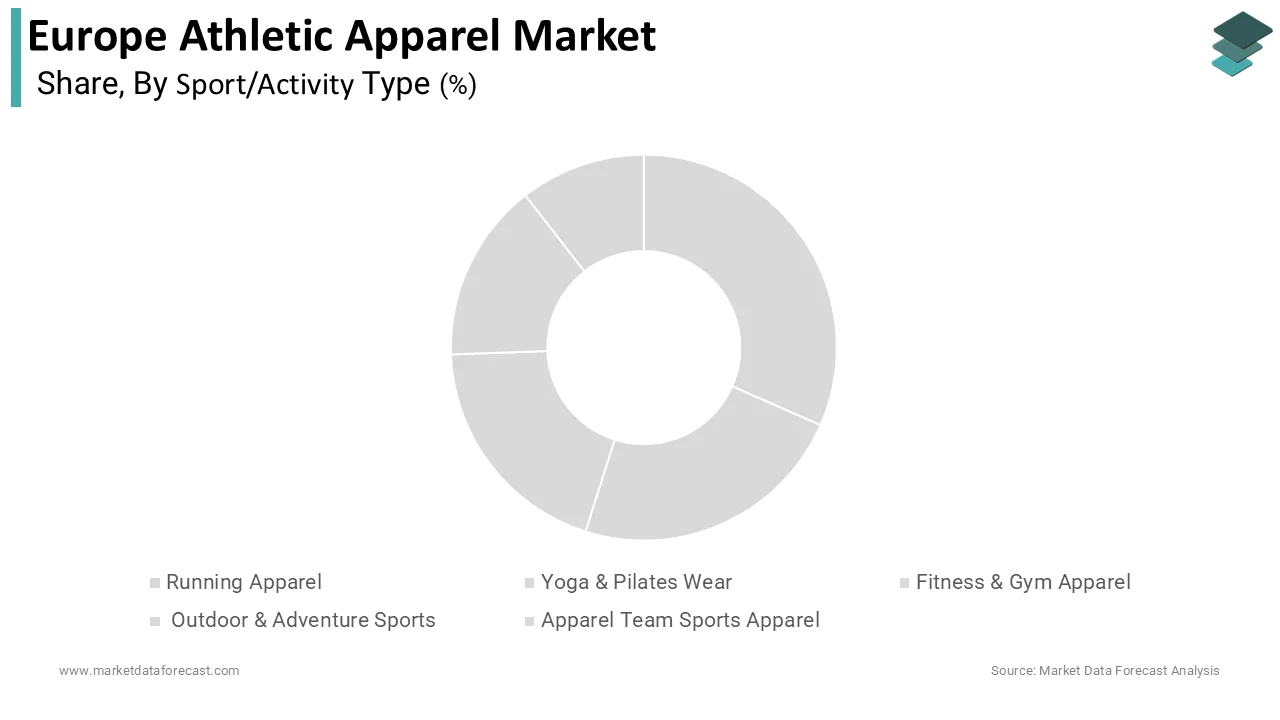
The yoga and pilates wear segment is expected to grow at an anticipated CAGR of 9.8% during the forecast period due to a profound shift towards mindfulness and low-impact exercise. The increasing awareness of mental health and the desire for holistic wellness practices that integrate physical movement with stress reduction are enhancing the growth of the segment. The surging participation rates in yoga and pilates among female demographics and older adults seeking sustainable fitness options are also promoting the growth of the segment. The specific technical requirements of yoga and pilates, which demand apparel with superior stretch, breathability, and squat-proof opacity, prompting consumers to purchase specialized items rather than generic sportswear is boosting the growth of the segment. The innovations in fabric technology, such as buttery-soft textures and seamless construction, which enhance comfort during prolonged static holds and flows. Furthermore, the influence of social media communities dedicated to mindfulness and yoga lifestyles amplifies trends rapidly, driving frequent purchases of new styles and colors.
By Distribution Channel Insights
The offline retail segment accounted in holding 54.6% of the Europe athletic apparel market share in 2025, with the physical retail experience retaining its importance due to the tactile nature of athletic fabrics and the necessity for precise fit assessment. The consumer preference for trying on performance wear to evaluate comfort, range of motion, and material feel before purchase. Furthermore, offline retail includes a diverse mix of specialty sports stores, brand flagship outlets, and department stores that offer immediate gratification and personalized assistance from knowledgeable staff. The strategic location of these stores in high-traffic urban areas and shopping malls, which facilitates impulse buying and allows brands to create immersive brand experiences through visual merchandising and in-store events, is another factor bolstering the growth of the segment. Retailers often host product launch events, athlete meet-and-greets, and trial zones that foster community engagement and brand loyalty. The ability to resolve sizing issues instantly and the trust associated with an established brick-and-mortar presence ensure that offline retail continues to hold the largest share of the market, serving as a vital touchpoint for customer acquisition and retention.
The online retail segment is projected to grow at a CAGR of 12.5% from 2026 to 2034, owing to the increasing penetration of smartphones, the sophistication of e-commerce platforms, and the shifting shopping habits of digital-native generations who prioritize convenience and variety. Additionally, the vast selection available online, ranging from niche performance brands to global giants, attracts consumers seeking specific features or limited-edition releases that physical stores cannot stock due to space constraints. The rise of social commerce, where users can purchase directly from influencer posts on Instagram and TikTok, further accelerates growth by shortening the path to purchase. The second factor is the aggressive pricing strategies, flash sales, and personalized marketing campaigns exclusive to online channels, which appeal to price-sensitive shoppers.
REGIONAL ANALYSIS
Germany Athletic Apparel Market Analysis
Germany was the top performer in the Europe athletic apparel market by holding 24.8% of the share in 2025, with a deeply ingrained sports culture, high disposable income, and a strong preference for quality and functionality in athletic gear. The "Verein" (club) system fosters a communal approach to sports, necessitating team kits and individual training wear for a wide array of activities from football to gymnastics. Furthermore, German consumers are known for their willingness to invest in premium products that offer durability and advanced technical features by favoring brands that emphasize innovation and sustainability. The strong domestic manufacturing heritage and the presence of global sportswear headquarters, which keeps the market highly competitive and trend-responsive is greatly influencing the growth of the market. Data indicates that expenditure on sports equipment and clothing in Germany grew by 8% in 2024, outpacing general retail growth as per national economic statistics. The government's active promotion of public health and active living through initiatives like "Sport pro Gesundheit" further stimulates participation and apparel consumption.
United Kingdom Athletic Apparel Market Analysis
The United Kingdom athletic apparel market held second position by holding 18.3% of the share in 202,5 with the vibrant sports heritage and the global influence of its fashion and music scenes on activewear trends. The unique blend of traditional sports participation and the pioneering of the athleisure lifestyle, where athletic wear is seamlessly integrated into daily urban life. The immense popularity of running and football, with millions of participants engaging in these activities regularly, is fueling demand for both performance and casual athletic clothing. The strong presence of influential fashion retailers and streetwear brands has redefined athletic apparel as a style statement, attracting a younger demographic that values aesthetics as much as performance. The UK's dense urban population and high internet penetration also support a thriving e-commerce sector for sportswear, with online sales accounting for a growing portion of total revenue. Additionally, major sporting events hosted in the country, such as marathons and football tournaments, create seasonal spikes in demand and keep sports apparel in the public consciousness. This combination of active participation, fashion-forward culture, and digital adoption ensures the UK remains a critical and dynamic market for athletic apparel.
France Athletic Apparel Market Analysis
The French athletic apparel market is likely to witness the fastest CAGR in the coming years, with its reputation for fashion excellence and a growing national emphasis on health and wellness. The government-led initiative "Sport Santé Sur Ordonnance," which encourages doctors to prescribe physical activity, thereby legitimizing and expanding the base of active individuals who require appropriate gear. The strong cycling culture, bolstered by events like the Tour de France and extensive urban cycling infrastructure, creates a specialized demand for cycling apparel that extends beyond professional riders to everyday commuters. French consumers are increasingly conscious of sustainability, pushing brands to adopt eco-friendly materials and transparent supply chains to maintain market relevance.
Italy Athletic Apparel Market Analysis
Italy's athletic apparel market growth is likely to grow with its exceptional design heritage and a passionate engagement with sports such as football, cycling, and skiing. The deep-rooted passion for football, which permeates all levels of society, from professional leagues to amateur Sunday leagues, generates sustained demand for team sports apparel and training gear. As per the study, football is practiced by over 1.5 million registered players in Italy, making it the most popular sport and a key volume driver for athletic clothing according to the Italian Football Federation. The booming fitness and wellness sector in major cities like Milan and Rome, where high-end gyms and boutique studios cater to an affluent clientele seeking premium branded apparel. Italian consumers are also early adopters of fashion-forward athleisure, often blending luxury brands with sportswear elements.
Spain Athletic Apparel Market Analysis
Spain's athletic apparel market growth is expected to have steady opportunities in the coming years, with a strong inclination towards running, tennis, and water sports, with the favorable weather allowing for year-round outdoor training and competition. The massive popularity of running, with Spain hosting some of the world's largest marathons and boasting a high density of running clubs that foster a communal spirit and consistent apparel consumption. The integration of sports into the social fabric, where activities like padel tennis have exploded in popularity, has created new niches for specialized athletic wear. Furthermore, the tourism sector contributes to the market, as visitors often engage in beach sports and hiking, purchasing local athletic gear.
COMPETITION OVERVIEW
The competition in the Europe athletic apparel market is intensely fierce, characterized by a constant battle for technological supremacy and cultural relevance among global giants and agile niche brands. Established multinational corporations leverage their vast resources to dominate through extensive sponsorship deals and massive marketing budgets that saturate media channels. However, specialized local brands and direct-to-consumer startups are gaining traction by offering hyper-personalized products and strong sustainability narratives that resonate deeply with eco-conscious European consumers. The market sees rapid innovation cycles where brands must continuously introduce new fabric technologies and design aesthetics to retain consumer interest. Price competition exists, but brand equity and perceived performance value often drive purchasing decisions more than cost alone. The rise of athleisure has blurred lines between sportswear and casual fashion, inviting entry from luxury fashion houses and fast-fashion retailers who further fragment the landscape. Success depends on building authentic community connections and maintaining agility in supply chain operations to respond quickly to shifting trends. Companies must balance mass appeal with niche specialization to survive in this hyper-competitive and dynamic environment.
KEY MARKET PLAYERS
A few major players of the Europe athletic apparel market include
- Nike Inc
- Adidas AG
- Puma SE
- Under Armour Inc
- ASICS Corporation
- New Balance Athletics Inc
- Decathlon S.A
- Lululemon Athletica Inc
- Columbia Sportswear Company
- Fila Holdings Corp
Top Strategies Used by Key Market Participants
Key players in the Europe athletic apparel market primarily focus on sustainability integration by developing eco-friendly materials and circular business models to meet regulatory and consumer demands. Companies heavily invest in digital transformation by enhancing direct-to-consumer channels and utilizing data analytics for personalized customer experiences. Major participants leverage strategic partnerships with professional sports leagues and cultural icons to boost brand visibility and authenticity. Firms also prioritize product innovation through advanced fabric technologies that offer superior performance and comfort for diverse athletic activities. Additionally, brands expand their physical retail footprint with experiential flagship stores that serve as community hubs rather than simple transaction points. These strategies collectively help companies maintain competitiveness and foster long-term loyalty in a rapidly evolving market environment.
Leading Players in the Europe Athletic Apparel Market
- Adidas AG stands as a cornerstone of the Europe athletic apparel market, leveraging its German heritage to drive global innovation in performance wear and lifestyle sportswear. The company contributes significantly to the global sector by pioneering sustainable materials and setting trends that blend athletic functionality with urban fashion. Recently, Adidas has strengthened its European position by accelerating its "End Plastic Waste" initiative, launching collections made entirely from recycled polyester to meet stringent regional sustainability demands. The brand actively partners with major European football leagues and local running clubs to deepen community engagement and brand loyalty. Adidas also revitalizes its direct-to-consumer strategy by upgrading flagship stores in cities like Berlin and Paris to offer immersive digital experiences.
- Nike Inc maintains a dominant presence in the Europe athletic apparel market through continuous innovation in fabric technology and powerful storytelling that resonates with athletes across the continent. The company drives global standards by integrating advanced data analytics into product development, creating gear that enhances performance for both professionals and amateurs. Recent strategic moves include the expansion of its Nike App ecosystem in Europe, offering personalized training plans and exclusive access to limited-edition drops that foster a dedicated digital community. Nike has also invested heavily in localizing marketing campaigns to celebrate diverse European sports cultures, from football in Spain to cycling in France. The brand recently opened several large-format House of Innovation stores in key capitals, serving as hubs for community events and product testing.
- Puma SE operates as a dynamic force in the Europe athletic apparel market, distinguishing itself through bold designs and strategic collaborations that bridge the gap between sports and pop culture. The company contributes globally by championing diversity and inclusivity, often launching collections that challenge traditional norms in athletic wear. Puma recently strengthened its foothold in Europe by partnering with leading European fashion designers and automotive brands to create unique crossover collections that appeal to style-conscious consumers. Puma actively supports local sports initiatives and youth academies across the continent to nurture future talent and build grassroots loyalty.
MARKET SEGMENTATION
This research report on the Europe athletic apparel market has been segmented and sub-segmented based on Sport/Activity Type, distribution channel & region.
By Sport/Activity Type
- Running Apparel
- Yoga & Pilates Wear
- Fitness & Gym Apparel
- Outdoor & Adventure Sports
- Apparel Team Sports Apparel
By Distribution Channel
- Online Retail
- Offline Retail
- Specialty Sports Stores
- Departmental Stores
By Region
- UK
- France
- Spain
- Germany
- Italy
- Russia
- Sweden
- Denmark
- Switzerland
- Netherlands
- Turkey
- Czech Republic
- Rest of Europe