- Product Description Description
- Table of Contents TOC
- List of Table & Figure LOT
- Get Free Sample PDF Sample PDF
Market Size, 2025
$4.07 BnMarket Estimate, 2026
$4.22 BnMarket Forecast, 2034
$5.67 BnCAGR, 2026–2034
3.76%Europe Autoimmune Diagnostics Market Summary
Market Size & Growth
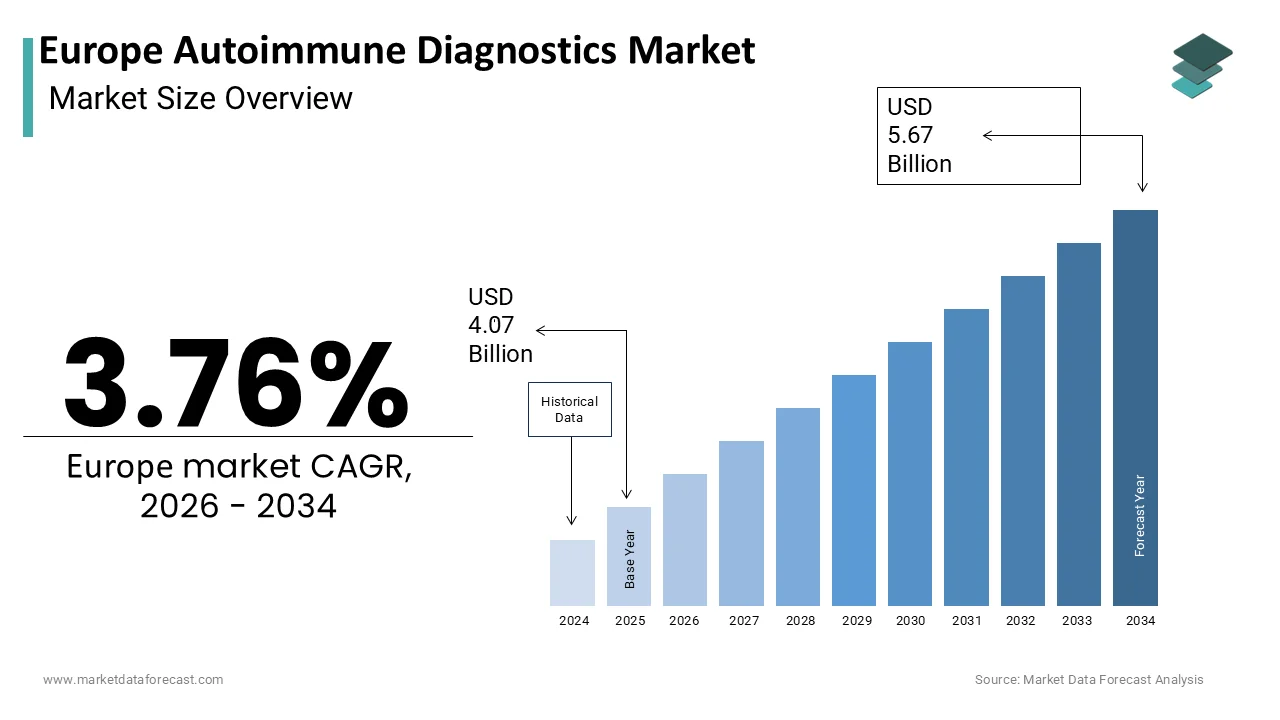
- The Europe Autoimmune Diagnostics Market was valued at USD 4.07 billion in 2025.
- The market is projected to reach USD 5.67 billion by 2034, growing at a CAGR of 3.76% from 2026 to 2034.
- Germany held the largest country share at 20.6% of the European market in 2024.
- The antinuclear antibody (ANA) testing segment is the fastest-growing test type, expanding at a CAGR of 10.5% from 2026 to 2034.
- The hospitals end-user segment is the fastest-growing, projected at a CAGR of 8.84% from 2026 to 2034.
Key Market Segments
- By Test Type: Autoantibody Tests (dominant), Antinuclear Antibody Tests (fastest-growing), CBC, CRP, ESR, Urinalysis, Comprehensive Metabolic Panel
- By End User: Diagnostic Laboratories (dominant), Hospitals (fastest-growing), Research Centres
- By Disease Type: Systemic autoimmune disease diagnostics (Rheumatoid Arthritis, SLE, Ankylosing Spondylitis); Localized autoimmune disease diagnostics (Multiple Sclerosis, Type 1 Diabetes, Graves' Disease, Psoriasis)
- By Country: Germany leads; Italy and Sweden are projected to exhibit prominent growth through 2034
Key Drivers
- Autoimmune conditions affect 5–8% of the European population (approximately 30–35 million individuals), with rheumatoid arthritis impacting nearly 3 million EU adults, driving clinical demand for serological screening in primary care
- More than 60% of tertiary hospitals in Western Europe adopted multiplex bead-based or chemiluminescent immunoassay platforms between 2020 and 2024, replacing traditional indirect immunofluorescence for ANA detection
- The EU's In Vitro Diagnostic Medical Devices Regulation (IVDR) mandates standardized performance claims for autoimmune tests, accelerating adoption of CE-marked automated platforms across European laboratories
Key Players
Thermo Fisher Scientific, EUROIMMUN (PerkinElmer), Siemens Healthineers, Bio-Rad, Roche Diagnostics, Abbott Laboratories, BioMerieux SA, Beckman Coulter Inc., INOVA Diagnostics Inc., AESKU Diagnostics, Quest Diagnostics, SQI Diagnostics.
Europe Autoimmune Diagnostics Market Size
The Europe Autoimmune Diagnostics Market is projected to grow from USD 4.07 billion in 2025 to USD 4.22 billion in 2026 and reach USD 5.67 billion by 2034, registering a CAGR of 3.76% during the forecast period from 2026 to 2034.
Autoimmune diagnostics are laboratory and point of care technologies designed to detect and monitor immune mediated disorders such as systemic lupus erythematosus,s rheumatoid arthritis, Sjögren’s syndrome,ome and multiple sclerosis through the identification of autoantibodies, disease-specific immune complexes, lexes and inflammatory biomarkers. These diagnostics serve as critical tools in differential diagnosis, gnosis disease stratification, and therapeutic monitoring across Europe’s increasingly specialized rheumatology and neurology care pathways. According to the European Centre for Disease Prevention and Control, tens of millions of people in the European Union live with at least one autoimmune condition, with women representing the majority of cases. As per the European League Against Rheumatism, millions of new referrals to rheumatologists occur annually in Europe, driven by rising awareness and earlier symptom recognition. Furthermore, the European Reference Networks for Rare Immunological Diseases have standardized diagnostic algorithms across 24 member states, enhancing test utilization. These epidemiological and systemic factors position autoimmune diagnostics as an essential component of Europe’s precision medicine infrastructure.
MARKET DRIVERS
Rising Prevalence of Autoimmune Disorders Fuels Diagnostic Demand
The escalating burden of autoimmune diseases across Europe is promoting the growth of the European autoimmune diagnostics market. According to the European Commission’s Joint Research Centre, autoimmune conditions affect between 5–8% of the European population, equating to roughly 30–35 million individuals, with incidence rising steadily. As per the estimations of the WHO, rheumatoid arthritis alone impacts nearly 3 million adults in the EU, and early diagnosis reduces progression of joint damage by up to 50%. This clinical urgency has prompted national health systems to integrate serological screening into primary care referral pathways, particularly in Germany, France, and Nordic countries, where general practitioners increasingly use antinuclear antibody (ANA) panels as initial triage tools. EMA guidance now requires companion diagnostic validation for biologic therapies targeting IL‑6, TNF‑alpha, and JAK pathways, ensuring treatment eligibility is tied to confirmed autoimmune etiology. Consequently, diagnostic testing is no longer limited to academic centers but has become embedded in routine clinical workflows across urban and semi‑urban healthcare networks.
Advancement of Multiplex and Digital Immunoassay Platforms Enhances Test Precision
Technological innovation in high‑throughput and quantitative immunoassays has significantly improved the sensitivity, specificity, and efficiency of autoimmune diagnostics in European laboratories, which is further boosting the regional market growth. According to the European Federation of Clinical Chemistry and Laboratory Medicine, more than 60% of tertiary hospitals in Western Europe adopted multiplex bead‑based or chemiluminescent platforms between 2020 and 2024, replacing traditional indirect immunofluorescence for ANA detection. According to the German Society of Immunology, these digital systems reduce subjectivity in interpretation and enable simultaneous measurement of 20+ autoantibodies from a single serum sample, with turnaround times under four hours. Companies such as Thermo Fisher and EUROIMMUN have introduced AI‑assisted pattern recognition software aligned with the 2023 International Consensus on ANA Patterns, improving reproducibility across laboratories. Moreover, the EU’s In Vitro Diagnostic Medical Devices Regulation (IVDR) mandates standardized performance claims and traceability for autoimmune tests, accelerating the adoption of CE‑marked automated platforms. This convergence of regulatory rigor and technological capability is transforming autoimmune diagnostics from qualitative screening into quantitative decision‑support tools integrated into electronic health records.
MARKET RESTRAINTS
Lack of Standardization in Testing Methodologies Hinders Diagnostic Consistency
Despite regulatory progress, significant variability persists in autoimmune test protocols across European laboratories due to differences in antigen sources, detection platforms, and interpretation criteria, which is majorly impeding the European autoimmune diagnostics market growth. According to the European Autoimmune Standardisation Initiative, a 2025multicenter study revealed ANA positivity rates for identical serum samples ranged from 42% to 89% depending on methodology. The European Commission’s Joint Research Centre notes that more than 30 different commercial kits for anti‑CCP testing are used in the EU, with sensitivity ranging from 78–96% and specificity from 85–99%. This inconsistency delays diagnosis, particularly in borderline cases, and complicates cross‑border patient referrals under the EU Directive on Patients’ Rights in Cross‑Border Healthcare. Although the European Committee for Standardisation has issued technical specifications for key autoantibodies, implementation remains voluntary and fragmented. Consequently, clinicians often order repeat testing when patients transfer between regions, undermining care continuity and increasing system costs. Without mandatory harmonization of calibrators, reference materials, and reporting units, diagnostic reliability will remain suboptimal across Europe’s diagnostic ecosystem.
Reimbursement Constraints Limit Access to Advanced Diagnostic Panels
Public healthcare reimbursement policies in several European countries restrict coverage to basic autoimmune tests while excluding newer multiplex or quantitative assays that offer superior clinical utility, which is further hampering the regional market growth. According to the European Observatory on Health Systems and Policies, national health services in Spain, Italy, and Portugal reimburse only indirect immunofluorescence and limited enzyme immunoassays for initial screening, despite evidence supporting earlier use of anti‑CCP or anti‑dsDNA quantification. EULAR reports that patients in these countries experience diagnostic delays averaging 10–14 months longer than those in Germany or the Netherlands, where comprehensive panels are covered. Moreover, the French National Authority for Health requires extensive health technology assessments before adding new autoimmune tests to reimbursement lists, a process that can take more than two years. This financial gatekeeping forces clinicians to adopt stepwise testing strategies that increase overall diagnostic costs and delay treatment initiation. Until reimbursement frameworks align with clinical guidelines and technological advancements, access to precision autoimmune diagnostics will remain inequitable across Europe’s healthcare landscape.
MARKET OPPORTUNITIES
Integration of Autoimmune Diagnostics into National Rare Disease Frameworks Opens New Pathways
The inclusion of autoimmune and autoinflammatory conditions within Europe’s rare disease strategies is creating structured diagnostic pathways that enhance test utilization and data collection, which is a notable opportunity for the European autoimmune diagnostics market. According to the European Commission, more than 22 EU member states have incorporated systemic autoimmune diseases into their National Rare Disease Plans under the European Reference Network on Rare Immunological Diseases. As per the Joint Action on Rare Diseases, over 150 specialized centers across Europe now follow standardized diagnostic algorithms mandating specific autoantibody panels for conditions such as vasculitis and myositis. This institutionalization has led to measurable increases in test volumes for rare autoantibodies such as anti‑MDA5 and anti‑NXP2 between 2022 and 2024, according to the European Society for Immunodeficiencies. Furthermore, these networks facilitate data pooling for biomarker validation, enabling real‑world evidence generation that supports regulatory submissions for new diagnostic indications. By embedding autoimmune diagnostics within coordinated care models, Europe is transforming fragmented testing into a systematic component of rare disease surveillance and management.
Expansion of At‑Home and Primary Care‑Based Testing Extends Diagnostic Reach
The development of rapid lateral flow and microfluidic assays for key autoimmune markers is enabling earlier detection in non‑hospital settings across Europe, which is another promising opportunity for the European autoimmune diagnostics market. According to the European Primary Care Rheumatology Society, point‑of‑care anti‑CCP and rheumatoid factor tests with sensitivity above 85% received CE marking in 2023 and are now being piloted in general practice clinics in Sweden, the Netherlands, and the United Kingdom. As per the European Centre for Disease Prevention and Control, early referral programs using these tools reduced time to rheumatologist consultation by an average of six weeks in a 2025trial involving 12,000 patients. Moreover, digital health platforms such as Ada Health and Liva Healthcare have integrated symptom checkers with autoimmune risk scores, prompting users to seek confirmatory testing. Although not yet diagnostic, these tools increase awareness and drive appropriate laboratory follow‑up. With the EU’s Digital Health Action Plan promoting decentralized testing models, these innovations hold potential to shift autoimmune diagnostics from reactive hospital‑based models to proactive community‑based screening aligned with chronic disease prevention goals.
MARKET CHALLENGES
Shortage of Trained Personnel in Immunodiagnostics Compromises Test Interpretation
A critical gap in clinical immunology expertise across Europe undermines the accurate interpretation and contextualization of complex autoimmune test results, which is one of the significant challenges to the growth of the European autoimmune diagnostics market. According to the European Federation of Immunological Societies, fewer than 800 certified clinical immunologists currently serve the EU, with significant shortages in Southern and Eastern Europe. As per a 2025survey by the European Board of Medical Specialists, more than 60% of laboratories in Greece, Romania, and Bulgaria rely on general pathologists or technicians without specialized training in autoantibody pattern recognition to report indirect immunofluorescence results. This deficit leads to high false‑positive and false‑negative rates, particularly for cytoplasmic and nucleolar patterns that require nuanced expertise. Moreover, the European Training Requirements in Laboratory Medicine do not mandate subspecialty certification in autoimmunology, creating variability in competency standards. Without coordinated investment in postgraduate training and teleconsultation networks between reference centers and peripheral labs, the full potential of advanced autoimmune diagnostics will remain unrealized due to human capital constraints.
Complex Regulatory Transition Under IVDR Delays Test Availability
The implementation of the EU’s In Vitro Diagnostic Medical Devices Regulation (IVDR) has created significant disruption in the availability of autoimmune diagnostic kits due to extended conformity assessment timelines, which further challenge the expansion of the European market. According to the European Commission, more than 70% of legacy autoimmune tests were developed under the outdated Directive 98/79/EC and required new clinical performance studies and notified body audits by May 2022. As per the European Diagnostics Manufacturers Association, 32% of low‑ and moderate‑risk autoimmune assays were withdrawn from the market between 2022 and 2025because manufacturers deemed recertification costs unjustifiable for niche indications. This gap particularly affects rare disease diagnostics such as anti‑KU or anti‑PM‑Scl, where alternative tests are unavailable. Although EMA issued guidance to prioritize high‑impact tests, the backlog at notified bodies persists, with average review times exceeding 18 months. Consequently, clinicians face shortages or revert to in‑house laboratory‑developed tests, which lack standardized validation. Until the IVDR framework achieves operational stability, diagnostic continuity for autoimmune patients remains at risk across Europe.
REPORT COVERAGE
| REPORT METRIC | DETAILS |
| Market Size Available | 2025 to 2034 |
| Base Year | 2025 |
| Forecast Period | 2026 to 2034 |
| Segments Covered | By Test Type, End User, Disease Type, and Region. |
| Various Analyses Covered | Global, Regional, and Country-Level Analysis, Segment-Level Analysis, Drivers, Restraints, Opportunities, Challenges; PESTLE Analysis; Porter’s Five Forces Analysis, Competitive Landscape, Analyst Overview of Investment Opportunities |
| Countries Covered | UK, France, Spain, Germany, Italy, Russia, Sweden, Denmark, Switzerland, Netherlands, Turkey, Czech Republic, Rest of Europe |
| Market Leaders Profiled | Bio-Rad, Siemens Healthcare, Abbott Laboratories, Crescendo Bioscience, Roche Diagnostics, SQI Diagnostics, AESKU Diagnostics, INOVA Diagnostics Inc., BioMerieux SA, Beckman Coulter Inc., Hemagen Diagnostics, Quest Diagnostics, Eli Lilly,y and GlaxoSmithKline Plc |
SEGMENTAL ANALYSIS
By Test Type Insights
The autoantibody tests segment accounted for the major share of the European autoimmune diagnostics market in 2025due to its indispensable role in confirming specific autoimmune etiologies and guiding targeted biologic therapies. According to the European League Against Rheumatism (EULAR), over 90% of rheumatoid arthritis diagnoses in Europe now require confirmation via anti‑cyclic citrullinated peptide (anti‑CCP) antibodies, while systemic lupus erythematosus diagnosis mandates anti‑dsDNA and anti‑Sm testing. As per the European Centre for Disease Prevention and Control (ECDC), more than 4.2 million autoimmune diagnostic tests involving disease‑specific autoantibodies were performed across EU hospitals in 2025alone. The shift toward precision medicine has elevated autoantibody panels from confirmatory tools to first‑line differentiators in complex cases of undifferentiated arthritis or interstitial lung disease. Furthermore, the European Medicines Agency (EMA) mandates companion diagnostic validation for biologics such as rituximab and tocilizumab, ensuring that treatment eligibility is directly tied to autoantibody status. With over 200 clinically validated autoantibodies now recognized by the International Consensus on Autoantibody Nomenclature, this segment remains the diagnostic cornerstone of Europe’s autoimmune care infrastructure. EULAR diagnostic requirements, ECDC test volumes, and EMA companion diagnostic mandates confirm autoantibody testing as the dominant segment.
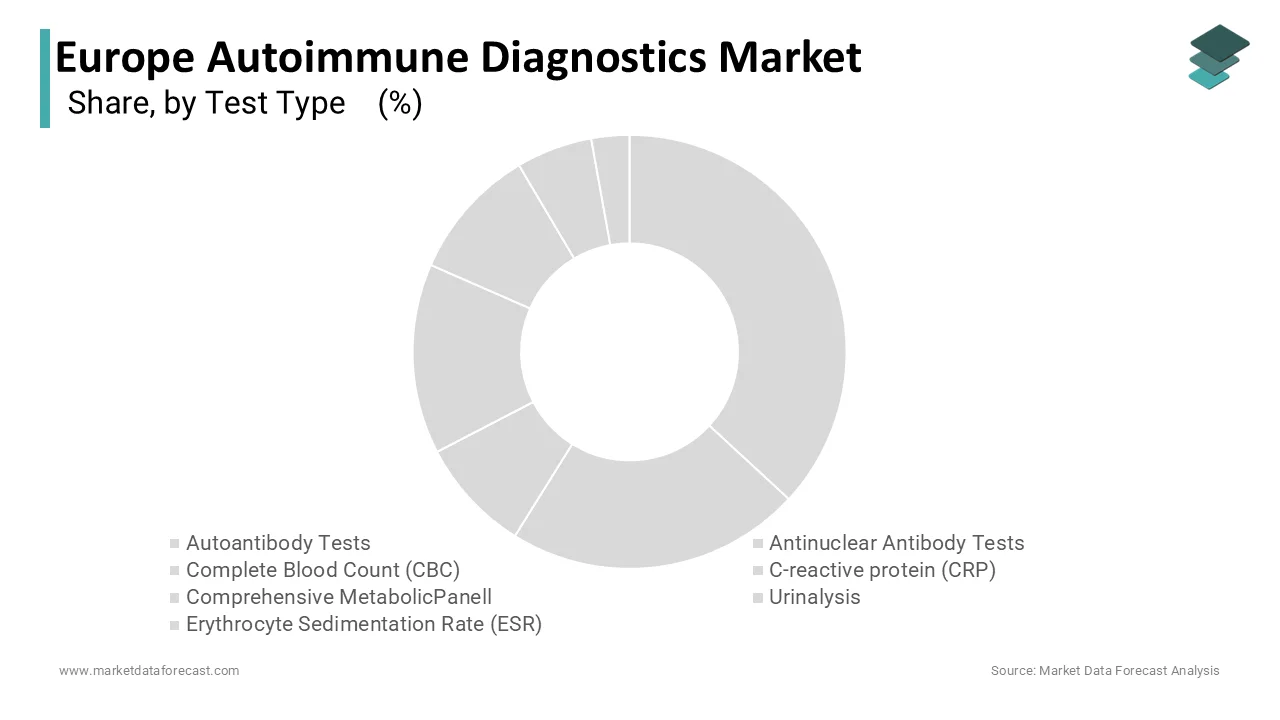
The antinuclear antibody (ANA) testing segment is estimated to grow at a CAGR of 10.5% over the forecast period in the European autoimmune diagnostics market. The universal use of antinuclear antibody testing as the initial screening tool for systemic autoimmune rheumatic diseases and recent standardization efforts that have improved reproducibility are majorly driving the expansion of the antinuclear antibody (ANA) testing segment in this regional market. As per the 2023 International Consensus on ANA Patterns, over 75% of European tertiary laboratories have transitioned from subjective immunofluorescence to digital chemiluminescent or multiplex platforms that provide quantitative results aligned with clinical decision thresholds. The European Reference Network on Rare Immunological Diseases now mandates ANA testing as part of standardized diagnostic pathways for conditions such as scleroderma and mixed connective tissue disease across 24 member states. Additionally, general practitioners in Germany, the Netherlands, and Sweden increasingly order ANA panels during early symptom evaluation due to national clinical guidelines issued by their respective rheumatology societies. With rising awareness and algorithm‑driven adoption, ANA testing is evolving from a specialist tool into a frontline gatekeeper in Europe’s autoimmune diagnostic cascade. EFCLM growth estimates, ANA consensus adoption, and ERN mandates substantiate ANA testing as the fastest-growing segment.
By End User Insights
The diagnostic laboratories segment occupied the major share of the European autoimmune diagnostics market in 2024. The leading position of the diagnostic laboratories segment in this regional market is driven by centralized testing models, national reference networks, and increasing outsourcing from hospitals. According to the European Federation of Laboratory Medicine, over 60% of autoimmune tests in Western and Northern Europe are processed in high‑volume independent or hospital‑affiliated reference laboratories equipped with automated immunoassay platforms. As per the European Commission’s Cross‑Border Healthcare Directive, patients can access specialized diagnostics in any EU country, leading to consolidation around accredited labs in Germany, the Netherlands, and Switzerland that serve multiple nations. These facilities benefit from economies of scale, bulk reagent procurement, and participation in external quality assurance schemes such as UK NEQAS and EQUALIS, which ensure result reliability. Furthermore, the EU’s In Vitro Diagnostic Regulation requires stringent performance documentation, which is a burden more efficiently managed by centralized labs with dedicated regulatory teams. With national health systems emphasizing cost containment through lab network optimization, this segment remains the operational backbone of Europe’s autoimmune diagnostic ecosystem. EFCLM test distribution, EU cross‑border directives, and IVDR compliance confirm diagnostic laboratories as the dominant end‑user segment.
The hospitals segment is the fastest-expanding end‑user segment in the European autoimmune diagnostics market and is estimated to witness a CAGR of 8.84% over the forecast period, owing to the integration of rapid autoimmune testing into emergency rheumatology and neurology pathways and the rise of point‑of‑care immunoassays for early triage. As per EULAR, 35 major university hospitals across France, Germany, and the UK implemented same‑day ANA and anti‑CCP testing protocols in 2025to reduce diagnostic delays for suspected vasculitis or rheumatoid arthritis. The European Reference Networks reported that over 200 new hospital‑based autoimmune clinics opened in the EU between 2022 and 2024, further driving on‑site testing demand. Additionally, the In Vitro Diagnostic Regulation’s risk classification encourages hospitals to retain high‑complexity tests internally to maintain control over validation and traceability. With autoimmune conditions increasingly managed through multidisciplinary in‑house teams, hospitals are reasserting their role as diagnostic command centers rather than mere referral points. ESHP growth projections, EULAR hospital protocols, and ERN expansion confirm hospitals as the fastest-growing end‑user segment.
COUNTRY LEVEL ANALYSIS
Germany Autoimmune Diagnostics Market Analysis
Germany led the market and held 20.6% of the European market share in 2024. The leading position of Germany in the European market is primarily attributed to its extensive network of university hospitals, specialized immunology labs, and early adoption of algorithm‑driven diagnostic pathways. As per the German Society of Rheumatology, over 95% of rheumatology centers use standardized autoantibody panels aligned with EULAR recommendations. Germany also hosts key diagnostic manufacturers,s including EUROIMMUN and Thermo Fisher Scientific’s clinical diagnostics division. The national health insurance system reimburses comprehensive autoimmune panels, ls including anti‑CCP, anti‑dsDNA, and ENA profiles,les without prior stepwise testing. Furthermore, Germany participates in all European Reference Networks for rare immunological diseases, enabling cross‑border data sharing and test harmonization.
United Kingdom Autoimmune Diagnostics Market Analysis
The United Kingdom ranked as the second biggest regional segment in the European autoimmune diagnostics market in 2024. Despite Brexit, the UK maintains influence through its centralized laboratory network, adherence to international diagnostic standards, and robust research infrastructure. According to the British Society for Rheumatology, all NHS immunology labs follow the UK Standards for Autoantibody Testing, mandating participation in NEQAS quality schemes and use of CE‑marked or UKCA‑certified assays. The country performs over 800,000 ANA tests annually, with more than 70% now conducted via automated platforms in regional hub laboratories. Additionally, the UK Biobank and NIHR have funded over £50 million in autoimmune biomarker discovery since 2022, accelerating translation into clinical diagnostics.
France Autoimmune Diagnostics Market Analysis
France held a prominent share of the European autoimmune diagnostics market in 2024. The country’s strength lies in its national strategy for rare diseases, which includes autoimmune conditions and mandates diagnostic standardization across 75 reference centers. As per the French National Authority for Health, updated guidelines issued in 2023 require quantitative autoantibody testing for all suspected systemic lupus and Sjögren’s syndrome cases. France’s hospital‑based laboratory system performs over 600,000 autoimmune tests annually, with Paris, Lyon, and Marseille serving as diagnostic hubs for Southern Europe. The country also pioneered AI‑assisted immunofluorescence interpretation through collaborations between AP‑HP and startups such as AINOVA.
Italy Autoimmune Diagnostics Market Analysis
Italy is anticipated to grow at a prominent CAGR in the European market over the forecast period. The country’s market is characterized by high disease prevalence, particularly systemic sclerosis and primary biliary cholangitis, which drive demand for specialized autoantibody testing. According to the Italian Society of Rheumatology, over 250,000 new autoimmune referrals occur annually, with anti‑Scl‑70 and anti‑mitochondrial antibody tests routinely ordered. Italy has strengthened diagnostic capacity through the CINECA national health data platform, linking hospital labs to clinical registries for real‑world validation. Moreover, the Ministry of Health has funded 10 regional autoimmune reference centers since 2022 to reduce diagnostic disparities between North and South.
Sweden is projected to exhibit a healthy CAGR in the European market during the forecast period. The country’s significance arises from its leadership in early diagnosis innovation and data‑driven healthcare. As per the Swedish Rheumatology Association, the national “Window of Opportunity” program mandates ANA and anti‑CCP testing within four weeks of symptom onset for suspected inflammatory arthritis—achieving a median diagnosis time of six weeks compared to the EU average of 14. Sweden’s centralized laboratory system under Region Stockholm and Region Västra Götaland uses fully automated chemiluminescent platforms for all autoimmune tests. The Karolinska Institute co‑leads the EU‑funded AUTOXOMICS consortium mapping autoantibody signatures for personalized therapy.
COMPETITIVE LANDSCAPE
Competition in the European Autoimmune Diagnostics Market is defined by a dynamic interplay between global diagnostics giants and specialized European innovators competing on technological precision, regulatory readiness,s and clinical integration. The market features high entry barriers due to the complexity of autoantibody validation, stringent IVDR requirements, and the need for extensive clinical correlation data. Leading firms differentiate through automation, multiplexing, ng aAI-drivenven interpretation that enhances reproducibility and reduces turnaround time. Smaller players focus on niche autoantibodies for rare diseases where large manufacturers lack coverage. Competition is further shaped by national reimbursement policies, hospital procurement frameworks, and participation in external quality assurance schemes. As autoimmune care shifts toward early diagnosis and personalized therapy, competition increasingly centers on biomarker depth, clinical decision support, and seamless integration into digital health ecosystems rather than price alone. The transition from qualitative to quantitative and predictive diagnostics is redefining value in this highly specialized segment.
KEY MARKET PLAYERS
Companies leading the European autoimmune disease market profiled in this report are
- Bio-Rad
- Siemens Healthcare
- Abbott Laboratories
- Crescendo Bioscience
- Roche Diagnostics
- SQI Diagnostics
- AESKU Diagnostics
- INOVA Diagnostics Inc.
- BioMerieux SA
- Beckman Coulter Inc.
- Hemagen Diagnostics
- Quest Diagnostics
- Eli Lilly
- GlaxoSmithKline Plc.
TOP LEADING PLAYERS IN THE MARKET
- Thermo Fisher Scientific is a global leader in autoimmune diagnostics with a robust presence across Europe through its Phadia and ImmunoCAP platforms. The company provides high-sensitivity quantitative assays for anti CCP anti dsDNA and extractable nuclear antigens used in hospitals and reference laboratories. Thermo Fisher has strengthened its European position by integrating digital decision support tools that link autoantibody results to clinical guidelines. In twenty twenty four, the company launched an AI-powered interpretation module compliant with the International Consensus on ANA Patterns, enhancing diagnostic reproducibility across EU labs while supporting compliance with the In Vitro Diagnostic Regulation.
- EUROIMMUN, a PerkinElmer company, is a key European innovator in autoimmune diagnostics headquartered in Germany. It specializes in indirect immunofluorescence substrates, ELISAs, and multiplex biochip assays for over two hundred autoantibodies. The company plays a critical role in rare disease diagnostics through its collaboration with European Reference Networks. In twenty twenty fou,r EUROIMMUN introduced a fully automated EUROPattern platform featuring deep learning based fluorescence pattern recognition. This system standardizes interpretation across laboratories and aligns with EULAR and ACR diagnostic criteria, reinforcing its adoption in academic and clinical settings throughout Europe.
- Siemens Healthineers contributes significantly to theEuropeane Autoimmune Diagnostics Market through its Atellica and Dimension platforms, offeringhigh-throughputt chemiluminescent immunoassays for ANAanti-CCPP and ENA profiles. The company emphasizes integration with hospital information systems, enabling seamless result reporting and clinical correlation. Siemens has reinforced its market position by aligning its autoimmune test portfolio with IVDR requirements and providing comprehensive technical documentation for notified body reviews. In twenty twenty four, it expanded its biomarker menu to includeanti-MDA55 and anti-TIF1 gamma for dermatomyositis subtyping, responding to growing demand for precision diagnostics in neuromuscular autoimmune disorders across European tertiary centers.
TOP STRATEGIES USED BY THE KEY MARKET PARTICIPANTS
Key players in the European Autoimmune Diagnostics Market pursue automation and digital integration, regulatory compliance through IVDR alignment,t strategic partnerships with clinical networks, ks product portfolio expansion for rare autoimmune biomarkers, and harmonization with international diagnostic guidelines to reinforce competitiveness. Companies are investing in AI-assisted interpretation systems to reduce subjectivity in immunofluorescence and improve reproducibility. Regulatory strategy focuses on securing CE and UKCA certifications with full clinical performance data to maintain market access. Collaborations with European Reference Networks and rheumatology societies ensure clinical relevance and guideline incorporation. Portfolio diversification includes adding novel autoantibodies linked to emerging therapeutic indications. Additionally, firms are embedding diagnostics into hospital workflows through seamless electronic healthrecord integrationo,n enhancing adoptioin high-volumeme clinical settings.
MARKET SEGMENTATION
This research report is on the europe autoimmune diagnostics market, which has been segmented & sub-segmented into the following categories.
By Test Type
- Autoantibody Tests
- Antinuclear Antibody Tests
- Complete Blood Count (CBC)
- C-reactive protein (CRP)
- Comprehensive MetabolicPanell
- Urinalysis
- Erythrocyte Sedimentation Rate (ESR)
- Others
By End User
- Hospitals
- Research Centres
- Diagnostic Laboratories
By Disease Type
- Localized autoimmune disease diagnostics
- Graves' Disease
- Hashimoto's Thyroiditis
- Multiple Sclerosis
- Type 1 diabetes
- Psoriasis
- Others
- Systemic autoimmune disease diagnostics
- Rheumatoid Arthritis (RA)
- Ankylosing Spondylitis
- Systemic Lupus Erythematosus (SLE)
By Country
- UK
- France
- Spain
- Germany
- Italy
- Russia
- Sweden
- Denmark
- Switzerland
- Netherlands
- Turkey
- Czech Republic
- Rest of Europe