- Product Description Description
- Table of Contents TOC
- List of Table & Figure LOT
- Get Free Sample PDF Sample PDF
Market Size, 2025
$4.97 BnMarket Estimate, 2026
$5.38 BnMarket Forecast, 2034
$10.07 BnCAGR, 2026–2034
8.15%Europe Avocados Market Size, Growth, Trends & Forecast (2026–2034)
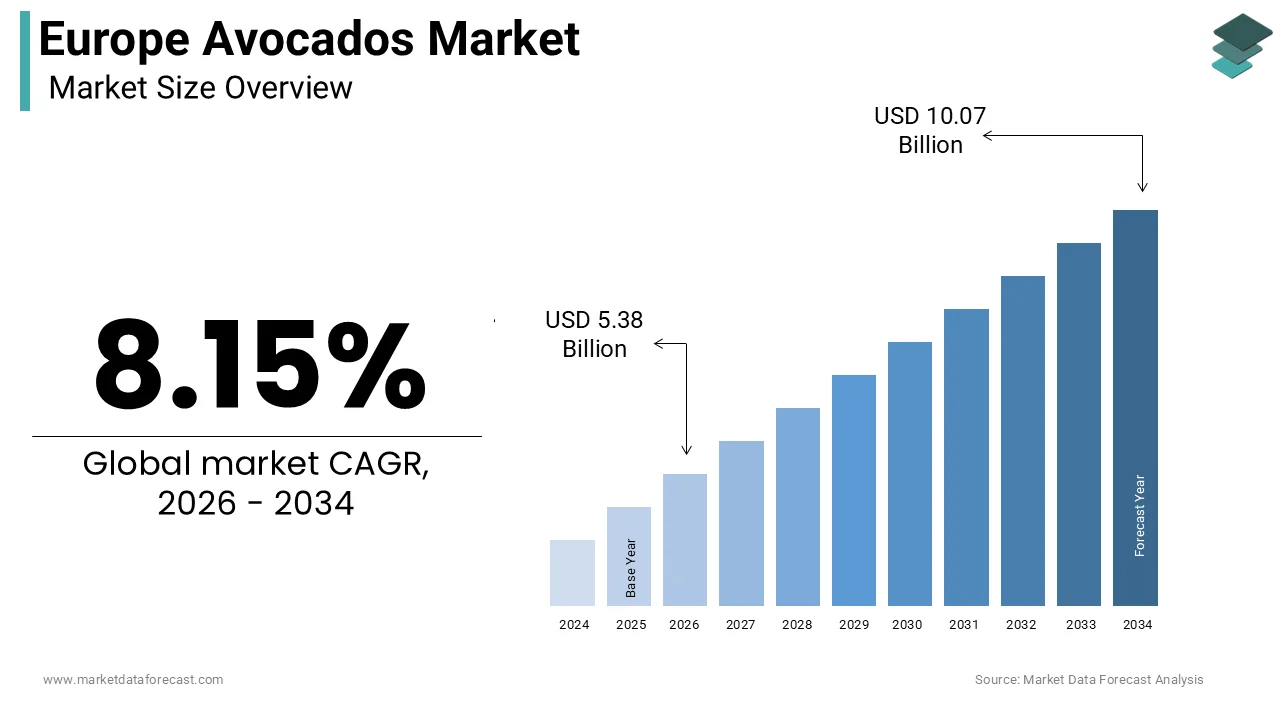
The Europe avocados market size was calculated to be USD 4.97 billion in 2025, is anticipated to reach USD 5.38 billion in 2026, and is projected to scale up to USD 10.07 billion by 2034, registering a compound annual growth rate (CAGR) of 8.15% during the forecast period from 2026 to 2034. Driven by rising health consciousness, nutritional demand, culinary diversification, and strategic retail integration, the avocado industry continues to expand steadily across the European continent.
Key Executive Metrics (At-a-Glance)
- 2025 Base Valuation: USD 4.97 Billion
- 2026 Current Valuation: USD 5.38 Billion
- 2034 Forecast Valuation: USD 10.07 Billion
- Compound Annual Growth Rate (CAGR): 8.15% (2026–2034)
- Dominant Distribution Channel Segment: Business to Business (B2B) (holding a 65.7% share in 2025, driven by food service and wholesale retail networks)
- Fastest-Growing Distribution Channel Segment: Business to Consumer (B2C) (projected at a 9.5% CAGR) / Direct Sales (fastest-growing at an 11.2% CAGR)
- Dominant Sales Channel Sub-Segment: Indirect Sales (held the majority share in 2025 via multi-tiered distribution networks)
- Dominant Region: France (holding a 22.2% share in 2025, anchored by high per capita consumption and developed retail infrastructure)
Core Market Drivers
- Rising Health Consciousness and Nutritional Demand: Health-centric dietary shifts positioning avocados as a superfood rich in monounsaturated fats, fiber, and essential vitamins.
- Culinary Diversification and Retail Integration: Proliferation of ready-to-eat options, expanded supermarket shelf space, and mainstream adoption in breakfast, salads, and foodservice.
Primary Market Restraints & Challenges
- Supply Chain Vulnerability and Geopolitical Instability: Over 90% import dependency from distant regions exposing supply chains to international trade friction and logistics delays.
- Environmental Scrutiny and Water Resource Constraints: Intensive water usage concerns and ecological footprints impacting public sentiment and sustainability credentials.
- Climate Change and Regulatory Compliance: Yield instability from extreme weather events and stringent EU phytosanitary, pesticide, and due diligence standards.
Europe Avocados Market Segmentation Breakdown
| Segment Category | Leading Sub-Segment (2025 Base) | Fastest-Growing Sub-Segment |
|---|---|---|
| By Distribution Channel (B2B vs B2C) | B2B (65.7% share in 2025, driven by food service and bulk wholesale networks) | B2C (9.5% CAGR driven by online grocery platforms and home delivery) |
| By Sales Channel (Direct vs Indirect) | Indirect Sales (majority share via multi-tiered distribution and retail giants) | Direct Sales (11.2% CAGR driven by transparency and short supply chains) |
| By Region | France (22.2% market share in 2025, anchored by high per capita consumption and gastronomy) | Germany & Southern European emerging zones (backed by plant-based dietary shifts) |
Major Industry Players Profiled
Key enterprises shaping the competitive Europe avocados market include Calavo Growers Inc., Mission Produce Inc., Westfalia Fruit Group, Del Monte Fresh Produce Company, Fresh Del Monte Produce Inc., Camposol Holding PLC, Hortifrut S.A., Greenyard NV, Nature’s Pride B.V., Simpson Farms Pty Ltd, The Oppenheimer Group, Henry Avocado Corporation, Grupo Aguacatero Los Cerritos, McDaniel Fruit Company, and Superior Foods Inc.
 Download Free Sample Report
Europe Avocados Market Size
The Europe avocados market size was calculated to be USD 4.97 billion in 2025 and is anticipated to be worth USD 10.07 billion by 2034, from USD 5.38 billion in 2026, growing at a CAGR of 8.15% during the forecast period.
An avocado is a nutrient-dense and savory fruit (specifically a single-seeded berry) from the Persea americana tree, native to Mexico and Central America. Known for its creamy, green flesh and bumpy, dark skin, it is high in heart-healthy monounsaturated fats, fiber, potassium, and vitamins K, C, and E. This market has evolved from a niche luxury segment into a staple dietary component across the continent, driven by shifting nutritional paradigms and culinary integration. In 2025, the European Union imported approximately 915,000 tonnes of avocados, marking a significant 14% increase compared to the previous year. Average consumption across the EU27 plus neighboring markets reached 1.8 kg per capita in 2025, doubling the figures recorded just a decade prior in 2016. France stands as the dominant end market, importing over 200,000 tonnes annually, while Germany follows with substantial volume growth, reaching 185,000 metric tons in 2024. The supply chain relies heavily on external producers, with a significant portion of consumed avocados imported from countries such as Peru, Chile, Colombia, Israel, and Morocco. Spain remains the only European nation with noteworthy domestic production, contributing 100,000 tons in recent years, yet this volume satisfies only a fraction of regional needs. The market structure is defined by year-round availability facilitated by complementary harvest calendars from the Southern and Northern Hemispheres. Retail penetration has expanded aggressively, with avocados now occupying prominent shelf space in discounters and hypermarkets alike. This robust expansion reflects a fundamental transformation in European eating habits where the fruit is increasingly viewed as an essential ingredient rather than an occasional treat.
MARKET DRIVERS
Rising Health Consciousness and Nutritional Demand
Health Centric Dietary Shifts Fuel Unprecedented Consumer Adoption. The intensifying consumer focus on health and wellness is the primary growth enabler propelling the Europe avocados market. This trend positions the fruit as a critical component of a balanced diet. European shoppers increasingly prioritize functional foods that offer tangible nutritional benefits, and avocados are widely recognized for their high content of monounsaturated fats, fiber, and essential vitamins. Research indicates that 97% of people in Europe value a healthy diet, directly correlating with the surge in avocado uptake as a perceived superfood. The World Avocado Organisation emphasizes that health is the single most important reason consumers across the region include avocados in their daily meals. This demographic shift is particularly evident among adults aged 19 to 50 years, who demonstrate the highest prevalence of avocado consumption due to active lifestyle choices. The fruit serves as a versatile meat alternative for the growing flexitarian population, further embedding it into mainstream cuisine beyond traditional uses. Per capita consumption in leading markets like France has climbed to 2.31 kg, illustrating how deeply health narratives have penetrated consumer behavior. Even in emerging markets like Italy, where consumption was historically lower at 0.81 kg per capita, the health narrative is driving rapid adoption rates. Retailers respond to this demand by expanding organic lines and ready-to-eat options that cater to time-poor yet health-conscious individuals. The alignment of avocado attributes with contemporary dietary guidelines ensures that demand remains resilient even during economic fluctuations. As nutritional awareness continues to spread through digital channels and public health campaigns, the link between well-being and avocado consumption strengthens the market foundation.
Culinary Diversification and Retail Integration
Strategic Retail Expansion and Versatile Culinary Applications Drive Volume. The profound integration of avocados into diverse culinary applications and the strategic expansion of retail accessibility across the region further contribute to the acceleration of the Europe avocados market. The fruit has transcended its traditional association with guacamole to become a staple in breakfast dishes, salads, sandwiches, and even desserts, reflecting a broadening palatal acceptance. Retailers have capitalized on this versatility by dedicating increased shelf space and promoting avocados through targeted marketing campaigns that highlight recipe ideas. In 2025, retail space for avocados kept expanding to accommodate the growing volume of imports, which reached 915,000 tonnes. The availability of ready-to-eat and pre-ripened avocados has removed a significant barrier to entry for consumers who previously hesitated due to the difficulty of selecting ripe fruit. Germany witnessed a 30% jump in import value to $683 million in 2024, partly driven by this enhanced retail convenience and product innovation. Supermarkets and discount chains now feature avocados as a core item rather than a seasonal specialty, ensuring consistent visibility and availability throughout the year. The rise of food service sectors, including cafes and restaurants incorporating avocado toast and bowls, has further normalized high-frequency consumption. Supply chain improvements allow for a seamless flow of goods from hemispheres with opposing seasons, guaranteeing that European shelves remain stocked regardless of the month. This constant presence reinforces habit formation among consumers who integrate the fruit into their weekly shopping routines. As culinary trends continue to evolve towards plant-based and nutrient-dense ingredients, the role of avocados in European gastronomy solidifies its status as a market driver.
MARKET RESTRAINTS
Supply Chain Vulnerability and Geopolitical Instability
Logistical Fragility and Geopolitical Tensions Threaten Supply Continuity. The inherent vulnerability of its elongated supply chains to geopolitical disruptions and logistical barriers is a significant restraint facing the Europe avocados market. Since over 90% of the avocados consumed in Europe are imported from distant regions, including Latin America and Africa, the market is highly exposed to international trade friction and transport delays. The reliance on sea freight from countries like Peru and Chile means that any port strikes, shipping container shortages, or route deviations can cause immediate supply shocks. Recent global events have demonstrated how quickly logistical networks can fracture, leading to inflated costs and reduced availability for European retailers. For instance, conflicts affecting key transit routes or political instability in supplier nations can abruptly halt shipments, leaving supermarkets with empty shelves. The concentration of supply from specific regions creates a single point of failure; if a major exporter faces internal unrest or export bans, the entire European market feels the impact. In 2025, while imports grew, the complexity of managing these vast distances remained a persistent risk factor for stakeholders. Fluctuations in fuel prices directly influence the cost of transportation, which can erode margins for importers and force price hikes that dampen consumer demand. Furthermore, the stringent phytosanitary regulations imposed by the European Union add layers of complexity that can delay clearance and result in spoilage of perishable cargo. These structural weaknesses in the supply architecture limit the market's ability to respond agilely to sudden spikes in demand. Until diversification of supply routes and near-shoring strategies are fully implemented, logistical fragility will continue to act as a formidable brake on market potential.
Environmental Scrutiny and Water Resource Constraints
Ecological Concerns Regarding Water Usage Impede Market Sentiment. Intensifying environmental scrutiny regarding water usage and the ecological footprint of avocado cultivation poses a severe hindrance to the Europe avocados market growth. Avocados are often labeled as a thirsty crop, with estimates suggesting that significant volumes of water are required to produce a single kilogram of fruit, raising concerns in water-scarce regions. Critics and environmental groups frequently highlight the strain that expanding orchards place on local water tables, particularly in key supplying countries like Morocco and parts of Latin America. Data emphasizing the intensive water extraction required for avocado cultivation in major producing nations, such as Mexico, has intensified scrutiny and environmental concerns among eco-conscious consumers in the European market. This narrative challenges the sustainability credentials of the fruit, potentially alienating a demographic that prioritizes ethical sourcing. Drought conditions exacerbated by climate change in producing regions threaten yield stability, making supply volumes unpredictable from season to season. The European consumer base is increasingly demanding transparency regarding the carbon footprint and water stewardship of their food, pressuring retailers to source only from certified sustainable farms. Failure to address these environmental concerns could lead to boycotts or a shift towards locally grown alternatives with lower water intensity. Although the industry argues that avocado water use is lower than that of n beef or coffee, the public perception of high consumption persists as a barrier. Regulatory bodies in Europe may eventually impose stricter import criteria related to water usage metrics, further complicating market access for non-compliant exporters. Consequently, the environmental controversy surrounding water resources remains a critical impediment to unfettered market growth.
MARKET OPPORTUNITIES
Expansion of Organic Cultivation and Premium Segments
Premiumization and Organic Certification Unlock High-Value Revenue Streams. The rapid expansion of organic cultivation and the development of premium product segments are a substantial opportunity for the Europe avocados market. The European demand for organic produce is outpacing conventional growth, driven by consumers willing to pay a premium for fruits grown without synthetic pesticides or fertilizers. Data shows that organic avocados commanded a price premium of 25 to 45% over conventional counterparts on retail shelves in recent years. Although the organic share of total avocado imports remains a niche segment relative to conventional volumes, this category is experiencing accelerated growth as more growers transition to certified organic practices to meet rising consumer interest. Spain emerged as a key mover of organic avocados within Europe, handling 18,800 tonnes in 2023, signaling a robust infrastructure for organic distribution. Retailers are increasingly dedicating specific planogram spaces to organic avocados to cater to the health and environmentally conscious shopper. This trend offers exporters from developing nations a lucrative avenue to differentiate their products and secure higher margins. The opportunity extends beyond fresh fruit to include value-added organic products such as oils and spreads, which align with the clean label movement. As the European Union strengthens its Farm to Fork strategy, the incentives for sustainable and organic farming will likely increase, further boosting this segment. Growers who can guarantee a consistent supply of high-quality organic fruit stand to capture a loyal customer base that is less sensitive to price fluctuations. The untapped potential in Eastern European markets also presents a frontier for introducing premium organic varieties as disposable incomes rise. Capitalizing on the organic wave allows the market to transcend volume competition and focus on value creation.
Development of Local European Production Hubs
Near-Shoring Initiatives and Domestic Cultivation Enhance Supply Security. The strategic development of local European production hubs to reduce dependency on long-haul imports and enhance supply security paves the way for the expansion of the Europe avocados market. While Spain continues to lead European production, local output has fluctuated recently due to severe drought conditions, though there is significant potential to stabilize and expand cultivation in other Mediterranean climates such as southern Italy, Greece, and Portugal. Investing in local orchards reduces the carbon footprint associated with transportation and mitigates risks linked to geopolitical instability in overseas supplier nations. Local production allows for shorter supply chains, ensuring fresher produce reaches consumers with an extended shelf life and reduced spoilage rates. The European Union's agricultural policies increasingly support sustainable farming initiatives that could be leveraged to fund avocado expansion projects in suitable regions. Spain has seen a marked increase in avocado imports in recent years, driven largely by its strategic role as a re-export hub to the rest of Europe, while domestic yield recovery efforts aim to capture more value internally. Technological advancements in irrigation and crop management are making it feasible to grow avocados in areas previously considered marginal, thereby widening the geographical scope of production. Local growers can better respond to immediate market trends and consumer preferences without the lag time inherent in intercontinental shipping. This shift towards near-shoring aligns with broader European goals of food sovereignty and resilience against global supply chain shocks. As climate patterns shift, new microclimates within Europe may become viable for avocado cultivation, opening fresh avenues for investment. Developing these local capacities provides a strategic buffer against external volatility while fostering rural economic development.
MARKET CHALLENGES
Climate Change Impact on Global Yield Stability
Climatic Volatility and Extreme Weather Events Disrupt Production Cycles. The escalating impact of climate change on global yield stability in key producing regions is a paramount challenge for the Europe avocados market. Avocado trees are highly sensitive to temperature fluctuations, water availability, and extreme weather events, all of which are becoming more frequent and severe due to changing climate patterns. Droughts in major exporting countries like Chile and Peru have already begun to constrain output, creating volatility in the volumes available for the European market. Climate models predict that traditional growing zones may face reduced suitability over the coming decades, forcing a costly and time-consuming relocation of orchards to higher altitudes or latitudes. The unpredictability of harvest seasons disrupts the carefully balanced year-round supply calendar that European retailers rely upon. In 2025, despite overall growth, the market faced pressures from variable weather conditions that threatened to tighten supply during peak demand periods. Such climatic instability leads to erratic pricing, making it difficult for retailers to maintain consistent promotional strategies and for consumers to budget for regular purchases. The long gestation period of avocado trees means that responses to climate shifts cannot be immediate, leaving the market exposed to medium-term deficits. Furthermore, the increased incidence of pests and diseases associated with warmer temperatures adds another layer of risk to crop yields. Addressing this challenge requires significant investment in climate-resilient varietals and adaptive agricultural practices, which may not be immediately accessible to all growers. The threat of climate-induced supply shortages remains a critical uncertainty that could hinder the market's projected trajectory.
Stringent Regulatory Compliance and Sustainability Standards
Complex Regulatory Frameworks and Due Diligence Requirements Increase Barriers. Adhering to increasingly stringent European regulatory compliance and sustainability standards hampers the expansion of the Europe avocados market. The European Union enforces rigorous phytosanitary controls, maximum residue levels for pesticides, and traceability requirements that can be difficult for international suppliers to consistently meet. Non-compliance can result in rejected shipments, financial losses, and damage to the reputation of exporting nations within the European marketplace. Apart from these, the upcoming deforestation-free regulation mandates that importers prove their supply chains do not contribute to forest degradation, adding a complex layer of due diligence. Smallholder farmers in developing countries often lack the resources and technical knowledge to navigate these bureaucratic hurdles, potentially limiting the pool of eligible suppliers. The cost of certification and compliance monitoring adds to the final retail price, which could suppress demand in price-sensitive segments of the market. Retailers are under pressure to ensure every fruit sold meets these high standards, necessitating robust tracking systems from farm to fork. Failure to adapt to these evolving regulatory landscapes could lead to supply gaps if existing suppliers are unable to upgrade their practices quickly enough. The tension between maintaining affordable prices and meeting high ethical and environmental standards creates a delicate balancing act for market participants. As the EU tightens its grip on import criteria, the barrier to entry rises, challenging the scalability of the market. Navigating this complex regulatory environment remains a persistent operational challenge for all stakeholders involved in the Europe avocados trade.
REPORT COVERAGE
| REPORT METRIC | DETAILS |
| Market Size Available | 2025 to 2034 |
| Base Year | 2025 |
| Forecast Period | 2026 to 2034 |
| CAGR | 8.15% |
| Segments Covered | By Distribution Channel, And Region |
| Various Analyses Covered | Global, Regional & Country Level Analysis; Segment-Level Analysis; DROC, PESTLE Analysis; Porter’s Five Forces Analysis; Competitive Landscape; Analyst Overview of Investment Opportunities |
| Regions Covered | UK, France, Spain, Germany, Italy, Russia, Sweden, Denmark, Switzerland, Netherlands, Turkey, and the Czech Republic |
| Market Leaders Profiled | Calavo Growers Inc., Mission Produce Inc., Westfalia Fruit Group, Del Monte Fresh Produce Company, Fresh Del Monte Produce Inc., Camposol Holding PLC, Hortifrut S.A., Greenyard NV, Nature’s Pride B.V., Simpson Farms Pty Ltd, The Oppenheimer Group, Henry Avocado Corporation, Grupo Aguacatero Los Cerritos, McDaniel Fruit Company, Superior Foods Inc. |
SEGMENTAL ANALYSIS
By Distribution Channel Insights
The Business to Business (B2B) segment dominated the Europe avocados market and accounted for a 65.7% share in 2025. This dominance of the segment is primarily driven by the extensive food service industry and the critical role of wholesalers in supplying retail chains across the continent. The food service sector, including restaurants, hotels, and catering services, relies heavily on bulk avocado purchases for menu items ranging from breakfast toast to gourmet salads. According to the World Avocado Organisation, the European avocado market shows strong post-pandemic growth with rising consumption. Furthermore, the logistical complexity of importing avocados necessitates a robust B2B supply chain where large importers and distributors manage ripening facilities and quality control before delivering to supermarkets. Rabobank data emphasizes the Netherlands as the primary trade hub handling substantial imports through specialized distribution channels. This centralized model ensures consistent quality and year-round availability, which is essential for maintaining consumer demand in a highly competitive retail environment. The sheer volume required by hypermarkets and supermarket chains further cements the B2B segment as the primary channel, as these retailers prefer negotiating directly with large-scale importers to secure stable pricing and supply contracts throughout the fluctuating seasonal cycles.
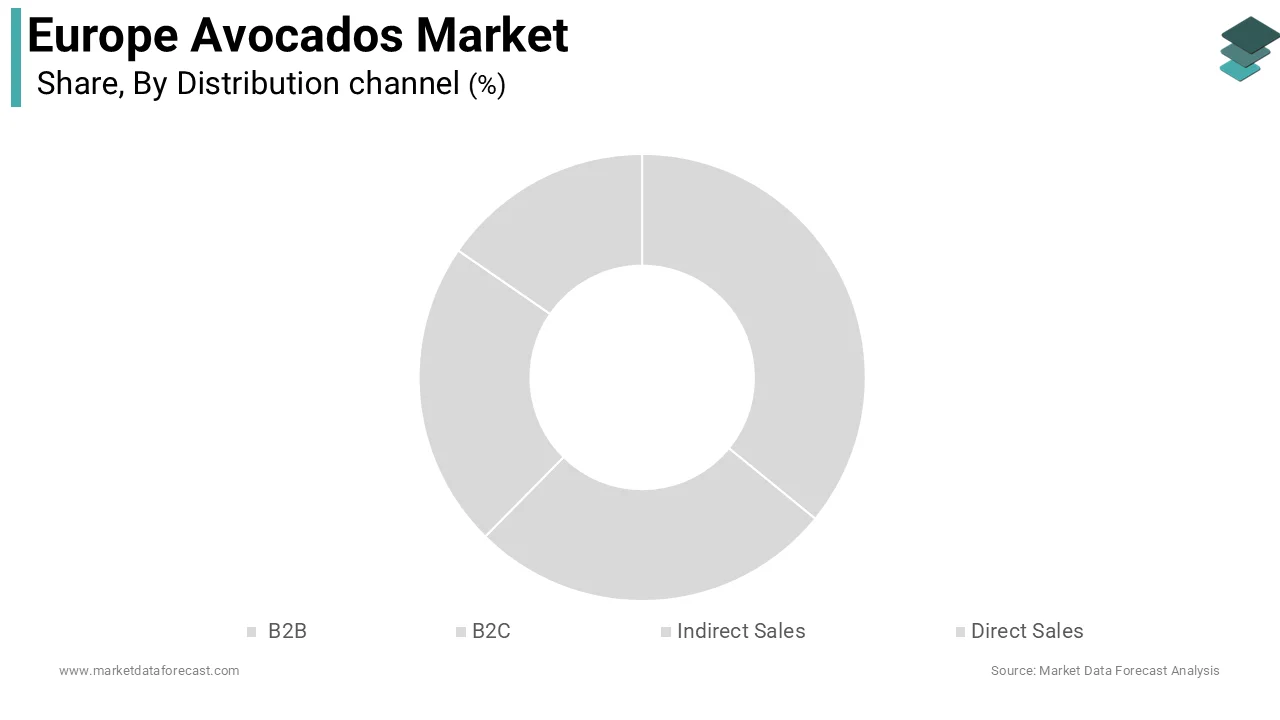
The Business to Consumer (B2C) segment is predicted to witness the highest CAGR of 9.5% from 2026 to 2034 due to the rapid proliferation of online grocery shopping platforms and direct-to-consumer delivery services that have transformed how Europeans purchase fresh produce. The convenience of home delivery, combined with the rising trend of health-conscious eating, has led to a surge in individual households buying avocados directly through digital channels. Online grocery platforms in Europe continue to expand, with fresh produce such as avocados remaining a popular choice. Younger consumer segments, particularly those focused on health and wellness, are the primary drivers of frequent digital orders for fresh fruit. Additionally, the rise of subscription-based fruit boxes and farm-to-table initiatives allows consumers to bypass traditional retail intermediaries and purchase avocados directly from growers or specialized online vendors. Mobile shopping for essential food items has seen a significant rise in Europe as more individuals adopt dedicated applications for their routine shopping. The convenience of these digital tools has led to a notable increase in the volume of fresh items purchased directly by consumers. The ability of B2C platforms to offer detailed product information, such as origin, sustainability certifications, and ripeness guides, further appeals to the educated European consumer who prioritizes transparency and ethical sourcing in their purchasing decisions.
The indirect sales segment held the majority share of the Europe avocados market in 2025. The supremacy of indirect sales is attributed to the established infrastructure of European retail giants such as Carrefour, Tesco, and Aldi, which rely on complex multi-tiered distribution networks to stock thousands of stores efficiently. This segment includes the traditional supply chain involving importers, wholesalers, distributors, and retail supermarkets, which remains the backbone of avocado availability across the region. Research indicates that third-party distribution networks utilize logistical efficiencies to maintain competitive prices and a broad market reach. These established networks often achieve a level of market saturation that newer, direct-to-retail models find difficult to replicate quickly. The necessity for post harvest treatments such as controlled atmosphere storage and artificial ripening requires specialized facilities that are predominantly owned and operated by large intermediaries rather than individual producers. Information from import promotion agencies shows that a vast majority of avocados sourced from developing nations are managed by specialized importers and distributors. These intermediaries play a critical role in moving the fruit from ports to various supermarket chains across the continent. This consolidation ensures that avocados meet strict European safety and quality standards before reaching consumers, thereby reducing liability risks for retailers. Furthermore, the seasonal nature of avocado production in different hemispheres requires sophisticated logistics management that indirect sellers are best equipped to handle, ensuring a continuous supply regardless of the harvest calendar in source countries.
The direct sales segment is estimated to register the fastest CAGR of 11.2% over the forecast period. This rapid expansion is propelled by the growing consumer preference for transparency, shorter supply chains, and support for sustainable farming practices, which direct sales models uniquely provide. The rise of farmer markets, community-supported agriculture schemes, and brand-owned flagship stores has enabled producers to connect directly with end users, thereby capturing higher margins and building brand loyalty. Multiple studies note that brands offering direct sales of organic and ethically grown avocados are gaining popularity in Northern Europe. Consumers in these regions are increasingly seeking transparent supply chains, leading to a notable rise in the volume of fruit sold through these specialized channels. Moreover, advancements in cold chain logistics have empowered smaller producers and cooperatives to ship directly to urban centers without relying on traditional wholesale intermediaries. Financial updates from major global distributors indicate that their strategy of selling directly to European retailers has led to significant growth in sales volume. This approach allows for better inventory management and has contributed to a stronger presence in the European market compared to previous years. The ability to tell a compelling story about the farm, the farmers, and the environmental impact resonates strongly with European shoppers who are increasingly willing to pay a premium for traceability. Additionally, the elimination of middlemen allows for fresher produce to reach the consumer faster, which enhances taste and shelf life, further driving the adoption of direct sales channels among quality-conscious demographics.
REGIONAL ANALYSIS
France Avocados Market Analysis
France led the European avocados market and captured a 22.2% share in 2025. The country maintains its top position because of a deeply entrenched culinary culture that has embraced the avocado as a staple ingredient in both home cooking and professional gastronomy. Research from agricultural agencies shows that France remains a highly developed market for avocados, with per capita consumption levels among the highest in Europe. The fruit is a staple for a wide range of consumers who incorporate it into their regular diets. The French market is known for a strong preference for ready-to-eat avocados, which has prompted retailers to invest heavily in in-store ripening technologies to meet consumer expectations for immediate usability. Various sources suggest that avocado sales in France continue to rise as consumers increasingly prioritize nutrition. This growth is sustained by a loyal customer base that views the fruit as an essential component of a health-conscious lifestyle. Furthermore, the presence of major international importers and distributors with headquarters or significant operations in France ensures a steady and diverse supply from global sources, including Peru, Chile, and Spain. The country also serves as a key export hub for neighboring regions, leveraging its strategic geographic location and advanced logistics infrastructure to distribute avocados throughout Western Europe. Continued marketing campaigns by the World Avocado Organisation tailored specifically to French consumers have successfully highlighted the versatility of avocados beyond guacamole, further solidifying their status in the national diet.
Germany Avocados Market Analysis
Germany grew rapidly in the Europe avocados market and occupied a share of 18.7% in 2025. This rapid growth of the plant-based market in Germany is driven by a shifting dietary landscape, with consumers increasingly adopting flexitarian and plant-based diets that prioritize nutrient-dense foods like avocados. The nation stands out as a primary driver of expansion in the European avocado trade, showing a faster increase in demand than many of its neighbors. This upward trend reflects a significant shift in local dietary preferences toward fresh, plant-based foods. Research indicates that avocado consumption in Germany has reached record levels. This surge suggests a long-term change in how the population approaches fresh produce and healthy eating. The German retail sector is highly competitive, with discount supermarkets playing a pivotal role in democratizing access to avocados by offering them at affordable price points throughout the year. Trade analysis reveals a substantial increase in the total value of avocados brought into Germany. This trend reflects both the rising cost of international logistics and the unwavering willingness of retailers to stock the fruit to meet high consumer interest. Moreover, the German market exhibits a high sensitivity to sustainability credentials, with a growing segment of shoppers actively seeking organic and fair trade certified avocados, which has prompted suppliers to diversify their offerings. The combination of a large population base, increasing health awareness, and aggressive retail promotion strategies positions Germany as the primary engine for future growth in the European avocado sector.
United Kingdom Avocados Market Analysis
The United Kingdom maintains a significant position in the Europe avocados market. Despite challenges related to post Brexit trade regulations, the UK market has demonstrated remarkable resilience, with consumption volumes remaining stable and even showing modest growth in recent periods. The British consumer is highly engaged with health trends, and the avocado has become synonymous with modern wellness culture, driving consistent demand across all age groups, particularly among urban professionals. The retail landscape in the UK is dominated by sophisticated supermarket chains that have pioneered innovative packaging and ripening solutions to reduce food waste and enhance customer satisfaction. Additionally, the strong cultural influence of social media and food blogging in the UK continues to drtrend-led led consumption, with avocado-based recipes frequently going viral and spurring temporary spikes in sales. The market is also seeing a rise in demand for value-added products such as pre-sliced and seasoned avocados, which cater to the busy lifestyles of British consumers seeking convenience without compromising on nutrition.
Spain Avocados Market Analysis
Spain plays a key role in the European avocado market by serving as both a leading producer and top-consuming nation. Domestic consumption of avocados in Spain benefits from a shortened supply chain because Spain is the only significant commercial producer within the European Union. Consequently, the produce offers superior freshness and lower carbon footprints compared to imported alternatives. The domestic market is buoyed by a strong culinary tradition that incorporates avocados into a variety of dishes, ranging from tapas to modern fusion cuisine, appealing to both locals and the massive tourist population. The Andalusia region in particular has seen substantial expansion in orchard acreage, allowing Spain to extend its harvesting season and provide fresh fruit to the European market during windows when Southern Hemisphere supplies are limited. Furthermore, Spanish retailers have been aggressive in promoting locally grown avocados as a premium, sustainable choice, which resonates well with environmentally conscious consumers across the continent. The synergy between production capacity and domestic consumption creates a robust market ecosystem that shields Spain from some of the volatility faced by pure import-dependent nations.
Italy Avocados Market Analysis
Italy is likely to expand notably in the Europe avocados market during the forecast period. It is recognized as one of the fastest-growing consumption zones in the southern region. The Italian market is characterized by a gradual but steady shift in consumer preferences as the avocado transitions from an exotic novelty to a mainstream pantry staple integrated into the Mediterranean diet. The growth in Italy is significantly driven by the food service sector, where chefs are increasingly utilizing avocados in innovative ways to attract discerning diners looking for healthy and Instagrammable meal options. The Italian distribution network is evolving with larger retail groups investing in better cold chain capabilities to ensure that avocados arrive in optimal condition, given the long distances from primary source countries. Moreover, there is a burgeoning interest in organic avocados among Italian consumers who are historically attentive to food quality and origin stories, creating opportunities for premium segment growth. Awareness of the health benefits associated with avocado consumption is spreading through targeted marketing and educational campaigns. Consequently, Italy is poised to continue its ascent as a key driver of demand in the European market.
COMPETITION OVERVIEW
The Europe avocados market features intense competition among global importers, ripening specialists, and retail giants who vie for shelf space and supply chain efficiency. Major players like Mission Produce, Westfalia Fruit, and Nature's Pride dominate through vertical integration, controlling everything from orchards to distribution centers. These companies leverage strategic partnerships with growers in Peru, Chile, and Kenya to ensure year-round availability while mitigating seasonal risks. Competition increasingly focuses on sustainability certifications, organic offerings, and ready-to-eat innovations to differentiate brands in a crowded marketplace. Retailers such as Carrefour, Tesco, and Aldi exert significant bargaining power, demanding consistent quality and competitive pricing that pressures margins for suppliers. New entrants face high barriers due to established logistics networks and strict regulatory compliance requirements regarding phytosanitary standards. Companies are investing heavily in ripening technology and cold chain infrastructure to reduce waste and extend shelf life, which serves as a key competitive advantage. Brand loyalty remains low among consumers who prioritize price and ripeness over specific labels, forcing suppliers to compete on reliability and service levels rather than marketing alone. The market is also witnessing consolidation as larger entities acquire smaller distributors to expand geographic reach and enhance operational scale. This dynamic environment drives continuous innovation in packaging and sourcing strategies to maintain market share amidst fluctuating supply conditions and evolving consumer preferences across diverse European nations.
KEY MARKET PLAYERS
A few major players of the Europe avocados market include
- Calavo Growers Inc
- Mission Produce Inc
- Westfalia Fruit Group
- Del Monte Fresh Produce Company
- Fresh Del Monte Produce Inc
- Camposol Holding PLC
- Hortifrut S.A
- Greenyard NV
- Nature’s Pride B.V
- Simpson Farms Pty Ltd
- The Oppenheimer Group
- Henry Avocado Corporation
- Grupo Aguacatero Los Cerritos
- McDaniel Fruit Company
- Superior Foods Inc
MARKET SEGMENTATION
This research report on the Europe avocados market has been segmented and sub-segmented based on distribution channel & region.
By Distribution Channel
- B2B
- B2C
- Indirect Sales
- Direct Sales
By Region
- UK
- France
- Spain
- Germany
- Italy
- Russia
- Sweden
- Denmark
- Switzerland
- Netherlands
- Turkey
- Czech Republic
- Rest of Europe