- Product Description Description
- Table of Contents TOC
- List of Table & Figure LOT
- Get Free Sample PDF Sample PDF
Market Size, 2025
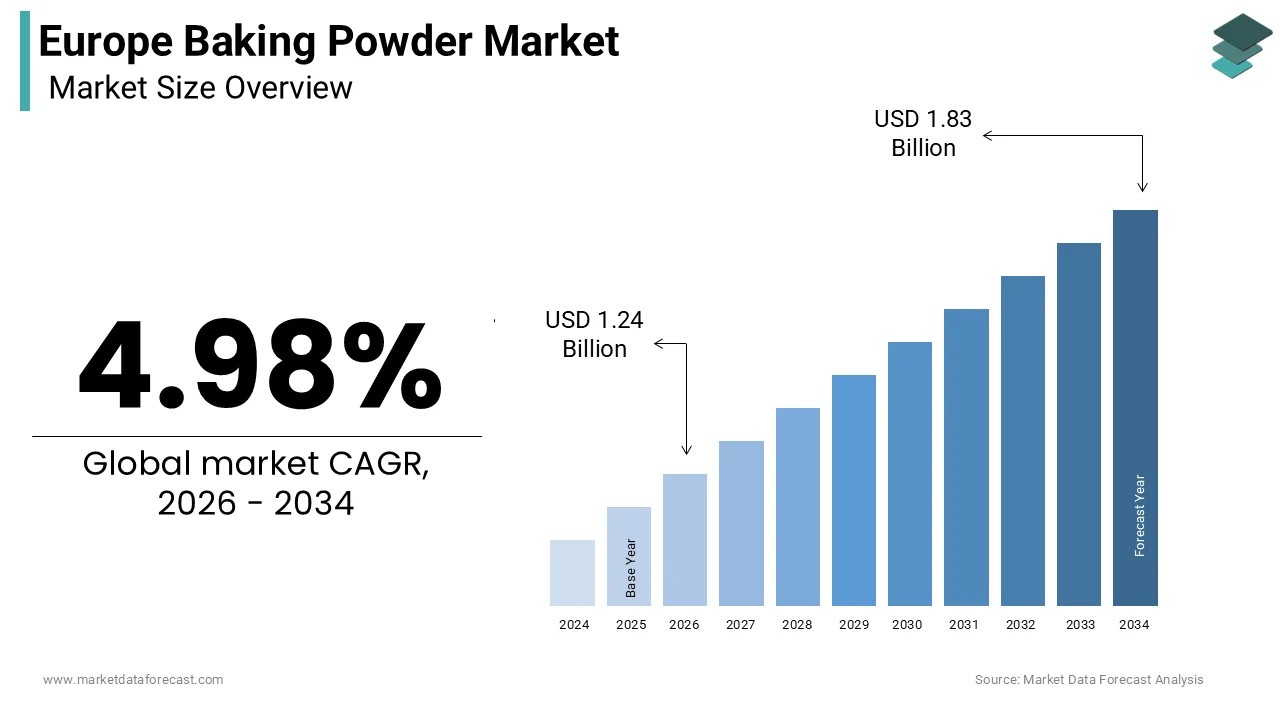
$1.18 BnMarket Estimate, 2026
$1.24 BnMarket Forecast, 2034
$1.83 BnCAGR, 2026–2034
4.98%Executive Summary: Europe Baking Powder Market
- Market Scope: Regional analysis of the European baking powder industry covering product types (phosphate and tartrate blends, anhydrous aluminum phosphate), application segments (biscuits, cookies, cakes, pastries), and key country markets.
- Market Valuation: Valued at US$ 1.18 billion in 2025, estimated at USD 1.24 billion in 2026, and projected to reach USD 1.83 billion by 2034, registering a robust CAGR of 4.98% during the forecast period (2026–2034).
- Primary Growth Drivers: Exponential expansion of commercial bakery and convenience food sectors, shift toward specialized and gluten-free dietary formulations, and rising demand for clean-label, aluminum-free leavening solutions.
Key Market Segment Metrics (2026–2034)
| Category | Leading Segment (2025 Position) | Fastest-Growing Segment |
|---|---|---|
| By Product Type | Phosphate & Tartrate (held major market share due to precise and controlled reaction rates required in massive commercial baking) | Anhydrous Aluminum Phosphate (fastest-growing, propelled by moisture absorption and stability in dry baking mixes) |
| By Application | Biscuits & Cookies (captured major share, anchored by massive snacking culture and high frequency of dry baked good consumption) | Cakes & Pastries (fastest-growing CAGR, driven by rising demand for premium artisanal desserts and specialized craft baking) |
| By Country | Germany (largest market share, supported by massive commercial food output, high flour milling, and industrial bakery scale) | United Kingdom, France & Spain (key growth hubs advancing health-conscious sodium reduction, clean labeling, and tourism-driven bakery demand) |
Major Market Players & Market Structure
Market Structure: Highly competitive landscape characterized by intense rivalry among multinational ingredient suppliers and localized manufacturers focusing on clean-label compliance, aluminum-free reformulations, and supply chain consistency.
Key Companies: AB Mauri, Kraft Foods Group Inc., Weikfield Products Private Limited, Ward McKenzie Pty Ltd., Clabber Girl Corporation, Caravan Ingredients Inc., Eagle International, Kudos Blends Limited, The New England Cupboard, Hansells Food Group Limited, Blue Bird Foods India Pvt. Limited, and ACH Food Companies Inc.
Europe Baking Powder Market Size
The Europe Baking Powder Market Size was worth US$ 1.18 billion in 2025, and is anticipated to be worth USD 1.83 billion by 2034, from USD 1.24 billion in 2026, growing at a CAGR of 4.98% during the forecast period.
Baking powder is a chemical leavening agent essential for creating light and airy baked goods. This crucial ingredient typically combines sodium bicarbonate with a weak acid and a moisture-absorbing starch to ensure optimal rising during the baking process. The foundational demand for these leavening agents is deeply intertwined with the massive scale of the European bakery sector and the cultural significance of bread and pastries across the continent. According to the Food and Agriculture Organization, global wheat production reached 3.04 billion metric tons in 2025, providing a colossal foundation for flour milling and subsequent baking operations. Furthermore, the integration of these chemical agents into daily dietary routines is supported by immense consumer consumption patterns. As per the World Health Organization, cereal products remain a primary source of daily energy intake for millions of Europeans, reinforcing the continuous need for reliable baking additives. Consequently, the intersection of massive agricultural output and deep cultural culinary traditions defines the dynamic landscape of this vital ingredient sector across European nations.
MARKET DRIVERS
The exponential expansion of commercial bakery operations
The exponential expansion of the commercial bakery sector and the rising consumer preference for convenient baked goods are fuelling the expansion of the European baking powder market. Modern urban lifestyles leave consumers with less time for traditional home baking, leading to a massive shift toward commercially produced breads, cakes, and pastries. These industrial operations require highly consistent and reliable leavening agents to ensure uniform texture and volume across millions of identical products produced daily. As commercial bakeries scale up their operations to meet urban consumer demands, the need for these additives is steadily increasing. Furthermore, the World Bank indicates that the global middle-class expansion is driving a 25% increase in packaged bakery consumption over the last five years. By providing the essential chemical reaction required to trap gas bubbles and create a soft crumb structure, these leavening agents remain absolutely critical to the operational success of the global baking industry.
The shift toward specialized and gluten-free diets
The profound shift toward specialized dietary requirements and the massive proliferation of gluten-free baking formulations significantly accelerate the adoption of advanced leavening blends, which is further propelling the regional market growth. Modern consumers are increasingly adopting specific dietary regimens due to health conditions like celiac disease or personal wellness choices, creating a massive demand for alternative flour-based products. Baking with alternative flours such as almond, coconut, or rice requires highly specialized leavening agents because these non-wheat flours lack the natural gluten network that traditionally traps gas and provides structure. According to the Association of European Coeliac Societies, 1 in 100 people are estimated to suffer from celiac disease in Europe, necessitating a complete avoidance of traditional wheat-based baked goods. Furthermore, the global interest in specialized nutritional profiles continues to rise as consumers actively seek out products tailored to specific dietary needs. By formulating specialized leavening blends that perfectly compensate for the structural deficiencies of alternative flours, manufacturers ensure that gluten-free products achieve the desired volume and texture, thereby driving sustained market expansion.
MARKET RESTRAINTS
Health-driven reformulation and consumer scrutiny
The escalating medical scrutiny regarding high sodium consumption and the potential health risks associated with aluminum-based leavening acids severely restrict traditional product formulations, which is a major restraint to the regional market. Traditional baking powders often contain significant amounts of sodium bicarbonate and aluminum-based acidic salts to control the release of carbon dioxide during the baking process. However, modern health authorities are aggressively campaigning for the reduction of dietary sodium to combat the rising epidemic of hypertension and cardiovascular diseases. According to the World Health Organization, hypertension affects nearly 1.28 billion adults globally, prompting strict public health guidelines that recommend limiting daily sodium intake to less than 2 grams per person. As per the European Food Safety Authority, the continuous consumption of aluminum-containing food additives has been linked to potential neurological and skeletal health concerns, leading to intense consumer pushback. Consequently, this profound health-driven behavioural shift forces manufacturers to completely reformulate their legacy products, which is a highly complex and expensive process that can alter the texture and taste of the final baked goods, thereby acting as a substantial bottleneck preventing unrestricted growth.
Agricultural volatility and supply chain instability
The extreme volatility in global agricultural commodity prices and the unpredictable nature of supply chain logistics severely constrain consistent manufacturing profitability, which is further hindering the expansion of the regional market. The production of these essential leavening agents is inextricably linked to the availability and cost of raw materials such as sodium bicarbonate, cream of tartar, and various starches, which are highly susceptible to adverse weather conditions and geopolitical disruptions. According to the Food and Agriculture Organization, the global food price index remains subject to significant fluctuations, with cereal prices often impacted by trade tensions and supply chain bottlenecks in key producing regions. When the cost of these foundational raw materials surges dramatically, manufacturers are forced into a dilemma between absorbing the increased expenses or passing them on to their clients, which can severely depress sales volumes. Furthermore, the World Bank indicates that global supply chains remain highly vulnerable to unexpected logistical shocks and freight cost spikes, which further inflate the procurement costs of essential ingredients. As per the International Grains Council, competing demands for starches from the bioplastics and biofuel sectors continuously drain the available supply for food-grade applications. Consequently, this inherent agricultural vulnerability requires manufacturers to maintain complex financial hedging strategies and massive inventory buffers to ensure uninterrupted production.
MARKET OPPORTUNITIES
The push for clean label and natural ingredients
The strategic development of clean-label and completely aluminum-free leavening solutions presents a highly lucrative avenue for the European market. As shoppers actively reject synthetic chemicals and aluminum compounds, there is a massive commercial opening for baking powders formulated with natural acidic ingredients like cream of tartar or calcium acid pyrophosphate derived from natural mineral sources. A significant majority of European consumers now actively seek out products with simple and recognizable ingredients, completely avoiding those with artificial preservatives and synthetic stabilizers. This profound behavioral shift forces major food corporations to reformulate their legacy products using natural leavening agents to retain market share. As per the United States Department of Agriculture, domestic production of natural acidic compounds provides an abundant and highly cost-effective raw material base for extracting these premium alternatives. Consequently, the relentless consumer demand for clean labels guarantees that manufacturers who successfully pivot to aluminum-free and natural formulations will command significantly higher retail margins and secure exclusive contracts with premium organic bakeries.
Innovation for the artisanal bakery sector
The rapid proliferation of premium artisanal bakeries and the surging consumer demand for specialty baked goods offer a massive opportunity for the European baking powder market. Modern consumers are increasingly seeking out high-quality and visually stunning baked goods that offer unique textures and complex flavor profiles, driving intense innovation in the artisanal baking sector. The number of independent craft bakeries across the continent is consistently expanding as consumers shift away from mass-produced commercial breads. These specialized bakeries require highly tailored leavening agents that can provide specific rising characteristics without altering the delicate flavor profiles of premium ingredients like heritage grains and organic butter. As per the World Food Culture Institute, the incorporation of specialized chemical leaveners in premium pastry making has increased significantly as chefs strive to differentiate their menus in a highly competitive landscape. Furthermore, the International Culinary Federation indicates that the deployment of customized leavening blends allows artisanal producers to achieve consistent results across varying environmental conditions and humidity levels. By developing specialized and highly responsive leavening products, manufacturers can capture a highly lucrative and rapidly expanding demographic of professional bakers and culinary enthusiasts.
MARKET CHALLENGES
Navigating complex regulatory environments
The implementation of rigorous food safety regulations and strict labeling mandates for chemical additives imposes massive compliance burdens on manufacturing operations, which is a major challenge for the regional market expansion. Food safety authorities across the European continent are continuously updating their permissible lists of chemical additives, requiring extensive clinical evidence and rigorous testing before any new leavening compound can be legally marketed. According to the European Food Safety Authority, the approval process for a novel food additive can involve lengthy dossier submissions and multi-phase risk assessments before authorization is granted. This heavy administrative burden severely limits the speed at which manufacturers can introduce innovative leavening solutions to the market. Furthermore, the European Commission mandates that all baking powders must be clearly labeled with their specific chemical components, which often deters health-conscious consumers who do not understand the complex scientific terminology. As per the World Trade Organization, differing international regulatory standards force multinational corporations to maintain entirely separate product formulations for different geographic regions, drastically increasing operational complexity and compliance costs. Consequently, the labyrinthine web of regional food safety regulations and strict labeling requirements acts as a formidable restraint and is slowing down product innovation and limiting the commercial agility of ingredient suppliers.
Competition from biological leavening methods
The widespread availability of alternative biological leavening methods and the rising popularity of natural fermentation processes continuously erode the traditional market share of chemical baking powders, which is also challenging the growth of the European baking powder market. In many premium and traditional baking applications, manufacturers and home bakers frequently opt for biological leavening agents such as sourdough starters, yeast, or natural ferments instead of chemical baking powders. These biological substitutes offer a complex flavor profile and perceived health benefits that chemical agents simply cannot replicate. As artisanal bakers seek to optimize flavor and nutritional density, interest in sourdough and naturally fermented products has grown significantly. As per the European Bakery and Pastry Association, these products are increasingly preferred by health-conscious consumers due to their lower glycemic index and improved digestibility. Furthermore, the Global Food Processing Association indicates that large-scale bakeries often utilize specialized yeast strains to achieve the desired volume and texture without relying on chemical additives. This relentless price and quality competition from biological alternatives forces chemical leavening manufacturers to continuously justify their products through superior convenience and precise chemical control, making it exceedingly difficult to capture the premium artisanal segment.
REPORT COVERAGE
| REPORT METRIC | DETAILS |
| Market Size Available | 2025 to 2034 |
| Base Year | 2025 |
| Forecast Period | 2026 to 2034 |
| CAGR | 4.98% |
| Segments Covered | By Product Type, Application, And Region |
| Various Analyses Covered | Global, Regional & Country Level Analysis; Segment-Level Analysis; DROC, PESTLE Analysis; Porter’s Five Forces Analysis; Competitive Landscape; Analyst Overview of Investment Opportunities |
| Regions Covered | UK, France, Spain, Germany, Italy, Russia, Sweden, Denmark, Switzerland, Netherlands, Turkey, and the Czech Republic |
| Market Leaders Profiled | AB Mauri, Kraft Foods Group Inc., Weikfield Products Private Limited, Ward McKenzie Pty Ltd., Clabber Girl Corporation, Caravan Ingredients Inc., Eagle International, Kudos Blends Limited, The New England Cupboard, Hansells Food Group Limited, Blue Bird Foods India Pvt. Limited and ACH Food Companies Inc. |
SEGMENTAL ANALYSIS
By Product Type Insights
The phosphate and tartrate segment held the major share of the global market in 2025. The absolute necessity for precise and controlled chemical reaction rates in massive commercial baking operations secures the overwhelming dominance of the phosphate and tartrate segment. Modern industrial bakeries require leavening agents that can be perfectly calibrated to release carbon dioxide at specific stages of the baking process, ensuring uniform volume and texture across millions of identical products. According to the European Commission, the regional bakery and farinaceous products sector generates an immense economic output exceeding 130 billion euros annually, demonstrating the massive financial scale of operations that rely heavily on highly predictable chemical leavening solutions. As per the International Association of Operative Millers, over 85% of industrial bread and pastry manufacturers utilize specific phosphate-based compounds to achieve the exact crumb structure required for mass production. Furthermore, the World Bank indicates that the global middle-class expansion is driving a 25% increase in packaged bakery consumption over the last five years, necessitating reliable and consistent leavening agents. By providing the essential chemical predictability required to trap gas bubbles without altering the final flavor profile, these specific compounds remain absolutely critical to the operational success of the global baking industry.
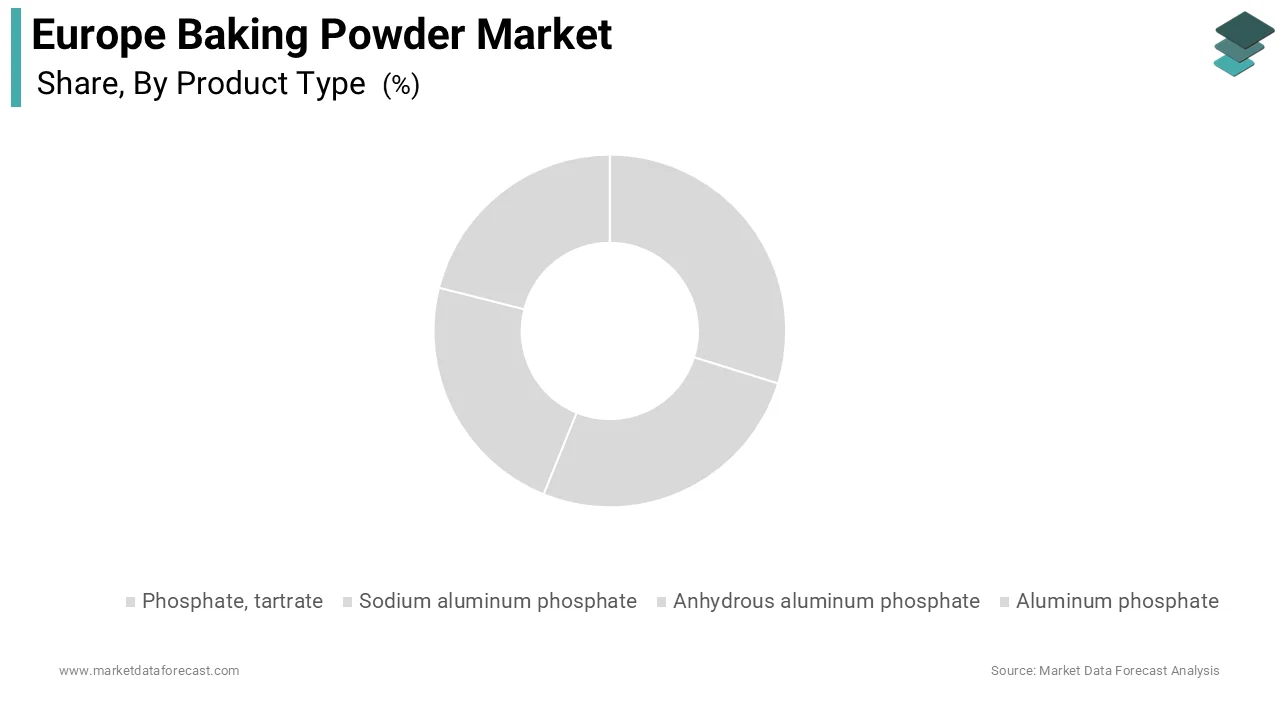
However, the anhydrous aluminum phosphate segment is estimated to record a healthy CAGR in the global market during the forecast period. The superior moisture absorption properties and exceptional stability in dry environments propel the rapid expansion of the anhydrous aluminum phosphate segment. Modern food manufacturing increasingly relies on pre-packaged dry baking mixes and instant batters that must remain completely stable on supermarket shelves for extended periods without premature activation. According to the European Food Safety Authority, the incorporation of highly specialized anhydrous compounds in dry mixes prevents any unintended chemical reactions during storage, ensuring that the leavening power is completely preserved until the consumer adds liquid. Modern consumer trends show a sustained preference for purchasing convenient dry baking mixes for quick home preparation, driving immense demand for moisture-resistant leavening agents. Furthermore, as per the Global Food Processing Association, anhydrous formulations significantly extend the shelf life of commercial dry products by up to 18 months without requiring expensive climate-controlled packaging. According to the World Bank, the rapid urbanization and busy lifestyles of modern consumers are accelerating the procurement of ready-to-use dry culinary solutions. This absolute necessity for prolonged stability in dry applications guarantees that this specific segment will experience the fastest growth trajectory.
By Application Insights
The biscuits and cookies segment held the major share of the European market in 2025. The massive global snacking culture and the high consumption frequency of dry baked goods secure the absolute dominance of the biscuits and cookies application segment. These products are deeply embedded in daily dietary routines across the European continent, serving as essential components of breakfast meals, afternoon breaks, and convenient on-the-go snacks. According to the European Commission, the regional production of sweet and savory biscuits remains highly significant, reflecting the colossal scale of consumer demand for these convenient culinary items. As per the International Snack Association, a vast majority of European consumers purchase packaged baked snacks at least once a week, driving continuous and massive procurement of specialized leavening agents by commercial manufacturers. Furthermore, the World Health Organization indicates that the convenience and portability of these products make them a staple in modern households, particularly among working professionals and students. The Global Food Processing Association notes that achieving the perfect crisp texture and uniform thickness in mass-produced biscuits requires highly precise chemical leavening systems that can withstand high-pressure dough processing. This profound cultural reliance, combined with immense production volumes, guarantees the absolute market supremacy of this application segment.
On the other hand, the cakes and pastries segment is predicted to showcase the fastest CAGR in the European market during the forecast period. The surging consumer demand for premium artisanal and indulgent dessert products propels the rapid expansion of the cakes and pastries application segment. Modern consumers are increasingly seeking out high-quality and visually stunning baked goods that offer complex flavor profiles and exceptionally soft textures to celebrate special occasions or enjoy daily luxuries. The number of independent craft bakeries and premium dessert cafes across the continent has steadily expanded as consumers shift away from mass-produced commercial breads. The World Food Culture Institute states that the incorporation of specialized chemical leaveners in premium pastry making has increased significantly as chefs strive to differentiate their menus in a highly competitive culinary landscape. Furthermore, the International Culinary Federation indicates that the deployment of customized leavening blends allows artisanal producers to achieve consistent results across varying environmental conditions and humidity levels, ensuring perfect volume in delicate sponge cakes. By developing specialized and highly responsive leavening products, manufacturers can capture a highly lucrative and rapidly expanding demographic of professional bakers and culinary enthusiasts.
REGIONAL INSIGHTS
Germany Baking Powder Market Analysis
Germany accounted for the largest share of the European market in 2025 and maintains a highly dominant position in the regional landscape characterized by massive commercial baking operations and a deep cultural affinity for traditional baked goods. This nation serves as a primary hub for industrial food manufacturing and premium culinary production. The market status here is defined by the continuous integration of advanced leavening solutions into daily dietary routines and the massive scale of domestic bakery output. According to the Federation of German Food and Drink Industries, the national food processing sector produces over 230 billion euros in goods annually, demonstrating the colossal financial scale of operations requiring consistent chemical leavening agents. As per the World Bank, regional urban population expansion is driving a 25% increase in packaged bakery consumption over the last five years, necessitating reliable and highly predictable rising agents. Furthermore, the International Association of Operative Millers states that domestic wheat flour production consistently exceeds 8 million metric tons annually, providing an endless foundation for commercial baking operations. This profound commitment to technological modernization and massive industrial scale guarantees sustained and highly profitable market growth across the entire nation for the next few years.
United Kingdom Baking Powder Market Analysis
The United Kingdom occupies a highly influential position in the regional arena, fueled by a thriving artisanal bakery sector and massive retail demand for convenience foods. This country is a recognized pioneer in dietary innovation and premium retail food products. The market status here is heavily influenced by the aggressive shift toward health-conscious baking and the widespread adoption of specialized leavening formulations. According to the Food and Drink Federation, the national food and drink manufacturing sector contributes 42 billion pounds in gross value added, demonstrating the immense purchasing power of domestic consumers and commercial producers. As per the World Health Organization, regional sodium reduction campaigns have heavily influenced bakeries to adopt aluminum-free and low-sodium leavening alternatives to meet strict public health guidelines. Furthermore, national statistics indicate that retail bakery product sales are substantial, reflecting the massive volume of goods requiring precise chemical rising agents. This unwavering commitment to dietary innovation and premium retail expansion ensures sustained market leadership and robust commercial growth across the entire nation for the next few years.
France Baking Powder Market Analysis
France holds a highly strategic position in the continental market, driven by an unparalleled reputation for premium pastry production and strict culinary standards. This nation is a leader in the transition toward highly specialized leavening solutions for delicate and complex baked goods. The market status here is defined by the seamless integration of premium chemical agents into traditional artisanal recipes and the continuous pursuit of perfect texture in luxury desserts. According to the National Confederation of French Bakers and Pastry Makers, there are over 30,000 artisanal bakeries operating nationwide, creating a massive demand for highly responsive and consistent leavening powders. As per the European Commission, the regional bakery and farinaceous products sector generates immense economic value, with French pastry exports growing significantly due to their superior quality. Furthermore, the International Culinary Federation states that premium pastry consumption in the country continues to rise as consumers seek out luxurious and visually stunning dessert experiences. This profound focus on culinary excellence and strict quality standards guarantees continuous and robust commercial expansion across the entire nation for the next few years.
Italy Baking Powder Market Analysis
Italy maintains a steadily expanding position in the regional landscape, supported by a profound cultural appreciation for traditional baked goods and massive domestic consumption. This country serves as a foundational consumer base for dry baked goods and traditional regional cakes. The market status here is heavily influenced by the everyday consumption of biscuits and rusks, which serve as essential components of daily dietary practices across all demographics. According to the Italian Association of Industrial Pasta and Baking Products, the national industrial bakery production exceeds 4 million metric tons annually, requiring massive and continuous procurement of reliable leavening agents. As per the World Bank, rising disposable incomes in the country are boosting premium snack purchases and driving the modernization of local manufacturing facilities. Furthermore, the International Snack Association states that a vast majority of consumers purchase packaged baked snacks weekly, ensuring a highly stable and consistent demand for chemical rising solutions. This sheer demographic scale and deep cultural integration guarantee massive and consistent market volume for the next few years.
Spain Baking Powder Market Analysis
Spain secures a highly dynamic position in the regional market characterized by rapid urbanization and the aggressive expansion of modern retail bakery formats. This nation demonstrates a growing appetite for convenient baked goods and the continuous modernization of the local food processing sector. The market status here is defined by the massive proliferation of in-store bakeries and the continuous expansion of the hospitality sector, driven by international tourism. According to the Spanish Confederation of Bakers, the national bakery sector generates over 7 billion euros in annual revenue, demonstrating the immense scale of both artisanal and industrial production. As per the World Travel and Tourism Council, the massive influx of international visitors requires the hospitality industry to procure enormous quantities of baked goods, necessitating reliable leavening solutions for high-volume production. Furthermore, the European Retail Roundtable states that in-store bakery sales have grown consistently as consumers seek fresh and convenient food options. This strategic focus on urbanization and tourism guarantees sustained, extended commercial growth across the entire nation for the next few years.
COMPETITION OVERVIEW
The competitive landscape of the regional baking powder sector is defined by intense rivalry among established multinational food ingredient corporations and specialized local manufacturers. Major global brands leverage massive financial resources to dominate modern supermarket shelves through aggressive promotional campaigns and extensive distribution networks. These industry leaders continuously invest in advanced chemical formulation to ensure absolute product consistency and extended shelf life for diverse culinary applications. Meanwhile, regional players compete fiercely by emphasizing localized production capabilities and highly economical bulk supply solutions that resonate deeply with budget-constrained commercial bakeries. The market also witnesses a surge in strategic mergers and acquisitions as companies seek to consolidate their supply chains and acquire emerging clean-label startups. Furthermore, sustainability initiatives have become a critical competitive differentiator with firms adopting eco-friendly packaging and natural acid sources to appeal to environmentally aware consumers. Ultimately, the competitive environment demands continuous adaptation to rapid dietary shifts, ensuring that only the most agile and innovative organizations maintain their extended profitability and brand loyalty across all international retail markets today and tomorrow globally right here and now across the entire continental culinary infrastructure network, ensuring absolute operational excellence and reliability for all global commercial clients every day.
KEY MARKET PLAYERS
A few major players in the Europe Baking Powder Market include
- B Mauri
- Kraft Foods Group Inc
- Weikfield Products Private Limited
- Ward McKenzie Pty Ltd
- Clabber Girl Corporation
- Caravan Ingredients Inc
- Eagle International
- Kudos Blends Limited
- The New England Cupboard
- Hansells Food Group Limited
- Blue Bird Foods India Pvt. Limited
- ACH Food Companies Inc.
Top Strategies Used by Key Market Participants
Key players in the market employ several strategic approaches to reinforce their competitive standing and capture evolving consumer preferences. Product diversification remains central as companies develop specialized baking powder variants tailored for specific applications, such as gluten-free baking, clean label requirements, and commercial industrial use. Strategic partnerships are another common tactic, with major manufacturers collaborating directly with retail chains to create exclusive private-label leavening products. Investment in sustainable production methods, including the reduction of carbon emissions and the sourcing of natural mineral acids, helps meet strict environmental regulations. Geographic expansion, particularly into emerging culinary markets, allows access to new demographics. Lastly, continuous investment in research ensures that all leavening solutions remain perfectly optimized against evolving dietary trends, ensuring extended commercial viability.
Leading Players in the Europe Baking Powder Market
- Dr. Oetker operates as a monumental force in the global baking ingredients sector, providing exceptional leavening solutions to consumers worldwide. The corporation leverages extensive culinary expertise to develop highly reliable baking powders that ensure perfect volume and texture in diverse recipes. Recently, the enterprise launched a comprehensive line of aluminum-free and clean-label leavening agents designed to meet modern health expectations. This strategic innovation significantly enhances their product portfolio and deeply resonates with contemporary dietary preferences. By continuously upgrading its manufacturing capabilities, the organization successfully reinforces industry leadership and drives substantial commercial growth across international markets around the world.
- Clabber Girl stands as a premier global brand actively transforming the leavening landscape through deep expertise in chemical formulation and consistent quality control. The organization focuses heavily on producing highly responsive baking powders that cater to the exacting standards of both home bakers and commercial manufacturers. Recently, the company completed a massive upgrade to its specialized mixing infrastructure designed to extend product shelf life and maintain optimal rising power. This operational enhancement significantly improves supply chain efficiency and guarantees superior product quality for global retail partners. By prioritizing technological excellence, the enterprise successfully attracts loyal clients around the world.
- Zeelandia functions as a highly innovative baking ingredients company, dedicating significant resources toward the development of premium commercial leavening solutions. The corporation utilizes advanced research facilities to create unique, customized baking powders that perfectly stabilize complex dough matrices without compromising authentic flavor profiles. In a recent strategic initiative, the enterprise introduced a new series of specialized leavening blends specifically engineered for the rapidly expanding gluten-free bakery sector. This technological breakthrough enables the brand to capture the functional food segment without compromising on product safety. Through continuous product development, the company continues to solidify its formidable presence around the world.
MARKET SEGMENTATION
This research report on the Europe baking powder market has been segmented and sub-segmented based on product type, application, and region.
By Product Type
- Phosphate, tartrate
- Sodium aluminum phosphate
- Anhydrous aluminum phosphate
- Aluminum phosphate
By Application
- Biscuits and biscuits
- BrBreaduffins and pies
- Cakes and pastries
- Others ( donuts, croissants, and pretzels)
By Region
- UK
- France
- Spain
- Germany
- Italy
- Russia
- Sweden
- Denmark
- Switzerland
- Netherlands
- Turkey
- Czech Republic
- Rest of Europe