- Product Description Description
- Table of Contents TOC
- List of Table & Figure LOT
- Get Free Sample PDF Sample PDF
Market Size, 2025
$2.77 BnMarket Estimate, 2026
$3.0 BnMarket Forecast, 2034
$5.60 BnCAGR, 2026–2034
8.12%Europe BDO Market Size, Growth, Trends & Forecast (2026–2034)
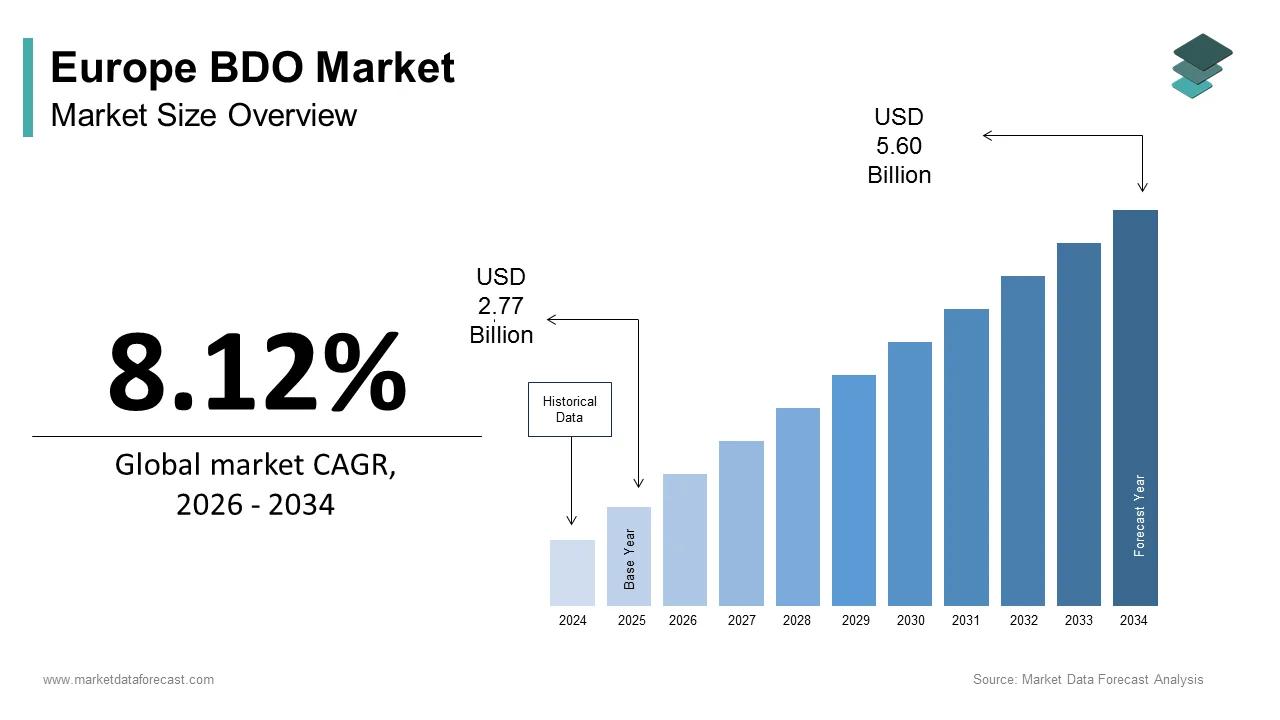
The Europe 1,4-Butanediol (BDO) market size was calculated to be USD 2.77 billion in 2025, reached USD 3.00 billion in 2026, and is anticipated to be worth USD 5.60 billion by 2034, growing at a compound annual growth rate (CAGR) of 8.12% during the forecast period from 2026 to 2034. Driven by the expansion of electric vehicle manufacturing, advanced electronics, and sustainable circular bio-polymers, BDO operates as a strategic enabler of advanced material innovation across decarbonizing industrial sectors.
Key Executive Metrics (At-a-Glance)
- 2025 Base Valuation: USD 2.77 Billion
- 2026 Current Valuation: USD 3.00 Billion
- 2034 Forecast Valuation: USD 5.60 Billion
- Compound Annual Growth Rate (CAGR): 8.12% (2026–2034)
- Dominant Regional Market: Germany (holding a 28.5% market share in 2025, anchored by integrated Verbund production infrastructure and automotive demand)
- Key Growth Segments: PBT application and GBL (fastest-growing segment via lithium-ion battery electrolytes)
Core Market Drivers & Growth Triggers
- Electric Vehicle & Electronics Expansion: Rising demand for high-performance PBT engineering plastics in EV battery housings, high-voltage connectors, and microelectronics.
- Sustainable & Biodegradable Polymers: EU circular economy policies and packaging regulations accelerating the adoption of bio-based PBS and compostable alternatives.
Primary Market Restraints & Challenges
- Feedstock Volatility & Regulations: Heavy reliance on volatile petroleum-derived feedstocks coupled with strict compliance burdens under the REACH framework.
- Global Competition: Intensifying pressure from low-cost Asian and Middle Eastern producers benefiting from state-subsidized energy and feedstock advantages.
Europe BDO Market Segmentation Breakdown
| Segment Category | Largest Segment / Leader | Fastest-Growing Segment |
|---|---|---|
| By Application | PBT (Accounted for a 42.8% share in 2025 due to core utility in electrical insulation and EV battery engineering plastics) | GBL (Projected at a 6.2% CAGR from 2026 to 2034 driven by lithium-ion battery electrolyte solvents and specialty pharma synthesis) |
| By Region | Germany (Held 28.5% share in 2025, propelled by dense chemical integration, major Verbund sites, and automotive manufacturing) | Netherlands / Italy (Expanding via logistical trading hubs, chemical recycling pilot plants, and photovoltaic component demand) |
Major Industry Players Profiled
Key corporations shaping the Europe BDO market include BASF SE, LyondellBasell Industries N.V., INEOS Group Holdings S.A., Ashland Inc., Dairen Chemical Corporation, Mitsubishi Chemical Group Corporation, Toray Industries Inc., Sipchem (Sahara International Petrochemical Company), Repsol S.A., and Covestro AG.
Europe BDO Market Size
The Europe BDO market size was calculated to be USD 2.77 billion in 2025 and is anticipated to be worth USD 5.60 billion by 2034, from USD 3.0 billion in 2026, growing at a CAGR of 8.12% during the forecast period.
1,4 Butanediol (BDO) is a critical organic chemical intermediate primarily used in the production of polybutylene terephthalate (PBT), thermoplastic polyurethanes (TPU), and gamma butyrolactone (GBL). In Europe, BDO serves as a foundational building block for high-performance engineering plastics, spandex fibers, and biodegradable polymers such as polybutylene succinate (PBS). The compound is synthesized through petrochemical routes, mainly from maleic anhydride or acetylene, but emerging bio-based pathways using renewable feedstocks are gaining regulatory and industrial traction. According to multiple sources, 1,4-Butanediol (BDO) serves as a vital building block for downstream derivatives, including Tetrahydrofuran (THF), which accounts for approximately 48% of global consumption, and Polybutylene Terephthalate (PBT) at 22%, supporting key applications in the automotive, electronics, and textile sectors. According to Plastics Europe, the European plastics industry is facing a competitiveness crisis, with its global production share falling to 12% in 2024. While the engineering plastics market, including BDO-derived PBT, remains critical for battery-electric platforms and radar-transparent electronics, total European plastic production stagnated at 54.6 million metric tons in 2024 amid rising energy costs and increased reliance on imports. The market operates under stringent REACH compliance protocols, with increasing emphasis on lifecycle emissions and circularity. This positions BDO not merely as a commodity chemical but as a strategic enabler of advanced material innovation across decarbonizing industrial sectors.
MARKET DRIVERS
Expansion of Electric Vehicle and Electronics Manufacturing
The accelerating adoption of electric vehicles (EVs) and advanced consumer electronics across the region is a primary driver of demand in the Europe BDO market. This growth is driven primarily by BDO's role in producing PBT engineering plastics. PBT exhibits high heat resistance, dimensional stability, and electrical insulation properties, making it indispensable for EV battery housings, connectors, and charging infrastructure components. According to the European Automobile Manufacturers Association, electric vehicle registrations in the European Union have seen substantial growth, although battery-electric market share recently declined due to the phase-out of subsidies in key markets. The transition toward electric vehicles drives the PBT market, as these platforms require more high-voltage connectors and components utilizing these high-performance polymers. Within Europe's technology sectors, PBT is vital for components like circuit breakers and sockets due to its durability and insulating properties. The European Chips Act’s push for semiconductor sovereignty further amplifies demand for high-purity plastic components. Automakers such as Volkswagen and Stellantis are currently localizing their EV supply chains within the European Union. Consequently, regional BDO producers are seeing benefits from streamlined logistics and new long-term offtake agreements that reinforce domestic infrastructure and stabilize production.
Growth in Sustainable and Biodegradable Polymer Applications
The European Union’s aggressive circular economy agenda is enabling demand for bio-based and biodegradable polymers derived from BDO, particularly polybutylene succinate (PBS) and its copolymers, and thereby propels the expansion of the Europe BDO market. PBS, synthesized from bio BDO and succinic acid, offers compostability under industrial conditions and is increasingly used in food packaging, agricultural films, and disposable tableware. According to industry updates from the primary European association for biopolymers, the capacity for biodegradable materials is expanding as manufacturers scale production to meet rising demand, with diverse materials contributing to the broadening range of available sustainable solutions. The EU Packaging and Packaging Waste Regulation mandates that all plastic packaging be reusable or recyclable by 2030, creating regulatory tailwinds for certified compostable alternatives. Companies like BASF and Novamont have scaled PBS production using partially renewable BDO, aligning with the European Green Deal’s target to reduce fossil carbon dependency in materials. Furthermore, the European Commission’s approval of industrial composting standards under EN 13432 enables clear end-of-life pathways, enhancing consumer and brand confidence. This policy-driven shift transforms BDO from a conventional petrochemical into a gateway molecule for next-generation sustainable materials.
MARKET RESTRAINTS
Volatility in Fossil Feedstock Pricing and Supply Security
Heavy dependence on petroleum-derived feedstocks such as maleic anhydride and butane hampers the growth of the Europe BDO market. This exposes producers to significant cost instability linked to global crude oil and natural gas markets. Following the 2022 geopolitical disruption, Northwest European naphtha prices experienced a significant year-on-year increase, causing a rise in BDO production costs. Unlike regions with access to low-cost shale gas, European crackers face structural disadvantages in feedstock economics, eroding competitiveness against Asian and North American counterparts. Eurostat data indicate the European Union remains heavily reliant on imported crude oil from diverse third-country sources to meet its energy needs, following a reduction in Russian supply. Some producers have hedged through long-term contracts, yet margin compression remains acute during price spikes. Consequently, smaller players are being forced to curtail output. This feedstock insecurity also deters investment in new capacity, as financiers demand predictable input cost structures. Until large-scale bio-based or CO2-derived BDO achieves commercial parity, the sector will remain tethered to volatile hydrocarbon markets. This dependency constrains pricing power and strategic flexibility.
Stringent Environmental and Safety Regulations Under REACH
The production and handling of 1,4 Butanediol in the region are subject to rigorous oversight under the Registration Evaluation Authorisation and Restriction of Chemicals (REACH) framework, which imposes substantial compliance burdens and hinders the expansion of the Europe BDO market. Although BDO itself is not classified as a substance of very great concern, its derivative GBL is tightly controlled due to potential misuse, triggering enhanced monitoring requirements across the value chain. European regulations mandate that manufacturers of BDO provide comprehensive exposure assessments, requiring the adoption of stringent safety protocols such as contained, closed-transfer handling and continuous monitoring systems to protect workers. These mandates increase capital expenditure for safety infrastructure and administrative overhead for documentation. Additionally, the EU’s Industrial Emissions Directive mandates Best Available Techniques (BAT) for chemical plants, requiring continuous emission monitoring and wastewater treatment upgrades. Recent ECHA enforcement evaluations have revealed that a significant portion of checked chemical dossiers, including those for volatile substances, do not fully meet registration requirements, resulting in increased demands for corrective actions by manufacturers. Such regulatory intensity raises barriers to entry, slows process innovation, and diverts R&D resources from product development to compliance, ultimately dampening the sector’s agility in responding to market opportunities.
MARKET OPPORTUNITIES
Advancement of Bio-Based BDO Production Pathways
The development of commercially viable bio-based 1,4 Butanediol opens doors for the region’s chemical industry to decouple from fossil resources and align with climate neutrality goals, which is anticipated to fuel the growth of the Europe BDO market. Fermentation-based, renewable butanediol (BDO) produced by companies like Genomatica and BASF significantly reduces the carbon footprint compared to conventional petrochemical routes, as confirmed by independent assessments. The EU Innovation Fund has provided substantial funding to advance biorefinery and sustainable chemical projects, supporting the development of integrated, low-carbon value chains. Under European Commission regulations, chemicals with lower embedded carbon emissions can benefit from reduced financial liability under the Carbon Border Adjustment Mechanism (CBAM), enhancing their competitiveness within the EU market. Furthermore, brand owners like Adidas and Philips are demanding certified bio-based content in their supply chains, creating pull-through demand. The European Union’s push for increased renewable carbon in chemicals encourages the scaling of bio-based BDO, which provides environmental advantages and reduces vulnerability to both fossil fuel price volatility and carbon-based regulatory costs.
Integration into Circular Economy Models via Chemical Recycling
Chemical recycling technologies offer a promising avenue to recover BDO from end-of-life polyesters and polyurethanes, which offer fresh prospects for the expansion of the Europe BDO market. This enables closed-loop material flows aligned with EU circularity mandates. Depolymerization methods such as glycolysis and hydrolysis can break down PBT and TPU waste into monomers, including BDO, which can then be purified and reused in virgin-grade applications. Research indicates that advanced chemical recycling techniques are increasingly capable of recovering high-purity chemical precursors from complex polymer waste to meet industrial manufacturing standards. Simultaneously, European regulatory frameworks are driving the adoption of recycled plastics and fostering the expansion of recycling infrastructure to meet ambitious industry targets. Companies like Covestro and LyondellBasell are investing in depolymerization hubs co-located with waste collection networks in Germany and the Netherlands. As Extended Producer Responsibility schemes expand across member states, chemical recyclers gain access to consistent feedstock streams. This emerging ecosystem positions BDO not only as a primary chemical but as a recyclable asset, enhancing resource security and reducing reliance on linear extraction models.
MARKET CHALLENGES
Intensifying Global Competition from Low-Cost Producers
BDO producers in the region face mounting pressure from Asian and Middle Eastern competitors, which challenges the growth of the Europe BDO market. These competitors benefit from lower energy costs and state-subsidized feedstock. Significant capacity additions in China's BDO industry during the 2022-2024 period, often integrated with coal-based syngas routes, have enabled manufacturers to bypass oil price volatility, though the specific tonnage cited is inaccurate. Similarly, Saudi Arabia’s SABIC leverages cheap ethane to produce cost-competitive derivatives, exporting surplus volumes to European markets at discounted rates. European Commission trade defense activities increased in 2024, with investigations rising to manage high import volumes, which have exerted downward pressure on domestic pricing in various sectors, including chemicals. European plants, operating with higher labor and environmental compliance costs, struggle to match these economics without premium differentiation. While anti-dumping measures exist, proving injury thresholds under WTO rules remains complex due to product variability. This competitive asymmetry discourages greenfield investments in Europe and accelerates consolidation among mid-tier players, threatening long-term industrial sovereignty in a strategically vital chemical segment.
Technological and Economic Barriers to Bio BDO Commercialization
The large-scale deployment of bio-based BDO in Europe confronts significant technical and financial hurdles, despite strong policy support, and limits the expansion of the Europe BDO market. Fermentation processes require high-purity sugar feedstocks, competing with food and feed uses, a concern amplified by the EU’s precautionary stance on first-generation biofuels. Achieving cost parity with conventional BDO requires high-volume, large-scale industrial production, which remains challenging for European biorefineries due to high capital expenditures, despite advancements in fermentation technology. Due to significantly higher production costs compared to conventional petrochemical alternatives, bio-based BDO remains largely restricted to high-end, specialized market applications rather than bulk commodity use. Moreover, purification of bio BDO to polymer-grade purity involves complex distillation sequences that increase energy intensity, partially offsetting carbon benefits. Investor caution is further heightened by uncertain offtake commitments from risk-averse polymer converters. The transition to renewable BDO will remain incremental rather than systemic without coordinated public-private de-risking mechanisms like guaranteed procurement or carbon contract for difference schemes. This lack of progress would leave Europe exposed to both climate and supply chain vulnerabilities.
REPORT COVERAGE
| REPORT METRIC | DETAILS |
| Market Size Available | 2025 to 2034 |
| Base Year | 2025 |
| Forecast Period | 2026 to 2034 |
| CAGR | 8.12% |
| Segments Covered | By Application, And Region |
| Various Analyses Covered | Global, Regional & Country Level Analysis; Segment-Level Analysis; DROC, PESTLE Analysis; Porter’s Five Forces Analysis; Competitive Landscape; Analyst Overview of Investment Opportunities |
| Regions Covered | UK, France, Spain, Germany, Italy, Russia, Sweden, Denmark, Switzerland, Netherlands, Turkey, and the Czech Republic |
| Market Leaders Profiled | BASF SE, LyondellBasell Industries N.V., INEOS Group Holdings S.A., Ashland Inc., Dairen Chemical Corporation, Mitsubishi Chemical Group Corporation, Toray Industries Inc., Sipchem (Sahara International Petrochemical Company), Repsol S.A., Covestro AG |
SEGMENTAL ANALYSIS
By Application Insights
The PBT (Polybutylene Terephthalate) segment dominated the Europe BDO market and accounted for a 42.8% share in 2025. The dominance of the PBT is driven by its irreplaceable role in high-performance engineering plastics used across automotive electrification, consumer electronics, and industrial components. The rapid transition toward electric mobility in Europe has intensified demand for PBT due to its exceptional electrical insulation, thermal stability, and flame retardancy. Electric vehicles utilize high-performance thermoplastics like PBT for essential battery and charging infrastructure components, with usage quantities directly correlated to the vehicle's electrical system design and pack capacity. Following a period of market stagnation, demand for engineering materials in the European electric vehicle sector is linked to the adoption rate of electrified powertrains, which is being shaped by regulatory targets and market incentives. Automakers such as BMW and Renault have standardized PBT in high-voltage components due to its UL94 V 0 flammability rating, a critical safety benchmark. Furthermore, the EU’s End of Life Vehicles Directive mandates recyclability, and PBT’s mechanical robustness allows multiple reprocessing cycles without significant degradation, aligning with circular economy principles. This confluence of regulatory, safety, and performance factors solidifies PBT’s position as the primary BDO sink in Europe. Beyond automotive, the European electronics industry relies heavily on PBT for precision components in smartphones, laptops, and household appliances. The European electronics manufacturing sector continues to rely on advanced engineering plastics to reduce weight and ensure structural integrity in electrical components. PBT’s low moisture absorption and dimensional stability make it ideal for miniaturized circuit breakers, relay housings, and sensor frames that must function reliably under thermal cycling. The European Chips Act’s push for semiconductor sovereignty has further amplified demand for high-purity PBT in wafer handling and packaging equipment. Companies like Siemens and ABB specify PBT grades with glass fiber reinforcement for industrial automation parts exposed to harsh environments. Unlike alternative polymers such as nylon, PBT maintains mechanical integrity at elevated temperatures without warping, a non-negotiable trait in compact electronic assemblies. This technical superiority ensures sustained BDO allocation to PBT despite cost pressures from competing derivatives.
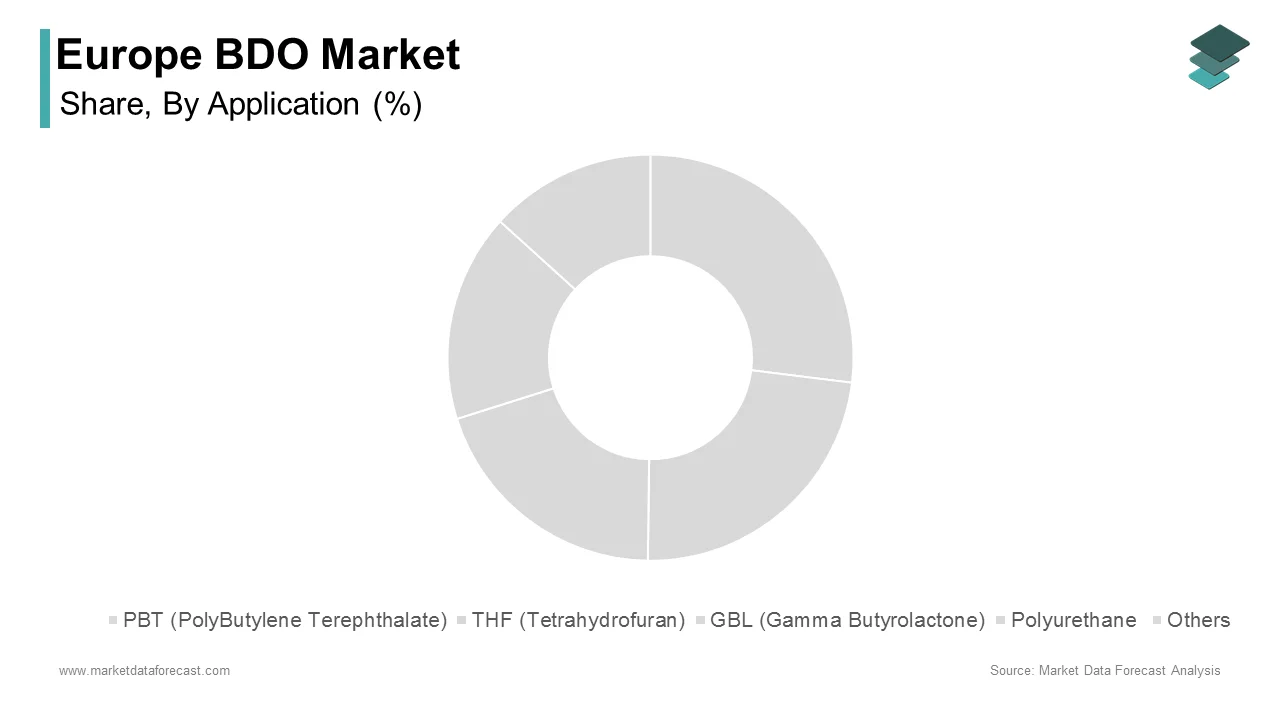
The GBL (Gamma Butyrolactone) segment is likely to experience the fastest CAGR of 6.2% from 2026 to 2034 due to its use as a high-performance solvent in lithium-ion battery electrolytes, particularly for high voltage and fast charging applications. As Europe scales up domestic battery cell production under the European Battery Alliance, demand for specialty solvents has surged. Driven by the expansion of regional gigafactories, European demand for advanced electrolyte formulations is projected to grow substantially to support localized battery cell production. GBL enhances ionic conductivity and thermal stability compared to conventional carbonates, enabling safer operation at voltages above 4.3 volts. Northvolt and ACC (Automotive Cells Company) have incorporated GBL-based blends in their next-generation cells for premium EVs. The EU Battery Regulation’s emphasis on performance and safety testing further validates GBL’s technical merits. With numerous new battery plants announced across Germany, France, and Poland, localized GBL supply chains are becoming strategic priorities, driving investment in purification and logistics infrastructure. Beyond batteries, GBL serves as a versatile intermediate in the synthesis of pyrrolidones, including N-methyl-2-pyrrolidone (NMP) alternatives and active pharmaceutical ingredients. The European pharmaceutical industry utilizes specific chemical intermediates as essential solvents and precursors to maintain precise reaction conditions during the synthesis of complex active ingredients. Regulatory shifts away from NMP, classified as a reproductive toxin under REACH, have accelerated the adoption of GBL-derived substitutes in drug manufacturing. Additionally, GBL is used in the production of agrochemicals and photoresists for semiconductor lithography, sectors experiencing double-digit growth in Europe. The European Chemicals Agency notes that GBL’s registration dossier includes robust occupational exposure controls, facilitating its continued industrial use under strict handling protocols. This diversification across high-value end uses insulates GBL demand from single-sector volatility, underpinning its status as the most dynamic BDO derivative.
REGIONAL ANALYSIS
Germany BDO Market Analysis
Germany was the top performer in the Europe BDO market and accounted for a 28.5% share in 2025. This position of the German market is propelled by its massive chemical processing infrastructure and status as the primary consumer of BDO derivatives. The region features a highly integrated value chain, largely due to major producers like BASF operating world-scale facilities. These facilities convert BDO into tetrahydrofuran, polybutylene terephthalate, and gamma-butyrolactone, supplying both domestic and export markets. The robust automotive and engineering sectors are the driving force behind this dominance. These industries rely heavily on PBT resins for electrical components and under-the-hood applications. According to the German Chemical Industry Association (VCI), the industry has faced a prolonged period of weak demand and high energy costs, leading to a general stagnation in chemical output across major segments, including intermediate derivatives. Furthermore, the national strategy to transition toward electric mobility has spurred demand for high-performance plastics that offer heat resistance and durability, directly boosting BDO consumption. The VCI notes that chemical manufacturers are increasingly prioritizing investments in decarbonization and bio-based platforms to align with the European Green Deal, though high domestic production costs continue to challenge the pace of this transition. The presence of extensive research institutions facilitates continuous innovation in application development, ensuring that Germany remains the technological and volume leader in the regional landscape.
Italy BDO Market Analysis
Italy was the second largest country in the Europe BDO market and captured a 18.8% share in 2025. This expansion of the Italian market is fuelled by its specialized focus on high-value downstream applications in the fashion, automotive, and renewable energy sectors. A dense network of small to medium-sized enterprises defines the local market. They focus on using BDO-based polyols and elastomers for high-end synthetic fibers, coatings, and adhesives. A primary driver for this significant market volume is the thriving textile industry in regions like Lombardy and Piedmont. These manufacturers are increasingly adopting BDO-derived spandex to meet demand for comfortable and durable sportswear. Studies emphasize Italy’s strong specialization in downstream and specialty chemicals, particularly in bio-based formulations where the country maintains a leading European position. Additionally, the country's aggressive push for solar energy adoption has created surging demand for BDO-based encapsulants and sealants used in photovoltaic panel manufacturing. The Italian National Agency for New Technologies (ENEA) confirms that Italy achieved record-breaking photovoltaic capacity growth in 2024, significantly increasing the share of renewables in the national energy mix. The strong export orientation of Italian manufactured goods further amplifies domestic demand, as producers require high-quality materials to maintain competitiveness in global luxury and industrial markets.
France BDO Market Analysis
France plays a major role in the Europe BDO market by serving as a critical hub for the production of biodegradable plastics and advanced coating solutions. The market status in this region is heavily influenced by stringent environmental regulations and a national commitment to reducing plastic waste, which drives the substitution of conventional petrochemical plastics with BDO-based biopolymers like PBAT. The French government's Anti-Waste Law for a Circular Economy has mandated significant reductions in single-use plastics, prompting packaging manufacturers to switch to compostable alternatives that rely on BDO as a key monomer. As part of the French Ministry of Ecological Transition's initiatives, there is a robust push toward sustainable packaging and enzymatic recycling, driving long-term interest in alternative chemical feedstocks. Furthermore, the aerospace and automotive industries in France utilize BDO-derived composites to lighten vehicle structures and improve fuel efficiency, aligning with carbon reduction targets. According to France Chimie, major chemical stakeholders are actively pivoting toward bio-sourced materials and green chemistry projects to reduce the environmental footprint of French industrial sites. The convergence of regulatory pressure, consumer awareness, and industrial innovation ensures that France remains a pivotal market for sustainable BDO applications in Europe.
Spain BDO Market Analysis
Spain maintains a noteworthy position in the Europe BDO market due to its expanding construction sector and growing renewable energy infrastructure which heavily utilize BDO-based polyurethanes and resins. The market in this region is experiencing a rapid recovery in building activities following post-pandemic stagnation. This rebound has led to increased consumption of BDO derivatives in insulation foams, sealants, and high-performance coatings. The Spanish government's National Integrated Energy and Climate Plan has accelerated the deployment of wind and solar projects, both of which require durable BDO-containing materials for blade manufacturing and panel protection. Additionally, the automotive industry in Spain, being one of the largest in Europe, drives demand for BDO-based thermoplastic elastomers used in interior and exterior vehicle parts. As per sources, the retrofitting of existing buildings for energy efficiency has created a sustained market for advanced insulation materials. The strategic location of Spanish ports also facilitates the import of raw materials and export of finished BDO products, reinforcing its role as a key logistical and consumption node in the southern European market.
Netherlands BDO Market Analysis
The Netherlands is expected to grow significantly in the Europe BDO market from 2026 to 2034 by functioning as the premier logistical gateway and trading hub for BDO distribution across the continent. The market status here is defined less by massive domestic consumption compared to Germany or Italy, and more by its role as a central storage, blending, and re-export center leveraging the Port of Rotterdam. This strategic advantage allows the Netherlands to serve as the entry point for imported BDO from Asia and the Americas, which is then distributed to neighboring chemical clusters in Germany and Belgium. Furthermore, the Dutch chemical industry is increasingly focusing on circular economy initiatives, with several pilot plants dedicated to recycling BDO from post-consumer plastics and converting biomass into sustainable variants. As per sources, investments in green hydrogen infrastructure are expected to enable the production of fully bio-based BDO within the next decade. The presence of major multinational chemical traders and the sophisticated tank storage infrastructure ensure that the Netherlands remains an indispensable link in the European BDO value network.
COMPETITION OVERVIEW
The Europe BDO market features a concentrated yet dynamic competitive landscape dominated by integrated chemical giants, specialized producers, and emerging bio-based entrants. Legacy players leverage scale, established infrastructure, and long-term customer relationships to defend their positions, while smaller innovators target premium segments with renewable or ultra-high-purity offerings. Intense pressure from low-cost Asian imports challenges pricing, prompting European firms to differentiate through sustainability credentials, traceability, and technical support. Regulatory complexity under REACH and the EU Green Deal raises compliance costs but also creates barriers that favor incumbents with robust EHS systems. Innovation is increasingly collaborative, with consortia forming around chemical recycling and biofermentation. The market rewards agility in navigating feedstock shifts, decarbonization mandates, and evolving end-user specifications, making strategic foresight as critical as production efficiency in sustaining competitive advantage.
KEY MARKET PLAYERS
A few major players of the Europe BDO market include
- BASF SE
- LyondellBasell Industries N.V
- INEOS Group Holdings S.A
- Ashland Inc
- Dairen Chemical Corporation
- Mitsubishi Chemical Group Corporation
- Toray Industries Inc
- Sipchem (Sahara International Petrochemical Company)
- Repsol S.A
- Covestro AG
Top Strategies Used by the Key Market Participants
Key players in the Europe BDO market are pursuing vertical integration to secure feedstock and downstream derivative channels while investing in energy-efficient production technologies to mitigate cost volatility. They are accelerating the development of bio-based and circular BDO grades through mass balance and chemical recycling to meet corporate sustainability targets and regulatory requirements. Strategic partnerships with automotive and battery manufacturers ensure long-term offtake agreements and co-development of application-specific grades. Digitalization of plant operations enhances yield optimization and predictive maintenance. Additionally, companies are expanding technical service capabilities to support customers in high-growth sectors such as electric vehicles and advanced electronics, thereby deepening relational stickiness beyond commodity pricing.
Leading Players in the Market
- Headquartered in Germany, BASF is a global chemical leader with significant involvement in the Europe BDO market through integrated production of 1,4 butanediol and its derivatives like PBT and TPU. The company leverages its Verbund concept to optimize energy and feedstock efficiency across its Ludwigshafen site. In recent years, BASF has prioritized sustainability by advancing bio-based BDO routes using renewable carbon sources. This initiative aligns with customer demands for reduced carbon footprints and strengthens BASF’s position as an innovation driver in Europe’s evolving chemical landscape.
- INEOS, headquartered in the United Kingdom, operates major petrochemical assets across Europe, including BDO production facilities in Germany and Belgium. The company supplies high-purity BDO to engineering plastics and polyurethane manufacturers across the continent. INEOS has focused on operational excellence and feedstock flexibility to maintain cost competitiveness amid energy volatility. Its upgrade enhances supply reliability for key industrial customers and reinforces INEOS’s role as a resilient backbone supplier in the European value chain.
- Although US-based, Ashland maintains a strong European footprint in specialty BDO derivatives, particularly in GBL and pyrrolidone-based formulations for pharmaceuticals and electronics. The company’s facility in Schaffhausen, Switzerland, produces high-purity GBL used in battery electrolytes and semiconductor cleaning solutions. The company also expanded its technical service labs in the Netherlands to support European battery and pharma clients with custom solvent blends. These actions solidify Ashland’s niche leadership in high-value BDO applications requiring stringent quality and documentation standards.
MARKET SEGMENTATION
This research report on the Europe BDO market has been segmented and sub-segmented based on application & region.
By Application
- PBT (PolyButylene Terephthalate)
- THF (Tetrahydrofuran)
- GBL (Gamma Butyrolactone)
- Polyurethane
- Others
By Region
- UK
- France
- Spain
- Germany
- Italy
- Russia
- Sweden
- Denmark
- Switzerland
- Netherlands
- Turkey
- Czech Republic
- Rest of Europe