- Product Description Description
- Table of Contents TOC
- List of Table & Figure LOT
- Get Free Sample PDF Sample PDF
Market Size, 2025
$2.08 BnMarket Estimate, 2026
$2.20 BnMarket Forecast, 2034
$3.45 BnCAGR, 2026–2034
5.78%Europe Bean Gum Market Size, Growth, Trends & Forecast (2025–2034)
The Europe bean gum market size was calculated to be USD 2.08 billion in 2025, is estimated to reach USD 2.20 billion in 2026, and is anticipated to be worth USD 3.45 billion by 2034, registering a compound annual growth rate (CAGR) of 5.78% during the forecast period. Driven by clean-label product trends, growing consumer preference for plant-based alternatives, and extensive industrial applications in food processing and pharmaceuticals, the regional market continues to expand dynamically.
Key Executive Metrics (At-a-Glance)
- 2025 Base Valuation: USD 2.08 Billion
- 2026 Current Valuation: USD 2.20 Billion
- 2034 Forecast Valuation: USD 3.45 Billion
- Compound Annual Growth Rate (CAGR): 5.78% (2026–2034)
- Dominant Type Segment: Guar Gum (accounting for 38.2% of the market share in 2025 due to broad cross-industry utility)
- Fastest-Growing Type Segment: Gellan Gum (projected to grow at a CAGR of 7.9% driven by clear beverages and functional drinks)
- Dominant Application Segment: Ice Creams (holding 22.1% of the market share in 2025 supported by high regional per capita consumption)
- Fastest-Growing Application Segment: Baby Foods (estimated to expand at a CAGR of 8.3% backed by EFSA safety approvals and prebiotic inclusion)
- Dominant End-User Segment: Food and Beverages (capturing the dominant market share in 2025 fueled by the surge in plant-based alternatives)
- Fastest-Growing End-User Segment: Pharmaceuticals (growing at a CAGR of 7.6% driven by oral solid dosage forms and generic drug development)
- Dominant Function Segment: Stabilization (occupying 35.4% of the market share in 2025 to prevent phase separation and whey breakdown)
- Fastest-Growing Function Segment: Fat Replacer (projected to grow at a CAGR of 8.1% aligned with healthy, low-calorie dietary reformulations)
- Dominant Country: Germany (holding 15.2% of the market share in 2025 backed by a strong presence of plant-based food manufacturers and nutraceutical consumption)
Core Market Drivers
- Clean-Label & Natural Food Demand: Surging preference among European consumers for recognizable, plant-based ingredients over synthetic alternatives in dairy, bakery, and meat products.
- Expansion of Plant-Based Dairy: Rapid growth of alternative dairy and beverage formulations requiring effective stabilizing and texturizing agents.
Primary Market Restraints & Challenges
- Raw Material Volatility: Climate-driven monsoon variations and geopolitical instabilities affecting crop yields in primary source regions like India and Pakistan, creating fluctuating import costs.
- Intense Substitute Competition: Growing market pressure from alternative hydrocolloids such as carrageenan, pectin, and xanthan gum.
Europe Bean Gum Market Segmentation Breakdown
| Segment Category | Leading Sub-Segment | Fastest-Growing Sub-Segment |
|---|---|---|
| By Type | Guar Gum (38.2% share in 2025 via superior thickening and economic efficiency) | Gellan Gum (7.9% CAGR driven by clear beverages and pharmaceutical suspensions) |
| By Application | Ice Creams (22.1% share in 2025 anchored by high European per capita consumption) | Baby Foods (8.3% CAGR powered by safety compliance and early childhood nutrition) |
| By End User | Food and Beverages (dominant share in 2025 via clean-label plant-based adoption) | Pharmaceuticals (7.6% CAGR via generic drug and nutraceutical expansion) |
| By Function | Stabilization (35.4% share in 2025 preventing phase separation in plant beverages) | Fat Replacer (8.1% CAGR aligned with health-focused product reformulations) |
| By Region | Germany (15.2% share in 2025 anchored by plant-based manufacturing and nutraceuticals) | Spain (accelerating growth through local fruit juice and agro-food export sectors) |
Major Industry Players Profiled
Key enterprises shaping the competitive Europe bean gum market include Ingredion Incorporated, Cargill, Incorporated, DuPont Nutrition & Biosciences (E.I. DuPont De Nemours & Company), Kerry Group, Scalzo Food Industries, LBG Sicilia Ingredients, G. Araouzos & Son, Ceamsa, TIC Gums Incorporation, CP Kelco, Fiberstar, and FMC Specialty Chemicals.
Europe Bean Gum Market Size
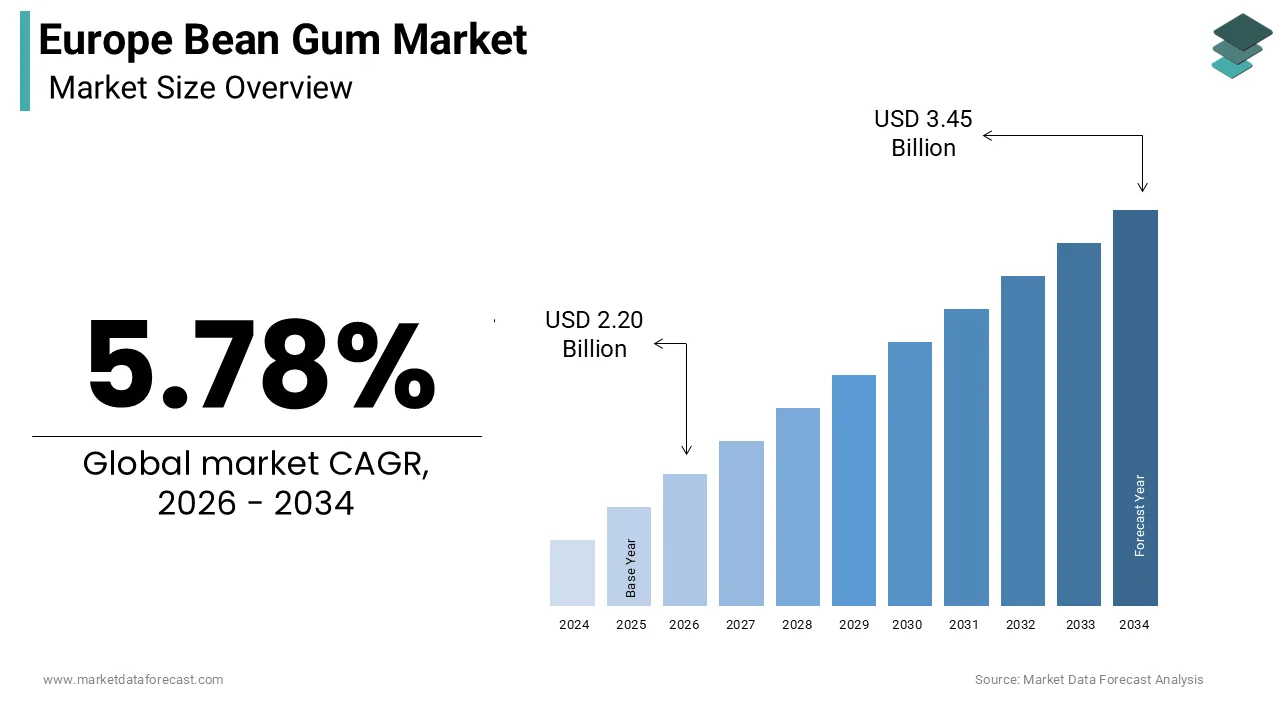
The Europe Bean Gum Market size was calculated to be USD 2.08 billion in 2025 and is anticipated to be worth USD 3.45 billion by 2034, from USD 2.20 billion in 2026, growing at a CAGR of 5.78% during the forecast period.
Bean gum, derived primarily from leguminous seeds such as guar and locust bean, is a natural polysaccharide widely used as a thickening, stabilizing, and emulsifying agent across multiple industries. In Europe, its demand has been steadily growing due to its functional properties in food processing, pharmaceuticals, personal care, and industrial applications. The European market for bean gum is shaped by evolving consumer preferences for clean-label ingredients, regulatory support for plant-based additives, and sustainability-driven sourcing practices. Additionally, according to the European Association of Vegetable Gums (EAVG), locust bean gum production in Mediterranean regions such as Italy and Spain increased by approximately 6% year-on-year, driven by domestic and export demand.
MARKET DRIVERS
Rising Demand for Natural Food Additives in Clean-Label Products
One of the key drivers fueling the Europe Bean Gum Market is the surging consumer preference for natural, clean-label ingredients in food and beverages. As per the findings of a 2025 survey conducted by Mintel Group Ltd., nearly 68% of European consumers prefer products with recognizable, plant-based ingredients over synthetic alternatives. Bean gums, particularly guar and locust bean gum, are increasingly incorporated into dairy, bakery, and meat products due to their ability to enhance texture and shelf life without compromising on label transparency.
The shift is especially pronounced in Western Europe, where countries like Germany, France, and the UK have witnessed a significant rise in product launches featuring bean gum. According to Innova Market Insights, clean-label product introductions in the EU food sector grew by 15% between 2022 and 2023, with bean gum cited as a preferred additive in over 23% of these formulations. Furthermore, regulatory support from the European Food Safety Authority (EFSA) regarding the safety and permissible usage levels of bean gum has further reinforced its adoption among food manufacturers seeking compliance and consumer trust.
Expansion of the Plant-Based and Alternative Dairy Industry
The rapid expansion of the plant-based and alternative dairy industry in Europe has significantly boosted the demand for bean gum as a functional ingredient. According to data released by Euromonitor International in 2025, the plant-based dairy market in Europe reached a value of EUR 5.4 billion in 2023, with an annual growth rate of 9.2%. Bean gum plays a critical role in these products by improving mouthfeel, preventing phase separation, and mimicking the texture of traditional dairy. Countries like Sweden, the Netherlands, and Switzerland lead in plant-based product innovation, where bean gum is extensively used as a stabilizer in oat, almond, and soy-based beverages. For instance, Oatly, one of the leading oat milk producers based in Sweden, disclosed in its 2023 sustainability report that locust bean gum constitutes up to 0.7% of its flagship oat drink formulation.
MARKET RESTRAINTS
Volatility in Raw Material Supply and Pricing
A significant restraint affecting the Europe Bean Gum Market is the volatility in the supply and pricing of raw materials, particularly locust beans and guar seeds. These crops are predominantly cultivated in semi-arid regions such as India, Pakistan, and parts of Africa, where agricultural output is heavily influenced by climatic conditions and geopolitical instability. According to a 2025 report published by Rabobank, fluctuations in monsoon patterns in India have led to a 12–15% variation in guar seed yields over the past three years, directly impacting global prices. In Europe, where import dependency for raw bean gum is high, this volatility translates into inconsistent input costs for manufacturers. Data from the European Commission's Directorate-General for Agriculture and Rural Development revealed that between 2021 and 2023, the average price of imported guar gum increased by 22%, creating financial pressure on downstream processors. Additionally, logistical disruptions caused by events such as the Red Sea shipping crisis in early 2025 further delayed shipments, contributing to inventory shortages. These supply-side challenges not only hinder cost-effective production but also complicate long-term planning for companies reliant on stable raw material availability.
Regulatory and Labeling Hurdles in Specific Applications
Despite its natural origin, bean gum faces regulatory and labeling constraints in certain niche applications within the European market. While it is generally recognized as safe (GRAS) under Regulation (EC) No 1333/2008 on food additives, some specific uses particularly in organic-certified products are restricted. According to the European Organic Certification body (EOSCA), locust bean gum does not meet the full criteria for inclusion in products labeled as "100% organic," which is limiting its use in premium health-focused segments. Furthermore, the labeling requirement under the EU Food Information to Consumers Regulation (FICR) mandates detailed allergen declarations when bean gum is sourced from cross-contaminated environments. This has posed challenges for small-scale processors who lack the infrastructure for dedicated sourcing and segregation. These regulatory complexities increase compliance costs and slow down product development cycles, especially for startups and artisanal brands aiming to enter the market. Consequently, some companies are opting for alternative gelling agents like pectin or carrageenan, which face fewer restrictions in organic and specialty categories, thereby tempering the growth potential of bean gum in select market niches.
MARKET OPPORTUNITIES
Growing Use in Functional Foods and Nutraceuticals
A significant opportunity emerging in the Europe Bean Gum Market lies in its increasing incorporation into functional foods and nutraceutical formulations. Bean gum, particularly guar gum, is known for its prebiotic properties, dietary fiber content, and ability to regulate blood sugar levels. Several clinical studies referenced by the British Nutrition Foundation indicate that daily consumption of 5–10 grams of guar gum can improve bowel regularity and glycemic control, making it a valuable ingredient in fortified cereals, meal replacement shakes, and probiotic yogurts. Companies such as Nestlé Health Science and Danone have already introduced products enriched with bean gum derivatives aimed at gut health and weight management. Moreover, the European Nutraceutical Association reported that in 2023, 21% of new dietary supplement launches contained natural hydrocolloids, with bean gum being a preferred choice due to its solubility and compatibility with encapsulation technologies.
Expansion of Industrial and Pharmaceutical Applications
Beyond the food sector, the Europe Bean Gum Market is witnessing substantial growth opportunities in industrial and pharmaceutical applications. Bean gum’s viscosifying and binding properties make it a valuable excipient in tablet formulations, controlled-release drug delivery systems, and suspensions. According to the European Federation of Pharmaceutical Industries and Associations (EFPIA), the EU pharmaceutical market reached a value of EUR 146 billion in 2023, with increasing R&D investments in oral solid dosage forms that utilize natural polymers like bean gum.
Additionally, the industrial sector, particularly oil drilling and textile manufacturing, is leveraging bean gum derivatives for their rheology-modifying capabilities. In hydraulic fracturing operations, guar-based fluids are used to carry proppants into rock formations, enhancing extraction efficiency. Furthermore, sustainability initiatives across industries are encouraging the substitution of synthetic polymers with bio-based alternatives. A 2025 white paper published by the European Bioplastics Association noted that bean gum-based composites are being tested for biodegradable packaging and moisture-resistant coatings, opening new frontiers for its application.
MARKET CHALLENGES
Competition from Substitute Hydrocolloids
One of the primary challenges confronting the Europe Bean Gum Market is the intensifying competition from alternative hydrocolloids such as xanthan gum, carrageenan, and pectin. These substitutes offer similar textural and stabilizing properties but often come with broader regulatory acceptance, better performance in certain pH or temperature ranges, and more flexible sourcing options. Carrageenan, widely used in dairy and processed meat products, remains a strong competitor, especially in chilled and frozen food applications where its gel-forming properties outperform those of bean gum. Data from the European Food Additives Manufacturers Association (EFAMA) indicates that in 2023, carrageenan accounted for nearly 28% of hydrocolloid consumption in the EU food industry, compared to 18% for locust bean gum. Moreover, innovations in fermentation-based hydrocolloids, such as gellan gum and welan gum, are attracting attention from major food manufacturers due to their non-GMO certifications and reduced dependency on agricultural harvests. This shift poses a challenge to traditional bean gum suppliers, necessitating continuous product differentiation and application-specific development to retain market share.
Limited Consumer Awareness and Misconceptions About Bean Gum Functionality
Another critical challenge impeding the Europe Bean Gum Market is the limited consumer awareness and prevailing misconceptions regarding the functionality and safety of bean-derived hydrocolloids. Despite its widespread use in food and pharmaceutical applications, many consumers remain unfamiliar with the role of bean gum, often associating it with artificial additives or chemical processing. According to a 2025 consumer perception survey conducted by YouGov, approximately 37% of respondents in Germany and France expressed uncertainty about the purpose and origin of ingredients like guar gum listed on product labels. This knowledge gap has been exacerbated by misinformation circulating on digital platforms, where some influencers and alternative health websites have wrongly linked bean gum consumption to digestive discomfort or allergic reactions. Although scientific consensus, as outlined in a review by the European Food Safety Authority in 2023, confirms that bean gum is generally well-tolerated and beneficial for digestive health, such narratives continue to influence purchasing decisions. Food manufacturers are increasingly compelled to reformulate products or seek alternative marketing strategies to address consumer skepticism. This challenge is particularly pronounced in the premium organic and gluten-free sectors, where brand reputation and ingredient clarity are paramount.
REPORT COVERAGE
| REPORT METRIC | DETAILS |
| Market Size Available | 2025 to 2034 |
| Base Year | 2025 |
| Forecast Period | 2026 to 2034 |
| CAGR | 5.78% |
| Segments Covered | By Type, Application, End User, Function, and Region |
| Various Analyses Covered | Global, Regional & Country Level Analysis; Segment-Level Analysis; DROC, PESTLE Analysis; Porter’s Five Forces Analysis; Competitive Landscape; Analyst Overview of Investment Opportunities |
| Regions Covered | UK, France, Spain, Germany, Italy, Russia, Sweden, Denmark, Switzerland, Netherlands, Turkey, and Czech Republic |
| Market Leaders Profiled | Cargill, Kerry group, Scalzo Food Industries, LBG Sicilia ingredients, G Araouzos & Son, Ceamsa, TIC Gum Incorporation, CP Kelco, Fiberstar, and FMC Specialty Chemicals |
SEGMENTAL ANALYSIS
By Type Insights
The guar gum segment was accounted in holding 38.2% of the Europe bean gum market share in 2025 owing to the widespread application across food, pharmaceuticals, and industrial sectors due to its superior thickening and stabilizing properties. One of the key factors fueling Guar Gum’s prominence is its extensive use in the food processing industry , especially in bakery and dairy products. According to Euromonitor International, over 60% of plant-based milk brands in Western Europe utilize guar gum as a texturizer and emulsifier. Additionally, its cost-effectiveness compared to other hydrocolloids has made it a preferred choice among manufacturers seeking economical solutions without compromising functionality. Another major driver is the rising demand from the oil and gas sector , particularly in hydraulic fracturing fluids.
The gellan gum segment is lucratively to grow with a CAGR of 7.9% during the forecast period. A primary growth driver is its increasing use in clear beverages and functional drinks , where its ability to form transparent gels and stabilize suspensions makes it ideal for premium bottled water, sports drinks, and ready-to-drink (RTD) formulations. Moreover, the pharmaceutical and nutraceutical industries are increasingly adopting gellan gum for encapsulation and controlled-release systems. The European Federation of Pharmaceutical Industries and Associations (EFPIA) reported that R&D investments in oral dosage forms increased by 6.4% in 2023 , with many companies favoring gellan gum due to its biocompatibility and thermal stability.
By Application Insights
The ice creams segment was the largest by capturing 22.1% of the Europe Bean Gum Market share in 2025. One major factor behind this dominance is the high per capita consumption of ice cream in Europe. According to the International Dairy Foods Association, Europeans consumed an average of 8.2 liters of ice cream per person annually in 2023 , with Italy, France, and Germany leading in production and export volumes. Bean gum plays a critical role in achieving the creamy consistency consumers expect, especially in low-fat and plant-based alternatives gaining popularity.
The baby foods segment is swiftly growing with an estimated CAGR of 8.3% throughout the forecast period. Bean gum, especially guar gum, is widely used in purees, porridges, and fortified cereals to maintain consistency and nutrient distribution without artificial additives. Regulatory approval from the European Food Safety Authority (EFSA) regarding its safety for infant consumption has further bolstered its inclusion in certified baby food lines. Furthermore, rising awareness of digestive health in early childhood has prompted manufacturers to incorporate prebiotic-rich ingredients like guar gum.
By End Users Insights
The Food and Beverages sector dominated the Europe Bean Gum Market with dominant share in 2025. One of the primary reasons for its dominance is the surge in plant-based diets , which has significantly expanded the usage of bean gum in alternative dairy and meat products. Brands such as Alpro and Rude Health frequently cite bean gum derivatives in their product formulations. In addition, the clean-label movement has reinforced the preference for naturally derived additives over synthetic ones. Mintel Group Ltd. reported in 2025 that nearly 68% of European consumers prefer recognizable, plant-based ingredients, which is driving food manufacturers to integrate bean gum into their recipes. Its GRAS (Generally Recognized as Safe) status under EU regulations further supports its sustained dominance in the food and beverage vertical.
The Pharmaceuticals segment is likely to grow with a CAGR of 7.6% during the forecast period. One of the key growth drivers is the rising development of generic drugs and bioavailability-enhanced formulations. Additionally, the expansion of nutraceuticals and herbal medicine markets is contributing to increased demand. According to the European Nutraceutical Association, nutraceutical product launches rose by 14% in 2023, with bean gum used as a natural binder and encapsulation agent.
By Function Insights
The stabilization segment was the largest by occupying 35.4% of the Europe Bean Gum Market share in 2025. Bean gum’s ability to maintain homogeneity and prevent phase separation in liquid and semi-liquid formulations makes it indispensable in food, beverages, and pharmaceuticals. A major factor driving stabilization’s dominant position is its widespread use in plant-based beverages , particularly oat and almond milk. These products often suffer from sedimentation or layering if not properly stabilized. Another significant contributor is the demand in fermented dairy and salad dressings , where bean gum prevents whey separation and oil-water breakdown. According to the European Dairy Association, dairy stabilizers accounted for over EUR 200 million in additive spending in 2023, with bean gum being a preferred option due to its natural origin and regulatory compliance.
The Fat Replacer function segment is projected to grow at a CAGR of 8.1% in the next coming years. The growing prevalence of obesity and cardiovascular diseases are prompting consumers to seek healthier dietary alternatives in the next coming years. According to the World Health Organization (WHO), over 50% of adults in the EU were overweight or obese in 2023 by encouraging food manufacturers to develop fat-reduced versions of popular items like mayonnaise, cheese spreads, and baked goods using bean gum as a substitute. Additionally, regulatory support for reformulated products has encouraged the use of natural fat replacers. The European Commission’s initiative on Healthier Product Reformulation, launched in 2022, incentivizes companies to reduce saturated fats and calories in processed foods. Guar gum is widely used in yogurt, sausages, and sauces as a fat mimetic, offering similar viscosity and creaminess without the caloric burden.
REGIONAL ANALYSIS
Germany was the largest contributor with 15.2% of the Europe Bean Gum Market share in 2025. One of the key growth drivers is the country’s strong presence of plant-based food manufacturers . Leading brands such as Veganz and Oatly have established manufacturing facilities in Germany, which is further boosting local demand for natural hydrocolloids. The Robert Koch Institute reported that nutraceutical consumption in Germany rose by 7.4% in 2023 by reinforcing the need for functional, plant-based excipients. A significant driver of bean gum consumption in France is the booming organic and clean-label food industry. Major retailers like Carrefour and Auchan have expanded their private-label organic lines, which is integrating bean gum in yogurts, desserts, and gluten-free bread. Additionally, the French dairy sector, which remains one of the largest in Europe, utilizes bean gum to enhance the texture of fermented milks and soft cheeses.
Italy was next by holding 10.2% of the Europe Bean Gum Market share in 2025 due to its deep-rooted food culture and high domestic production of locust bean gum. Southern regions such as Sicily and Puglia are major cultivation zones for carob trees, which is making Italy one of the few European countries with localized sourcing capabilities for this key hydrocolloid. The domestic confectionery and ice cream industry, which relies heavily on locust bean gum for texture control and melt resistance is prompting the growth of the market in this country. Moreover, regional exports of specialty food products have surged, with bean gum playing a crucial role in maintaining product integrity during transit.
Spain Bean Gum Market is likely to grow at faster rate in the next coming years. A major growth driver is the local fruit juice and soft drink industry , which extensively uses bean gum as a suspension agent and viscosity modifier. Leading brands such as Lactalis and Mahou San Miguel incorporate bean gum in their beverage formulations to ensure product consistency. Additionally, the agro-food export sector , which constitutes a significant portion of Spain’s GDP, benefits from bean gum’s functional properties.
Netherlands Bean Gum Market growth is driven by its advanced food processing infrastructure and status as a logistics hub for agri-food trade. The concentration of multinational food corporations headquartered or operating in the Netherlands is additionally fuelling the growth of the market. Companies like Unilever, FrieslandCampina, and Royal FloraHolland leverage bean gum in a wide array of products, from dairy alternatives to convenience meals. Furthermore, the growth of the plant-based food sector in the Benelux region has amplified demand. The Dutch Vegetarian Society reported that plant-based food sales in the Netherlands rose by 11% in 2023 , with oat milk and vegan cheeses utilizing bean gum for texture optimization.
LEADING PLAYERS IN THE EUROPE BEAN GUM MARKET
One of the leading players in the Europe Bean Gum Market is Ingredion Incorporated , a global ingredient solutions provider with a strong presence in natural hydrocolloids. The company offers a wide range of bean gum-based products, particularly guar and locust bean gum, catering to food, beverage, and pharmaceutical applications. Ingredion’s focus on innovation and sustainable sourcing has enabled it to maintain a competitive edge in the European market.
Another major player is Cargill, Incorporated, a multinational corporation known for its extensive portfolio of food and industrial ingredients. Cargill plays a significant role in the bean gum market by integrating vertically from sourcing raw materials to supplying high-quality finished products. The company’s commitment to supply chain transparency and customer-centric formulations makes it a key participant in the regional market.
DuPont de Nemours, Inc. is now operating as DuPont Nutrition & Biosciences, is also a dominant force in the industry. With an emphasis on scientific research and product development, DuPont provides specialized bean gum derivatives tailored for functional foods, beverages, and pharmaceuticals. Its ability to deliver customized solutions enhances its influence across various end-use sectors in Europe.
TOP STRATEGIES USED BY KEY MARKET PARTICIPANTS
One of the major strategies employed by key players in the Europe Bean Gum Market is product innovation and differentiation. Companies are continuously developing new formulations that offer enhanced functional properties such as improved texture, stability, and clean-label compatibility to meet evolving consumer preferences.
Another critical strategy is vertical integration and sustainable sourcing . Many companies are strengthening their supply chains by directly engaging with farmers and ensuring ethical procurement of raw materials like guar seeds and locust beans, which helps in maintaining quality and reducing dependency on third-party suppliers.
Strategic partnerships and collaborations play a vital role in enhancing market presence. Key players are able to expand their application scope and reinforce their foothold in the competitive landscape of the European bean gum market.
KEY MARKET PLAYERS AND COMPETITIVE OVERVIEW
Major Players of the Europe Bean gum market include Cargill, Kerry group, Scalzo Food Industries, LBG Sicilia ingredients, G Araouzos & Son, Ceamsa, TIC Gum Incorporation, CP Kelco, Fiberstar, and FMC Specialty Chemicals
The competition in the Europe Bean Gum Market is characterized by a mix of established multinational corporations and regionally focused specialty ingredient suppliers. Companies are intensifying efforts to differentiate themselves through innovation, sustainability, and value-added services as demand for natural and plant-based additives continues to rise. The market also sees growing interest from alternative hydrocolloid producers by adding pressure on bean gum suppliers to enhance functionality and cost-efficiency. Additionally, regulatory dynamics and consumer perception play a crucial role in shaping brand positioning. Companies are investing in R&D to develop tailor-made solutions that align with emerging dietary trends, such as plant-based diets and functional foods. This evolving environment fosters continuous adaptation, with firms striving to balance supply chain resilience, product performance, and environmental responsibility to secure long-term competitiveness in the European market.
RECENT HAPPENINGS IN THE MARKET
- In February 2025, Ingredion Incorporated launched a new line of clean-label guar gum derivatives specifically designed for use in plant-based dairy alternatives, which is aiming to enhance texture and mouthfeel while meeting consumer demand for natural ingredients.
- In May 2025, Cargill announced a strategic partnership with a network of guar bean farmers in Spain to ensure a more stable and sustainable supply chain for its European operations by reinforcing its commitment to traceability and quality control.
- In July 2025, DuPont Nutrition & Biosciences introduced a functional locust bean gum blend tailored for infant nutrition products, which is responding to the rising demand for natural thickening agents in baby food formulations.
- In September 2025, Tate & Lyle expanded its portfolio by acquiring a small European-based hydrocolloid supplier by strengthening its capabilities in natural texturizing ingredients and enhancing its presence in the food and beverage sector.
- In November 2025, Royal FloraHolland integrated bean gum into a new line of biodegradable packaging coatings for fresh produce, which is supporting the company’s broader sustainability goals while leveraging the material’s moisture-resistant properties.
MARKET SEGMENTATION
This research report on the Europe Bean Gum Market has been segmented and sub-segmented based on type, application, end user, function, and region.
By Type
- Guar Gum
- Locust Bean Gum
- Gum Arabic
- Tara Gum
- Gellan Gum
- Other gums
By Application
- Fruit Juices
- Soft Drinks
- Bread and Pastry
- Baby Foods
- Confectionaries
- Ice Creams
- Other food items
By End Users
- Food and Beverages
- Pharmaceuticals
- Paper
- Textile
- Cosmetics
- Oil drilling fluids
By Function
- Stabilization
- Texturing
- Coating
- Gelling
- Fat replacer
By Region
- UK
- France
- Spain
- Germany
- Italy
- Russia
- Sweden
- Denmark
- Switzerland
- Netherlands
- Turkey
- Czech Republic
- Rest of Europe