Europe Beauty Devices Market Size, Share, Trends & Growth Forecast Report By Product Type, Application and Country (UK, France, Spain, Germany, Italy, Russia, Sweden, Denmark, Switzerland, Netherlands, Turkey, Czech Republic and Rest of Europe) - Industry Analysis, From (2026 to 2034)
Europe Beauty Devices Market Summary
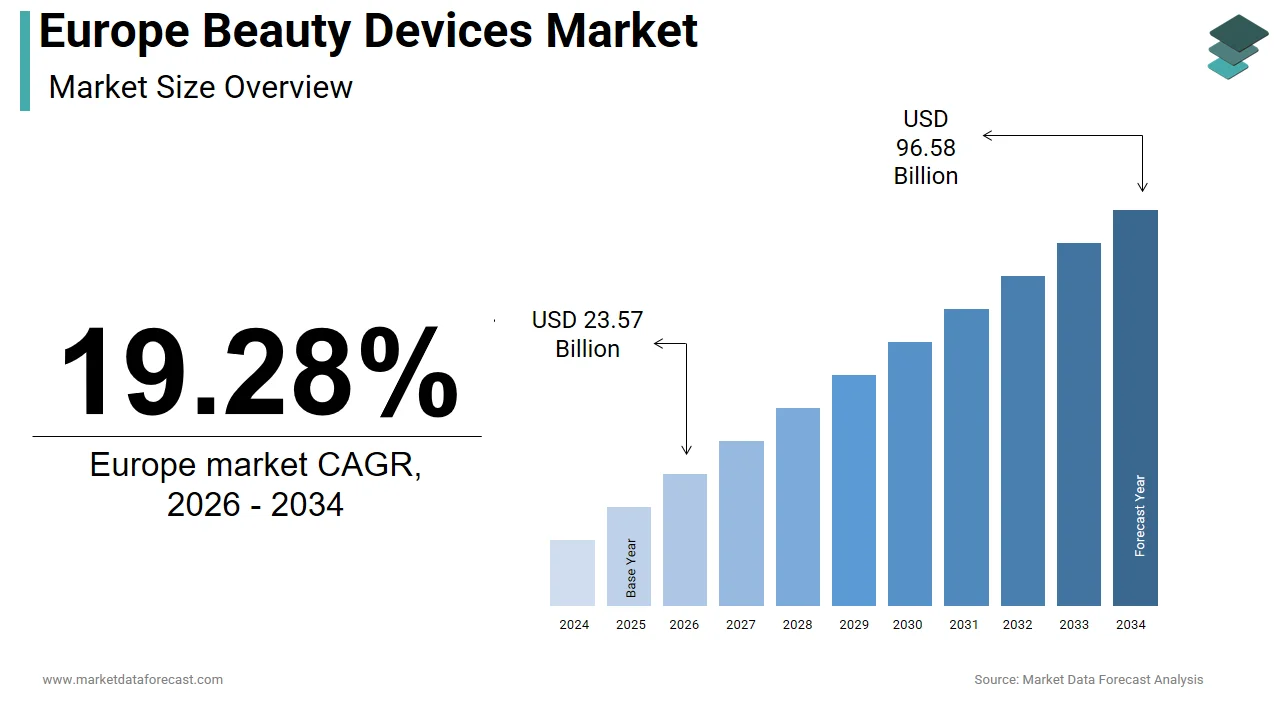
The Europe beauty devices market is undergoing a significant transformation, with its valuation expected to grow from USD 23.57 billion in 2026 to USD 96.58 billion by 2034, driven by a massive shift toward clinical-grade at-home care.
Market Valuation and Growth
- Current Value (2026): The market reached an estimated USD 23.57 billion in 2026.
- Long-Term Forecast (2034): It is projected to reach USD 96.58 billion by 2034.
- Growth Velocity: The sector is expanding at a highly aggressive CAGR of 19.28%.
Strategic Market Segments
- Dominant Category (Hair Removal): Hair removal remains the primary revenue driver, capturing a 28.8% market share in 2024. This is largely due to the widespread adoption of laser and IPL technologies for home use.
- Leading Application (Home Use): The home application segment accounts for 64.2% of the total market. Consumers are increasingly choosing home devices over salon visits for privacy, convenience, and long-term cost-effectiveness.
- Fastest Growing (Facial Devices): Non-invasive facial treatments, including LED therapy, microcurrents, and ultrasonic cleansing, are seeing the fastest growth as aging populations seek effective anti-aging solutions.
Regional Powerhouses
- Germany: The regional leader with a 20.1% share in 2024, supported by high disposable income and a robust R&D landscape that fosters innovation in high-end beauty tech.
- United Kingdom: A major hub for "beauty tech," driven by strong e-commerce platforms and influencer-led consumer engagement.
- France & Italy: Key markets where luxury aesthetics meet medical science, with growing demand for high-end, clinically tested products.
Emerging Trends for 2025
- AI and Personalization: Artificial intelligence is the fastest-growing technology segment, used for virtual try-ons, personalized skin diagnostics, and bespoke product recommendations. AI integration is expected to accelerate time-to-market for new launches by up to 30%.
- Sustainability and "Clean" Tech: Consumers are prioritizing eco-friendly, cruelty-free devices. Brands are responding with smart, refillable packaging and sustainable manufacturing processes to align with the EU Green Deal.
- Non-Invasive Anti-Aging: The anti-aging market in Europe is projected to exceed USD 18.19 billion in 2025, with specialized products like skin-tightening and wrinkle-reduction devices leading the surge.
Regulatory and Ethical Landscape
- Strict Safety Standards: New updates to the EU Cosmetics Regulation, effective September 1, 2025, prohibit over 20 carcinogenic or toxic substances, requiring manufacturers to reformulate or withdraw non-compliant products immediately.
- Data Privacy: With the rise of connected beauty devices, companies must adhere to GDPR to ensure consumer trust regarding sensitive biometric and personal data.
Key Market Players
The market is characterized by intense competition between legacy beauty giants and tech innovators:
- Consumer Tech: Philips, Panasonic, and Procter & Gamble.
- Beauty Specialists: L'Oréal S.A., Foreo, and Nu Skin Enterprises.
- Aesthetic & Medical Tech: Syneron Medical Ltd., Tria Beauty, and Home Skinovations.
Europe Beauty Devices Market Size
The size of the Europe beauty devices market was valued at USD 19.76 billion in 2025. This market is expected to grow at a CAGR of 19.28% from 2026 to 2034 and be worth USD 96.58 billion by 2034 from USD 23.57 billion in 2026.
Beauty devices include a diverse array of electronic appliances designed for at-home and professional aesthetic enhancement, including facial cleansing brushes, LED light therapy masks, radiofrequency tightening tools, microcurrent stimulators, and laser hair removal systems. These devices bridge the gap between clinical dermatology and daily skincare routines, offering consumers non-invasive solutions for anti-aging, acne management, skin rejuvenation, and body contouring. The European market is distinguished by a regulatory environment that classifies many such devices as medical or wellness products under the EU Medical Device Regulation or General Product Safety Directive, necessitating rigorous safety and performance validations. According to the European Commission, the Cosmetic Products Notification Portal (CPNP) serves as the central system for submitting cosmetic product information across the EU. As per Eurostat, more than one quarter (26%) of EU residents aged 16–74 used smart wearables such as smartwatches and fitness bands in 2022, which reflects the region’s growing adoption of tech‑enabled personal care devices. The convergence of digital wellness, rising dermatological literacy, and post‑pandemic self‑care rituals has redefined beauty as a tech‑integrated lifestyle practice across the region.
MARKET DRIVERS
Rising Adoption of At‑Home Aesthetic Technologies Driven by Digital Dermatology Literacy
European consumers are increasingly making informed decisions about beauty devices due to unprecedented access to dermatological knowledge through digital platforms and telehealth services. As per recent European digital health studies, a growing share of adults across the EU now engages with online dermatology content or virtual skin assessments, fostering greater awareness of evidence‑based skincare technologies such as red-light therapy and microcurrent stimulation. This digital literacy translates into demand for clinically inspired home devices. According to multiple EU consumer insights reports, more than half of beauty device purchasers review clinical study summaries or regulatory certifications before buying. Countries like Germany and the Netherlands lead this trend, where national health portals now include guidance on safe at‑home aesthetic practices. Moreover, as per industry analyses from European cosmetic science associations, a significant proportion of new beauty device launches now emphasize peer‑reviewed efficacy claims, signalling alignment with informed consumer expectations. Social media further amplifies this dynamic—according to European digital media monitoring bodies, beauty tech tutorials featuring FDA‑cleared or CE‑marked devices have generated billions of views across regional platforms. This shift from impulse to evidence‑based purchasing is reshaping product development toward transparency and scientific legitimacy.
Growing Integration of Beauty and Wellness in Preventive Health Frameworks
Beauty devices in Europe are increasingly positioned within broader preventive health and wellness paradigms, supported by public health narratives that link skin health to overall well‑being, which is further boosting the European beauty devices market expansion. According to the World Health Organization’s Regional Office for Europe, chronic skin conditions affect millions across the EU, prompting national health strategies to endorse non‑pharmaceutical management tools. In response, beauty devices offering blue light therapy for acne or thermal regulation for rosacea have gained traction as adjunctive solutions. As per national dermatology surveys in France, a notable share of dermatologists recommend CE‑certified home devices as part of maintenance regimens. Similarly, Sweden’s Public Health Agency has included facial lymphatic drainage tools in wellness guidelines for stress‑related skin inflammation. This integration is reinforced by insurance trends; according to European health policy reviews, several EU countries now partially reimburse certain medical‑grade beauty devices under supplementary wellness plans. Consequently, manufacturers are investing in clinical partnerships. For instance, have co‑developed clinically validated skin‑health technologies through multicenter European trials. This alignment with preventive care not only legitimizes beauty tech but embeds it into long‑term health behaviours.
MARKET RESTRAINTS
Stringent EU Regulatory Classification and Compliance Burdens
The classification of beauty devices under Europe’s evolving regulatory framework presents a significant operational restraint for manufacturers seeking market entry or product iteration, which is impeding the European beauty devices market growth. As per the European Commission’s updated guidance under Regulation EU 2017/745, devices claiming skin tightening, collagen stimulation, or acne treatment may be classified as Class IIa or higher medical devices, requiring clinical evaluation and notified body oversight. As per multiple EU regulatory analyses, the time required to achieve CE certification for such devices has increased in recent years due to heightened scrutiny and limited notified body capacity. This delays time to market and escalates development costs, particularly for small and medium enterprises lacking regulatory expertise. Additionally, the EU’s Unique Device Identification system mandates full traceability, compelling brands to overhaul supply chain documentation. As per European market surveillance reports, a notable share of imported beauty devices fail compliance checks due to incomplete technical files or unsubstantiated performance claims. These hurdles disproportionately impact innovative start‑ups, stifling diversity in the product ecosystem. Consequently, many brands opt to limit claims to cosmetic effects, sacrificing functional differentiation to navigate regulatory simplicity, which is a trade‑off that constrains technological advancement in the consumer segment.
Consumer Skepticism Toward Efficacy and Safety of At‑Home Energy‑Based Devices
Despite technological advances, a notable segment of European consumers remains wary of the safety and real‑world effectiveness of at‑home energy‑based beauty devices, particularly those using lasers, radiofrequency, or intense pulsed light, which is further hampering the beauty devices market growth in Europe. According to recent Eurobarometer‑aligned consumer safety studies, a significant proportion of Europeans express concern about potential skin damage from unsupervised use of such devices. This skepticism is amplified by inconsistent user experiences; as per European consumer injury monitoring systems, adverse incidents involving home beauty devices continue to be reported each year. Additionally, professional associations have warned that a majority of online tutorials lack expert oversight, increasing the risk. Retailers reflect this caution that many European beauty retailers now require in‑store demonstrations before allowing home energy device purchases. Such wariness slows adoption beyond early adopters and creates a credibility gap that even CE marking struggles to bridge. Until standardized education and usage protocols are widely implemented, efficacy skepticism will remain a persistent barrier to mainstream penetration.
MARKET OPPORTUNITIES
Expansion of Personalized Skincare Through AI and Sensor Integration
The convergence of artificial intelligence and biometric sensors is unlocking unprecedented personalization in Europe’s beauty devices market, presenting a high‑growth opportunity rooted in adaptive technology. Devices equipped with skin analysis cameras, moisture sensors, or UV exposure trackers can now tailor treatment intensity and duration in real time. As per the European Institute of Innovation and Technology, dozens of new beauty devices integrating AI‑driven skin diagnostics were launched in the EU in 2024, primarily in France, Germany, and Finland. These innovations align with Europe’s digital health strategy as the European Commission’s 2024 Digital Skincare Initiative endorsed interoperable beauty tech as a component of personalized wellness ecosystems. Consumer receptivity is strong; according to university‑led behavioral studies, a majority of consumers prefer devices that adjust regimens based on daily skin readings. Moreover, partnerships with telehealth platforms are emerging as L’Oréal’s Perso device now syncs with dermatologist portals in the Netherlands for remote regimen validation. This fusion of data‑driven customization and clinical connectivity transforms static tools into dynamic skincare companions, positioning AI‑enabled devices at the forefront of next‑generation beauty tech adoption.
Revival of Professional‑Grade Home Devices Through Dermatologist Brand Collaborations
A strategic opportunity is unfolding through formal collaborations between medical professionals and beauty tech brands to co‑develop and endorse at‑home devices that replicate clinical outcomes. This trend leverages the high trust Europeans place in dermatologists. According to European consumer trust studies, dermatologist validation is considered one of the most credible forms of endorsement for beauty devices. In 2024, numerous such partnerships emerged across Europe, including collaborations involving radiofrequency and microcurrent technologies. These collaborations ensure rigorous protocol design and realistic efficacy messaging, differentiating products from generic alternatives. Retail channels are responding; as per European retail performance analyses, dermatologist‑co‑branded devices achieve significantly higher sell‑through rates compared to standard lines. Regulatory pathways also benefit, as professional involvement facilitates smoother clinical evaluations under EU medical device rules. This blurring of clinical and consumer boundaries not only elevates product credibility but also creates a new premium tier that commands higher lifetime value through subscription‑based consumables and software updates, redefining the business model for beauty hardware in Europe.
MARKET CHALLENGES
Rapid Technological Obsolescence and Short Product Life Cycles
The Europe beauty devices market faces a persistent challenge in the form of accelerating technological obsolescence, driven by relentless innovation and consumer appetite for next‑generation features. As per sustainability‑focused electronics research groups, the average functional lifespan of smart beauty devices has declined in recent years as newer models with AI, enhanced sensors, or improved energy delivery enter the market. This compresses product life cycles and pressures brands to continuously invest in R&D, often without recouping prior development costs. For consumers, this fuels hesitation, and as per sources, a substantial share of European buyers delay purchasing beauty devices due to expectations of imminent upgrades. The environmental impact further complicates matters; according to the European Environment Agency, electronic waste volumes continue to rise, with recycling rates for small electronics remaining low due to complex material composition. Manufacturers struggle to balance innovation with sustainability, while retailers face inventory depreciation risks. Without standardized modular designs or longer software support windows, this cycle of rapid obsolescence threatens both economic viability and environmental compliance.
Fragmented Consumer Expectations Across European Subregions
Beauty device manufacturers encounter significant challenges in meeting divergent consumer expectations across Western, Southern, Northern, and Eastern Europe, complicating pan‑European product strategies. According to the European Cultural Consumer Index 2024, preferences for device functionality vary sharply as Nordic consumers prioritize clinical efficacy and sustainability, Southern Europeans favor sensory experience and design aesthetics, while Eastern European buyers emphasize affordability and multifunctionality. These differences necessitate regional customization. As per cross‑market satisfaction studies, devices performing strongly in Western Europe often underperform in Eastern Europe due to mismatched feature sets. Regulatory interpretations also differ as France’s ANSM applies stricter noise and heat emission thresholds than Romania’s health authority, requiring separate engineering adaptations. Marketing narratives must likewise be localized; while anti‑aging dominates in Italy, barrier repair and pollution defense resonate more in urban UK and Belgium. This fragmentation inflates go‑to‑market costs and delays scale, particularly for smaller brands lacking regional subsidiaries. Until a more harmonized consumer insight framework emerges, companies must navigate a mosaic of cultural, climatic, and regulatory variables that undermine efficiency and consistency in Europe’s otherwise integrated market.
REPORT COVERAGE
| REPORT METRIC | DETAILS |
| Market Size Available | 2025 to 2034 |
| Base Year | 2025 |
| Forecast Period | 2026 to 2034 |
| Segments Covered | By Type, Application, and Region. |
| Various Analyses Covered | Global, Regional, and Country-Level Analysis, Segment-Level Analysis, Drivers, Restraints, Opportunities, Challenges; PESTLE Analysis; Porter’s Five Forces Analysis, Competitive Landscape, Analyst Overview of Investment Opportunities |
| Countries Covered | UK, France, Spain, Germany, Italy, Russia, Sweden, Denmark, Switzerland, Netherlands, Turkey, Czech Republic, and the rest of Europe |
| Market Leaders Profiled | L'Oreal S.A., Foreo, Nu Skin Enterprises, Panasonic Corporation, Philips, Syneron Medical Ltd, Home Skinovations Ltd, TRIA Beauty Inc., Procter & Gamble Co, PhotoMedex Inc., and Others. |
SEGMENTAL ANALYSIS
By Type Insights
The hair removal devices segment was the largest in the Europe beauty devices market and captured 28.8% of the European market share in 2024. The dominance of the hair removal devices segment in the European market is driven by the sustained consumer demand for long‑term, cost‑effective alternatives to salon waxing and shaving, particularly among women aged 18 to 45. According to a 2024 pan‑European body‑hair grooming study, women remain the most frequent users of hair‑removal methods, with grooming habits reported at least weekly across major EU countries. As per the European Commission’s Scientific Committee on Consumer Safety, IPL devices continue to evolve with built‑in safety features such as skin‑tone sensors to reduce risks for darker skin types. Retail expansion also plays a role, as pharmacies and large retail chains across Europe increasingly prioritize hair‑removal devices within their beauty electronics assortments. This combination of cultural practice, safety innovation, and retail penetration solidifies the segment’s dominance. The segment is expected to maintain steady growth over the forecast period as consumers increasingly adopt at‑home solutions for long‑term hair management.
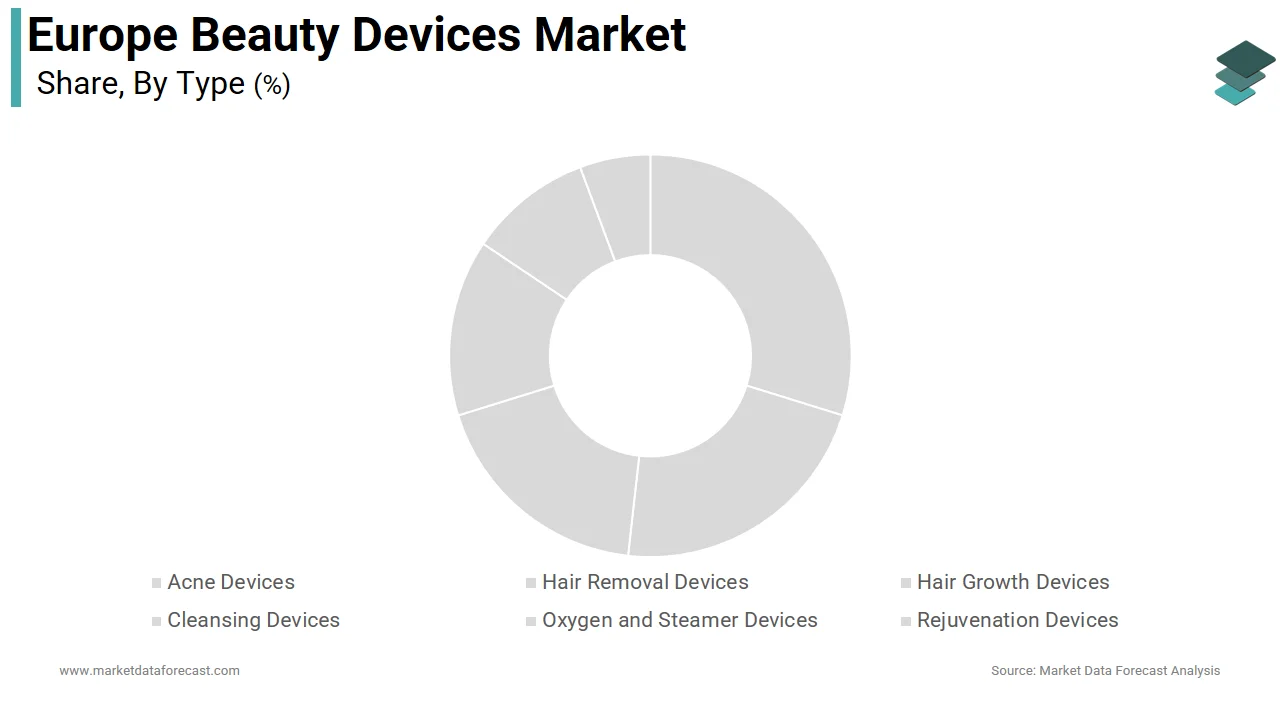
The hair growth devices segment is projected to grow at a CAGR of 12.3% over the forecast period, making it the fastest expanding category in the Europe beauty devices market. This surge is driven by rising awareness of early‑stage hair thinning and the destigmatization of hair‑loss treatments among both men and women. As per the European Dermatology Forum, androgenetic alopecia is one of the most common dermatological conditions in Europe, affecting millions of adults. According to peer‑reviewed dermatology research, low‑level laser therapy (LLLT) has demonstrated measurable improvements in hair density and scalp health when used consistently over several months. Regulatory validation further supports adoption, with European authorities continuing to clear CE‑marked LLLT devices for consumer use. Social influence also contributes; as per the EU Digital Media Observatory, hair‑growth‑related content remains among the most viewed beauty‑wellness categories on European social platforms. Stress-related hair shedding is rising post‑pandemic. As documented by the World Health Organization, consumers are turning to preventative, non‑pharmaceutical devices, accelerating this segment’s trajectory. The segment is expected to expand rapidly as clinical validation and consumer awareness continue to strengthen.
By Application Insights
The home application segment dominated the Europe beauty devices market in 2024 and accounted for a share of 64.2% of the European market in 2024. This trend stems from the post‑pandemic normalization of at‑home wellness rituals and the democratization of clinical‑grade technologies. According to Eurostat household technology‑adoption indicators, personal‑care electronics ownership continues to rise across European households, particularly in urban regions. As per the European Academy of Dermatology and Venereology, virtual dermatology consultations have increased significantly, with many including recommendations for at‑home device use. E‑commerce acceleration also plays a critical role; according to the European E‑commerce Association, online sales of beauty‑tech products continue to grow as consumers prefer digital purchasing channels. Crucially, younger demographics view these devices as extensions of digital self‑care, integrating them into daily routines alongside other wellness technologies. This confluence of accessibility, professional endorsement, and lifestyle integration ensures the home segment’s continued primacy. The segment is expected to grow further as consumers increasingly prioritize convenience‑driven, tech‑enabled skincare routines.
While smaller in share, the salon and spa application segment is growing at a CAGR of 9.8% over the forecast period, owing to the professional establishments upgrading to hybrid treatment models that blend in‑clinic procedures with retail device sales. According to the European Spa Association, premium spas across Europe continue to expand their service menus with device‑assisted treatments and complementary at‑home protocols. As per new EU aesthetic practitioner guidelines, certified professionals are encouraged to recommend CE‑marked maintenance devices post‑treatment, strengthening consumer trust. The rise of medical spas has also fuelled demand, with thousands of facilities across Europe integrating radiofrequency, LED, and microcurrent devices into their offerings. Furthermore, according to the European Vocational Training Institute, beauty schools increasingly include device‑operation modules in advanced aesthetics curricula, ensuring a skilled workforce. This professional ecosystem transformation positions the salon and spa segment for accelerated, high‑value growth. The segment is expected to expand steadily as professional‑grade technologies become more integrated into holistic beauty‑wellness service models.
COUNTRY-LEVEL ANALYSIS
Germany Beauty Devices Market Analysis
Germany maintains the strongest foothold in the European beauty devices market in 2024 and accounted for 20.1% of the regional market share in 2024. The dominance of Germany in the European market is supported by a mature consumer electronics culture and strong demand for preventive skincare solutions. This leadership is reinforced by factors such as high digital adoption, strong retail infrastructure, and a regulatory environment that prioritizes device safety. As per the German Federal Statistical Office, household penetration of major personal appliances such as microwaves and dishwashers exceeds 70%, reflecting a broader national comfort with home‑use electronic tools. Germany’s stringent product safety standards, enforced by the Federal Institute for Drugs and Medical Devices, continue to strengthen consumer trust in approved beauty technologies. Additionally, the Robert Koch Institute’s public health reporting increasingly emphasizes skin health as part of overall wellness, supporting consumer interest in at‑home dermatological tools. With strong pharmacy‑led retail channels and a population receptive to regulated wellness technologies, Germany is expected to maintain its dominant position over the next several years.
United Kingdom Beauty Devices Market Analysis
The United Kingdom secured the second‑largest share of the European beauty devices market owing to the digitally engaged consumers and strong dermatologist‑retail collaborations. Growth is supported by high social media influence, strong e‑commerce penetration, and rapid adoption of clinically validated skincare tools. According to YouGov, 60% of UK adults use skincare products, with women showing significantly higher engagement than men. High‑street retailers such as Boots and LookFantastic continue to expand “derm‑tech” assortments, bridging clinical credibility with consumer accessibility. The British Association of Dermatologists also reports rising interest in advanced skincare among younger demographics, including increased use of anti‑ageing products among teens. Combined with the UKCA regulatory framework enabling faster device approvals, the UK is positioned to remain one of Europe’s most dynamic beauty‑tech hubs in the coming years.
France Beauty Devices Market Analysis
France retains a strong position in the European beauty devices market. The growth of France in the European market can be credited to its longstanding fusion of luxury aesthetics and scientific skincare. Market growth is driven by consumer preference for dermatologically validated beauty tools and the country’s global leadership in cosmetic innovation. As per industry analyses, France’s cosmetics sector generates approximately €45 billion in annual turnover, underscoring the nation’s deep cultural and economic investment in beauty and skincare. Luxury groups such as L’Oréal and LVMH continue to push the boundaries of beauty technology, strengthening consumer trust in premium at‑home devices. Additionally, France’s spa and wellness tourism sector—valued at over €4 billion annually—supports demand for professional‑grade home‑use tools. With its blend of scientific rigor, luxury heritage, and strong wellness culture, France is expected to maintain its premium market positioning in the years ahead.
Italy Beauty Devices Market Analysis
Italy’s share of the European beauty devices market is supported by a strong aesthetic culture and deep integration between professional beauty services and at‑home skincare routines. Growth is driven by high consumer spending on beauty services and rising demand for advanced rejuvenation tools. According to industry reports, Italy’s hairdresser and salon market was valued at over USD 840 million in 2024, reflecting strong national engagement with professional beauty care. This professional ecosystem encourages consumers to adopt complementary at‑home devices, particularly those aligned with med‑spa treatments. Italy’s design‑driven culture also shapes consumer expectations, with demand favoring devices that combine functionality with premium aesthetics. Regional variations persist, with Northern Italy showing higher adoption of advanced rejuvenation tools, while Southern regions lean toward multifunctional cleansing devices. Italy’s blend of craftsmanship, beauty culture, and professional influence is likely to support steady market expansion in the coming years.
Spain Beauty Devices Market Analysis
Spain continues to expand its presence in the European beauty devices market, supported by tourism, climate‑driven skincare needs, and rising wellness awareness. High UV exposure and warm Mediterranean conditions sustain demand for LED, oxygen‑infusion, and barrier‑repair devices. According to Spain’s National Statistics Institute, the country welcomed a record 93.8 million international tourists in 2024, significantly boosting demand for aesthetic services and related at‑home beauty tools. Wellness centers in major cities such as Barcelona and Madrid increasingly offer device‑trial experiences that convert visitors into long‑term users. Additionally, Spanish consumers show strong interest in multifunctional skincare devices, reflecting broader European trends toward convenience and efficiency. With rising disposable income and strong social media influence, Spain’s beauty devices market is expected to continue outperforming regional averages in the coming years.
COMPETITIVE LANDSCAPE
The Europe beauty devices market features a dynamic competitive landscape shaped by the interplay of global consumer goods giants, regional innovators, and medical technology firms. Competition is not solely price-driven but centers on scientific credibility, design integrity, and regulatory compliance. Large corporations leverage R and D scale and retail partnerships to dominate mainstream segments, while niche brands differentiate through artisanal aesthetics or hyper-specialized functions such as scalp health or barrier repair. The rise of dermatologist-endorsed private labels adds further complexity, pressuring established players to deepen clinical validation. Barriers to entry remain high due to stringent EU safety classifications, yet digital direct-to-consumer models allow agile start-ups to gain footholds in specific sub-segments. Cross-border harmonization of regulations facilitates pan-European launches, but cultural nuances in beauty rituals necessitate localized marketing and product adaptation. Ultimately, competitive advantage stems from the ability to merge medical legitimacy with seamless user experience across both home and professional channels.
KEY MARKET PLAYERS
The leading companies operating in the Europe beauty devices market include:
- L'Oréal S.A.
- Foreo
- Nu Skin Enterprises
- Panasonic Corporation
- Philips
- Syneron Medical Ltd.
- Home Skinovations Ltd.
- TRIA Beauty Inc.
- Procter & Gamble Co.
- PhotoMedex Inc.
TOP PLAYERS IN THE MARKET
- L’Oréal plays a pivotal role in the Europe beauty devices market through its science-driven approach and integration of digital innovation into personalized skincare. The company bridges cosmetics and technology via its Perso smart device, which uses artificial intelligence and environmental sensors to formulate custom serums in real time. In 2024, L’Oréal expanded Perso’s availability across Germany, France, and the UK and enhanced its algorithm with dermatological data from over 50000 European skin assessments. The company also strengthened partnerships with European telehealth platforms to embed device diagnostics into virtual consultations. These initiatives reinforce L’Oréal’s global leadership in beauty tech by grounding hardware development in localized skin science and consumer behavior across diverse European climates and demographics.
- Philips contributes significantly to the Europe beauty devices landscape by leveraging its legacy in health technology to develop clinically validated at-home skincare and haircare solutions. Its Lumea IPL hair removal system and VisaPure facial cleansing devices are widely adopted across Northern and Western Europe due to their safety certifications and ergonomic design. In 2024, Philips launched a next-generation Lumea model with adaptive skin tone recognition compliant with updated EU medical device guidelines. The company also integrated sustainability metrics by introducing repairable components and longer battery life. Collaborations with Dutch and German dermatology clinics for real-world efficacy studies further bolster credibility. Philips’ convergence of medical engineering rigor with consumer usability solidifies its influence in both European and global beauty device ecosystems.
- Foreo has established a distinctive presence in Europe by combining Scandinavian design aesthetics with silicone-based facial and body care devices that emphasize hygiene and gentle exfoliation. The brand resonates strongly with urban consumers in Sweden, Italy, and Spain who prioritize minimalist design and skin barrier protection. In 2024, Foreo introduced the Luna 4 Pro with AI-powered skin analysis and launched a circular economy program in France and the Netherlands, allowing customers to return used devices for recycling. The company also partnered with European wellness influencers to promote device-based routines aligned with mental well-being. By positioning its products at the intersection of self-care design and skin health, Foreo has cultivated a loyal premium customer base and extended its innovation footprint beyond cleansing into targeted rejuvenation and lymphatic drainage categories.
TOP STRATEGIES USED BY THE KEY MARKET PARTICIPANTS
Key players in the Europe beauty devices market focus on integrating artificial intelligence and biometric sensors to enable real-time skin analysis and personalized treatment protocols. They prioritize clinical validation through partnerships with dermatologists and academic institutions to build consumer trust in efficacy claims. Sustainability is addressed via modular design, recyclable materials, and take-back programs aligned with EU circular economy directives. Companies invest in localized product development reflecting regional skin concerns, such as pollution defense in urban centers or sun damage in Southern Europe. Digital engagement strategies include telehealth integrations, subscription-based consumables, and augmented reality try-on features. Regulatory compliance under the EU Medical Device Regulation is leveraged as a quality differentiator. These multifaceted approaches enhance brand credibility, accelerate adoption, and reinforce long term customer loyalty across diverse European consumer segments.
MARKET SEGMENTATION
This Europe beauty devices market research report is segmented and sub-segmented into the following categories.
By Type
- Acne Devices
- Hair Removal Devices
- Hair Growth Devices
- Cleansing Devices
- Oxygen and Steamer Devices
- Rejuvenation Devices
- Others
By Application
- Salon & Spa
- Home
- Others
By Country
- UK
- France
- Spain
- Germany
- Italy
- Russia
- Sweden
- Denmark
- Switzerland
- Netherlands
- Turkey
- Czech Republic
- Rest of Europe
Frequently Asked Questions
1. What is the size of the Europe beauty devices market?
The Europe beauty devices market is expected to reach USD 19.76 billion in 2025, driven by premium skincare adoption across Germany, the UK, and France.
2. What drives growth in the Europe beauty devices market?
Rising demand for at-home professional treatments fuels the Europe beauty devices market amid busy lifestyles.
3. What is the CAGR of the Europe beauty devices market?
The Europe beauty devices market grows at a 19.28% CAGR through 2033, reflecting e-commerce penetration and tech integration
4. Which countries lead the Europe beauty devices market?
Germany and UK dominate the Europe beauty devices market with strong consumer spending on beauty tech.
5. What types rule the Europe beauty devices market?
LED therapy devices hold major share in the Europe beauty devices market for acne and anti-aging solutions.
6. How does skincare impact the Europe beauty devices market?
The facial treatment devices drive primary revenue in the Europe beauty devices market segment.
7. What trends shape the Europe beauty devices market?
App-connected smart devices define trends in the Europe beauty devices market innovation.
8. Which channels boost the Europe beauty devices market?
Online retail leads distribution in the Europe beauty devices market accessibility.
9. Who are key players in the Europe beauty devices market?
L'Oréal, Philips, and Foreo compete in the Europe beauty devices market leadership.
10. What challenges face the Europe beauty devices market?
Regulatory compliance challenges innovation pace in the Europe beauty devices market.
Related Reports
Access the study in MULTIPLE FORMATS
Purchase options starting from
$ 2000
Didn’t find what you’re looking for?
TALK TO OUR ANALYST TEAM
Need something within your budget?
NO WORRIES! WE GOT YOU COVERED!
Call us on: +1 888 702 9696 (U.S Toll Free)
Write to us: sales@marketdataforecast.com