Europe Bellows Market Size, Share, Trends, and Growth Analysis Report, Segmented by Material, Product, Application, End User, and Country – Industry Forecast From 2026 to 2034
Market Size, 2025
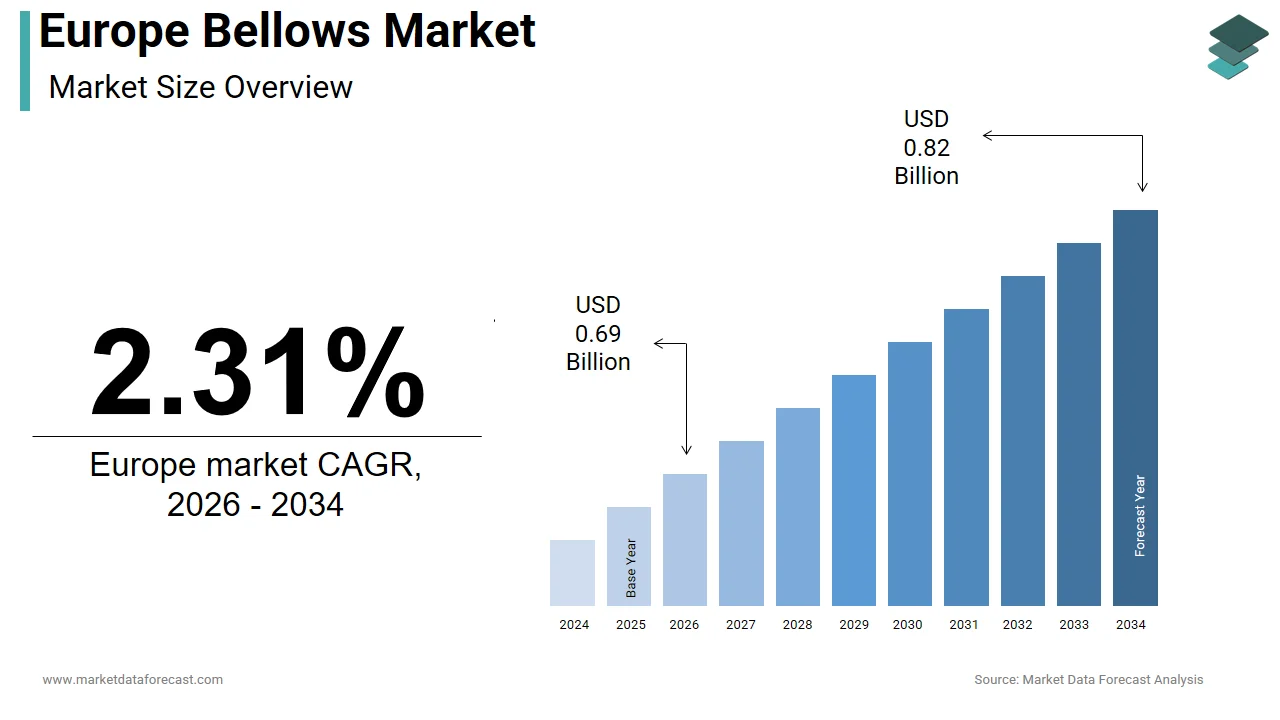
$0.67 BnMarket Estimate, 2026
$0.69 BnMarket Forecast, 2034
$0.82 BnCAGR, 2026–2034
2.31%Europe Bellows Market Report Summary
The Europe bellows market was valued at USD 0.67 billion in 2025, is anticipated to reach USD 0.69 billion in 2026, and is projected to reach USD 0.82 billion by 2034, growing at a CAGR of 2.31% from 2026 to 2034. Market growth is driven by increasing demand for flexible sealing and vibration absorption solutions across industrial machinery, automotive, aerospace, and energy sectors. Bellows are widely used to compensate for thermal expansion, isolate mechanical vibrations, and maintain pressure integrity in piping systems and precision equipment. Expanding infrastructure development, modernization of industrial facilities, and rising investments in energy and power generation projects are further supporting steady market expansion across Europe.
Key Market Trends
- Rising demand for high-performance metal bellows in automotive and aerospace applications.
- Increasing adoption of corrosion-resistant and temperature-tolerant materials.
- Growing use of bellows as compensating and expansion elements in industrial piping systems.
- Expansion of renewable energy and power generation projects requires flexible sealing solutions.
- Continuous improvements in manufacturing precision and durability standards.
Segmental Insights
- Based on material, the stainless steel segment dominated the Europe bellows market in 2025 by accounting for 58.1% market share, driven by its superior corrosion resistance, strength, and durability in high-pressure and high-temperature environments.
- Based on product, the mechanically formed bellows segment was the largest in 2025, capturing 52.9% share, supported by cost efficiency, structural strength, and widespread industrial applications.
- Based on application, the compensating element segment held the majority share of 45.2% in 2025, driven by growing demand for thermal expansion compensation and vibration control in industrial machinery and piping systems.
Regional Insights
The European market is witnessing steady demand across major economies, supported by industrial production growth, infrastructure upgrades, and strong engineering capabilities.
- Germany plays a leading role due to its advanced manufacturing sector, strong automotive industry, and high adoption of precision engineering components.
- France maintains a significant presence supported by aerospace, energy, and industrial equipment demand.
- The United Kingdom continues to contribute steadily, driven by infrastructure modernization and industrial maintenance activities.
Competitive Landscape
The European market is characterized by the presence of established industrial component manufacturers and specialized engineering firms with strong technical expertise. Market players are focusing on product customization, material innovation, and precision manufacturing to meet diverse industry requirements. Strategic partnerships, expansion of production capacities, and investments in advanced forming technologies are shaping competitive dynamics across the region.
Prominent companies operating in the Europe bellows market include WITZENMANN, BOA Group, Senior Flexonics, Shuguang Group, MIRAPRO, Flexider, Hyspan Precision Products, Inc., Technoflex, Penflex, AEROSUN Corporation, KSM Co., Ltd., Duraflex, and Weldmac Manufacturing Co.
Europe Bellows Market Size
The size of the Europe bellows market was worth USD 0.67 billion in 2025. The regional market is anticipated to grow at a CAGR of 2.31% from 2026 to 2034 and be worth USD 0.82 billion by 2034 from USD 0.69 billion in 2026.
Bellows are engineered, flexible components designed to absorb axial, lateral, and angular movements in piping and mechanical systems while maintaining pressure integrity and preventing leakage. In Europe, these components, fabricated from stainless steel, nickel alloys, or elastomers, are integral to high precision applications across power generation, chemical processing, aerospace, automotive exhaust systems, and emerging clean energy infrastructure. The market is distinguished not by volume but by technical sophistication, adherence to stringent safety norms, and integration within advanced industrial ecosystems. As reported by Eurostat (2025–2026 releases), the EU's industrial production in 2025 showed mixed, largely stagnant dynamics, with manufacturing output for the year 2025 only increasing by an average of roughly 1.5% compared to 2024, following a contraction. Machinery and equipment sectors, while facing headwinds, maintained moderate production levels in specialized areas, requiring high-precision components like bellows. The European Commission emphasizes that the EU manufacturing sector employs approximately 30 million people, with Germany, Italy, France, and Poland functioning as the core engine of the region's mechanical engineering, collectively generating nearly three-quarters of the EU's total manufacturing value-added. Germany alone contributes over 35% of the mechanical engineering output, fostering a robust industrial landscape for bellows deployment. This environment prioritizes durability, certification compliance (such as PED 2014/68/EU), and performance under extreme thermal or corrosive conditions, positioning bellows as silent yet indispensable enablers of industrial reliability.
MARKET DRIVERS
Stringent Emission Regulations Drive Adoption of High Performance Bellows in Automotive and Power Sectors
European environmental legislation has become a pivotal enabler for the integration of these components and the growth of the Europe bellows market. It is driving advancements in emission control and exhaust management systems. The European Union has formally adopted the Euro 7 regulation, which, in addition to strengthening rules on brake particle emissions and durability for all vehicles, mandates tighter exhaust emission standards for heavy-duty vehicles and stricter particle measurements for light-duty vehicles. Bellows, particularly metallic flex joints, are essential in accommodating thermal expansion and engine movement while maintaining system integrity under extreme conditions. Following a period of significant reductions, the average CO2 emissions of new light-duty vehicles in the European Union have shown a leveling trend in recent years, despite the continued adoption of cleaner technologies. Furthermore, Strict European Union environmental regulations, including the Industrial Emissions Directive, necessitate that industrial facilities, such as those with flue gas desulfurization or combined heat and power plants, upgrade to more durable, leak-proof components to reduce emissions. Germany contains a vast number of industrial sites regulated under the EU Industrial Emissions Directive, where the ongoing requirement for reduced emissions mandates regular, high-performance, and durable sealing solutions within their infrastructure. This regulatory environment ensures consistent demand for high grade expansion joints, especially those meeting EN 13445 and PED 2014 68 EU certifications, reinforcing the structural relevance of bellows beyond mere mechanical utility.
Expansion of Renewable Energy Infrastructure Fuels Demand for Specialized Bellows in Thermal and Hydrogen Applications
The region’s accelerated transition toward renewable and low-carbon energy sources has created new frontiers for bellows technology, particularly in concentrated solar power and green hydrogen production, which is further driving the European bellows market. The EU has elevated its binding 2030 renewable energy target to over 40 percent of gross final energy consumption to drive decarbonization across sectors, backed by investment in advanced technological solutions. In concentrated solar power plants, metallic bellows are integral to heat transfer loops that operate at temperatures exceeding 550 degrees Celsius, where thermal cycling demands components with exceptional fatigue resistance. While Spain remains the leader in European CSP, most new global CSP capacity is currently being deployed outside Europe. Simultaneously, the burgeoning hydrogen economy relies on bellows for cryogenic transfer lines and electrolyzer interconnects. Germany and the Netherlands are leading in the installation of new electrolysis capacity within Europe, driving rapid growth in green hydrogen production. These systems require ultra high purity and vibration tolerant connections, a niche where welded metal bellows excel. Additionally, the European Clean Hydrogen Alliance and other European initiatives report a significant pipeline of green hydrogen projects under development, driving the need for specialized infrastructure to manage high-pressure and cryogenic thermal stresses. This confluence of clean energy mandates and engineering complexity positions bellows as enablers of Europe’s industrial decarbonization architecture.
MARKET RESTRAINTS
Volatility in Raw Material Prices Constrains Profit Margins and Production Planning
Persistent pressure from fluctuating costs of specialty alloys, particularly nickel, chromium, and molybdenum, restrains the growth of the Europe bellows market. These materials constitute the core of high-performance metallic bellows. Stainless steel grades such as 321 and 347, along with nickel based superalloys like Inconel 625, are indispensable for applications demanding corrosion resistance and thermal stability. European stainless steel market stakeholders face rising cost pressures due to high import dependence and anticipation of new environmental regulations, according to market analysis. Nickel prices remained under pressure due to a persistent global supply surplus driven by high production volumes from Indonesia, despite growing demand from the electric vehicle battery sector. These cost escalations directly impact small and medium sized bellows manufacturers, who lack the hedging capabilities of larger conglomerates. A significant portion of German precision component manufacturers reported margin squeeze and production declines in 2025 due to sustained economic headwinds and challenging raw material costs, according to VDMA. Moreover, just in time manufacturing practices prevalent in Western Europe leave minimal inventory buffers, amplifying exposure to spot market volatility. Disruptions in the European machinery supply chain have caused extended lead times for specialized components, affecting project timelines in downstream industries. This financial unpredictability undermines investment in R&D and automation, slowing innovation despite strong end user demand.
Fragmented Regulatory Landscape Across EU Member States Complicates Standardization and Certification
Divergent national interpretations of safety directives create significant compliance burdens for bellows manufacturers across jurisdictions, which constrains the expansion of the Europe bellows market. This remains a constraint despite the European Union’s ongoing efforts to harmonize these regulations. The Pressure Equipment Directive 2014/68/EU establishes baseline requirements. However, individual countries retain authority over conformity assessment procedures, inspection protocols, and documentation formats. Many notified bodies apply supplementary testing standards beyond EN 13445 for critical expansion joints in specialized industrial applications. For instance, France’s ASN nuclear safety authority mandates additional seismic resilience validation for bellows in reactor coolant systems, whereas Germany’s TÜV requires third party fatigue life certification even for non critical industrial uses. This fragmentation increases administrative overhead. Cross-border bellows suppliers in Europe face significant time burdens managing redundant certification processes. Furthermore, post Brexit trade arrangements have introduced parallel UKCA marking requirements, forcing dual compliance for companies serving both EU and British markets. The European Commission acknowledges that regulatory asymmetry and non-harmonized requirements for certain components increase the total cost of industrial exports within the Single Market. Such barriers disproportionately affect specialized bellows producers with limited legal and technical resources, stifling market entry and scaling potential despite technological readiness.
MARKET OPPORTUNITIES
Integration of Digital Twin Technology Enables Predictive Maintenance and Custom Bellows Design
The convergence of industrial Internet of Things and simulation software provides significant opportunities for bellows manufacturers to shift from reactive replacement models to predictive lifecycle management, which is predicted to fuel the growth of the Europe bellows market. Digital twin frameworks, now increasingly adopted in European heavy industry, allow real time monitoring of bellows performance parameters such as strain, temperature gradients, and cycle counts. Industrial research indicates that the integration of digital twin technology allows manufacturing facilities to significantly decrease unexpected operational interruptions by predicting maintenance needs in complex infrastructure. This data rich environment enables bellows suppliers to co design components with end users using finite element analysis calibrated to actual operating conditions. Major energy refineries in Europe have adopted digital twin platforms to monitor critical infrastructure, which has successfully lengthened the periods between required maintenance interventions. Similarly, leading energy technology companies employ virtual modeling in their specialized facilities to test how components withstand thermal stress, reducing the reliance on physical prototypes during the design phase. Regional industry groups for small and medium enterprises observe a growing intention among engineering firms to adopt digital modeling, which is driving interest in mechanical components equipped with integrated sensing technologies. This trend not only enhances asset reliability but also opens revenue streams through subscription based health monitoring services, redefining the value proposition of traditional component suppliers in an era of industrial digitization.
Rising Investment in Circular Economy Initiatives Spurs Demand for Recyclable and Modular Bellows Systems
The region’s commitment to circularity, anchored in the EU Circular Economy Action Plan, is reshaping product design philosophies across industrial supply chains, including bellows manufacturing, which offers fresh prospects for the expansion of the Europe bellows market. The plan mandates that all new industrial products placed on the EU market by 2030 must meet ecodesign requirements emphasizing durability, reparability, and recyclability. Bellows, traditionally viewed as consumable wear parts, are now being engineered as modular, disassemblable units to facilitate repair and material recovery. Data from European authorities indicates that industrial waste remains a critical challenge, requiring enhanced component-level interventions and improved recycling rates to reduce dependency on virgin materials. Leading manufacturers such as Witzenmann in Germany have launched bellows platforms with standardized flange interfaces and replaceable convolutions, reducing whole unit scrappage. Additionally, the use of mono material alloys, such as single grade stainless steel without brazed joints, enhances end of life recyclability. Studies confirm that Europe maintains one of the highest global rates for stainless steel recovery, making alloy selection a strategic lever for sustainability compliance. Meanwhile, the Nordic Council of Ministers reports that public sectors in Scandinavia are increasingly adopting circular procurement clauses, which are significantly influencing supplier specifications. This regulatory and cultural shift incentivizes innovation in reversible joining techniques and take back schemes, positioning bellows not as disposable elements but as integral nodes in closed loop industrial ecosystems.
MARKET CHALLENGES
Skilled Labor Shortage Impedes Precision Manufacturing and Quality Assurance Capabilities
A deepening deficit in qualified personnel trained in precision welding, non-destructive testing, and metallurgical analysis challenges the growth of the Europe bellows market. These skills are essential for producing high-integrity expansion joints. European manufacturing sectors are experiencing persistent labor shortages, particularly in specialized technical roles across major industrial economies. Bellows fabrication, particularly for aerospace or nuclear applications, demands certified welders capable of executing orbital TIG processes on thin walled tubes under inert atmospheres, a competency increasingly scarce among younger workers. Industrial demand for specialized welding skills involving advanced materials often outpaces the integration of these specific modules into standard vocational training curricula. This shortage directly impacts production throughput and quality consistency. Manual welding variability remains a primary factor in the failure or rejection of critical pressure-retaining components during quality assurance inspections. Moreover, the aging workforce exacerbates the problem. The German engineering sector is facing a significant demographic shift as a substantial portion of its skilled technical workforce nears retirement. Failure to adopt automation and reskilling initiatives will lead to compromised reliability and delivery delays as demand for mission-critical bellows grows in emerging sectors like carbon capture and fusion energy.
Geopolitical Instability Disrupts Supply Chains for Critical Alloy Inputs and Finished Components
Ongoing geopolitical tensions, particularly in Eastern Europe and key maritime trade corridors, have introduced systemic vulnerabilities into the region’s bellows supply chain, which in turn holds back the expansion of the Europe bellows market. These disruptions are significantly affecting both raw material access and component logistics. Russia has historically been a significant supplier of nickel and metallurgical materials to the European Union, making supply chains vulnerable to conflict-related disruptions. The tightening of EU sanctions on Russian metals has compelled European industries to seek alternative, more complex logistics, resulting in higher costs and increased delivery times for raw materials. Simultaneously, Red Sea shipping disruptions, impacting a substantial portion of global trade, have caused significant delays for European manufacturers relying on Asian component suppliers. Concurrently, global shipping volatility continues to cause shortages of critical materials like high-performance alloys, leading to production challenges for European industries. Furthermore, export controls on dual use technologies have complicated the import of precision forming machinery from certain Asian suppliers, hindering domestic capacity expansion. These external shocks expose the fragility of lean inventory models and underscore the strategic risk of overreliance on non EU sources for both materials and manufacturing. The bellows sector faces ongoing cost inflation and supply delays until regional resilience measures, like the EU’s Critical Raw Materials Act, are fully implemented.
REPORT COVERAGE
| REPORT METRIC | DETAILS |
| Market Size Available | 2025 to 2034 |
| Base Year | 2025 |
| Forecast Period | 2026 to 2034 |
| Segments Covered | By Material, Product, Application, End User, and Country. |
| Various Analyses Covered | Global, Regional, and Country-Level Analysis, Segment-Level Analysis, Drivers, Restraints, Opportunities, Challenges; PESTLE Analysis; Porter’s Five Forces Analysis, Competitive Landscape, Analyst Overview of Investment Opportunities |
| Countries Covered | UK, France, Spain, Germany, Italy, Russia, Sweden, Denmark, Switzerland, Netherlands, Turkey, Czech Republic, and the Rest of Europe. |
| Market Leaders Profiled | WITZENMANN, BOA Group, Senior Flexonics, Shuguang Group, MIRAPRO, Flexider, Hyspan Precision Products, Inc., Technoflex, Penflex, AEROSUN Corporation, KSM Co., Ltd., Duraflex, Weldmac Manufacturing Co., and Others. |
SEGMENTAL ANALYSIS
By Material Insights
The stainless steel segment dominated the Europe bellows market and accounted for a 58.1% share in 2025. The dominance of the segment is driven by the material’s optimal balance of corrosion resistance, mechanical strength, weldability, and cost efficiency across a wide range of industrial applications. European consumption of austenitic stainless steel remains driven by demand for corrosion-resistant materials in specialized chemical, energy, and automotive applications. The widespread adoption is further reinforced by compliance with EN 10217 and PED 2014/68/EU standards, which mandate materials capable of withstanding pressures above 0.5 bar in safety critical environments. The German manufacturing sector continues to rely heavily on these materials for producing flexible piping components and expansion joints, according to industry trade bodies. Additionally, recycling infrastructure supports sustainability goals. Furthermore, European non-ferrous metal associations report that the material maintains a high recovery rate after its initial lifecycle, supporting regional circular economy mandates. These combined attributes make stainless steel the default choice for both standard and custom bellows, particularly where lifecycle cost and regulatory conformity outweigh the need for extreme temperature performance.
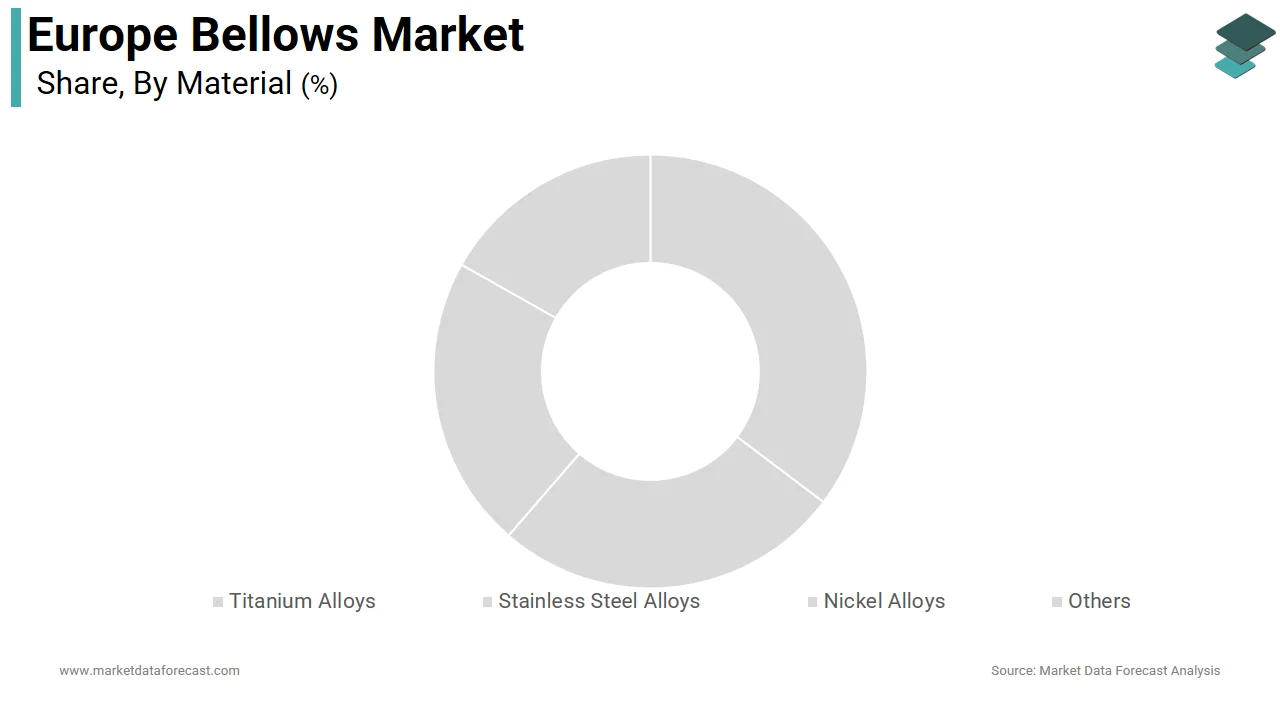
The nickel alloys segment is on the rise and is expected to be the fastest growing segment in the market by witnessing a CAGR of 6.8% between 2026 and 2034 due to rising demand in high temperature and highly corrosive environments, particularly in green hydrogen electrolyzers, concentrated solar power plants, and offshore oil and gas subsea systems. Inconel 625 and Hastelloy C276 bellows are increasingly specified for their ability to endure chloride induced stress corrosion cracking and thermal cycling beyond 700 degrees Celsius. Europe continues to expand its operational electrolysis capacity, with Proton Exchange Membrane technology increasingly utilized for its ability to integrate with variable renewable energy sources. Similarly, concentrated solar power remains a key component of the Iberian Peninsula’s long-term energy strategy, with a focus on utilizing thermal energy storage systems to provide dispatchable carbon-free power. The European hydrogen project pipeline is expanding significantly, driving a shift toward advanced materials that can withstand the corrosive and high-pressure environments of next-generation electrolysis. Furthermore, as offshore energy operations move into harsher and deeper environments, operators are increasingly relying on corrosion-resistant alloys for subsea infrastructure to prevent degradation from salt-water exposure. These mission critical applications justify the premium cost and fuel sustained investment in advanced metallurgical processing across Germany and France.
By Product Insights
In 2025, the mechanically formed bellows segment was the largest segment in the Europe bellows market and captured a 52.9% share. The prominence of the segment is attributed to its cost effectiveness, scalability, and suitability for high volume industrial applications. Produced through hydraulic or mechanical forming of seamless tubes, these bellows are widely used in HVAC systems, automotive exhausts, and general industrial piping where moderate cycle life and pressure ratings suffice. According to recent VDMA reports, despite a challenging economic environment and a downturn in European mechanical engineering exports, mechanical forming remains a standard, high-volume production method for bellows in European industrial machinery. Their dominance is further supported by mature manufacturing infrastructure. European bellows producers rely heavily on mechanical forming for a wide range of diameters, serving as a primary production technique for standard industrial applications. Small and medium enterprises constitute the vast majority of all EU businesses, and they often favor cost-effective manufacturing solutions with shorter lead times for standard components. Additionally, standardized designs compliant with EJMA and EN 13445 reduce engineering overhead, making them ideal for replacement markets. Mechanically formed bellows are generally more cost-effective to produce than edge-welded counterparts, making them a popular choice for fluid handling and motion compensation in European industrial applications.
The electroformed bellows segment is expected to exhibit a noteworthy CAGR of 8.2% during the forecast period owing to its unmatched precision, ultra thin walls, and leak tight integrity, making them indispensable in semiconductor manufacturing, aerospace actuators, and medical instrumentation. Fabricated through electrodeposition of nickel or nickel cobalt alloys onto mandrels, electroformed bellows achieve wall thicknesses as low as 25 micrometers with micron level dimensional accuracy. Supported by the EU Chips Act, European semiconductor equipment spending is accelerating, with major investments in fabrication plants within Germany, France, and Italy. These fabs require thousands of electroformed bellows for vacuum isolation valves and wafer handling robots, where outgassing and particle generation must be near zero. Similarly, the Ariane 6 launch vehicle utilizes electroformed bellows to improve fatigue resistance in its thrust vector control systems. Research indicates that electroformed components demonstrate improved cycle life compared to traditionally formed components for high-frequency applications. As Europe targets increased global semiconductor production by 2030, demand for specialized micro-engineered components is rising, supported by high-tech manufacturers within the region.
By Application Insights
The compensating element application segment held the majority share of 45.2% of the Europe bellows market in 2025. The supremacy of the segment is credited to its critical role in managing thermal expansion, vibration, and misalignment in large scale industrial infrastructure. Power plants, district heating networks, and petrochemical facilities rely on axial and lateral expansion joints to prevent pipe stress failure during operational cycling. Driven by a significant rebound in nuclear and hydro output along with high renewable generation, the European Union's electricity sector has seen a sharp decline in fossil fuel reliance, though conventional, high-temperature power plants continue to utilize specialized expansion joints for thermal management. Germany is expanding its extensive district heating network to support a climate-neutral building sector, relying on specialized piping components to manage, absorb, and compensate for thermal expansion and seasonal ground shifts. Similarly, amidst a challenging economic environment, the European chemical industry continues to operate a vast network of manufacturing plants, relying on engineered piping solutions to ensure safety and integrity when handling volatile, corrosive, or high-pressure fluids. The reliability imperative in these continuous process environments favors robust, certified bellows with proven fatigue life, reinforcing steady demand. Moreover, aging infrastructure renewal programs, such as France’s 2025 Thermal Network Modernization Plan, mandate replacement of legacy expansion joints with modern, leak proof designs, further anchoring this segment’s dominance.
The high precision measuring instrument application segment is predicted to witness the highest CAGR of 7.5% over the forecast period. The swift expansion of the segment is fueled by the integration of bellows into pressure transducers, barometric sensors, and analytical instruments used in aerospace, life sciences, and environmental monitoring. In these devices, bellows function as sensitive diaphragms that convert minute pressure differentials into measurable displacement with exceptional repeatability. European metrology research initiatives focus on advancing high-accuracy measurement technologies for industrial applications. Meanwhile, Sentinel-6 satellites utilize high-precision radar and microwave instruments designed to operate with extreme environmental stability for monitoring ocean surface levels. Additionally, European regulatory guidelines for monoclonal antibody production emphasize the use of advanced monitoring systems in bioreactors to ensure product quality and sterility. In precision metrology, metallic bellows are recognized for their linear response to applied loads, often providing more stable performance than elastomeric components in high-accuracy applications. Europe is intensifying investment in quantum sensing and climate monitoring. Consequently, demand for these ultra-reliable micro bellows will sustain double-digit growth.
COUNTRY-LEVEL ANALYSIS
Germany Bellows Market Analysis
Germany was the top performer in the European bellows market and accounted for a 24.7% share in 2025. The dominance of the German market is driven by its position as the premier manufacturing hub for automotive, aerospace, and precision engineering industries. The market relies on an intense demand for high-performance metal and elastomeric bellows used in critical applications such as fuel injection systems, turbochargers, and semiconductor fabrication equipment. According to data from the German Federal Statistical Office and industry observers, the automotive sector's direct share of gross value-added has fallen below 5%, with production having fallen significantly from previous peaks. Despite this, the sector remains a vital industrial base, with ongoing demand for durable expansion joints to support transition-related restructuring. A key driving factor is the aggressive transition toward electric mobility, which necessitates specialized bellows for battery thermal management systems and hydrogen fuel cell stacks, prompting significant reinvestment in advanced sealing technologies. As per reports from the German Chemical Industry Association (VCI), the country's chemical-pharmaceutical industry generates over 200 billion euros in annual revenue (approx. €221 billion in 2024), despite a significant, ongoing downturn in production. The industry remains a critical user of corrosion-resistant bellows for safe fluid handling in complex processing plants. Furthermore, the strong presence of leading global manufacturers headquartered in Germany fosters a competitive ecosystem that accelerates the adoption of custom-engineered solutions for niche industrial applications. The government's push for Industry 4.0 and supply chain resilience further amplifies demand for locally produced, high-precision components. This synergy of industrial depth, technological leadership, and strategic investment cements Germany's dominant position in the market.
France Bellows Market Analysis
France was the next prominent country in the European market and captured a 18.2% share in 2025. The expansion of the French market is propelled by a thriving aerospace sector, an extensive nuclear energy program, and a sophisticated chemical processing industry. The region shows a strategic reliance on high-integrity bellows for safety-critical applications in aircraft engines, nuclear reactors, and pharmaceutical manufacturing, where failure is not an option. According to statistics from the French Ministry of Economy, the aerospace and defense sector generates over sixty billion euros in annual revenue, driving consistent demand for lightweight yet robust metal bellows used in hydraulic systems and jet propulsion units. A further driving factor is the nation's heavy dependence on nuclear power, which supplies nearly seventy percent of its electricity, necessitating specialized expansion joints capable of operating under high radiation and temperature conditions in reactor cooling loops. As per sources, the strict environmental regulations governing chemical plants have led to increased replacement of aging seals with advanced bellows designed to prevent leaks and ensure compliance. The government's France 2030 investment plan specifically targets industrial sovereignty, providing subsidies for the development of next-generation sealing solutions for hydrogen energy and biotechnology. Furthermore, the expansion of high-speed rail networks requires reliable bellows for gangway connections and suspension systems. This combination of sectoral strength, policy support, and safety mandates sustains France's significant role in the market.
Italy Bellows Market Analysis
Italy holds a significant share of the Europe bellows market due to its strong heritage in luxury automotive manufacturing, packaging machinery, and white goods production. The market status is influenced by the prevalence of small and medium-sized enterprises that are increasingly adopting automated production lines, leading to a surge in demand for flexible coupling bellows and protective covers for robotic arms. According to data from the Italian National Institute of Statistics, the machinery and equipment sector is a cornerstone of the economy, exporting billions of euros worth of packaging and food processing machines that integrate precise bellows components for sanitary and efficient operation. A key driving factor is the renowned Italian automotive design industry, which produces high-performance vehicles requiring specialized bellows for exhaust systems and suspension components that offer both durability and aesthetic appeal. As per research, the push toward digitalization and smart manufacturing has incentivized factories to upgrade legacy equipment with modern servo motors and linear actuators that rely on high-quality bellows for protection against dust and debris. The booming tourism sector also drives demand for bellows in hospitality infrastructure, including elevators and climate control systems. Furthermore, the strategic location of Italy as a gateway to Mediterranean trade routes boosts activity in port logistics and shipbuilding, necessitating heavy-duty marine bellows. This fusion of traditional craftsmanship with modern automation positions Italy as a vital growth market.
United Kingdom Bellows Market Analysis
The United Kingdom expanded steadily in the European market owing to its advanced offshore energy sector, a resilient pharmaceutical industry, and a strong focus on research and development in materials science. Regional trends show the urgent need for corrosion-resistant and high-pressure bellows to support operations in the harsh environments of the North Sea and to maintain strict hygiene standards in drug manufacturing. The UK life sciences sector is experiencing a significant upward trend in turnover and employment, strengthening the demand for single-use manufacturing components that ensure high-level contamination control, such as sterile bellows, in biopharmaceutical production. Also, this country is boosted by the government's commitment to becoming a global leader in offshore wind energy, which requires specialized expansion joints for subsea cables and turbine foundations to withstand dynamic ocean forces. As per sources, the ongoing maintenance and decommissioning of oil and gas infrastructure creates a steady market for replacement bellows designed for extreme conditions. The presence of world-class universities and research centers fosters innovation in novel alloys and composite materials for bellows, enabling applications in aerospace and defense. Furthermore, the strict health and safety regulations mandate the use of certified components, pushing vendors to offer higher specification products. This blend of energy transition, scientific excellence, and regulatory rigor characterizes the UK market trajectory.
Spain Bellows Market Analysis
Spain is anticipated to grow in the European market over the forecast period due to its role as a major automotive producer, a leader in renewable energy installation, and a hub for water management infrastructure. This region currently has significant investments in large-scale solar and wind projects, which drive demand for bellows used in hydraulic tracking systems and power transmission units. According to data from the Spanish State Agency for Tax Administration, the automotive industry remains a pillar of the economy, producing over two million vehicles annually, many of which require extensive use of bellows for exhaust gas recirculation and air intake systems. In addition, this region is supported by the severe water scarcity issues in certain regions, which have prompted massive government spending on desalination plants and irrigation networks, all of which rely on flexible bellows to accommodate pipe movement and vibration in pumping stations. As per reports from the Spanish Renewable Energy Association, the country aims to generate seventy four percent of its electricity from renewables by 2030, fueling a boom in the construction of solar thermal plants that utilize molten salt and require high temperature bellows. The tourism industry also contributes through the continuous modernization of hotel and resort facilities, increasing demand for HVAC systems. Furthermore, the agricultural export boom requires specialized belts for food processing and packaging machinery. This alignment of industrial activity, environmental challenges, and energy goals drives steady expansion in the Spanish market.
COMPETITIVE LANDSCAPE
The Europe bellows market features a competitive landscape shaped by a blend of established engineering firms and niche specialists. Competition is not primarily price driven but centers on technical expertise, material science capabilities, and compliance with stringent safety and environmental regulations. Leading companies differentiate themselves through proprietary manufacturing processes, such as orbital welding or electroforming, and by offering integrated solutions that include design validation and lifecycle monitoring. The market sees moderate consolidation as larger players acquire smaller innovators to access advanced technologies like smart sensing or cryogenic compatibility. Regional strengths vary. Germany excels in industrial and automotive bellows, France leads in nuclear and aerospace applications, and the UK focuses on high precision instrumentation. New entrants face high barriers due to certification requirements, capital intensity, and long qualification cycles with OEMs. However, opportunities exist in emerging sectors like green hydrogen and semiconductor manufacturing, where performance demands exceed traditional standards. Overall, competition fosters continuous innovation while reinforcing Europe’s position as a hub for high-reliability fluid and motion control components.
KEY MARKET PLAYERS
The leading companies operating in the Europe bellows market include:
- WITZENMANN
- BOA Group
- Senior Flexonics
- Shuguang Group
- MIRAPRO
- Flexider
- Hyspan Precision Products, Inc.
- Technoflex
- Penflex
- AEROSUN Corporation
- KSM Co., Ltd.
- Duraflex
- Weldmac Manufacturing Co
TOP PLAYERS IN THE MARKET
- Witzenmann GmbH is a German engineering leader specializing in metallic expansion joints, bellows, and flexible piping systems. The company plays a pivotal role in the global bellows market by supplying high integrity components to aerospace, energy, and automotive sectors worldwide. In recent years, Witzenmann has intensified its focus on digitalization and sustainability, launching smart bellows embedded with sensor technology for real time structural health monitoring. Its R&D investments in cryogenic and high temperature alloys have reinforced its position as a solutions provider for next generation industrial applications beyond conventional markets.
- Senior Flexonics, a division of Senior plc headquartered in the United Kingdom, is a key contributor to the global bellows landscape through its advanced exhaust and thermal management systems. The company serves major automotive and aerospace OEMs across North America, Europe, and Asia. The facility integrates simulation and rapid prototyping capabilities to accelerate product validation. Additionally, the company has deepened partnerships with green hydrogen developers to adapt its metallic flex joints for electrolyzer interconnects, demonstrating strategic agility in emerging clean energy segments.
- AEROSUN Corporation, based in France, is a specialized manufacturer of precision bellows for nuclear, defense, and space applications. The company supplies mission critical expansion joints to the European Space Agency and EDF’s nuclear fleet, contributing significantly to Europe’s sovereign industrial capabilities. It also partnered with CEA, France’s atomic energy commission, to co develop radiation resistant bellows for next generation small modular reactors. These initiatives underscore its commitment to technological sovereignty and high reliability engineering in regulated environments.
TOP STRATEGIES USED BY THE KEY MARKET PARTICIPANTS
Key players in the Europe bellows market prioritize vertical integration to control material quality and reduce supply chain volatility. They invest heavily in research and development to create application-specific alloys and geometries that meet evolving regulatory standards. Strategic partnerships with end users in hydrogen, aerospace, and nuclear sectors enable co-engineered solutions and long-term contracts. Digital transformation through embedded sensors and predictive maintenance platforms enhances service differentiation. Companies also expand manufacturing footprints within Europe to comply with local content rules and shorten delivery cycles. Sustainability initiatives, including recyclable designs and circular business models, align with EU environmental directives. Certification harmonization across member states remains a focus to ease cross-border sales. Workforce upskilling addresses the shortage of precision welders and metallurgists. Export diversification mitigates geopolitical risks while maintaining core European operations. These strategies collectively reinforce resilience and innovation in a technically demanding market.
MARKET SEGMENTATION
This research report on the Europe bellows market has been segmented and sub-segmented into the following categories.
By Material
- Titanium Alloys
- Stainless Steel Alloys
- Nickel Alloys
- Others
By Product
- Edge-Welded Bellows
- Mechanically Formed Bellows
- Electroformed Bellows
- Others
By Application
- Corrosive Medium
- High Precision Measuring Instrument
- Sealing and Connecting Element
- Compensating Element
By End User
- Aerospace and Defense
- Automotive
- Power Generation
- Water Treatment
- Oil and Gas
- Semiconductor
- Others
By Country
- United Kingdom
- France
- Spain
- Germany
- Italy
- Russia
- Sweden
- Denmark
- Switzerland
- Netherlands
- Rest of Europe
Frequently Asked Questions
What is the Europe bellows market?
The Europe bellows market produces flexible seals preventing dust ingress in machinery. Germany leads manufacturing rubber and metal types for automotive applications.
How does the Europe bellows market operate?
The Europe bellows market operates through custom fabricators molding materials like NBR and stainless steel. Precision engineering meets industrial sealing requirements.
What materials dominate the Europe bellows market?
Rubber and metal dominate the Europe bellows market with silicone for high-heat uses. Material selection matches environmental exposure and pressure demands.
Which industries drive the Europe bellows market?
Automotive and manufacturing drive the Europe bellows market protecting pistons and joints. Machine tools rely on bellows for contamination-free operations.
What types exist in the Europe bellows market?
Types in the Europe bellows market include cylindrical, conical, and accordion designs. Square bellows suit non-round applications in specialized equipment.
How does regulation shape the Europe bellows market?
Regulation in the Europe bellows market enforces RoHS compliance and pressure standards. CE marking ensures safe industrial applications continent-wide.
What trends influence the Europe bellows market?
Trends in the Europe bellows market feature lightweight composites and 3D-printed prototypes. Custom designs adapt to automation and robotics needs.
How does automotive use the Europe bellows market?
Automotive leverages the Europe bellows market for CV joint boots and shock protection. Durable materials withstand vibration and weather exposure effectively.
What challenges face the Europe bellows market?
Challenges in the Europe bellows market include material degradation and custom sizing. Advanced polymers and simulation software address durability concerns.
How has manufacturing evolved in the Europe bellows market?
Manufacturing in the Europe bellows market shifted to injection molding and CNC fabrication. Precision tooling enables complex geometries for modern machinery.
Related Reports
Access the study in MULTIPLE FORMATS
Purchase options starting from
$ 2000
Didn’t find what you’re looking for?
TALK TO OUR ANALYST TEAM
Need something within your budget?
NO WORRIES! WE GOT YOU COVERED!
Call us on: +1 888 702 9696 (U.S Toll Free)
Write to us: sales@marketdataforecast.com