- Product Description Description
- Table of Contents TOC
- List of Table & Figure LOT
- Get Free Sample PDF Sample PDF
Market Size, 2025
$1.13 BnMarket Estimate, 2026
$1.21 BnMarket Forecast, 2034
$2.05 BnCAGR, 2026–2034
6.85%Europe Biobanks Market Summary
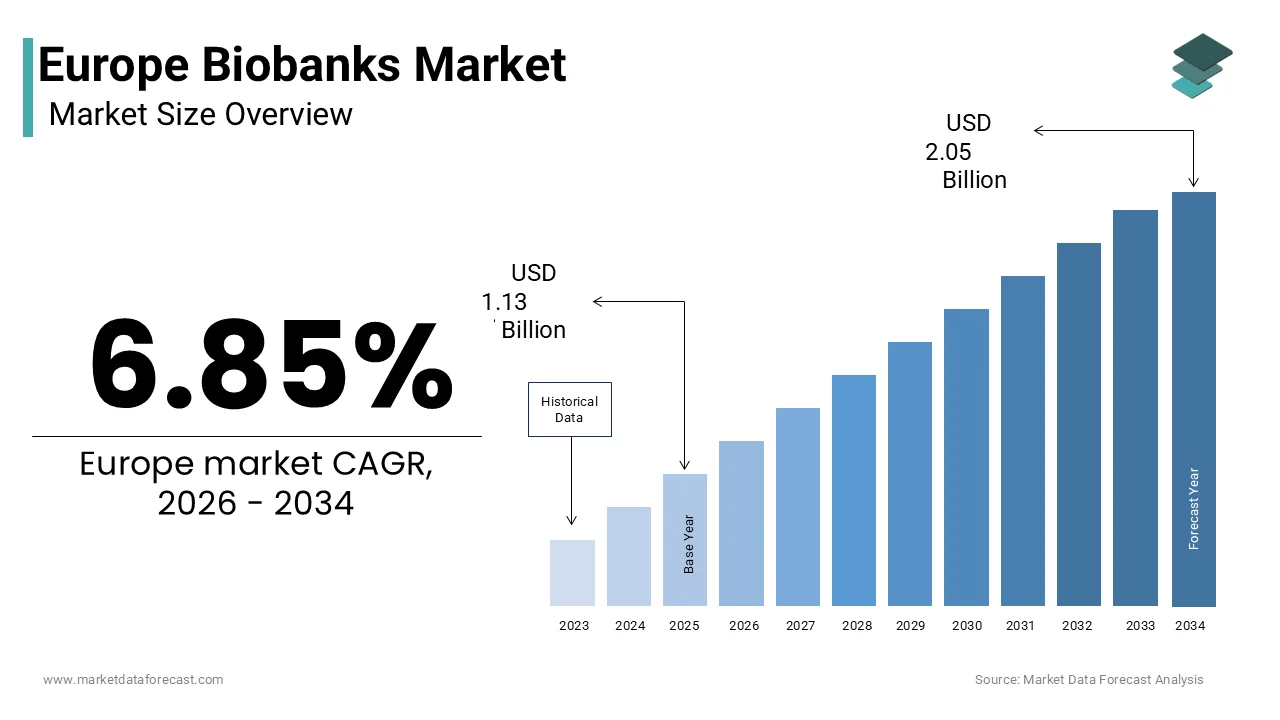
The Europe biobanks market reached USD 1.13 billion in 2025, increased to USD 1.21 billion in 2026, and is projected to grow at a CAGR of 6.85% from 2026 to 2034, reaching USD 2.05 billion by 2034, driven by large-scale genomics initiatives, precision medicine adoption, and the institutionalization of biobanks within European research infrastructures.
Market Snapshot
- 2025 Market Size: USD 1.13 billion
- 2026 Estimate: USD 1.21 billion
- 2034 Forecast: USD 2.05 billion
- CAGR (2026–2034): 6.85%
Quick Growth Drivers
- Expansion of EU and national genomics programs (1+ Million Genomes)
- Rising demand for precision medicine and biomarker discovery
- Integration of biobanks into Horizon Europe–funded research mandates
- Growth of oncology, rare disease, and neurodegenerative research
- Pan-European coordination through BBMRI-ERIC networks
Principal Restraints
- Fragmented ethical and consent frameworks across member states
- Complex cross-border data and sample governance under GDPR
- Chronic underfunding of long-term storage and operational costs
- Dependence on short-term project-based grants
High-Value Opportunities
- Digital and AI-ready biobanking platforms integrating multi-omics data
- Federated data models enabled by the European Health Data Space
- Public–private partnerships for biomarker and drug development
- Industry demand for high-quality, pre-consented biospecimens
Key Market Challenges
- Inconsistent pre-analytical handling and sample quality variability
- Limited ISO 20387 accreditation adoption across biobanks
- Public mistrust regarding data privacy and commercial access
- Underrepresentation of elderly, rural, and disadvantaged populations
Fastest-Growing Segments
- DNA & RNA Samples: 10.2% CAGR — genomics and multi-omics demand
- Clinical Trials Applications: 11.7% CAGR — biomarker-driven trials
- Equipment: 8.9% CAGR — smart freezers, automation, IoT monitoring
Regional Leadership & Dynamics
- United Kingdom (19.45%) — UK Biobank scale, broad consent, industry access
- Germany (16.8%) — strong accreditation, cancer and cardiovascular networks
- France — genomic medicine platforms integrated with clinical care
- Sweden — population-based biobanking linked to national registries
- Netherlands — highly interoperable, innovation-ready biobank networks
What Wins Commercially
- ISO 20387–compliant, highly traceable consumables and workflows
- AI-ready datasets combining biospecimens with longitudinal health data
- Automated, monitored storage infrastructure minimizing sample risk
- Transparent governance models enabling ethical industry collaboration
Top Strategic Ask for Executives
- Secure sustainable operational funding beyond project grants
- Harmonize consent and ethical frameworks for cross-border research
- Invest in digital, federated, AI-compatible biobank infrastructure
- Strengthen public engagement to improve trust and participation
Leading Players
Some of the companies that are playing a dominating role in the Europe biobanks market include:
- Thermo Fisher Scientific
- Hamilton Company
- Brooks Life Sciences
- Beckman Coulter
- Tecan Group
- Panasonic Biomedical
- BioLife Solutions
Europe Biobanks Market Size
The europe biobanks market reached USD 1.13 billion in 2025 and USD 1.21 billion in 2026, and is projected to grow at a CAGR of 6.85% from 2026 to 2034, reaching USD 2.05 billion by 2034.
Biobanks are organized repositories that collect, process, store, and distribute human biological samples, such as blood, tissue, DNA, and biofluids, together with associated clinical and demographic data for research purposes. These infrastructures serve as critical enablers of precision medicine, epidemiological studies, and biomarker discovery across oncology, neurodegenerative diseases, and rare disorders. According to sources, Europe is home to numerous operational biobanks connected by networks such as BBMRI ERIC, which brings together extensive collections across many nations. A significant volume of biospecimens is accessed annually through BBMRI ERIC to support a large number of research endeavors. Regulations like the EU's General Data Protection Regulation and the revised Clinical Trials Regulation contribute to Europe's position in responsible sample management. Biobanks are becoming key to Europe's linked research and healthcare systems, thanks to projects such as the Genomes project and the European Health Data Space, which help with sharing data across borders.
MARKET DRIVERS
Expansion of Large-Scale Genomic and Precision Medicine Initiatives
The proliferation of national and EU-funded precision medicine programs is a key accelerator of the European biobank growth. Standardization across the region is also driven by these programs. Projects such as the UK Biobank, France Médecine Génomique, and Germany’s National Decade Against Cancer rely on high-quality biospecimens linked to deep phenotypic data to identify genetic risk factors and therapeutic targets. The European Commission’s 1+ Million Genomes initiative has significantly accelerated the integration of biobanking and national genomic strategies across numerous participating European countries to advance personalized healthcare and research. A large majority of European countries have signed the 1+ Million Genomes declaration, working together through supporting projects to build a substantial, high-quality, and representative European genomic reference dataset for medical research and innovation. Swedish biobanks, including those within the SciLifeLab collaboration, actively contribute a large volume of samples to both national and international research consortia, significantly aiding the study of various complex diseases like Alzheimer's and cardiovascular disease. These initiatives demand rigorous sample quality, standardized metadata, and interoperable data systems, elevating the role of biobanks from passive storage to active research infrastructure. The convergence of genomics, AI, and longitudinal health records ensures sustained demand for ethically sourced, well-characterized biospecimens.
Integration into European Research Infrastructures and Funding Mandates
The institutionalization of biobanks within pan-European research infrastructures has institutionalized their role and secured long-term funding to ultimately contribute to the expansion of the European biobanks market. BBMRI-ERIC coordinates growing biobanking activities across a wide European network and facilitates access to an expanding number of biological samples. European Union research programs, such as Horizon Europe, are increasingly promoting the use of established biobanks and adherence to FAIR data management principles for biospecimens in funded health research. There is a growing trend of collaboration and partnership between funded oncology and immunology research projects and biobanks to enhance research quality and reproducibility. National governments across Europe are increasing their investment to upgrade and centralize national biobank networks, supporting critical research areas such as cancer and infectious diseases. This policy embedding transforms biobanks from optional collaborators into mandatory components of competitive research design, ensuring consistent demand, operational sustainability, and methodological harmonization across the continent.
MARKET RESTRAINTS
Fragmented Ethical and Legal Frameworks Across Member States
Significant disparities in national ethics and consent laws, despite EU-level regulations, create operational barriers for cross-border biobank collaboration and thereby restrain the growth of the European biobanks market. The General Data Protection Regulation provides a data protection baseline, but rules for obtaining informed consent, reusing samples, and allowing commercial access diverge substantially. Jurisdictional variations in European nations mean some countries, like Sweden,n operate within a legal framework that facilitates broad consent for future research under strict oversight, while Germany has recently implemented a national standard broad consent model to overcome a previously fragmented approach. National legal frameworks within Europe vary significantly regarding industry engagement; the UK allows commercial entities conditional access to resources under a specific governance structure, while Austrian regulations tend toward more restrictive access for commercial purposes, emphasizing non-commercial scientific and public interest research. These inconsistencies complicatmulti-countryry studies. Disparate national consent requirements create significant barriers to international research collaboration, with a substantial portion of the research community experiencing project delays or cancellations as a result. The absence of a single, unified European legal framework for biobanking requires institutions to navigate a complex array of differing national legal interpretations and regulations, which significantly increases the administrative effort and potential legal complexity for cross-border research. Jurisdictional differences in ethical standards will continue to hinder the complete integration of Europe's biobanking ecosystem.
Chronic Underfunding of Operational and Maintenance Costs
These organized repositories in the region face persistent financial instability due to reliance on short-term project grants that cover collection and analysis but rarely long-term storage and quality control, which in turn hinders the expansion of the European biobanks market. Many biobanks within Europe operate with limited and often short-term funding for essential activities, creating significant challenges for long-term operational sustainability, including the maintenance of critical infrastructure like freezers and data management systems. Instances of sample loss in biobanks, particularly in certain European regions, have been reported due to critical issues such as equipment malfunctions and power supply interruptions, highlighting the need for robust contingency plans. The overall cost of maintaining high-quality biospecimens over an extended period is substantial, encompassing not just storage but also ongoing tracking, quality assurance measures, and dedicated staffing, which often presents a significant financial challenge. Horizon Europe's support extends to developing infrastructure, but regular operational costs are infrequently covered. This gap forces biobanks to charge researchers high access fees or reduce collection scope, undermining sustainability and equity. The risk of degradation or closure hangs over even the most scientifically valuable collections when they lack dedicated operational funding.
MARKET OPPORTUNITIES
Emergence of Digital Biobanking and AI-Ready Data Ecosystems
The transformation of biobanks into digital, and AI-ready data hubs offers a major opportunity to enhance research value and interoperability, which is expected to drive the growth of the European biobanks market. Modern biobanks are moving beyond physical storage to curate rich, structured datasets that integrate genomic, imaging, electronic health record, and lifestyle data, formatted for machine learning applications. European Union regulations are moving toward creating a unified health data infrastructure that enables the secure, privacy-preserving reuse of health data for research and innovation. This framework mandates the use of common data formats and secure processing environments, allowing researchers to analyze vast datasets without physically transferring personal data, thereby balancing privacy with scientific discovery. Scientific research leverages comprehensive national health data ecosystems, such as those in the Nordic countries that link biospecimens with extensive health registries, to develop advanced machine learning models. This approach supports innovative research into predicting the future onset of various health conditions, potentially transforming preventive medicine. BBMRI ERIC’s “BIOSCAN” initiative is developing common data elements and ontologies to ensure AI compatibility across collections. Biobanks offering digitally enriched, algorithm-ready resources will secure premium partnerships and strategic relevance within Europe's data-driven health innovation landscape, driven by growing pharmaceutical demands for real-world, multimodal datasets for target validation.
Growth of Public-Private Partnerships for Biomarker and Drug Development
Strategic collaborations between academic biobanks and pharmaceutical or diagnostic companies are opening new funding and validation pathways for biospecimen collections. This is likely to fuel the expansion of the European biobanks market. European public-private partnerships in health research consistently fund numerous consortia that utilize banked biological samples to identify biomarkers and enhance clinical studies. Collaborative research efforts between academia and industry in Europe focus on developing advanced cancer models to identify new biomarkers and improve pre-clinical testing for immunotherapies. Similarly, Roche Diagnostics collaborates with French and German biobanks to access tissue microarrays for companion diagnostic validation. These partnerships provide biobanks with critical operational funding while ensuring industry alignment with clinical needs. European Union regulations facilitate controlled and secure access to extensive health data for commercial innovation through a new legislative framework, balancing research needs with strict privacy and ethical oversight. Trusted and transparent biobanks will be vital to the European drug development pipeline, particularly as the focus on precision oncology and rare disease therapeutics expands.
MARKET CHALLENGES
Inconsistent Sample Quality and Preanalytical Standardization
Variability in preanalytical handling exists, from collection and processing to storage, which limits the growth of the European biobanks market. This compromises the scientific validity of biospecimens across European biobanks. Factors such as ischemia time, centrifugation speed, and freeze-thaw cycles significantly alter molecular integrity, yet standardized protocols are not uniformly implemented. Differing pre-analytical procedures, such as tissue fixation delays, contribute significantly to variability in biospecimen quality, which can compromise research results across different biobanks. The routine documentation of essential pre-analytical information varies considerably among biobanks in different European regions, indicating a general need for greater harmonization of quality management practices. This inconsistency undermines reproducibility in multi-center studies and reduces confidence among industry users. Achieving formal accreditation for biobanking is voluntary, even with an established international quality management standard, as the substantial costs and resource allocation represent a considerable challenge for many institutions. The research potential of extensive collections remains hampered by hidden preanalytical noise unless common operating procedures and real-time monitoring tools are universally adopted.
Public Mistrust and Low Participation in Biobank Donation
Persistent public skepticism about data privacy and commercial use continues to constrain sample acquisition and negatively impacts the expansion of the European biobanks market. This skepticism also impacts the diversity found within European biobanks. Despite general public confidence in public healthcare systems, there is a significant reluctance among many EU citizens to consent to the donation of biospecimens for research if commercial entities might potentially access and use the data. In Germany and Austria, historical sensitivities surrounding the use of personal data, particularly genetic information, contribute to lower participation rates in population-based biobanks compared to other countries, with the "opt-in" model being a significant factor in these lower rates. Furthermore, biobanks often underrepresent elderly, rural, and socioeconomically disadvantaged groups, limiting the generalizability of findings. A challenge within the biobanking community is the inconsistent or absent systematic collection of data related to ethnicity and social determinants of health across many biobanks, which can hinder research into health inequalities. Failing to implement robust public engagement, maintain transparent operations, and employ inclusive recruitment strategies could lead to biobanks entrenching health disparities and presenting an incomplete picture of disease biology within Europe's varied populations.
REPORT COVERAGE
| REPORT METRIC | DETAILS |
| Market Size Available | 2025 to 2034 |
| Base Year | 2025 |
| Forecast Period | 2026 to 2034 |
| Segments Covered | By Product Type, Sample Type, Application, and Region. |
| Various Analyses Covered | Global, Regional, and Country-Level Analysis, Segment-Level Analysis, Drivers, Restraints, Opportunities, Challenges; PESTLE Analysis; Porter’s Five Forces Analysis, Competitive Landscape, Analyst Overview of Investment Opportunities |
| Countries Covered | UK, France, Spain, Germany, Italy, Russia, Sweden, Denmark, Switzerland, Netherlands, Turkey, Czech Republic, Rest of Europe |
| Market Leaders Profiled | Beckman Coulter, Tecan group, Taylor- Wharton, Panasonic biomedical, Teva Pharmaceuticals, Biolife Solutions, Custom biogenic systems, Princeton cryotech, Fluidx, Tissue solutions, Wildcat laboratory solutions, Micronik and Brooks life science systems. |
SEGMENTAL ANALYSIS
By Product Type Insights
The consumables segment was the largest in the European biobanks market by capturing a share of 63.3% in 2025. The prominence of the consumables segment is attributed to its recurrent usage in every phase of the biobanking workflow, including cryovials, freezer boxes, labeling systems, DNA/RNA stabilization tubes, and reagents for nucleic acid extraction. Unlike capital equipment, consumables require continuous replenishment, generating steady demand even in established biobanks. The implementation of updated regulations, such as the EU Medical Device Regulation and the ISO 20387 biobanking standard, has led to a notable increase in the need for highly traceable, certified consumables supported by comprehensive documentation. The UK Biobank has long established a very large participant base, and in recent years has focused heavily on generating and releasing extensive genomic and proteomic data from these existing participants for the global research community. Similarly, the German National Cohort uses standardized consumables across multiple collection sites to ensure preanalytical uniformity. The rise of multi-omics research further amplifies demand for high-integrity consumables that preserve molecular fidelity. With biobanks prioritizing sample quality over cost, premium consumables from certified vendors have become non-negotiable operational essentials.
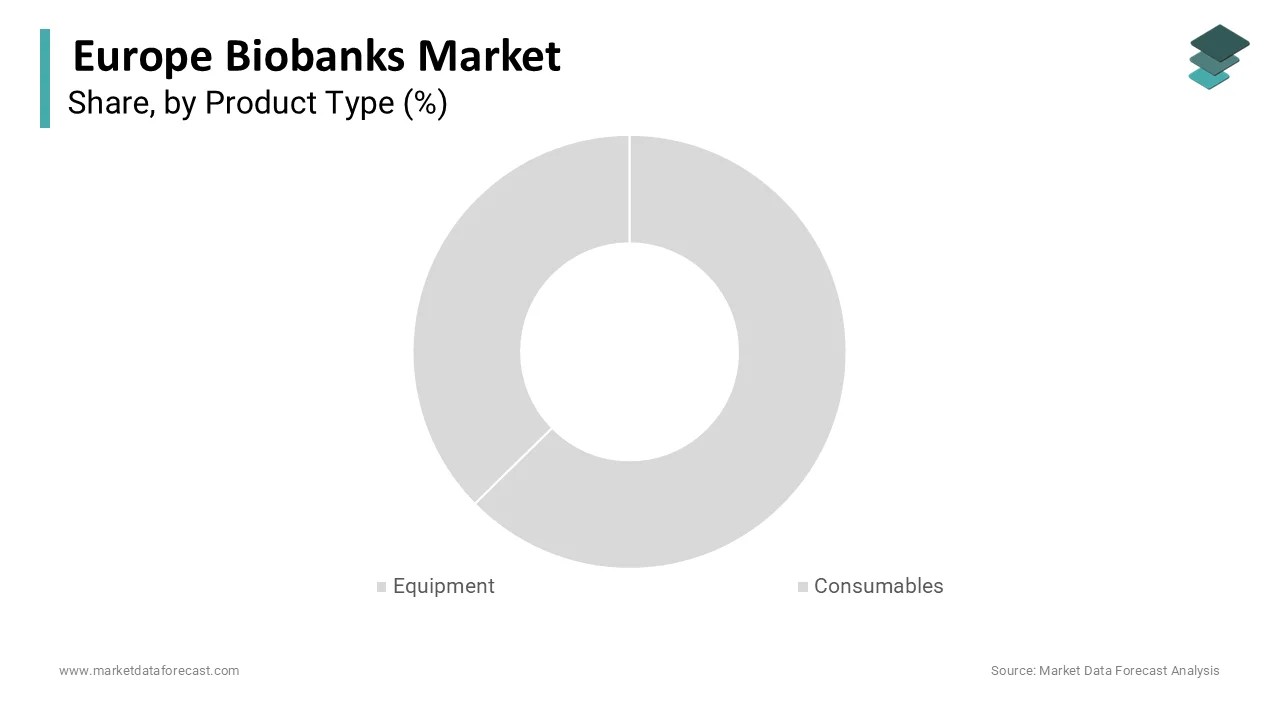
The equipment segment is predicted to witness the highest CAGR of 8.9% from 2025 to 2033 due to the modernization of legacy storage infrastructure and the adoption of smart, connected systems that enhance sample integrity and data integration. Ultra-low temperature freezers with remote monitoring and liquid nitrogen vapor phase storage systems are replacing mechanical freezers to minimize freeze-thaw risks. The Netherlands has demonstrated a recent commitment to enhancing its national biobank infrastructure by funding the integration of Internet of Things (IoT) technology into its freezers, allowing for real-time monitoring of critical conditions like temperature, door status, and power supply. Apart from these, the adoption of automated sample retrieval robots, such as those utilized in facilities like SciLifeLab in Sweden, represents a broader trend toward minimizing human error and substantially increasing processing capacity in laboratory environments. Horizon Europe’s infrastructure grants increasingly mandate digital readiness, compelling institutions to upgrade. The transformation of biobanks into AI-ready data centers is driving a higher demand for sophisticated storage infrastructure compared to the growth rate of basic consumables.
By Sample Type Insights
In 2024, the biofluids segment led the European biobanks market by accounting for a 58.7% share. The supremacy of the bio-fluids segment is credited to its minimally invasive collection, high biomarker richness, and compatibility with large-scale epidemiological and genomic studies. Population-based health initiatives, such as the UK Biobank, have assembled vast collections of biological samples and associated health data from a large number of participants to facilitate extensive research into the determinants and biomarkers of various chronic diseases. International collaborative efforts within the European Union, like the 1+ Million Genomes project, focus on harmonizing and enabling secure cross-border access to large volumes of existing genomic and health data for research, rather than centrally collecting new physical samples. There is a significant trend in the scientific community towards utilizing advanced analytical methods, including proteomic and metabolomic profiling, on biofluid samples within large-scale biobanks to discover novel disease biomarkers and inform precision medicine strategies. Their stability during transport and suitability for automated processing make bbiofluidsideal for multi-center trials. Furthermore, regulatory frameworks like the Clinical Trials Regulation ease ethical approval for blood draws compared to tissue biopsies. These logistical, scientific, and regulatory advantages ensure biofluids remain the cornerstone of European biobanking.
The DNA and RNA samples segment is estimated to register the fastest CAGR of 10.2% during the forecast period, owing to the continent’s strategic pivot toward genomic medicine and multi-omics integration. National programs such as Germany’s “GenomDE” and France's Médecine Génomique aim to sequence hundreds of thousands of whole genomes, demanding high-quality nucleic acid extraction and long-term storage. The European Health Data Space further incentivizes DNA/RNA biobanking by enabling federated genomic analysis across borders. Innovations in stabilization, such as room temperature DNA cards and RNA integrity-preserving reagents, have reduced cold chain dependency, expanding collection in remote areas. The rising prominence of polygenic risk scoring and RNA-based therapies is driving a surge in the need for high-purity nucleic acids across both scholarly and commercial research sectors.
By Application Insights
The research applications captured the majority share of the European biobanks market in 2025. Academic and public health institutions rely on biobanks to investigate disease mechanisms, identify biomarkers, and validate diagnostic targets across oncology, neurodegeneration, and infectious diseases. Large-scale projects like the European Prospective Investigation into Cancer and Nutrition use millions of biofluid samples to link lifestyle factors to disease outcomes. Horizon Europe mandates biobank use in health-related calls, ensuring sustained academic demand. Unlike clinical or therapeutic applications, research has fewer regulatory barriers, enabling broader sample access. Furthermore, open science policies encourage data and sample sharing, amplifying utility. This foundational role in knowledge generation ensures research remains the primary driver of biobank activity across Europe.
The clinical trials segment is anticipated to witness the fastest CAGR of 11.7% from 2025 to 2033. The rapid growth of the clinical trials segment is fueled by the increasing requirement for biomarker stratification and pharmacogenomic validation in oncology and rare disease trials. The EU Clinical Trials Regulation is increasing the need for high-quality, annotated biospecimens by requiring detailed plans for their collection and use in targeted therapy trials, promoting better data for precision medicine. Biobank-linked sample collection is becoming standard in European oncology trials, with a significant and growing proportion of new studies in the EU Clinical Trials Register integrating biobanks for sample access. Companies like AstraZeneca and Roche partner with national biobanks to access pre-consented samples for retrospective biomarker analysis, reducing trial timelines by several months. The European Innovation Council's Cancer Mission actively builds European capacity by funding numerous biobank networks to support innovative, adaptive trial designs, enhancing research agility and precision oncology. The widespread adoption of precision medicine is prompting biobanks to shift focus from static research archives to dynamic, trial-enabling infrastructures.
COUNTRY LEVEL ANALYSIS
United Kingdom Biobanks Market Analysis
The United Kingdom dominated the European biobanks market and accounted for a 19.45 share in 2025. The UK Biobank maintains a vast collection of biological samples linked with extensive health and genomic data from a substantial number of participants, creating a comprehensive resource for the global health research community. This rich resource is increasingly used by a large and growing international community of approved researchers, leading to a substantial volume of scientific discoveries and published research papers across many countries and institutions. The UK’s favorable ethics framework allows broad consent and controlled industry access, facilitating public-private partnerships. Despite Brexit, the UK remains deeply integrated into EU research through Horizon Europe association. Its combination of scale, data depth, and governance maturity makes it the benchmark for European biobanking.
Germany Biobanks Market Analysis
Germany followed closely in the European biobanks market by holding a 16.8% share in 2025. Under the coordination of the German Biobank Network (GBN), Germany has established a robust, centralized umbrella organization that links academic research sites across the country to facilitate the exchange of human biospecimens for biomedical research. The National Decade Against Cancer initiative continues to drive the integration of research findings into clinical practice, ensuring that cancer centers across the nation utilize standardized protocols to enhance the quality of patient care and scientific data. In addition, the German Accreditation Body (DAkkS) and national biobanking nodes prioritize international quality standards, specifically focusing on the voluntary accreditation of biobanks to ensure the high-level reliability of biological materials used in global scientific research. Furthermore, the German Center for Cardiovascular Research (DZHK) operates a major cross-site repository for liquid and tissue samples, centralizing these resources to provide researchers with high-quality, standardized materials for advancing cardiovascular therapies. Strong public funding, ethical clarity, and integration into national health research strategies position Germany as a high-integrity, high-output biobanking hub.
France Biobanks Market Analysis
France maintains a significant share of the European biobanks market due to its national genomic medicine program, which has established many molecular diagnostic platforms linked to regional biobanks holding millions of samples. The French government's initiative in genomic medicine aims to significantly increase the national capacity for large-scale genome sequencing. Reputable French cancer research institutions are actively collecting and processing substantial numbers of patient tumor samples to support various oncology research efforts. The French ethics review system is structured to streamline the approval process for biomedical research projects, with the goal of increasing efficiency. In addition, the French government has committed substantial financial resources to modernize its health research infrastructure, supporting biobanking and data sharing efforts that align with broader European Union objectives. France’s integration of biobanking into clinical care pathways makes it a leader in translational sample utilization.
Sweden Biobanks Market Analysis
Sweden grew steadily in the European biobanks market. The country excels in population-based biobanking. The SciLifeLab national resource is increasingly integrating large-scale biological samples with comprehensive national health registries to support population-wide research. Moreover, the LifeGene cohort, hosted by Karolinska Institutet, has established a significant repository of genetic and environmental data through widespread voluntary participation across the Swedish population. Its biobanks are fully integrated into the European Health Data Space, enabling federated analysis without raw data transfer. Sweden has launched a national initiative to consolidate multi-omics data with clinical biospecimens to advance the integration of medical research into the healthcare system. Strong public trust, universal health records, and proactive open science policies make Sweden a high-efficiency, high-impact node in Europe’s biobanking ecosystem.
Netherlands Biobanks Market Analysis
The Netherlands is predicted to expand in the European biobanks market from 2025 to 2034. The Netherlands maintains a robust national network of biobanks coordinated through the BBMRI NL consortium, which promotes harmonization of diverse university and hospital-based biobank collections. Dutch centers are highly engaged in European efforts to address rare diseases, with expert centers participating in many European Reference Networks (ERNs). The sample repositories for these networks are distributed across various member countries within the EU, rather than being concentrated in a single Dutch location. The Dutch government and affiliated organizations have shown consistent support for improving biobanking infrastructure, with recent funding initiatives aimed at enhancing data and sample quality, as well as modernizing storage and retrieval systems to meet evolving research needs. Moreover, the nation also mandates data interoperability using the European Health Record Exchange Format, facilitating cross-border research. The Netherlands serves as Northwestern Europe's agile, innovation-ready biobanking hub, a role bolstered by strong cooperation across the industry, advanced digital infrastructure, and strategic policy alignment.
COMPETITIVE LANDSCAPE
Competition in the European Biobanks Market is characterized by a mix of global life science instrumentation leaders, specialized automation providers,s and regional LIMS developers. Companies compete not on price but on reliability, data integration,,n and regulatory compliance in an environment where sample integrity inon-negotiablele. The market rewards vendors that offer end-to-end solutions from collection to retrieval that align with ISO 20387 and GDPR requirements. Thermo Fisher Scientific, Hamilton,n and Brooks Life Sciences dominate through scalable infrastructure, re while smaller players differentiate via niche software or consumables. Public funding through Horizon Europe and national genomic initiatives heavily influences procurement, ent favoring vendors with proven interoperabilitymulti-countryntry projects. The shift toward AI-ready and federated data models is raising the bar for digital capabilities, forcing suppliers to embed real-time monitoring, audit trails,s and cloud connectivity into hardware. As biobanks evolve from passive repositories toactive research enginesn, the competition centers on enabling secure, seamless, and standardized acceshigh-qualityality biospecimens across Europe’s fragmented but increasingly harmonized research ecosystem.
KEY MARKET PLAYERS
The most promising companies in the europe biobanks market profiled in this report are
- Beckman Coulter
- Tecan Group
- Taylor-Wharton
- Panasonic Biomedical
- Teva Pharmaceuticals
- BioLife Solutions
- Custom Biogenic Systems
- Princeton Cryotech
- FluidX
- Tissue Solutions
- Wildcat Laboratory Solutions
- Micronik
- Brooks Life Science Systems
TOP LEADING PLAYERS IN THE MARKET
- Thermo Fisher Scientific is a key enabler of the European biobanks market through its comprehensive portfolio of ultra-low temperature freezers, cryogenic storage systems,s and sample preparation consumables. The company supplies critical infrastructure to national biobanks, ks including the UK Biobank and SciLifeLab in Sweden, den ensuring long term sample integritythrough IoT-enabledd monitoring and alarm systems. Thermo Fisher has strengthened its European position by launching ISO compliant consumables with full traceability and by integrating its SampleManager LIMS with European health data platforms. Recent collaborations with BBMRI ERIC focus on standardizing preanalytical workflows across member states. These actions reinforce Thermo Fisher’s role as a trusted partner in building resilient and interoperable biobanking ecosystems aligned with EU regulatory and research priorities.
- Hamilton Company significantly supports the European biobanks market by providing automated liquid handling and sample storage solutions that enhance precision and scalability. Its Microlab and VANTAGE platforms are deployed in high-throughput biobanks across Germany, France,e and the Netherlands for DNA extraction, on aliquots, ing and cryogenic retrieval. The company has reinforced its European footprint by developing GDPR compliant software modules that embed audit trails and chain of custody tracking into every workflow. These innovations position Hamilton as a leader in transitioning biobanks from manual archives to digitized autonomous research infrastructures that meet Horizon Europe data quality standards.
- Brooks Life Sciences contributes to Europeanrope biobanks market through its advanced automated cryogenic storage and sample management systems designed for large-scale genomic and clinical collections. Its BioStore and SampleStore platforms are operational in national biobanks in the UK,ce enablingsecure high-densityy storage with real-time inventory tracking. Brooks has strengthened its European presence by achieving full compliance with the EU Medical Device Regulation and ISO standards for its consumables and hardware. The company recently launched a cloud-based sample logistics platform that integrates with European health data spaces to support federated research without physical sample transfer. These initiatives underscore Brooks’ commitment to data-driven sample integrity and cross-border research enablement in Europe’s evolving precision medicine landscape.
TOP STRATEGIES USED BY THE KEY MARKET PARTICIPANTS
Key players in the European Biobanks Market prioritize compliance with ISO 20387 and the EU Medical Device Regulation through certified consumables and traceable workflows. They develop automated and IoT-enabled storage systems to ensure sample integrity and remote monitoring. Companies integrate laboratory information management systems with European health data platforms to support FAIR data principles. Strategic partnerships with BBMRI ERIC and national biobanks drive standardization of preanalytical protocols. Additionally, they invest in cloud-based logistics and federated data solutions to enable cross-border research while maintaining GDPR compliance and sample sovereignty.
MARKET SEGMENTATION
This research report on the europe biobanks market has been segmented and sub-segmented into the following categories.
By Product Type
- Equipment
- Consumables
By Sample Type
- Human Tissues
- Stem Cells
- DNA Or RNA
- Bio-fluids
- Others
By Application
- Therapeutic Applications
- Research Applications
- Clinical Trials
- Regenerative Medicine
By Country
- UK
- France
- Spain
- Germany
- Italy
- Russia
- Sweden
- Denmark
- Switzerland
- Netherlands
- Turkey
- Czech Republic
- Rest of Europe