Europe Bispecific Antibodies Market Size, Share, Trends & Growth Forecast Report, Segmented By Indication (Cancer, Inflammatory & Autoimmune disorders), And Country (UK, France, Spain, Germany, Italy, Russia, Sweden, Denmark, Switzerland, Netherlands, Turkey, Czech Republic & Rest Of Europe) - Industry Analysis From (2026 To 2034)
Market Size, 2025
$5.08 BnMarket Estimate, 2026
$7.28 BnMarket Forecast, 2034
$130.28 BnCAGR, 2026–2034
43.42%Europe Bispecific Antibodies Market Report Summary
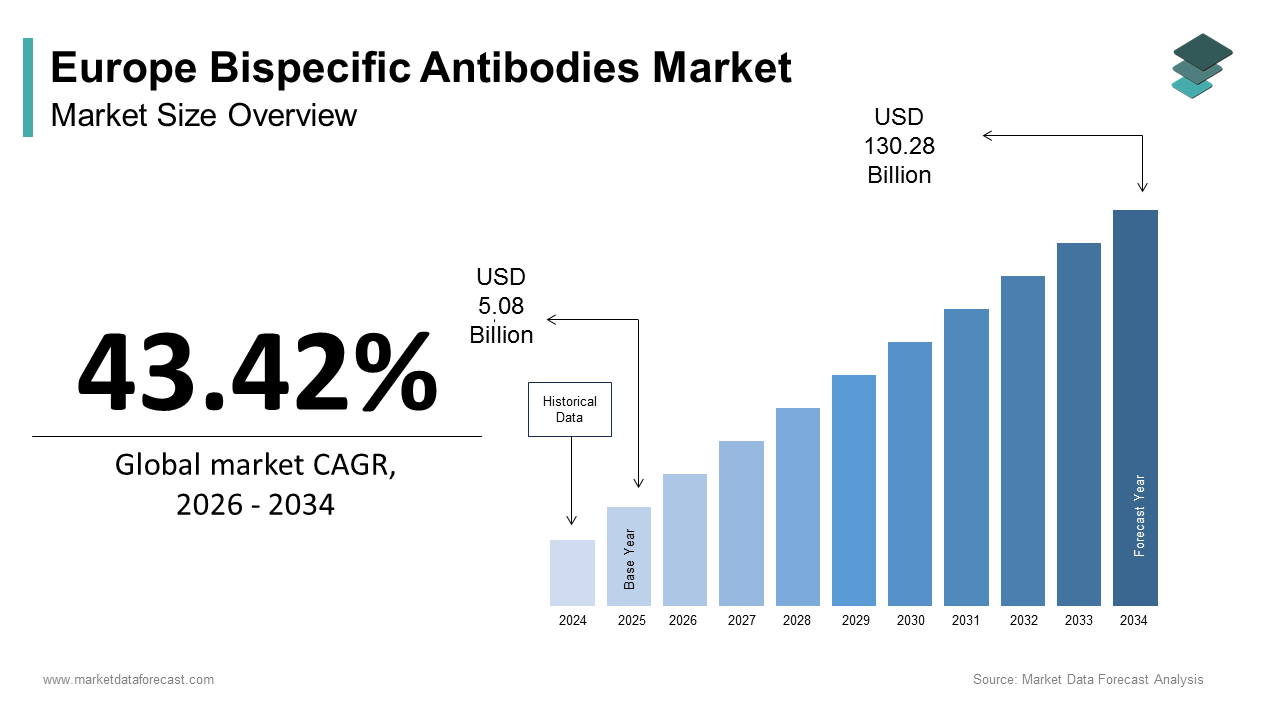
The Europe bispecific antibodies market was valued at USD 5.08 billion in 2025 and is projected to reach USD 130.28 billion by 2034, growing from USD 7.28 billion in 2026 at a CAGR of 43.42% during the forecast period. Exceptional market growth is driven by rapid advances in antibody engineering, strong clinical success in oncology, and accelerated regulatory pathways for innovative biologics across Europe. Increasing investment in immuno-oncology research, expanding clinical pipelines, and rising demand for targeted therapies with improved efficacy and safety profiles are further propelling the adoption of bispecific antibodies in the region.
Key Market Trends
- Rapid expansion of oncology-focused bispecific antibody pipelines across Europe
- Strong clinical momentum driven by success in hematologic malignancies and solid tumors
- Increasing collaborations between biotech firms and large pharmaceutical companies
- Accelerated regulatory approvals and early-access programs for breakthrough biologics
- Rising investment in next-generation antibody platforms and novel immune-engaging mechanisms
Segmental Insights
Based on the indication, the cancer segment dominated the Europe bispecific antibodies market in 2024, supported by high unmet medical needs, strong clinical outcomes, and growing adoption in hematologic oncology and solid tumor treatments.
Regional Insights
- Germany led the Europe bispecific antibodies market by capturing 26.4% of the total market share in 2024, driven by strong clinical research infrastructure, early adoption of advanced biologics, and a leading oncology center.s
- France ranked second with an 18.2% market share in 2024, supported by robust public healthcare funding and active participation in multinational clinical trials.
- United Kingdom is expected to witness significant growth throughout the forecast period, driven by strong translational research capabilities, regulatory flexibility, and expanding oncology pipelines.
- Switzerland shows strong market growth due to its concentration of global pharmaceutical headquarters, including Roche and Novartis, which drive innovation, development, and early adoption of bispecific antibodies.s
- Italy is experiencing growth supported by a large patient population, well-established hematologic oncology networks, and policy reforms aimed at accelerating access to advanced therapies.
Competitive Landscape
The Europe bispecific antibodies market is highly innovation-driven, with leading pharmaceutical and biotechnology companies focusing on pipeline expansion, strategic partnerships, and accelerated clinical development. Market players are investing heavily in next-generation bispecific formats, manufacturing scale-up, and precision oncology strategies to strengthen their competitive positioning across Europe.
Prominent players in the Europe bispecific antibodies market include Roche, Novartis, Johnson & Johnson, AstraZeneca, Sanofi, Merck KGaA, Bayer, GlaxoSmithKline, Boehringer Ingelheim, BioNTech, UCB, Pierre Fabre, Sobi, Immunocore, and Genmab.
Europe Bispecific Antibodies Market Size
The Europe bispecific antibodies market size was calculated to be USD 5.08 billion in 2025 and is anticipated to be worth USD 130.28 billion by 2034, growing from USD 7.28 billion in 2026 at a CAGR of 43.42% during the forecast period.
Bispecific antibodies are a class of engineered immunotherapies designed to simultaneously bind two distinct antigens or epitopes, thereby redirecting immune effector cells, such as T cells or natural killer cells, toward malignant or pathogenic targets with high specificity. Unlike conventional monoclonal antibodies, bispecific formats like BiTE (bispecific T cell engager) or IgG-like scaffolds integrate dual functionality into a single molecular construct, enabling novel mechanisms such as tumor cell lysis via T cell recruitment or co-blockade of synergistic signaling pathways. In Europe, these therapeutics are increasingly deployed in oncology, particularly for hematologic malignancies where traditional treatments have plateaued. According to the European Medicines Agency, five bispecific antibodies received conditional marketing authorization between 2021 and 2024, reflecting accelerated regulatory pathways for high unmet need indications. Concurrently, over 120 clinical trials involving bispecific antibodies were active across the EU in 2024, with Germany, France, and the UK hosting nearly 60% of trial sites.
MARKET DRIVERS
High Unmet Need in Relapsed or Refractory Hematologic Cancers Drives Adoption
The persistent clinical challenge of treating relapsed or refractory hematologic malignancies has created fertile ground for bispecific antibody deployment, which is propelling the growth of Europe bispecific antibodies market. According to the European Society for Medical Oncology, approximately 35 000 new cases of diffuse large B-cell lymphoma are diagnosed annually in the EU, with nearly 40% progressing to refractory disease after first-line therapy. In this setting, bispecific antibodies like epcoritamab and glofitamab have demonstrated overall response rates exceeding 50% in heavily pretreated patients, outcomes unattainable with conventional chemotherapy. The European Medicines Agency granted accelerated approval to mosunetuzumab in 2022 based on a 71% response rate in relapsed follicular lymphoma patients who had failed at least two prior regimens. Furthermore, the European Hematology Association’s 2024 treatment guidelines now recommend bispecific T cell engagers as second-line options for select lymphoma subtypes. National health technology assessment bodies, including Germany’sGBAA and France’s HAS, have fast-tracked reimbursement decisions due to survival gains in populations with historically poor prognoses. This convergence of compelling efficacy data, regulatory prioritization, and clinical guideline integration has cemented bispecific antibodies as a therapeutic mainstay in Europe’s evolving hemato-oncology sector.
Expansion of Academic and Industry Clinical Trial Infrastructure Accelerates Development
Europe’s robust clinical research ecosystem has become an enabler of bispecific antibody innovation through coordinated academic-industry partnerships and dedicated trial networks, which is additionally elevating the growth of Europe's bispecific antibody market. According to the European Clinical Research Infrastructure Network, over 70% of first-in-human studies for novel bispecific formats between 2021 and 2024 were conducted in EU academic medical centers, leveraging centralized biomarker and pharmacovigilance platforms. The Innovative Medicines Initiative is a public-private partnership between the European Commission and EFPIA that funded the BEAT AML Master Protocol, which integrates bispecific arms into adaptive trial designs for acute myeloid leukemia across 18 countries. In 2024, the UK’s National Institute for Health and Care Research launched the Bispecific Antibody Accelerator Platform, providing standardized cytokine monitoring andstep-upp dosing protocols to mitigate cytokine release syndrome risks. Additionally, Germany’s Paul Ehrlich Institute established a centralized safety database for T cell engagers, enabling real-time signal detection across trial sites.
MARKET RESTRAINTS
Complex and Costly Manufacturing Processes Limit Scalable Production
The structural complexity of bispecific antibodies in consistent large-scale manufacturing is a major factor limiting the growth of the bispecific antibodies market. Unlike monoclonal antibodies, which benefit from decades of process optimization, bispecific formats often suffer from chain mispairing, low yields, and aggregation during production. According to the European Biopharmaceutical Review, typical manufacturing yields for IgG-like bispecifics are 30 to 50% lower than for standard monoclonals, requiring advanced purification steps such as multimodal chromatography. As per the reports, 22% of chemistry manufacturing and controls sections in bispecific marketing applications required major objections due to product heterogeneity or impurity profiles. Furthermore, the need for mammalian cell lines with proprietary engineering, such as Genmab’s DuoBody platform, concentrates production capacity among a few contract development organizations. Lonza’s Visp facility in Switzerland reported a 14-month waiting list for bispecific GMP runs in early 2025. These bottlenecks inflatthe e cost of goods and delay commercial launch timelines, particularly for smaller biotechs lacking manufacturing partnerships, thereby constraining patient access despite clinical promise.
Risk of Severe Cytokine Release Syndrome Complicates Clinical Deployment
Cytokine release syndrome, where safety barriers limiting the broad outpatient use ofT-cell-engagingg bispecific antibodies, across European healthcare systems, is also impeding the growth of Europe bispecific antibodies market. According to the European Society for Blood and Marrow Transplantation, up to 60% of patients receiving the first dose of CD3 CD20 bispecifics experience grade 1 or 2 CRS, with 5 to 7% developing life-threatening grade 3 or higher events requiring intensive care. This risk necessitates hospitalization for initial dosing step-up protocols and premedication with corticosteroids and antihistamines, as well as logistical hurdles in countries with fragmented rural healthcare. In 2023, France’s National Cancer Institute mandated that all bispecific T cell engager administrations occur in certified centers with ICU backup within 30 minutes, excluding over 40% of community oncology clinics. Similarly, the UK’s Medicines and Healthcare products Regulatory Agency issued a drug alert in early 2024 after three fatalities linked to home administration attempts. Although mitigation strategies like subcutaneous delivery and lower-affinity CD3 binders are in development, most approved bispecifics still require complex risk evaluation and mitigation plans.
MARKET OPPORTUNITIES
Adoption in Solid Tumors Opens New Therapeutic Frontiers
While initially confined to hematologic cancer,s bispecific antibodies are now demonstrating meaningful activity in solid tumors, a shift that could dramatically expand their addressable is creating new opportunities for the growth of Europe bispecific antibodies market. According to the European Organisation for Research and Treatment of Cancer, early phase trials of HER2 CD3 bispecifics in gastric and breast cancers showed objective response rates of 30 to 40% in patients refractory to trastuzumab and chemotherapy. In 2024, Roche reported that its amivantamab targeting EGFR and ME, which achieved a median progression-free survival of 6.9 months in EGFR exon 20 insertion-positive non-small cell lung cancer patients across 22 EU trial sites. The European Commission’s Cancer Mission has prioritized bispecific platforms for hard-to-treat solid malignancies, with funding allocated to tumor microenvironment modulating formats that overcome immune exclusion. Additionally, national cancer plans in Germany and the Netherlands now include biomarker-driven bispecific access pilots for rare solid tumor subtypes.
Integration with Personalized Medicine and Companion Diagnostics Enhances Precision
The alignment of bispecific antibody therapy with Europe’s precision oncology infrastructure is creating new opportunities for the growth of Europe bispecific antibodies market. According to the European Federation of Pharmaceutical Industries and Associations, over 80% of ongoing bispecific trials in the EU now require companion diagnostic testing for target antigen expression, such as CD20 for lymphoma or BCMA for multiple myeloma. This ensures patient selection based on molecular eligibility rather than histology alone. The European Medicines Agency approved the first tissue-agnostic bispecific indication for a tumor-agnostic target, contingent on a CE-marked diagnostic assay for NTRK fusion detection. Germany’s National Decentralized Molecular Tumor Board reported that 17,000 patients underwent comprehensive genomic profiling in 2023, enabling enrollment into biomarker-matched bispecific trials. Furthermore, the EU’s In Vitro Diagnostic Regulation has streamlined co-development pathways for companion tests with therapeutic biologics. This synergy between diagnostics and therapeutics not only improves response predictability but also supports health technology assessment submissions by demonstrating value in defined molecular populations, accelerating reimbursement and clinical adoption across Europe’s diverse payer landscape.
MARKET Challenges
Lack of Harmonized Reimbursement Frameworks Across Member States Delays Access
European Medicines Agency reimbursement decisions for bispecific antibodies remain fragmented across national health systems, which is a challenge for the growth of Europe bispecific antibodies market. According to the European Observatory on Health Systems and Policies, the time from EMA approval to national pricing and reimbursement ranged from 3 months in Germany to over 18 months in Spain and Italy in 2024. This delay stems from divergent health technology assessment methodologies; France’s HAS emphasizes budget impact, while Sweden’s TLV focuses on incremental survival per cost-utility-adjusted life year. In Eastern Europe, only three countries had reimbursed any bispecific antibody by early 2025 due to affordability constraints. The European Network for Health Technology Assessment acknowledged in 2024 that inconsistent evaluation of novel endpoints, like duration of response or minimal residual disease, contributes to appraisal divergence.
Intellectual Property Disputes and Platform Fragmentation Hinder Innovation
The overlapping patent claims and a proliferation of proprietary engineering platforms that complicate freedom to operate and collaborative developmenareis additionally hampering the growth of Europe's bispecific antibodies market. According to the European Patent Office, over 1,200 patents related to bispecific formats were granted between 2020 and 2024, with core claims covering Fc modification,s knobs into holes technology, and T cell engager architectures held by Genmab, Amgen, Roche, and Regeneron. In 2023, a German court issued a preliminary injunction against a biosimilar developer attempting to use a common heterodimerization method, citing Genmab’s platform IP. This legal complexity deters smaller biotechs from entering the field and forces costly licensing negotiations that inflate development costs. Furthermore, the absence of standardized formats for over 80 distinct bispecific scaffolds in clinical testing prevents economies of scale in manufacturing and analytics. The Innovative Medicines Initiative noted in 2024 that platform fragmentation slows regulatory learning and delays harmonization of quality guidelines.
REPORT COVERAGE
| REPORT METRIC | DETAILS |
| Market Size Available | 2025 to 2034 |
| Base Year | 2025 |
| Forecast Period | 2026 to 2034 |
| CAGR | 43.42% |
| Segments Covered | By Indication, And Region |
| Various Analyses Covered | Global, Regional & Country Level Analysis; Segment-Level Analysis; DROC, PESTLE Analysis; Porter’s Five Forces Analysis; Competitive Landscape; Analyst Overview of Investment Opportunities |
| Regions Covered | UK, France, Spain, Germany, Italy, Russia, Sweden, Denmark, Switzerland, Netherlands, Turkey, and the Czech Republic |
| Market Leaders Profiled | Roche, Novartis, Johnson & Johnson, AstraZeneca, Sanofi, Merck KGaA, Bayer, GlaxoSmithKline, Boehringer Ingelheim, BioNTech, UCB, Pierre Fabre, Sobi, Immunocore, Genmab |
SEGMENTAL ANALYSIS
By Indication Insights
The cancer segment was the largest by holding a dominant share of the Europe bispecific antibodies market in 2024, owing to the high unmet clinical need in relapsed or refractory hematologic malignancies, where conventional therapies have reached efficacy plateaus. The European Society for Medical Oncology reported that over 180000 new cases of non-Hodgkin lymphoma and multiple myeloma are diagnosed annually in the EU, with nearly half progressing to treatment-resistant stages. Bispecific antibodies, particularly CD3-engaging formats like epcoritamab and teclistama, have demonstrated unprecedented response rates in these settings, with the European Hematology Association citing overall response rates of 60 to 70% in heavily pretreated multiple myeloma patients. Furthermore, national cancer plans in Germany, France, and the UK now explicitly include bispecific T cell engagers in updated treatment algorithms for second-line lymphoma and third-line myeloma. The European Commission’s Cancer Mission allocated 280 million euros in 2024 to accelerate access to novel immunotherapies, including bispecifics, in high-burden regions. This convergence of compelling clinical evidence, regulatory prioritization, and policy integration has entrenched oncology as the definitive therapeutic anchor for bispecific antibody deployment across Europe.
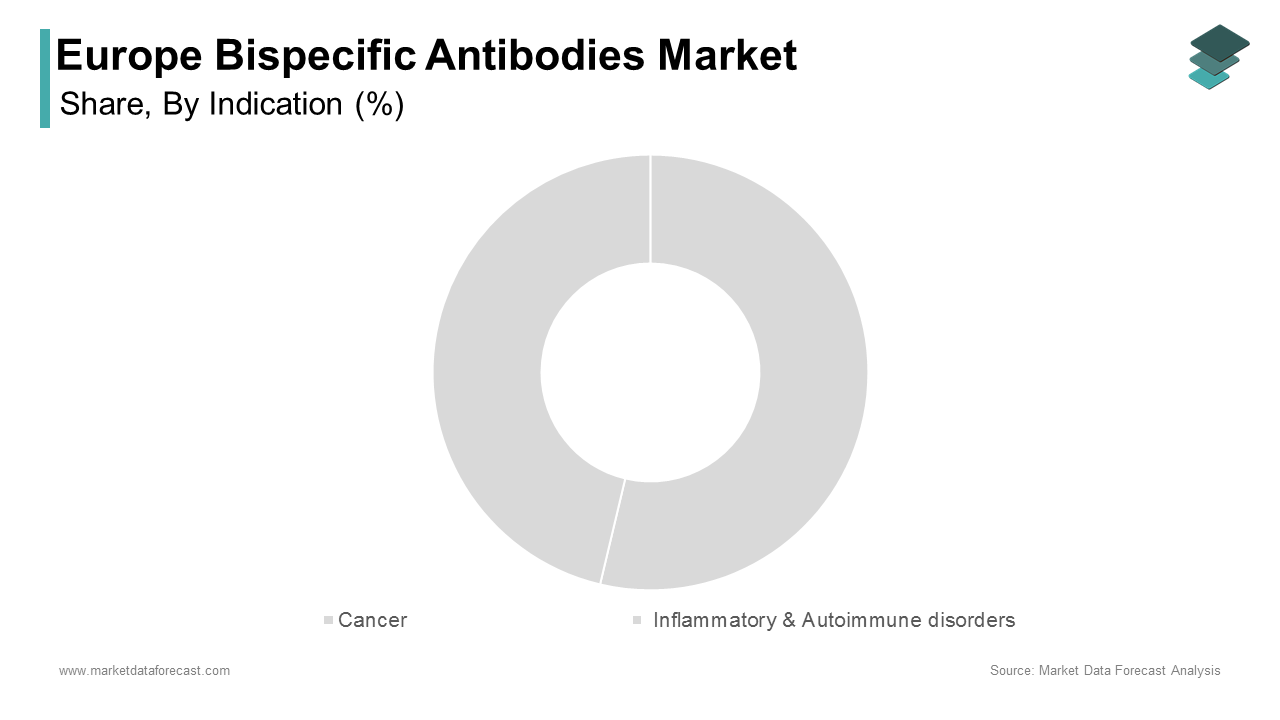
The inflammatory and autoimmune disorders segment is likely to witness the fastest CAGR of 28.6% from 2025 to 2033, owing to the emerging clinical evidence demonstrating that dual cytokine or receptor blockade can achieve superior efficacy over single-target biologics in complex immune-mediated diseases. In 2024, Roche reported phase II results for its IL-17 IL-23 bispecific RG6149 in moderate to severe psoriasis, showing 82% of patients achieving PASI 90 at 16 weeks, outperforming both ustekinumab and secukinumab monotherapies. Similarly, the European Crohn’s and Colitis Organisation highlighted a novel TNF alphIL-2323 bispecific that induced mucosal healing in refractory Crohn’s patients in a German multicenter trial. The European Medicines Agency has granted priority medicines designation to three autoimmune bispecifics since 2023, recognizing their potential to address treatment gaps in diseases with heterogeneous pathophysiology.
REGIONAL ANALYSIS
Germany Bispecific Antibodies Market Analysis
Germany was the top performer of the Europe bispecific antibodies market by capturing 26.4% of the share in 2024, with its advanced hemato-oncology infrastructure, high reimbursement capacity, and dense network of certified treatment centers. Germany accounts for nearly 30% of all bispecific antibody administrations in the E, U with over 140 university hospitals and specialized clinics authorized to deliver T cell engagers under national safety protocols. The Paul Ehrlich Institute reported that 7,200 patients receiveCD3-baseded bispecifics in 2024, more than any other EU nation, driven by rapid GBA reimbursement decisions for lymphoma and myeloma indications. Furthermore, Germany hosts pivotal clinical trial sites for novel bispecific formats, including the BEAT AML Master Protocol and Roche’s Skyscraper trials. The government’s Hospital Future Act also allocated 120 million euros in 2023 to upgrade ICU capacity in oncology centers specifically to support cytokine release syndrome management.
France Bispecific Antibodies Market Analysis
France's bispecific antibodies market growth was positioned second by holding 18.2% of the share in 2024, owing to its centralized oncology care model, proactive health technology assessment, and leadership in early access programs. The Temporary Authorization for Use mechanism enabled over 1 800 French patients to receive teclistamab and mosunetuzumab in 2023, 6 months ahead of formal reimbursement, accelerating real-world evidence generation. France’s National Cancer Institute mandates that all bispecific administrations occur in 42 certified reference centers, ensuring standardized safety monitoring and step-up dosing. In 2024, these centers treated over 4 100 patients with hematologic malignancies using bispecifics, the second-highest volume in Europe. The country’s emphasis on equitable access, rapid coverage, and research integration ensures its continued influence in shaping bispecific therapy adoption across Southern Europe.
United Kingdom Bispecific Antibodies Market Analysis
The United Kingdom's bispecific antibodies market is likely to experience significant growth opportunities throughout the forecast period. The UK maintains prominence through its world-class academic medical centers, streamlined regulatory science pathway,s and early inclusion of bispecifics in national treatment guidelines. The NHS England Cancer Programme approved funding for three bispecific antibodies in 2023, with over 2,900 patients treated by year's end in lymphoma and myeloma. The UK’s Early Access to Medicines Scheme enabled 650 patients to receive epcoritamab before full marketing authorization, accelerating clinical uptake. Furthermore, the UK hosts the Bispecific Antibody Accelerator Platform, which provides standardized cytokine monitoring and safety training to 60 designated hospitals nationwide. The Medicines and Healthcare products Regulatory Agency also pioneered the first EU-aligned risk management plan for subcutaneous bispecific delivery in 2024.
Switzerland Bispecific Antibodies Market Analysis
Switzerland's bispecific antibodies market growth is propelled by its disproportionate contribution to its population due to its concentration of global pharmaceutical headquarters, including Roche and Novartis, which drive both development and early adoption. Swiss University Hospitals in Basel, Zurich, and Geneva treated over 1,500 patients with bispecific antibodies in 2024, among the highest per capita rates in Europe, supported by national reimbursement within 90 days of EMA approval. Switzerland’s regulatory framework allows parallel use of EU and Swiss data for coverage decisions, enabling faster access than in many EU states. Additionally, the Swiss Group for Clinical Cancer Research coordinates multicenter trials for next-generation bispecifics, including solid tumor and autoimmune indications.
Italy Bispecific Antibodies Market Analysis
Italy's bispecific antibodies market growth is driven by its large patient population, strong hematologic oncology networks, and recent reforms to accelerate access to advanced therapies. Italy diagnosed over 28,000 new cases of multiple myeloma and lymphoma in 2024, creating substantial demand for novel immunotherapies. The national price negotiation process under AIFA approved three bispecific antibodies in 2023, with regional rollout completed by mid-2024, across 85 authorized centers. The Italian Association of Medical Oncology established national safety standards for cytokine release syndrome management, enabling broader community hospital participation. Furthermore, Italy contributes significantly to EU clinical research with the Fondazione Italiana Linfomi enrolling over 900 patients in bispecific trials since 2022.
COMPETITION OVERVIEW
Competition in the Europe bispecific antibodies market is intensifying as global biopharmaceutical leaders vie for dominance in high-value hematologic indications while simultaneously exploring novel applications in solid tumors and autoimmune diseases. The market is characterized by scientific differentiation through proprietary molecular formats rather than price competition, given the premium nature of these therapies. Regulatory and reimbursement landscapes vary significantly across member states, creating both opportunities for early access and barriers to uniform adoption. Companies compete not only on clinical efficacy but also on the comprehensiveness of their safety infrastructure, patient support services, and integration with diagnostic strategies. Smaller biotechs with innovative platforms are increasingly acquired or partnered with larger firms to navigate complex manufacturing and commercialization pathways.
KEY MARKET PLAYERS
A few major players of the Europe bispecific antibodies market include
- Roche
- Novartis
- Johnson & Johnson
- AstraZeneca
- Sanofi
- Merck KGaA
- Bayer
- GlaxoSmithKline
- Boehringer Ingelheim
- BioNTech
- UCB
- Pierre Fabre
- Sobi
- Immunocore
- Genmab
Top Strategies Used by the Key Market Participants
Key players in the Europe bispecific antibodies market are pursuing strategies centered on platform differentiation, clinical evidence generation, risk mitigation, and equitable access expansion. Companies are leveraging proprietary engineering technologies such as CrossMAb BiTE and DuoBody to ensure manufacturing fidelity and functional superiority. They are conducting robust phase III trials and real-world evidence studies to demonstrate survival benefits and support health technology assessments. Extensive risk evaluation and mitigation plans, including step-up dosing protocols and centralized safety monitoring, are standard to manage cytokine release syndrome. Strategic partnerships with academic networks, national cancer institutes, and payers accelerate reimbursement and broaden certified treatment center networks. Additionally, firms are investing in subcutaneous formulations and digital health tools to enable safer outpatient administration and improve patient experience across diverse European healthcare settings.
Leading Players in the Market
- Roche Holding AG is a pioneering force in the Europe bispecific antibodies market with its CD3-engaging T cell redirecting platforms and dual pathway inhibition constructs. The company’s mosunetuzumab for follicular lymphoma and glofitamab for diffuse large B-cell lymphoma have received European Medicines Agency approval and are integrated into national treatment guidelines. Roche’s proprietary CrossMAb technology enables correct heavy and light chain pairing, critical for manufacturing consistency. In 2024, Roche expanded access to its bispecific portfolio through early patient programs in Germany, France, and the UK, while launching a subcutaneous formulation of epcoritamab to reduce hospitalization needs. Its deep integration with diagnostic units through companion PD L1 and CD20 testing further strengthens its precision medicine ecosystem across Europe and globally.
- Amgen Inc has established a robust presence in the Europe bispecific antibodies market through its breakthrough BCMA-targeting teclistamab for relapsed multiple myeloma. Approved by the European Medicines Agency in 2022, teclistamab is now reimbursed in over 20 European countries and forms a cornerstone of Amgen’s hemato-oncology strategy. The company leverages its proprietary BiTE platform, originally developed for blinatumomab, to engineer next-generation constructs with extended half-lives. Amgen partnered with European academic networks to implement standardized cytokine release syndrome management protocols and launched a real-world evidence registry across 12 EU nations to support long term safety monitoring. These initiatives enhance clinical adoption while reinforcing Amgen’s global leadership in T cell engager therapeutics.
- Janssen Biotech Inc a Johnson and Johnson company, plays a strategic role in the Europe bispecific antibodies market with its BCMA CD3 bispecific talquetamab for triple-class refractory multiple myeloma. Granted conditional marketing authorization by the European Medicines Agency in 2023, talquetamab addresses a critical unmet need in a rapidly growing patient segment. Janssen’s DuoBody platform enables efficient production of IgG-like bispecifics with native Fc functionality, enhancing pharmacokinetics. Janssen initiated the EU Myeloma Access Program, providing training and support to over 100 certified treatment centers across Southern and Eastern Europe. It also launched a digital patient monitoring tool to track cytokine release syndrome symptoms remotely.
MARKET SEGMENTATION
This research report on the Europe bispecific antibodies market has been segmented and sub-segmented based on indication and region.
By Indication
- Cancer
- Inflammatory & Autoimmune disorders
By Region
- UK
- France
- Spain
- Germany
- Italy
- Russia
- Sweden
- Denmark
- Switzerland
- Netherlands
- Turkey
- Czech Republic
- Rest of Europe
Frequently Asked Questions
1. What factors are driving the growth of the Europe bispecific antibodies market?
Key drivers include rising cancer prevalence, increasing demand for targeted immunotherapies, strong R&D investments, and supportive regulatory frameworks in Europe.
2. Which therapeutic areas dominate the Europe bispecific antibodies market?
Oncology is the leading therapeutic area, followed by autoimmune diseases, hematological disorders, and infectious diseases.
3. What are the major applications of bispecific antibodies in Europe?
Bispecific antibodies are mainly used in cancer immunotherapy, T-cell redirection, dual-target signaling inhibition, and immune system modulation.
4. How does Europe’s regulatory environment impact the bispecific antibodies market?
European regulatory bodies, particularly the EMA, provide structured approval pathways that encourage innovation while ensuring safety and efficacy.
5. Which countries are key contributors to the Europe bispecific antibodies market?
Germany, France, the United Kingdom, Italy, and Spain are major contributors due to strong pharmaceutical infrastructure and research capabilities.
6. What role does biotechnology play in the Europe bispecific antibodies market?
Biotechnology companies play a crucial role by developing advanced antibody engineering platforms and collaborating with large pharmaceutical firms.
7. What are the main challenges in the Europe bispecific antibodies market?
High development costs, complex manufacturing processes, and stringent regulatory requirements are key challenges.
8. How is innovation shaping the Europe bispecific antibodies market?
Innovation in antibody formats, improved targeting mechanisms, and next-generation immune cell engagement technologies are accelerating market growth.
9. What types of bispecific antibodies are commonly developed in Europe?
Common types include T-cell engager antibodies, dual-affinity retargeting antibodies, and IgG-like bispecific antibodies.
10. How does personalized medicine influence the Europe bispecific antibodies market?
Personalized medicine drives demand for bispecific antibodies by enabling more precise targeting of disease pathways and patient-specific treatment approaches.
11. What is the competitive landscape of the Europe bispecific antibodies market?
The market is highly competitive, with global pharmaceutical companies and European biotech firms actively investing in R&D and strategic partnerships.
12. What trends are emerging in the Europe bispecific antibodies market?
Key trends include increased clinical trial activity, expansion beyond oncology, and growing collaborations between academia and industry.
13. What is the future outlook for the Europe bispecific antibodies market?
The market is expected to grow steadily, supported by a robust product pipeline, technological advancements, and increasing adoption of advanced biologics therapies.
Related Reports
Access the study in MULTIPLE FORMATS
Purchase options starting from
$ 2000
Didn’t find what you’re looking for?
TALK TO OUR ANALYST TEAM
Need something within your budget?
NO WORRIES! WE GOT YOU COVERED!
Call us on: +1 888 702 9696 (U.S Toll Free)
Write to us: sales@marketdataforecast.com