- Product Description Description
- Table of Contents TOC
- List of Table & Figure LOT
- Get Free Sample PDF Sample PDF
Market Size, 2025
$1.19 BnMarket Estimate, 2026
$1.25 BnMarket Forecast, 2034
$1.85 BnCAGR, 2026–2034
5.05%Europe Blenders Market Size, Growth, Trends & Forecast (2026–2034)
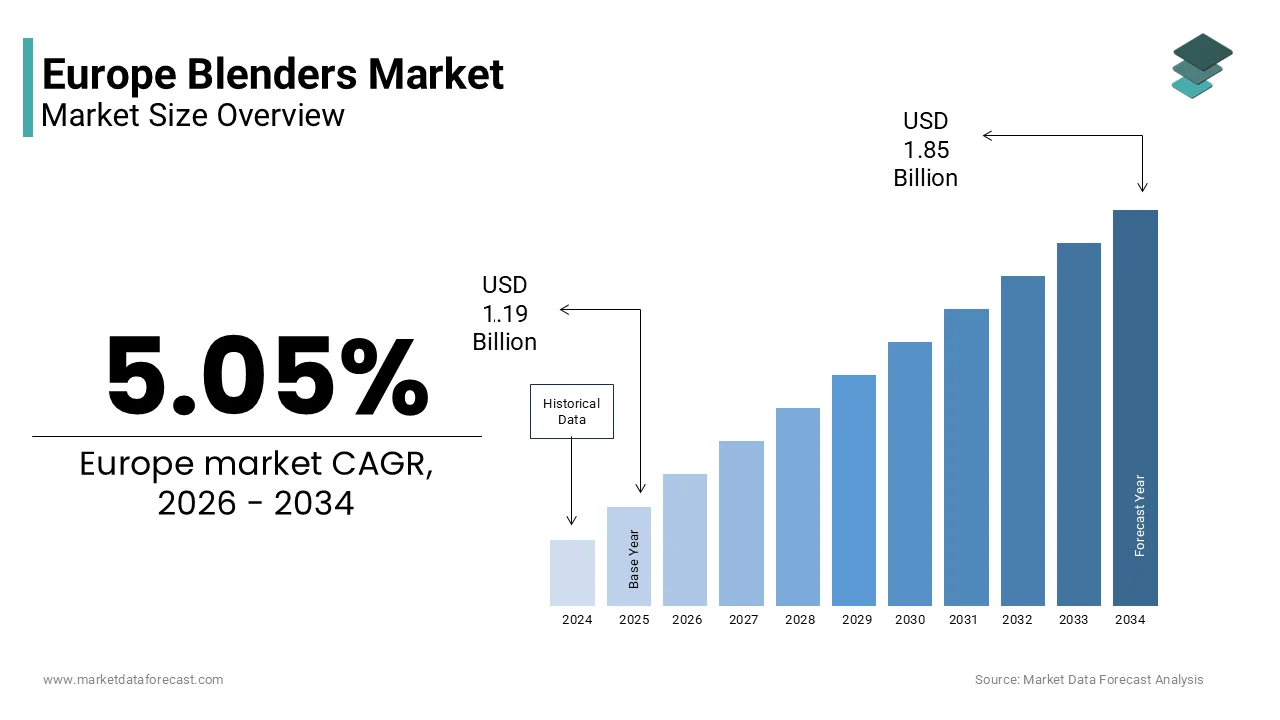
The Europe blenders market size was valued at USD 1.19 billion in 2025, is anticipated to reach USD 1.25 billion in 2026, and is projected to scale up to USD 1.85 billion by 2034, registering a compound annual growth rate (CAGR) of 5.05% during the forecast period from 2026 to 2034. Driven by a surging regional focus on health and plant-based diets, the rapid integration of smart kitchen technologies, and expanding e-commerce ecosystems, the market continues to expand steadily across Europe.
Key Executive Metrics (At-a-Glance)
- 2025 Base Valuation: USD 1.19 Billion
- 2026 Current Valuation: USD 1.25 Billion
- 2034 Forecast Valuation: USD 1.85 Billion
- Compound Annual Growth Rate (CAGR): 5.05% (2026–2034)
- Dominant Type Segment: Countertop Blenders (holding 48.9% market share in 2025 via heavy-duty versatility and family-sized capacities)
- Fastest-Growing Type Segment: Personal / Portable Blenders (projected at a rapid CAGR of 9.2% driven by on-the-go nutrition and urban lifestyles)
- Dominant Power Segment: 300 to 600 Watts (securing 42.8% market share in 2025 due to an optimal balance of daily performance and energy efficiency)
- Fastest-Growing Power Segment: Above 900 Watts (expanding at an 8.5% CAGR for professional-grade whole-food processing)
- Dominant Distribution Channel: Offline Retail (capturing 58.7% share in 2025 through physical touchpoints and immediate availability)
- Fastest-Growing Distribution Channel: Online Retail (exhibiting a 10.5% CAGR via digital convenience and direct-to-consumer models)
- Dominant Country Market: Germany (leading the region with 22.6% market share backed by strong purchasing power and quality-focused consumer habits)
Core Market Drivers
- Health Consciousness & Plant-Based Diets: Surging popularity of vegan, flexitarian, and clean-eating lifestyles encouraging homemade smoothies, soups, and nutrient extraction.
- Smart Home Integration: Proliferation of connected kitchen appliances equipped with Wi-Fi, app-based remote operations, and automated AI nutrition programs.
- Digital Commerce Growth: High internet penetration and expansive e-commerce networks enabling direct-to-consumer engagement and wider regional distribution.
Primary Market Restraints & Challenges
- High Market Saturation: High household appliance penetration rates in Western Europe (such as Germany, France, and the UK), shifting focus primarily toward replacement sales.
- Regulatory Compliance & Costs: Strict EU Ecodesign directives mandating strict energy efficiency, repairability, and long-term spare-part availability, increasing production overheads.
- Supply Chain & Price Pressures: Volatile raw material prices, heavy reliance on external electronic part sourcing, and intense price competition in lower-end segments squeezing profit margins.
Europe Blenders Market Segmentation Breakdown
| Segment Category | Leading Sub-Segment (2025 Base) | Fastest-Growing Sub-Segment (2026–2034) |
|---|---|---|
| By Type | Countertop Blenders (48.9% share via multifunctionality and premium aesthetics) | Personal / Portable Blenders (9.2% CAGR for mobile, single-serving urban lifestyles) |
| By Power | 300–600 Watts (42.8% share offering reliable everyday performance and energy savings) | Above 900 Watts (8.5% CAGR for high-power whole-food processing and nut butters) |
| By Distribution Channel | Offline Retail (58.7% share via tactile inspection and instant product pickup) | Online Retail (10.5% CAGR via digital choice, price comparisons, and home delivery) |
| By Region | Germany (22.6% regional share backed by high-end appliance demand and durability standards) | Southern & Eastern Europe (expanding via rising modern retail and urban health trends) |
Major Industry Players Profiled
Key enterprises shaping the Europe blenders market include Robert Bosch GmbH, Koninklijke Philips N.V., Panasonic Holdings Corporation, Whirlpool Corporation, Breville Group Limited, SMEG S.p.A., Hamilton Beach Brands Inc., Cuisinart Corporation, Spectrum Brands Holdings Inc., Vita Mix Corporation, Blendtec Inc., Electrolux AB, Braun GmbH, and De’Longhi S.p.A.
Europe Blenders Market Size
The Europe blenders market size was valued at USD 1.19 billion in 2025 and is projected to reach USD 1.85 billion by 2034 from USD 1.25 billion in 2026, growing at a CAGR of 5.05%.
A blender is an electric kitchen or laboratory appliance used to mix, crush, purée, or emulsify food and other substances. It works by using a high-speed motor to spin sharp metal blades, which creates a vortex that pulls ingredients downward to be broken down into a smooth, homogenized consistency. These devices have evolved from simple mechanical tools into sophisticated smart appliances integral to modern culinary practices. The market dynamics are heavily influenced by shifting consumer lifestyles and dietary preferences across the continent. As per Eurostat the average household expenditure on major durables including kitchen appliances has shown resilience despite economic fluctuations indicating sustained consumer interest in home cooking solutions. Furthermore, according to the European Commission, the share of EU households with internet access reached 94% in 2024, effectively removing connectivity barriers and driving the growth of e-commerce channels for small domestic appliances. The rise of health consciousness is another pivotal factor. The World Health Organization (WHO) notes that noncommunicable diseases (NCDs), primarily cardiovascular diseases and cancers, are responsible for 90% of all deaths in the European Region, with unhealthy diets identified as a top-tier preventable risk factor causing nearly 2 million avoidable deaths annually. This health paradigm shift encourages the consumption of fresh fruits vegetables and homemade smoothies thereby driving demand for efficient blending technologies. Additionally, the increasing prevalence of dual income households necessitates time saving kitchen gadgets that simplify meal preparation. The integration of Internet of Things capabilities into premium blender models allows for remote operation and recipe guidance appealing to tech savvy demographics. As a result, the market is characterized by a transition towards multifunctional energy efficient and aesthetically pleasing designs that align with contemporary European living standards and sustainability goals.
MARKET DRIVERS
Rising Health Consciousness and Demand for Plant Based Diets
The escalating focus on health and wellness among the regional consumers is one of the main reasons for the growth of the Europe blenders market. There is a marked shift towards plant based diets and the consumption of nutrient dense foods such as smoothies soups and nut milks. European health authorities and scientific bodies have established clear links between plant-rich diets and long-term wellness, leading to various regional initiatives that encourage increased consumption of fresh produce. This awareness has led to a surge in home preparation of healthy meals where blenders play a crucial role. According to the ProVeg International report the number of flexitarians and vegans in Europe has increased significantly with over 10 percent of the population in countries like Germany and the United Kingdom identifying as vegetarian or vegan. Blenders are essential for processing plant based ingredients which often require thorough mixing to achieve desirable textures. The convenience of preparing fresh juices and smoothies at home allows consumers to control sugar content and avoid additives found in commercial products. Furthermore the popularity of fitness cultures and clean eating trends on social media platforms influences purchasing decisions. Consumers are investing in high performance blenders capable of crushing ice and pulverizing seeds to maximize nutrient extraction. This behavioral change towards proactive health management ensures a steady demand for versatile and powerful blending appliances across the region.
Expansion of Smart Home Ecosystems and Connected Kitchen Appliances
The rapid adoption of smart home technologies and the integration of connected devices in kitchens are also a top factor boosting the expansion of the Europe blenders market. Modern consumers increasingly seek appliances that offer convenience precision and connectivity through smartphone applications. As per the International Data Corporation the European smart home market is experiencing robust growth with connected kitchen appliances representing a substantial segment. Smart blenders equipped with Wi Fi and Bluetooth capabilities allow users to access digital recipes adjust settings remotely and monitor blending progress in real time. This technological advancement appeals to millennials and Gen Z demographics who value seamless integration of technology into daily routines. Consumers are increasingly adopting appliances that offer tailored digital features. Consumer advocacy groups emphasize that this trend must be balanced with strong protections for personal data and transparent nutritional information. Manufacturers are responding by developing blenders with preset programs for specific tasks such as making almond milk or hot soups which simplify complex culinary processes. The ability to update firmware and add new features via software updates extends the product lifecycle and enhances user engagement. Moreover the trend towards home automation systems that coordinate multiple appliances encourages the purchase of compatible blenders. This synergy between culinary needs and digital innovation creates a compelling value proposition for premium smart blenders fostering market expansion.
MARKET RESTRAINTS
Market Saturation and High Penetration Rates in Developed Economies
High saturation in developed economies continues to be a significant obstacle for the European blenders market. As a result, the majority of households already own at least one unit. In countries such as Germany France and the United Kingdom the penetration rate of small kitchen appliances is exceptionally high limiting the potential for new customer acquisition. According to research, the replacement cycle for small domestic appliances in Western Europe is shorter than that of major appliances, with market demand currently rising as consumers begin replacing items purchased during the global pandemic. This maturity means that manufacturers must rely heavily on replacement sales rather than first time buyers which constrains volume expansion. Eurostat consumption expenditure data indicates a recent growth in household spending across the European Union, with a modest recovery in categories involving household equipment and furnishings after previous periods of decline. The lack of innovative differentiation in entry level models further exacerbates this issue as consumers see little reason to upgrade functional existing units. Additionally economic uncertainties and inflationary pressures have made consumers more cautious about discretionary spending. Many households prioritize essential repairs or replacements only when absolutely necessary delaying the purchase of new or upgraded blenders. This saturation combined with economic caution creates a challenging environment for achieving significant volume growth in established markets.
Stringent Environmental Regulations and Sustainability Compliance Costs
Strict environmental regulations and the push for sustainability impose considerable constraints on the Europe blenders market. These factors increase compliance costs and limit material choices. The European Union’s Ecodesign for Sustainable Products Regulation mandates rigorous standards for energy efficiency reparability and recyclability of electronic goods. The European Commission has implemented Ecodesign regulations requiring manufacturers to design specific household appliances for easier repair and disassembly to ensure spare parts remain available for a set duration after purchase. These requirements increase production costs which can be passed on to consumers potentially dampening demand for premium models. As noted by the European Commission's Circular Economy Action Plan, shifting to circular business models can improve company profitability and shield manufacturers from resource price volatility by reducing the need for virgin raw materials. Furthermore restrictions on certain plastics and hazardous substances limit the design flexibility of blender components. Manufacturers must source alternative eco friendly materials which may not always offer the same performance characteristics or aesthetic appeal. The need to provide spare parts for extended periods also complicates supply chain management and inventory control. Small and medium sized enterprises may struggle to meet these regulatory demands due to limited resources leading to market consolidation. These regulatory pressures while beneficial for the environment create financial and logistical hurdles that restrain market dynamism and innovation speed.
MARKET OPPORTUNITIES
Integration of Artificial Intelligence for Personalized Nutrition Planning
The integration of artificial intelligence and machine learning into blender systems opens new doors for the growth of the Europe blenders market. These technologies offer highly personalized nutrition solutions. Advanced blenders can now analyze ingredients and suggest optimal blending settings to preserve nutrients and enhance flavor profiles. As emphasized by EIT Food, there is a transition toward precision nutrition that utilizes artificial intelligence to provide dietary guidance based on specific biological markers and metabolic information. Smart blenders connected to health apps can track nutrient intake and provide feedback on dietary habits appealing to health conscious consumers. This capability transforms the blender from a simple tool into a comprehensive health management device. Trends in the Europe Smart Kitchen Appliances sector show that the integration of AI-driven features like automated recipe guidance is gaining momentum as consumers seek time-saving and health-focused household technologies. Manufacturers can leverage this trend by partnering with nutritionists and health platforms to offer bundled services and subscription models. The ability to customize recipes based on dietary restrictions such as gluten free or low sugar preferences adds value for users with specific health needs. Furthermore AI can optimize energy consumption by adjusting motor speed and duration reducing electricity usage. This technological sophistication differentiates products in a crowded market and justifies premium pricing. Consumers are increasingly driven by data in their health choices. Consequently, AI-enabled blenders are poised to capture a larger share of the smart kitchen segment.
Growth of Online Retail Channels and Direct to Consumer Models
The proliferation of online retail channels and the rise of direct to consumer business models offer substantial opportunities for manufacturers in Europe blenders market. E commerce platforms provide a broader reach and allow brands to engage directly with customers bypassing traditional retail intermediaries. Eurostat confirms that a substantial majority of internet users in the European Union now engage in online shopping, reflecting a long-term shift toward digital commerce across all member states. This trend enables manufacturers to showcase product features through detailed videos and customer reviews which are crucial for high involvement purchases like kitchen appliances. Direct to consumer strategies allow for better data collection on consumer preferences enabling targeted marketing and product development. Research from Cross-Border Commerce Europe indicates that international online sales are a vital growth channel, with digital marketplaces serving as the primary infrastructure for brands to reach niche consumer segments across different countries. Social media platforms also serve as powerful marketing tools where influencers demonstrate blender capabilities through recipe tutorials and lifestyle content. This visual engagement drives impulse purchases and brand loyalty. Additionally online channels facilitate the launch of limited edition colors and collaborations creating buzz and urgency. The flexibility of digital platforms allows for rapid response to market trends and consumer feedback. Manufacturers can enhance brand visibility by leveraging digital avenues. This approach drives sales growth in an increasingly competitive landscape.
MARKET CHALLENGES
Supply Chain Disruptions and Raw Material Volatility
Volatile supply chains and fluctuating raw material prices remain serious barrier for the Europe blenders market. These ongoing issues severely impact both production stability and profitability. The manufacturing of blenders relies on various components including motors plastics and electronic circuits which are subject to global supply chain fluctuations. The European Central Bank indicate that producer price inflation for intermediate goods has moderated significantly following a period of extreme volatility, though geopolitical risks continue to influence raw material cost stability. These cost pressures squeeze profit margins for manufacturers who may hesitate to pass full costs to price sensitive consumers. According to monitors of the European Chips Act, the supply of electronic components for the consumer goods sector has moved toward a state of equilibrium, shifting the industry focus from production delays to managing inventory levels and localized sourcing. The dependence on Asian suppliers for key parts exposes European companies to risks associated with trade policies and transportation disruptions. Additionally the transition to sustainable materials often involves higher costs and limited availability further complicating procurement. Manufacturers must navigate these uncertainties by diversifying supplier bases and holding larger inventories which ties up capital. The unpredictability of lead times makes it difficult to plan production schedules and meet retailer demands. These supply chain challenges hinder the ability of companies to innovate and expand product lines efficiently. Global supply networks must stabilize and raw material prices must normalize. Until then, the market will face persistent operational headwinds.
Intense Price Competition and Pressure on Profit Margins
Intense price competition, particularly in the mid and low-end segments, inhibits the expansion of the Europe blenders market. This pressure significantly impacts profit margins for manufacturers. The presence of numerous local and international brands leads to a fragmented market where price becomes a key differentiator for cost conscious consumers. The European Consumer Organisation (BEUC) observes that while cost-of-living concerns persist, household purchasing behavior is increasingly driven by a preference for products that demonstrate long-term energy efficiency and lower total cost of ownership. This environment forces manufacturers to engage in frequent promotions and discounts eroding profitability. Research suggests that while private label options are expanding in many retail sectors, established brands in the appliance market maintain a competitive edge through technical innovation and perceived reliability compared to generic alternatives. These store brands compete directly with established names forcing them to lower prices or enhance value propositions. The commoditization of basic blender features such as multiple speeds and pulse functions makes it difficult for brands to justify premium pricing without significant innovation. Additionally the high cost of marketing and distribution in a competitive landscape further reduces net margins. Companies must continuously invest in research and development to differentiate their products which adds to financial burdens. The struggle to maintain brand loyalty in a price driven market requires strategic agility and efficient cost management. Without distinct competitive advantages manufacturers risk being squeezed out by larger players or cheaper alternatives. This competitive intensity poses a persistent challenge to sustainable growth and profitability.
REPORT COVERAGE
| REPORT METRIC | DETAILS |
| Market Size Available | 2025 to 2034 |
| Base Year | 2025 |
| Forecast Period | 2026 to 2034 |
| CAGR | 5.05% |
| Segments Covered | By Type, Power, Distribution Channel, and Region |
| Various Analyses Covered | Global, Regional, & Country Level Analysis; Segment-Level Analysis; DROC, PESTLE Analysis; Porter’s Five Forces Analysis; Competitive Landscape; Analyst Overview of Investment Opportunities |
| Regions Covered | UK, France, Spain, Germany, Italy, Russia, Sweden, Denmark, Switzerland, Netherlands, Turkey, and the Czech Republic |
| Market Leaders Profiled | Robert Bosch GmbH, Koninklijke Philips N.V., Panasonic Holdings Corporation, Whirlpool Corporation, Breville Group Limited, SMEG S.p.A., Hamilton Beach Brands Inc., Cuisinart Corporation, Spectrum Brands Holdings Inc., Vita Mix Corporation, Blendtec Inc., Electrolux AB, Braun GmbH, and De’Longhi S.p.A. |
SEGMENTAL ANALYSIS
By Type Insights
The countertop blender segment held the majority share of 48.9% of the Europe blenders market in 2025. This leading position of the segment is credited to its versatility in handling heavy duty tasks and its central role in modern kitchen ecosystems. Countertop blenders are preferred by European consumers for their ability to handle a wide variety of culinary tasks ranging from crushing ice to making hot soups and nut butters. Research shows that European households increasingly prioritize the kitchen as a space for health-conscious activities, driving demand for versatile appliances capable of processing a wide variety of fresh ingredients. Countertop models typically feature larger jars allowing for the preparation of meals for entire families which aligns with the social dining culture prevalent in countries like Italy and France. Eurostat confirms a long-term trend toward smaller average household sizes across the European Union, which influences the development of compact yet multifunctional kitchen tools. The robust motors in these units enable the processing of hard ingredients such as frozen fruits and vegetables which are staples in smoothie diets. Furthermore the integration of preset programs for specific recipes enhances user convenience reducing the learning curve for complex preparations. The durability of glass and high quality plastic jars also appeals to consumers seeking long lasting products. This multifunctionality ensures that countertop blenders remain the primary choice for serious home cooks and health enthusiasts who require reliable performance for daily meal preparation. The dominance of the countertop segment is further reinforced by its alignment with premium kitchen aesthetics and the adoption of smart features. Modern European kitchens are designed with a focus on style and functionality leading consumers to choose appliances that complement their interior decor. Sources note a shift in the small appliance sector toward premium aesthetics, with manufacturers favoring brushed metals and non-reflective finishes to integrate with modern interior home styling. Manufacturers are integrating smart connectivity allowing users to control blending settings via smartphone apps which adds a layer of technological sophistication. Studies indicate that while the European smart home market continues to expand, growth is driven by a diverse range of devices, with smart kitchen tools gradually increasing their presence as connectivity becomes a standard feature in high-end models. These smart features often include nutritional tracking and recipe suggestions which enhance the user experience and justify higher price points. The perception of countertop blenders as statement pieces in the kitchen drives their popularity among affluent demographics. Additionally the availability of high end brands that offer warranty and service support builds consumer trust. This combination of aesthetic appeal and advanced technology solidifies the leading position of countertop blenders in the European market.
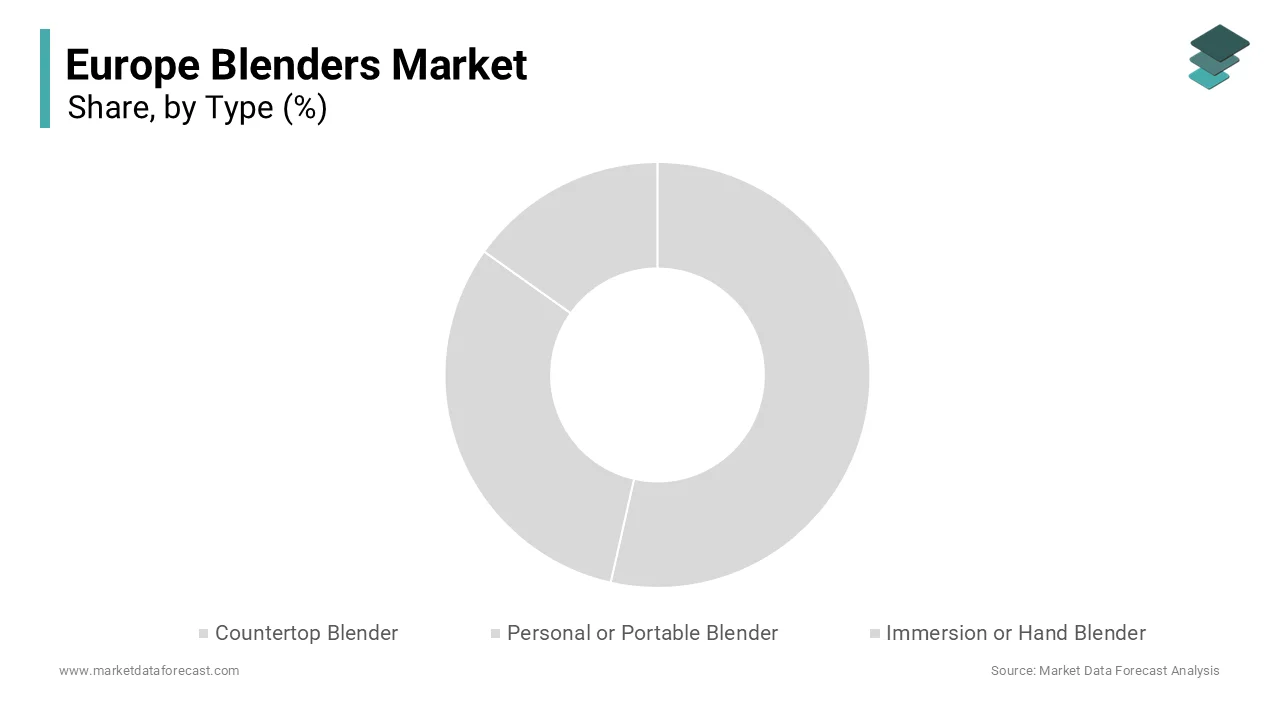
The personal or portable blender segment is likely to experience the fastest CAGR of 9.2% between 2026 and 2034 owing to the increasing demand for convenience and on the go nutrition among urban professionals and students. Apart from this, the fast paced lifestyles of urban populations in Europe are also driving the demand for personal and portable blenders that offer convenience and mobility. Personal blenders allow users to prepare single serving smoothies and shakes quickly which can be consumed directly from the blending cup eliminating the need for additional cleaning. This feature is particularly appealing to young professionals and students who often skip breakfast or rely on quick nutritious snacks. Portable blenders facilitate this by making it easier to incorporate healthy habits into busy schedules. The compact size of these devices also makes them suitable for small apartments and dormitories where space is limited. Furthermore the affordability of personal blenders compared to high end countertop models lowers the barrier to entry for first time buyers. This alignment with urban living trends and health consciousness ensures rapid adoption and growth of the personal blender segment. The influence of social media and fitness trends significantly contributes to the fast growth of the personal blender segment. Platforms such as Instagram and TikTok are filled with content promoting healthy lifestyles and smoothie recipes which inspires consumers to purchase convenient blending solutions. Influencers often showcase the ease of use and portability of these devices encouraging followers to adopt similar habits. The fitness industry in Europe is also expanding with more people joining gyms and engaging in outdoor activities where portable nutrition is beneficial. Personal blenders equipped with rechargeable batteries allow users to blend ingredients anywhere enhancing their utility for active individuals. The trend towards personalized nutrition and the desire for instagrammable health routines drive the popularity of these stylish and functional devices. This cultural shift towards visible health consciousness fuels the accelerated growth of the personal blender market.
By Power Insights
The power segment between 300 and 600 watts was the largest segment in the Europe blenders market and secured a 42.8% share in 2025. This dominance of the segment is driven by the optimal balance between performance and energy efficiency for everyday household tasks. Blenders in the 300 to 600 watts range offer sufficient power for most common kitchen tasks such as making smoothies pureeing soups and mixing batters without consuming excessive electricity. As per sources, energy efficiency is a key consideration for consumers due to rising electricity costs and environmental concerns. This power range provides enough torque to handle soft and medium hardness ingredients effectively while maintaining lower operational costs. According to research, household energy prices in the EU have fluctuated significantly prompting consumers to seek appliances that offer good performance without high energy consumption. Blenders in this category are often perceived as reliable workhorses that meet the needs of average households without the premium price tag of high power models. They are suitable for daily use and can withstand regular wear and tear making them a practical choice for families. The availability of various models within this power range from reputable brands ensures that consumers have ample choices. This balance of affordability performance and energy efficiency makes the 300 to 600 watts segment the most popular among European buyers. The wide availability and affordability of blenders in the 300 to 600 watts range contribute significantly to their market dominance. These models are stocked by major retailers and online platforms across Europe making them easily accessible to a broad consumer base. The lower manufacturing costs associated with mid range motors allow manufacturers to offer competitive prices while maintaining reasonable profit margins. This segment appeals to students young couples and budget conscious families who require functional appliances without advanced features. The standardization of components in this power range also simplifies maintenance and repair extending the product lifecycle. Furthermore the presence of established brands in this segment builds consumer confidence in quality and durability. The combination of accessibility affordability and reliability ensures that the 300 to 600 watts segment remains the leader in the Europe blenders market.
The above 900 watts segment is on the rise and is expected to be the fastest growing segment in the market by witnessing a CAGR of 8.5% during the forecast period. This rapid expansion of the segment is fueled by the increasing demand for high performance blenders capable of processing tough ingredients and delivering professional results. The growing interest in gourmet cooking and professional grade results at home is driving the rapid growth of high power blenders above 900 watts. Consumers are increasingly investing in appliances that can replicate the texture and consistency of commercially prepared foods such as silky smooth soups and creamy nut butters. High wattage blenders can crush ice grind grains and emulsify ingredients with ease providing superior performance compared to lower power models. The ability to process difficult ingredients quickly saves time and effort appealing to busy households. Furthermore the durability of high power motors ensures longevity justifying the higher initial investment. This demand for professional quality outcomes in domestic settings fuels the expansion of the high power segment. Health trends that emphasize the consumption of whole foods including seeds nuts and fibrous vegetables are another key factor driving the growth of the above 900 watts segment. As per the European Nutrition Society diets rich in fiber and healthy fats require thorough blending to improve digestibility and nutrient absorption. High power blenders are capable of breaking down cell walls in plant materials releasing more nutrients and creating smoother textures. According to the ProVeg International report the increase in plant based diets has led to greater demand for appliances that can handle tough ingredients like kale stems and flaxseeds. Consumers recognize that lower power blenders may leave chunks or fail to fully process these items reducing the health benefits. The ability to make fine powders from grains and legumes also supports gluten free and alternative flour trends. This functional advantage makes high power blenders essential for health conscious individuals. The alignment with nutritional goals and the need for efficient processing of whole foods ensures the rapid adoption of high wattage blenders.
By Distribution Channel Insights
The offline distribution channel segment remained in the lead in the Europe blenders market and occupied a 58.7% share in 2025 because of the consumer preference for physical inspection and immediate availability of products. European consumers often prefer to inspect kitchen appliances physically before purchase to assess build quality size and ease of use. Offline stores such as department stores and specialty appliance shops allow customers to test buttons check jar material and evaluate noise levels. The ability to speak with knowledgeable staff who can provide recommendations and demonstrations adds value to the shopping experience. This tactile engagement is particularly important for higher priced blenders where durability and performance are critical factors. Furthermore the immediate availability of products allows consumers to take them home instantly avoiding delivery wait times. This convenience and assurance provided by offline channels sustain their leading position in the market. The established retail networks and robust after sales support offered by offline channels contribute to their market dominance. Major electronics retailers and department stores have extensive presence across Europe providing easy access to a wide range of blender models. The availability of spare parts and service centers in physical locations ensures that consumers can maintain their appliances effectively. Promotional events and in store demonstrations also drive sales by showcasing product capabilities directly to shoppers. The integration of online and offline experiences through click and collect services further strengthens the appeal of physical stores. This comprehensive support infrastructure and widespread accessibility ensure that offline channels remain the primary source for blender purchases in Europe.
The online distribution channel segment is expected to exhibit a noteworthy CAGR of 10.5% from 2026 and 2034 due to the convenience of home delivery extensive product variety and competitive pricing. Moreover, the convenience of shopping from home and the extensive variety of products available online are primary drivers for the rapid growth of this channel. Online platforms allow consumers to compare prices read reviews and access detailed specifications easily facilitating informed decision making. The ability to shop at any time without geographical constraints appeals to busy professionals and younger demographics. Home delivery services eliminate the hassle of transporting bulky items adding to the convenience factor. Furthermore online retailers often offer exclusive deals and bundles that attract price sensitive buyers. This ease of access and broad selection drives the accelerated adoption of online channels for blender purchases. Competitive pricing and the influence of digital marketing significantly contribute to the fast growth of the online distribution channel. Online retailers often have lower overhead costs allowing them to offer blenders at more attractive prices than physical stores. As per the European Consumer Organisation price comparison tools enable shoppers to find the best deals quickly increasing pressure on retailers to remain competitive. Digital marketing strategies including social media ads and influencer partnerships drive traffic to online stores and stimulate impulse purchases. According to the Interactive Advertising Bureau targeted advertising based on user behavior enhances conversion rates for kitchen appliances. The ease of returning products and flexible payment options also reduce barriers to online shopping. Additionally the rise of mobile commerce allows consumers to make purchases seamlessly from smartphones. These factors combined create a dynamic and attractive online shopping environment that fuels the rapid expansion of this distribution channel.
REGIONAL ANALYSIS
Germany Blenders Market Analysis
Germany dominated the Europe blenders market and captured a share of 22.6% share in 2025. Robust economic growth and increasing household purchasing power are fueling the demand for high-end kitchen appliances. German consumers are known for their appreciation of quality and durability preferring brands that offer long term reliability. As per the Federal Statistical Office, household spending on durable goods has faced downward pressure as consumers prioritize essential expenses in response to broader economic challenges. The trend towards healthy eating and home cooking has increased the popularity of high performance blenders. According to the German Nutrition Society, there is a significant shift toward plant-based nutrition that emphasizes whole, minimally processed foods and sustainable dietary patterns The presence of major appliance manufacturers in Germany fosters innovation and availability of advanced models. Retail networks are well developed with both offline and online channels contributing to sales. Government incentives for energy efficient appliances also influence purchasing decisions. The strong emphasis on sustainability encourages the adoption of eco friendly blender designs. These factors combine to make Germany the largest market for blenders in Europe.
United Kingdom Blenders Market Analysis
The United Kingdom followed closely behind in the Europe blenders market and accounted for a 18.4% share in 2025. High-density urban living in the UK, combined with a passion for food, is driving the market for convenient kitchen innovations. British consumers are increasingly adopting health conscious lifestyles leading to higher consumption of smoothies and soups. As per the Office for National Statistics, household habits are evolving as the initial post-pandemic spike in home meal preparation transitions into a demand for time-saving kitchen solutions. The popularity of fitness trends and wellness programs influences purchasing behavior particularly among younger demographics. According to the British Nutrition Foundation, dietary guidance is increasingly focused on the quality of food processing and the long-term health benefits of diverse, fiber-rich plant ingredients. The retail sector is highly competitive with numerous online and offline options available to consumers. Major retailers frequently offer promotions and discounts driving sales volumes. The influence of celebrity chefs and cooking shows also promotes the use of specialized kitchen gadgets. The UK’s focus on innovation and design attracts premium brands to the market. These dynamics ensure the UK maintains a significant share in the regional market.
France Blenders Market Analysis
France plays a major role in the Europe blenders market. The country’s rich culinary heritage and focus on gastronomy drive the demand for high quality blending appliances. French consumers value precision and versatility in kitchen tools preferring models that can handle diverse culinary tasks. As per the National Institute of Statistics and Economic Studies, household spending on kitchen equipment has fluctuated as consumers adjust their purchasing behavior to match changing economic conditions. The trend towards homemade gourmet preparations such as veloutés and sauces boosts the popularity of powerful blenders. According to the French Agency for Food, Environmental and Occupational Health & Safety, public health focus is centered on reducing exposure to chemical contaminants and improving the nutritional profile of the national diet. The presence of renowned appliance brands in France supports the availability of premium products. Retailers emphasize design and aesthetics appealing to style conscious buyers. The growth of e commerce has expanded access to a wider range of models. Government initiatives promoting healthy eating also contribute to market growth. These cultural and economic factors sustain France’s strong position in the European blender market.
Italy Blenders Market Analysis
Italy is another key player in the Europe blenders market. A strong tradition of preparing meals from scratch with fresh components is accelerating the market for high-performance blenders. Italian consumers prioritize quality and performance preferring appliances that can handle tough ingredients like tomatoes and herbs. As per the Italian National Institute of Statistics, the market for home-related investments is stabilizing as previous government incentives for residential renovations reach their conclusion. The popularity of traditional recipes such as pesto and minestrone requires reliable blenders. According to the Italian Society of Human Nutrition, there is a renewed effort to promote the Mediterranean dietary pattern with a modern emphasis on environmental impact and nutritional adequacy. The design sensibility of Italian consumers favors aesthetically pleasing and compact models. Local manufacturers contribute to the market with innovative and stylish products. The retail landscape includes a mix of specialized stores and large supermarkets. Online sales are growing rapidly offering convenience to urban consumers. These factors ensure Italy remains a key player in the European blender market.
Spain Blenders Market Analysis
Spain is anticipated to grow significantly in the Europe blenders market over the forecast period. The country’s warm climate and love for fresh beverages drive the demand for blenders capable of making smoothies and cold soups. Spanish consumers are increasingly health conscious leading to higher consumption of fruit based drinks. As per the National Statistics Institute, consumer demand for household technology is closely linked to fluctuations in purchasing power and the broader cost of living. The popularity of gazpacho and other cold dishes requires efficient blending capabilities. According to the Spanish Agency for Food Safety and Nutrition, national health initiatives are focused on implementing clear nutritional labeling and reducing the intake of specific fats and sugars. The tourism industry also influences demand with hotels and restaurants investing in commercial grade blenders. Retailers offer a wide variety of models catering to different budget segments. The growth of online shopping provides access to international brands. Government subsidies for energy efficient appliances encourage upgrades. These cultural and economic drivers support Spain’s position in the regional market.
COMPETITIVE LANDSCAPE
The competition in the Europe blenders market is intense and characterized by the presence of established global brands and numerous local manufacturers. Leading companies compete on the basis of innovation product quality design and price. The market exhibits a high level of fragmentation with many players vying for consumer attention through differentiated offerings. Differentiation is achieved through smart features sustainability initiatives and specialized functionalities such as vacuum blending or portable designs. Price competition is fierce particularly in the mid and low end segments where private label brands pose significant threats. New entrants face barriers due to brand loyalty and established distribution networks but can succeed through niche targeting. Collaborative efforts with retailers and online platforms are crucial for market penetration. The focus on health and wellness drives continuous innovation in blending technologies. Companies that prioritize sustainability and digital integration are better positioned to capture market share. Regulatory compliance with energy and safety standards also influences competitive dynamics. Strong after sales service and warranty offerings enhance customer retention. Overall the market rewards agility innovation and strategic branding.
KEY MARKET PLAYERS
Some of the notable key players in the Europe blenders market are
- Robert Bosch GmbH (BSH Home Appliances)
- Koninklijke Philips N.V.
- Panasonic Holdings Corporation
- Whirlpool Corporation
- Breville Group Limited
- SMEG S.p.A.
- Hamilton Beach Brands Inc.
- Cuisinart Corporation
- Spectrum Brands Holdings Inc.
- Vita Mix Corporation
- Blendtec Inc.
- Electrolux AB
- Braun GmbH
- De’Longhi S.p.A.
Top Players in the Market
- Koninklijke Philips N.V. is a leading health technology company with a strong presence in the Europe blenders market through its extensive portfolio of kitchen appliances. The company contributes globally by innovating products that promote healthy living and sustainable practices. Philips focuses on developing high performance blenders with advanced technologies such as ProBlend systems for superior nutrient extraction. Recent actions include the launch of eco friendly models made from recycled materials aligning with European sustainability goals. The company strengthens its market position by integrating smart features into its appliances allowing users to access recipes via mobile applications. Philips also expands its distribution networks through strategic partnerships with major retailers and e commerce platforms. These initiatives enhance brand visibility and customer engagement. Philips maintains its reputation as a trusted provider of quality kitchen solutions in Europe and beyond. It achieves this by prioritizing innovation and sustainability.
- SEB Group is a global reference in small domestic equipment with a dominant role in the Europe blenders market. The company owns renowned brands such as Moulinex Tefal and Krups which are widely recognized for their reliability and innovation. SEB contributes to the global market by offering diverse blending solutions tailored to various consumer needs. Recent actions involve the introduction of compact and powerful blenders designed for urban lifestyles and small kitchens. The company invests heavily in research and development to improve energy efficiency and durability of its products. SEB strengthens its market position by expanding its digital presence and enhancing after sales services. The group also focuses on circular economy initiatives by offering repair services and spare parts to extend product lifecycles. These strategies reinforce consumer trust and loyalty. By leveraging its strong brand portfolio and commitment to innovation SEB continues to lead the European market.
- Breville Group Limited is a prominent player in the premium kitchen appliance sector with significant influence in the Europe blenders market. The company is known for its innovative designs and high performance blenders that cater to culinary enthusiasts. Breville contributes globally by setting standards for quality and functionality in small appliances. Recent actions include the expansion of its product line with smart blenders featuring automated programs and connectivity options. The company strengthens its market position through targeted marketing campaigns and collaborations with celebrity chefs. Breville also focuses on enhancing retail experiences by providing interactive demonstrations in stores. The group invests in sustainable packaging and energy efficient technologies to meet environmental standards. By delivering superior user experiences and maintaining high quality standards Breville attracts discerning consumers. Its focus on innovation and brand prestige ensures a strong competitive edge in the European market.
Top Strategies Used by the Key Market Participants
Key players in the Europe blenders market primarily focus on product innovation and sustainability to maintain competitive advantage. Companies invest in research and development to create energy efficient and smart blenders with enhanced features. Strategic partnerships with retailers and e commerce platforms expand distribution reach and brand visibility. Manufacturers emphasize eco friendly designs using recycled materials to align with European environmental regulations. Digital marketing and influencer collaborations drive consumer engagement and brand awareness. After sales support and warranty services enhance customer loyalty and trust. Pricing strategies often target specific segments from budget conscious buyers to premium users. These approaches help key participants address evolving consumer preferences and regulatory requirements effectively while strengthening their market positions.
MARKET SEGMENTATION
This research report on the European blenders market has been segmented and sub-segmented based on categories.
By Type
- Countertop Blender
- Personal or Portable Blender
- Immersion or Hand Blender
By Power
- Up to 300 Watts
- 300 to 600 Watts
- 600 to 900 Watts
- Above 900 Watts
By Distribution Channel
- Offline
- Online
By Country
- UK
- France
- Spain
- Germany
- Italy
- Russia
- Sweden
- Denmark
- Switzerland
- Netherlands
- Turkey
- Czech Republic
- Rest of Europe