- Product Description Description
- Table of Contents TOC
- List of Table & Figure LOT
- Get Free Sample PDF Sample PDF
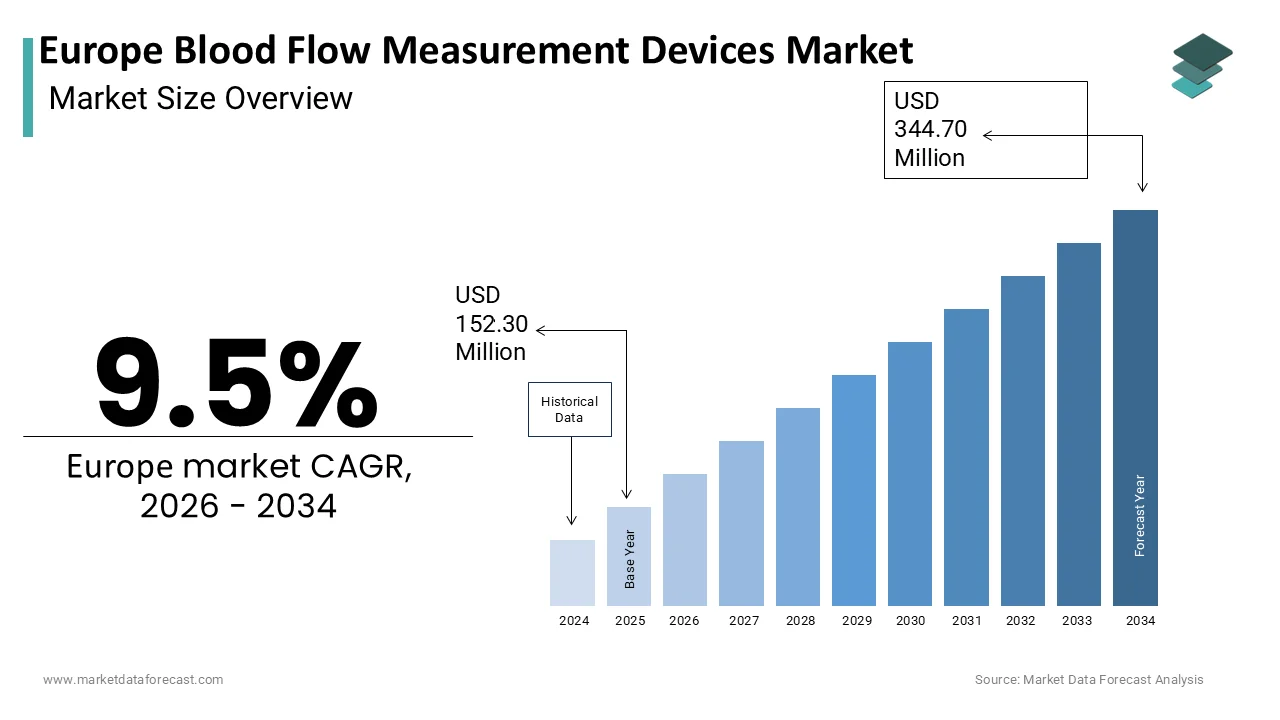
Market Size, 2025
$152.3 MnMarket Estimate, 2026
$166.77 MnMarket Forecast, 2034
$344.7 MnCAGR, 2026–2034
9.5%Europe Blood Flow Measurement Devices Market Size
The Europe Blood Flow Measurement Devices Market is projected to grow from USD 152.30 million in 2025 to USD 166.77 million in 2026 and reach USD 344.70 million by 2034, registering a CAGR of 9.5% from 2026 to 2034.
Blood Flow Measurement Devices refer to the diagnostic and monitoring tools designed to assess hemodynamic parameters, including volume, velocity, and direction of blood movement in arteries, veins, and microcirculatory networks. These devices employ modalities such as Doppler ultrasound, laser speckle contrast imaging, photoplethysmography, and thermal clearance to support clinical decision making in cardiovascularr surgery, neurology, and critical care. The market operates within a highly regulated medical technology ecosystem governed by the European Union Medical Devices Regulation, which mandates rigorous clinical evidence and post-market surveillance. According to sources, a substantial portion of the European post-marketization population lives with key cardiovascular risk factors, indicating a major market for preventative and diagnostic health solutions. Also, it emphasizes the high prevalence of issues like hypertension, which affects approximately one in three adults in the WHO European Region, leading to a considerable patient pool requiring ongoing monitoring and risk management. According to recent Eurostat data for 2022, cardiovascular diseases were responsible for 32.7% of all deaths in the EU, a figure that highlights the persistent burden on healthcare systems despite gradual declines in mortality rates over time. This persistent disease burden, coupled with aging demographics and hospital modernization initiatives under the national,,l health resilience plan, has cemented the clinical necessity of accurate non-invasive blood flow monitoring across both tertiary and primary care settings.
MARKET DRIVERS
Rising Prevalence of Cardiovascular and Peripheral Vascular Diseases
The escalating burden of circulatory disorders across Europe is a primary accelerator for the growth of the growth of European blood flow measurement devices market. This is particularly for outpatient and surgical contexts. According to research, over 92 million people in the EU suffer from hypertension, while more than 15 million live with peripheral artery disease,e, often undiagnosed until advanced stages. Early detection of impaired perfusion is critical to preventing limb amputations, stroke, and heart failure, which collectively strain healthcare systems. The clinical urgency has accelerated the adoption of point-of-care Doppler ultrasound and laser Doppler perfusion monitors in vascular clinics and wound care centers. National screening programs, such as the UK’s NHS Abdominal Aortic Aneurysm Screening Programme and Sweden's diabetic foot surveillance protocols, mandate regular blood flow and vascular assessments, which institutionalize the utilization of diagnostic devices like ultrasounds or Doppler probes. The integration of these tools into standardized care pathways ensures consistent procurement and expands access beyond specialized hospitals to community settings.
Integration of Blood Flow Monitoring in Minimally Invasive and Robotic Surgery
The shift toward precision surgery has elevated the role of real-time blood flow assessment during minimally invasive and robotic procedures to ensure viability and anastomotic integrity, which propels the expansion of the European blood measurement devices market. According to studies, the number of robot-assisted European laparoscopy systems installed across Europe was over 1,250 units in 2025. Laparoscopic and robotic operations are widely prevalent in European Union hospitals, with growth observed in complex subsegments like vascular reconstruction and organ transplantation. In these contexts, intraoperative blood flow verification using handheld Doppler or indocyanine green angiography with flow quantification is now considered the standard of care to reduce postoperative complications. The European Society for Vascular Surgery updated its guidelines to recommend the use of flowmetry during all infrainguinal bypass surgeries, based on evidence that real-time perfusion data guiding surgical decisions improves patient outcomes, as per sources. Device manufacturers have responded by developing sterile single-use probes compatible with robotic arms and integrating flow metrics into surgical navigation platforms. This fusion of diagnostics and intervention not only improves outcomes but also justifies premium reimbursement in value-based care models, thereby driving hospital investment in advanced flow measurement systems.
MARKET RESTRAINTS
Stringent Regulatory Requirements Under the EU Medical Devices Regulation
The implementation of the European Union Medical Devices Regulation has hindered innovation and market entry for these devices by significantly increasing the time and cost involved in launching products, and thereby restricting the growth of the European blood flow measurement devices market. As per the Restricting Commission, manlow-metric devices previously certified under the Medical Devices Directive required new clinical performance evaluations to maintain CE marking by May 26, 2025. This process entails extensive analytical validation, biocompatibility testing, and post-market clinical follow-up up which can cost a significant,nt amount per device. Sma, all post-market enterprises lacking regulatory expertise have faced delays or withdrawn applications entirely. Furthermore, notified bodies now demand real-world performance data for software-based flow algorithms, particularly those using AI, which extends approval timelines. These patient safety measures, though beneficial, unintentionally narrow market competition and impede the integration of new technologies in financially constrained healthcare systems.
Limited Reimbursement for Advanced Perfusion Monitoring in Outpatient Settings
Reimbursement policies across the region often restrict coverage to inpatient or procedural settings, despite clinical evidence supporting early perfusion assessment, thereby limiting the adoption of these devices in preventive and chronic disease management. This constrains the expansion of the European blood flow measurement devices market. According to a study, only a few EU member states provide consistent reimbursement for laser Doppler or transcutaneous oxygen monitoring in diabetic foot clinics, with most requiring prior authorization or severe symptom thresholds. In addition, reimbursement for advanced diagnostics like flowmetry in Germany often favors inpatient settings or specialized, certified wound centers, which creates significant access and reimbursement challenges for primary care providers, including podiatrists. The financial barrier discourages clinics from investing in equipment even when clinically indicated. As per a survey, across Europe, numerous outpatient medical facilities have indicated that a lack of clarity and consistency in coverage policies regarding non-invasive flow assessments has directly led them to postpone or decline performing these evaluations for their patients. Alignment of payment policies by health technology assessment agencies with preventive care guidelines is a necessary condition for the full realization of early perfusion monitoring's potential.
MARKET OPPORTUNITIES
Expansion of Telehealth and Remote Patient Monitoring for Vascular Conditions
The evolution of telemedicine infrastructure across the region creates a significant opportunity for integrating portable blood flow measurement devices into decentralized care models for chronic vascular diseases, which in turn fuels the growth of the European blood flow measurement devices market. According to studies, the use and reimbursement of remote monitoring in national chronic care pathways is an increasing focus across the EU. Companies have responded by developing smartphone-compatible Doppler cuffs and photoplethysmography wearables that transmit flow data to clinicians via secure cloud platforms. As per research, the NHS and other health systems are exploring and implementing home-based remote patient monitoring programs to manage chronic conditions, improve efficiency, and potentially reduce the need for in-person clinic visits. Similarly, various hospitals and health systems, including those in Sweden, are leveraging new technologies and digital health solutions to improve the management of chronic conditions, such as diabetic foot complications, to prevent serious outcomes like hospitalizations. The maturation of 5G connectivity and AI analytics facilitates proactive interventions through these systems, which shifts the focus of care delivery from reactive to preventive models.
Adoption in Neurocritical Care for Cerebral Blood Flow Monitoring
Regional neurointensive care units are opening new prospects for the expansion of the European blood flow measurement devices market. This growth is due to the increasing recognition of cerebral perfusion monitoring as essential for managing traumatic brain injury, stroke, and subarachnoid hemorrhage, which is encouraging the adoption of advanced technologies. According to studies, a 2019 study in the European Journal of Neurology found approximately 138,000 new TBI cases occurred in the EU in 2019. Current European guidelines emphasize managing cerebral perfusion pressure (CPP) through maintaining adequate mean arterial pressure and controlling intracranial pressure (ICP). Technologies such as transcranial Doppler ultrasound and near-infrared spectroscopy-based flowmetry are increasingly integrated into multimodal centers. As per studies, units using real-time cerebral flow data reduced hypoperfusion episodes and improved functional The expansion of national neurocritical care networks and advancements in device miniaturization are poised to accelerate adoption beyond academic hospitals and into regional ICUs.
MARKET CHALLENGES
Interoperability Gaps with Hospital Electronic Health Record Systems
Limited integration of flow data into hospital electronic health record platforms due to fragmented data standards and proprietary communication protocols, which challenge the growth of the European blood flow measurement devices market. According to research, many medical devices in EU hospitals cannot transmit structured measurements directly to EHRs, requiring manual entry, which introduces errors and delays. Blood flow devices are particularly affected as Doppler velocity waveforms, perfusion iindicess and thermal clearance valu, es la,c,k standardized LOINC or SNOMED CT codes recognized across national health IT systems. As per sources, only a portion of vascular labs in university hospitals had automated data transfer from flow meters to patient records. This disconnect impedes clinical decision support analytics and population health management. The EU's new Medical Device Regulation amendments favor IHE profile conformity, but the lack of mandatory adoption means uptake is inconsistent across the market. Mandating interoperability as a certification criterion is necessary to overcome data flow barriers and support successful value-based care implementation and workflow efficiency.
Shortage of Trained Personnel for Advanced Flow Interpretation
The effective utilization of these devices is increasingly hindered by a shortage of healthcare professionals skilled in both operation and clinical interpretation, particularly for advanced modalities like laser speckle contrast imaging and high-resolution Doppler, which obstructs the expansion of the European blood flow measurement devices market. According to studies, there is a significant and widespread shortage of certified vascular technologists across the European Union. The current workforce is less than a third of what is estimated to be necessary to adequately meet the demand for essential vascular screening and diagnostic services. This staffing gap is particularly pronounced in several Eastern and Southern European countries, where the number of accredited vascular laboratories per million inhabitants is notably low, highlighting a considerable unmet need for these critical healthcare services. Also, this scarcity leads to inconsistent exam quality, delayed diagnoses, and underuse of available equipment. Even in well-resourced settings, radiologists a, nd surgeons often lack training in functional hemodynamic assessment, focusing instead on anatomical imaging. Professional bodies have launched certification programs but face low enrollment due to limited institutional support and reimbursement for training. Achieving the full clinical potential of these devices requires more than just better technology. It demands a unified approach to workforce development.
REPORT COVERAGE
| REPORT METRIC | DETAILS |
| Market Size Available | 2025 to 2034 |
| Base Year | 2025 |
| Forecast Period | 2026 to 2034 |
| Segments Covered | By Product, Application, and Region. |
| Various Analyses Covered | Global, Regional, and Country-Level Analysis, Segment-Level Analysis, Drivers, Restraints, Opportunities, Challenges; PESTLE Analysis; Porter’s Five Forces Analysis, Competitive Landscape, Analyst Overview of Investment Opportunities |
| Countries Covered | UK, France, Spain, Germany, Italy, Russia, Sweden, Denmark, Switzerland, Netherlands, Turkey, Czech Republic, Rest of Europe |
| Market Leaders Profiled | Compumedics Ltd. (Australia), Transonic Systems, Inc. (U.S.), Cook Medical, Inc. (U.S.), Perimed AB (Sweden), Medistim ASA (Norway), ADInstruments (Australia), Deltex Medical Group plc (U.K.), BIOPAC Systems, Inc. (U.S.), Atys Medical (France), SONOTEC Ultraschallsensorik Halle GmbH (Germany), Moor Instruments Ltd. (U.K.). |
SEGMENTAL ANALYSIS
By Product Insights
The ultrasound segment held the majority share in the European Blood Flow Measurement Devices Market in 2025. Its established clinical validity, wide accessibility, and integration into routine vascular diagnostics across care settings propel the expansion of the ultrasound segment. Doppler ultrasound, in particular, is embedded in national screening protocols for conditions such as deep venous thrombosis, peripheral artery disease, and carotid stenosis, where it provides real-time visualization, measurement of flow velocity direction, and turbulence. According to streal-timest vascular laboratories in the EU use duplex ultrasound as the first-line modality for hemodynamic assessment, with millions of vascular ultrasound exams performed annually. Its non-ionizingnatureu,, re, operator familiarity, and compatibility with portable systems make it ideal for both hospital and outpatient use. Reimbursement policies further entrench its dominance, with some assigning specific codes for arterial and venous Doppler studies, ensuring consistent payment. Apart from these, the technology benefits from continuous innovationincluding AI-assisted stenosis detection and handheld wireless probes that extend its utility and primary care without compromising diagnostic accuracy.
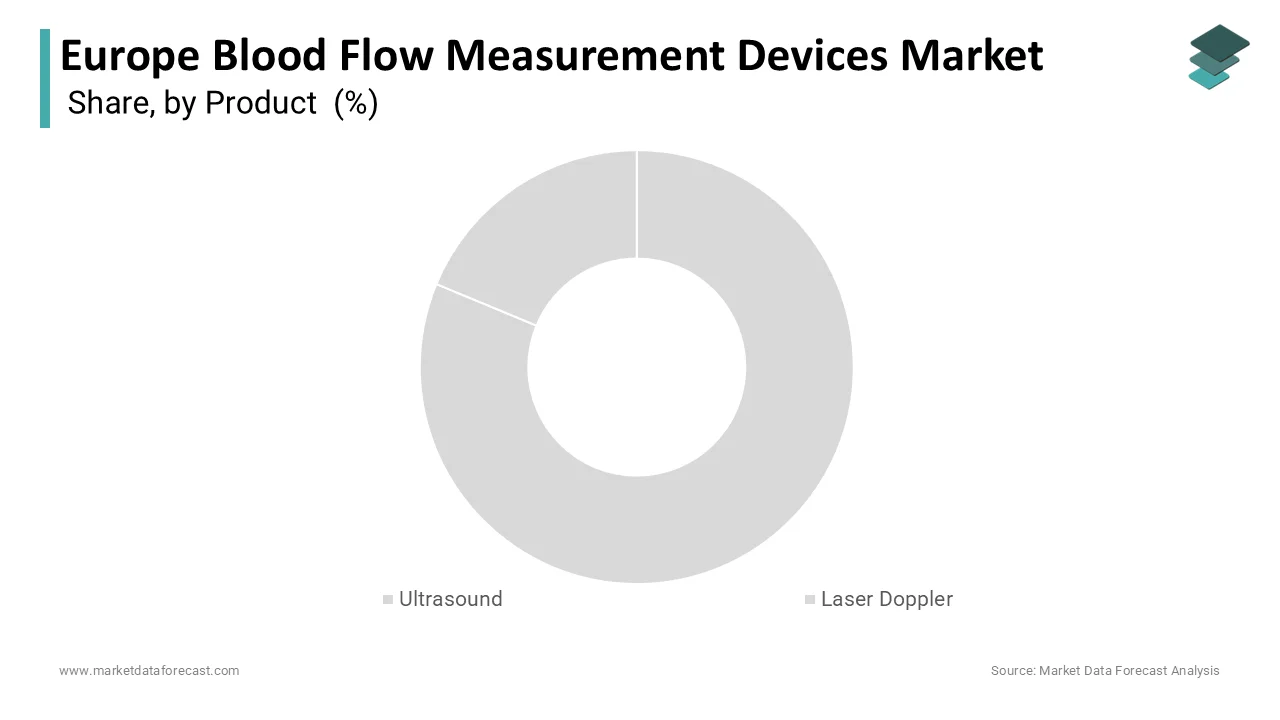
The laser Doppler segment is predicted to witness the highest CAGR of 11.3% from 2025 to 2033 due to its unique capability to quantify microcirculatory perfusion in tissues where traditional ultrasound lacks resolution. This is particularly critical in managing chronic wounds, diabetic foot ulcers, and flap viability in reconstructive surgery. According to sources, thousands of major amputations occur annually in the EU due to undetected microvascular insufficiency, and early perfusion mapping using laser Doppler has been shown to reduce this risk. National wound care guidelines in some European countries recommend perfusion assessment before debridement or offloading decisions. Technological advancements have also enhanced usability with newer devices offering real-time color-coded perfusion maps and smartphone connectivity, enabling teleconsultations. The increasing focus of value-based care models on limb salvage, coupled with stricter penalties for hospital readmissions, is driving rapid demand for precise microcirculation tools across academic and community healthcare environments.
By Application Insights
The non-invasive applications segment led the European blood flow measurement devices market by capturing a substantial share in 2025. The supremacy of the non-invasive applications segment is attributed to strong patient and clinician preference for risk-free repeatable diagnostics that align with outpatient and preventive care models, such a. Doppler ultrasound, photoplethysmography, and laser Doppler require no incision, contrast agents, or ionizing radiation, making them suitable for serial monitoring in c, chronic disease m, management. National screening initiatives further support this trend. Reimbursement structures also favor these methods, as some health insurers fully cover Doppler studies for suspected peripheral artery disease without prior hospitalization. Moreover, patient compliance is significantly higher with painless procedures, enabling early detection before irreversible tissue damage occurs. This combination of safety, scalability, and policy support ensures non-invasive flow measurement remains the clinical and economic cornerstone of European vascular care.
The invasive applications segment is estimated to register the fastest CAGR of 9.8% during the forecast period owing to its indispensable role in high precision intraoperative and critical care s,ettings where real time quantitative flow data directly impacts surgical decisions and patient outcoreal-timeniques such as thermal diffusion flowmetry and perivascular ultrasonic transit time probes are increasingly used during coronary artery bypass grafting, organ transplantation, and neurosurgery to verify anastomotic patency and graft function. According to studies, centers using intraoperative flow verification reduced graft failure rates and readmissions. The steady adoption of these procedures, while confined to specialized environments, stems from the combination of their clinical necessity and the premium reimbursement provided through mechanisms like DRG payments. The expanding application of robotic and minimally invasive techniques in surgery will accelerate the demand for small and sterile flow probes designed to be compatible with surgical protocols.
COUNTRY LEVEL ANALYSIS
Germany Blood Flow Measurement Devices Market Analysis
Germany stood as the top performer in the European blood flow measurement devices market by occupying a share of 25.6% in 2025. Europeanization ofofermany in the region is driven by its dense network of vascular clinics, robust health insurance coverage, and command in medical technology innovation. The country hosts numerous certified vascular laboratories, which collectively perform millions of Doppler exams annually. Statutory health insurers fully reimburse both non-invasive and select invasive flow studies under uniform fee schedules, ensuring non-invasive. Apart from these, Germany allocated funds for diagnostic equipment, modernization, with a significant portion directed toward AI-enhanced ultrasound systems. Leading m, manufacturers develop and validate new flow AI-enhanced in collaboration with university hospitals in Heidelberg and Munich. The nation’s aging population further amplifies demand for peripheral and cerebral perfusion monitoring. This confluence of infrastructure policy and demography solidifies Germany’s leadership in both volume and technological sophistication.
United Kingdom Blood Flow Measurement Devices Market Analysis
The United Kingdom was the second largest country in the European blood flow measurement devices market and captured a 17.3% share in 2025. The growth of the UK market is attributed to centralized healthcare procurement, evidence-based guidelines,s, and a strong focus on preventive vascular care. The UK also serves as a clinically valid, ation with trials conducted at Imperial College London and the University of Edinburgh fr, frequently informing European regulatory submissions. Despite fiscal constraints, the NHS prioritizes flow diagnostics as ascost-savingg tools that prevent expensive amp,,utations and hospitalizations.
France Blocost-savingsurement Devices Market Analysis
France remains a prominent player in the European blood flow measurement devices market because of its high density of hospital vascular services and national protocols that standardize perfusion assessment across public and private sectors. The country is also a pioneer in cerebral blood flow monitoring, with neurocritical units in Paris, Lyon, and Toulouse routinely using transcranial Doppler to manage subarachnoid hemorrhage. Reimbursement through the national health insurance system covers both outpatient and inpatient flow measurements with minimal patient co-payments. Moreover, France hosts key R and D centers for companies that collaborate with hospitals on next-generation handheld Doppler platforms. This integration of public health policy and next-generation industrial innovation sustains France’s prominent market role.
Italy Blood Flow Measurement Devices Market Analysis
Italy is rapidly expanding in the European blood flow measurement devices market owing to its aging population, high prevalence of diabetes, and regional disparities in vascular care that are now being addressed through national standardization efforts. Hospitals lead in advanced applications using laser Doppler for burn and flap monitoring, with reimbursement codes established. Apart from these, Italy’s strong biomedical en engineering sector centered in Bologna and Milan fosters local development of low-cost portable flow m, meters tailored to community cl, clinics. The market's penetration is expanding rapidly in all regions, driven by the ongoing centralization of diagnostic protocols and equipment procurement, which is overcoming past fragmentation barriers.
Spain Blood Flow Measurement Devices Market Analysis
Spain is expected to grow notably in Europe's blood flow measurement devices market from 2025 to 2033, owing to growing public investment in the chronic disease market and expanding,g use of telemedicine-enabled diagnostics. The country’s high incidence of peripheral artery disease telemedicine-enabled device utilization. Academic centers are also advancing intraoperative flow verification in transplant surgery, driving demand for sterile invasive probes. Spain's medtech startups are pioneering the development of AI-assisted Doppler apps integrated with national electronic health records, accelerating the country's move towards decentralized care models despite a history of reliance on imported medical devices.
COMPETITIVE LANDSCAPE
The European Blood Flow Measurement Devices Market features a dual competitive structure comprising global imaging giants and specialized diagnostic innovators. Large players like GE Healthcare and Philips leverage their installed ultrasound base to cross-sell advanced flow modules, while niche firms such as Moor Instruments and Transonic Systems dominate high-precision microcirculation and intraoperative segments. Competition is driven less by price and more by clinical validation, regulatory compliance, and integration into standardized care pathways. The EU Medical Devices Regulation has raised entry barriers favoring incumbents with robust quality management systems and post-market surveillance capabilities. Differentiation arises through AI-enabled automation workflow compatibility and evidence generation via multicenter trials. Although ultrasound remains commoditized in basic Doppler applications, innovation in quantitative perfusion imaging and real-time intraoperative verification creates premium segments. Regional reimbursement policies and clinician training gaps further fragment adoption but also present partnership opportunities for companies offering education and digital support services alongside hardware.
KEY MARKET PLAYERS
Companies playing a notable role in the europe blood flow measurements devices market profiled in the report are
- Compumedics Ltd. (Australia)
- Transonic Systems, Inc. (U.S.)
- Cook Medical, Inc. (U.S.)
- Perimed AB (Sweden)
- Medistim ASA (Norway)
- ADInstruments (Australia)
- Deltex Medical Group plc (U.K.)
- BIOPAC Systems, Inc. (U.S.)
- Atys Medical (France)
- SONOTEC Ultraschallsensorik Halle GmbH (Germany)
- Moor Instruments Ltd. (U.K.)
TOP LEADING PLAYERS IN THE MARKET
- GE Healthcare is a leading contributor to the European Blood Flow Measurement Devices Market through its comprehensive portfolio of Doppler ultrasound systems and integrated vascular diagnostic solutions. The company’s LOGIQ and Venue series offer advanced flow quantification algorithms used in cardiology, vascular surgery, and critical care across European hospitals. It also expanded training partnerships with the European Society for Vascular Medicine to certify clinicians on standardized flow measurement protocols. These initiatives reinforce GE’s role as a technology and education partner while supporting its global dominance in medical imaging and hemodynamic assessment.
- Philips Healthcare plays a strategic role in the European Blood Flow Measurement Devices Market by embedding flow analytics into its broad European imaging-guided therapy and point-of-care ecosystems. Its EPIQ and Lumify ultrasound platforms feature proprietary FlowQuant technology that delivers real-time velocity mapping with minimal operator dependency. The company also collaborated with wound care centers in Sweden to validate a remote perfusion monitoring protocol using its portable systems. These actions align Philips’ flow measurement capabilities with Europe’s shift toward integrated, connected, and preventive care models on a global scale.
- Moor Instruments Ltd is a specialized innovator in the European Blood Flow Measurement Devices Market, renowned for its laser Doppler and laser Europeanane perfusion imaging systems used in microcirculation research and clinical practice. Headquartered in the United Kingdom, the company supplies academic hospitals and diabetic foot clinics across Europe with perfusion monitors that support limb salvage decisions. It also launches a high-resolution module allowing clinicians to review perfusion data remotely in collaboration with the NHS. These developments strengthen Moor’s niche leadership in microvascular diagnostics and extend its influence in global wound care and burn assessment standards.
TOP STRATEGIES USED BY THE KEY MARKET PARTICIPANTS
Key participants in the European Blood Flow Measurement Devices Market focus on embedding artificial intelligence to standardize flow interpretation and reduce operator variability across clinical settings. They pursue regulatory convergence by aligning device validation with European clinical guidelines and health technology assessment requirements. Strategic collaborations with professional societies and national health systems facilitate adoption through training certification and protocol integration. Companies also prioritize interoperability by enabling seamless data transfer to hospital electronic health records and telehealth platforms. Additionally, they invest in miniaturization and wireless connectivity to expand use beyond hospitals into primary care and home monitoring environments, thereby supporting preventive and decentralized care models.
MARKET SEGMENTATION
This research report on the europe blood flow measurement devices market has been segmented and sub-segmented into the following categories.
By Product
-
Ultrasound
- Ultrasound Doppler
- Transit-Time Flow Meters
- Laser Doppler
By Application
-
Non-Invasive Applications
-
Cardiovascular Disease
- Diabetes
- Gastroenterology
- Tumour Monitoring
-
- Other Non-Invasive Applications
- Invasive Applications
- CABG
- Microvascular Surgery
- Other Invasive Application
By Country
-
UK
- France
- Spain
- Germany
- Italy
- Russia
- Sweden
- Denmark
- Switzerland
- Netherlands
- Turkey
- Czech Republic
- Rest of Europe