- Product Description Description
- Table of Contents TOC
- List of Table & Figure LOT
- Get Free Sample PDF Sample PDF
Market Size, 2025
$0.48 BnMarket Estimate, 2026
$0.51 BnMarket Forecast, 2034
$0.87 BnCAGR, 2026–2034
6.95%Europe Cardamom Market Report Summary
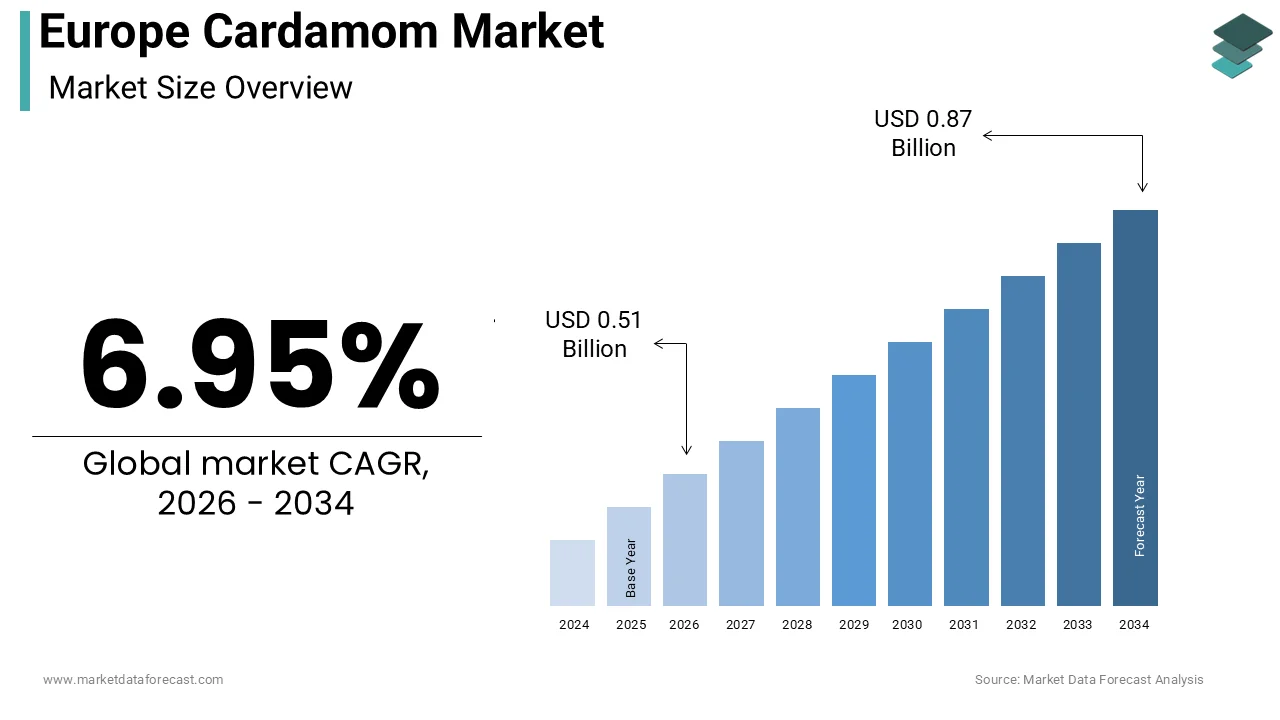
The Europe cardamom market was valued at USD 0.48 billion in 2025, is estimated to reach USD 0.51 billion in 2026, and is projected to reach USD 0.87 billion by 2034, growing at a CAGR of 6.95% during the forecast period. The growth of the Europe cardamom market is driven by increasing demand for natural spices, rising popularity of ethnic cuisines, and expanding use of cardamom in food, beverages, and pharmaceutical applications. Cardamom is widely valued for its aromatic flavor, medicinal properties, and role in traditional and modern culinary practices. The market is further supported by growing consumer preference for organic and clean-label ingredients, as well as the increasing incorporation of spices in functional foods and herbal products.
Key Market Trends
- Rising demand for natural spices and clean-label ingredients across Europe.
- The increasing popularity of ethnic and exotic cuisines is boosting cardamom consumption.
- Growing use of cardamom in functional foods, beverages, and herbal products.
- Expansion of organic and premium spice products.
- Increasing application of cardamom in pharmaceutical and wellness products.
Segmental Insights
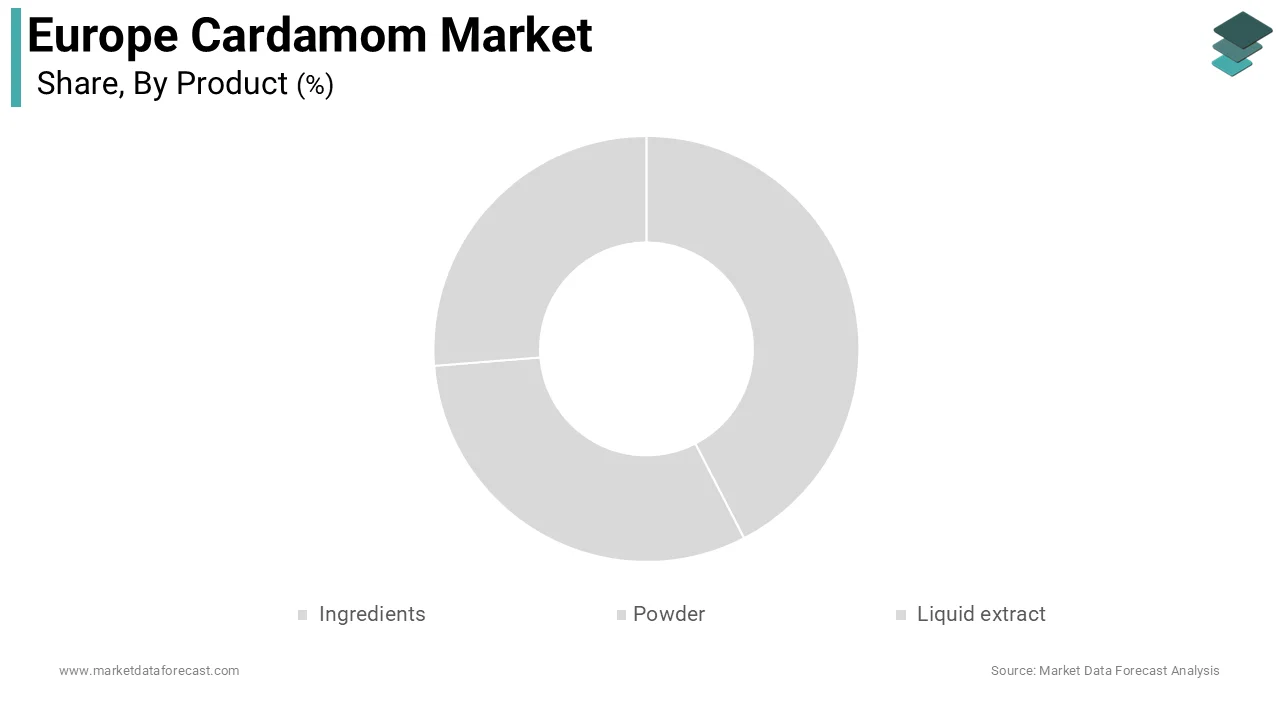
- Based on product, the powder segment dominated the Europe cardamom market by accounting for 56.5% of the market share in 2025, driven by ease of use and widespread application in cooking and food processing.
- Based on application, the food and beverages segment led the Europe cardamom market by capturing 71.9% of the market share in 2025, supported by strong demand from the bakery, confectionery, and beverage industries.
- Based on type, the green cardamom segment accounted for 80.9% of the Europe cardamom market share in 2025, owing to its superior aroma, flavor, and quality.
- Based on distribution channel, the offline segment held 65.5% of the Europe cardamom market share in 2025, driven by the strong presence of supermarkets, specialty stores, and traditional retail outlets.
Regional Insights
- Finland dominated the Europe cardamom market in 2025, accounting for 27.7% of the regional market share, driven by high consumption of cardamom in traditional baked goods and beverages.
- Sweden holds a significant share, supported by similar culinary traditions and high demand for spice-based bakery products.
- Germany is expected to witness notable growth, fueled by increasing demand for ethnic cuisines and premium spices.
- The United Kingdom is projected to grow steadily, supported by a diverse population and the rising use of spices in international cuisines.
- France is emerging as a growing market, driven by the increasing adoption of gourmet and specialty ingredients.
Competitive Landscape
- The Europe cardamom market is moderately competitive, with the presence of global spice manufacturers and regional suppliers focusing on quality, sourcing, and distribution. Market players are investing in organic certification, supply chain optimization, and product innovation to strengthen their market position.
- Prominent players in the Europe cardamom market include Olam International, McCormick & Company, Everest Spices, MDH Spices, DS Group, Bart Ingredients, Schwartz, East End Foods, TRS Foods, and Pereg Gourmet Spices.
Europe Cardamom Market Size
The Europe cardamom market size was calculated to be USD 0.48 billion in 2025 and is anticipated to be worth USD 0.87 billion by 2034, from USD 0.51 billion in 2026, growing at a CAGR of 6.95% during the forecast period.
Unlike generic spice markets, cardamom is defined by its reliance on specific aromatic profiles essential to Nordic baking traditions and the burgeoning craft coffee culture. The region functions primarily as a consumption hub since cardamom cultivation is geographically impossible in European climates due to strict tropical requirements. According to the International Spice Conference, Finland has one of the highest per capita consumption levels of this spice, which indicates its deep cultural integration in Scandinavia. As per Eurostat trade records, a significant portion of imports enters as whole green pods to preserve volatile compounds until final processing. Regulatory scrutiny regarding pesticide residues and aflatoxin levels remains exceptionally high, which is shaping sourcing strategies toward certified organic origins. The rise of artisanal bakeries and specialty coffee roasters has further refined demand, shifting focus from bulk commodity trading to premium single-origin lots. This ecosystem operates at the intersection of traditional heritage and modern gastronomic innovation, where the sensory quality of the spice dictates commercial value more than volume alone.
MARKET DRIVERS
Deep-Rooted Cultural Tradition in Nordic Bakery and Confectionery
The enduring dominance of cardamom in Northern European culinary heritage is majorly propelling the growth of the European cardamom market, particularly within the bakery and confectionery sectors. In countries like Finland, Sweden, and Norway, cardamom is not merely a flavoring but a cultural staple integral to daily life and festive celebrations. As per the Finnish Customs Administration, Finland records the highest consumption rate globally, which indicates the cultural significance of cardamom. This demand peaks during traditional holidays such as Christmas and Easter, where spiced breads like pulla and julekake are mandatory fixtures on household tables. The recipe standards for these items often mandate specific ratios of ground cardamod creating an inelastic demand curve that remains resilient against price fluctuations. Bakeries across the region source significant volumes year-round to maintain supply for these legacy products, with industrial bakers accounting for 45% of total retail volume sales, as per the European Bakers Association. The transmission of these baking traditions to younger generations ensures sustained relevance, while the expansion of Scandinavian cuisine globally reinforces domestic pride and consumption. Unlike transient food trends, this driver is anchored in centuries of practice and provides a stable foundation for market volume that other spices cannot replicate in the region.
Surging Popularity of Specialty Coffee and Craft Beverage Formulations
The exponential growth of the specialty coffee sector across Europe is further supporting the cardamom market growth in Europe. Baristas and roasters increasingly utilize cardamom pods or extracts to create distinctive flavor profiles in lattes, cold brews, and spiced teas, capitalizing on consumer desire for exotic and aromatic notes. As per the Specialty Coffee Association of Europe, the specialty coffee market has expanded significantly, with many new menu items featuring spice infusions. Cardamom pairs exceptionally well with coffee due to its complementary citrusy and piney undertones, a synergy that drives its adoption in high-end cafes throughout major urban centers like London, Berlin, and Copenhagen. According to Mintel Food and Drink, independent coffee shops in Western Europe have increasingly introduced cardamom-infused beverages, which reflects a growing consumer preference. Furthermore, the rise of non-alcoholic craft spirits and botanical sodas has opened additional avenues, with distillers using cardamom as a primary botanical in gin and aperitifs. This diversification beyond solid food applications broadens the addressable market, engaging a demographic that prioritizes experiential consumption and flavor complexity in their daily rituals.
MARKET RESTRAINTS
Extreme Price Volatility Due to Geopolitical and Climatic Instability
The extreme price volatility inherent in its supply chain, which is concentrated in a few geopolitically sensitive regions, is one of the major restraints to the Europe cardamom market growth. Since Europe produces no cardamom domestically, it relies entirely on imports from Guatemala, India, and Sri Lanka, making the market highly susceptible to external shocks. As per the International Trade Centre, wholesale prices for green cardamom have shown sharp fluctuations due to erratic monsoon patterns in India and labor strikes in Guatemala. Such unpredictability complicates inventory planning and cost management for European importers and food manufacturers who operate on thin margins. Small and medium-sized enterprises often struggle to hedge against these spikes, leading to reduced order volumes or the substitution of cardamom with cheaper alternatives like synthetic flavorings or less expensive spices. The lack of long term price stability discourages investment in product development featuring cardamom as a primary ingredient, as brands fear alienating price-sensitive consumers with sudden cost pass-throughs. Additionally, currency exchange rate fluctuations between the Euro and producer nation currencies exacerbate these financial risks, creating a barrier to consistent supply. This structural vulnerability limits market expansion potential, forcing many buyers to maintain minimal stock levels and hindering the ability to capitalize on emerging demand trends effectively.
Stringent Regulatory Compliance Regarding Contaminant Levels
Rigorous food safety regulations in the European Union are further impeding the regional market expansion. The spice is particularly prone to issues related to pesticide residues, heavy metals, and Salmonella contamination due to traditional drying and storage practices in producing countries. As per the European Commission Health and Food Safety Directorate, numerous notifications have been recorded regarding cardamom consignments, with many batches rejected at entry points for exceeding maximum residue limits. Compliance with these standards requires extensive testing and certification, adding substantial costs and time delays to the import process. Small-scale exporters from developing nations often lack the technical infrastructure to meet these stringent requirements, which is leading to a consolidation of supply sources and reduced competition. The threat of border rejections creates a cautious procurement environment where importers may limit orders to verified large-scale suppliers, which is potentially stifling innovation from smaller producers offering unique varieties. Furthermore, the requirement for detailed traceability documentation increases administrative burdens, slowing down the speed to market for fresh crops. These regulatory hurdles effectively raise the barrier to entry, limiting the diversity of available products and increasing the overall cost structure for market participants operating within the European zone.
MARKET OPPORTUNITIES
Expansion of Clean Label Natural Preservatives in Meat and Dairy
The shifting consumer preference for clean label products provides a substantial opportunity for the Europe cardamom market. As European shoppers increasingly reject synthetic additives like nitrites and artificial antioxidants, food technologists are turning to the antimicrobial properties of cardamom essential oils to extend shelf life naturally. According to findings published in the Journal of Food Science, cardamom extracts demonstrate strong activity against common foodborne pathogens, offering both preservation and flavor enhancement. As per ProVeg International, the plant-based meat sector has shown notable growth and is receptive to natural ingredients that improve sensory profiles without compromising the clean label claim. Manufacturers are reformulating sausages, cheeses, and ready meals to include cardamom, leveraging its GRAS status and consumer familiarity. This application moves cardamom beyond the niche of sweet treats into the high-volume savory category, significantly expanding its total addressable market. The ability to list cardamom as a simple ingredient rather than a chemical code aligns perfectly with current labeling trends, driving adoption among major food brands seeking to improve their clean label scores. This functional utility positions cardamom as a strategic ingredient for innovation in the processed food sector.
Integration into Functional Beverages and Wellness Tonics
The booming functional beverage sector offers a lucrative avenue for the Europe cardamom market. European consumers are actively seeking drinks that provide therapeutic value, and cardamom fits seamlessly into the narrative of gut health and metabolic support. For instance, the market for functional teas and tonics in Europe is projected to grow significantly, with herbal blends containing digestive aids seeing the fastest adoption. Cardamom is traditionally used in Ayurveda and Unani medicine to alleviate bloating and improve digestion, attributes that resonate strongly with the health-conscious demographic. Beverage companies are launching ready-to-drink formulations featuring cardamom combined with ginger, fennel, and probiotics to target wellness-oriented buyers. For instance, sales of spiced herbal infusions have increased, reflecting a shift away from sugary soft drinks toward beneficial botanical beverages. The versatility of cardamom allows it to be used in hot teas, cold sparkling waters, and even fermented drinks like kombucha, which is appealing to diverse taste preferences. By positioning cardamom as a functional ingredient rather than just a flavor, brands can command premium pricing and tap into the expanding wellness economy, which is creating a robust growth trajectory for the spice in the liquid refreshment category.
MARKET CHALLENGES
Supply Chain Vulnerability to Climate Change Impacts
Climate change poses an existential challenge to the stability of cardamom supplies feeding the European market, as the crop is highly sensitive to specific microclimatic conditions. Cardamom cultivation requires consistent rainfall, high humidity, and stable temperatures, parameters that are becoming increasingly erratic in major producing regions like the Western Ghats of India and the highlands of Guatemala. According to the Intergovernmental Panel on Climate Change, rising temperatures are projected to reduce suitable cultivation areas, threatening long term yield stability. Unpredictable monsoon patterns have already caused significant crop failures, with production in key districts dropping in recent years due to drought followed by excessive flooding. These climatic disruptions lead to inconsistent quality and sporadic availability, making it difficult for European importers to secure reliable long term contracts. The resulting supply insecurity forces buyers to scramble for alternative sources, often at inflated prices, disrupting downstream production schedules for bakeries and beverage manufacturers. Furthermore, the stress on plants alters the chemical composition of the pods, potentially affecting the aroma profile that European consumers expect. Adapting to these changes requires significant investment in climate-resilient agricultural practices, which many smallholder farmers cannot afford, thereby exacerbating the risk of supply shortages for the entire European value chain.
Prevalence of Adulteration and Quality Consistency Issues
The pervasive issue of adulteration and the difficulty in maintaining consistent quality standards are further challenging the cardamom market expansion in Europe. High market prices incentivize bad actors to mix inferior grades, exhausted pods, or even artificial dyes into genuine shipments, which deceives buyers and compromises product safety. As per the European Spice Association, industry audits have revealed that a notable portion of tested cardamom samples in certain European ports showed signs of adulteration or substandard oil content. Detecting these fraudulent practices requires sophisticated analytical equipment and expertise, resources that are not uniformly available across all entry points and testing facilities. The variability in pod size, color, and aroma between different harvests and regions further complicates the standardization process, which is leading to dissatisfaction among end users who demand uniformity for industrial applications. Brands risk reputational damage if adulterated products reach the consumer, resulting in recalls and loss of trust. The lack of a unified global authentication standard makes it challenging to verify the purity of every consignment efficiently. This environment of uncertainty forces reputable importers to incur higher costs for rigorous testing and certification, which is squeezing margins and creating a competitive disadvantage against less scrupulous operators who bypass quality controls.
REPORT COVERAGE
| REPORT METRIC | DETAILS |
| Market Size Available | 2025 to 2034 |
| Base Year | 2025 |
| Forecast Period | 2026 to 2034 |
| CAGR | 6.95% |
| Segments Covered | By Product, Application, Type, Distribution Channel, And Region |
| Various Analyses Covered | Global, Regional & Country Level Analysis; Segment-Level Analysis; DROC, PESTLE Analysis; Porter’s Five Forces Analysis; Competitive Landscape; Analyst Overview of Investment Opportunities |
| Regions Covered | UK, France, Spain, Germany, Italy, Russia, Sweden, Denmark, Switzerland, Netherlands, Turkey, and the Czech Republic |
| Market Leaders Profiled | Olam International, McCormick & Company, Everest Spices, MDH Spices, DS Group, Bart Ingredients, Schwartz, East End Foods, TRS Foods, Pereg Gourmet Spices |
SEGMENTAL ANALYSIS
By Product Insights
The powder segment dominated the Europe cardamom market by holding 56.5% of the regional market share in 2025. The dominance of the powder segment in the European market can be credited to the immense convenience it offers to both industrial food manufacturers and home cooks, eliminating the need for grinding whole pods while ensuring consistent flavor distribution in large batches. The growth of the powder segment in the European market is further driven by its critical role in cardamom powder in industrial food processing, where standardization and efficiency are paramount. Large-scale bakeries and confectionery manufacturers across Europe require ingredients that can be precisely dosed and uniformly mixed into doughs and batters without altering texture. As per Food Manufacturing Europe, powdered forms are strongly favored in industrial spice procurement to streamline production lines and reduce labor costs. The solubility and dispersibility of fine cardamom powder allow for seamless integration into dry mixes, instant beverages, and seasoning blends, which constitute a massive volume of retail sales. Furthermore, the shelf life of properly processed powder remains stable under controlled storage conditions, which reduces waste for manufacturers. The ability to blend cardamom powder with other spices like cinnamon and nutmeg creates ready-to-use formulations that appeal to busy consumers and food service operators. This operational advantage ensures that the powder segment remains the backbone of commercial cardamom consumption and caters to the high-volume demands of the European food industry.
However, the liquid extract segment is projected to register the highest CAGR of 9.5% over the forecast period in the European market, owing to the rising demand for clean-label ingredients in the beverage industry and the growing application of cardamom extracts in pharmaceutical and nutraceutical formulations. The craft beverage revolution in Europe is a key catalyst for the growth of cardamom liquid extracts, as mixologists and producers seek potent and consistent flavoring agents. Liquid extracts offer superior solubility in cold and hot liquids compared to powders, which is making them ideal for ready-to-drink teas, cocktails, and functional waters. According to Beverage Daily, botanical infusions are increasingly featured in new product launches within the ready-to-drink tea market. Brands are utilizing cardamom extracts to create distinct flavor profiles that stand out in a crowded marketplace, leveraging the spice's aromatic complexity to enhance premium positioning. The consistency of liquid extracts ensures that every batch of beverage delivers the same sensory experience, which is a critical factor for brand loyalty. Additionally, the clarity of liquid extracts allows for use in transparent beverages where powder residue would be visually unappealing. This versatility drives adoption across various beverage categories, from alcoholic spirits to health-focused tonics, propelling the segment forward.
By Application Insights
The food and beverages segment accounted for 71.9% of the European market share in 2025. The overwhelming dominance of the food and beverages segment in the European market is attributed to the extensive use of cardamom in traditional baking, savory dishes, and the rapidly expanding specialty coffee and tea sectors. The deep-rooted baking traditions in Northern and Central Europe serve as the foundational pillar for cardamom consumption in the food sector. In countries like Finland and Sweden, cardamom is an indispensable ingredient in daily breads, pastries, and festive cookies, creating a consistent and high-volume demand. As per the Finnish Spice Association, Finnish households record some of the highest levels of cardamom consumption annually, primarily for baking purposes. This cultural embedding ensures that cardamom remains a staple pantry item, resilient to economic fluctuations. The trend has spread to other European nations where artisanal bakeries incorporate cardamom into sourdoughs and sweet rolls to offer unique flavor experiences. The versatility of cardamom allows it to complement both sweet and savory profiles, expanding its utility in diverse culinary applications from meat marinades to dessert toppings. The enduring popularity of these traditional recipes guarantees a steady baseline consumption that anchors the food and beverage segment as the market leader.
On the other hand, the medical usage segment is anticipated to grow at the fastest CAGR of 10.4% over the forecast period, owing to the increasing recognition of cardamom's therapeutic properties in managing digestive disorders, respiratory issues, and metabolic conditions, supported by growing clinical research. The rising prevalence of gastrointestinal and respiratory ailments in Europe is prompting a shift towards natural remedies, with cardamom emerging as a key ingredient in herbal medicines. According to the European Medicines Agency, clinical studies have validated the carminative and antispasmodic effects of cardamom, which is making it effective for treating bloating, indigestion, and coughs. Healthcare practitioners are increasingly recommending cardamom-based preparations as adjunct therapies, boosting demand in the pharmaceutical sector. The aging population in Europe is particularly receptive to natural solutions for chronic condition management, driving sales of cardamom supplements and herbal teas. Regulatory approvals for traditional herbal medicinal products containing cardamom have streamlined market entry, which is encouraging pharmaceutical companies to develop new formulations. The perception of cardamom as a safe and effective natural remedy enhances consumer trust and leads to higher adoption rates. As awareness of its health benefits spreads, the medical application of cardamom is poised for significant expansion.
By Type Insights
The green cardamom segment commanded for the 80.9% of the regional market share in 2025. The supremacy of the green cardamom segment in the European market is majorly driven by its superior aroma, versatile culinary applications, and strong cultural significance in European traditions, particularly in the Nordic region. Green cardamom is prized for its intense, sweet, and floral aroma, which makes it the preferred choice for a wide range of culinary applications from baking to brewing. As per the International Trade Centre, the majority of cardamom imported into Europe is of the green variety, reflecting its unmatched popularity. Its ability to enhance both sweet and savory dishes allows it to permeate multiple food categories, including desserts, curries, and beverages. The visual appeal of bright green pods also adds aesthetic value to dishes, which is making them a favorite in gourmet cooking. The consistent demand for this premium quality spice ensures that green cardamom remains the cornerstone of the European market, overshadowing other types in terms of volume and value.
On the other side, the black cardamom segment is a promising segment and is estimated to grow at a CAGR of 8.5% over the forecast period due to the growing popularity of authentic Asian cuisines, particularly Indian and Chinese, and the increasing use of black cardamom in savory meat dishes and spice blends. The surging interest in authentic Asian flavors across Europe is driving the demand for black cardamom, which is a key component in many regional dishes. Unlike green cardamom, black cardamom offers a smoky and earthy flavor profile that is essential for curries, stews, and biryanis. According to the European Restaurant Association, Asian restaurants have expanded significantly, with Indian cuisine remaining a top favorite among diners. Home cooks are also experimenting with complex spice blends like garam masala, which rely heavily on black cardamom for depth and character. The availability of authentic ingredients in mainstream supermarkets has made it easier for consumers to recreate restaurant-quality meals at home. This culinary exploration is expanding the consumer base for black cardamom beyond niche ethnic communities, which is fuelling its rapid growth in the market.
By Distribution Channel Insights
The offline segment led the market by accounting for 65.5% of the regional market share in 2025. The lead of the offline segment in the European market can be credited to the established presence of hypermarkets, supermarkets, and specialty spice shops, where consumers prefer to physically inspect product quality before purchase. The robust network of supermarkets and hypermarkets across Europe provides unparalleled accessibility for cardamom products, which is making offline channels the primary source of procurement. Major retail chains like Carrefour, Tesco, and Rewe dedicate significant shelf space to spices by offering a wide variety of brands and pack sizes. As per Eurostat, physical stores remain the dominant mode of grocery shopping in Europe, which is reinforcing the strength of offline channels. The tactile experience of smelling and viewing whole pods is crucial for spice buyers, a feature that online platforms cannot fully replicate. Promotional activities and in-store displays further drive impulse purchases, contributing to high sales volumes. The reliability of supply and immediate availability make offline retail the preferred choice for both households and food service operators, which is also contributing to the dominance of the offline segment in this regional market.
However, the online segment is growing exponentially and is anticipated to record the fastest CAGR of 11.5% over the forecast period, owing to the convenience of e-commerce, the availability of niche products, and the shifting consumer behavior towards digital shopping for groceries and specialty items. The convenience of online shopping allows consumers to access a vast array of cardamom products, including specific origins and organic certifications that may not be available in local stores. As per e-Commerce Europe, online grocery sales have surged, with specialty food items seeing notable growth. E-commerce platforms like Amazon and specialized spice websites offer detailed product information, customer reviews, and competitive pricing, empowering buyers to make informed decisions. The ability to compare different brands and read about sourcing practices appeals to health-conscious and ethically minded consumers. Subscription services for regular delivery of spices are gaining popularity, ensuring steady replenishment for households and businesses. The reach of online channels extends to remote areas where physical access to specialty spices is limited, broadening the customer base. This accessibility and variety are key drivers propelling the online segment forward.
REGIONAL ANALYSIS
Finland Cardamom Market Analysis
Finland dominated the cardamom market in Europe in 2025 with 27.7% of the regional market share. The growth of Finland in the European market is attributed to its unparalleled per capita consumption, where cardamom is a cultural necessity rather than a luxury spice. The dominance of Finland is further driven by the integral role of cardamom in daily life, particularly in the consumption of pulla and coffee rituals. As per Statistics Finland, the nation records the highest per capita consumption globally, underscoring its cultural significance. This deep-seated tradition ensures a consistent and inelastic demand that sustains the market regardless of price fluctuations. The retail landscape is saturated with cardamom products, ranging from whole pods to pre-ground powder, available in every grocery store. The cultural export of Finnish baking traditions through diaspora communities and international exposure further reinforces the spice's status. Government dietary guidelines and culinary education also emphasize the use of local and traditional ingredients, keeping cardamom at the forefront of national cuisine. This unique cultural saturation makes Finland the most critical market for cardamom in Europe, setting the benchmark for consumption intensity.
Sweden Cardamom Market Analysis
Sweden occupied a promising share of the Europe cardamom market in 2025. The position of Sweden in the European market is attributed to its strong tradition of fika and the ubiquitous use of cardamom in baked goods and beverages. The country serves as a major hub for cardamom distribution in the Nordic region. The Swedish market is propelled by the social institution of fika, a coffee break that almost invariably includes cardamom-scented pastries like kardemummabullar. As per the Swedish Coffee Association, coffee consumption in Sweden is among the highest globally, often paired with cardamom-flavored treats. This habitual consumption creates a robust baseline demand that supports a wide range of product offerings. The presence of major spice importers and processors in Sweden facilitates efficient distribution across the Nordic countries. Consumer preference for high-quality and sustainably sourced cardamom is driving the growth of organic and fair trade segments. The integration of cardamom into modern Swedish cuisine, including fusion dishes and craft beverages, is expanding its application beyond traditional baking. The strong cultural identity associated with cardamom ensures its enduring popularity and market stability in Sweden.
Germany Cardamom Market Analysis
Germany is expected to exhibit a prominent CAGR in the Europe cardamom market during the forecast period due to its large population, vibrant bakery industry, and growing interest in international cuisines. The country acts as a central logistics hub for cardamom distribution across Continental Europe. Growth in Germany is fueled by the professional bakery sector, which utilizes vast quantities of cardamom for traditional Christmas stollen and year-round confectionery. As per the German Bakery Industry Association, spice usage in commercial baking remains steady, with cardamom being a key ingredient for premium products. The rising popularity of Middle Eastern and Indian cuisines among the German population has further diversified demand, introducing cardamom to savory dishes and rice preparations. The presence of numerous ethnic communities contributes to a steady consumption of authentic spices. Retailers are responding by expanding their international food aisles, offering a wider selection of cardamom varieties. The trend towards healthy eating and natural ingredients also supports the use of cardamom in functional foods and teas. Germany's strategic location and robust infrastructure make it a pivotal player in the European cardamom supply chain.
United Kingdom Cardamom Market Analysis
The United Kingdom is anticipated to account for a notable share of the Europe cardamom market during the forecast period due to its multicultural demographics and thriving food service sector to drive cardamom consumption. The country is a key market for both traditional South Asian uses and modern culinary innovations. The UK market is propelled by the large South Asian community, which maintains a high demand for cardamom in daily cooking and festive celebrations. As per the Office for National Statistics, ethnic minority populations contribute significantly to the spice trade, with cardamom being a top seller. The flourishing curry house culture and the popularity of Indian takeaways ensure a steady flow of cardamom into the food service sector. Additionally, the craft beverage scene in the UK is increasingly incorporating cardamom into gin, teas, and coffees, appealing to younger consumers. The trend towards home cooking and experimentation with global flavors has boosted retail sales of whole and ground cardamom. Supermarkets are dedicating more space to world food sections, making cardamom more accessible to the general public. The dynamic nature of the UK food scene ensures continuous growth and innovation in cardamom applications.
France Cardamom Market Analysis
France is estimated to showcase a healthy CAGR in the Europe cardamom market during the forecast period due to its sophisticated culinary landscape and the integration of cardamom in haute cuisine and patisserie. The country's focus on quality and origin drives the demand for premium cardamom. The French market benefits from the high regard for spices in gourmet cooking, where cardamom is used to elevate both sweet and savory dishes. Renowned French pastry chefs frequently incorporate cardamom into macarons, chocolates, and creams, setting trends that influence consumer preferences. As per the French Federation of Confectionery, the use of exotic spices in luxury confectionery has increased, reflecting a shift towards bold and complex flavors. The growing interest in wellness and herbal teas has also boosted cardamom sales, as it is valued for its digestive properties. The presence of specialized spice merchants and gourmet food shops ensures the availability of high-quality pods. The emphasis on terroir and origin in French food culture encourages consumers to seek out single-origin cardamom, supporting the premium segment. The combination of culinary excellence and health consciousness positions France as a significant and evolving market for cardamom.
COMPETITION OVERVIEW
The competition in the Europe cardamom market is characterized by a dynamic interplay between global multinational corporations and specialized regional traders who vie for dominance through quality assurance and supply chain reliability. Large players leverage their extensive resources to secure long term contracts with growers in key producing nations, ensuring a steady flow of raw materials despite global volatility. Smaller niche competitors differentiate themselves by offering single-origin organic cardamom and artisanal blends that appeal to discerning chefs and gourmet consumers. The market sees intense rivalry as companies strive to meet the stringent regulatory requirements of the European Union regarding pesticide residues and food safety. Brand reputation and certification status play crucial roles in gaining trust from major food manufacturers who require consistent specifications for their production lines. Mergers and acquisitions are frequent as entities seek to expand their geographic reach and diversify their product portfolios to capture emerging trends in health and wellness. The push for sustainability forces all participants to adopt ethical sourcing practices and invest in transparent supply chains. This competitive environment fosters continuous innovation in product forms and applications, driving the overall growth of the cardamom sector across the European region.
KEY MARKET PLAYERS
A few major players of the Europe cardamom market include
- Olam International
- McCormick & Company
- Everest Spices
- MDH Spices
- DS Group
- Bart Ingredients
- Schwartz
- East End Foods
- TRS Foods
- Pereg Gourmet Spices
Top Strategies Used by Key Market Participants
Key players in the Europe cardamom market primarily focus on vertical integration strategies to control the entire supply chain from cultivation in origin countries to final processing in Europe. This approach ensures consistent quality and mitigates risks associated with climate change and geopolitical instability. Companies heavily invest in sustainable sourcing programs that support farmers with training and resources to improve yield and adhere to strict environmental standards. Strategic acquisitions of regional spice blenders allow large corporations to gain immediate access to local expertise and established customer networks. Innovation in extraction technologies is another critical strategy as firms develop high-purity liquid extracts and microencapsulated powders to meet diverse industrial needs. Digital traceability platforms are increasingly deployed to provide transparency regarding origin and handling, which builds trust with European consumers. Partnerships with research institutions help validate health claims and expand applications in the nutraceutical sector.
Leading Players in the Market
- McCormick & Company stands as a global powerhouse in the spice industry with a profound influence on the Europe cardamom market through its extensive distribution network and premium brand portfolio. The company sources high-quality green cardamom directly from certified farms in Guatemala and India to ensure consistent flavor profiles for European consumers. Recently, McCormick expanded its sustainable sourcing initiatives by partnering with local growers to implement regenerative agriculture practices that protect biodiversity. This strategic move strengthens their supply chain resilience against climate volatility while appealing to eco-conscious buyers. Their investment in advanced grinding technologies allows them to offer superior powder and extract forms that meet the rigorous standards of European food manufacturers. McCormick continues to drive innovation by launching new culinary blends featuring cardamom that cater to evolving taste preferences across the continent.
- Olam Food Ingredients plays a pivotal role in the global cardamom supply chain by integrating farming, processing, and distribution capabilities that serve the diverse needs of the Europe market. The company leverages its vast agricultural footprint to provide traceable and ethically sourced cardamom pods to major food and beverage manufacturers. Olam recently enhanced its position by investing in state-of-the-art processing facilities in Europe that allow for closer proximity to end users and faster delivery times. This expansion enables them to offer customized extraction services and tailored spice blends that align with specific customer requirements. Their commitment to digital traceability platforms ensures full transparency from farm to fork, a critical factor for European brands focused on clean labels. Olam actively supports farmer communities through training programs that improve yield quality and sustainability, securing a stable, long-term supply for the region.
- Associated British Foods plc exerts significant influence in the Europe cardamom market through its specialized ingredient divisions that supply high-value spices to the bakery and beverage sectors. The company utilizes its deep understanding of European culinary traditions to curate premium cardamom selections that meet the exacting standards of artisanal bakers and industrial producers. Recently, Associated British Foods strengthened its market presence by acquiring niche spice blenders who possess unique expertise in Nordic flavor profiles. This strategic acquisition allows them to offer specialized products that resonate with local tastes in Finland and Sweden, where cardamom consumption is highest. Their focus on research and development has led to the creation of innovative cardamom extracts that deliver consistent potency for functional beverages. The company continues to prioritize sustainability by optimizing logistics routes to reduce carbon emissions associated with cardamom transportation across the continent.
MARKET SEGMENTATION
This research report on the Europe cardamom market has been segmented and sub-segmented based on product, application, type, distribution channel & region.
By Product
- Ingredients
- Powder
- Liquid extract
By Application
- Food and beverages
- Medical usage
- Others
By Type
- Green cardamom
- Black cardamom
- White cardamom
By Distribution Channel
- Offline
- Online
By Region
- UK
- France
- Spain
- Germany
- Italy
- Russia
- Sweden
- Denmark
- Switzerland
- Netherlands
- Turkey
- Czech Republic
- Rest of Europe