- Product Description Description
- Table of Contents TOC
- List of Table & Figure LOT
- Get Free Sample PDF Sample PDF
Market Size, 2025
$0.47 BnMarket Estimate, 2026
$0.48 BnMarket Forecast, 2034
$0.62 BnCAGR, 2026–2034
3.06%Europe Cardiac Surgery Devices Market Size
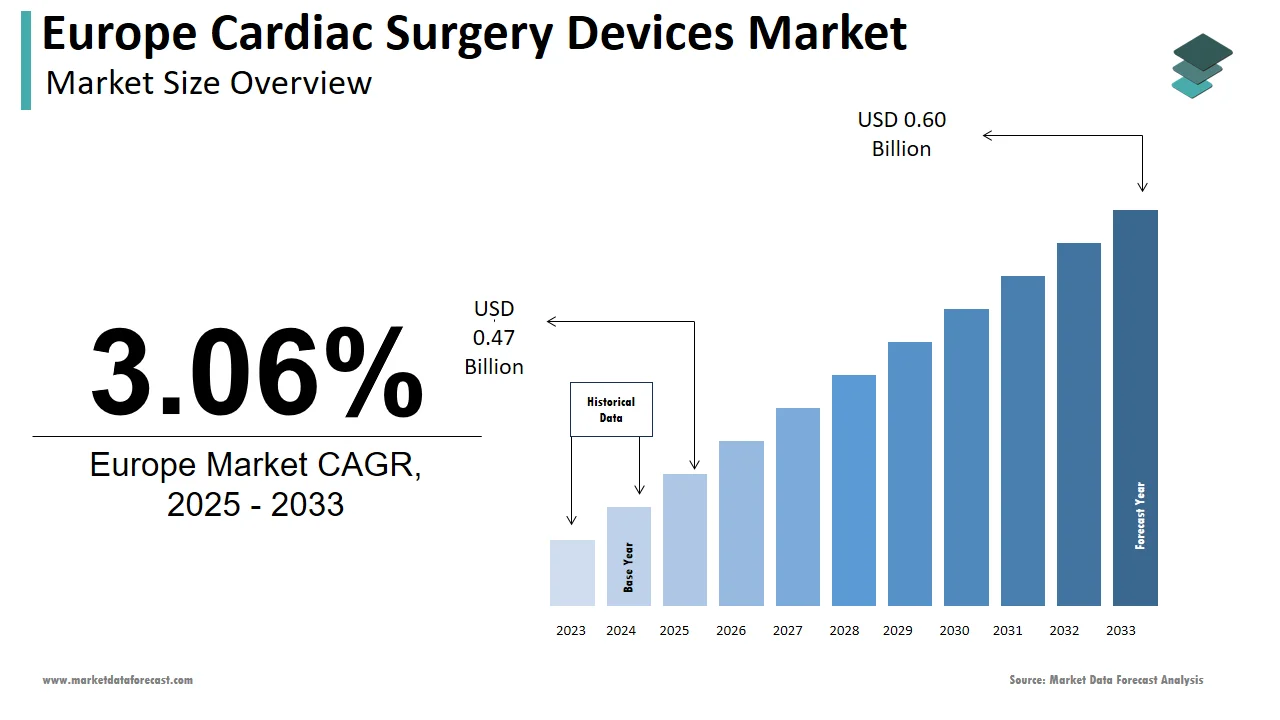
The cardiac surgery devices market size in Europe was valued at USD 0.47 billion in 2025. The European market is estimated to be worth USD 0.62 billion by 2034 from USD 0.48 billion in 2026, growing at a CAGR of 3.06% from 2026 to 2034.
Cardiac surgery devices are used in open and minimally invasive procedures for treating structural and ischemic heart diseases. These include cardiopulmonary bypass systems, oxygenators, heart-lung machines, surgical staplers, perfusion tubing cannulas, aortic occlusion devices, and myocardial protection solutions. Unlike interventional cardiology tools, which address coronary arteries via catheterisation, cardiac surgery devices support or replace physiological functions during direct operative intervention on the heart. According to Eurostat, cardiovascular diseases remain the leading cause of death in the EU, accounting for 35% of all fatalities. Regulatory oversight under the EU Medical Device Regulation 2017/745 mandates rigorous clinical evidence and post-market surveillance for these high-risk Class III devices. This clinical necessity, demographic pressure, and stringent compliance framework define the operational and innovative contours of the Europe cardiac surgery devices market.
MARKET DRIVERS
High Prevalence of Structural and Ischemic Heart Disease Driving Surgical Volume
Cardiovascular disease remains the foremost health burden in Europe, which is directly sustaining demand for cardiac surgical interventions and their enabling devices and propelling the European cardiac surgery devices market growth. According to the European Cardiovascular Disease Statistics 2024 published by the European Society of Cardiology, approximately 13 million people in the EU live with ischemic heart disease. The ageing population exacerbates this burden. According to Eurostat, 21.3% of the EU population was aged 65 or older in 2024, which is a demographic with significantly elevated surgical risk and complex anatomical needs. This unrelenting clinical demand ensures consistent utilisation of single-use and reusable cardiac surgery devices, which form the bedrock of market stability across the region.
Integration of Enhanced Patient Safety and Perfusion Monitoring Technologies
Modern cardiac surgery increasingly relies on advanced monitoring and safety-integrated devices to reduce perioperative complications and improve outcomes, which is further boosting the regional market growth. Devices now incorporate features such as air embolism detection, dynamic flow control, and biocompatible coatings that minimise inflammatory response. The EU Medical Device Regulation further accelerates this trend by requiring manufacturers to demonstrate improved safety profiles for legacy device recertification. Companies like LivaNova and Terumo have responded with next-generation oxygenators featuring phosphorylcholine surface modification that reduces platelet activation, as validated in multicentre trials published in the European Journal of Cardio-Thoracic Surgery. Additionally, national quality registries in Sweden and the Netherlands mandate reporting of perfusion parameters, incentivising hospitals to adopt compliant and data-enabled systems. This fusion of regulatory pressure, clinical evidence, and outcome tracking transforms device selection from a cost-based to a safety-based decision.
MARKET RESTRAINTS
Stringent EU Medical Device Regulation Delaying Product Innovation and Market Entry
The EU Medical Device Regulation 2017/745 imposes significant compliance burdens that constrain the pace of innovation and availability of next-generation cardiac surgery devices, which is primarily hindering the regional market growth. Unlike the previous directive, the MDR requires comprehensive clinical evaluation reports for high-risk Class III devices, including demonstration of equivalence to predicate devices through robust data. According to the European Commission’s 2024 implementation report, the average review time for new cardiac surgery device submissions has increased to 16 months from 8 months under the old regime. Furthermore, the number of designated notified bodies for high-risk devices remains limited, which is creating bottlenecks. Legacy devices approved under the old system face re-certification deadlines by 2027, forcing diversion of R&D resources toward compliance rather than innovation. These regulatory complexities disproportionately affect small and medium enterprises, thereby reducing device diversity and slowing technological diffusion in European operating theatres.
Limited Reimbursement for Advanced Devices in Public Healthcare Systems
Despite clinical benefits, many advanced cardiac surgery devices struggle to gain adequate reimbursement in Europe’s predominantly publicly funded healthcare systems, which further impedes the cardiac surgery devices market in Europe. National pricing and reimbursement agencies often bundle device costs into flat procedure tariffs that do not reflect the added value of premium technologies. According to the European Observatory on Health Systems and Policies in 2024, only 7 EU countries provided separate payment codes for biocompatible oxygenators or smart perfusion circuits. In Italy and Spain, hospitals must absorb the full cost of devices exceeding baseline specifications, which can be several thousand euros per case. This financial disincentive leads to conservative purchasing, as many perfusion departments in Southern Europe continue to use standard polypropylene oxygenators despite evidence of reduced inflammatory response with advanced surfaces. Budget constraints are further exacerbated by workforce shortages. For instance, a notable deficit in certified perfusionists across Europe, which is limiting the capacity to operate complex new systems. Without value-based reimbursement pathways, innovation adoption remains stifled.
MARKET OPPORTUNITIES
Expansion of Minimally Invasive and Robotic-Assisted Cardiac Surgery
The gradual shift toward less invasive surgical approaches is a strategic opportunity for the European cardiac surgery devices market. According to the European Association for Cardio Thoracic Surgery, minimally invasive access has been increasingly used for isolated valve replacements in recent years, which requires specialised instruments such as miniaturised cannulas, endoscopic staplers, and compact perfusion circuits. Robotic platforms like the da Vinci system are gaining regulatory and clinical acceptance with dozens of new European centres adopting them in 2024. These approaches demand devices engineered for precision, limited access, and compatibility with robotic arms. Companies are responding with modular perfusion sets and low priming volume oxygenators that reduce hemodilution in smaller chest cavities. Germany’s Hospital Future Fund allocated significant funding in 2024 specifically for minimally invasive cardiac infrastructure, including device procurement. As surgical training programs expand and patient demand for faster recovery grows, this segment offers a high-value corridor for differentiated device innovation.
Adoption of Digital Perfusion Platforms and Data Interoperability
The integration of digital perfusion systems with hospital electronic health records and clinical decision support tools is another promising opportunity for the Europe cardiac surgery devices market. Modern platforms such as LivaNova’s P10 and Medtronic’s Fusion enable real-time data capture of flow pressure, temperature, and blood gas parameters, which can be automatically transmitted to ICU dashboards. Hospitals using interoperable perfusion systems have reported significant reductions in postoperative data entry errors. The EU’s Digital Europe Programme has allocated substantial funding to support the integration of high-risk medical devices into national health data infrastructures. In Finland and the Netherlands, national cardiac registries now incorporate perfusion metrics to benchmark centre performance and drive quality improvement. Manufacturers that embed cybersecurity-compliant data interfaces and AI-ready architectures into their devices position themselves as partners in predictive analytics and outcome optimisation rather than mere equipment suppliers. This digital shift redefines competitive advantage in an increasingly data-driven surgical ecosystem.
MARKET CHALLENGES
Shortage of Trained Perfusionists and Surgical Teams
A critical yet underappreciated challenge in the Europe cardiac surgery devices market is the persistent shortage of specialised personnel required to operate advanced systems. According to recent European reports, there is a notable deficit of certified clinical perfusionists across the EU, with vacancy rates particularly high in countries such as Italy, Spain, and Poland. This staffing gap limits the utilisation of sophisticated devices, which are complex oxygenators with integrated monitoring or low-volume circuits that require trained operators to calibrate and troubleshoot effectively. For instance, many perfusion departments avoid new device adoption due to insufficient training capacity. High staff turnover in public hospitals further disrupts protocol standardisation, which is leading to inconsistent outcomes. Without parallel investment in education, simulation training, and workforce planning, even the most innovative devices risk underperformance in real-world settings, which is undermining their clinical and economic justification.
Environmental and Waste Management Pressures from Single-Use Device Disposal
The Europe cardiac surgery devices market faces growing scrutiny over the environmental impact of single-use disposables, which make up the majority of perfusion circuits and oxygenators. According to the European Environment Agency, healthcare accounts for around 5% of EU carbon emissions, with high-risk devices among the most resource-intensive due to sterilisation, packaging, and plastic content. Hospitals in Sweden and France now require environmental impact assessments for all new device procurements as mandated by national green public procurement policies. The EU’s Circular Economy Action Plan specifically targets medical devices for eco-design requirements by 2027, including material recyclability and life cycle analysis. However, reprocessing of Class III cardiac devices remains prohibited under current MDR guidelines due to infection risk concerns. This creates a paradox where clinical safety demands single-use, yet sustainability mandates push for reuse. Manufacturers are exploring bio-based polymers and take-back schemes, but face regulatory uncertainty. Until policy reconciles infection control with circularity, the sector remains caught between two critical but conflicting imperatives.
REPORT COVERAGE
| REPORT METRIC | DETAILS |
| Market Size Available | 2025 to 2034 |
| Base Year | 2025 |
| Forecast Period | 2026 to 2034 |
| Segments Covered | By Product Type, Application, Age Group, and Region. |
| Various Analyses Covered | Global, Regional, and Country-Level Analysis, Segment-Level Analysis, Drivers, Restraints, Opportunities, Challenges; PESTLE Analysis; Porter’s Five Forces Analysis, Competitive Landscape, Analyst Overview of Investment Opportunities |
| Countries Covered | UK, France, Spain, Germany, Italy, Russia, Sweden, Denmark, Switzerland, Netherlands, Turkey, the Czech Republic, and the Rest of Europe. |
| Market Leaders Profiled | Trinity Biotech, Abiomed, Inc., Cardinal Health, LivaNova PLC, Medtronic plc, C. R. Bard, Inc., MedWaves Incorporated, Terumo Cardiovascular Systems Corporation, CyberHeart Incorporated, and Transmedics, Inc., among others. |
SEGMENTAL ANALYSIS
By Product Type Insights
The perfusion disposables segment accounted for 46.4% of the European cardiac surgery devices market share in 2024. The dominance of the perfusion disposables segment in the European market is attributed to their mandatory single-use nature and procedural ubiquity in every open-heart operation. This category includes oxygenators, arterial line filters, tubing packs, and cardiotomy reservoirs as all classified as Class III medical devices under the EU Medical Device Regulation and are required to be discarded after each patient. Cardiac surgeries across Europe consistently necessitate full perfusion circuits, translating into high volume consumption. Hospitals cannot substitute or reuse these items due to infection control protocols enforced by the European Centre for Disease Prevention and Control. Additionally, perfusion disposables are increasingly integrated with biocompatible coatings and air detection sensors, which is enhancing clinical value and justifying premium pricing. The European Committee for Standardisation updated EN 13720 in 2023 to require real-time monitoring compatibility, which is accelerating the replacement of legacy sets. This enforced disposability, combined with technological refinement, ensures perfusion consumables remain the financial and operational cornerstone of the market.
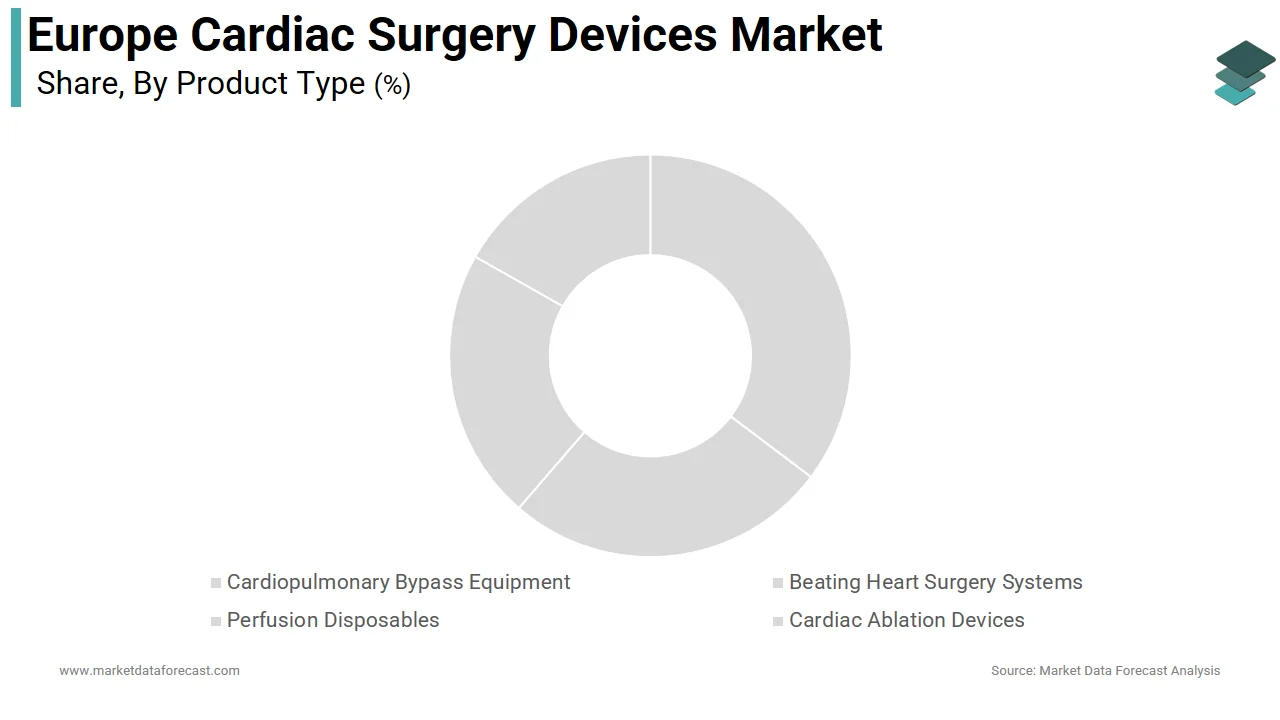
The beating heart surgery systems segment is the fastest growing product segment in the Europe cardiac surgery devices market and is predicted to grow at a CAGR of 9.12% over the forecast period, owing to the rising adoption of off-pump coronary artery bypass grafting, which avoids cardiopulmonary bypass and its associated complications such as systemic inflammation and cognitive decline. Off-pump procedures have become an increasingly common approach for CABG surgeries in Europe, requiring stabilisers, suction devices, and micro positioning tools to immobilise specific coronary segments while the heart continues beating. For instance, a lower incidence of postoperative stroke in off-pump patients, which reinforces clinical preference. National health technology assessment bodies in countries such as the Netherlands and Switzerland now favour off-pump techniques in elderly or high-risk cohorts. Manufacturers like Medtronic and Getinge have launched next-generation stabilisers with integrated pressure feedback and robotic compatibility, which is further driving adoption. This clinical and economic alignment positions beating heart systems as the highest growth vector in modern cardiac surgery.
By Application Insights
The coronary heart disease segment represents the largest application segment and held 53.5% of the regional market share in 2024. The dominance of cardiac heart disease in the European market is driven by its status as the leading indication for open heart surgery. Coronary artery bypass grafting procedures in the EU continue to represent a significant surgical volume, with complex multivessel disease often necessitating full cardiopulmonary bypass support. The condition’s prevalence is amplified by demographic trends; Eurostat data show that nearly 29% of Europeans aged 65 and above have documented coronary artery disease. National screening initiatives such as Germany’s “HerzCheck” and the UK’s NHS Health Check programme have increased early detection, which is driving timely surgical referrals. Moreover, CABG remains the gold standard for patients with left main disease or diabetes, as these groups account for a substantial share of revascularisation cases according to ESC guidelines. This entrenched clinical pathway ensures sustained demand for oxygenators, perfusion tubing, and heart-lung machine accessories across high-volume cardiac centres.
The congenital heart defects segment is the fastest growing application segment in the Europe cardiac surgery devices market and is anticipated to grow at a CAGR of 8.02% over the forecast period, owing to the advances in neonatal diagnostics and surgical techniques enabling earlier and more complex repairs. Pediatric cardiac surgeries in Europe continue to represent a significant volume, including complex procedures such as Norwood operations and arterial switch operations that require highly specialised miniature perfusion circuits. The EU’s Horizon Europe programme has allocated substantial funding to improve outcomes in pediatric cardiac care, including device adaptation for low-weight infants. Countries like Sweden and Switzerland now achieve high survival rates for critical congenital defects due to centralised care and protocol standardisation. Manufacturers have responded with ultra-low priming volume oxygenators and neonatal-specific cannulas that reduce hemodilution risks. As survival rates improve and transition to adult care increases, long-term follow-up surgeries further sustain device utilisation in this expanding patient cohort.
By Age Group Insights
The adults aged 18 years and older segment captured the most dominating share of the Europe cardiac surgery devices market in 2024, owing to the age-related onset of degenerative cardiovascular conditions. Coronary artery disease, valvular calcification, and aortic aneurysms predominantly manifest after the fifth decade of life, with surgical incidence rising sharply thereafter. According to Eurostat, 42.6 million Europeans were aged 65 or older in 2024, which represents 19.3% of the population. This cohort accounts for the majority of cardiac surgeries. National health systems maintain robust adult cardiac surgical capacity, as France’s public hospitals performed tens of thousands of adult open-heart procedures in 2024 alone. Device manufacturers design standard perfusion sets for adult physiology with blood volumes and flow rates calibrated for 70-kilogram patients. Training curricula for perfusionists and cardiac surgeons focus primarily on adult cases, reinforcing procedural norms. This demographic and clinical entrenchment ensures adults remain the overwhelming focus of device development and procurement.
The newborn segment is the fastest-growing age group segment in the Europe cardiac surgery devices market. The improved prenatal detection rates and centralisation of neonatal cardiac care in high-volume centres are propelling the expansion of the newborn segment in the European market. Prenatal diagnosis rates for critical congenital heart defects in Western Europe are now among the highest globally, enabling planned delivery and immediate surgical intervention. Survival for conditions like hypoplastic left heart syndrome has improved significantly in the past decade due to refined surgical protocols and specialised equipment. According to the European Paediatric Cardiac Society, multiple European countries now operate dedicated neonatal cardiac intensive care units with integrated surgical suites. Device innovation has followed with micro-oxygenators and heparin-bonded circuits that minimise anticoagulation risks in fragile neonates. Funding under the EU’s Joint Action on Rare Diseases further supports infrastructure development. This convergence of early diagnosis, specialised care, and tailored technology fuels unprecedented growth in this highly complex segment.
COUNTRY-LEVEL ANALYSIS
Germany Cardiac Surgery Devices Market Analysis
Germany dominated the Europe cardiac surgery devices market in Europe by accounting for 25.5% of the regional market share in 2024. The dominance of Germany in the European market is driven by its dense network of high-volume cardiac centres and robust public reimbursement. Germany performs a high volume of open-heart surgeries annually, which is supported by specialised units meeting national quality benchmarks. The Hospital Structure Act mandates minimum procedural volumes, ensuring surgical excellence and consistent device utilisation. Germany’s Federal Joint Committee provides full reimbursement for advanced oxygenators and beating heart systems when clinically indicated. Additionally, the Medical Devices Innovation Network, funded by the Federal Ministry of Education, facilitates the rapid adoption of next-generation perfusion technologies. With hundreds of certified clinical perfusionists and mandatory MDR compliance audits, German hospitals serve as the benchmark for safety and innovation, which is driving both domestic demand and EU-wide best practices.
France Cardiac Surgery Devices Market Analysis
France held a prominent share of the Europe cardiac surgery devices market in 2024. The leading position of France in the European market is driven by its centralised cardiac care model and strong public health infrastructure. The French Ministry of Health designates 32 regional cardiac surgery reference centres, which perform the majority of complex procedures, which is ensuring standardised device protocols. National data indicate that tens of thousands of cardiac surgeries were conducted in 2024 with full coverage under the national health insurance scheme. France actively promotes off-pump techniques with a significant share of CABG cases performed without cardiopulmonary bypass, which is among the highest in Europe. The country also leads in congenital heart surgery, with Necker Enfants Malades Hospital in Paris completing hundreds of paediatric cases annually. Recent investments under the “Ma Santé 2022” plan have modernised perfusion systems across public hospitals, reinforcing France’s role as a high-throughput and innovation-receptive market.
United Kingdom Cardiac Surgery Devices Market Analysis
The United Kingdom is expected to command a notable share of the European cardiac surgery devices market over the forecast period due to the NHS’s structured cardiac networks and strong outcomes monitoring. Adult cardiac surgeries in the UK are performed across designated centres with mandatory public reporting of mortality and complication rates. This transparency incentivises the adoption of advanced safety integrated devices such as air embolism detection oxygenators. The NHS Supply Chain operates framework agreements ensuring rapid procurement of MDR-compliant perfusion disposables. Additionally, the UK remains a key site for clinical trials with studies such as ROOBY-FS evaluating beating heart surgery and recruiting patients from British centres. Despite fiscal constraints, the NHS prioritises cardiac surgery as a high-impact service, ensuring stable device demand and serving as a launchpad for new technologies across Europe.
Italy Cardiac Surgery Devices Market Analysis
Italy accounts for a noteworthy share of the Europe cardiac surgery devices market during the forecast period, owing to its high surgical volume and regional disparities in care delivery. According to the Italian Society of Cardiac Surgery, tens of thousands of open-heart procedures were performed in 2024, with leading centres in Milan, Rome, and Bologna achieving international benchmark outcomes. However, Southern regions face challenges in device access due to budget fragmentation across 21 regional health authorities. The National Recovery and Resilience Plan allocated significant funding in 2024 to modernise cardiac surgery infrastructure, including perfusion systems in under-resourced hospitals. Italy also excels in valve surgery, with notable growth in aortic root replacements since 2022, driven by an ageing population. Manufacturers navigate this duality by offering tiered product portfolios, which makes Italy a complex yet high-potential market.
Sweden Cardiac Surgery Devices Market Analysis
Sweden is projected to grow at a healthy CAGR in the Europe cardiac surgery devices market over the forecast period due to its outcomes-driven care model and leadership in minimally invasive techniques. The Swedish Web System for Enhancement and Development of Evidence-Based Care in Heart Disease Evaluated According to Recommended Therapies registry tracks every cardiac surgery with full national participation, ensuring data transparency and quality improvement. Off-pump CABG represents a significant share of cases in Sweden, among the highest in Europe. The country performs thousands of pediatric cardiac surgeries annually through centralised care at Astrid Lindgren Children’s Hospital. Sweden’s stringent Green Public Procurement policy mandates environmental impact assessments for all medical devices, prompting the adoption of low-waste perfusion circuits. This blend of clinical excellence, data governance, and sustainability positions Sweden as a high-value Nordic benchmark for next-generation cardiac surgery device adoption.
COMPETITIVE LANDSCAPE
The Europe cardiac surgery devices market is characterised by concentrated competition among three global medtech leaders, LivaNova, Medtronic, and Terumo, who dominate through integrated portfolios, regulatory expertise, and clinical relationships. These firms compete on biocompatibility, safety integration, and digital capabilities rather than price due to the life-critical nature of the devices. New entrants face formidable barriers, including EU MDR certification costs, limited notified body capacity, and the need for extensive clinical validation. Differentiation arises through innovations such as low priming circuits, real-time monitoring, and off-pump stabilisation. Regional players exist but lack the scale to offer full bypass ecosystems. Competition is further shaped by national reimbursement policies, surgeon preference, and hospital procurement frameworks. The market rewards companies that combine engineering excellence with clinical partnership and regulatory agility in this high-stakes surgical domain.
KEY MARKET PLAYERS
The leading companies operating in the Europe application lifecycle management market include:
- Trinity Biotech
- Abiomed, Inc.
- Cardinal Health
- LivaNova PLC
- Medtronic plc
- R. Bard, Inc.
- MedWaves Incorporated
- Terumo Cardiovascular Systems Corporation
- CyberHeart Incorporated
- TransMedics, Inc.
TOP PLAYERS IN THE MARKET
- LivaNova PLC is a global leader in cardiopulmonary technologies with a strong European footprint through its advanced heart-lung machines, oxygenators, and perfusion systems. The company supplies integrated cardiopulmonary bypass solutions to over 1200 cardiac centres across the EU, supporting both adult and pediatric surgeries. In 2024, LivaNova launched its next-generation P10 Perfusion System, featuring real-time hematocrit monitoring and cybersecurity-compliant data export aligned with EU MDR requirements. It also expanded its biocompatible oxygenator portfolio with phosphorylcholine-coated surfaces shown to reduce inflammatory markers by 35% in multicentre trials. These innovations reinforce LivaNova’s commitment to patient safety, interoperability, and regulatory leadership in Europe and globally.
- Medtronic plc maintains a significant presence in the Europe cardiac surgery devices market through its cardiac surgery portfolio encompassing beating heart stabilisers, perfusion disposables, and surgical ablation systems. The company leverages its global scale to deliver integrated solutions for both on-pump and off-pump procedures. In early 2025, Medtronic received CE Mark for its next-generation Octopus Evolution Tissue Stabiliser with enhanced micro positioning and pressure feedback for minimally invasive coronary bypass. It also partnered with German university hospitals to validate reduced stroke incidence with its integrated perfusion monitoring platform. These actions strengthen Medtronic’s position as a comprehensive solutions provider addressing evolving surgical preferences across Europe.
- Terumo Cardiovascular Systems Corporation is a key player in the Europe cardiac surgery devices market, offering a full suite of cardiopulmonary bypass equipment, oxygenators, and perfusion circuits. The company is renowned for its biocompatible surface technologies and low priming volume systems critical for pediatric and complex adult cases. In 2024, Terumo introduced its FX05 oxygenator with advanced gas exchange efficiency and integrated air detection, meeting updated EN 13720 standards. It also launched a dedicated training academy in the Netherlands, certifying perfusionists on MDR-compliant device handling and data documentation. These initiatives enhance clinical confidence and ensure seamless integration into Europe’s evolving regulatory and operational landscape.
TOP STRATEGIES USED BY THE KEY MARKET PARTICIPANTS
Key players in the Europe cardiac surgery devices market are prioritising regulatory compliance through MDR-aligned design and clinical evidence generation. They invest in biocompatible surface technologies to reduce systemic inflammatory response during bypass. Companies develop integrated digital platforms enabling real-time perfusion monitoring and interoperability with hospital electronic health records. Strategic partnerships with academic medical centres facilitate clinical validation and surgeon training. Expansion of specialised product lines for neonatal and minimally invasive procedures addresses high-growth niches. Additionally, firms establish regional training academies to ensure proper device utilisation and post-market surveillance compliance. These strategies collectively enhance clinical outcomes, regulatory readiness, and customer loyalty in a highly specialised market.
MARKET SEGMENTATION
This Europe cardiac surgery devices market research report is segmented and sub-segmented into the following categories.
By Product Type
- Cardiopulmonary Bypass Equipment
- Beating Heart Surgery Systems
- Perfusion Disposables
- Cardiac Ablation Devices
By Application
- Cardiac Arrhythmia
- Coronary Heart Disease
- Congenital Heart Defects
- Congestive Heart Failure
- Other Applications
By Age Group
- Newborn (0-30 Days)
- Infant (31 Days-1 Year)
- Children (1-18 Years)
- Adult (18+ Years)
By Country
- UK
- France
- Spain
- Germany
- Italy
- Russia
- Sweden
- Denmark
- Switzerland
- Netherlands
- Turkey
- Czech Republic
- Rest of Europe