- Product Description Description
- Table of Contents TOC
- List of Table & Figure LOT
- Get Free Sample PDF Sample PDF
Market Size, 2025
$555.80 MnMarket Estimate, 2026
$591.43 MnMarket Forecast, 2034
$972.21 MnCAGR, 2026–2034
6.41%Executive Summary: Europe Cardiovascular Monitoring & Diagnostic Devices Market
- Market Scope: Comprehensive European cardiovascular monitoring and diagnostic devices market analysis covering product categories (ECG systems, monitors, implantable loop recorders), country-level landscapes, and regulatory frameworks.
- Market Valuation: Valued at USD 555.80 million in 2025, estimated at USD 591.43 million in 2026, and projected to reach USD 972.21 million by 2034, registering a compound annual growth rate (CAGR) of 6.41% from 2026 to 2034.
- Primary Growth Drivers: Escalating burden of atrial fibrillation and heart failure among aging European populations, institutionalization of remote monitoring and telecardiology into national healthcare frameworks, and expansion of primary prevention screening programs using wearable technologies. Key market restraints include lengthy and costly conformity assessments under the EU Medical Device Regulation (MDR) and fragmented reimbursement policies across European healthcare systems.
Key Market Segment Metrics (2026–2034)
| Category | Leading Segment (2025 Position) | Fastest-Growing Segment |
|---|---|---|
| By Product | ECG Systems (accounted for a dominant 38.7% share in 2025 backed by universal acute and primary care utility) | Implantable Loop Recorders (projected to record the fastest CAGR of 13.6% driven by long-term rhythm monitoring mandates) |
| By Country | Germany (led the European market capturing a 25.6% share via advanced cardiology infrastructure and high procedural volumes) | Netherlands & UK (expanding rapidly through integrated care models, digital health mandates, and proactive screening) |
Major Market Players & Market Structure
Market Structure: Highly regulated and competitive medical technology ecosystem featuring global medtech leaders and specialized European firms competing on EU MDR compliance, AI-enabled diagnostics, and interoperable EHR data integration.
Key Companies: Philips Healthcare, GE HealthCare, Siemens Healthcare, Boston Scientific Corporation, St. Jude Medical, Inc., Schiller AG, Nihon Kohden Corporation, and Welch Allyn, Inc.
Europe Cardiovascular Monitoring & Diagnostic Devices Market Size
The Europe Cardiovascular Monitoring & Diagnostic Devices Market is projected to grow from USD 555.80 million in 2025 to USD 591.43 million in 2026 and reach USD 972.21 million by 2034, registering a CAGR of 6.41% from 2026 to 2034.
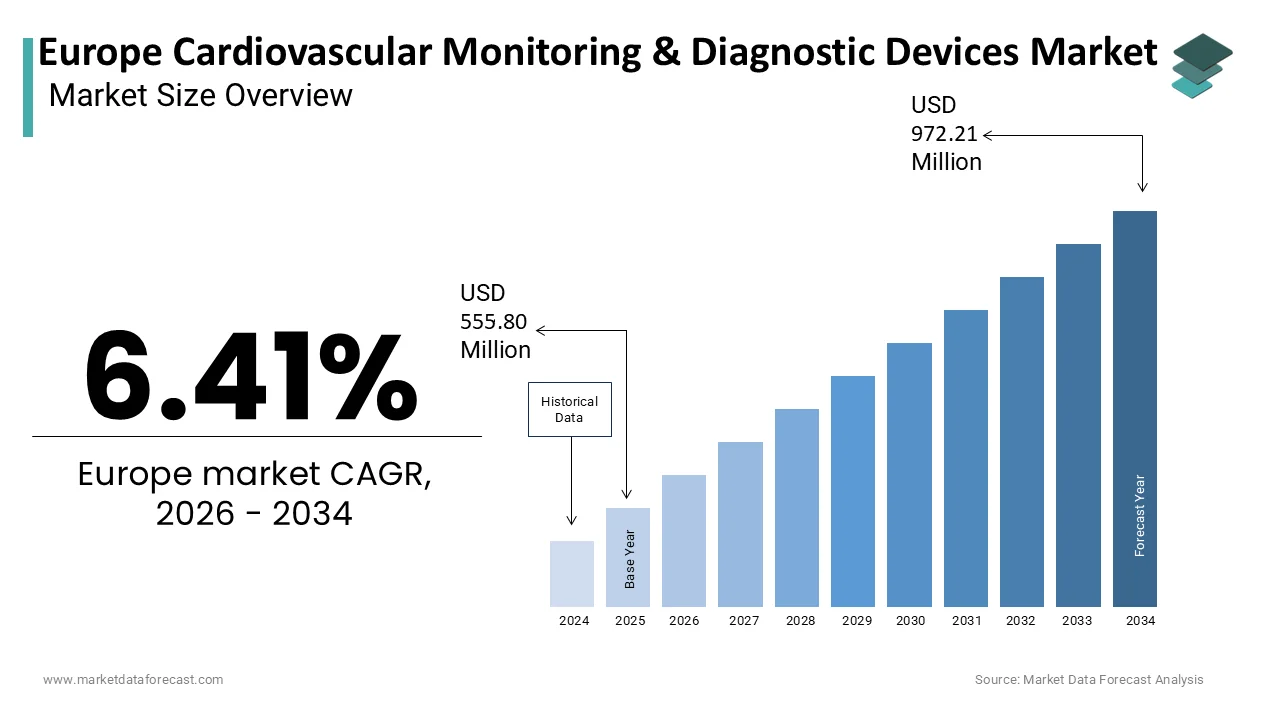
Cardiovascular monitoring and diagnostic devices are medical tools used to assess heart function, track vascular health, and identify conditions such as arrhythmias, ischemia, and heart failure. These include electrocardiography systems, Holter and event monitors, echocardiography equipment, cardiac magnetic resonance imaging, stress testing platforms, and implantable loop recorders. The market is shaped by Europe’s aging population, rising prevalence of hypertension and heart failure, and the continent’s emphasis on early detection and preventive cardiology. Cardiovascular diseases remain the most frequent cause of mortality across the European region. Concurrently, the proportion of the European Union population aged 65 and older is steadily increasing, representing a population segment at heightened risk for specific cardiovascular conditions. European institutions are increasingly prioritizing cardiovascular health through new initiatives and significant funding, emphasizing the need for advanced diagnostic methods. The current EU Medical Device Regulation enforces stringent clinical validation processes aimed at patient safety, a framework that developers of innovative digital health technologies, such as AI-enabled remote monitoring tools, navigate as part of the region's integrated digital health strategy.
MARKET DRIVERS
Escalating Burden of Atrial Fibrillation and Heart Failure in Aging European Populations
Atrial fibrillation and heart failure are reaching epidemic proportions across the region, driven by demographic aging and lifestyle factors, which fuel the growth of the European cardiovascular monitoring & diagnostic devices market. The number of adults living with atrial fibrillation in the European Union is substantial and projected to increase significantly in the coming years, primarily driven by a general increase in life expectancy and an aging population. Similarly, Heart failure affects a substantial portion of the European population, and hospitalization rates for the condition continue to rise, placing a significant economic and clinical burden on healthcare systems. These conditions necessitate continuous or recurrent cardiac monitoring to guide anticoagulation therapy, assess fluid status, and prevent decompensation. In response to the growing burden of heart conditions, national health systems are broadening access to long-term heart rhythm monitoring technologies, with specific programs in countries like Germany and the UK targeting high-risk patient groups such as those with unexplained syncope or cryptogenic stroke. Data from national registries, such as the Danish National Patient Registry, indicate a significant and recent increase in the use of outpatient monitoring techniques, such as Holter studies, suggesting a growing emphasis on proactive screening for heart rhythm disorders within primary care. This clinical urgency transforms diagnostic devices from episodic tools into essential infrastructure for chronic cardiovascular management across the continent.
Integration of Remote Monitoring and Telecardiology into National Healthcare Frameworks
The region is rapidly institutionalizing remote cardiovascular monitoring through policy and reimbursement reforms aimed at reducing hospital readmissions and improving chronic disease management, which further contributes to the expansion of the European cardiovascular monitoring & diagnostic devices market. There is a clear movement toward standardizing requirements for remote healthcare services across member states. Healthcare systems in specific regions are increasingly adopting reimbursement models that support the use of remote patient monitoring technology for chronic conditions. The implementation of these programs appears to be linked to a notable reduction in patient readmission rates in some areas. New billing mechanisms are being introduced to facilitate the broader implementation and scalability of remote screening technologies for common health conditions. Across various pilot regions, programs leveraging user-friendly technology and consistent clinician interaction have demonstrated high patient adherence rates. This systemic adoption, backed by regulatory support and outcome-based incentives, is accelerating the deployment of connected diagnostic devices across primary and post acute care settings.
MARKET RESTRAINTS
Lengthy and Costly Conformity Assessment Procedures Under the EU Medical Device Regulation
The European Union’s Medical Device Regulation has significantly extended the time and expense required to bring new cardiovascular diagnostic devices to market. This restrains the growth of the European cardiovascular monitoring & diagnostics devices market. The time required for reviewing certain critical medical devices, such as cardiac monitors classified under specific regulatory tiers, has increased significantly. This extended review duration is attributed to more rigorous documentation standards, particularly regarding post-market surveillance and risk management. The proportion of new applications for diagnostic heart devices that successfully navigate the initial approval phase with regulatory bodies has been notably low. This barrier disproportionately affects small and medium enterprises, which lack the regulatory infrastructure to navigate complex technical documentation. Furthermore, the regulation mandates ongoing performance evaluation after market entry, increasing long-term compliance costs. These barriers delay patient access to innovations such as AI-enhanced arrhythmia detection or miniaturized echocardiography probes and discourage investment in next-generation diagnostic platforms, particularly those targeting niche indications like pediatric cardiology or low-resource settings.
Fragmented Reimbursement Policies Across European Healthcare Systems
Reimbursement remains highly inconsistent across European countries, which limits the expansion of the European cardiovascular monitoring & diagnostics devices market. This is despite clinical consensus on the value of advanced cardiovascular diagnostics. Variations in national healthcare policies result in differing levels of coverage for cardiac diagnostic procedures, with some systems offering comprehensive reimbursement while others restrict support to hospital environments. Administrative requirements, such as the necessity for advance approvals, can create barriers that potentially impact the timing of cardiac evaluations. The decentralization of health authority decision-making leads to geographic inconsistencies in how diagnostic services are funded within a single country. Disparities in payment regulations across different regions contribute to unequal access to specific monitoring technologies for patients. Differences in reimbursement structures appear to influence the rate at which advanced cardiac recording devices are utilized across various European territories. Additionally, novel technologies such asAI-interpretedd ECGs often fall into reimbursement gray zones as national coding systems lag behind innovation. The absence of uniform coverage standards creates a volatile market for manufacturers and discourages doctors from using innovative diagnostics, ultimately jeopardizing the health and economic advantages of timely diagnoses.
MARKET OPPORTUNITIES
Expansion of Primary Prevention Screening Programs Using Wearable and Patch-Based ECG Technologies
The region is increasingly deploying wearable and patch-based ECG devices in population-level screening to detect undiagnosed atrial fibrillation and reduce stroke burden, which creates new opportunities for the growth of the European cardiovascular monitoring & diagnostics market. The European Stroke Organisation endorses opportunistic screening for individuals over 65, and several countries have operationalized this through digital health initiatives. One country has initiated a community-based program providing remote heart monitoring technology to a specific demographic group, and initial findings suggest a notable rate of identifying previously undetected health issues. Concurrently, a separate country's health service is actively investing resources to broaden the availability of this type of screening technology within community-based health centers, focusing these efforts on individuals considered to be at greater risk. Across the continent, a large-scale collaborative research effort is underway, supported by significant regional funding, to evaluate and refine advanced analysis tools for these monitoring devices among a wide variety of people. These programs are supported by CE-marked devices that meet MDR requirements for diagnostic accuracy and data security. The public health shift from treatment to prevention, combined with the transition of wearable ECGs from consumer gadgets to clinically validated tools, is creating a scalable market for regulated diagnostic-grade monitoring platforms.
Adoption of AI-Enabled Image Interpretation in Cardiac Imaging Modalities
Artificial intelligence is transforming the efficiency and accuracy of cardiovascular imaging by automating measurements and enhancing diagnostic confidence in echocardiography, cardiac MR, and CT angiography. This is likely to provide fresh prospects for thEuropeanpe cardiovascular monitoring & diagnostics market. Use of artificial intelligence software for quantifying left ventricular ejection fraction and assessing heart valves has become increasingly common in European university hospitals to improve workflow and standardize results. As per research, the integration of AI interpretation significantly enhances the reproducibility of echocardiography results and substantially streamlines the reporting workflow. The European regulatory landscape, including the European Medicines Agency, is actively developing and integrating governance principles for AI into existing medical device and pharmaceutical frameworks, focusing on safety, transparency, and data integrity. Furthermore, national radiology societies in Italy and Spain have incorporated AI performance metrics into accreditation standards, ensuring widespread adoption. The demand for cardiac imaging is increasing across Europe amidst significant workforce constraints. Consequently, AI is viewed as an essential tool to enhance the capacity of existing staff to manage growing patient volumes effectively. This creates a high-value opportunity for diagnostic device manufacturers integrating validated AI into their platforms.
MARKET CHALLENGES
Interoperability Gaps Between Diagnostic Devices and National Electronic Health Record Systems
Cardiovascular monitoring devices often operate in data silos, despite the region’s push toward digital health, due to incompatible communication standards and fragmented EHR architectures, which impede the growth of the European cardiovascular monitoring & diagnostics devices market. Interoperability standards for clinical data exchange, such as HL7 FHIR, are not yet universally adopted across all European Union hospitals for specific clinical domains like cardiology. A significant gap remains in achieving seamless data flow between disparate systems. This disconnect forces clinicians to manually transcribe ECG or Holter results into patient records, a process that introduces errors and delays care. Hospitals and other healthcare facilities frequently encounter challenges integrating data from external medical devices, such as ambulatory ECG monitors, into primary electronic health records (EHRs) promptly. This lack of immediate data transfer can compromise the efficiency of clinical workflows and timely intervention for urgent findings. Furthermore, wearable ECG data from consumer devices rarely meet regulatory requirements for clinical use due to a lack of audit trails and calibration documentation. The full realization of connected cardiovascular care is hindered because, until data can move seamlessly, advanced monitoring offers diminished clinical utility, and workflow efficiency improvements remain unrealized.
Shortage of Trained Personnel to Operate and Interpret Advanced Diagnostic Equipment
The region faces a critical deficit in cardiologists and cardiac technologists capable of operating and interpreting data from advanced monitoring and imaging devices, which poses a major barrier to theEuropeane cardiovascular & monitoring & diagnostics devices market. Significant inequalities exist across Europe in the availability of cardiologists, with middle-income countries generally experiencing a greater shortage of specialists per capita compared to their high-income counterparts. This gap is exacerbated by the growing complexity of diagnostic platforms; modern echocardiography systems require proficiency in 3D imaging, strain analysis,s and contrast protocols that extend training timelines. Regional disparities in access to advanced cardiac diagnostics, such as echocardiography, pose a challenge within Poland, highlighting the need for strategic planning to ensure more uniform availability of care. Similarly, the extensive data produced by modern long-term heart rhythm monitoring technologies creates a significant analysis burden that can overwhelm current staffing levels. AI tools can aid in interpretation, but they are not a substitute for clinical judgment in complex cases. The extensive data produced by modern long-term heart rhythm monitoring technologies creates a significant analysis burden that can overwhelm current staffing levels.
REPORT COVERAGE
| REPORT METRIC | DETAILS |
| Market Size Available | 2025 to 2034 |
| Base Year | 2025 |
| Forecast Period | 2026 to 2034 |
| Segments Covered | By Product, and Region. |
| Various Analyses Covered | Global, Regional, and Country-Level Analysis, Segment-Level Analysis, Drivers, Restraints, Opportunities, Challenges; PESTLE Analysis; Porter’s Five Forces Analysis, Competitive Landscape, Analyst Overview of Investment Opportunities |
| Countries Covered | UK, France, Spain, Germany, Italy, Russia, Sweden, Denmark, Switzerland, Netherlands, Turkey, Czech Republic, Rest of Europe |
| Market Leaders Profiled | GE Healthcare and Phillips Healthcare, Siemens Healthcare, Boston Scientific Corporation, St. Jude Medical, Inc., Nihon Kohden Corporation, and Welch Allyn, Inc. |
SEGMENTAL ANALYSIS
By Product Insights
The ECG systems segment dominated the European cardiovascular monitoring & diagnostics devices market by accounting for a 38.7% share in 2025. The dominance of the ECG systems segment is driven by universal integration into primary and emergency care pathways across Europe, and regulatory and reimbursement support for digital and connected ECG platforms. ECG systems remain the cornerstone of cardiovascular diagnostics due to their mandatory use in acute settings, primary care,e and pre-operative screening across all European healthcare systems. Leading international cardiology guidelines emphasize the critical importance of a rapid electrocardiogram assessment immediately upon patient presentation with suspected acute coronary issues. Data from German health authorities indicate that a very high volume of electrocardiogram procedures is performed annually in both hospital and outpatient settings, highlighting its widespread and routine use in managing common chronic conditions and other screenings. Following reports of rare instances of myocarditis after mRNA immunization, public health bodies in various nations, including France and Italy, implemented enhanced surveillance and specific guidance for managing affected individuals, but did not introduce universal electrocardiogram screening within the vaccination protocols. The ubiquity of ECG as a first-line diagnostic tool ensures consistent demand for both standalone and integrated systems, particularly as aging populations increase the frequency of cardiovascular risk assessments. Hence, the segment’s dominance is structurally embedded in Europe’s preventive healthcare architecture. The modernization of ECG systems toward digital connectivity and AI-enhanced interpretation has been actively promoted by European regulatory and reimbursement frameworks. European medical device regulations apply rigorous clinical validation requirements to digital ECG software based on its potential risk, with a general trend towards establishing clearer, harmonized guidelines for future software updates and data exchange across health systems. Germany is seeing a growing interest in health technology assessments and the integration of artificial intelligence in healthcare, with ongoing efforts to develop appropriate reimbursement models for innovative digital tools. The UK's health technology assessment bodies encourage the adoption of cost-effective digital health technologies for disease prevention in primary care settings, promoting systems that align with best practices for data management and clinical efficiency. The Dutch healthcare system is highly advanced in its efforts to integrate medical devices and electronic health records, aiming for seamless data exchange between hospitals and national networks to improve patient care pathways. This policy-driven digitization ensures that ECG systems are not merely diagnostic tools but nodes in Europe’s evolving cardiovascular data infrastructure, which secures their central role in both volume and technological relevance.
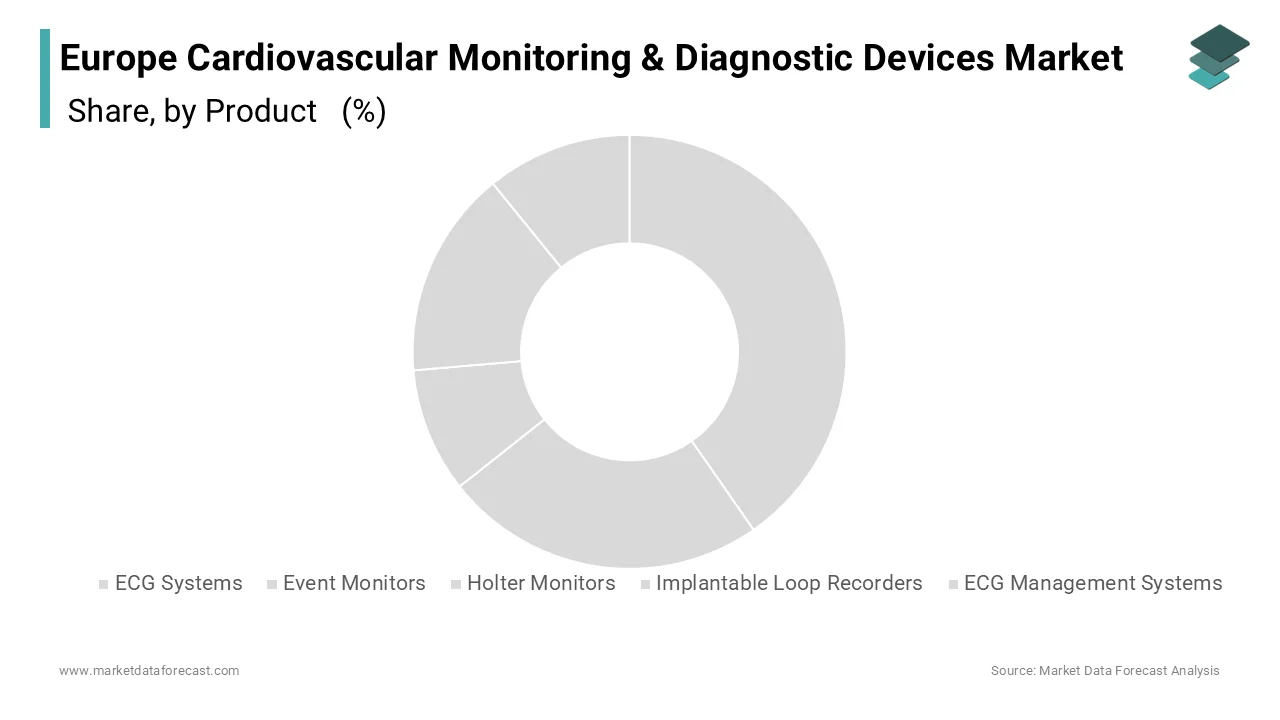
The implantable loop recorders segment is anticipated to witness the fastest CAGR of 13.6% from 2025 to 2033 due to national guidelines mandating long-term rhythm monitoring for patients with unexplained stroke or recurrent syncope. European medical guidelines increasingly advocate for an individualized approach to prolonged cardiac monitoring in cryptogenic stroke patients, with a growing emphasis on using implantable devices in higher-risk groups to increase atrial fibrillation detection. There is a general increase in awareness and discussion about prolonged monitoring strategies to detect atrial fibrillation. This is even though guidelines in Sweden currently limit the routine use of implantable loop recorders for stroke patients to research settings. In Germany, the use of implantable loop recorders for patients experiencing unexplained syncope after initial negative workup is a well-established and widely covered practice, leading to high rates of arrhythmia diagnosis and subsequent therapeutic interventions. These policy shifts transform implantable monitoring from a niche diagnostic into a standard of care, creating sustained and scalable demand across public health systems. Recent technological advances have significantly improved the safety, comfort, rt and longevity of implantable loop recorders, enhancing both clinician confidence and patient willingness. Contemporary medical devices are notably more slender than earlier models. The functional lifespan of these devices on a single power source has approximately doubled. The trend toward device miniaturization appears to correlate with a reduction in certain procedural complications. The observed rate of procedural infections has fallen below one percent. Furthermore, remote monitoring capabilities allow automatic arrhythmia detection with alerts sent directly to cardiology teams, reducing diagnostic delays. The cardiovascular diagnostics sector is set for rapid expansion, securing its place as the highest growth vector, as European regulators expedite the CE certification for next-gen devices that feature AI for arrhythmia classification, allowing applications to extend past traditional indications into primary prevention and heart failure management.
COUNTRY LEVEL ANALYSIS
Germany Cardiovascular Monitoring & Diagnostic Devices Market Analysis
Germany led the European cardiovascular monitoring & diagnostic devices market by capturing a 25.6% share in 2025. The supremacy of the German market is propelled by its advanced cardiology infrastructure, universal healthcare coverage,e and high procedural volumes. Large-scale clinical use of both standard and ambulatory cardiac monitoring highlights their role in both emergency responses and routine health screenings. Widespread availability of cardiac diagnostic tools is supported by a reimbursement framework that includes advanced monitoring devices for specific neurological and cardiovascular conditions. The integration of cardiac data management systems into national digital health infrastructure has become a common standard among specialized medical practices. Furthermore, updated clinical guidelines have introduced a requirement for advanced interpretive technology in specific monitoring scenarios, such as assessing medication safety in specialized patient populations. The presence of global medtech hubs in Berlin and Munich further accelerates clinical validation and commercialization of next-generation devices, solidifying Germany’s position as Europe’s cardiovascular diagnostics leader.
UK Cardiovascular Monitoring & Diagnostic Devices Market Analysis
The United Kingdom was the second largest country in the European cardiovascular monitoring & diagnostic devices market and held a share of 18.7% in 2025. The growth of the UK market is attributed to its centralized National Health Service and proactive cardiovascular prevention strategies. There has been an increase in the volume of heart monitoring procedures across general practitioner offices and hospitals to screen for specific heart rhythm conditions. A strategic initiative is focusing on early detection of a particular heart condition within high-risk individuals through the use of portable monitoring technology. Funding has been set aside to introduce advanced, longer-duration monitoring tools in community and hospital environments. The recommended standard of care has broadened, suggesting the use of ongoing heart monitoring for an expanded patient demographic undergoing certain surgical procedures. A process is in place to speed up the clearance and availability of new heart diagnostic tools that utilize advanced analytical technology. This combination of policy foresight, centralized procurement, and clinical integration ensures the UK remains a high-impact market despite post Brexit regulatory divergence.
France Cardiovascular Monitoring & Diagnostic Devices Market Analysis
France expanded steadily in the European Cardiovascular Monitoring & Diagnostic Devices Market due to strong hospital-based cardiology services and national screening mandates. Cardiac monitoring tools are widely utilized and reimbursed for individuals managing established heart conditions or recovering from cardiac events. Updated health protocols have expanded the use of diagnostic heart assessments for younger populations following specific medical interventions. The implementation of centralized digital platforms facilitates the remote transfer of cardiac data from community settings to specialized centers. Integration of automated diagnostic assistance within hospital networks is supported by national health frameworks to promote standardized care. France leverages strong public health planning and digital infrastructure to foster growth in its balanced market for both traditional and advanced cardiovascular diagnostics.
Italy Cardiovascular Monitoring & Diagnostic Devices Market Analysis
Italy is another key player in the European cardiovascular monitoring & diagnostics devices market, owing to its aging population and high cardiovascular disease burden, en and regional innovation in cardiac care. An aging population is driving a steady need for medical devices designed to monitor heart conditions such as arrhythmia and heart failure. Public health policies fully cover the cost of specific monitoring devices for individuals experiencing symptoms like palpitations or syncope, resulting in a substantial number of these devices being provided each year. Additionally, some regions have successfully established remote networks that link primary care physicians with specialists for interpreting heart diagnostic tests, thereby reducing diagnostic delays in less urbanized areas. There is also a specific financial allocation aimed at modernizing hospital cardiology units with contemporary digital and remote monitoring technologies. Despite regional disparities in healthcare funding, ing Italy’s clinical need and targeted public investment sustain its significant role in the European cardiovascular diagnostics landscape.
Netherlands Cardiovascular Monitoring & Diagnostic Devices Market Analysis
The Netherlands is predicted to grow in the European Cardiovascular Monitoring & Diagnostic Devices Market from 2025 to 2033 due to its integrated care models, early adoption of digital health, and leadership in preventive cardiology. A significant majority of primary care medical facilities utilize interconnected systems for heart monitoring, which automatically forward patient information to specialists for prompt evaluation. This approach is associated with a considerable decrease in the time required to identify certain irregular heart rhythms. Authorities have established requirements for comprehensive financial coverage for internal monitoring devices used in instances of fainting with an unknown cause. Financial coverage is provided for external heart monitoring devices for patients experiencing certain types of strokes as part of specific coordinated healthcare plans. Furthermore, the country’s national EHR system supports seamless data exchange between devices and hospital records using standardized FHIR protocols, ensuring diagnostic continuity. This ecosystem of policy, technology,gy and prevention positions the Netherlands ashigh-efficiencyncy market punching above its population weight in cardiovascular diagnostics innovation and deployment.
COMPETITIVE LANDSCAPE
Competition in the European Cardiovascular Monitoring & Diagnostic Devices Market is characterized by a mix of global medtech giants and specialized European firms competing on regulatory compliance, clinical validation,n and digital integration capabilities. The market is highly regulated under the EU Medical Device Regulation, requiring extensive evidence of safety and performance,nce which favors established players with robust quality management systems. Differentiation arises through AI-enabled interpretation, accuracy,y device connectivity, ty and alignment with national telehealth and preventive cardiology strategies. While ECG systems remain commoditized in basic segments,nts innovation thrives in advanced monitoring, such as long-term rhythm recording, and AI-assisted diagnostics. Reimbursement policies vary significantly across countries, creating complex market access pathways that demand localized regulatory and commercial strategies. Companies that combine clinical credibility, seamless EHR integration, and scalable remote monitoring solutions gain preferential adoption in both hospital and primary care settings. The competitive landscape rewards those who can translate technological sophistication into practical workflow efficiency and population health impact across Europe’s diverse healthcare systems.
KEY MARKET PLAYERS
Some of the companies that are playing a dominating role in the europe cardiovascular monitoring & diagnostic devices market include
- GE Healthcare
- Philips Healthcare
- Siemens Healthcare
- Boston Scientific Corporation
- St. Jude Medical, Inc.
- Nihon Kohden Corporation
- Welch Allyn, Inc.
TOP LEADING PLAYERS IN THE MARKET
- Philips Healthcare is a global leader in cardiovascular diagnostics with a strong foothold in Europe through its advanced ECG systems, Holter monitors,s anAI-powereded cardiac imaging platforms. The company contributes to the global market by pioneering integrated diagnostic ecosystems that connect bedside monitoring with cloud-based ECG management and telecardiology services. In Europe, Philips supports national prevention programs by providing scalable ECG solutions compliant withthe EU Medical Device Regulation and interoperable with national electronic health records. Recently, the company strengthened its position by launching its next-generation PageWriter TC70 ECG system with embedded AI for automated ischemia detection and by expanding its remote monitoring partnerships with integrated care networks in Germany, the Netherlands, and the UK, enhancing real-time arrhythmia surveillance across primary and post acute settings.
- GE HealthCare plays a pivotal role in theEuropeane Cardiovascular Monitoring & Diagnostic Devices Market through its comprehensive portfolio of resting and stress ECG systems, event recorders,s and cardiac imaging solutions. The company contributes globally by advancing digital cardiology through its Muse ECG Management System, which enables centralized storage, age interpretation, and AI-assisted analytics across hospital networks. In Europe, GE HealthCare has deep integration with university hospitals and national screening initiatives, particularly in France, Italy, and Sweden. To reinforce its market presence,e the company recently upgraded its MUSE platform to support HL7 FHIR standards for seamless EHR integration and introduced a new wearable event monitor with 30 day battery life validated for cryptogenic stroke workup. These innovations align with EU telehealth mandates and support early detection strategies across diverse healthcare systems.
- Schiller AG isSwitzerland-basedsed specialist in electrocardiography with a longstanding reputation in the European cardiovascular diagnostics landscape. The company contributes to the global market by delivering high-precision portable and modular ECG systems widely used in primary care, emergency departments, and sports cardiology. Schiller’s devices are certified under EU MDR and feature multilingual interfaces tailored to Europe’s linguistic diversity. The company has strengthened its position by launching the AT 200 ECG system with real-time AI-based arrhythmia alerts and by partnering with national health services in Eastern and Southern Europe to deploy ECG screening in rural clinics. Additionally, Schiller enhanced its ECG Cloud platform to support automatic data routing to cardiologists in compliance withGDPRP, enabling scalable preventive cardiology programs across underserved regions.
TOP STRATEGIES USED BY THE KEY MARKET PARTICIPANTS
Key players in thEuropeanpe Cardiovascular Monitoring & Diagnostic Devices Market focus on achieving full compliance with the EU Medical Device Regulation through rigorous clinical validation and post market surveillance systems. They prioritize interoperability by aligning devices with national electronic health record standards such as HL7 FHIR to enable seamless data exchange. Companies invest in AI integration to automate ECG interpretation, detect subtle arrhythmia,s and support clinical decision making. Strategic partnerships with integrated care networks, primary care federations, and national screening programs ensure widespread deployment. Product portfolios are tailored to regional reimbursement landscapes with modular designs that accommodate both high-end hospital and resource-constrained primary care settings. Continuous software updates and cloud-based management platforms enhance device lifecycle value and clinician engagement across diverse European healthcare ecosystems.
MARKET SEGMENTATION
This research report on the europe cardiovascular monitoring & diagnostic devices market has been segmented and sub-segmented into the following categories
By Product
-
ECG Systems
-
Resting ECG Systems
-
Stress ECG Systems
-
- Event Monitors
- Holter Monitors
- Implantable Loop Recorders
- ECG Management Systems
By Country
- UK
- France
- Spain
- Germany
- Italy
- Russia
- Sweden
- Denmark
- Switzerland
- Netherlands
- Turkey
- Czech Republic
- Rest of Europe