- Product Description Description
- Table of Contents TOC
- List of Table & Figure LOT
- Get Free Sample PDF Sample PDF
Market Size, 2025
$2963.53 MnMarket Estimate, 2026
$3176.31 MnMarket Forecast, 2034
$5531.37 MnCAGR, 2026–2034
7.18%Executive Summary: Cardiovascular Monitoring & Diagnostic Devices Market
- Market Scope: Comprehensive global cardiovascular monitoring and diagnostic devices industry analysis covering product categories, regional leadership frameworks, strategic corporate developments, and competitive landscapes.
- Market Valuation: Valued at USD 2963.53 million (2025), estimated at USD 3176.31 million (2026), and projected to reach USD 5531.37 million by 2034, registering a steady CAGR of 7.18% (2026–2034).
- Primary Growth Drivers: Escalating prevalence of cardiovascular diseases, rising demand for non-invasive diagnostic techniques, technological advancements in remote heart rhythm monitoring, and wireless technology integration. Restraints include high installation costs, lack of standardization, and rural awareness gaps.
Key Market Segment Metrics (2026–2034)
| Category | Leading Segment (2025 Position) | Fastest-Growing Segment |
|---|---|---|
| By Product | ECG Systems (accounted for the largest product share in 2025 due to widespread availability) | Portable diagnostic and remote monitoring devices |
| By Region (Dominant) | North America (largest regional market supported by favorable reimbursement policies) | Advanced cardiovascular care infrastructure across developed hubs |
| By Region (Emerging) | Asia-Pacific (estimated to be the fastest-growing region during the forecast period) | Fueled by increasing healthcare spending and rising device effectiveness awareness |
Major Market Players & Market Structure
Market Structure: Highly competitive global cardiovascular medical device sector characterized by strategic corporate acquisitions, targeted R&D investments, sales department expansions, and regulatory product approvals.
Key Companies: GE Healthcare, Philips Healthcare, Siemens Healthcare, Boston Scientific Corporation, St. Jude Medical, Inc., Nihon Kohden Corporation, Welch Allyn, Inc., Spacelabs Healthcare, LivaNova PLC, and Hill-Rom Holdings, Inc.
Global Cardiovascular Monitoring & Diagnostic Devices Market Size
The global cardiovascular monitoring and diagnostic devices market size was valued at USD 2963.53 million in 2025. The global market is estimated to exhibit a CAGR of 7.18% from 2026 to 2034, rising from USD 3176.31 million in 2026 to USD 5531.37 million by 2034.
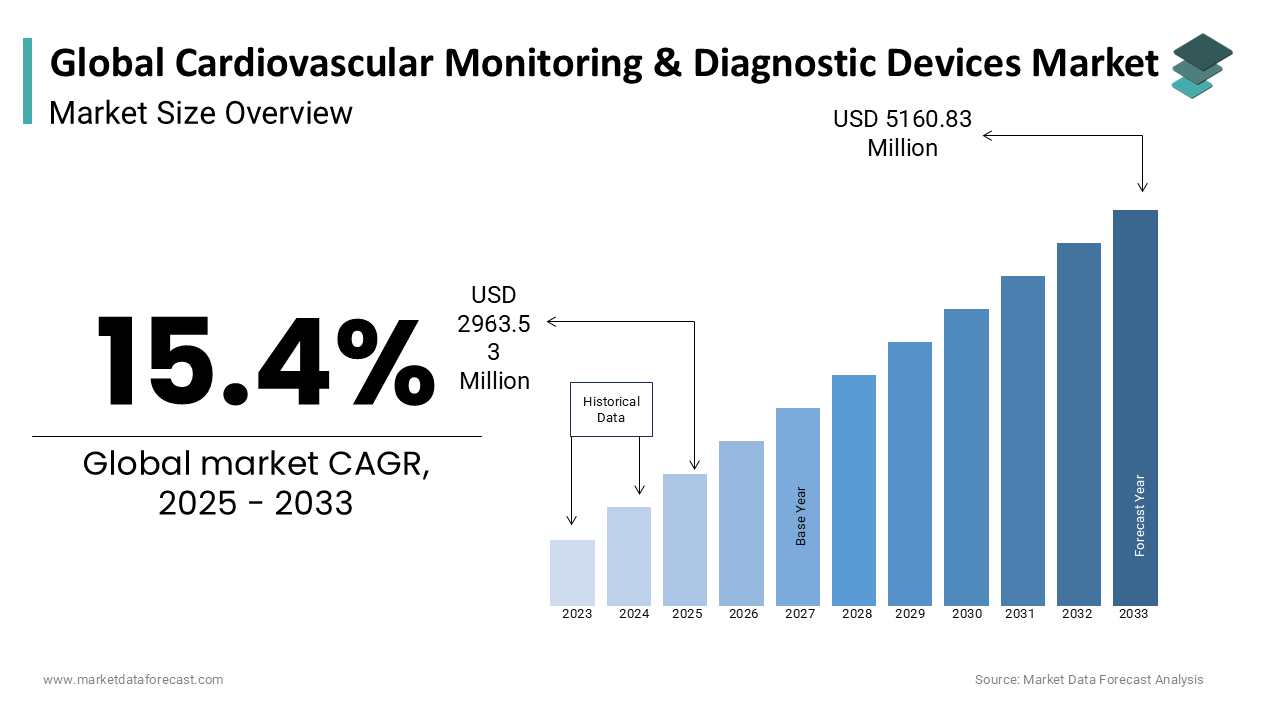
The demand for cardiovascular monitoring and diagnostic devices is eventually rising with the growing number of people diagnosed with heart-related issues. Cardiovascular monitoring devices help monitor the heart by measuring and recording its electrical activity. These recordings help professionals to make necessary treatment options. Advanced technologies in the healthcare sector are attributed to the launching of various devices that lower the risk of life-threatening incidences by diagnosing the disease at an early stage. Launch of monitoring the heart rhythm remotely through small devices that transfer the recording of the heartbeats through wireless technology that reduces the patient’s visits to the doctor. The doctor can review the heart’s health through the recording and promote efficient healthcare options. According to the British Heart Foundation, a quarter of deaths every year in the UK are due to heart disease, which is around 1,40,000 deaths each year. Around 2.3 million people in the UK are suffering from various kinds of heart-related diseases. These statistics are likely to showcase huge opportunities for the cardiovascular monitoring and diagnostic devices market.
MARKET DRIVERS
Growing Prevalence of CVDs
Cardiovascular diseases are the primary cause of death and witnessing a high rise in prevalence. Many people are being diagnosed with cardiovascular diseases such as periphery artery diseases, coronary artery diseases, congenital heart diseases, and pulmonary conditions, shifting the focus toward preventative healthcare. Increasing the risk of hypertension, heart muscle weakness, increasing the number of people who have diabetes, and obesity are the major factors driving the market. Technological advancements have enabled additional features such as portability in performing various tests, which further add to the growth of the cardiovascular monitoring market. With the newly innovative developments for diagnosing and treating cardiovascular diseases, the cardiac monitoring and diagnostic devices market is growing at a lucrative rate. The demand for cardiac monitoring and diagnostic products is powered by increased awareness of a healthy lifestyle. Increasing expenditure in the manufacturing of medical devices is also one of the compelling reasons for expanding the global market for diagnostic devices and cardiovascular monitoring. At the very same time, the untapped demand is creating new opportunities for the cardiac monitoring and diagnostic devices market throughout the coming period, together with the latest rising technological developments in cardiovascular care and diagnostics.
MARKET RESTRAINTS
Lack of Standardization
Lack of standardization is one of the major factors in the cardiovascular monitoring and diagnostics devices market. In addition to this, the high cost of installation and maintenance of the devices is merely to stymie the growth rate of the market. In developed and emerging countries, the cost of surgeries is very high due to the advancement in technologies, and a lack of support from government officials will certainly degrade the market’s size in the coming years. Lack of awareness of the importance of diagnostic procedures that eventually reduce the risk of heart failure among people, especially in rural areas, is also impeding the value of cardiovascular monitoring and diagnostic devices in the market.
REPORT COVERAGE
| REPORT METRIC | DETAILS |
| Market Size Available | 2025 to 2034 |
| Base Year | 2025 |
| Forecast Period | 2026 to 2034 |
| Segments Covered | By Product & Region |
| Various Analyses Covered | Global, Regional & Country Level Analysis, Segment-Level Analysis, DROC, PESTLE Analysis, Porter’s Five Forces Analysis, Competitive Landscape, Analyst Overview on Investment Opportunities |
| Regions Covered | North America, Europe, APAC, Latin America, Middle East & Africa |
| Market Leaders Profiled | GE Healthcare, Philips Healthcare, Siemens Healthcare, Boston Scientific Corporation, St. Jude Medical, Inc., Nihon Kohden Corporation, Welch Allyn, Inc., Spacelabs Healthcare, LivaNova PLC, and Hill-Rom Holdings, Inc. |
SEGMENTAL ANALYSIS
By Product Insights
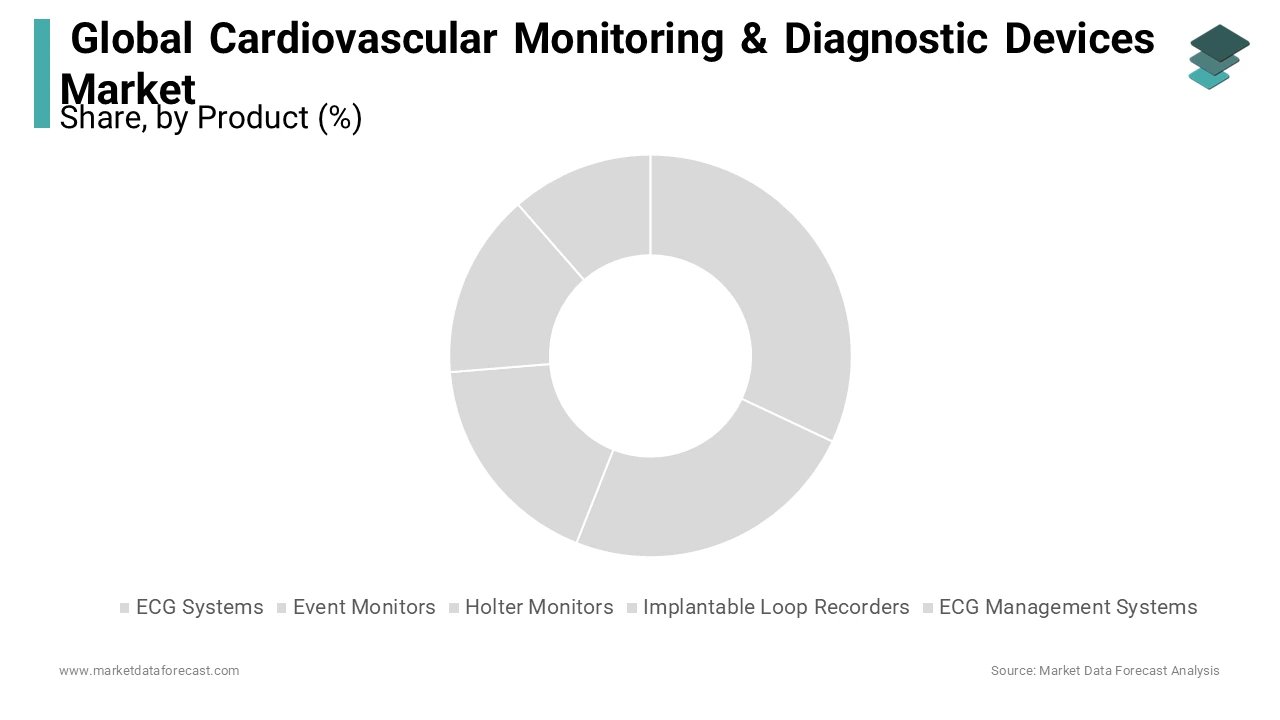
The ECG systems segment accounted for the largest share of the market and is expected to maintain its stronghold in the market during the forecast period due to widespread availability and increasing preference for these devices in developed and developing regions.
REGIONAL ANALYSIS
North America is the largest market for cardiovascular diagnostic and monitoring devices market. It is expected to sustain its substantial share owing to its favorable reimbursement policies and high awareness about available diagnosis and treatment methods among patients and physicians.
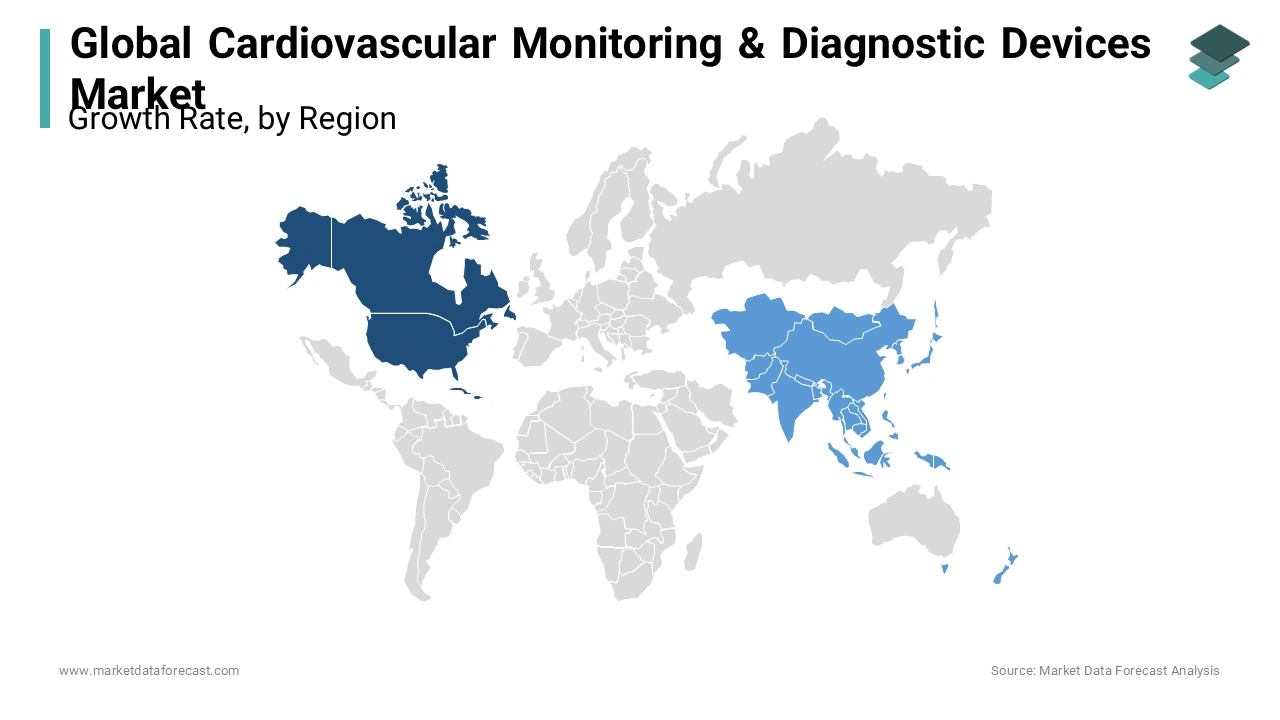
Asia-Pacific is estimated to be the fastest-growing region during the forecast period due to raising awareness about accessible devices' effectiveness in successfully curing several cardiovascular conditions and increasing healthcare spending.
Also, developing and emerging economies like China and India provide lucrative opportunities for growth for the market players during the forecast period.
KEY MARKET PLAYERS
Some of the companies that are playing a dominating role in the global cardiovascular monitoring and diagnostic devices market include
- GE Healthcare
- Philips Healthcare
- Siemens Healthcare
- Boston Scientific Corporation
- St. Jude Medical, Inc.
- Nihon Kohden Corporation
- Welch Allyn, Inc.
RECENT MARKET DEVELOPMENTS
-
Abbott Laboratories (US) has a fair share of the market for cardiac monitoring and heart rhythm control products. The company spends heavily on R&D programs to improve its market position. In 2018, Abbott spent 7.5 percent of its overall income (USD 2.30 billion) in R&D activities, of which the Cardiovascular & Neuromodulation division invested USD 1 billion. Implementation of this project is progressing, although it may hamper the brand value of its goods sold in this market.
-
SCHILLER China set up its sales and marketing department in Guangzhou in 2018. The new site has taken the company's activities closer to consumers in southern and eastern China.
- In early 2019, ZOLL Medical signed a definitive agreement to buy Cardiac Science Corporation (CSC) to reinforce its position in the automated external defibrillator section.
- At the end of 2020, Rivacor VR-T, Rivacor DR-T, Rivacor HF-T QP, Actor DX, Actor CRT-DX Bipolar, and Acticor CRT-DX obtained FDA approval.
MARKET SEGMENTATION
This research report on the global cardiovascular monitoring and diagnostic devices market has been segmented and sub-segmented into the following categories.
By Product
- ECG Systems
- Resting ECG Systems
- Stress ECG Systems
- Event Monitors
- Holter Monitors
- Implantable Loop Recorders
- ECG Management Systems
By Region
- North America
- Europe
- Asia-Pacific
- Latin America
- Middle-East and Africa