- Product Description Description
- Table of Contents TOC
- List of Table & Figure LOT
- Get Free Sample PDF Sample PDF
Market Size, 2025
$947.54 MnMarket Estimate, 2026
$1,013.11 MnMarket Forecast, 2034
$1,730.32 MnCAGR, 2026–2034
6.92%Executive Summary: Latin America Cardiovascular Monitoring & Diagnostic Devices Market
- Market Scope: Comprehensive Latin American cardiovascular monitoring and diagnostic devices market analysis covering product categories (ECG systems, monitors, and management systems), country-level landscapes, and technology adoption metrics.
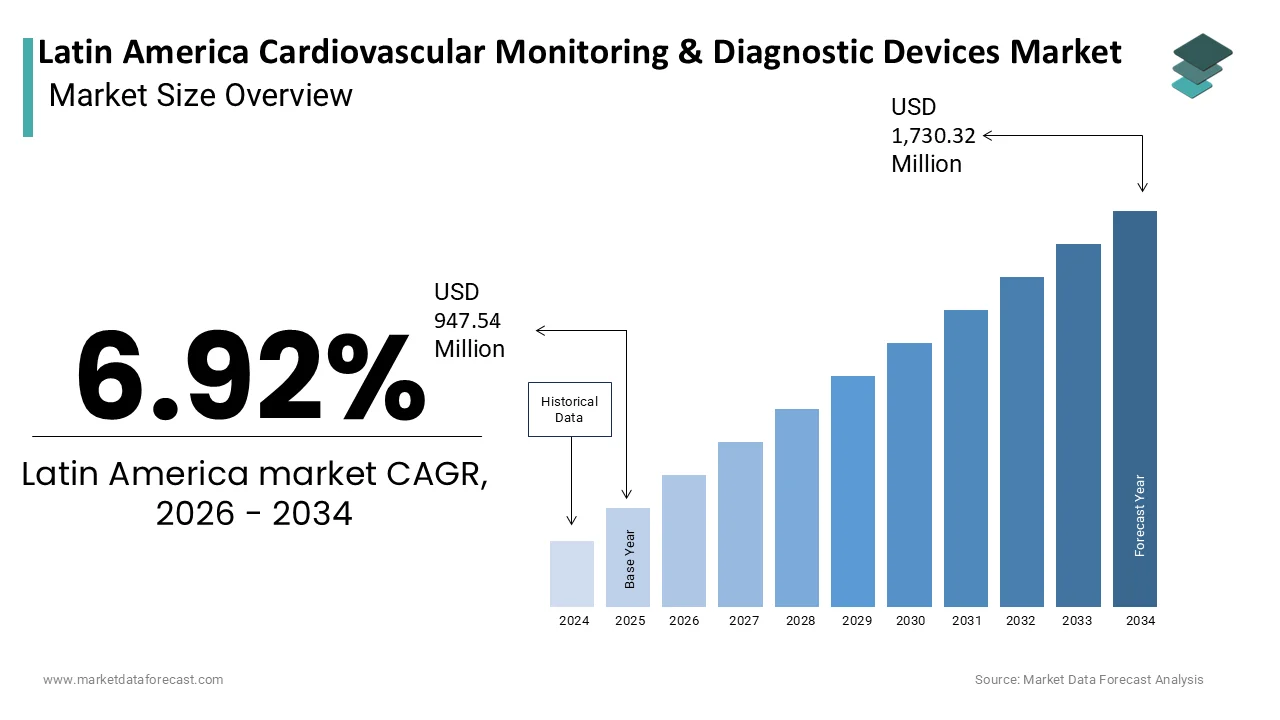
- Market Valuation: Valued at USD 947.54 million in 2025, estimated at USD 1,013.11 million in 2026, and projected to reach USD 1,730.32 million by 2034, registering a compound annual growth rate (CAGR) of 6.92% from 2026 to 2034.
- Primary Growth Drivers: High prevalence of cardiovascular diseases as a leading cause of death, rising incidence of diabetes, obesity, hypertension, and heart muscle weakening, shifting focus toward preventative healthcare, and technological advancements enabling device portability. Key market restraints include unclear reimbursement policies, stringent government regulations for product approvals, and the high cost of advanced cardiac devices.
Key Market Segment Metrics (2026–2034)
| Category | Leading Segment (2025 Position) | Fastest-Growing Segment |
|---|---|---|
| By Product | ECG Systems (Resting and Stress ECG systems captured the largest market share backed by routine diagnostic utility) | Holter & Event Monitors (expanding rapidly via ambulatory and portable remote patient monitoring demands) |
| By Country | Brazil (dominates the regional market share supported by large healthcare expenditure and extensive public health networks) | Mexico & Argentina (projected to witness steady growth driven by expanding private clinics and medical infrastructure) |
Major Market Players & Market Structure
Market Structure: Highly competitive medical technology ecosystem featuring prominent global conglomerates focusing on diagnostic accuracy, portability features, and regional distribution networks across Latin America.
Key Companies: GE Healthcare, Philips Healthcare, Siemens Healthcare, Boston Scientific Corporation, St. Jude Medical, Inc., Nihon Kohden Corporation, and Welch Allyn, Inc.
Latin America Cardiovascular Monitoring & Diagnostic Devices Market Size
The Latin America Cardiovascular Monitoring & Diagnostic Devices Market is projected to grow from USD 947.54 million in 2025 to USD 1,013.11 million in 2026 and reach USD 1,730.32 million by 2034, registering a CAGR of 6.92% from 2026 to 2034.
According to the Pan American Health Organization, cardiovascular diseases account for approximately 30% of all deaths in Latin America and the Caribbean, highlighting an urgent need for advanced diagnostic infrastructure. According to the World Heart Federation, over 1 million people die annually from heart-related causes in the region, with many cases remaining undiagnosed due to limited access to screening tools. As per the Council of Supply Chain Management Professionals, average dwell times for trucks at distribution centers have increased by 15% due to labor shortages, necessitating faster turnaround solutions. The market is evolving as healthcare systems strive to integrate early detection mechanisms into primary care settings to mitigate late-stage complications. Government initiatives aimed at improving chronic disease management are driving the procurement of portable and user-friendly diagnostic devices. Furthermore, the rising prevalence of hypertension and diabetes among the aging population necessitates continuous monitoring solutions that can be deployed in both hospital and home care environments. This transition toward proactive cardiac care is reshaping the procurement landscape as institutions prioritize devices that offer accuracy, efficiency, and connectivity to support comprehensive patient management strategies across the continent.
MARKET DRIVERS
Escalating Prevalence of Cardiovascular Diseases and Risk Factors
The surging incidence of cardiovascular diseases driven by lifestyle changes and demographic shifts drives the expansion of the Latin American cardiovascular monitoring and diagnostic devices market. According to the World Health Organization, noncommunicable diseases, including heart conditions,s are responsible for 72% of all deaths in the Americas, with cardiovascular disorders representing the largest share. According to the InterAmerican Heart Foundation, the prevalence of hypertension in adults across Latin America has reached 35%, creating a vast patient pool requiring regular blood pressure and cardiac rhythm monitoring. This epidemiological reality directly influences market dynamics as healthcare providers must equip facilities with diagnostic tools capable of handling high patient volumes efficiently. The increasing rates of obesity and diabetes further exacerbate cardiac risks, necessitating comprehensive screening protocols that rely on advanced imaging and monitoring technologies. Hospitals and clinics are expanding their cardiology departments to meet this demand, leading to increased procurement of echocardiography machines and stress test systems. Public health campaigns promoting early detection are also driving awareness among patients who seek diagnostic services proactively. This sustained clinical need ensures that the demand for cardiovascular monitoring devices remains robust as healthcare systems struggle to manage the growing burden of chronic heart conditions through timely and accurate diagnosis.
Government Initiatives Enhancing Healthcare Infrastructure Access
Strategic government programs aimed at modernizing public healthcare infrastructure and expanding access to specialized cardiac care further aid the regional market growth. According to the Ministry of Health in Brazil, the federal government allocated over 5 billion reais in recent budgets specifically for upgrading equipment in public hospitals, including the acquisition of digital electrocardiogram and ultrasound systems. According to the Mexican Social Security Institute, investments in cardiovascular health programs have increased by 15% annually to reduce mortality rates through better diagnostic capabilities in rural and underserved areas. These financial commitments directly stimulate market growth as public tenders create substantial opportunities for device manufacturers to supply large volumes of equipment. The focus on decentralizing healthcare services means that smaller regional hospitals are being equipped with basic diagnostic tools that were previously available only in major urban centers. Additionally, partnerships between governments and international health organizations facilitate the transfer of technology and training for local medical staff,f ensuring proper utilization of new devices. Regulatory reforms streamlining the approval process for medical devices in countries like Colombia and Argentina further accelerate market entry. This supportive policy environment combined with increased public spending ensures a steady demand for cardiovascular monitoring and diagnostic solutions across the region.
MARKET RESTRAINTS
Economic Volatility and Currency Fluctuations Impacting Procurement
Persistent economic instability and volatile currency exchange rates are impeding the Latin American market expansion. According to the International Monetary Fund, several major economies in the region experienced inflation rates exceeding 10% in recent years, eroding the purchasing power of healthcare institutions and limiting capital expenditure budgets. According to the Central Bank of Argentina, the devaluation of the local currency against the US dollar has increased the cost of imported medical devices by over 40%, making advanced diagnostic equipment prohibitively expensive for many public hospitals. This financial barrier directly impacts market expansion as healthcare administrators are forced to delay upgrades or opt for lower-cost alternatives that may lack advanced features. The reliance on imported technology means that fluctuations in global supply chains and trade tariffs further exacerbate cost pressures. Private healthcare providers also face challenges in passing these increased costs to patients due to price sensitivity and insurance limitations. Consequently, the adoption rate of next-generation diagnostic tools slows down as institutions prioritize essential maintenance over new acquisitions. This economic constraint creates an uneven market landscape where only well-funded private facilities can afford state-of-the-art technology while public sectors struggle with outdated equipment, thereby restraining overall market potential.
Limited Reimbursement Coverage for Advanced Diagnostic Procedures
Inadequate reimbursement policies for advanced cardiovascular diagnostic procedures restrict patient access and hinder the widespread adoption of sophisticated monitoring devices. According to the Latin American Health Economics Association, less than 50% of the population in many countries has access to comprehensive health insurance that covers advanced cardiac imaging and continuous monitoring services. According to the Brazilian National Agency for Supplementary Health, reimbursement rates for complex diagnostic tests such as cardiac MRI and CT angiography have remained stagnant despite rising operational costs, discouraging providers from investing in these technologies. This coverage gap directly affects market dynamics because hospitals cannot justify the high capital investment in advanced devices if they cannot recover costs through patient billing. Patients often face high out-of-pocket expenses, es leading them to forego necessary diagnostic evaluations or seek cheaper, less accurate alternatives. The lack of standardized reimbursement frameworks across different countries creates uncertainty for manufacturers trying to establish consistent pricing strategies. Furthermore, public health systems often prioritize acute care over preventive diagnostics, leaving little budget for routine monitoring programs. This financial disincentive limits the utilization of advanced diagnostic tools and slows the transition toward preventive cardiac care models, thereby constraining market growth and innovation adoption in the region.
MARKET OPPORTUNITIES
Expansion of Telemedicine and Remote Patient Monitoring Solutions
The rapid growth of telemedicine infrastructure is a prominent opportunity for the Latin American cardiovascular monitoring and diagnostic devices market. According to the Inter-American Development Bank, the adoption of digital health services in the region increased by 60% during the pandemic, creating a lasting shift toward virtual care models that require compatible monitoring hardware. According to the Chilean Ministry of Health, over 200,000 patients are now enrolled in remote monitoring programs for chronic conditions including hypertension and heart failure, driving demand for wearable ECG patches and Bluetooth-enabled blood pressure monitors. This digital transition directly benefits the market as manufacturers develop connected devices that integrate seamlessly with telehealth platforms, enabling real-time data transmission to physicians. The vast geographic disparities in Latin America make remote monitoring particularly valuable for reaching patients in rural areas where specialist care is scarce. Governments are increasingly supporting these initiatives through regulatory frameworks that recognize remote diagnostics as valid for clinical decision-making. Partnerships between technology firms and telecom providers are enhancing connectivity in remote regions, further facilitating device usage. This trend allows companies to tap into a large underserved population by offering affordable, scalable monitoring solutions that improve patient outcomes while reducing the burden on hospital infrastructure.
Growing Medical Tourism Industry Driving Premium Device Adoption
The burgeoning medical tourism sector in countries such as Mexico, Costa Rica, and Brazil creates significant opportunities for the adoption of high-end cardiovascular diagnostic devices in private healthcare facilities. According to the Medical Tourism Association, Latin America attracts over 1 million international patients annually, many of whom seek specialized cardiac diagnostics and treatments at competitive prices. According to the Costa Rican Tourism Board, healthcare-related travel contributes over 500 million dollars to the national economy, prompting private hospitals to invest in state-of-the-art imaging and monitoring systems to meet international quality standards. This demand for premium care directly drives market growth as facilities compete to offer the latest technological advancements to attract foreign patients. Accreditation by international bodies requires hospitals to maintain up-to-date equipment, ensuring consistent procurement of advanced diagnostic tools. The presence of multinational insurance providers covering treatments in the region further incentivizes hospitals to adopt globally recognized devices. Manufacturers can capitalize on this trend by establishing direct partnerships with leading medical tourism hubs to supply integrated diagnostic suites. This niche but high-value segment encourages the introduction of innovative technologies and sets a benchmark for quality that gradually influences the broader domestic market, raising overall standards of cardiac care.
MARKET CHALLENGES
Shortage of Trained Cardiologists and Technical Staff
A critical shortage of qualified cardiologists and biomedical technicians proficient in operating advanced diagnostic equipment is a significant challenge to the Latin American cardiovascular monitoring and diagnostic devices market. According to the Pan American Health Organization, there is a deficit of approximately 15 cardiologists per 100,000 inhabitants in many Latin American countries, resulting in long wait times and underutilization of available diagnostic resources. According to the Brazilian Society of Cardiology, over 30% of installed echocardiography machines in public hospitals remain idle due to a lack of trained personnel to perform and interpret complex tests accurately. This skills gap directly impacts market dynamics because healthcare institutions hesitate to invest in sophisticated technology if they cannot ensure proper operation and maintenance. The steep learning curve associated with new diagnostic platforms requires extensive training, which many public facilities cannot afford or schedule due to staffing constraints. Consequently, some hospitals revert to using older,lder simpler devices that do not require specialized expertise, leading to suboptimal diagnostic accuracy. The migration of skilled professionals to North America and Europe further exacerbates the local shortage. Addressing this human capital challenge requires collaborative efforts between educational institutions and device manufacturers to develop comprehensive training programs. Until this workforce issue is resolved, the full potential of the cardiovascular monitoring market will remain constrained, limiting its impact on patient care.
Regulatory Fragmentation and Complex Approval Processes
The lack of harmonized regulatory frameworks across Latin American countries creates substantial barriers to the timely entry and distribution of cardiovascular monitoring and diagnostic devices. According to the Andean Community, each member country maintains distinct registration requirements and clinical evidence standards, forcing manufacturers to navigate multiple bureaucratic processes for market access. According to the Colombian National Institute for Food and Drug Surveillance, the average time to approve a new Class II medical device can exceed 18 months due to inconsistent documentation requirements and limited regulatory capacity. These delays directly affect market dynamics by prolonging the return on investment for manufacturers and delaying patient access to innovative technologies. Companies must maintain separate regulatory affairs teams for each country, increasing operational costs and complexity. The absence of mutual recognition agreements means that approvals in one country do not facilitate entry into neighboring markets, hindering regional scalability. Additionally, frequent changes in local regulations create uncertainty for long-term business planning. This fragmented environment favors large multinational corporations with extensive resources while marginalizing smaller innovators who cannot afford the regulatory burden. Consequently, the pace of technological adoption slows as companies prioritize markets with clearer pathways, impacting the overall availability of advanced cardiac care solutions in the region.
REPORT COVERAGE
| REPORT METRIC | DETAILS |
| Market Size Available | 2025 to 2034 |
| Base Year | 2025 |
| Forecast Period | 2026 to 2034 |
| Segments Covered | By Product and Country. |
| Various Analyses Covered | Global, Regional, & Country-Level Analysis; Segment-Level Analysis, DROC, PESTLE Analysis, Porter’s Five Forces Analysis, Competitive Landscape, Analyst Overview of Investment Opportunities |
| Country Covered | Mexico, Brazil, Argentina, Chile, Peru, and the rest of Latin America. |
| Market Leaders Profiled | GE Healthcare and Philips Healthcare, Siemens Healthcare, Boston Scientific Corporation |
SEGMENTAL ANALYSIS
By Product Insights
The ECG systems segment led the market by holding the largest share of the Latin American cardiovascular monitoring and diagnostic devices market in 2025 due to their status as the foundational diagnostic tool for initial cardiac assessment in both primary care and emergency departments. According to the Pan American Health Organization, over 80% of public health centers in the region are equipped with basic electrocardiography machines, making it the most accessible cardiac diagnostic technology available. According to the Brazilian Ministry of Health, more than 15 million ECG procedures are performed annually in the public sector alone, reflecting the high volume of patients presenting with chest pain or palpitations. This widespread accessibility directly drives market leadership as ECG systems are considered essential infrastructure rather than optional upgrades. The low cost of entry compared to advanced imaging modalities allows even small rural clinics to procure these devices, ensuring broad market penetration. Furthermore, the simplicity of operation means that general practitioners and nurses can perform tests without specialized cardiologist supervision, addressing the shortage of specialists. Regulatory bodies prioritize the standardization of ECG equipment, ensuring consistent quality across manufacturers. The continuous need for rapid triage in emergency rooms sustains steady replacement and upgrade cycles for digital ECG systems. This entrenched position ensures that ECG systems remain the largest revenue generator in the product segment as they serve as the first line of defense in cardiovascular disease detection across all healthcare settings in Latin America.
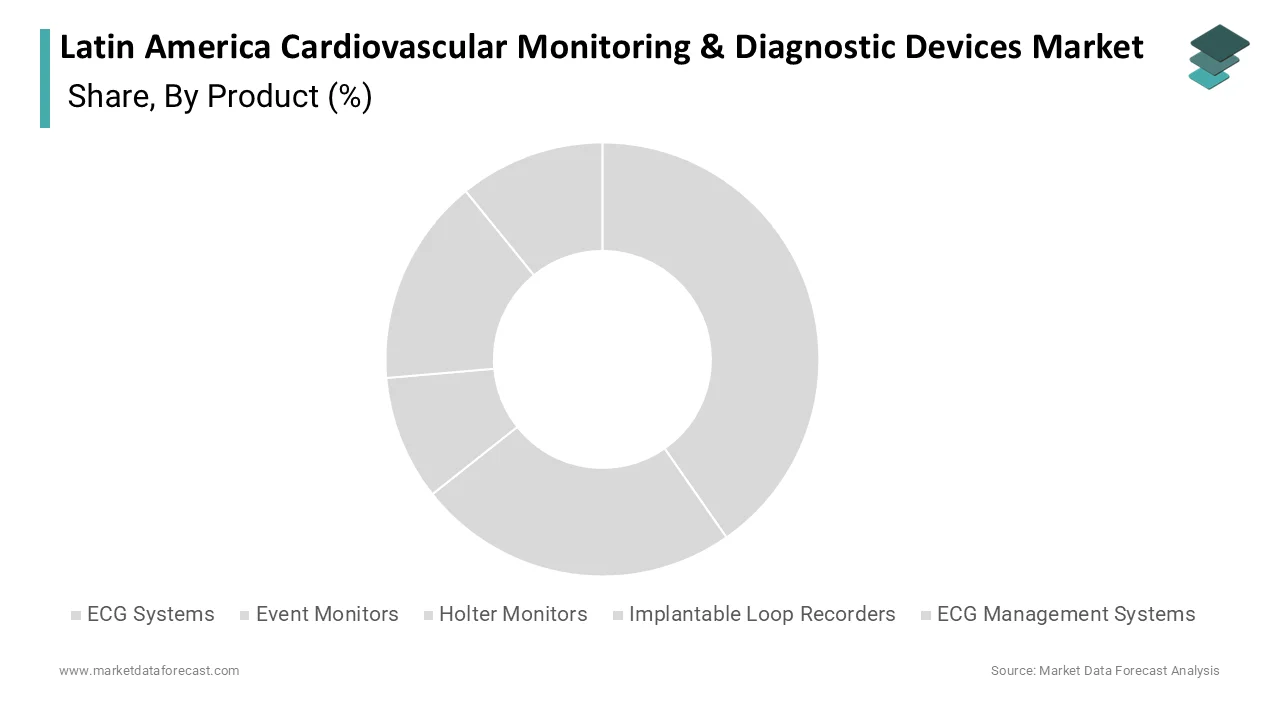
On the other hand, theHolterr monitors segment is experiencing the fastest growth in the Latin American market due to the increasing clinical recognition of paroxysmal arrhythmias that require extended monitoring beyond standard ECG snapshots. According to the Heart Rhythm Society, the detection rate of atrial fibrillation increases by 30% when using 24- to 48-hour Holter monitoring compared to single-time-point assessments, highlighting its diagnostic superiority. According to the Mexican Institute of Social Security, the number of ambulatory cardiac monitoring prescriptions has grown by 25% annually as physicians seek to correlate symptoms like dizziness and syncope with heart rhythm abnormalities. This clinical evidence directly drives market expansion as healthcare providers adopt Holter monitors as standard practice for unexplained cardiac symptoms. The aging population in Latin America is more prone to intermittent arrhythmias, creating a larger target demographic for these devices. Additionally, the shift toward outpatient care reduces hospital stays, making portable monitoring solutions economically attractive for payers. Patients prefer the convenience of wearing a device at home rather than remaining in a hospital bed for observation. Manufacturers are responding by developing lighter wireless Holter monitors that improve patient compliance and comfort. This combination of clinical efficacy, patient preference, and cost efficiency ensures that the Holter monitor segment will continue to outpace others in growth rate as awareness of arrhythmia risks increases.
COUNTRY LEVEL ANALYSIS
Brazil Cardiovascular Monitoring And Diagnostic Devices Market Analysis
Brazil held the leading share of the Latin American cardiovascular monitoring and diagnostic devices market in 2025 and is likely to exhibit stable economic growth and robust medical device integration for the next few years owing to its massive population and comprehensive public healthcare system. According to the Brazilian Institute of Geography and Statistics, the country accounts for approximately 35% of the regional market value due to high-volume procurement by the Unified Health System. According to the Brazilian Association of Medical Device Industries, local manufacturing incentives have increased domestic production of ECG systems by 15%, reducing reliance on imports and lowering costs. The high prevalence of hypertension and Chagas disease creates a sustained demand for diagnostic tools across both urban and rural areas. Government programs aimed at expanding primary care coverage have led to the distribution of thousands of portable diagnostic devices to family health teams. The presence of major multinational manufacturers with local production facilities ensures steady supply and competitive pricing. Additionally, the growing private healthcare sector in cities like São Paulo and Rio de Janeiro drives demand for advanced monitoring solutions. Regulatory alignment with international standards facilitates the introduction of new technologies. This combination of scale, public investment, and industrial capacity ensures that Brazil remains the dominant force in the regional market, setting trends for adoption and utilization of cardiovascular diagnostic devices.
Mexico Cardiovascular Monitoring And Diagnostic Devices Market Analysis
Mexico is anticipated to experience steady infrastructural advancements and rising private sector investments over the coming years. Mexico occupies a significant position in the market characterized by a dual healthcare system that drives demand in both public and private sectors. According to the National Institute of Statistics and Geography, Mexico contributes approximately 20% to the regional market revenue, supported by steady economic growth and healthcare modernization efforts. According to the Mexican Social Security Institute, investments in cardiology infrastructure have increased by 10% annually to address rising rates of ischemic heart disease among the working-age population. The proximity to the United States facilitates faster access to innovative devices and technical support from global manufacturers. Medical tourism in border cities creates additional demand for high-end diagnostic equipment in private hospitals catering to international patients. Government initiatives to reduce cardiovascular mortality have led to targeted procurement campaigns for screening devices in primary care units. The expansion of private insurance coverage among the middle class further stimulates demand for advanced monitoring solutions. Local distributors play a crucial role in navigating regulatory requirements and ensuring market access. This dynamic environment ensures that Mexico remains a key growth engine in the region with balanced contributions from public health programs and private sector innovation.
Argentina Cardiovascular Monitoring And Diagnostic Devices Market Analysis
Argentina is projected to maintain measured technological modernization and resilient healthcare spending in the near future. Argentina maintains a notable share of the market despite economic challenges, driven by a strong medical tradition and high density of healthcare professionals. According to the Argentine Ministry of Health, the country accounts for approximately 10% of the regional market, with a focus on specialized cardiac care in major urban centers. According to the National Administration of Drugs, Food and Medical Technology, regulatory reforms have streamlined the approval process for imported diagnostic devices, reducing wait times by 20%. The high literacy rate and health awareness among the population drive demand for preventive cardiac screenings and monitoring services. Private healthcare cooperatives known as Obras Sociales play a significant role in procuring diagnostic equipment for their members. The economic volatility has led to a preference for durable and cost-effective devices that offer long-term value. Local assembly of certain monitoring devices helps mitigate currency fluctuation impacts. Academic institutions contribute to market growth by conducting research and training programs that promote the use of advanced diagnostic techniques. This resilient market structure ensures that Argentina remains an important hub for cardiovascular diagnostics in the Southern Cone with steady demand for reliable and efficient monitoring solutions.
Chile Cardiovascular Monitoring And Diagnostic Devices Market Analysis
Chile is expected to witness continued leadership in digital health adoption and high-end device penetration over the upcoming years. Chile represents a mature and technologically advanced segment of the market driven by strong regulatory frameworks and high healthcare spending per capita. According to the Chilean Ministry of Health, the country holds approximately 8% of the regional market share, characterized by high adoption rates of digital and connected diagnostic devices. According to the Superintendence of Health, over 70% of the population is covered by health insurance schemes that reimburse for advanced cardiac monitoring services, encouraging provider investment. The government’s explicit health guarantees program ensures access to specific cardiovascular treatments,s including diagnostic testing for priority conditions. Chile serves as a gateway for new technologies entering the South American market due to its stable economic environment and transparent regulatory processes. Private clinics in Santiago lead in adopting cutting-edge monitoring solutions such as implantable loop recorders and wireless Holter systems. The emphasis on quality accreditation drives hospitals to maintain state-of-the-art equipment. High internet penetration supports the growth of telecardiology and remote monitoring initiatives. This progressive healthcare landscape ensures that Chile remains a leader in technological adoption, influencing regional standards and practices for cardiovascular monitoring and diagnostics.
COMPETITIVE LANDSCAPE
The competition in the Latin America Cardiovascular Monitoring & Diagnostic Devices Market is characterized by intense rivalry among global multinational corporations and emerging local manufacturers who strive to differentiate through price competitiveness and service quality. Major competitors focus on developing cost-effective solutions that align with the budgetary constraints of public healthcare systems while maintaining high clinical standards. Product differentiation is achieved through technological innovations such as wireless connectivity and artificial intelligence integration, which appeal to modernizing hospitals. Strategic alliances with local distributors are crucial for navigating regulatory complexities and ensuring widespread market access across diverse geographies. Price sensitivity remains a significant factor influencing purchasing decisions, particularly in the public sector where tender processes dominate procurement. Companies must balance affordability with after-sales support, including maintenance and training,g to retain customer loyalty. The entry of new players offering disruptive technologies further intensifies competition, prompting established firms to continuously innovate and adapt their business models. Regulatory harmonization efforts across the region are gradually reducing barriers to entry,t ry but compliance remains a key competitive advantage. This dynamic landscape requires agile strategies and deep local insights to succeed in capturing market share and driving adoption of advanced cardiac care solutions.
KEY MARKET PLAYERS
Some of the companies that are playing a dominant role in the Latin America Cardiovascular Monitoring & Diagnostic Devices Market include:
- GE HealthCare
- Philips Healthcare
- Siemens Healthcare
- Boston Scientific Corporation
- St. Jude Medical, Inc.
- Nihon Kohden Corporation
- Welch Allyn, Inc.
TOP LEADING PLAYERS IN THE MARKET
- Koninklijke Philips N.V. maintains a strong presence in the region by offering a comprehensive portfolio of cardiovascular monitoring solutions, including advanced ECG systems and patient monitoring platforms. The company actively collaborates with local governments to upgrade public hospital infrastructure through strategic partnerships that facilitate technology transfer and training. Recent actions include the launch of connected care solutions tailored for remote areas in Brazil and Mexico, enabling real-time data transmission to specialists. Philips focuses on integrating artificial intelligence into diagnostic workflows to enhance accuracy and efficiency for healthcare providers. Their commitment to sustainable healthcare drives the adoption of energy-efficient devices that reduce operational costs for hospitals. By leveraging its global expertise and local insights,s Philips strengthens its position as a trusted partner for modernizing cardiac care delivery across Latin America while addressing specific regional challenges related to accessibility and resource optimization.
- GE HealthCare Technologies Inc. contributes significantly to the market by providing robust diagnostic imaging and monitoring equipment designed to withstand diverse clinical environments in Latin America. The company has expanded its service network to ensure timely maintenance and support for hospitals in remote locations,s thereby enhancing device uptime and reliability. Recent initiatives involve the introduction of portable ultrasound and ECG devices that empower primary care physicians to perform accurate cardiac assessments outside traditional hospital settings. GE HealthCare actively engages in educational programs with medical societies to promote best practices in cardiovascular diagnostics. They have also invested in digital health platforms that integrate diagnostic data with electronic health records, improving workflow efficiency. By focusing on innovation and accessibility, high-quality care reinforces its leadership role in delivering high-quality cardiac care solutions that meet the evolving needs of healthcare systems throughout the region.
- Medtronic plc plays a pivotal role in the market by offering advanced cardiac monitoring technologies, including implantable loop recorders and wearable sensors for continuous rhythm assessment. The company works closely with cardiologists and healthcare institutions to implement comprehensive disease management programs that leverage data from monitoring devices. Recent actions include the expansion of its digital real-time ecosystem in Latin America, allowing patients to share real-time cardiac data with their care teams securely. Medtronic invests heavily in clinical research and training initiatives to demonstrate the value of early detection and intervention for arrhythmias. They have established centers of excellence in key countries to provide specialized support and patient-centered care for healthcare professionals. By prioritizing ppatient-centeredinnovation and clinical evidence, Medtronic strengthens its market position and drives the adoption of proactive cardiac monitoring solutions that improve outcomes and reduce healthcare costs across Latin America.
TOP STRATEGIES USED BY KEY MARKET PARTICIPANTS
Key players in the Latin America Cardiovascular Monitoring & Diagnostic Devices Market primarily employ strategic partnerships with local distributors and healthcare providers to navigate complex regulatory landscapes and enhance market penetration. Companies focus on product localization by adapting devices to meet specific regional clinical needs and economic constraints,s ensuring affordability and usability. Investment in digital health platforms enables seamless integration of monitoring data with telemedicine services, es expanding access to specialist care in remote areas. Manufacturers actively participate in government tenders and public health initiatives to secure high-volume contracts for essential diagnostic equipment. Continuous education and training programs for healthcare professionals build trust and ensure proper utilization of advanced technologies. These strategies collectively enable companies to overcome infrastructural challenges and drive sustainable growth in the dynamic Latin American healthcare environment.
MARKET SEGMENTATION
This research report on the Latin America cardiovascular monitoring & diagnostic devices market has been segmented and sub-segmented into the following categories.
By Product
- ECG Systems
- Resting ECG Systems
- Stress ECG Systems
- Event Monitors
- Holter Monitors
- Implantable Loop Recorders
- ECG Management Systems
By Country
- Mexico
- Brazil
- Argentina
- Chile
- Rest of Latin America