Europe Cashew Kernel Market Size, Share, Trends & Growth Forecast Report By Type, By Product, By Distribution Channel, and By Country (Germany, United Kingdom, France, Italy, Spain & Rest of Europe) – Industry Analysis and Forecast, 2026 to 2034
Market Size, 2025
$84.82 MnMarket Estimate, 2026
$88.8 MnMarket Forecast, 2034
$128.23 MnCAGR, 2026–2034
4.7%Europe Cashew Kernel Market Report Summary
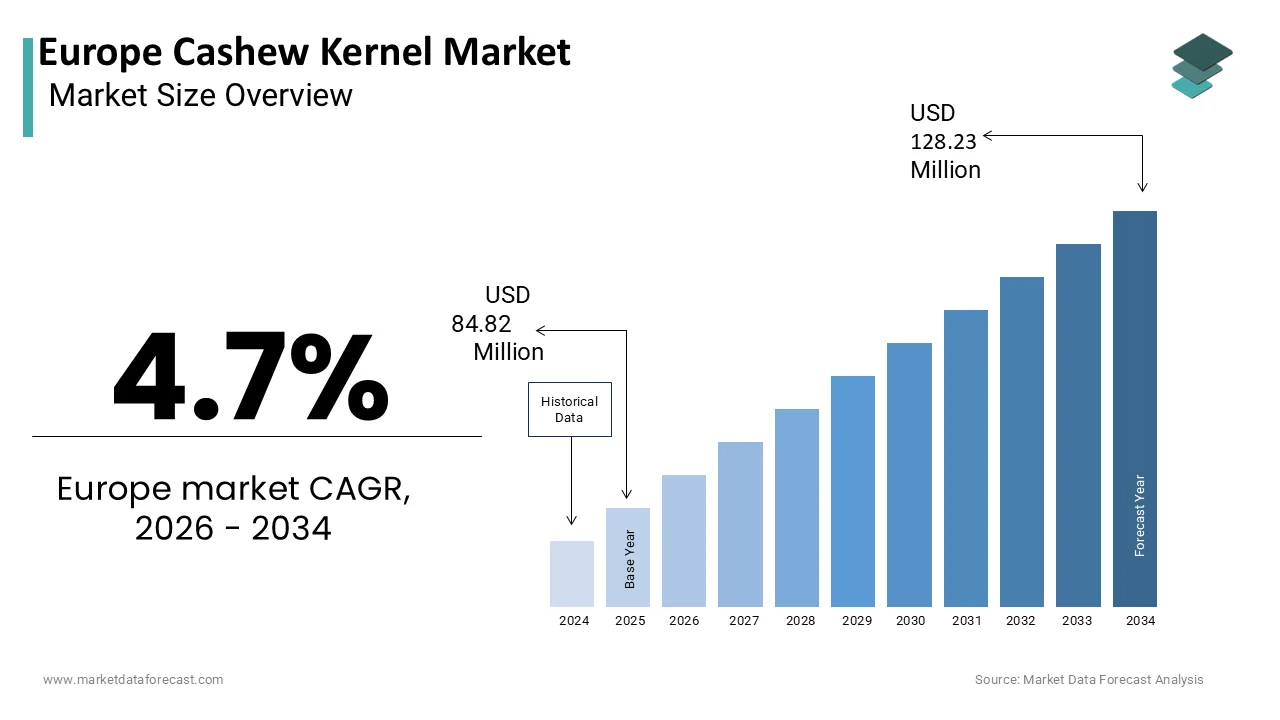
The Europe Cashew Kernel Market was valued at USD 84.82 million in 2025 and is projected to reach USD 128.23 million by 2034, growing from USD 88.80 million in 2026 at a CAGR of 4.70% during the forecast period. Growth is driven by the increasing adoption of plant-based diets, rising demand for vegan dairy alternatives, and growing consumer awareness of the cardiovascular health benefits of cashews. However, price volatility, import dependency, and stringent food safety regulations remain key market restraints.
Key Market Trends
- Rising demand for plant-based and vegan dairy alternatives made from cashew kernels.
- Increasing popularity of organic and Fair Trade-certified cashew products.
- Expansion of value-added products, including flavored snacks, cashew butter, and premium snack formats.
- Growing consumer preference for sustainably sourced and ethically certified products.
- Increasing adoption of convenient packaging formats such as single-serve and resealable packs.
Segmental Insights
- Based on type, conventional cashew kernels held the largest market share in 2025, driven by competitive pricing, broad availability, and strong demand across mainstream retail channels.
- Based on product, white wholes dominated the market in 2025 due to their premium appearance, superior quality, and extensive use in snacking, confectionery, and gourmet applications.
- Organic cashew kernels are the fastest-growing type segment, projected to register a CAGR of 10.1%, driven by increasing consumer demand for chemical-free, sustainable, and ethically sourced food products.
Regional Insights
- Germany led the market in 2025, supported by high consumer spending, strong organic food demand, growing vegan consumption, and its role as a major import and distribution hub.
- United Kingdom holds a significant share, driven by multicultural cuisine, strong online grocery adoption, and increasing demand for plant-based products.
- France is a prominent market, supported by premium culinary applications, organic food demand, and increasing health-conscious consumption.
- Italy contributes notably through expanding confectionery applications, growing vegan food adoption, and rising use of exotic nuts in modern cuisine.
- Online retailers represent the fastest-growing distribution channel, projected to register a CAGR of 12.2%, driven by wider product availability, convenience, subscription services, and growing e-commerce adoption.
Competitive Landscape
The market is highly competitive, with global agribusiness companies, specialized nut suppliers, and regional distributors competing through sustainable sourcing, premium product development, product innovation, and supply chain transparency. Companies are investing in organic and Fair Trade-certified products, value-added cashew ingredients, digital supply chain traceability, and strategic retail partnerships to strengthen their position in the European market.Prominent players in the market include Olam International, Archer Daniels Midland Company (ADM), and Blue Diamond Growers.
Europe Cashew Kernel Market Size
The Europe Cashew Kernel Market is projected to grow from USD 84.82 million in 2025 to USD 88.80 million in 2026 and reach USD 128.23 million by 2034, registering a CAGR of 4.7% during the forecast period from 2026 to 2034.
Cashew kernels are processed nuts derived from the cashew apple, primarily sourced from tropical regions in Africa, Asia, and Latin America. These kernels are valued for their rich nutritional profile, high content of unsaturated fats, and versatile culinary applications, ranging from snacking to vegan dairy alternatives. The European market is characterized by a strong preference for high-quality whole kernels and an increasing demand for organic and fair-trade certified products. According to Eurostat data, the European Union imported approximately 235,000 tonnes of cashew nuts in 2025, reflecting steady consumption growth driven by health-conscious consumer trends. The shift towards plant-based diets has significantly influenced market dynamics, as cashews serve as a primary ingredient for milk, cheese, and cream substitutes. As per the European Commission’s agricultural statistics, the per capita consumption of tree nuts has risen by approximately 15% over the last decade, indicating a structural change in dietary habits.
Furthermore, the European Food Safety Authority recognizes nuts as essential components of a heart-healthy diet, which supports regulatory and promotional efforts. The market operates within a complex supply chain that relies heavily on imports due to the inability of European climates to support commercial cashew cultivation. This dependency necessitates robust trade relationships and stringent quality control measures to ensure food safety and sustainability standards are met across the region.
MARKET DRIVERS
Rising Adoption of Plant-Based Diets and Vegan Alternatives
The accelerating transition towards plant-based diets across Europe is one of the major factors propelling the cashew kernel market growth in Europe due to the nut’s unique functional properties in creating dairy-free alternatives. Cashews possess a high fat content and creamy texture when blended, making them ideal for producing vegan milk, cheese, yogurt, and cream without the need for extensive processing or additives. According to the Good Food Institute, retail sales of plant-based food products in Europe grew by 21% in recent years, with dairy alternatives representing the largest category. Consumers are increasingly seeking clean-label products that avoid soy and gluten, leading to a surge in demand for cashew-based formulations. Major food manufacturers in countries like Germany and the Netherlands have expanded their portfolios to include cashew-derived ingredients to meet this consumer preference. As per industry analysis, the versatility of cashew kernels allows for innovation in gourmet vegan cheeses and desserts, which command premium prices in retail channels. The alignment of cashew consumption with ethical and environmental values further strengthens its position in the market. Health-conscious consumers view cashews as a nutritious source of protein and healthy fats, which complements the wellness-oriented lifestyle associated with veganism. This dietary shift ensures sustained demand for high-quality cashew kernels as a staple ingredient in the growing plant-based food sector.
Growing Consumer Awareness of Cardiovascular Health Benefits
The growing consumer awareness regarding the cardiovascular health benefits of tree nuts is further aiding the rapid expansion of the European cashew kernels market. Cashews are rich in monounsaturated and polyunsaturated fatty acids, which are known to help lower bad cholesterol levels and reduce the risk of heart disease. According to the European Society of Cardiology, dietary guidelines recommend regular consumption of unsalted nuts as part of a heart-healthy diet to manage blood pressure and lipid profiles. Public health campaigns across member states have highlighted the role of nuts in preventing chronic diseases, leading to higher inclusion of cashews in daily snack routines. As per data from national health surveys in countries like France and Italy, nut consumption has increased among adults aged 40 and above who are more focused on preventive healthcare. The convenience of ready-to-eat roasted and salted cashew packs appeals to busy professionals seeking nutritious snack options. Retailers have responded by expanding shelf space for premium nut varieties, including organic and raw cashews. The perception of cashews as a functional food that supports overall well-being, rather than just a treat, enhances their appeal. This health-driven motivation creates a stable and growing customer base that prioritizes quality and nutritional value over price sensitivity, ensuring consistent market expansion.
MARKET RESTRAINTS
High Price Volatility and Supply Chain Dependencies
The Europe cashew kernel market faces significant restraint due to high price volatility and heavy reliance on imports from a limited number of producing countries. Since Europe does not cultivate cashews commercially, it depends entirely on supplies from West Africa, Vietnam, and India, where production is subject to climatic variations and political instability. According to the International Nut and Dried Fruit Council, fluctuations in global harvest yields can cause price swings of up to 30% within a single season, affecting retailer margins and consumer affordability. Weather events such as droughts or excessive rainfall in key producing regions like Ivory Coast and Tanzania directly impact output quality and volume. As per trade data, logistics disruptions and rising freight costs further exacerbate price instability, making it difficult for European importers to maintain consistent pricing strategies. The concentration of supply sources creates vulnerability to geopolitical tensions and trade policy changes, which can interrupt the flow. Small and medium-sized retailers often struggle to absorb these cost increases, leading to reduced promotional activities or substitution with cheaper nuts. This economic uncertainty discourages long-term contracts and limits market predictability. Consumers may also switch to more affordable alternatives like peanuts or sunflower seeds during periods of high cashew prices, thereby restraining volume growth. The lack of local production means Europe has no buffer against global supply shocks, maintaining a persistent structural weakness in the market.
Stringent Food Safety and Aflatoxin Regulations
Strict food safety regulations regarding aflatoxin contamination act as a major restraint for the Europe cashew kernel market by imposing rigorous testing and compliance requirements on imports. Aflatoxins are toxic compounds produced by molds that can contaminate nuts during storage in humid tropical conditions, posing serious health risks including liver damage and cancer. According to the European Food Safety Authority, the maximum allowable limits for aflatoxins in nuts destined for human consumption are among the strictest in the world, requiring advanced detection methods. Many shipments from developing countries are rejected at European borders due to non-compliance, resulting in financial losses and supply delays. As per customs data, thousands of tonnes of nuts are intercepted annually for exceeding safety thresholds, creating uncertainty for suppliers and buyers. The cost of implementing rigorous quality control systems and third-party certifications is substantial, particularly for small-scale exporters. European importers must invest in sophisticated testing infrastructure to ensure compliance, which increases operational expenses. These barriers limit the pool of eligible suppliers and reduce competition, potentially leading to higher prices. The fear of regulatory penalties and reputational damage makes retailers cautious about sourcing from new or less established markets. This regulatory burden slows down market entry for new players and restricts the diversity of supply sources, thereby constraining overall market growth and flexibility.
MARKET OPPORTUNITIES
Expansion of Organic and Fair Trade Certified Products
The growing demand for ethically sourced and environmentally sustainable food products presents a significant opportunity for the Europe cashew kernel market through the expansion of organic and fair-trade certified offerings. European consumers are increasingly concerned about the social and environmental impact of their purchases, driving preference for products that support farmer livelihoods and sustainable farming practices. According to the Research Institute of Organic Agriculture (FiBL), sales of organic nuts in Europe have grown by double digits in recent years, outpacing conventional segments. Fair-trade certification ensures that cashew farmers receive fair wages and work under safe conditions, which resonates with socially conscious buyers. As per market surveys, a majority of millennials and Gen Z consumers are willing to pay a premium for certified sustainable products. Retailers are responding by launching private-label organic cashew lines and partnering with ethical sourcing initiatives. This trend opens new revenue streams for manufacturers who can differentiate their products through transparency and certification. The European Union’s Farm to Fork Strategy supports sustainable agriculture, which aligns with the values of organic cashew production. By capitalizing on this ethical consumption wave, companies can build brand loyalty and access niche market segments that are less sensitive to price fluctuations. The integration of sustainability into marketing strategies enhances product appeal and drives long-term growth in the premium sector.
Innovation in Value-Added and Flavored Snack Formats
Innovation in value-added and flavored snack formats offers substantial opportunities for the Europe cashew kernel market by catering to evolving consumer tastes and convenience preferences. Manufacturers are moving beyond traditional roasted and salted variants to introduce exotic flavors such as chili lime, honey sriracha, and turmeric, which appeal to adventurous palates. According to industry reports, the flavored nut segment is experiencing faster growth than plain nuts due to its positioning as a gourmet snack option. The rise of on-the-go consumption has led to the development of single-serve packs and resealable pouches that enhance portability and freshness. As per retail analytics, impulse purchases of premium snacks have increased in convenience stores and supermarkets, driven by attractive packaging and novel flavor profiles. Cashew butter and spreads are also gaining popularity as healthy alternatives to peanut butter, especially among children and fitness enthusiasts. The incorporation of cashews into energy bars and trail mixes further expands their application in the health food sector. Product innovation allows brands to command higher margins and differentiate themselves in a crowded market. By leveraging culinary trends and consumer desire for variety, manufacturers can stimulate repeat purchases and attract new demographic groups. This creative approach transforms cashews from a commodity into a lifestyle product, which is driving the regional market expansion.
MARKET CHALLENGES
Intense Competition from Alternative Tree Nuts and Seeds
The Europe cashew kernel market faces intense competition from alternative tree nuts and seeds, which offer similar nutritional benefits at lower price points or with different taste profiles. Almonds, walnuts, hazelnuts, and pistachios are widely available in Europe and often benefit from local production or established consumer loyalty. According to market data, almond consumption in Europe remains significantly higher than cashew due to its widespread use in confectionery and baking industries. Hazelnuts produced locally in countries like Italy and Turkey enjoy a strong cultural presence and shorter supply chains, reducing costs. As per consumer preference studies, price sensitivity leads many shoppers to substitute cashews with sunflower seeds or peanuts, which are considerably cheaper. The abundance of choices dilutes brand loyalty and forces cashew marketers to compete aggressively on price and promotion. Private-label brands often prioritize almonds and walnuts due to higher turnover rates, leaving cashews with less shelf visibility. The perception of cashews as a luxury item limits their frequency of purchase compared to staple nuts. This competitive pressure restricts market share growth and requires continuous investment in marketing to maintain relevance. Manufacturers must constantly justify the premium price of cashews through quality and uniqueness, which is challenging in a price-conscious economic environment.
Labor-Intensive Processing and Quality Consistency Issues
The labor-intensive nature of cashew processing and challenges in maintaining consistent quality pose significant hurdles for the Europe cashew kernel market. Cashew shells contain caustic oil that requires careful manual or semi-automated removal to prevent kernel damage and ensure safety. According to industry assessments, the processing yield and quality vary significantly depending on the skill of workers and the technology used in producing countries. Inconsistent grading leads to mixed sizes and broken kernels in shipments, which do not meet the high standards expected by European retailers and consumers. For instance, rejection rates for broken or discolored kernels remain a persistent issue, affecting profitability and customer satisfaction. The reliance on manual labor in source countries raises ethical concerns regarding working conditions, which can impact brand reputation if not properly managed. European buyers demand uniform whole kernels for premium packaging, but achieving this consistency is difficult due to natural variations in raw nut size and shape. The lack of standardized processing technologies across different suppliers complicates quality assurance processes. These operational inefficiencies increase costs and reduce the reliability of supply. Addressing these challenges requires significant investment in mechanization and training in producing regions, which is often beyond the control of European importers. This structural limitation hinders the ability to scale up premium product offerings efficiently.
REPORT COVERAGE
| REPORT METRIC | DETAILS |
| Market Size Available | 2025 to 2034 |
| Base Year | 2025 |
| Forecast Period | 2026 to 2034 |
| Segments Covered | By Type, Product, Distribution Channel, and Region. |
| Various Analyses Covered | Global, Regional and Country-Level Analysis, Segment-Level Analysis, Drivers, Restraints, Opportunities, Challenges; PESTLE Analysis; Porter’s Five Forces Analysis, Competitive Landscape, Analyst Overview of Investment Opportunities |
| Countries Covered | Spain, Italy, France, Germany, United Kingdom, Rest of Europe |
| Market Leaders Profiled | Olam Food Ingredients (OFI), The Hershey Company, Barry Callebaut AG, Royal Nut Company, Intersnack Group GmbH & Co. KG, John B. Sanfilippo & Son, Inc., Keurig Dr Pepper Inc. (Emerald Nuts), Bühler Group, Valency International Pte. Ltd., Intersnack Procurement B.V., Bata Food B.V., Besana Group. |
SEGMENTAL ANALYSIS
By Type Insights
The conventional segment dominated the market by capturing the leading share of the European market in 2025. The dominance of the conventional segment in the European market is driven by its competitive pricing, which makes it accessible to a broad spectrum of consumers across various income levels. Unlike organic variants that command a premium due to certification costs and lower yields, conventional cashews benefit from economies of scale in large-scale production hubs such as Vietnam and India. For instance, conventional cashews are typically priced 20% to 30% lower than their organic counterparts, and this makes them the preferred choice for price-sensitive households and bulk buyers. This affordability drives high-volume sales in mainstream retail channels where value for money is a key purchasing determinant. For instance, the majority of European households prioritize cost efficiency when purchasing staple snacks and ingredients, limiting the penetration of premium products. The widespread availability of conventional cashews in discount supermarkets and hypermarkets further reinforces their market leadership by ensuring consistent supply and visibility. Manufacturers and traders focus on optimizing supply chains to keep costs low, allowing for aggressive promotional strategies that stimulate demand. The established infrastructure for processing and distributing conventional nuts ensures reliable quality and timely delivery, meeting the expectations of large-scale retailers. This combination of economic accessibility and logistical efficiency sustains the dominance of the conventional segment in the regional market.
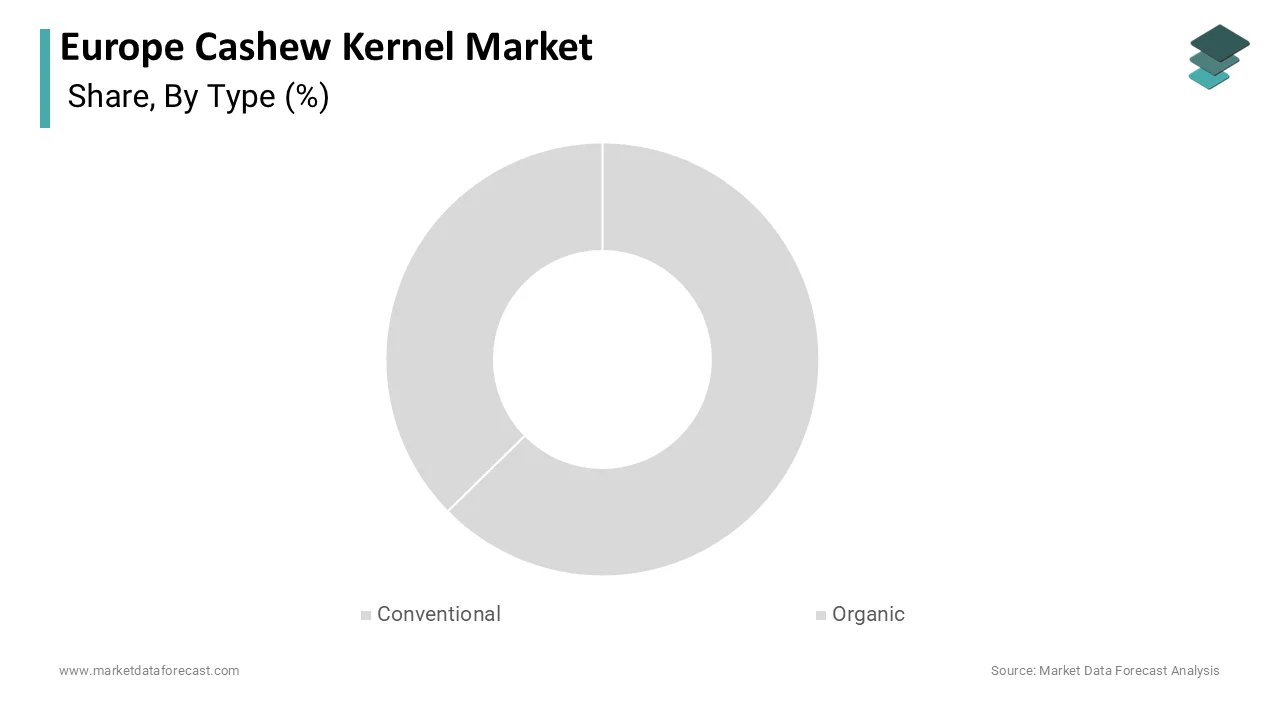
On the other end, the organic segment is estimated to record a promising CAGR of 10.1% over the forecast period owing to the escalating consumer demand for chemical-free and environmentally sustainable food products. Health-conscious shoppers are increasingly scrutinizing ingredient labels and avoiding products treated with synthetic pesticides or fertilizers during cultivation. According to the Research Institute of Organic Agriculture (FiBL), the area under organic management in Europe has expanded significantly, with consumer spending on organic food reaching record highs in recent years. This trend extends to nuts, where buyers perceive organic cashews as safer and healthier alternatives. As per market surveys, a growing segment of millennials and parents are willing to pay a premium for certified organic products to ensure the well-being of their families. The transparency provided by organic certification builds trust and loyalty among consumers who value ethical sourcing and environmental stewardship. Retailers are responding to this demand by expanding their organic nut offerings and promoting them through dedicated health food sections. The alignment of organic cashews with broader wellness trends, such as clean eating and detoxification, further accelerates their adoption. This shift in consumer values creates a dynamic growth environment for organic suppliers who can meet the rigorous standards required for certification.
By Product Insights
The white wholes segment led the market with the leading share of the European market in 2025. The growth of the white wholes segment in the European market can be driven by their premium aesthetic appeal and versatility in diverse culinary applications. These kernels are carefully processed to remove the testa and skin, resulting in a creamy white color and intact shape that is highly valued by consumers and chefs alike. According to culinary industry standards, white wholes are the preferred choice for garnishing desserts, salads, and main courses where visual presentation is critical. Their uniform size and texture also make them ideal for snacking, as they offer a consistent eating experience. As per retail sales data, white wholes command the highest price point among cashew products, reflecting their status as a premium item. Consumers associate the pristine appearance of white wholes with superior quality and freshness, driving preference in gift packs and luxury snack segments. The food processing industry utilizes white wholes for high-end confectionery and bakery products, where appearance impacts consumer perception. The ability of white wholes to maintain their integrity during roasting and flavoring processes further enhances their utility. This combination of visual appeal and functional performance ensures that white wholes remain the most sought-after product type in the European market.
On the other side, the white pieces segment is estimated to showcase a CAGR of 10.2% over the forecast period owing to their cost-effectiveness for industrial manufacturing applications. Broken cashew kernels retain the same nutritional value and flavor profile as whole nuts but are sold at a lower price point, making them attractive to food processors. For instance, using white pieces can reduce raw material expenses by up to 25% compared to whole nuts without compromising product quality. This economic advantage is particularly significant for large-scale producers of granola bars, nut butters, and baked goods where the visual integrity of the nut is less critical. For instance, the demand for affordable healthy ingredients in mass-market products is rising, prompting manufacturers to switch to broken kernels. The versatility of white pieces allows them to be easily incorporated into mixes, coatings, and fillings, enhancing texture and taste. Suppliers are improving sorting technologies to ensure consistent size distribution of pieces, meeting specific industrial requirements. This shift towards cost-efficient ingredients supports the rapid growth of the white pieces segment as manufacturers seek to optimize margins while maintaining nutritional benefits.
By Distribution Insights
The supermarkets and hypermarkets segment held the major share of the European market in 2025. The growth of the supermarkets and hypermarkets segment in the European market is attributed to their extensive geographic reach and the convenience of one-stop shopping they offer to consumers. These large retail formats attract millions of shoppers weekly, providing high visibility and accessibility for cashew products. According to Eurostat data, supermarkets account for the majority of grocery sales in Europe, making them the primary channel for nut distribution. The ability to purchase cashews alongside other household essentials encourages impulse buys and regular replenishment. For instance, the high traffic volume in hypermarkets ensures consistent turnover of perishable and semi-perishable goods, including nuts. Retailers dedicate significant shelf space to nuts, often featuring them in health food aisles or promotional displays that enhance discoverability. The presence of private-label brands in these stores offers affordable options that drive volume sales. The established logistics networks of supermarket chains ensure steady supply and fresh stock availability across numerous locations. This widespread presence and operational efficiency make supermarkets and hypermarkets the dominant distribution channel for cashew kernels in Europe.
However, the online retailers segment is expected to exhibit a CAGR of 12.2% over the forecast period in the European cashew kernels market owing to the unparalleled convenience and expanded product variety they offer. E-commerce platforms allow consumers to browse and purchase a wide range of cashew types, including organic, flavored, and specialty grades, from the comfort of their homes. According to e-commerce statistics, online grocery shopping has surged in popularity, with consumers appreciating the time savings and home delivery services. Online retailers are not constrained by physical shelf space, enabling them to stock niche and premium products that may not be available in local stores. For instance, the ability to read detailed product descriptions and customer reviews helps buyers make informed decisions about quality and origin. Subscription services for regular nut deliveries further enhance convenience and ensure steady supply for households. The integration of fast delivery options has reduced the waiting time, making online purchases comparable to instant gratification. This shift in shopping behavior towards digital channels is particularly strong among younger demographics who prioritize ease and selection. The continuous improvement in user experience and logistics supports the rapid growth of online retail for cashew kernels.
COUNTRY LEVEL ANALYSIS
Germany Cashew Kernel Market Analysis
Germany accounted for the highest share of the European market in 2025 and is expected to continue its growth as the primary market for premium cashew products in Europe over the next few years due to high consumer spending and robust organic demand. Germany holds the largest share in the Europe cashew kernel market, driven by its strong economy, high disposable income, and health-conscious population. The country has a well-established culture of snacking on nuts and incorporating them into baking and cooking. According to the German Federal Ministry of Food and Agriculture, nut consumption has risen steadily as part of the national health initiative. Germany is a major hub for organic food retail, with a significant portion of cashew sales coming from certified organic channels. The presence of supermarket chains and discounters ensures wide availability and competitive pricing. As per trade data, Germany is one of the top importers of cashew nuts in Europe, serving as a distribution center for neighboring countries. The demand for vegan and plant-based products is particularly strong in Germany, driving innovation in cashew-based dairy alternatives. Consumer preference for high-quality and sustainably sourced products supports the growth of premium cashew segments. The robust regulatory framework for food safety ensures high standards for imported nuts. This combination of economic strength and health awareness positions Germany as the leading market for cashew kernels in Europe.
UK Cashew Kernel Market Analysis
The UK is poised to expand its market presence by leveraging its vibrant online retail landscape and diverse culinary integration over the coming years. The United Kingdom occupies a significant position in the Europe cashew kernel market, characterized by a diverse multicultural population and strong demand for ethnic cuisines. Cashews are a staple ingredient in Indian, Thai, and Chinese dishes, which are widely consumed in the UK. According to the British Nut Foundation, nut intake has increased as consumers seek healthier snack alternatives to chips and crisps. The UK has a vibrant online retail sector for groceries, which has boosted sales of specialty and premium cashew products. As per retail reports, major supermarkets have expanded their world food aisles, featuring a variety of roasted and flavored cashews. The growing vegan movement in the UK has also spurred demand for cashew milk and cheese. Post-Brexit trade adjustments have impacted supply chains, but demand remains resilient due to strong consumer loyalty. The prevalence of health awareness campaigns promotes nut consumption for heart health. The UK market is dynamic, with a high acceptance of new flavors and formats. This cultural diversity and health focus sustain steady growth in cashew consumption across the region.
France Cashew Kernel Market Analysis
France is projected to see sustained market growth as high-end gastronomic demand continues to favor premium, sustainably sourced kernels in the near future. France is a key player in the Europe cashew kernel market, influenced by its sophisticated culinary traditions and growing interest in healthy eating. While almonds and hazelnuts are traditionally more popular, cashews are gaining traction as a gourmet ingredient in French cuisine. According to French agricultural statistics, imports of tropical nuts have increased as chefs experiment with global flavors. The French market places a high value on quality and origin, with a preference for premium and organic cashews. As per consumer trends, there is a rising demand for natural and unprocessed snacks among health-conscious urbanites. Specialty food stores and organic shops play a significant role in distributing high-end cashew products. The hospitality sector in France uses cashews in upscale dining experiences, adding to the demand. Government initiatives promoting balanced diets encourage nut consumption. The French consumer is discerning and willing to pay for superior quality and ethical sourcing. This focus on gastronomy and wellness drives the steady expansion of the cashew market in France.
Italy Cashew Kernel Market Analysis
Italy is likely to strengthen its market position by further integrating exotic nuts into its expansive confectionery and plant-based food sectors in the next few years. Italy holds a notable share in the Europe cashew kernel market, driven by its rich culinary heritage and increasing adoption of international food trends. Although local nuts like pistachios and hazelnuts dominate, cashews are increasingly used in contemporary Italian cooking and confectionery. According to Italian food industry reports, the use of exotic nuts in gelato, chocolate, and bakery products is rising. The health-conscious segment of the population is incorporating cashews into their diets for their nutritional benefits. As per market data, Italy imports significant volumes of cashew kernels for both direct consumption and industrial processing. The popularity of veganism in urban centers like Milan and Rome has boosted demand for cashew-based dairy alternatives. Italian consumers appreciate high-quality ingredients and are open to trying new flavors. The strong food culture supports the integration of cashews into traditional and modern recipes. Trade relationships with producing countries ensure a steady supply of high-grade kernels. This blend of tradition and innovation sustains the growth of the cashew market in Italy.
Spain Cashew Kernel Market Analysis
Spain is anticipated to maintain steady consumption patterns as it continues to align with Mediterranean dietary preferences that emphasize healthy, plant-based snacking in the coming years. Spain is an important market in the Europe cashew kernel sector, supported by its Mediterranean diet, which emphasizes healthy fats and nuts. Cashews are consumed as snacks and used in various culinary preparations across the country. According to Spanish agricultural data, nut consumption has increased as part of preventive health measures against cardiovascular diseases. The tourism industry in Spain drives demand for diverse food options, including international snacks featuring cashews. As per retail trends, supermarkets and hypermarkets have expanded their nut sections, offering a wide variety of cashew products. The growing awareness of plant-based diets has introduced cashew milk and yogurt to Spanish consumers. Local producers are beginning to incorporate cashews into traditional sweets and savory dishes. The warm climate and outdoor lifestyle encourage snacking on portable healthy foods. Government health campaigns promote the benefits of tree nuts. This cultural alignment with healthy eating habits supports the steady demand for cashew kernels in Spain.
COMPETITIVE LANDSCAPE
The competition in the Europe cashew kernel market is characterized by the presence of global agribusiness giants, specialized nut traders, and regional distributors who compete on quality, ty price, and sustainability. Large multinational companies leverage their extensive supply chains and financial resources to offer consistent volumes and competitive pricing. Specialized traders differentiate themselves through niche products such as organic, fairtrade,r or single-origin cashews that appeal to premium segments. Regional distributors often compete by providing faster delivery and personalized service to local retailers and food processors. The market is fragmented, with no single player dominating all segments, leading to intense rivalry in specific categories like snacking or industrial ingredients. Price volatility and supply chain disruptions create challenges that test the resilience of competitors. Innovation in product formats and flavors drives differentiation as companies seek to capture consumer interest. Regulatory compliance and sustainability credentials are increasingly important competitive factors. Brands that can demonstrate ethical sourcing and high quality standards gain a competitive edge. The rise of private label brands in supermarkets adds pressure on branded players to justify premium pricing. Overall,l the market requires agility and strategic focus to maintain profitability and growth.
KEY MARKET PLAYERS
Some of the companies that are playing a dominating role in the Europe Cashew Kernel Market include
- Olam Food Ingredients (OFIfi)
- The Hershey Company
- Barry Callebaut AG
- Royal Nut Company
- Intersnack Group GmbH & Co. KG
- John B. Sanfilippo & Son, Inc.
- Keurig Dr Pepper Inc. (Emerald Nuts)
- Bühler Group
- Valency International Pte. Ltd.
- Intersnack Procurement B.V.
- Bata Food B.V.
- Besana Group
TOP LEADING PLAYERS IN THE MARKET
- Olam International is a leading global agribusiness with a significant presence in the Europe cashew kernel market through its extensive sourcing and processing network. The company supplies high-quality raw and processed cashews to major European retailers and food manufacturers. Olam recently invested in advanced processing facilities in Africa to improve kernel quality and ensure sustainable sourcing practices. The company strengthens its market position by offering traceability solutions that allow European buyers to verify the origin and ethical standards of their cashew supply. Olam collaborates with local farmers to enhance productivity and income, ensuring a stable supply chain. Their focus on innovation and sustainability aligns with European consumer values,s driving demand for responsible products. By maintaining rigorous quality control and logistical efficiency,cy Olam remains a trusted partner for premium cashew kernels in the region.
- Archer Daniels Midland Company plays a pivotal role in the Europe cashew kernel market by providing a diverse range of nut ingredients for food and beverage applications. The company leverages its global procurement capabilities to source premium cashews from key producing regions. ADM recently expanded its specialty ingredient portfolio to include organic and fair trade certified cashew kernels, els catering to the growing health-conscious segment. The company strengthens its position by developing customized cashew-based solutions for plant-based dairy alternatives and snacking products. ADM invests in research and development to enhance flavor profiles and nutritional benefits of cashew ingredients. Their robust distribution network ensures timely delivery to European customers. By focusing on value-added products and sustainability, ADM meets the evolving needs of European food manufacturers and retailers.
- Blue Diamond Growers is a prominent player in the Europe cashew kernel market known for its high-quality nut products and strong brand recognition. Although primarily known for almonds, the company has expanded its offerings to include premium cashew kernels for the European snack and culinary sectors. Blue Diamond recently launched new flavored cashew varieties tailored to European taste preferences,s such as sea salt and herb blends. The company strengthens its market position through strategic marketing campaigns that highlight the health benefits and versatility of cashews. Blue Diamond focuses on sustainable sourcing and community support in producing regions. Their commitment to quality and innovation appeals to discerning European consumers. By leveraging its established distribution channels and brand equity, ty Blue Diamond continues to grow its presence in the competitive European nut market.
TOP STRATEGIES USED BY KEY MARKET PARTICIPANTS
Key players in the Europe cashew kernel market primarily employ vertical integration and sustainable sourcing strategies to secure supply and enhance brand value. Companies invest in direct relationships with farmers in producing countries to ensure consistent quality and ethical standards. Product innovation is a major strategy,y with firms developing flavored organic and value-added cashew products to differentiate their offerings. Strategic partnerships with retailers and food manufacturers help expand market reach and drive volume growth. Digitalization of supply chains improves transparency and traceability, which is crucial for meeting European regulatory requirements. Marketing efforts focus on health benefits and sustainability to appeal to conscious consumers. Expansion into e-commerce channels allows companies to reach niche markets and offer personalized products. These strategies collectively help participants navigate price volatility and competition while meeting the high standards of the European market.
MARKET SEGMENTATION
This research report on the europe cashew kernel market is segmented and sub-segmented into the following categories.
By Type
- Conventional
- Organic
By Product
- White Wholes
- White Pieces
By Distribution Channel
- Supermarkets and Hypermarkets
- Online Retailers
By Country
- Germany
- United Kingdom
- France
- Italy
- Spain
- Rest of Europe
Frequently Asked Questions
1. What is driving growth in the Europe cashew kernel market?
Adoption of plant-based and vegan diets, rising demand for vegan dairy alternatives, and growing consumer awareness of cashews’ cardiovascular health benefits
2. Why are cashews popular in plant-based and vegan products?
Cashews’ high fat content and neutral flavor make them ideal for creamy, dairy-free alternatives such as milk, cheese, and yogurt.marketdataforecast+1
3. Which type of cashew kernel leads the market?
Conventional cashew kernels lead because of competitive pricing, broad availability, and strong demand across mainstream retail channels.
4. Which grade of cashew kernel is most widely used?
White wholes dominate due to their premium appearance, superior quality, and extensive use in snacking, confectionery, and gourmet applications.
5. What is the fastest-growing type segment?
Organic cashew kernels are the fastest-growing type, driven by demand for chemical-free, sustainable, and ethically sourced food products.cbi+1
Related Reports
Access the study in MULTIPLE FORMATS
Purchase options starting from
$ 2000
Didn’t find what you’re looking for?
TALK TO OUR ANALYST TEAM
Need something within your budget?
NO WORRIES! WE GOT YOU COVERED!
Call us on: +1 888 702 9696 (U.S Toll Free)
Write to us: sales@marketdataforecast.com