- Product Description Description
- Table of Contents TOC
- List of Table & Figure LOT
- Get Free Sample PDF Sample PDF
Market Size, 2025
$633 MnMarket Estimate, 2026
$694.15 MnMarket Forecast, 2034
$1,452 MnCAGR, 2026–2034
9.66%Europe Cellulite Treatment Market Summary
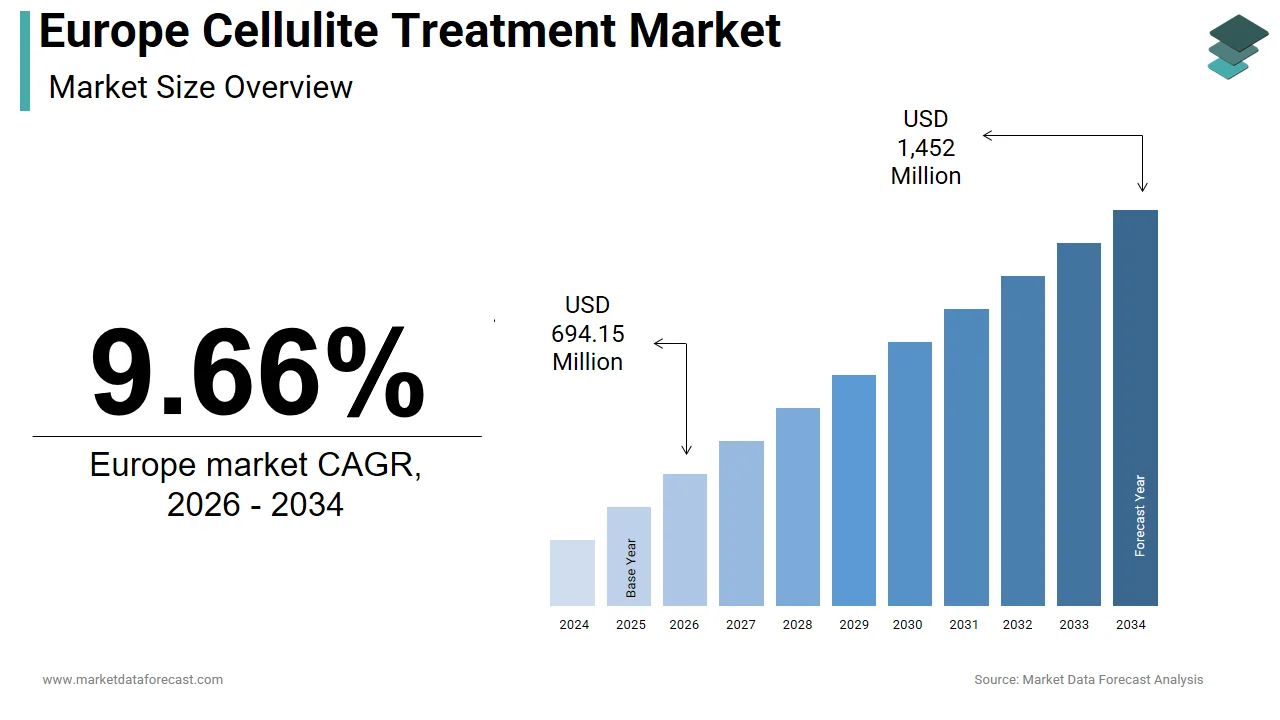
Europe’s cellulite treatment market was valued at USD 633 million in 2025, is expected to reach USD 694.15 million in 2026, and is projected to grow to USD 1,452 million by 2034, expanding at a CAGR of 9.66% (2026 to 2034).
Growth is driven by the extremely high prevalence of cellulite among European women, rising acceptance of aesthetic wellness, and increasing adoption of clinically regulated, device-based treatment solutions.
Market Valuation and Steady Growth
The European cellulite treatment market is undergoing a gradual transformation, shifting from a discretionary cosmetic service into a medically structured aesthetic category.
- Current Standing (2025): The market is valued at USD 633 million as of 2025, supported by widespread clinic penetration and repeat treatment demand.
- Long-term Projection (2034): It is expected to reach USD 1,452 million by 2034, driven by the integration of cellulite care into holistic body-contouring and wellness programs.
- Growth Velocity: The market is expanding at a CAGR of 9.66%, reflecting stable, demand-driven growth rather than short-term trend adoption.
Dominant Market Segments
- Procedure (Non-Invasive): Non-invasive treatments dominate the market, accounting for 61.6% of the total share. Strong consumer preference for painless, zero-downtime solutions such as radiofrequency, acoustic wave therapy, and mechanical lymphatic drainage drives this dominance.
- Cellulite Type (Soft Cellulite): Soft cellulite represents 45.5% of cases, driven by aging-related skin laxity and hormonal changes. This subtype responds well to collagen-stimulating and circulation-enhancing technologies.
Regional Powerhouses
- France (The Leader): Holding 20.2% of the regional market, France leads due to its strong aesthetic culture, dense clinic ecosystem, and early medicalization of cellulite care.
- Italy (The Challenger): Italy demonstrates strong growth potential, supported by cultural acceptance of aesthetic maintenance and integration of luxury wellness with dermatological services.
- UK & Germany: The UK leads in evidence-based and minimally invasive adoption, while Germany emphasizes precision, preventive health, and measurable treatment outcomes.
Competitive Dynamics: “Clinical Credibility as the Competitive Edge”
Unlike loosely regulated beauty markets, the European cellulite treatment market is defined by medical legitimacy, regulatory compliance, and proof of efficacy.
- Regulatory Integration: Most cellulite-treatment devices are classified as Class IIa or IIb medical devices, requiring CE certification, clinical evaluation, and post-market surveillance.
- Shift Toward Durability: Demand is moving beyond temporary smoothing toward structural correction, increasing interest in minimally invasive techniques such as subcision.
- Expectation Management: Providers increasingly rely on standardized assessment tools and patient education to address the short-term nature of results.
Key Market Players
The market is a mix of established aesthetic-device manufacturers and medical-aesthetic specialists:
- Device & Technology Leaders: LPG Systems, Zimmer Aesthetics, Alma Lasers, Syneron Medical
- Medical Aesthetics: Merz Aesthetics, Bausch Health Companies, Hologic
Europe Cellulite Treatment Market Size
The size of the Europe cellulite treatment market was valued at USD 633 million in 2025. This market is expected to grow at a CAGR of 9.66% from 2026 to 2034 and be worth USD 1,452 million by 2034 from USD 694.15 million in 2026.
Cellulite treatment is a spectrum of non-invasive, minimally invasive, and topical interventions designed to reduce the appearance of dimpled or uneven skin texture caused by fibrous connective tissue pulling down on the skin while subcutaneous fat pushes upward. Unlike purely cosmetic procedures, many modern cellulite treatments in Europe are positioned within the broader framework of body contouring and skin quality enhancement, often integrated into medical aesthetic clinics and wellness centers. For instance, energy‑based modalities such as radiofrequency, acoustic wave therapy, and laser‑assisted techniques are widely recognized as core technologies driving the region’s cellulite treatment market. The European Commission classifies most cellulite‑targeting devices under the Medical Device Regulation as Class IIa or higher when they claim structural skin modification, which requires stringent safety and performance evidence. As per widely cited dermatological reviews, cellulite affects an estimated 85–98% of women of European descent, which is making it one of the most prevalent aesthetic concerns across the region. This combination of high prevalence, evolving aesthetic norms, and regulatory scrutiny shapes a market where efficacy, legitimacy, and patient education are as critical as technological innovation.
MARKET DRIVERS
High Prevalence of Cellulite Among European Women and Shifting Body Image Norms
The near-universal presence of cellulite among post‑pubertal women in Europe creates a vast and consistent baseline demand for treatment solutions, which is majorly driving the European cellulite treatment market growth. As per dermatological reviews, cellulite affects 85–98% of women of European descent, which reinforces its classification as a physiological rather than pathological condition. This perception is increasingly amplified by social media and wellness culture, which frame smooth skin texture as a marker of health and self‑care rather than vanity. In Sweden and the Netherlands, national health surveys have reported a rise in women seeking professional body‑contouring advice, with cellulite reduction frequently cited as a primary motivator. As per European dermatology associations, a growing share of women now views cellulite care as a legitimate aspect of dermatological wellness, akin to acne or pigmentation management. This normalization, coupled with demographic scale, sustains demand across both premium clinics and mid‑tier aesthetic centers, particularly in Western and Northern Europe, where disposable income and aesthetic literacy are high.
Integration of Cellulite Treatments into Holistic Body Contouring Protocols
Cellulite treatments are no longer offered in isolation but as essential components of comprehensive body‑sculpting regimens that combine fat reduction, skin tightening, and lymphatic drainage, which is further contributing to the European cellulite treatment market expansion. According to the International Society of Aesthetic Plastic Surgery, cellulite‑specific modalities are commonly included within body‑contouring treatment packages across Europe. As per national aesthetic registries, patients receiving combined therapies report higher satisfaction levels than those undergoing single‑modality care. Technologies such as endermologie and acoustic‑wave therapy are particularly valued for their ability to improve microcirculation and fibrosis, complementing fat‑reduction devices that do not address skin texture. Furthermore, the European Board of Dermatology now includes cellulite assessment in its body‑contouring certification curriculum, signalling professional legitimization. As consumers increasingly seek “whole‑body” transformation rather than spot correction, this integrative approach drives repeat visits and premium pricing, reinforcing cellulite treatment as a strategic pillar in the aesthetic service portfolio.
MARKET RESTRAINTS
Lack of Standardized Clinical Endpoints and Objective Measurement Tools
A significant restraint in the Europe cellulite treatment market is the absence of universally accepted clinical endpoints or objective quantification methods, leading to inconsistent efficacy claims and patient expectations. Unlike fat reduction measured in centimetres or volume, cellulite severity is typically assessed through subjective visual scales such as the Nürnberger‑Müller classification, which lacks inter‑rater reliability. According to a 2024 review by the European Journal of Dermatology, only a minority of clinical studies on cellulite treatments used objective tools such as 3D imaging or ultrasound elastography to document structural skin changes. This methodological gap complicates regulatory submissions; the European Medicines Agency has repeatedly flagged cellulite‑device dossiers for insufficient objective endpoints under the Medical Device Regulation. Consequently, practitioners rely on before‑and‑after photography, which is highly susceptible to lighting and posture variables. As per European consumer‑protection bodies, complaints related to unmet expectations in cellulite treatments remain common due to ambiguous outcome definitions. Until standardized metrics are adopted across research, regulation, and practice, the market will struggle with credibility gaps and therapeutic reproducibility.
Stringent EU Classification of Cellulite Devices as Medical Devices
The European Union’s regulatory stance that classifies most cellulite‑reducing devices as medical devices under Regulation EU 2017/745 imposes significant compliance burdens that restrict market entry and innovation, which further hampers the growth of the cellulite treatment market in Europe. Devices claiming to “reduce dimpling” or “remodel connective tissue” are typically categorized as Class IIa or IIb, requiring clinical evaluation, notified‑body oversight, and post‑market surveillance. As per European regulatory associations, CE‑certification timelines for aesthetic devices have lengthened in recent years due to heightened scrutiny of performance claims. In several EU member states, national regulatory agencies have rejected cellulite‑device applications, citing insufficient evidence of structural skin change. Moreover, the requirement to maintain a Qualified Person Responsible for Regulatory Compliance further strains resources for smaller manufacturers. These regulatory hurdles disproportionately impact novel or hybrid technologies, stifling diversity and favouring established players with existing certification infrastructure, thereby limiting consumer access to emerging solutions.
MARKET OPPORTUNITIES
Rise of at‑Home Cellulite Devices with Clinical‑Grade Technology
An emerging opportunity lies in the development of at‑home cellulite treatment devices that incorporate scaled‑down versions of professional technologies such as radiofrequency, microcurrent, and mechanical massage. According to dermatology and consumer‑tech trend reports across Europe, sales of at‑home body‑contouring and skin‑smoothing devices have risen significantly as consumers seek clinic‑style results at home. Brands like FOREO and NuFACE now offer FDA‑cleared and CE‑marked handheld devices that combine thermal energy with lymphatic stimulation, supported by independent clinical evaluations. As per peer‑reviewed European clinical studies, home‑use radiofrequency and massage‑based devices have demonstrated measurable improvements in skin texture over 8–12 weeks of consistent use. Crucially, these devices appeal to a new demographic of urban professionals aged 30 to 45 who seek maintenance between professional sessions or cannot access clinic‑based care. Retailers across Europe have introduced dedicated “body‑tech” sections to meet rising demand, with dermatologist endorsements playing a major role in purchase decisions. This convergence of medical legitimacy, convenience, and digital engagement opens a high‑growth channel that bridges professional and consumer aesthetics.
Expansion of Cellulite Treatment into Preventive and Wellness‑Oriented Positioning
Cellulite care is increasingly repositioned not as corrective but as preventive maintenance within broader wellness and longevity frameworks, which is creating a new opportunity for early intervention and lifestyle integration. According to European wellness industry analyses, a growing share of premium wellness centers now includes cellulite‑prevention protocols focused on circulation, collagen support, and lymphatic health. As per the European Society for Cosmetic Scientists, emerging research highlights the role of early microcirculatory support in reducing the progression of fibrotic changes associated with cellulite. Brands are responding with subscription‑based programs that combine device‑based treatments with supplements and movement coaching. National health trends also contribute; Finland’s National Institute for Health and Welfare has incorporated lymphatic‑supportive practices into its physical‑activity guidance for women. By framing cellulite as a modifiable physiological process rather than a cosmetic flaw, the market expands into proactive health behaviours, attracting younger clients and enabling recurring revenue models beyond one‑time procedures.
MARKET CHALLENGES
High Treatment Costs and Limited Insurance Coverage
A persistent challenge facing the Europe cellulite treatment market is the high out‑of‑pocket cost of professional procedures and the absence of reimbursement pathways, which restricts access to affluent urban demographics. According to Eurostat, private aesthetic insurance coverage remains low across Europe, leaving most consumers to self‑fund cellulite‑related treatments. As per national aesthetic associations, treatment courses involving multiple sessions can cost well over 1,000 euros in many European countries, with higher pricing in Switzerland and the UK. This economic exclusivity limits market penetration beyond major cities, where disposable income is higher and aesthetic services are more concentrated. Surveys conducted by European dermatology and aesthetic bodies indicate that a majority of rural residents consider professional cellulite care financially inaccessible. While financing options such as instalment plans are becoming more common, they do not fully mitigate perceived cost barriers. Until pricing models become more accessible or clinical evidence justifies medical necessity, the market will remain skewed toward premium segments, missing the broader population that reports cellulite concerns.
Short Duration of Results and Need for Maintenance Therapies
The transient nature of most cellulite treatment outcomes presents a critical challenge to long‑term consumer satisfaction and market sustainability. Unlike permanent fat reduction, cellulite improvements typically last three to six months due to the dynamic interplay of hormones, weight fluctuations, and connective‑tissue remodeling. According to European dermatology literature, many patients experience partial or full regression of results within months without maintenance therapy. As per the European Society of Aesthetic Medicine, a significant proportion of patients discontinue treatment within a year due to time or cost fatigue. Moreover, inconsistent maintenance protocols across clinics lead to variable outcomes, which is fuelling skepticism. Social‑media monitoring groups in Europe have also noted rising consumer frustration related to short‑lived results, contributing to a perception gap between expectations and achievable outcomes. Until technologies deliver longer‑lasting structural changes or regimens are standardized with realistic expectations, patient retention and market credibility will remain vulnerable to the cycle of hope and disappointment.
REPORT COVERAGE
| REPORT METRIC | DETAILS |
| Market Size Available | 2025 to 2034 |
| Base Year | 2025 |
| Forecast Period | 2026 to 2034 |
| Segments Covered | By Procedure, Cellulite Type, End-Use, and Region. |
| Various Analyses Covered | Global, Regional, and Country-Level Analysis, Segment-Level Analysis, Drivers, Restraints, Opportunities, Challenges; PESTLE Analysis; Porter’s Five Forces Analysis, Competitive Landscape, Analyst Overview of Investment Opportunities |
| Countries Covered | UK, France, Spain, Germany, Italy, Russia, Sweden, Denmark, Switzerland, Netherlands, Turkey, Czech Republic, and the Rest of Europe |
| Market Leaders Profiled | Zimmer Aesthetics, Alma Lasers Inc., LPG Systems, Cymedics, Merz Aesthetics, Bausch Health Companies Inc, Hologic Inc., Nubway, and Syneron Medical. |
SEGMENTAL ANALYSIS
By Procedure Insights
The non‑invasive segment led the market by accounting for 61.6% of the European cellulite treatment market share in 2024. The dominance of the non-invasive segment in this regional market is driven by the strong consumer demand for painless, zero‑downtime aesthetic solutions that fit modern lifestyle preferences. Technologies such as radiofrequency, acoustic wave therapy, and mechanical lymphatic drainage (e.g., LPG endermologie) dominate this category due to their CE certification under the EU Medical Device Regulation and integration into routine wellness programs. According to the International Society of Aesthetic Plastic Surgery (ISAPS), over 1.1 million non‑invasive body contouring procedures were performed in Europe in 2023, which reflects widespread adoption across aesthetic clinics. These modalities are widely available in urban beauty centers from Stockholm to Seville, with 65% of practitioners offering multi‑session package plans for enhanced results. Patient satisfaction data from Germany indicates that a majority of users cite “no recovery time” as the primary reason for choosing non‑invasive options over surgical alternatives. Additionally, as per the European Consumer Organisation, more than half of women aged 30–50 consider non‑invasive aesthetic treatments part of routine self‑care, which is signalling cultural normalization. This combination of safety, accessibility, and lifestyle alignment ensures non‑invasive treatments remain the foundation of cellulite management. The non‑invasive segment is expected to maintain steady growth over the forecast period as wellness‑driven aesthetic demand continues to rise.
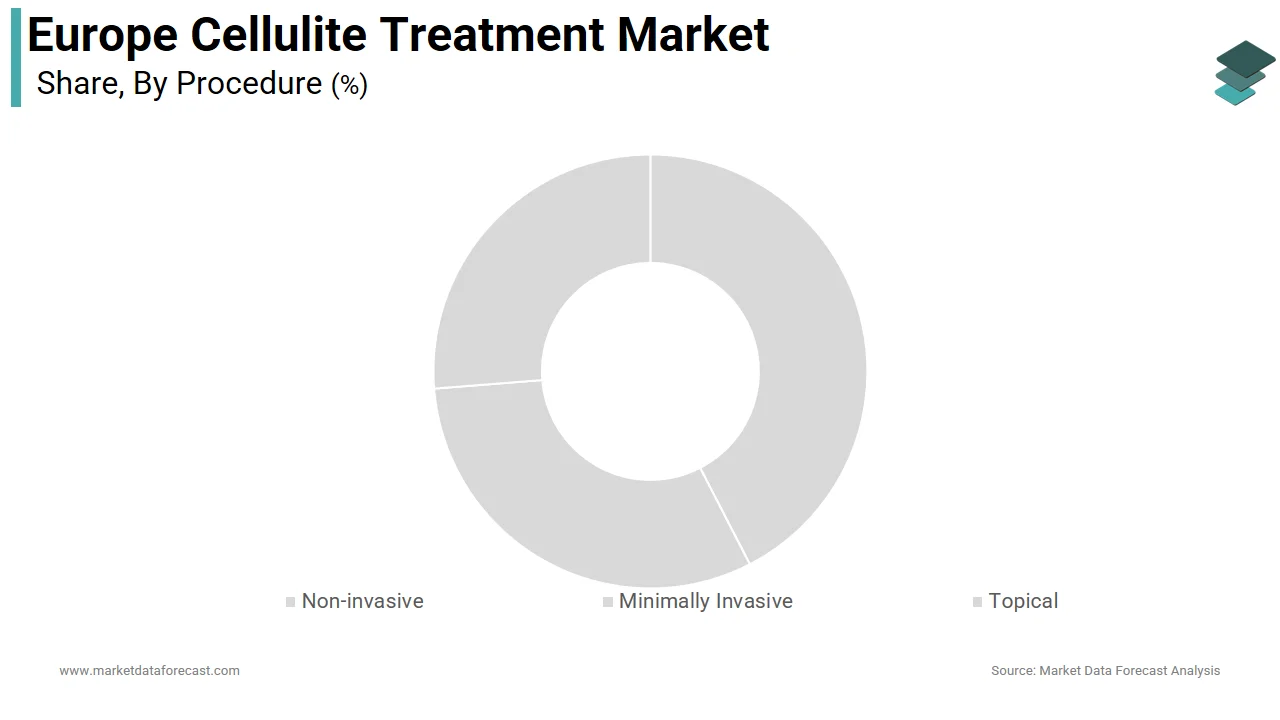
The minimally invasive segment is the fastest‑growing category in Europe and is predicted to grow at a CAGR of 10.3% over the forecast period due to rising demand for long‑lasting structural correction. Techniques such as subcision (e.g., Cellfina) mechanically release fibrous septae responsible for dimpling, offering durable results. According to ISAPS, minimally invasive body procedures have seen double‑digit growth across Europe, reflecting increasing patient willingness to pursue more effective interventions. Regulatory clarity has also supported the adoption of the European Medicines Agency, which classifies subcision devices as Class IIb medical tools, ensuring standardized oversight. Demand is particularly strong in premium clinics in Switzerland, the UK, and Italy, where patients seek one‑time corrective solutions. As per a 2023 ISAPS survey, a growing share of women previously using non‑invasive treatments are now considering minimally invasive options for longer‑lasting outcomes. This shift toward evidence‑based, durable correction is reshaping patient expectations across high‑income markets. The minimally invasive segment is expected to accelerate further over the forecast period as consumers prioritize efficacy and longevity.
By Cellulite Type Insights
The soft cellulite segment remained the most prevalent cellulite type in Europe and had 45.5% of the European market share in 2024. The dominance of the soft cellulite segment in this regional market is driven by demographic aging and hormonal changes. This aligns with Eurostat data showing that 21.3% of the EU population is aged 65 or older, a group more prone to collagen loss and skin laxity. Soft cellulite typically affects the thighs and buttocks and responds well to non‑invasive treatments that stimulate collagen and enhance circulation. According to the French Society of Dermatology, a majority of women over 50 seeking cellulite treatment present with soft‑type morphology, making it the most common clinical presentation in aesthetic practices. Treatment protocols often combine radiofrequency with mechanical massage to improve firmness and reduce fluid retention. The European Society for Cosmetic Scientists notes that soft cellulite is more responsive to topical and device‑based interventions than fibrotic forms, improving treatment outcomes and patient retention. Its high incidence among an expanding demographic group ensures continued dominance in clinical volume and revenue. Soft cellulite is expected to remain the leading segment over the forecast period as Europe’s aging population grows.
The edematous cellulite segment is the fastest‑growing subtype in Europe and is expected to exhibit a CAGR of 12.4% over the forecast period due to rising awareness of its association with vascular and metabolic health. According to the European Society for Vascular Medicine, chronic venous insufficiency affects over 20 million Europeans, contributing to fluid retention and inflammation that characterize this cellulite subtype. Clinics in Germany and the Netherlands increasingly screen for microcirculatory dysfunction during consultations, integrating lymphatic drainage, compression therapy, and acoustic wave therapy into treatment plans. As per the European Wellness Federation, circulation‑focused body treatments increased significantly in 2023, reflecting growing demand for medically aligned aesthetic care. Edematous cellulite is increasingly viewed as a marker of underlying fluid imbalance rather than a purely cosmetic concern, prompting collaboration between dermatologists and vascular specialists. This medicalized framing enhances treatment legitimacy and supports premium pricing. The edematous cellulite segment is expected to grow rapidly over the forecast period as awareness of vascular‑linked aesthetic conditions expands.
By End‑Use Insights
The clinics and beauty centers segment remained the dominant end‑use segment in the Europe cellulite treatment market and captured the dominant share in the regional market in 2024 due to their accessibility and broad service offerings. These facilities combine medical oversight with wellness‑oriented environments, appealing to consumers seeking trusted yet convenient care. According to ISAPS, Europe hosts tens of thousands of licensed aesthetic clinics offering body‑contouring and cellulite‑focused treatments, with the highest concentrations in France, Italy, and Spain. These centers benefit from flexible staffing models that include dermatologists, physiotherapists, and trained aestheticians, enabling tiered service options from maintenance therapies to advanced device‑based treatments. The European Commission’s 2024 safety guidelines for aesthetic services further strengthened consumer confidence by mandating staff certification and device registration. Additionally, subscription‑based cellulite care plans have become increasingly common, supporting recurring engagement and predictable revenue. This ecosystem of professional accessibility, regulatory compliance, and personalized service makes clinics and beauty centers the central hub for cellulite treatment delivery. This segment is expected to maintain its dominance over the forecast period as consumer demand for aesthetic wellness continues to expand.
The hospitals segment is the fastest‑growing end‑use segment in the Europe cellulite treatment market and is expected to grow at a CAGR of 10.3% over the forecast period as advanced cellulite correction becomes integrated into medical dermatology and plastic surgery departments. According to the European Hospital and Healthcare Federation, major university hospitals across Europe have expanded body‑contouring and reconstructive units, incorporating cellulite assessment into post‑bariatric and post‑liposuction care. These units leverage multidisciplinary teams to manage complex cases involving fibrosis, scarring, or lymphatic dysfunction—areas where aesthetic centers have limited capability. The European Medicines Agency’s classification of subcision devices as Class IIb medical tools supports hospital adoption due to established compliance frameworks. Public hospitals in Sweden and the Netherlands are also piloting cellulite treatment for lipedema patients under national health initiatives. This shift positions hospitals as centers for medically indicated cellulite care rather than purely cosmetic providers. Hospital‑based cellulite treatment is expected to grow steadily over the forecast period as clinical demand and reimbursement pathways expand.
COUNTRY-LEVEL ANALYSIS
France Cellulite Treatment Market Analysis
France led the cellulite treatment market in Europe with a 20.2% share in 2024 due to its strong aesthetic culture, dense clinic ecosystem, and early adoption of medicalized cellulite care. Market growth is driven by high consumer demand for body‑contouring solutions, widespread availability of certified aesthetic centers, and strong dermatology involvement in cellulite management. While procedure‑specific national counts are not publicly reported, France is recognized for pioneering clinical terminology around cellulite and for integrating device‑based therapies into dermatological practice. The national health agency ANSM enforces strict device certification standards, reinforcing consumer trust in approved technologies. French beauty houses such as L’Oréal and Clarins continue to invest heavily in cellulite‑related research, helping normalize treatment adoption. With Paris and Lyon serving as hubs for innovation and practitioner training, France is expected to maintain its leadership and set treatment trends across Europe in the coming years.
Italy Cellulite Treatment Market Analysis
Italy held the second‑largest share in 2024. The growth of Italy in the European market is driven by its strong aesthetic heritage and integration of dermatology with luxury wellness. The country’s market is supported by thousands of aesthetic centers offering device‑based cellulite protocols and a cultural emphasis on body maintenance. As national procedure‑rate statistics are not publicly available, consumer surveys consistently show high engagement among Italian women in professional aesthetic treatments. The Italian Society of Aesthetic Medicine promotes standardized training on cellulite subtypes, ensuring clinical precision across practices. Major cities such as Milan and Rome host flagship clinics that combine radiofrequency, lymphatic therapies, and nutricosmetic programs, reflecting Italy’s holistic approach to body contouring. Government wellness initiatives have also encouraged broader access to circulation‑supportive therapies. With strong cultural acceptance and a premium service landscape, Italy is positioned to remain a high‑value market in Southern Europe.
United Kingdom Cellulite Treatment Market Analysis
The United Kingdom accounts for a substantial share of the European cellulite treatment market. The rising demand for evidence‑based, minimally invasive solutions, high consumer literacy, strong regulatory oversight, and preference for treatments backed by clinical research are driving the cellulite treatment market growth in the UK. While no national dataset quantifies cellulite procedure distribution, UK aesthetic associations report rising adoption of technologies such as acoustic wave therapy and subcision. London remains a major hub, with a large number of clinics regulated by the Care Quality Commission, ensuring high safety standards. National guidance on cosmetic procedure safety has further strengthened professional accountability. Research institutions such as King’s College London continue to publish influential work on cellulite biology, shaping global treatment protocols. With strong uptake of new technologies and a rigorous regulatory environment, the UK is expected to remain a benchmark for clinical excellence in Northern Europe.
Germany Cellulite Treatment Market Analysis
Germany is a prominent market for cellulite treatment in Europe. The engineering‑driven aesthetic technology sector and strong preventive health culture are driving the German market growth. German consumers favour treatments with measurable outcomes, contributing to high adoption of radiofrequency, infrared, and lymphatic‑supportive modalities. As national statistics on cellulite‑specific clinic practices are not publicly available, industry reports highlight widespread use of imaging and assessment tools to personalize treatment plans. Germany’s Federal Institute for Drugs and Medical Devices enforces strict CE certification, reinforcing trust in approved technologies. A national emphasis on circulation and lymphatic health supports demand for pressotherapy and massage‑based protocols. Some regional insurers also provide partial reimbursement for lymphatic drainage when linked to medical conditions, indirectly supporting market growth. With its focus on precision, safety, and preventive care, Germany is expected to see steady expansion in the coming years.
Spain Cellulite Treatment Market Analysis
Spain is predicted to account for a notable share of the European cellulite treatment market over the forecast period, owing to the strong tourism‑driven demand and competitive pricing. The country’s warm climate and body‑conscious culture support consistent interest in cellulite reduction services. While official counts of international cellulite‑treatment visitors are not published, Spain remains one of Europe’s most active destinations for aesthetic tourism, particularly in Barcelona, Madrid, and Marbella. Spanish clinics frequently offer bundled treatment packages combining radiofrequency, cryotherapy, and hydrotherapy, appealing to both domestic and international clients. Practitioner certification has expanded in recent years, increasing nationwide access to aesthetic services. Spain is also a leader in topical innovation, with brands such as Sesderma developing formulations supported by dermatological research. With its blend of affordability, quality, and tourism‑driven volume, Spain is likely to remain one of Southern Europe’s most dynamic and accessible cellulite treatment markets.
COMPETITIVE LANDSCAPE
The Europe cellulite treatment market features intense yet specialized competition centered on technological differentiation, clinical credibility, and regulatory compliance. Unlike generic aesthetics, success here depends on demonstrating measurable structural change in fibrous connective tissue, which demands robust scientific backing and medical professional endorsement. The market is bifurcated between non-invasive device leaders like LPG offering maintenance protocols, and minimally invasive innovators such as Solta Medical, targeting long term correction. Hospitals and premium clinics serve as primary battlegrounds where treatment efficacy, reputation, and staff expertise determine patient flow. Barriers to entry are high due to the EU medical device classification requiring extensive clinical dossiers and post-market surveillance. Smaller brands struggle to compete without certified training networks or published outcomes data. Competition is less about price and more about proving sustained results through standardized assessment and transparent communication. As consumer expectations shift from temporary smoothing to lasting remodeling, the market rewards companies that bridge aesthetic appeal with dermatological science.
KEY MARKET PLAYERS
The leading companies operating in the Europe cellulite treatment market include:
- Zimmer Aesthetics
- Alma Lasers Inc.
- LPG Systems
- Cymedics
- Merz Aesthetics
- Bausch Health Companies Inc.
- Hologic, Inc.
- Nubway
- Syneron Medical
TOP PLAYERS IN THE MARKET
- LPG Systems is a pioneering force in the Europe cellulite treatment market as the developer of endermologie, the first CE-certified mechanical massage technology for cellulite reduction. Headquartered in France, the company supplies its Endermologie LPG Alliance devices to over 15000 clinics across Europe, integrating rollers and suction to stimulate lipolysis and lymphatic drainage. In 2024, LPG launched a next-generation handpiece with real-time tissue feedback and personalized treatment mapping, enhancing precision for varying cellulite types. It also partnered with European dermatology schools to include endermologie in aesthetic medicine curricula. These initiatives reinforce LPG’s legacy as a science-backed innovator while expanding its influence in global medical aesthetics through standardized training and clinical validation.
- Bausch Health, via its Solta Medical division, plays a critical role in the Europe cellulite treatment market through its Thermage and newly introduced minimally invasive platforms. While Thermage’s radiofrequency technology addresses skin tightening, the company has expanded into structural cellulite correction with subcision-based solutions validated in European clinical trials. In 2024, Solta Medical secured CE certification for an advanced cellulite subcision device and initiated training programs for dermatologists in Germany and Italy. It also collaborated with European aesthetic societies to publish consensus guidelines on fibrotic cellulite management. By anchoring innovation in medical dermatology and regulatory compliance, Bausch Health strengthens its position as a provider of durable, evidence-based cellulite solutions across premium clinical settings.
- Merz Aesthetics contributes significantly to the Europe cellulite treatment landscape through its integrated approach combining devices, injectables, and topical regimens. Although best known for Radiesse and Ultherapy, Merz has strategically entered the cellulite space by developing multimodal protocols that pair radiofrequency with biostimulatory injectables to target both fat and fibrous septae. In 2024, Merz launched a cellulite-specific treatment algorithm endorsed by the European Society of Aesthetic Medicine and expanded its “Merz Academy” to include certified cellulite management modules for practitioners in Spain and the UK. The company also funded real-world evidence studies on long-term outcomes, reinforcing clinical credibility. This holistic, education-driven strategy positions Merz as a comprehensive partner in advanced body contouring across Europe and globally.
TOP STRATEGIES USED BY THE KEY MARKET PARTICIPANTS
Key players in the Europe cellulite treatment market focus on clinical validation through multicenter trials and real-world evidence to substantiate durability claims under the stringent EU Medical Device Regulation. They invest in practitioner education by establishing certified training academies and integrating protocols into dermatology curricula. Companies develop multimodal treatment algorithms that combine energy-based devices with injectables or topical actives for synergistic outcomes. Regulatory compliance is prioritized through proactive CE certification and collaboration with notified bodies. Patient engagement is enhanced via digital tools, including 3D imaging and treatment tracking apps to manage expectations and demonstrate progress. These strategies collectively build scientific legitimacy, clinical adoption, and long-term consumer trust in a market historically challenged by inconsistent results.
MARKET SEGMENTATION
This Europe cellulite treatment market research report is segmented and sub-segmented into the following categories.
By Procedure
- Non-invasive
- Minimally Invasive
- Topical
By Cellulite Type
- Soft Cellulite
- Hard Cellulite
- Edematous Cellulite
By End-Use
-
Hospitals
- Clinics & Beauty Centers
By Country
- UK
- France
- Spain
- Germany
- Italy
- Russia
- Sweden
- Denmark
- Switzerland
- Netherlands
- Turkey
- Czech Republic
- Rest of Europe