- Product Description Description
- Table of Contents TOC
- List of Table & Figure LOT
- Get Free Sample PDF Sample PDF
Market Size, 2025
$18.01 BnMarket Estimate, 2026
$19.24 BnMarket Forecast, 2034
$32.69 BnCAGR, 2026–2034
6.85%Europe Cherry Market Report Summary
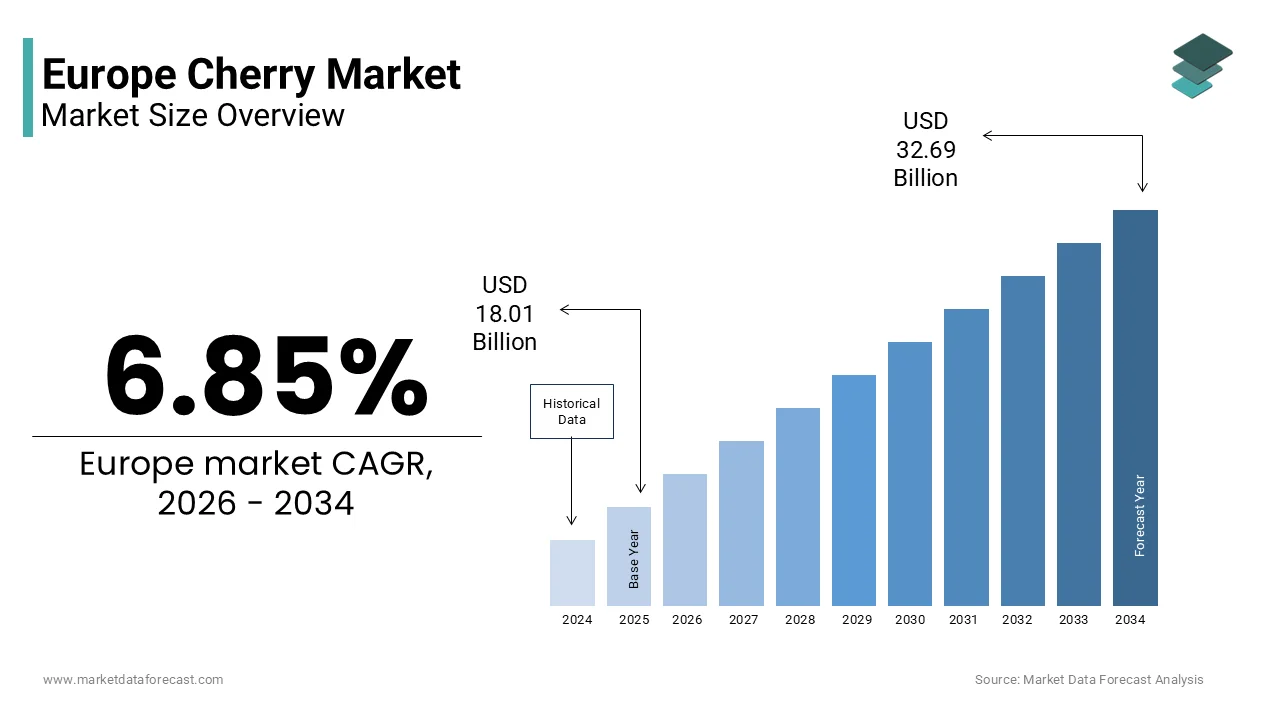
The Europe cherry market was valued at USD 18.01 billion in 2025, is estimated to reach USD 19.24 billion in 2026, and is projected to reach USD 32.69 billion by 2034, growing at a CAGR of 6.85% during the forecast period. The growth of the Europe cherry market is driven by increasing consumer demand for fresh and healthy fruits, rising awareness regarding the nutritional benefits of cherries, and expanding applications of cherries in food processing and confectionery products. Cherries are widely consumed due to their rich antioxidant content, vitamins, and natural sweetness. The growing popularity of organic produce, increasing fruit consumption trends, and expanding export opportunities are further supporting the development of the cherry market across Europe.
Key Market Trends
- Rising consumer demand for fresh and naturally sourced fruits with high nutritional value and antioxidant content.
- Increasing popularity of cherries in bakery products, desserts, beverages, and processed food applications.
- Growing interest in organic and sustainably produced fruits across European countries.
- Expansion of cold chain logistics and fruit export infrastructure supporting international trade of cherries.
- Increasing use of cherries in health focused diets due to their potential benefits for heart health and inflammation reduction.
Segmental Insights
Based on product, the sweet cherries segment dominated the Europe cherry market and accounted for 77.4% of the regional market share in 2025. Sweet cherries are widely preferred for fresh consumption due to their appealing taste, natural sweetness, and higher consumer demand in retail fruit markets.
Based on application, the direct consumption segment held the largest share of the Europe cherry market and captured 66.4% of the regional market share in 2025. The strong consumer preference for fresh fruit consumption, supported by rising health awareness and growing retail distribution channels, is driving the growth of this segment.
Regional Insights
- The Europe cherry market is witnessing steady growth across several countries due to favorable climatic conditions and increasing fruit cultivation activities.
- Poland accounted for the largest share of the Europe cherry market and held 26.2% of the regional market share in 2025. The country’s strong fruit farming sector, extensive cherry orchards, and growing export capacity are key factors supporting its leadership in the European cherry market.
- Other European countries are also expanding cherry production and trade due to increasing demand for fresh fruits and the growth of agricultural export markets.
Competitive Landscape
The Europe cherry market is characterized by the presence of several fruit producers, growers, and agricultural cooperatives focusing on improving fruit quality, expanding orchard production, and strengthening supply chains. Companies are investing in advanced farming techniques, cold storage infrastructure, and export distribution networks to meet the rising demand for cherries across domestic and international markets. Strategic partnerships with retail chains and food processing companies are further supporting market expansion across Europe. Prominent players in the Europe cherry market include Leelanau Fruit Company, CMI Orchards, APROCAL, Smeltzer Orchard Company, Lubelskie Jagody, Naturipe Berry Growers, Valley Fresh, Cerise du Montmorency, Rainier Fruit, Columbia Fruit Packers, Chelan Fresh, Zirkle Fruit Company, Washington Fruit Growers, Stemilt Growers, and Driscoll's.
Europe Cherry Market Size
The Europe cherry market size was valued at USD 18.01 billion in 2025 and is projected to reach USD 32.69 billion by 2034 from USD 19.24 billion in 2026, growing at a CAGR of 6.85%.
Cherry encompasses the cultivation harvesting distribution and consumption of both sweet and sour cherry varieties across the European continent. Cherries are grown predominantly in temperate climates with key producing countries including Poland Germany Spain Italy and France. The market caters to fresh consumption as well as processed forms such as frozen dried canned and juice-based products. Cherry production in Europe is highly seasonal with harvests typically occurring between May and August depending on latitude and variety. As per Eurostat, the European Union recorded sweet cherry production in 2023, with Poland contributing a significant share of the total. Climate conditions, soil composition, and agricultural policies under the Common Agricultural Policy significantly influence yield stability and quality. Consumer preference for locally sourced and pesticide reduced fruit has intensified demand for sustainably grown cherries. Additionally, the European Green Deal’s emphasis on biodiversity and reduced chemical inputs is reshaping orchard management practices. The market operates within a complex interplay of domestic supply chain dynamics, cross border trade flows, and evolving dietary trends favoring functional and antioxidant rich foods.
MARKET DRIVERS
Rising Consumer Preference for Antioxidant Rich Functional Foods
European consumers are increasingly prioritizing health-conscious dietary choices with a marked shift toward foods offering functional benefits beyond basic nutrition, which is one of the key factors propelling the growth of the European cherry market. Cherries, particularly sweet cherries, are recognized for their high concentrations of anthocyanins, polyphenols, and vitamin C which exhibit anti-inflammatory and cardiovascular protective properties. As per the European Food Information Council, dietary patterns in Western and Northern Europe have shown growth in the consumption of berry and stone fruit categories driven by awareness of their role in chronic disease prevention. As per the European Journal of Clinical Nutrition, regular intake of cherries correlates with reduced markers of oxidative stress in adults. This scientific validation has influenced retail strategies with major supermarket chains in Germany and the Netherlands introducing dedicated “functional fruit” sections featuring cherries alongside blueberries and pomegranates. Furthermore, food service operators in urban centers such as Paris and Stockholm are incorporating fresh cherries into wellness-oriented menus including smoothie bowls and antioxidant salads. This demand side evolution is prompting growers to adopt varietal selection focused on phytochemical density rather than solely on size or shelf life thereby reinforcing the alignment between consumer health trends and agricultural innovation in the cherry sector.
Expansion of E-Commerce and Direct to Consumer Fruit Delivery Platforms
The digital transformation of grocery retail has created new avenues for perishable produce like cherries to reach end consumers with minimal intermediation, which is further contributing to the European cherry market expansion. As per the European Commission’s Digital Economy and Society Index, online fresh food sales in the European Union have grown in recent years. Platforms such as Picnic in the Netherlands and Getir in France now offer same day delivery of seasonal fruits including premium grade cherries sourced directly from cooperatives in Spain and Italy. This model reduces post harvest handling time and enhances perceived freshness, a critical attribute for cherry buyers. As per the Federal Ministry of Food and Agriculture, urban households in Germany have increasingly purchased fresh fruit online. These platforms often provide detailed provenance information including harvest date, farm location, and sustainability certifications which appeals to environmentally aware consumers. Moreover, subscription-based fruit boxes featuring rotating seasonal selections have gained traction among millennial and Gen Z demographics particularly in Scandinavia and Benelux countries. This shift not only stabilizes demand during peak harvest but also enables producers to bypass traditional wholesale channels that typically impose stringent cosmetic standards leading to significant waste. Consequently, digital retail is emerging as a pivotal driver reshaping distribution logic and value capture in the Europe cherry market.
MARKET RESTRAINTS
Climate Volatility and Increasing Frequency of Late Spring Frosts
Cherry cultivation in Europe is acutely vulnerable to climatic anomalies, particularly unseasonal temperature fluctuations during the flowering and fruit set stages, which is a major impediment to the European cherry market growth. Late spring frosts have become more frequent and severe across Central and Eastern Europe undermining yield reliability. According to the Copernicus Climate Change Service, frost days during April in Poland’s Lublin region have increased compared to the long-term baseline. As per the German Weather Service, frost events have destroyed large portions of cherry blossoms in Germany’s Rhineland Palatinate. Such losses are especially devastating because cherries have a narrow phenological window for pollination and fruit development. Unlike annual crops, orchard trees cannot be replanted within the same season making recovery multiyear and capital intensive. Growers are increasingly investing in frost mitigation technologies such as overhead sprinklers, wind machines, and protective netting but these solutions entail high operational costs and energy use. Furthermore, insurance mechanisms remain underdeveloped for specialty fruit crops in many EU member states. This climatic unpredictability deters new entrants and constrains long term investment in orchard expansion thereby acting as a structural restraint on market supply stability and grower confidence.
Stringent Phytosanitary Regulations and Residue Monitoring Protocols
The European cherry market operates under one of the world’s most rigorous regulatory frameworks governing pesticide residues and plant health, which is also negatively impacting the regional market growth. Regulation EC 396 2005 establishes maximum residue levels for over 1000 substances with cherries classified as a high scrutiny commodity due to their thin skin and direct consumption. As per the European Food Safety Authority, the EU coordinated control program has detected non-compliant pesticide residues in imported cherry samples primarily from non-EU countries leading to heightened border inspections. Even for domestic producers, compliance requires meticulous record keeping, integrated pest management, and frequent laboratory testing which small scale orchardists often lack the resources to implement. As per France’s Directorate General for Food, shipments from cherry farms in Provence have been suspended following traces of pesticide residues above the threshold. Such enforcement actions disrupt supply chains and damage brand reputation. Moreover, the EU’s Sustainable Use of Pesticides Regulation scheduled for full implementation by 2027 mandates a 50% reduction in chemical pesticide use which will further limit available crop protection tools. These regulatory pressures increase production complexity and cost disproportionately affecting traditional family run orchards that form the backbone of Europe’s cherry landscape.
MARKET OPPORTUNITIES
Development of Climate Resilient and Early Ripening Cherry Varieties
Plant breeding innovations are unlocking new production possibilities by addressing phenological mismatches caused by warming springs, which is a potential opportunity in the European cherry market. Research institutions across Europe have accelerated the development of cherry cultivars with enhanced frost tolerance and earlier harvest windows. The FruitBreedomics project funded by the European Union successfully introduced the ‘Celina’ and ‘Samba’ varieties which ripen earlier than traditional ‘Burlat’ types while maintaining firmness and sugar content. According to the Julius Kühn Institute in Germany, new orchards have increasingly adopted these advanced cultivars. Early ripening allows growers in Southern Europe to access premium early season markets in May when prices are typically higher than June averages as observed in Spain’s Jerte Valley auction data. Additionally, these varieties exhibit improved resistance to rain induced fruit cracking, a major post bloom challenge in maritime climates like Belgium and the UK. Collaborative trials between Wageningen University and Dutch nurseries have demonstrated yield stability under variable rainfall conditions. Such genetic advancements not only mitigate climate risks but also extend the commercial harvest window enabling staggered supply to processors and retailers. This opportunity is particularly significant for medium scale farms seeking to differentiate through quality and timing rather than volume.
Growing Integration of Cherries into Plant Based and Clean Label Food Innovation
The surge in plant-based eating across Europe is creating novel product development avenues for cherry ingredients beyond fresh consumption, which is another notable opportunity in the regional market. Food manufacturers are leveraging cherries for their natural color, sweetness, and functional properties in formulations that align with clean label trends. Companies such as Alpro in Belgium and Oatly in Sweden now incorporate cherry puree into yogurt style oat desserts to replace artificial flavors and synthetic dyes. The European Commission’s update to the EU Organic Regulation further facilitates this shift by simplifying certification for multi-ingredient products containing at least 95% organic agricultural content including fruit. Moreover, cherry pomace, a byproduct of juice production, is being valorised as a source of natural anthocyanin extracts for use in meat analogues and bakery goods. A pilot facility in Emilia Romagna, Italy operated by a consortium of cooperatives processes cherry waste annually into functional powders used by clean label brands in Germany and Denmark. This circular approach not only reduces waste but also generates secondary revenue streams for growers. As consumer demand for recognizable ingredients intensifies, cherries are positioned to play a strategic role in the reformulation of processed foods toward more transparent and sustainable profiles.
MARKET CHALLENGES
Labor Shortages and Rising Costs of Seasonal Harvest Workforce
Cherry harvesting remains largely manual due to the fruit’s delicate skin and the need for selective picking based on ripeness, which is one of the significant challenges to the European cherry market. This dependency on human labor has become increasingly problematic as Europe faces a structural decline in available seasonal agricultural workers. As per the European Labour Authority, the number of non-EU seasonal workers granted permits for fruit harvesting in the EU has dropped in recent years due to tightened immigration policies in key destination countries like Italy and Spain. As per the National Support Centre for Agriculture, Polish cherry growers have reported high vacancy rates for harvest crews during peak season. Wages for fruit pickers have consequently risen as per the French Ministry of Labour. These cost pressures are exacerbated by the short harvest window typically lasting 10 to 14 days per orchard leaving little room for operational flexibility. Although mechanical harvesting technologies exist, they are unsuitable for fresh market cherries due to bruising and are primarily used for processing grades which fetch lower prices. The absence of scalable automation solutions combined with demographic shifts in rural populations presents a persistent challenge to maintaining consistent harvest quality and volume across the European cherry belt.
Post Harvest Losses Due to Limited Cold Chain Infrastructure in Eastern Europe
Despite being a major production zone, Eastern Europe suffers from inadequate refrigerated logistics which significantly compromises cherry quality and marketability, which is further challenging the expansion of the European cherry market. Cherries are highly perishable with optimal storage requiring specific temperature and humidity conditions immediately after picking. However, as per the European Bank for Reconstruction and Development, only a limited share of fruit packing facilities in Romania and Bulgaria were equipped with pre cooling units. In Poland, audits by the Institute of Horticulture have found that cherries destined for export often experienced temperature deviations during transit leading to accelerated softening and fungal growth. These losses are particularly acute for smallholder farms that lack access to integrated cold chain networks and must rely on third party transporters with inconsistent refrigeration standards. The European Commission’s Farm to Fork Strategy identifies post-harvest waste as a priority yet investment in regional cold infrastructure remains uneven. Without timely cooling, cherries lose a significant portion of their shelf life within the first hours after harvest as confirmed by research from the University of Natural Resources and Life Sciences Vienna. This logistical gap not only reduces grower income but also limits the ability of Eastern European producers to compete in high value fresh markets where appearance and firmness are critical quality parameters.
REPORT COVERAGE
| REPORT METRIC | DETAILS |
| Market Size Available | 2025 to 2034 |
| Base Year | 2025 |
| Forecast Period | 2026 to 2034 |
| CAGR | 6.85% |
| Segments Covered | By Product, Application, Distribution Channel, and Region |
| Various Analyses Covered | Global, Regional, & Country Level Analysis; Segment-Level Analysis; DROC, PESTLE Analysis; Porter’s Five Forces Analysis; Competitive Landscape; Analyst Overview of Investment Opportunities |
| Regions Covered | UK, France, Spain, Germany, Italy, Russia, Sweden, Denmark, Switzerland, Netherlands, Turkey, and the Czech Republic |
| Market Leaders Profiled | Leelanau Fruit Company, CMI Orchards, APROCAL, Smeltzer Orchard Company, Lubelskie Jagody, Naturipe Berry Growers, Valley Fresh, Cerise du Montmorency, Rainier Fruit, Columbia Fruit Packers, Chelan Fresh, Zirkle Fruit Company, Washington Fruit Growers, Stemilt Growers, and Driscoll's |
SEGMENTAL ANALYSIS
By Product Insights
Dominant Segment: Sweet Cherries (Approximately 78% of Europe cherry market by volume in 2023)
The sweet cherries segment dominated the market in 2025 with 77.4% of the regional market share. The dominance of sweet cherries segment in the European market is majorly driven by strong consumer preference for fresh fruit consumption and their premium positioning in retail channels and higher per capita consumption in Western and Southern Europe where cherries are viewed as a seasonal luxury item. As per Eurostat, sweet cherry production in the European Union has been significantly higher compared to sour cherries reflecting both agronomic focus and market demand. Supermarkets in Germany, France, and Spain allocate prominent shelf space to sweet cherries during summer months, often marketing them as “locally grown” and “rich in antioxidants” which enhances perceived value. Additionally, the export potential of sweet cherries to non-producing countries such as the United Kingdom and Nordic regions further drives cultivation. Breeding programs in Italy and Spain have prioritized firmness and transportability in new sweet cherry varieties like ‘Sweetheart’ and ‘Kordia’ enabling longer supply chains without quality degradation. The alignment of harvest timing with peak tourism seasons in Mediterranean countries also boosts direct farm sales and agri tourism revenue. These combined factors sustain sweet cherries’ overwhelming market share and commercial relevance across Europe.
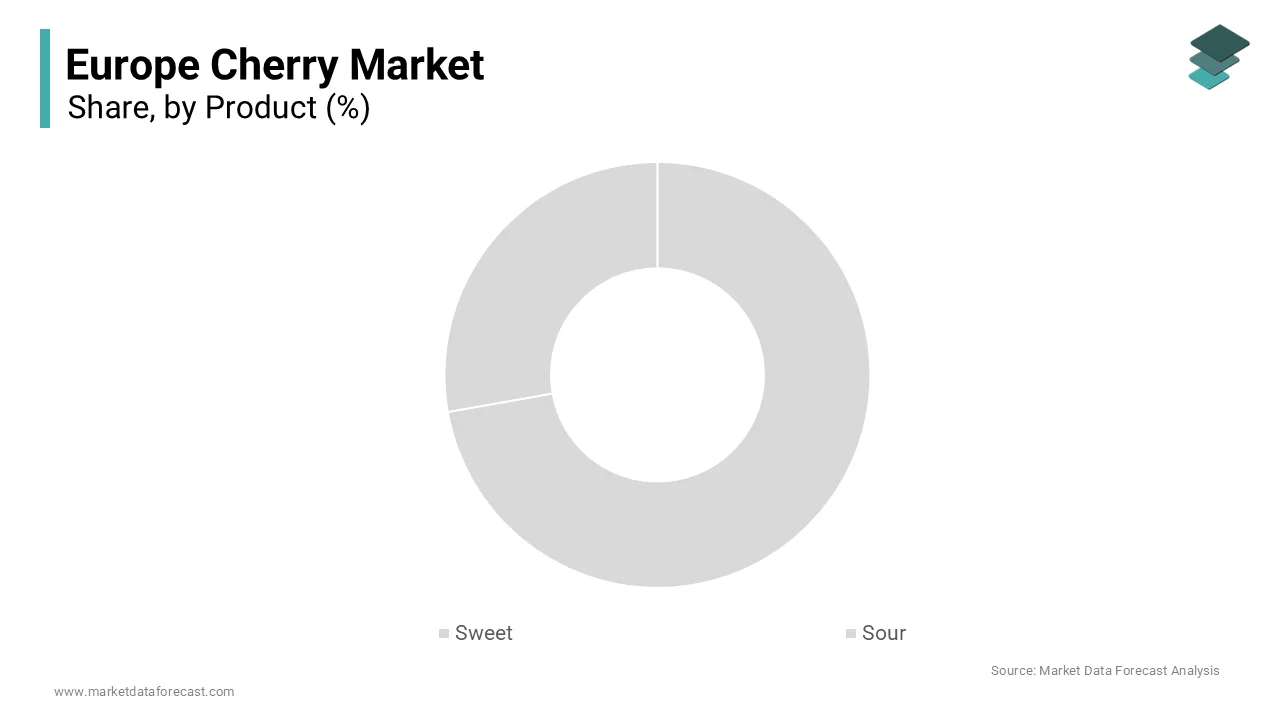
The sour cherries segment is a promising segment and is estimated to witness the fastest CAGR of 5.6% over the forecast period due to the rising demand for functional ingredients in food and beverage applications. Unlike sweet cherries which are largely consumed fresh, sour cherries are primarily processed into juices, concentrates, and powders valued for their high melatonin and anthocyanin content. As per the European Commission’s agri food trade review, exports of sour cherry concentrate from Poland and Hungary have increased fueled by demand from natural health product manufacturers in Germany and the Netherlands. As per Euromonitor International, the functional beverage sector which includes tart cherry juice as a recovery drink for athletes has been expanding rapidly in Europe. Moreover, sour cherry trees are more cold tolerant and better suited to Central and Eastern European climates where land is less competitive than in prime sweet cherry zones. In response, Poland’s Ministry of Agriculture allocated funding to support modernization of sour cherry processing facilities under its Rural Development Program. These structural and demand side tailwinds position sour cherries for accelerated growth despite their smaller base.
By Application Insights
Dominant Segment: Direct Consumption (Approximately 65% of Europe cherry market by value in 2023)
The direct consumption segment led the market by accounting for 66.4% of the European market share in 2025 due to the entrenched cultural habits and seasonal gifting traditions. Consumers in countries like Spain, Italy, and France view fresh cherries as a symbol of summer abundance. As per GfK, household penetration of cherries during peak harvest months has been high. Retailers reinforce this trend through premium packaging and origin labeling such as “Jerte Valley Cherries” with Protected Geographical Indication status which commands price premiums above generic varieties. The rise of short food supply chains has further amplified direct consumption with farm gate sales and weekly markets accounting for a notable share of fresh cherry distribution in Southern Europe as reported by the Food and Agriculture Organization of the United Nations. Additionally, the European Union’s School Fruit Scheme has distributed fresh cherries to children across member states promoting early taste acquisition. Cold chain improvements including mobile pre cooling units at orchards have extended shelf life enabling wider geographic reach without compromising quality. These interlinked socio cultural and logistical factors sustain direct consumption as the cornerstone of the cherry market.
The snacks and confectionary segment is estimated to experience the highest CAGR of 7.14% over the forecast period due to innovation in clean label and plant based indulgence products. Cherry inclusions are increasingly used in energy bars, fruit leathers, and dark chocolate fillings as a natural alternative to artificial flavors and synthetic colors. As per Mintel, consumer demand for recognizable ingredients has been strong with many snack buyers preferring products containing real fruit pieces over flavorings. Major brands such as Katjes and Rapunzel have reformulated their fruit gummy and cereal bar lines to include dried sour cherry bits sourced from Eastern Europe. Furthermore, the European Commission’s update to nutrition labeling guidelines encourages reduced sugar content which aligns with tart cherry’s natural acidity allowing for sugar reduction without compromising taste. Investments in dehydration and freeze drying technologies in Poland and Hungary have improved texture retention and color stability of cherry pieces used in baking and confectionary. These developments position the segment for sustained innovation and volume expansion.
REGIONAL ANALYSIS
Poland Cherry Market Analysis
Poland held a leading position in the Europe cherry market with 26.2% of the regional market sare in 2025. The dominance of Poland in the European cherry market is primarily due to its vast sour cherry production and expanding processing infrastructure. As per Statistics Poland, national cherry production has been significant with the majority classified as sour varieties destined for juice concentrate and frozen applications. Poland’s cool temperate climate and fertile loess soils in regions like Lublin and Masovia provide ideal conditions for high yielding orchards. The government’s strategic focus on agri processing under the National Recovery Plan has unlocked subsidies for fruit drying and freezing facilities. Additionally, Poland serves as a key supplier to German and Scandinavian beverage manufacturers seeking natural functional ingredients. The country benefits from EU rural development funds that support orchard modernization including anti hail netting and drip irrigation systems. Despite challenges from late frosts, Polish growers have adopted early blooming cultivars like ‘Łutówka’ which show improved resilience. This combination of policy support, climatic suitability, and downstream integration solidifies Poland’s dominance in the European cherry landscape.
Spain Cherry Market Analysis
Spain remained as a pivotal player in the Europe cherry market in 2025. The early season sweet cherry harvest and premium export orientation are propelling the expansion of the Spain market. As per the Ministry of Agriculture, Fisheries and Food, Spain’s cherry production has been dominated by sweet varieties cultivated in the Jerte Valley, Extremadura, and Aragon. The country’s southern latitude enables harvesting as early as late April giving it a critical time advantage in supplying high value markets in Germany, France, and the United Kingdom when local supply is absent. The Jerte Valley alone accounts for a large share of Spain’s cherry output and holds Protected Geographical Indication status which enhances brand equity and pricing power. Spanish growers have heavily invested in rain proof canopy systems to mitigate cracking losses. Additionally, cooperatives such as APROCAL have established direct export channels to Nordic retailers using refrigerated air freight to maintain quality. These strategic advantages in timing, quality, and logistics ensure Spain’s continued prominence in the fresh cherry segment.
Germany Cherry Market Analysis
Germany is anticipated to occupy a prominent share of the European cherry market during the forecast period. Germany occupies a central role in the Europe cherry market as both a significant producer and the continent’s largest consumer market. As per the Federal Statistical Office, national cherry production has been notable with sweet cherries dominating in Baden Württemberg and sour cherries prevalent in eastern states like Saxony. Domestic demand far exceeds supply, driving substantial imports primarily from Spain, Italy, and Poland especially during the May to July window. Germany’s influence extends beyond volume through its stringent quality standards and sustainability expectations which shape sourcing practices across the EU. Retailers such as Edeka and Rewe enforce strict residue and packaging criteria prompting suppliers to adopt integrated pest management and recyclable materials. Moreover, German consumers show strong preference for organic cherries with sales growing steadily as per the Organic Market Report published by the Federal Ministry of Food and Agriculture. This demand pull combined with robust cold chain infrastructure ensures Germany remains a decisive force in market dynamics.
Italy Cherry Market Analysis
Italy maintains a strong presence in the Europe cherry market through geographically diverse production and high value varietal specialization. As per ISTAT, national output has been concentrated in key growing zones such as Puglia, Emilia Romagna, and Veneto offering staggered harvests from May to July. Italy is renowned for premium cultivars such as ‘Ferrovia’ and ‘Bigarreau’ which are prized for their large size, deep red color, and crisp texture. These attributes make Italian cherries highly sought after in luxury retail and hospitality sectors across France, Switzerland, and Austria. The country also leverages its culinary heritage to promote cherries in gastronomic tourism with festivals like the Sagra della Ciliegia in Vignola attracting large visitor numbers annually. Despite climate pressures including heatwaves and water scarcity, Italian growers have adopted precision agriculture tools with many commercial orchards using soil moisture sensors and micro irrigation as documented by the Council for Agricultural Research and Economics. These innovations sustain yield quality and reinforce Italy’s reputation for excellence in sweet cherry production.
France Cherry Market Analysis
France plays a strategic role in the Europe cherry market characterized by high quality production and strong domestic consumption patterns. As per FranceAgriMer, national cherry output has been concentrated in regions such as Provence, Rhône Alpes, and Alsace. French consumers exhibit strong seasonal loyalty to cherries with household purchase rates peaking during June as per a Kantar Worldpanel survey. The country is home to several branded appellations including ‘Cerise du Montmorency’ which enjoys Protected Designation of Origin status and is exclusively used in artisanal jams and liqueurs. Recent policy initiatives under the France Relance plan have allocated funding to support orchard renewal and organic conversion with many hectares transitioning since 2022. Additionally, French research institutes such as INRAE have developed rootstocks that confer resistance to bacterial canker, a disease that has reduced yields in wet springs. Urban consumers in Paris and Lyon increasingly seek traceable and low residue fruit driving demand for short supply chains and farm box schemes. These cultural, economic, and agronomic factors collectively sustain France’s influential position in the European cherry ecosystem.
COMPETITIVE LANDSCAPE
The Europe cherry market exhibits a dual competitive structure with fragmented small-scale growers coexisting alongside organized cooperatives and integrated agri-processors. Competition in the fresh segment is driven by timing quality and origin branding with early season producers like Spain commanding premium pricing. In contrast the processed segment is shaped by cost efficiency ingredient functionality and supply reliability with Poland and Hungary as key hubs. No single entity dominates the entire value chain leading to intense rivalry among regional clusters. Differentiation hinges on certifications such as Protected Geographical Indication organic labels and carbon footprint declarations. Retailer power exerts downward pressure on pricing yet also incentivizes innovation in packaging and sustainability. New entrants face high barriers including orchard establishment costs climate vulnerability and compliance with phytosanitary regulations. However collaborative models through cooperatives enable smallholders to access export channels and processing infrastructure. Overall competition fosters continuous improvement in quality traceability and product diversification across the European cherry landscape.
KEY MARKET PLAYERS
Some of the notable key players in the Europe cherry market are
- Leelanau Fruit Company
- CMI Orchards
- APROCAL
- Smeltzer Orchard Company
- Lubelskie Jagody
- Naturipe Berry Growers
- Valley Fresh
- Cerise du Montmorency
- Rainier Fruit
- Columbia Fruit Packers
- Chelan Fresh
- Zirkle Fruit Company
- Washington Fruit Growers
- Stemilt Growers
- Driscoll's
Top Players in the Market
- APROCAL is a leading Spanish cooperative representing over 1200 cherry growers in the Jerte Valley a region renowned for its high-quality sweet cherries with Protected Geographical Indication status. The organization plays a pivotal role in standardizing quality packaging and export logistics for its members ensuring consistent supply to premium markets across Europe and the Middle East. APROCAL contributes to the global market by promoting Spanish cherries as a premium seasonal product through international trade fairs and digital marketing campaigns. In recent developments the cooperative launched a blockchain based traceability system in early 2024 enabling retailers and consumers to verify origin harvest date and sustainability practices. This initiative enhances transparency and strengthens brand trust in an increasingly discerning global marketplace.
- Lubelskie Jagody is a major Polish agri food enterprise specializing in the cultivation processing and export of sour cherries and other soft fruits. Headquartered in eastern Poland the company operates one of the largest integrated cherry processing facilities in Central Europe supplying frozen puree concentrate and dried cherry ingredients to food manufacturers in Germany the Netherlands and Scandinavia. Its contribution to the global market lies in providing functional cherry derivatives for the natural health and plant-based food sectors. In 2023, Lubelskie Jagody commissioned a new IQF freezing line dedicated exclusively to sour cherries reducing processing time by 40 percent and preserving anthocyanin content. The company also signed a long-term supply agreement with a leading German juice brand in January 2024, which is reinforcing its position as a reliable B2B ingredient partner.
- Cerise du Montmorency is a French producer consortium centered in the Montmorency Valley near Paris dedicated to the cultivation and valorisation of the Montmorency sour cherry variety which holds Protected Designation of Origin status. The group supports over 80 orchards committed to traditional low intervention farming and supplies raw material for artisanal jams liqueurs and health focused powders. It contributes globally by positioning French sour cherries as a heritage functional ingredient with unique phytochemical profiles. In late 2023 the consortium partnered with a Paris based nutraceutical startup to develop a standardized cherry extract for sleep support supplements now distributed in Germany and Belgium. Additionally in March 2024 it launched an educational platform for chefs and mixologists highlighting culinary applications of Montmorency cherries thereby expanding demand beyond conventional uses.
Top Strategies Used by the Key Market Participants
Key players in the Europe cherry market prioritize varietal innovation to enhance fruit firmness shelf life and climate resilience through partnerships with agricultural research institutes. They invest in vertical integration by controlling orchard management harvesting and post-harvest processing to ensure quality consistency. Geographic diversification of orchards across microclimates mitigates weather related production risks. Companies increasingly adopt digital traceability systems to meet retailer and consumer demands for transparency. Strategic branding through geographical indications and organic certifications differentiates products in premium segments. Collaborations with food and beverage manufacturers unlock value added applications in functional foods and beverages. Participation in EU funded sustainability programs supports transition to low input farming. Export development focuses on air freight logistics for early season sweet cherries to high value markets. These strategies collectively reinforce competitiveness and long-term market relevance.
MARKET SEGMENTATION
This research report on the European cherry market has been segmented and sub-segmented based on categories.
By Product
- Sweet
- Sour
By Application
- Direct Consumption
- Processed Foods
- Snacks and Confectionary
- Dairy Products
- Others
By Distribution Channel
- Supermarkets and Hypermarkets
- Convenience Stores
- Online
By Country
- UK
- France
- Spain
- Germany
- Italy
- Russia
- Sweden
- Denmark
- Switzerland
- Netherlands
- Turkey
- Czech Republic
- Rest of Europe