- Product Description Description
- Table of Contents TOC
- List of Table & Figure LOT
- Get Free Sample PDF Sample PDF
Market Size, 2025
$2.84 BnMarket Estimate, 2026
$3.24 BnMarket Forecast, 2034
$9.11 BnCAGR, 2026–2034
13.81%Europe Clean Beauty Market Size, Growth, Trends & Forecast (2026–2034)
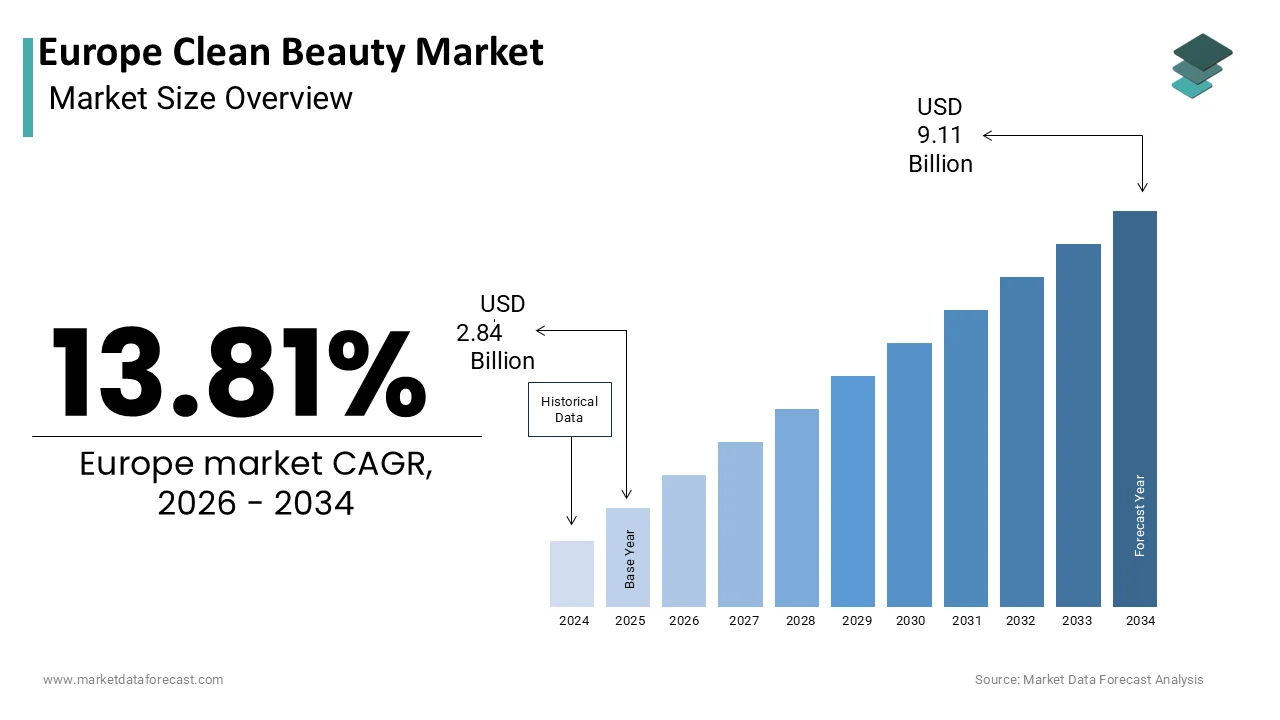
The Europe clean beauty market size was valued at USD 2.84 billion in 2025, is estimated to reach USD 3.24 billion in 2026, and is projected to scale up to USD 9.11 billion by 2034, registering a compound annual growth rate (CAGR) of 13.81% during the forecast period from 2026 to 2034. Driven by surging health consciousness, strict chemical safety regulations, and a major pivot toward eco-friendly packaging and ethical sourcing, the European clean beauty industry continues its rapid expansion.
Key Executive Metrics (At-a-Glance)
- 2025 Base Valuation: USD 2.84 Billion
- 2026 Current Valuation: USD 3.24 Billion
- 2034 Forecast Valuation: USD 9.11 Billion
- Compound Annual Growth Rate (CAGR): 13.81% (2026–2034)
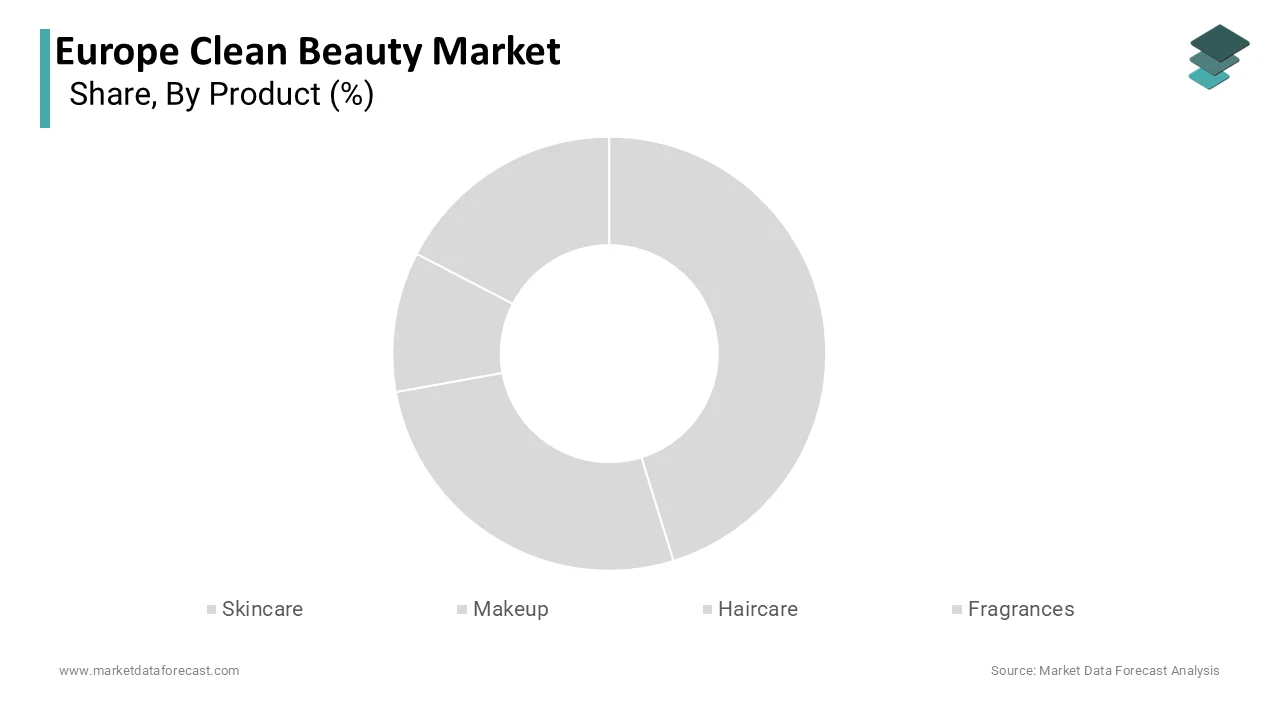
- Dominant Product Segment: Skincare (accounts for ~45% of total sales due to daily wellness regimens and anti-aging demand)
- Dominant Distribution Channel: Retail Stores (captures ~68% of sales for tactile evaluation and professional advice)
- Dominant Regional Market: Germany (pioneered by strong standards like BDIH/NaTrue and high eco-consumer awareness)
Core Market Drivers
- Health Consciousness & Ingredient Transparency: Consumer aversion to parabens, sulfates, and synthetic chemicals, accelerated by digital label-reading apps.
- Environmental Sustainability: Strong push toward circular economies, refillable systems, and biodegradable packaging driven by initiatives like the European Green Deal.
Primary Market Restraints & Challenges
- Regulatory Ambiguity & Greenwashing: Lack of uniform legal definitions for "clean" or "natural," leading to consumer confusion and deceptive marketing claims.
- High Production Costs: Expensive organic raw materials and sustainable manufacturing resulting in retail prices 40%–50% higher than conventional options.
Europe Clean Beauty Market Segmentation Breakdown
| Segment Category | Leading Sub-Segment | Fastest-Growing Sub-Segment |
|---|---|---|
| By Product Type | Skincare (Dominant share in 2025 anchored by daily maintenance routines) | Fragrances (10.4% CAGR driven by niche artisanal scents and ethical sourcing) |
| By Distribution Channel | Retail Stores (Holds major share due to physical product testing and sensory feedback) | Online Channels (12.2% CAGR powered by home delivery and digital reviews) |
| By Country | Germany (Market leader with strict certification standards like NaTrue and BDIH) | Spain / Eastern Europe (Rapid growth hubs driven by rising eco-awareness and disposable incomes) |
Major Industry Landscape & Dynamics
The market features an intense mix of multinational conglomerates acquiring indie innovators and agile local brands. Key focal points include scaling biotech-derived ingredients, deploying rigorous third-party certifications, and overcoming supply chain volatility to secure long-term consumer trust.
 Download Free Sample Report
Europe Clean Beauty Market Size
The Europe clean beauty market was valued at USD 2.84 billion in 2025, is expected to have a 13.81% CAGR from 2026 to 2034, and be worth USD 9.11 billion by 2034 from USD 3.24 billion in 2026.
Clean beauty represents a transformative shift in personal care consumption, where consumers prioritize formulations free from controversial synthetic ingredients, such as parabens, sulfates, and phthalates. This segment encompasses skincare, haircare and cosmetic products that emphasize transparency, sustainability, and ethical sourcing throughout the supply chain. The movement has gained substantial traction across major European economies, including Germany, France, and the United Kingdom, where regulatory frameworks are increasingly stringent regarding chemical safety. Consumer awareness regarding environmental impact and personal health has reached unprecedented levels, which is driving demand for products with clear ingredient lists and eco-friendly packaging. According to the European Commission, approximately 65% of European consumers consider environmental impact when making purchasing decisions, which directly influences their preference for clean beauty alternatives. The definition extends beyond mere absence of harmful chemicals to include positive attributes, such as organic certification, cruelty-free testing, and biodegradable formulas. As per Euromonitor International, the concept of wellness has become integral to beauty routines, with 72% of consumers in Western Europe associating clean ingredients with overall well-being. This cultural shift reflects a broader societal move toward conscious consumption, where buyers scrutinize brand ethics and production methods. The market thrives on trust and authenticity, requiring brands to maintain rigorous standards while communicating their values effectively to an increasingly informed audience that demands accountability and proof of claims.
MARKET DRIVERS
Rising Health Consciousness and Ingredient Transparency Drive Consumer Preference for Safe Formulations
Health consciousness among European consumers has emerged as a pivotal force propelling the clean beauty sector forward, as individuals become more vigilant about what they apply to their skin. Modern shoppers actively seek products that align with their wellness goals, avoiding substances linked to hormonal disruption or allergic reactions. According to a survey conducted by Mintel, 58% of consumers in France and Germany stated they check ingredient lists before purchasing personal care items, reflecting a deep-seated desire for safety and clarity. This trend is particularly pronounced among millennials and Generation Z, who view skincare as an extension of their health regimen rather than merely a cosmetic enhancement. The availability of digital tools and mobile applications that decode complex ingredient lists has empowered consumers to make informed choices, thereby increasing demand for brands that offer full disclosure. As per Statista, data from 2024 indicates that 43% of European beauty buyers prefer products labeled as natural or organic due to perceived health benefits. Retailers have responded by dedicating shelf space to clean beauty lines and providing detailed information about sourcing and formulation processes. This heightened scrutiny forces manufacturers to reformulate existing products and invest in research to develop safer alternatives that meet consumer expectations without compromising efficacy. The emphasis on transparency builds brand loyalty, as customers reward companies that demonstrate commitment to health and safety through consistent communication and verified certifications.
Environmental Sustainability Concerns Influence Purchasing Decisions toward Eco Friendly Products
Environmental sustainability has become a critical determinant in shaping consumer behavior within the Europe clean beauty market, as buyers increasingly associate personal care choices with ecological responsibility. Consumers are gravitating toward brands that utilize renewable resources, minimize water usage, and employ biodegradable packaging solutions to reduce their carbon footprint. According to the European Environment Agency, nearly 70% of households in the European Union express concern about plastic waste generated from cosmetic containers, prompting a surge in demand for refillable systems and compostable materials. This environmental awareness is reinforced by educational campaigns and media coverage highlighting the detrimental effects of microplastics and non-recyclable packaging on marine ecosystems. As per Nielsen IQ research, 61% of European shoppers are willing to pay a premium for products with sustainable packaging, indicating that eco-friendliness is no longer a niche preference but a mainstream expectation. Brands that integrate circular economy principles into their operations gain competitive advantage by appealing to environmentally conscious demographics that prioritize long-term planetary health over short-term convenience. The rise of zero-waste stores and bulk buying options further supports this shift, enabling consumers to minimize packaging waste while accessing high-quality clean beauty products. Regulatory initiatives, such as the European Green Deal, also play a role by setting ambitious targets for waste reduction and resource efficiency, which incentivize companies to adopt greener practices. This convergence of consumer values and policy direction creates a robust foundation for sustained growth in the sustainable beauty segment.
MARKET RESTRAINTS
Ambiguous Regulatory Definitions Create Confusion and Hinder Standardization across Markets
The lack of uniform regulatory definitions for terms such as clean, natural, and organic presents a significant restraint for the Europe clean beauty market by fostering consumer confusion and enabling greenwashing practices. Unregulated like the strictly governed organic food sector, the beauty industry operates under varied interpretations of what constitutes clean, leading to inconsistent labeling and marketing claims. According to the European Consumer Organisation, many shoppers struggle to differentiate between genuinely safe products and those using vague terminology for promotional purposes, which erodes trust in the category. This ambiguity allows some brands to exploit loopholes by highlighting minor natural ingredients while retaining potentially harmful synthetics, thereby misleading consumers who seek authentic clean alternatives. As per a study by the European Commission, approximately 53% of environmental claims made on various consumer products in Europe, including cosmetics, contain vague, misleading, or unfounded information. The absence of a legally binding definition means that certification bodies operate independently, resulting in fragmented standards that complicate cross-border trade and brand positioning. Manufacturers face increased costs associated with obtaining multiple certifications to satisfy different national requirements, which can be prohibitive for smaller enterprises. This regulatory fragmentation stifles innovation, as companies hesitate to invest in new formulations without clear guidelines on compliance. Consumers ultimately bear the burden of navigating this complex landscape, often relying on third-party apps or independent reviews to verify claims, which slow down purchase decisions and limits market expansion potential.
Higher Production Costs and Premium Pricing Limit Accessibility for Mass Market Consumers
Elevated production costs associated with sourcing high-quality natural ingredients and implementing sustainable manufacturing processes result in premium pricing that restricts access to clean beauty products for budget-conscious consumers, which is further hampering the European market expansion. Organic raw materials, such as plant-based oils and botanical extracts, typically cost 20 to 30% more than their synthetic counterparts due to limited supply chains and labor-intensive harvesting methods. According to data from the Federation of European Cosmetic Industries, small and medium-sized enterprises face significant financial barriers when transitioning to clean formulations, as they lack the economies of scale enjoyed by larger conglomerates. This cost disparity translates into retail prices that are often 40 to 50% higher than conventional alternatives, making clean beauty a luxury rather than a staple for many households. As per Eurostat statistics, inflationary pressures in 2024 led to a 12% decline in discretionary spending on premium personal care items among lower-income demographics in Southern and Eastern Europe. The price sensitivity of these consumers forces them to prioritize essential goods over specialized beauty products, thereby limiting market penetration in key growth regions. Additionally, the investment required for eco-friendly packaging and ethical labor practices further inflates operational expenses, which brands pass on to customers. While affluent segments remain resilient to price increases, the broader mass market remains elusive for many clean beauty brands unless they can optimize supply chains or introduce tiered product lines that balance affordability with integrity.
MARKET OPPORTUNITIES
Expansion into Emerging Eastern European Markets Presents Untapped Growth Potential
Eastern European countries represent a lucrative opportunity for the Europe clean beauty market, as rising disposable incomes and increasing exposure to global wellness trends drive demand for premium personal care products. Nations such as Poland, Czech Republic, and Romania are experiencing rapid urbanization and a growing middle class that exhibits strong interest in health-oriented lifestyle choices. According to the World Bank, GDP per capita in these regions has grown by an average of 4.5% annually over the past five years, enabling greater spending on non-essential goods, including clean beauty items. Local retailers are expanding their assortments to include international clean beauty brands, while domestic entrepreneurs launch indigenous lines that cater to regional preferences and cultural nuances. As per Kantar Worldpanel, sales of natural and organic cosmetics in Eastern Europe increased by 18% in 2024, outpacing growth rates in mature Western markets. This momentum is supported by improved distribution networks and e-commerce platforms that facilitate access to diverse product offerings, even in remote areas. Educational initiatives by beauty influencers and dermatologists further amplify awareness about the benefits of clean formulations, encouraging trial and adoption among younger demographics. Brands that enter these markets early can establish strong brand loyalty and capture significant market share before competition intensifies. Strategic partnerships with local distributors and adaptation of marketing messages to resonate with regional values will be crucial for success in this dynamic and evolving landscape.
Innovation in Biotechnology and Fermentation Technologies Enables Scalable Sustainable Ingredients
Advancements in biotechnology and fermentation technologies offer a prominent opportunity for the Europe clean beauty market, by enabling the production of high-performance sustainable ingredients at scale without depleting natural resources. These innovative methods allow manufacturers to create bio-identical compounds, such as hyaluronic acid and squalane, through microbial fermentation, reducing reliance on animal-derived or plant-harvested materials that may have environmental drawbacks. According to the European Bioplastics Association, the use of bio-based ingredients in cosmetics has grown by 25% since 2020, driven by technological breakthroughs that enhance purity and consistency while lowering production costs. Fermentation processes also generate fewer waste byproducts and require less water and energy compared to traditional extraction methods, aligning with sustainability goals cherished by modern consumers. As per a report from the Fraunhofer Institute, biotech-derived actives demonstrate superior stability and efficacy, which appeals to formulators seeking to replace synthetic additives without compromising product performance. This scientific approach addresses the challenge of ingredient scarcity and variability associated with agricultural sourcing, ensuring reliable supply chains for global brands. Furthermore, biotechnology enables the creation of novel molecules with unique benefits that cannot be obtained from natural sources, opening new avenues for product differentiation and intellectual property development. Companies investing in research and development within this field position themselves as leaders in innovation, attracting partnerships with major cosmetic houses and securing competitive advantages in an increasingly crowded marketplace.
MARKET CHALLENGES
Greenwashing Accusations Damage Brand Credibility and Erode Consumer Trust
Accusations of greenwashing pose a severe challenge to the Europe clean beauty market, as consumers become more skeptical of marketing claims that lack substantive evidence or third-party verification. When brands exaggerate their environmental credentials or use misleading imagery to suggest sustainability without implementing meaningful changes, they risk facing public backlash and regulatory scrutiny. According to an investigation by the European Commission, nearly 42% of environmental claims made by companies on their websites, including cosmetic brands, were found to be exaggerated, false, or deceptive, leading to increased enforcement actions and fines. This erosion of trust makes it difficult for genuine clean beauty brands to distinguish themselves from opportunistic competitors, who prioritize profit over integrity. As per YouGov, surveys indicate that 52% of European consumers have stopped purchasing from a brand after discovering deceptive sustainability practices, highlighting the long-term reputational damage caused by greenwashing. Social media amplifies these controversies, allowing negative experiences to spread rapidly and influence purchasing decisions across wide audiences. Brands must, therefore, invest in transparent communication strategies backed by verifiable data and recognized certifications, to rebuild confidence and demonstrate authentic commitment to clean principles. Failure to address this challenge results in diminished customer loyalty, reduced sales, and increased difficulty in launching new products, as shoppers adopt a wait-and-see approach before embracing emerging labels.
Supply Chain Volatility and Raw Material Scarcity Disrupt Production and Increase Costs
Volatility in global supply chains and scarcity of key raw materials present ongoing challenges for the Europe clean beauty market, by disrupting production schedules and escalating input costs. Many natural ingredients used in clean formulations, such as argan oil, shea butter, and essential oils, are sourced from specific geographic regions vulnerable to climate change, political instability, and logistical bottlenecks. According to the Food and Agriculture Organization, extreme weather events in 2023 reduced yields of several botanical crops by up to 20%, leading to shortages and price spikes that affected cosmetic manufacturers across Europe. This unpredictability forces companies to maintain larger inventory buffers or seek alternative suppliers, which may compromise quality or ethical standards. As per the European Chemical Industry Council, transportation delays and increased freight costs added an average of 15% to overall logistics expenses in 2024, further straining profit margins for clean beauty brands. Smaller enterprises with limited bargaining power struggle to secure consistent supplies, leaving them exposed to market fluctuations that larger corporations can mitigate through diversified sourcing strategies. The dependence on seasonal harvests also introduces timing constraints that complicate product launches and promotional planning. To address these issues, brands are exploring vertical integration and long-term contracts with farmers, but these solutions require significant capital investment and time to implement. Until supply chains become more resilient, the industry will continue to face operational disruptions that hinder growth and stability.
SEGMENTAL ANALYSIS
By Product Type Insights
The skincare segment dominated the market by commanding for the highest share of the European market in 2025 due to its direct association with health, wellness, and daily self-care routines. Consumers view facial and body care products as essential investments in their long-term well-being, which drives consistent demand regardless of economic fluctuations. The segment benefits from high repeat purchase rates, as individuals establish dedicated regimens involving cleansers, serums, moisturizers, and treatments that require regular replenishment. According to Euromonitor International, skincare accounts for approximately 45% of total clean beauty sales in Europe, reflecting its entrenched position in consumer habits. The rise of dermatologist-recommended brands and clinical-grade natural formulations has further legitimized the category, attracting buyers who seek efficacy alongside safety. As per Mintel data, 67% of European women prioritize skin health over decorative cosmetics, indicating a fundamental shift in beauty priorities toward maintenance and prevention rather than concealment. This preference is amplified by aging populations in countries like Germany and Italy, where anti-aging solutions derived from botanical sources are highly sought after. The proliferation of social media influencers sharing detailed skincare routines has also educated consumers about ingredient benefits, fostering loyalty to specific clean brands. Additionally, the integration of skincare into holistic wellness practices, such as yoga and meditation, reinforces its status as a non-negotiable component of modern lifestyle choices, ensuring sustained market leadership.
However, the fragrances segment is a promising segment and is estimated to showcase a CAGR of 10.4% during the forecast period owing to resurgence in interest towards niche perfumery and artisanal scents that emphasize natural essences and ethical sourcing. Consumers are moving away from mass-produced synthetic fragrances toward unique olfactory experiences that reflect personal identity and values. According to The Perfume Foundation, the demand for natural perfumes has increased by 35% in the last three years, as buyers become more aware of potential allergens and endocrine disruptors present in conventional scents. The growth is also attributed to the gifting culture in Europe, where premium clean fragrances are perceived as thoughtful and luxurious presents for special occasions. As per Nielsen IQ, sales of natural perfumes in France and the United Kingdom grew by 12% in 2024, outpacing other beauty categories due to successful marketing campaigns highlighting sustainability and craftsmanship. Independent perfumers are gaining traction by offering transparent ingredient lists and small-batch production methods that appeal to discerning shoppers seeking exclusivity. The rise of unisex and gender-neutral scents further broadens the target audience, allowing brands to capture diverse demographics. Additionally, the integration of aromatherapy benefits into fragrance formulations attracts consumers looking for emotional well-being and stress relief through scent. This multifaceted appeal ensures that the fragrance segment maintains its momentum as a high-growth area within the clean beauty ecosystem.
By Distribution Channel Insights
The retail stores segment held the major share of the European market in 2025 and is expected to continue to hold the leading position in the Europe clean beauty market. This dominance is rooted in the tactile nature of beauty shopping, where consumers prefer to test textures, smells, and colors before making purchase decisions. Physical retail environments provide immediate gratification and professional advice from trained staff, which enhances the overall shopping experience and reduces return rates. According to Eurostat, approximately 68% of beauty products in Europe are still sold through brick-and-mortar outlets, reflecting the enduring importance of physical presence in the industry. Major retailers, such as Sephora, Douglas, and Boots, have dedicated extensive shelf space to clean beauty brands, creating curated sections that simplify discovery for shoppers. As per Kantar Worldpanel, foot traffic in premium beauty stores increased by 8% in 2024, as consumers sought post-pandemic social interactions and personalized consultations. The ability to engage all senses during the selection process builds confidence in product suitability, particularly for skincare and fragrance categories where individual reactions vary significantly. Retailers also leverage loyalty programs and in-store events to foster community and encourage repeat visits. The strategic placement of clean beauty lines near entrances or in prominent displays further boosts visibility and impulse purchases. Despite the rise of e-commerce, the experiential advantage of retail stores ensures they remain the primary channel for driving volume and brand awareness in the European market.
However, the online channels segment is estimated to witness a promising CAGR of 12.2% during the forecast period in the European market owing to the convenience of home delivery, extensive product variety, and access to detailed customer reviews that aid decision making. Digital platforms allow brands to reach wider audiences beyond geographic limitations, enabling niche clean beauty labels to gain visibility and compete with established players. According to eMarketer, online beauty sales in Europe accounted for 28% of total market value in 2024, and are expected to rise steadily as internet penetration and digital literacy improve across the region. The proliferation of mobile commerce apps and social media shopping features has streamlined the purchasing process, making it easier for consumers to discover and buy clean beauty products on the go. As per Statista, the number of online beauty shoppers in the United Kingdom and Sweden increased by 20% in the past year, driven by attractive discounts and seamless checkout experiences. Direct-to-consumer models enable brands to collect valuable data on customer preferences, allowing for targeted marketing and personalized product recommendations. Subscription services and auto-replenishment options further enhance customer retention by ensuring continuous supply of essential items. The ability to compare prices and read verified reviews empowers shoppers to make informed choices, reducing the perceived risk of buying unseen products. These advantages ensure that online channels will continue to capture increasing market share in the coming years.
COUNTRY LEVEL ANALYSIS
Germany Clean Beauty Market Analysis
Germany dominated the European clean beauty market in 2025 and is anticipated to maintain a position of stable growth and strong consumer leadership in the clean beauty landscape over the next few years due to its strong regulatory framework and environmentally conscious consumer base. The country has long been a pioneer in natural cosmetics, with established certification standards, such as BDIH and NaTrue, that guide purchasing decisions and ensure product integrity. German consumers are highly educated about ingredient safety and sustainability, leading to robust demand for certified organic and cruelty-free products. According to the German Cosmetic, Toiletry, Perfumery and Detergent Association, sales of natural cosmetics in Germany reached 1.6 billion euros in 2024, reflecting steady annual growth of 5%. The presence of major domestic brands, like Dr. Hauschka and Weleda, reinforces local pride and trust in homegrown clean beauty solutions. Retail infrastructure supports this demand, with specialized health food stores and pharmacies dedicating significant shelf space to natural personal care items. As per Statista, over 60% of German households regularly purchase natural beauty products, indicating deep market penetration. The government’s support for green initiatives and strict enforcement of chemical regulations further bolster consumer confidence in the clean beauty sector. Innovation hubs in Berlin and Munich foster startups focused on sustainable packaging and biotech ingredients, keeping the market dynamic and competitive. This combination of regulatory rigor, consumer awareness, and industrial strength positions Germany as a stable and influential leader in the European clean beauty landscape.
France Clean Beauty Market Analysis
France is projected to experience a steady expansion in the premium and eco-certified segments for the next few years, maintaining a strong position in the Europe Clean Beauty Market, particularly within the luxury segment leveraging its heritage in perfumery and high-end skincare. French consumers associate beauty with elegance and wellness, prompting demand for premium products that offer both sensory pleasure and ethical assurance. According to the French Federation of Beauty Companies, exports of natural and organic cosmetics from France grew by 7% in 2024, reaching record levels as global demand for French luxury clean beauty rises. Paris serves as a global hub for beauty innovation, hosting trade shows and incubators that attract international talent and investment. The influence of French pharmacy brands, such as Caudalie and Nuxe, has expanded the definition of clean beauty to include dermatologically tested natural ingredients, appealing to health-conscious shoppers. As per Kantar Worldpanel, 55% of French women prefer skincare products with plant-based actives, citing efficacy and gentleness as key factors. The cultural emphasis on art de vivre encourages consumers to view beauty routines as rituals of self-care, supporting higher spending on quality items. Regulatory alignment with European standards ensures consistency and trust, while local sourcing of ingredients, like lavender and grape seed, strengthens the narrative of authenticity. This unique blend of tradition, innovation, and luxury sustains France’s prominence in the clean beauty arena.
UK Clean Beauty Market Analysis
The UK is poised to act as a highly progressive and innovative market for sustainable beauty formulations over the next few years, demonstrating robust growth in clean beauty adoption. British shoppers are among the most vocal advocates for transparency and sustainability, pushing brands to adopt clearer labeling and ethical practices. According to the British Beauty Council, the clean beauty segment in the UK expanded by 9% in 2024, outperforming the overall beauty market growth rate. London serves as a creative hotspot for indie brands that challenge conventional norms with bold formulations and inclusive marketing strategies. The prevalence of zero-waste stores and refill stations in major cities reflects a strong cultural commitment to reducing environmental impact. As per Mintel, 63% of UK consumers actively seek out brands with credible environmental credentials, influencing their loyalty and purchase frequency. Retail giants, like Boots and Superdrug, have launched exclusive clean beauty lines, making these products more accessible to mainstream audiences. The influence of social media influencers and beauty bloggers amplifies awareness and drives trial among younger demographics, who prioritize values aligned with their own. Government initiatives promoting circular economy principles further support the transition toward sustainable consumption. This dynamic ecosystem, characterized by activism, innovation, and accessibility, ensures the United Kingdom remains a key growth engine for the Europe Clean Beauty Market.
Italy Clean Beauty Market Analysis
Italy is set to achieve consistent market development driven by a strong alignment between domestic agricultural production and clean beauty manufacturing for the next few years, exhibiting steady demand for natural and organic personal care. Italian consumers value quality and authenticity, preferring products made with locally sourced ingredients, such as olive oil, citrus extracts, and thermal water. According to Cosmetics Europe, Italy saw a 4% increase in sales of natural cosmetics in 2024, driven by domestic brands that emphasize heritage and craftsmanship. The popularity of pharmacy brands and dermocosmetics integrates scientific rigor with natural elements, appealing to health-conscious individuals seeking reliable solutions. Regional diversity influences preferences, with northern consumers favoring innovative, tech-driven formulas while southern buyers lean toward traditional botanical remedies. As per ISTAT, data indicates that household spending on personal care items remained resilient despite economic pressures, indicating the essential nature of beauty routines in Italian culture. The tourism sector also plays a role, as visitors seek authentic Italian beauty souvenirs, boosting sales of artisanal soaps, oils, and creams. Export opportunities are expanding, as Italian clean beauty brands gain recognition for their quality and style in international markets. Collaborations between agricultural producers and cosmetic manufacturers strengthen supply chains and promote rural development. This synergy between tradition and modernity enables Italy to maintain a distinctive and respected presence in the European clean beauty landscape.
Spain Clean Beauty Market Analysis
Spain is likely to emerge as a fast-growing hub for eco-conscious cosmetics and solar skin wellness over the next few years, showing increasing interest in sustainable beauty practices, as environmental awareness rises among its population. Spanish consumers are becoming more discerning about ingredient origins and packaging waste, driving demand for eco-friendly alternatives. According to the Spanish Association of Perfumery and Cosmetics, sales of natural and organic products grew by 6% in 2024, reflecting a shift in consumer priorities toward sustainability. The warm climate influences skincare needs, with high demand for sun protection and hydration products formulated with natural filters and moisturizers. Local brands are leveraging indigenous ingredients, like almond oil, saffron, and rosemary, to create unique offerings that resonate with national pride. As per Statista, 50% of Spanish shoppers consider environmental impact when choosing beauty products, indicating a growing market for green claims. Urban centers, like Madrid and Barcelona, are hubs for clean beauty boutiques and concept stores that educate consumers about sustainable lifestyles. The hospitality industry also contributes by offering natural amenity kits in hotels, promoting exposure to clean brands among tourists. Government incentives for green businesses encourage innovation and investment in sustainable production methods. This convergence of cultural values, climatic needs, and policy support positions Spain as an emerging force in the European clean beauty sector with significant potential for future expansion.
COMPETITIVE LANDSCAPE
The competition in the Europe Clean Beauty Market is intense and characterized by a diverse mix of established multinational corporations and agile independent brands. Large companies leverage their extensive resources to invest in research and development acquiring smaller entities to gain access to innovative technologies and loyal customer bases. They utilize their broad distribution networks to ensure wide availability and visibility of clean beauty products across various retail channels. Independent brands compete by offering unique value propositions such as artisanal craftsmanship hyper transparency and niche targeting that resonate with specific consumer segments. These smaller players often lead in sustainability practices and community engagement creating strong emotional connections with their audiences. The market sees frequent product launches and reformulations as companies strive to meet evolving regulatory standards and consumer preferences for cleaner safer ingredients. Price competition exists but is often secondary to value alignment where consumers prioritize ethical credentials and brand authenticity. Collaborative efforts between competitors on industry wide sustainability initiatives are becoming more common reflecting a shared responsibility to address environmental challenges. This dynamic landscape requires continuous adaptation and innovation from all participants to maintain relevance and achieve long term success in the rapidly evolving European clean beauty sector.
KEY MARKET PLAYERS
Some of the companies that are playing a dominating role in the Europe Clean Beauty Market include
- Burt's Bees
- The Honest Company
- ILIA Beauty
- RMS Beauty
- COOLA
- Juice Beauty
- Tata Harper
- 100% Pure
- Jane Iredale
- Kosas
- OSEA Malibu
- Herbivore Botanicals
- Beautycounter
- Vapour Organic
TOP LEADING PLAYERS IN THE MARKET
- L’Oréal Group maintains a formidable presence in the Europe Clean Beauty Market through its dedicated brand portfolio and extensive research capabilities. The company has actively reformulated numerous products to exclude controversial ingredients while enhancing transparency across its supply chain. Recent initiatives include the launch of specialized clean lines under its luxury and consumer divisions that emphasize botanical extracts and sustainable sourcing. L’Oréal invests heavily in green sciences to develop bio based alternatives to synthetic compounds ensuring efficacy without compromising safety standards. The corporation collaborates with external startups and academic institutions to accelerate innovation in natural preservation systems. By integrating digital tools for ingredient traceability L’Oréal strengthens consumer trust and demonstrates commitment to ethical practices. These strategic moves reinforce its leadership position by addressing evolving consumer demands for purity and environmental responsibility while maintaining high performance standards expected from a global beauty giant.
- Beiersdorf AG leverages its strong heritage in dermatological skincare to dominate the clean beauty segment in Europe with brands like Nivea and Eucerin. The company focuses on simplifying ingredient lists and eliminating potential irritants to cater to sensitive skin needs which aligns with clean beauty principles. Beiersdorf has recently introduced refillable packaging options and reduced plastic usage across its product ranges to meet sustainability goals. It emphasizes clinical testing and scientific validation to prove the safety and effectiveness of its natural formulations. The firm actively engages in partnerships with suppliers who adhere to strict ethical and environmental standards ensuring responsible sourcing of raw materials. By communicating clearly about ingredient benefits and avoiding greenwashing Beiersdorf builds long term loyalty among health conscious consumers. Its commitment to transparency and continuous improvement in eco friendly practices solidifies its reputation as a trusted provider of safe and effective personal care solutions in the European market.
- Weleda AG stands as a pioneer in the Europe Clean Beauty Market with its longstanding commitment to anthroposophic principles and biodynamic farming. The company produces certified natural cosmetics using ingredients grown in its own gardens or sourced from trusted partners who follow rigorous ecological standards. Weleda recently expanded its production facilities to increase capacity for organic raw materials ensuring consistent quality and supply stability. It advocates for biodiversity and fair trade practices contributing positively to local communities and ecosystems. The brand educates consumers through workshops and digital content about holistic wellness and the benefits of natural ingredients. Weleda’s transparent labeling and avoidance of synthetic preservatives appeal to discerning shoppers seeking authentic clean beauty experiences. By maintaining strict adherence to its core values while innovating in product formats such as waterless bars and concentrated serums Weleda continues to inspire trust and loyalty among environmentally aware consumers across Europe.
TOP STRATEGIES USED BY KEY MARKET PARTICIPANTS
Key players in the Europe Clean Beauty Market employ several strategic approaches to maintain competitiveness and drive growth. Companies focus extensively on product innovation by developing new formulations that utilize bio technology and fermentation to create sustainable active ingredients. They prioritize transparency by providing detailed ingredient information and obtaining recognized certifications to build consumer trust. Strategic acquisitions allow larger corporations to integrate niche clean brands into their portfolios expanding their reach and expertise. Partnerships with local farmers and ethical suppliers ensure responsible sourcing and support circular economy initiatives. Digital engagement through social media and educational platforms helps brands connect with informed consumers and explain the benefits of clean beauty. Investment in eco friendly packaging solutions such as refillable systems and biodegradable materials addresses environmental concerns and meets regulatory expectations. These combined strategies enable companies to differentiate themselves in a crowded marketplace while aligning with the values of modern European consumers who demand both efficacy and ethical integrity in their personal care choices.
MARKET SEGMENTATION
This research report on the European clean beauty market has been segmented and sub-segmented into the following categories.
By Product
- Skincare
- Makeup
- Haircare
- Fragrances
By Distribution Channel
- Online
- Retail Stores
- Subscription Boxes
By Country
- UK
- France
- Spain
- Germany
- Italy
- Russia
- Sweden
- Denmark
- Switzerland
- Netherlands
- Turkey
- Czech Republic
- Rest of Europe