- Product Description Description
- Table of Contents TOC
- List of Table & Figure LOT
- Get Free Sample PDF Sample PDF
Europe Compression Therapy Market Report Summary
The Europe compression therapy market was valued at USD 1.53 billion in 2024, is estimated to reach USD 1.61 billion in 2025, and is projected to reach USD 2.41 billion by 2033, growing at a CAGR of 5.14% during the forecast period from 2025 to 2033. Market growth is driven by the rising prevalence of venous disorders, the rapidly aging population, and increasing clinical adoption of compression therapy across wound care and oncology pathways. Strong evidence-based guidelines, widespread reimbursement in Northern and Western Europe, and expanding demand for home-based care solutions further strengthen market expansion. Additionally, advancements in smart compression garments and self-management technologies are creating new therapeutic possibilities and supporting long-term adherence across diverse patient groups.
Key Market Trends
- Increasing demand for compression garments and wraps driven by rising cases of chronic venous insufficiency, lymphedema, and venous leg ulcers across Europe.
- Growing integration of compression therapy into national wound care and oncology protocols, supported by strong reimbursement in Germany, France, and Nordic countries.
- Rising consumer shift toward home-based care and self-management solutions enabled by user-friendly designs and telehealth support tools.
- Advancements in smart compression systems with real-time pressure monitoring and digital adherence tracking gaining clinical traction.
- Increasing emphasis on comfort, customization, and wearable-friendly designs to address long-standing challenges of adherence and proper fit.
Segmental Insights
- Based on product, the compression garments segment held the largest share of the Europe compression therapy market in 2024. Its dominance is attributed to strong guideline recommendations, reimbursement support for medical-grade stockings, and suitability for long-term outpatient management of venous and lymphatic conditions.
- Based on application, venous leg ulcers accounted for the major share of the market in 2024, supported by high prevalence rates, established treatment protocols, and clear health-economic benefits related to ulcer healing and recurrence prevention across Europe.
- Based on end user, the hospitals and clinics segment was the largest in 2024, driven by their role in diagnosis, initiation of therapy, and management of complex cases such as lymphedema, active ulcers, and post-surgical thromboprophylaxis. Their strong clinical infrastructure ensures consistent use of both garments and pneumatic pumps.
Regional Insights
The Europe compression therapy market is expanding across major healthcare systems supported by structured clinical pathways, reimbursement mechanisms, and aging demographics.
- Germany was the leading contributor in 2024 due to its strong vascular care infrastructure, large aging population, national reimbursement for medical-grade garments, and widespread hospital adoption of compression pumps.
- France continues to show robust usage backed by national wound-care guidelines, cancer-related lymphedema management programs, and reimbursement support extending into home-care models.
- The United Kingdom demonstrates strong adoption driven by established venous ulcer treatment pathways within the NHS and expanding telehealth-enabled home-care programs promoting self-management.
- The Nordic countries, including Sweden and Denmark, are emerging as leaders in digital compression monitoring and early adoption of smart therapeutic devices integrated into national eHealth systems.
Competitive Landscape
The Europe compression therapy market is characterized by the presence of established medical textile manufacturers, global medical device companies, and specialized lymphedema therapy innovators. Companies are focusing on enhancing patient adherence through comfort-centric garment designs, investing in digital fitting and monitoring technologies, and expanding professional training programs to address shortages of certified compression fitters. Regulatory compliance under the EU Medical Devices Regulation and strong partnerships with clinical societies further shape competitive positioning across the region. Key players in the Europe compression therapy market include Medi GmbH & Co., Medtronic Plc, Julius Zorn GmbH, SIGVARIS, Hartmann AG, BSN Medical GmbH, ArjoHuntleigh, 3M Health Care, Spectrum Healthcare, Bio Compression Systems, Inc., and Gottfried Medical.
Europe Compression Therapy Market Size
The europe compression therapy market size was valued at USD 1.53 billion in 2024 and is anticipated to reach USD 1.61 billion in 2025 from USD 2.41 billion by 2033, growing at a CAGR of 5.14% during the forecast period from 2025 to 2033.
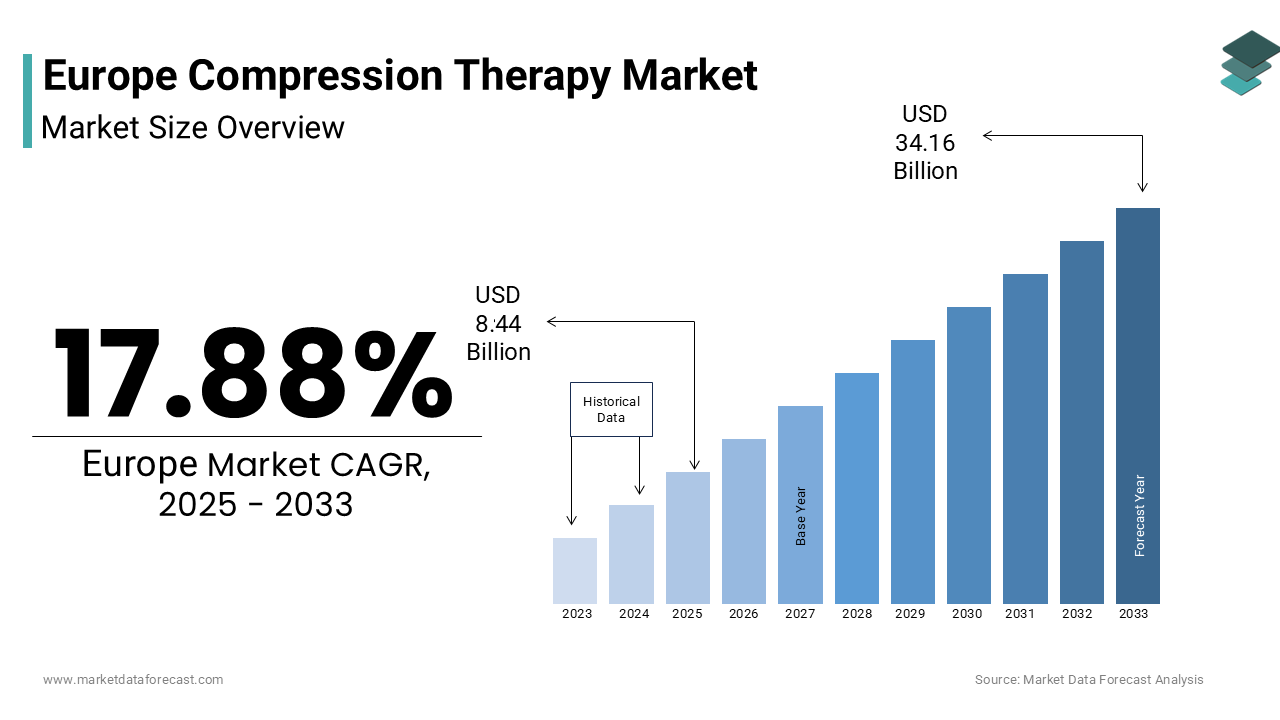
The compression therapy is a medical device and garment that apply controlled external pressure to limbs to improve venous return reduce edema and prevent or treat conditions such as chronic venous insufficiency venous leg ulcers and lymphedema. This therapeutic approach is grounded in hemodynamic principles and is widely endorsed, across European clinical guidelines. According to the European Society for Vascular Surgery up to 30% of the adult population in the European Union exhibits signs of chronic venous disease with prevalence rising sharply after age 50. As per the World Health Organization, Europe more than 1.5 million people suffer from active venous leg ulcers at any given time creating substantial clinical and economic burden. The European Wound Management Association reports that compression therapy remains the gold standard first line intervention with strong evidence supporting its efficacy in healing and recurrence prevention. National health systems in Germany, France and the Nordic countries routinely reimburse medical grade compression products reflecting deep integration into standard care pathways across primary and specialist settings.
MARKET DRIVERS
Aging Population and Rising Prevalence of Venous Disorders
The shifting trend towards older population for compression therapy due to the strong correlation between age and venous disease incidence is solely boosting the growth of Europe compression therapy market. According to Eurostat, EU population was aged 65 or older is projected to reach 30% by 2050. As per the European Society for Vascular Surgery, the prevalence of chronic venous insufficiency is rising among individuals over 70 with women affected at nearly twice the rate of men. Data from the European Health Interview Survey shows that adults over 60 report symptoms, such as leg swelling heaviness or varicose veins prompting clinical evaluation. In Germany, national screening programs for venous disease in primary care have increased early diagnosis rates, since 2022. This epidemiological reality ensures a growing patient base requiring long term compression management. Furthermore, age related comorbidities like obesity and reduced mobility exacerbate venous stasis creating a compounding effect that intensifies therapeutic need across home and clinical settings.
Integration of Compression Therapy into National Wound Care and Oncology Pathways
The formal adoption of compression therapy in standardized clinical protocols for venous ulcers and cancer related lymphedema has institutionalized its use and secured reimbursement, across European health systems. The integration of compression therapy into national wound care and oncology pathways is additionally fuelling the growth of Europe compression therapy market. According to the European Wound Management Association, national venous ulcer treatment guidelines in Western Europe mandate multilayer high compression bandaging as first line therapy with healing rates at 12 weeks. As per the European Society for Medical Oncology, compression garments are now recommended for all breast cancer patients undergoing axillary lymph node dissection with early use shown to reduce lymphedema incidences. The national oncology networks include compression therapy in mandatory survivorship care plans covered under universal insurance. The German Joint Federal Committee updated reimbursement codes in 2023 to include dynamic compression pumps for high risk orthopedic patients resulting in an increase in hospital procurement.
MARKET RESTRAINTS
Inconsistent Reimbursement and Access Across EU Member States
The lack of harmonized coverage policies for compression therapy products that creates significant disparities in patient access is restricting the growth of Europe compression therapy market. According to the European Compression Therapy Group, national reimbursement varies widely with Germany and Austria providing full public coverage for Class II and III garments while countries like Spain and Greece restrict reimbursement to only active ulcer patients or impose strict pressure class limitations. In Eastern Europe including Romania and Bulgaria public reimbursement is often unavailable forcing patients to rely on informal markets with unregulated quality. This inconsistency undermines treatment continuity for mobile populations and complicates pan European clinical trials.
Poor Patient Adherence Due to Discomfort and Improper Fit
The poor long-term adherence to compression therapy driven by physical discomfort difficulty in application and inadequate fitting is also limiting the growth of Europe compression therapy market. According to a 2024 multicenter study published in the European Journal of Vascular Surgery. patients discontinue use within 6 months citing heat sensation skin irritation and challenges in donning high compression garments. As per the European Wound Registry, prescribed compression stockings are correctly fitted at initial dispensing due to shortages of trained fitters particularly in rural areas of Italy and Portugal. Data from patient advocacy groups shows that garments requiring significant manual dexterity are especially problematic for elderly and arthritic users, who constitute the majority of the target population. Although innovations like easy donning fabrics zipped designs and adjustable wraps exist they are often excluded from reimbursement formularies due to higher unit costs. This adherence gap significantly diminishes real world effectiveness and perpetuates cycles of recurrence increasing long term burden on health systems.
MARKET OPPORTUNITIES
Advancement of Smart and Sensor Integrated Compression Systems
The emergence of intelligent compression garments embedded with pressure sensors and connectivity features is significantly ascribed to promote new opportunities for the expansion of the Europe compression therapy market. According to the European Institute of Innovation and Technology prototype, smart stockings that monitor real time interface pressure and patient compliance have demonstrated a 35% improvement in ulcer healing rates in clinical pilots across Finland and Belgium. As per the International Society of Lymphology, digital adherence data from connected garments enables clinicians to intervene early when pressure drops below therapeutic thresholds preventing complications. Companies like Sigvaris and Medi are now collaborating with digital health platforms to integrate compression data into national eHealth records under GDPR compliant architectures. Furthermore, the EU’s Digital Health and Care Strategy supports validation of such technologies through the Horizon Europe program for wearable therapeutic devices. These innovations shift compression therapy from passive application to active monitoring enhancing both clinical outcomes and value based reimbursement prospects.
Expansion of Home Based and Self Management Care Models
The policy driven shift toward decentralized care and patient empowerment in European health systems creates fertile ground for accessible user-friendly compression solutions. The expansion of home based and self-management care models is also to elevate the growth of Europe compression therapy market. According to Eurostat, EU member states have adopted national strategies to increase home based chronic disease management by 2025, thereby reducing hospital dependency. As per the European Centre for Disease Prevention and Control, structured self-management programs for venous disease that include compression education and telehealth follow up reduced hospital readmissions by 30% in pilot regions of Denmark and the Netherlands. In response, manufacturers are developing intuitive adjustable compression wraps and instructional mobile applications that support independent use. France’s National Health Insurance now reimburses compression starter kits that include video tutorials and sizing guides. This patient centered approach aligns with EU priorities for sustainable health systems by enabling earlier discharge and reducing caregiver burden while improving quality of life through greater autonomy in daily management.
MARKET CHALLENGES
Critical Shortage of Trained Compression Fitters and Clinical Specialists
A severe deficit of healthcare professionals qualified to prescribe fit and educate patients on compression therapy is also degrading the growth of Europe compression therapy market. According to the European Wound Management Association, fewer than 20 countries maintain formal certification pathways for compression fitters with Southern and Eastern regions facing acute shortages. As per the European Health Workforce Platform, Germany alone requires an additional 4800 trained fitters to meet current demand, yet vocational programs produce fewer than 850 annually. In Italy, and Greece, many community nurses lack updated training on modern compression protocols leading to underuse or incorrect application. This gap is exacerbated by the complexity of newer products, such as multi-layer bandaging systems and adjustable devices, which require hands on instruction.
Regulatory Ambiguity in Classification of Next Generation Compression Devices
The evolving nature of compression technology, particularly hybrid systems combining mechanical pressure with pneumatic thermal or sensor elements has created regulatory uncertainty under the EU Medical Devices Regulation. The regulatory ambiguity in classification of next generation compression devices is additionally to limit the growth of the Europ[e compression therapy market in coming years. According to the European Commission’s Medical Devices Coordination Group, novel compression products submitted for CE marking in 2023 faced classification delays due to unclear risk categorization. As per the German Federal Institute for Drugs and Medical Devices, devices integrating sensors or actuators are sometimes classified as Class IIb or even Class III requiring extensive clinical evidence that small and medium enterprises cannot afford. This ambiguity stifles innovation as startups hesitate to invest in R&D without predictable approval pathways. Moreover, inconsistent interpretations by notified bodies across member states result in market access disparities with a device approved in the Netherlands facing additional scrutiny in Poland.
REPORT COVERAGE
| REPORT METRIC | DETAILS |
| Market Size Available | 2024 to 2033 |
| Base Year | 2024 |
| Forecast Period | 2025 to 2033 |
| Segments Covered | By Product, Technique, Application, Distribution Channel & Region |
| Various Analyses Covered | Global, Regional & Country Level Analysis, Segment-Level Analysis, Drivers, Restraints, Opportunities, Challenges, PESTLE Analysis, Porter's Five Forces Analysis, Competitive Landscape, Analyst Overview on Investment Opportunities |
| Regions Covered | United Kingdom, France, Spain, Germany, Italy, Russia, Sweden, Denmark, Switzerland, the Netherlands, Turkey, and the Czech Republic. |
| Key Market Players | Medi GmbH & Co., Medtronic Plc, Julius Zorn GmbH, SIGVARIS, Hartmann AG, BSN Medical GmbH, ArjoHuntleigh, 3M Health Care, Spectrum Healthcare, Bio Compression Systems, Inc., and Gottfried Medical. |
SEGMENTAL ANALYSIS
By Product Insights
The compression garments segment was the largest by holding a dominant share of the Europe compression therapy market in 2024 with compression stockings representing the largest subcategory from widespread clinical endorsement strong reimbursement in key markets and suitability for long term outpatient use. According to the European Society for Vascular Surgery, compression stockings are recommended as first line therapy for chronic venous insufficiency in over 95% of national guidelines across the EU. As per the German Federal Joint Committee, more than 12 million pairs of medical grade compression stockings were reimbursed in Germany alone in 2023 under statutory health insurance reflecting deep integration into standard care. In France, and the Netherlands, national screening programs for post-surgical deep vein thrombosis prophylaxis mandate stocking use for high risk patients reducing hospital acquired clots by 33%. Furthermore, advances in microfiber knitting and flat knit technologies have significantly improved comfort and durability increasing patient adherence.
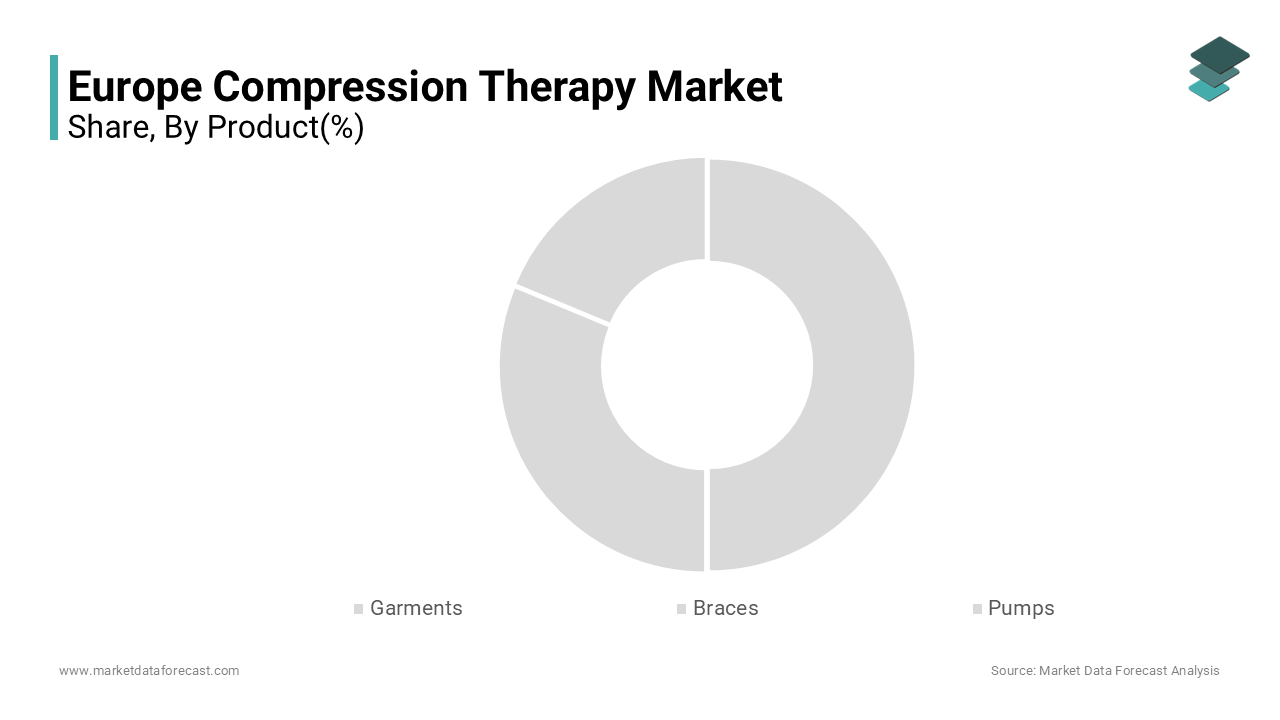
The compression pumps segment is more likely to grow at a fastest CAGR of 9.2% from 2025 to 2033 owing to the rising demand for advanced lymphedema management home based rehabilitation and integration into multimodal wound care protocols. According to the European Society for Medical Oncology, many breast cancer survivors in Western Europe, now receive intermittent pneumatic compression as part of standardized lymphedema prevention programs. As per the UK’s National Institute for Health and Care Excellence, dynamic compression pumps are recommended for patients with recurrent venous ulcers unresponsive to static compression reducing healing time by 28 days on average. Technological refinements, such as programmable pressure cycles lightweight designs and silent operation have enhanced home usability with reimbursement expansion in Sweden and Belgium covering devices for severe lymphedema. The shift toward value-based care that prioritizes functional outcomes over passive interventions further fuels adoption of active pump therapy in both hospital and domiciliary settings.
By Application Insights
The venous leg ulcer segment was the largest by holding 42.3% of the Europe compression therapy market share in 2024 owing to the high disease prevalence established treatment protocols and strong health economic justification. According to the European Wound Management Association, approximately 1.5 million people in the EU suffer from active venous leg ulcers at any given time with annual incidence exceeding 350000 cases. As per the UK’s National Health Service, venous ulcers account for 70% of all chronic leg ulcers and consume 1.5 billion euros annually in direct care costs. Reimbursement systems across Northern and Western Europe fully cover compression bandaging kits and trained nurse application reinforcing consistent clinical uptake.
The lymphedema segment is likely to grow at a fastest CAGR of 8.7% throughout the forecast period owing to the rising cancer survivorship expanding surgical indications and the formal integration of compression into survivorship care pathways. According to the International Agency for Research on Cancer, many new cancer cases were diagnosed in Europe with breast gynecological and urological malignancies, major causes of secondary lymphedema. As per the European Society for Medical Oncology, updated guidelines now recommend lifelong compression garment use for at risk patients reducing lymphedema incidence. Furthermore, awareness campaigns by patient advocacy groups have reduced diagnostic delays with early intervention now standard in oncology centers across Western Europe creating sustained demand for both preventive and therapeutic compression solutions.
By End User Insights
The hospitals and clinics segment was the largest by capturing 54.3% of the Europe compression therapy market share in 2024 with the primary sites for diagnosis initiation of therapy and management of complex cases such as active ulcers and post-surgical thromboprophylaxis. According to the European Hospital Association, over 85% of EU hospitals have dedicated vascular or wound care units where compression bandaging and pump therapies are administered under clinical supervision. As per the German Institute for Quality and Efficiency in Health Care, acute care facilities are required to implement venous thromboembolism risk assessments for all surgical and immobile patients with compression protocols mandated for high-risk individuals. Furthermore, hospitals serve as training hubs for community nurses and fitters ensuring continuity of care post discharge. This institutional anchoring combined with procurement scale and clinical authority that ensures hospitals remain the cornerstone of compression therapy delivery.
The home care segment is likely to witness a fastest CAGR of 9.5% from 2025 to 2033 owing to the policy driven shifts toward decentralized care aging demographics and the development of user friendly compression products suitable for self-management. According to Eurostat, EU member states now include home based chronic disease management in their national health strategies with the goal of reducing hospital dependency. As per the European Centre for Disease Prevention and Control, structured home care programs for venous disease that include compression garment use and telehealth monitoring reduced hospital admissions in pilot regions of the Netherlands and Finland. Reimbursement reforms in Belgium and Austria now cover home delivery of compression kits and remote fitting consultations. Additionally, innovations such as zipped stockings easy don wraps and mobile adherence apps empower elderly and mobility limited patients to maintain therapy independently aligning with Europe’s broader vision for sustainable and patient centered care.
COMPETITVE LANDSCAPE
Competition in the Europe compression therapy market is defined by a strategic interplay between heritage medical textile manufacturers specialized lymphedema innovators and diversified health and hygiene conglomerates. Established players differentiate through clinical credibility material science and deep integration into national reimbursement systems particularly in Germany France and the Nordic countries. The market is highly regulated under the EU Medical Devices Regulation requiring robust post market surveillance and clinical data which favors incumbents with regulatory infrastructure. At the same time rising demand for home based care is attracting agile startups offering smart garments and telehealth support though scalability remains limited. Reimbursement fragmentation across Southern and Eastern Europe creates access disparities that larger firms address through tiered product portfolios. Innovation increasingly focuses on adherence enhancement through comfort customization and digital tools rather than pressure mechanics alone. This environment rewards companies that combine therapeutic efficacy with user centered design and professional education.
KEY MARKET PARTICIPANTS
Some of the companies that are playing a dominating role in the Europe compression therapy market include
- Medi GmbH & Co.
- Medtronic Plc
- Julius Zorn GmbH
- SIGVARIS
- Hartmann AG
- BSN Medical GmbH
- ArjoHuntleigh
- 3M Health Care
- Spectrum Healthcare
- Bio Compression Systems, Inc.
- Gottfried Medical
Top Players in the Market
Medi GmbH & Co KG
Medi GmbH & Co KG is a cornerstone of the Europe compression therapy market renowned for its precision engineered flat knit garments and evidence based clinical solutions. Headquartered in Germany the company exports its compression stockings bandages and lymphedema systems to over 100 countries reinforcing Europe’s leadership in high performance medical textiles. Medi actively collaborates with vascular surgeons and lymphology societies to validate product efficacy through real world studies. Recently Medi launched its “medi ABC” digital fitting platform enabling clinicians to scan patients’ limbs and generate custom garment specifications improving adherence and therapeutic outcomes. It also expanded its production capacity in Bavaria to meet rising demand for adjustable compression wraps in home care settings. These initiatives strengthen Medi’s role as an innovator bridging clinical rigor with patient centric design.
Sigvaris Group
Sigvaris Group holds a distinguished position in the Europe compression therapy market through its legacy of medical grade circular knit hosiery and commitment to vascular health education. Based in Switzerland the company supplies products across 120 countries and partners with national health systems to integrate compression into preventive care pathways. Sigvaris emphasizes scientific validation with over 300 peer reviewed studies supporting its product portfolio. Recently Sigvaris introduced its “Sigvaris Smart” line featuring moisture wicking yarns and seamless toe closures to enhance comfort for elderly users. It also launched a pan European training academy for nurses and fitters to address workforce shortages and standardize application protocols. These actions reinforce its reputation as a trusted partner in both therapeutic delivery and professional capacity building across the continent.
BSN Medical (Essity)
BSN Medical a subsidiary of Essity is a vital contributor to the Europe compression therapy market offering a comprehensive portfolio including JOBST compression stockings and multi-layer bandaging systems. The company leverages Essity’s pan European distribution network to ensure rapid access in hospitals pharmacies and home care channels. BSN Medical integrates sustainability into its manufacturing using recycled nylon and waterless dyeing processes while maintaining medical performance standards. Recently BSN Medical enhanced its “JOBST for Her” and “JOBST for Men” lines with body specific sizing and fashion forward finishes to improve long term adherence. It also partnered with telehealth platforms in the UK and Germany to provide virtual fitting consultations for home users. These efforts align clinical effectiveness with lifestyle relevance driving broader acceptance in diverse patient populations.
Top Strategies Used by the Key Market Participants
Key players in the Europe compression therapy market prioritize clinical validation through partnerships with vascular societies and real world evidence generation to secure reimbursement and guideline inclusion. They invest in digital innovation including 3D limb scanning virtual fitting and adherence tracking to overcome traditional barriers of discomfort and poor fit. Companies expand training programs for healthcare professionals to address critical shortages of certified fitters and ensure proper application. Strategic product differentiation through gender specific designs easy don features and breathable fabrics enhances patient compliance. Furthermore, they align manufacturing with EU sustainability mandates by incorporating recycled materials and eco-friendly production processes while maintaining medical grade performance and regulatory compliance.
MARKET SEGMENTATION
This research report on the European compression therapy market has been segmented and sub-segmented based on the following categories
By Product
- Garments
- Stockings
- Bandages & Wraps
- Other Garments
- Braces
- Pumps
By Technique
- Static
- Dynamic
By Application
- Varicose Vein Treatments
- Deep Vein Thrombosis Treatments
- Lymphedema Treatments
- Leg Ulcer Treatments
- Others
By Distribution Channel
- Pharmacies & Retailers
- Hospitals & Clinics
- E-Commerce Platforms
By Country
- UK
- France
- Spain
- Germany
- Italy
- Russia
- Sweden
- Denmark
- Switzerland
- Netherlands
- Turkey
- Czech Republic
- Rest of Europe