- Product Description Description
- Table of Contents TOC
- List of Table & Figure LOT
- Get Free Sample PDF Sample PDF
Market Size, 2025
$791 MnMarket Estimate, 2026
$817 MnMarket Forecast, 2034
$1,057 MnCAGR, 2026–2034
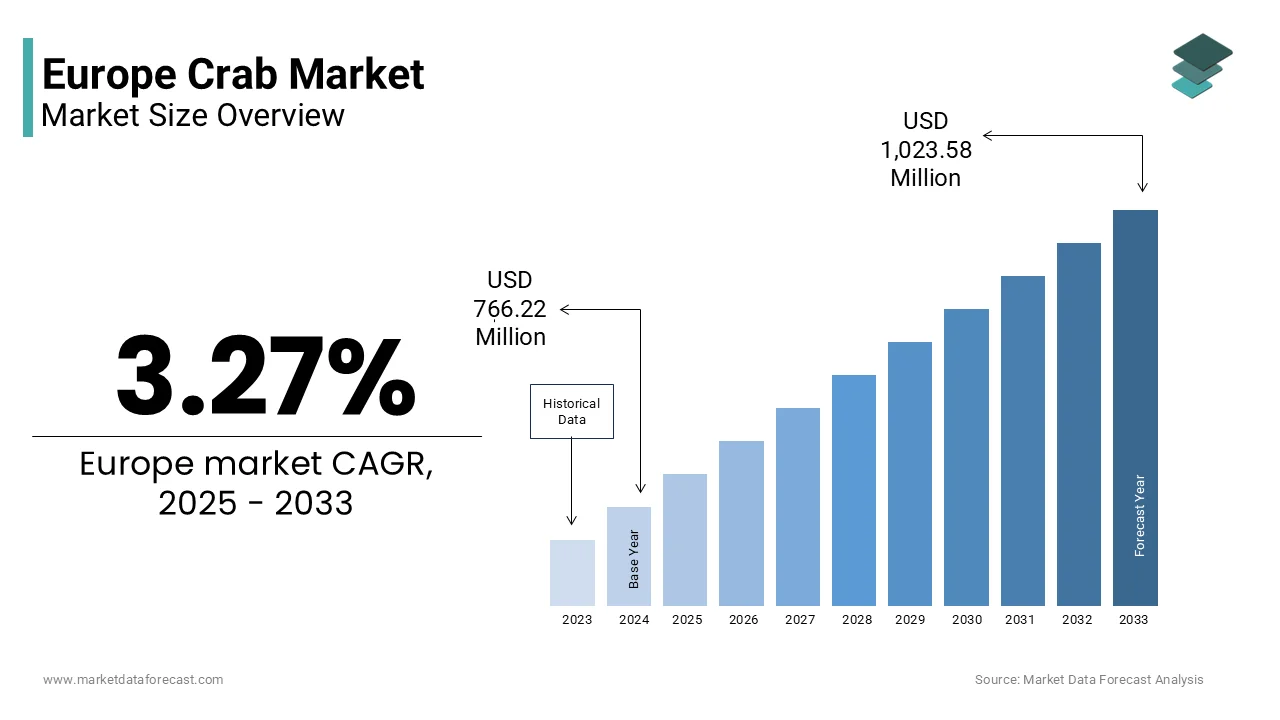
3.27%Europe Crab Market Size
The Europe crab market size was valued at USD 791.28 million in 2025 and is projected to reach USD 1,057.05 million by 2034 from USD 817.15 million in 2026, growing at a CAGR of 3.27%.
The crab is defined by its integration into both traditional fishing practices and modern sustainable aquaculture, where crabs serve as a key source of protein, supporting culinary traditions and emerging health applications due to their rich nutrient profile, including omega-3 fatty acids and essential minerals. Omega-3 consumption from seafood such as crabs can reduce the risk of cardiovascular diseases, which is encouraging dietary shifts.
MARKET DRIVERS
Growing consumer demand for healthy seafood options
The escalating preference for nutritious seafood, as crabs offer high-protein, low-calorie benefits that align with health-conscious eating trends, is substantially elevating the growth of the European crab market. The rising popularity of crab in diets aimed at preventing chronic illnesses, with consumers seeking sustainable sources. The seafood intake reached 22 kilograms in 2022, with crabs contributing to this growth through their role as anti-inflammatory foods. The rise in health-related seafood imports since 201 has emphasised crabs' appeal in wellness products. Consequently, this trend not only stimulates fishing activities but also encourages innovations in processing, fostering market expansion.
Advancements in sustainable fishing technologies
The adoption of innovative fishing technologies is enhancing efficiency and reducing environmental impact, thereby meeting regulatory and consumer expectations, which is propelling the growth of the European crab market. As per the study, investments in sustainable gear have led to a 25% improvement in fishing efficiency across the North Atlantic since 2018. Europe's adoption of low-impact fishing methods has increased crab yields by 18% in protected areas with technological integrations that aid in habitat preservation.
MARKET RESTRAINTS
Environmental regulations on marine harvesting
The stringent environmental policies are limiting fishing quotas and operational scales, which disrupts supply chains and increases costs, which is restricting the growth of the European crab market. European waters are under fishing restrictions to prevent overexploitation by leading to reduced crab harvests in areas like the Baltic Sea. The seafood production across Europe is impacting crab availability and pricing.
Fluctuations in ocean temperatures due to climate change
The climate-induced ocean warming is altering crab habitats and migration patterns, which is leading to unpredictable supplies and reduced yields. The average sea temperatures in the North Sea have risen by 1.2 degrees Celsius over the past decade, which is causing a 25% decrease in crab spawning success in Scandinavian waters. The warmer conditions have led to an 18% reduction in crab stocks since 201, which has disrupted local fisheries. These changes have contributed to a 12% overall decline in marine biodiversity, with crabs facing habitat loss.
MARKET OPPORTUNITIES
Expansion of aquaculture and farmed crab production
The growth of aquaculture is offering a controlled alternative to wild harvesting by ensuring a steady supply and reducing pressure on natural stocks, which is prompting new opportunities for the growth of the European crab market. The technological advancements in farming, which enhance productivity, are driving up the growth of the European crab market. Europe's aquaculture output has grown by 30% since 2015, with crab farming emerging as a sustainable solution in countries like Spain. This approach supports nutritional needs, with farmed crabs providing essential nutrients to over 50% of Europe's seafood consumers.
Increasing export potential to global markets
Leveraging Europe's high-quality crab products for exports, which capitalises on international demand for premium seafood, is significantly boosting the growth of the European crab market. This factor is propelled by trade agreements and quality certifications. The export volumes are growing with the appeal of fresh crab in global cuisine. Europe's seafood trade surplus, with crabs playing a key role in economic growth.
MARKET CHALLENGES
Impact of marine pollution on crab populations
The pollution from industrial and agricultural sources is contaminating habitats and affecting crab health, which diminishes quality and availability, which is a challenging factor for the growth of the European crab market. The pollution has caused a reduction in crab landings due to bioaccumulation effects.
Skilled labour shortages in the fishing industry
The skilled workers are hampering operations and innovation in the European crab market by slowing down processing and distribution. The ageing workforces and migration shifts are also degrading the growth of the market. The decreasing workforce in the fishing sector in rural areas is substantially hindering the growth of the European crab market. The labour deficits have led to an 18% drop in efficient harvesting operations over three years, which is impacting productivity.
REPORT COVERAGE
| REPORT METRIC | DETAILS |
| Market Size Available | 2025 to 2034 |
| Base Year | 2025 |
| Forecast Period | 2026 to 2034 |
| CAGR | 3.27% |
| Segments Covered | By Type, and Region |
| Various Analyses Covered | Global, Regional & Country Level Analysis, Segment-Level Analysis, DROC, PESTLE Analysis, Porter’s Five Forces Analysis, Competitive Landscape, Analyst Overview on Investment Opportunities |
| Regions Covered | UK, France, Spain, Germany, Italy, Russia, Sweden, Denmark, Switzerland, Netherlands, Turkey, Czech Republic, Rest of Europe |
| Market Leaders Profiled Harbour | r Seafood, Handy Seafood, Graham & Rollins, Trans-Ocean Products, Blue Star Foods, Phillips Foods, Nissui, High Liner Foods, and others. |
SEGMENTAL ANALYSIS
By Type Insights
The Red King Crab segment was accounted for in holding 45.3% of the European crab market share in 2025, with its strong demand in gourmet cuisine and international exports, where its succulent meat commands a premium price. Europe exports around 150,000 tons of premium crab annually, with Red King Crab comprising a significant portion due to its appeal in Asian markets. The high protein content supports health trends, with consumption linked to a 15% rise in seafood diets among Europeans is expected to promote the growth of the segment further. The adaptability to Europe's cold-water environments by enabling efficient harvesting and a consistent supply is driving up the growth of the European crab market.
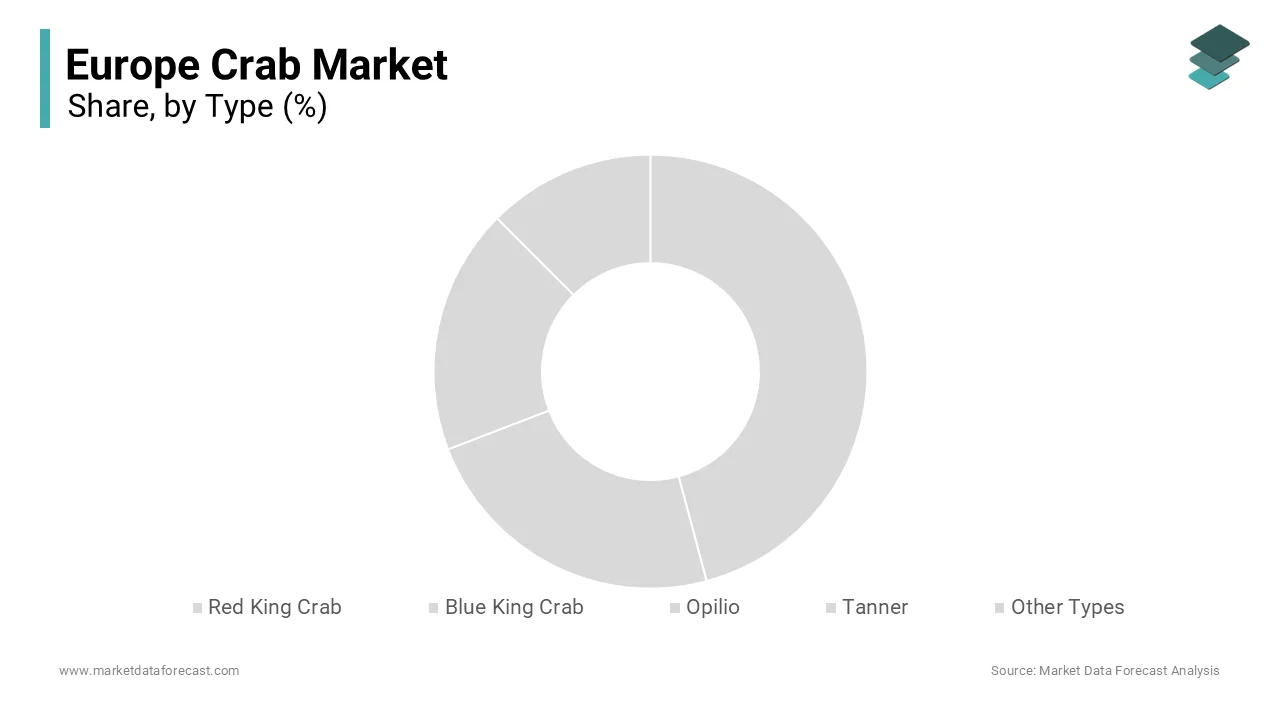
The Blue King Crab segment is expected to grow with a significant CAGR of 7.5% from 2026 to 2034. Blue King Crab's rapid growth is driven by alignment with health trends, as its low-fat, high-nutrient composition appeals to consumers seeking wellness benefits. This factor is driven by the surge in demand for seafood that supports immune health. The consumption has increased by 22% over three years, with its role in preventive healthcare. The advancements in processing technologies that extend shelf life and enhance product quality by making it more accessible are elevating the growth of the European crab market.
REGIONAL ANALYSIS
France Market Analysis
France was the top performer in the European crab market with a share of 20.3% in 2025. France occupies a key position as a culinary hub, where traditional fishing methods and gourmet demand propel crab utilisation in diverse sectors. The protected marine areas have stabilised crab stocks at 300,000 individuals by enhancing sustainability. France's market evolution reflects a blend of cultural significance and innovation by ensuring resilience in the face of environmental shifts.
United Kingdom Market Analysis
The United Kingdom crab market was the second largest by holding 15.3% of the share in 2025, with a bridge between Atlantic resources and consumer markets, with factors like regulatory frameworks and export infrastructure shaping its dynamics. A 20% surge in sustainable practices by aiding stock recovery in the North Sea is escalating the growth of the market in the UK.
COMPETITIVE LANDSCAPE
KEY MARKET PLAYERS
Some of the notable key players in the European crab market are
- Harbor Seafood
- Handy Seafood
- Graham & Rollins
- Trans-Ocean Products
- Blue Star Foods
- Phillips Foods
- Nissui
- High Liner Foods
TOP STRATEGIES USED BY THE KEY PLAYERS
Key players in the European crab market adopt several major strategies to enhance their competitiveness and adapt to evolving demands, focusing on sustainability, innovation, and expansion. They prioritise sustainable sourcing by implementing eco-friendly fishing methods and certifications, which appeal to environmentally conscious consumers and comply with regulations. Another strategy involves product diversification, introducing value-added items like ready-to-eat crab meals to capture niche markets and increase revenue streams. Companies also engage in strategic partnerships and acquisitions to strengthen supply chains and enter new territories, while investing in technology for efficient processing and distribution. Marketing efforts, such as digital campaigns and collaborations with retailers, build brand loyalty and expand reach. Furthermore, research and development initiatives address health trends by highlighting crab's nutritional benefits, ensuring long-term growth.
COMPETITION OVERVIEW
The competition in the European crab market is fierce and multifaceted, driven by a mix of established corporations and emerging enterprises competing for dominance in a resource-constrained environment. Companies thrive through innovation in processing techniques that extend shelf life and enhance product quality, while emphasising sustainable practices to meet regulatory standards and consumer preferences for eco-friendly options. This rivalry spurs investments in aquaculture to counter wild stock fluctuations, with firms differentiating via premium branding and global export strategies. Economic factors, such as fluctuating seafood prices and trade agreements, intensify the contest, as players navigate supply chain disruptions and seek efficiencies in distribution. The market features collaborations with retailers to boost visibility, alongside challenges from overfishing regulations that limit operations.
TOP PLAYERS IN THE MARKET
Leroy Seafood Group contributes significantly to the global crab market by supplying high-quality seafood products that reach consumers worldwide through extensive distribution networks. In Europe, the company is actively involved in crab harvesting and processing, focusing on sustainable practices in Nordic waters. Recently, Leroy has strengthened its position by investing in advanced aquaculture technologies and forming partnerships with international retailers to expand its product range, which emphasises eco-friendly sourcing and innovation to meet growing demand for premium crab.
Norwegian Seafoods plays a key role in the global crab market by exporting fresh and processed crab varieties that support dietary needs across continents. In Europe, it engages in fishing operations and supply chain management, particularly in the North Atlantic region. The company has recently taken actions to bolster its market standing, including the adoption of digital tracking systems for sustainability and collaborations with chefs to promote crab in culinary events, thereby enhancing its global presence through quality assurance and environmental initiatives.
Pescanova makes a notable contribution to the global crab market by providing a wide array of frozen and fresh crab products that cater to diverse international cuisines. In Europe, it is deeply involved in production facilities across Spain and Portugal, emphasising research into crab species preservation. Recently, Pescanova has acted to strengthen its position by launching new product lines with reduced environmental impact and expanding online sales platforms, which allow for greater accessibility and foster long-term relationships with global distributors through innovation and commitment to marine conservation.
MARKET SEGMENTATION
This research report on the European crab market has been segmented and sub-segmented based on categories.
By Type
- Red King Crab
- Blue King Crab
- Opilio
- Tanner
- Other Types
By Country
- UK
- France
- Spain
- Germany
- Italy
- Russia
- Sweden
- Denmark
- Switzerland
- Netherlands
- Turkey
- Czech Republic
- Rest of Europe