- Product Description Description
- Table of Contents TOC
- List of Table & Figure LOT
- Get Free Sample PDF Sample PDF
Market Size, 2025
$17.34 BnMarket Estimate, 2026
$18.19 BnMarket Forecast, 2034
$26.69 BnCAGR, 2026–2034
4.91%Europe Cut Flowers Market Size
The Europe cut flowers market size was valued at USD 17.34 billion in 2025 and is projected to reach USD 26.69 billion by 2034 from USD 18.19 billion in 2026, growing at a CAGR of 4.91%.
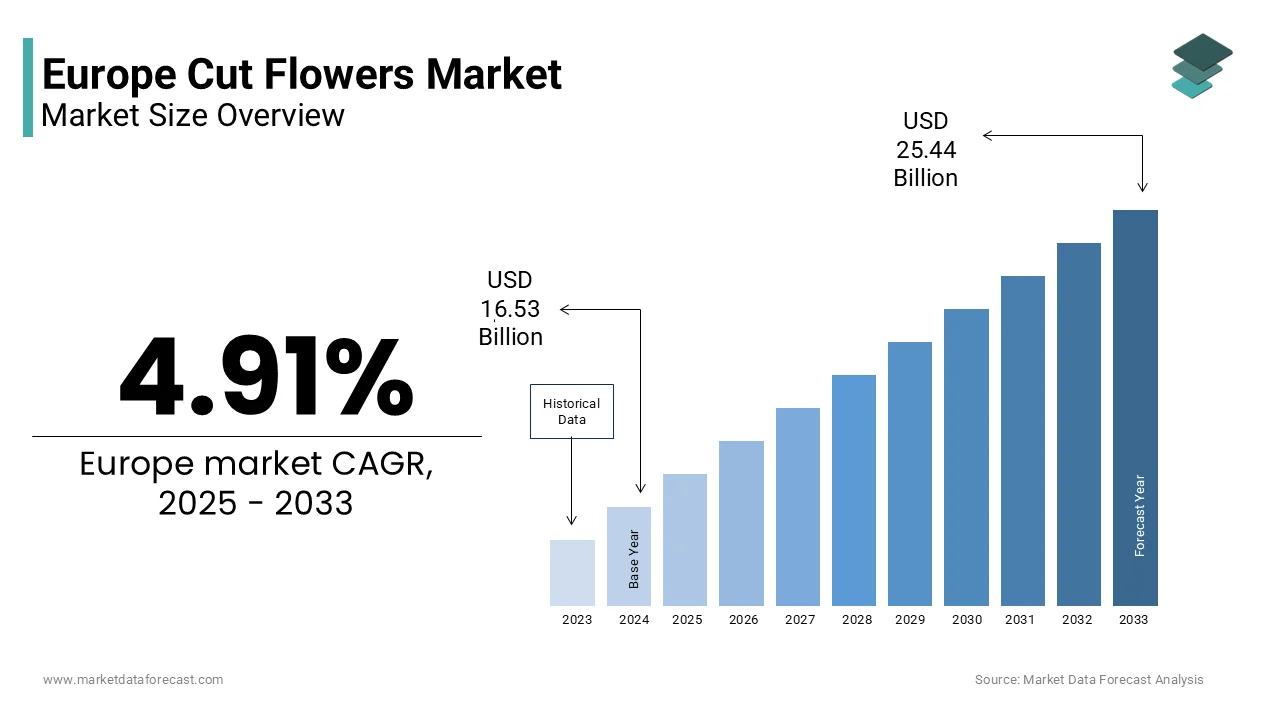
Cut flowers are freshly harvested floral stems, including roses, tulips, lilies, carnations, and chrysanthemums, intended for ornamental use in households, events, hospitality venues, and institutional settings. These products are distinguished by post-harvest handling protocols, cold chain logistics, and aesthetic grading standards that preserve vase life and visual appeal. Unlike potted plants or dried botanicals, ls cut flowers are perishable commodities with a short shelf life of a few days, requiring rapid transport from farm to consumer. According to the European Commission’s Directorate General for Agriculture and Rural Development, over 70 per cent of cut flowers sold in the EU are imported due to climatic limitations and seasonal gaps in domestic production. As per the International Flower Trade Association, more than 12 billion stems enter European markets annually, with the Netherlands serving as the primary auction and redistribution hub through Royal FloraHolland. Cultural traditions sustain recurring demand while urbanisation and rising disposable incomes in Central and Eastern Europe are expanding gifting occasions beyond traditional holidays. This market operates at the intersection of agriculture, logistics, and consumer sentiment, where freshness, sustainability and emotional resonance define commercial success.
MARKET DRIVERS
Deeply Embedded Cultural Traditions Sustain Recurring Seasonal Demand
Floral gifting in the region is interwoven with centuries-old customs and national celebrations that encourage the growth of the European cut flowers market. A significant portion of households in countries like France, Italy, and Spain purchase cut flowers multiple times a year for various occasions, as per research. Moreover, in Poland, All Saints' Day on November 1st is one of the continent's largest single-day floral events, with millions of chrysanthemums sold annually for decorating graves. These rituals are reinforced through intergenerational practices and media campaigns, ensuring consistent baseline demand. Retailers and florists plan inventory and logistics months around these dates, making cultural observance a structural pillar rather than a cyclical trend in the European cut flower economy.
Rising Urbanisation and Premiumisation of Lifestyle Experiences Drive Everyday Consumption
Increased integration into daily urban living as symbols of self-care wellness and interior aesthetics also propels the expansion of the European cut flowers market. According to sources, a portion of the EU population now resides in urban areas where small living spaces and limited access to gardens heighten the appeal of temporary natural décor. In Germany and Sweden, many single-person households report buying fresh flowers monthly for personal enjoyment. This shift is amplified by the premiumization of home environments, with a notable share of consumers willing to pay more for sustainably sourced long-lasting bouquets. Cafés, hotels and coworking spaces further institutionalise floral presence with contracts for weekly deliveries to enhance ambience and perceived quality. Social media platforms like Instagram have also normalised floral displays as markers of refined taste, accelerating trial among younger demographics. This transition, occasion-based to lifestyle-driven consumption, expands the market’s addressable base and stabilises off-peak demand.
MARKET RESTRAINTS
High Carbon Footprint of Long-Distance Imports Faces Regulatory and Consumer Scrutiny
A significant portion of the region’s cut flowers are air freighted from equatorial regions where year-round cultivation is possible, but transport emissions are substantial, a situation that hampers the growth of the European cut flowers market. According to studies, Dutch roses grown in heated greenhouses have a significantly higher carbon footprint than Kenyan roses flown to Europe. As per sources, a share of cut flowers entering the EU arrive by air, with only a portion transported via slower but lower-emission sea routes. Consumer awareness is also rising. The industry's long-term viability is contingent upon investment in regional low-carbon manufacturing or certified carbon offset programs to mitigate the economic and reputational risks posed by the EU's Carbon Border Adjustment Mechanism.
Extreme Weather Events Disrupt Supply Chains and Increase Price Volatility
Climate instability in both producing and transit regions increasingly jeopardises the reliability of the cut flowers' supply, which in turn inhibits the expansion of the European cut flowers market. The frequency of extreme weather events in East Africa, home to a notable share of EU flower imports, has risen in recent years, which disrupts harvests and airport operations. Also, prolonged droughts reduce rose yields, which leads to a price surge in auctions. These disruptions cascade through the tightly synchronised cold chain, where even minor delays degrade quality and shorten vase life. Unlike non-perishable goods, flowers cannot be stockpiled to buffer against shocks, making the market uniquely vulnerable. The sector is under increasing pressure to broaden its sourcing options and implement cultivation methods that can withstand climate change, as climate models predict greater instability.
MARKET OPPORTUNITIES
Expansion of Local Greenhouse Production Reduces Import Dependency and Enhances Traceability
European growers are increasingly investing in high-tech greenhouse facilities, which is setting up new opportunities for the growth of the European cut flowers market. This investment allows them to produce premium cut flowers year-round while meeting sustainability mandates. According to the European Union’s Common Agricultural Policy, millions of euros were allocated to support energy-efficient horticultural infrastructure, including geothermal heating and LED lighting. Dutch growers produce a large number of stems of roses and chrysanthemums annually under protected cultivation, which is reducing reliance on African imports during the winter months. These facilities enable precise control over water, nutrients, and pesticide use, allowing compliance with the EU’s Sustainable Use of Pesticides Regulation. Moreover, local production shortens supply chains to under 48 hours from harvest to retail, enhancing freshness and enabling QR code traceability that appeals to eco-conscious consumers. This relocalisation trend aligns with broader food sovereignty principles and creates a premium niche for “European-grown” floral branding.
Growth of Direct-to-Consumer Floral Subscription Models Enhances Customer Retention and Data Insights
Digital platforms offering curated weekly or monthly flower deliveries are transforming consumer engagement, which provides fresh prospects for the expansion of the European cut flowers market. Online floral subscription services grew. These models provide predictable revenue for growers and reduce waste through demand-based harvesting. Subscribers report higher emotional attachment, with a portion stating they view flowers as part of their self-care routine. Brands leverage this direct relationship to test new varieties, gather feedback, and promote seasonal collections without retailer markups. The integration of sustainability narratives, such as plastic-free packaging or carbon-neutral delivery, further differentiates offerings. This shift from transactional to relational commerce creates sticky customer bases and valuable behavioural datasets that inform breeding and marketing strategies.
MARKET CHALLENGES
Labour Shortages in Floriculture Threaten Harvest Timeliness and Quality Consistency
Acute workforce constraints, particularly labour-intensive tasks such as harvesting, grading and bouquet assembly, are affecting the growth of the European cut flowers market. According to studies, many horticultural farms reported difficulty filling seasonal positions despite wage increases. This gap stems from ageing rural populations' declining interest in agricultural work and tightened immigration policies post-Brexit. Automation handles the planting and irrigation, but the fragile stems still rely on the careful, dexterous touch of a human. The industry risks quality degradation and lost yield during peak seasons due to the lack of coordinated investment in vocational training or robotic harvesting trials.
Lack of Harmonised Sustainability Certification Confuses Consumers and Dilutes Credibility
The region lacks a unified sustainability label, which leads to marketplace confusion and greenwashing risks, and thereby obstructs the expansion of the European cut flowers market. Many different eco certifications are in use across EU retailers, each with varying criteria on water, pesticide and labour standards. Also, some of the shoppers find it difficult to compare the environmental impact of floral products due to inconsistent labelling. This fragmentation allows some suppliers to highlight selective credentials while omitting critical issues such as water overuse in arid regions. For instance, Kenyan rose farms certified for fair wages may still draw from stressed aquifers yet display sustainable claims prominently. The absence of an EU-wide floral ecolabel akin to the EU Organic logo undermines trust and hampers premium pricing for genuinely responsible producers. Market mechanisms for transparently rewarding best practices and scaling verified sustainability will remain limited until regulatory standards are in place.
REPORT COVERAGE
| REPORT METRIC | DETAILS |
| Market Size Available | 2025 to 2034 |
| Base Year | 2025 |
| Forecast Period | 2026 to 2034 |
| CAGR | 4.91% |
| Segments Covered | By Product, Application, Distribution Channel, and Region |
| Various Analyses Covered | Global, Regional, & Country Level Analysis; Segment-Level Analysis; DROC, PESTLE Analysis; Porter’s Five Forces Analysis; Competitive Landscape; Analyst Overview of Investment Opportunities |
| Regions Covered | UK, France, Spain, Germany, Italy, Russia, Sweden, Denmark, Switzerland, Netherlands, Turkey, and the Czech Republic |
| Market Leaders Profiled | Selecta Cut Flowers SAU, Sher Holland BV, Multiflora Corp, Rosebud Ltd, Karen Roses Ltd, Dummen Orange Holding BV, and Marginpar BV |
SEGMENTAL ANALYSIS
By Product Insights
The rose remained the prominent segment in the European cut flowers market and captured a 36.6% share in 2025. The dominance of the rose segment is fuelled by year-round availability through controlled greenhouse cultivation and global import networks. Also, it is universal symbolism in expressions of love, gratitude and remembrance across cultures. According to research, roses account for billions of stems traded annually in Europe, with Valentine’s Day alone driving a substantial surge in weekly demand. In France, millions of red roses are sold during February, which reflects deeply entrenched romantic traditions. Similarly, in Ita, ly roses represent a notable share of all flowers purchased for weddings and anniversaries. Breeding innovations have also extended vase life to several days and introduced novel colours like deep purple and peach, enhancing design versatility. This combination of emotional resonance, commercial reliability and horticultural advancement ensures the rose’s continued market superiority.
The gerbera daisies segment is on the rise and is expected to be the fastest-growing segment in the regional market by witnessing a CAGR of 9.8% from 2026 to 2034. Factors such as their vibrant colour palette,,e long vase life, and alignment with contemporary interior aesthetics propel the expansion of the gerbera daisies segment. Gerbera production in EU greenhouses increased, fuelled by demand from urban millennials and Gen Z consumers. In some of the European countries, a share of florists sell gerberas as their top-selling product for self-gifting and home décor. Their flat-faced structure and bold hues make them ideal for social media content, with Instagram posts featuring gerbera bouquets growing. Additionally, gerberas are naturally ethylene resistant, allowing extended shelf life without chemical treatments, appealing to eco-conscious buyers. This fusion of visual appeal, functional durability and digital virality positions Gerbera as the vanguard of modern floral consumption.
By Application Insights
The commercial segment dominated the European cut flowers market and accounted for a 62.6% share in 2025. It covers hotels, restaurants, corporate offices, event venues, and funeral services, where floral displays serve functional and symbolic roles. Premium hotels increasingly invest in regular floral design services as part of their guest experience strategy by using seasonal arrangements to strengthen ambience and brand identity. In addition, large-scale cultural and luxury events across cities like Cannes, Milan, and London generate short-term surges in high-value floral installations, which emphasise flowers’ growing role as an experiential design element in premium venues. The institutional nature of these purchases ensures volume consistency and long-term supplier relationships, making commercial use the backbone of the industry’s revenue structure.
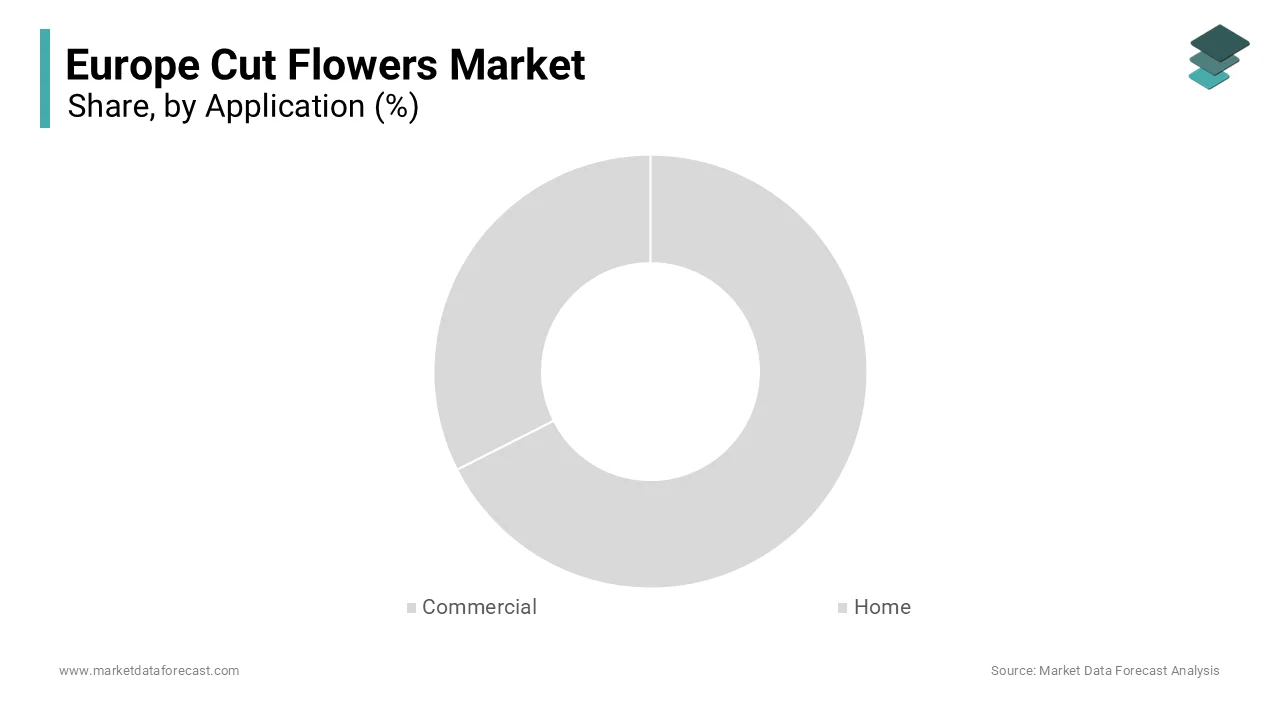
The home use segment is expected to exhibit a noteworthy CAGR of 11.3% from 2026 to 203,3, owing to the normalisation of floral self-gifting and long-term consumption of fresh flowers into wellness-oriented domestic routines. According to sources, a notable share of EU households now live in urban apartments where access to gardens is limited, increasing reliance on cut flowers for natural ambience. Direct-to-consumer subscription services have capitalised on this trend, with home delivery subscriptions growing. Social media further amplifies this behaviour. Apart from these, the rise of hybrid work models has spurred demand for home office floral arrangements, with a share of remote workers reporting improved mood and focus. This shift transforms flowers from occasional luxuries into recurring elements of daily emotional hygiene.
REGIONAL ANALYSIS
Netherlands Market Analysis
The Netherlands led the European cut flowers market and occupied a 28.6% share in 2025. It is serving as the continent’s logistical and auction epicentre rather than just a production hub, a role that primarily drives the demand for cut flowers in the Netherlands. Home to Royal FloraHolland, the country handles billions of stems annually, with the majority re-exported to neighbouring nations. The nation also sets quality and grading standards adopted across the EU, ensuring consistency and trust. The Netherlands functions as the primary hub for Europe's floral market by driving innovation in breeding, logistics, and sustainability, not just by facilitating trade.
Germany Market Analysis
Germany was the next prominent country in the European cut flowers market by capturing a 17.8% share in 2025. The growth of Germany is attributed to high per capita spending and a strong preference for sustainably sourced blooms. According to research, households spent notable euros annually on cut flowers, with urban centres like Berlin and Munich accounting for a portion of the volume. The country’s stringent environmental regulations have pushed retailers to adopt certified sustainable flowers, with many supermarket bouquets bearing MPS or Fairtrade labels. Germany is also Europe’s largest importer of Kenyan roses, yet consumer pressure has accelerated trials of local greenhouse production, particularly in North Rhine-Westphalia. Additionally, the corporate sector drives consistent commercial use. This blend of ececo-consciousurchasing power and institutional demand solidifies Germany’s position as a high-value mature market.
France Market Analysis
France is expected to be the most lucrative region in the European cut flowers market. Its deep cultural integration of floral rituals and strong domestic production in its key regions has significantly contributed to the French market. France maintains a robust domestic flower production sector, with traditional varieties such as mimosa, carnations, and roses driving seasonal demand cycles throughout the year. National events like Mother’s Day generate some of the highest annual retail sales for flowers in France, reflecting the strong cultural significance of floral gifting. French consumers place high importance on design quality and local provenance, which shows a growing willingness to pay a premium for sustainably grown and regionally produced bouquets. This fusion of traditional craftsmanship and policy backing sustains France’s unique and resilient floral identity.
United Kingdom Market Analysis
The United Kingdom is gradually expanding in the European cut flowers market marked because of retail innovation and evolving gifting norms. As per studies, the United Kingdom remains heavily dependent on flower imports, with the Netherlands and Kenya serving as key supply partners within global floral trade routes. The rapid expansion of online floristry is reshaping retail distribution models, as digital platforms leverage efficient packaging innovations to enable widespread next-day delivery. Consumer behaviour in the UK shows a rising preference for locally grown flower varieties, with increased demand for seasonal blooms such as peonies and sweet peas supporting the revival of domestic horticulture. Post Brexit customs checks initially disrupted supply, but have since stabilised with new cold chain corridors established at Dover and Felixstowe. The UK’s blend of digital agility, seasonal intensity and local sourcing momentum ensures continued market relevance.
Italy Market Analysis
Italy is likely to grow in the European cut flowers market from 2026 to 2034, owing to ceremonial traditions, strong regional production, and emotional symbolism in daily life. According to research, Italy experiences strong seasonal demand for flowers, with major cultural observances such as All Saints’ Day driving significant sales surges for traditional varieties like chrysanthemums. As per sources, the country’s domestic flower production is largely concentrated in regions such as Liguria, Tuscany, and Sicily, where favourable climatic conditions enable continuous cultivation of key ornamental species throughout the year. Urban florists in Milan and Rome increasingly blend traditional arrangements with modern minimalist designs, appealing to younger demographics. This interplay of ritual intensity, regional pride, and aesthetic evolution sustains Italy’s distinctive and culturally rooted market position.
COMPETITIVE LANDSCAPE
KEY MARKET PLAYERS
Some of the notable key players in the European cut flowers market are
- Selecta Cut Flowers SAU
- Sher Holland BV
- Multiflora Corp
- Rosebud Ltd
- Karen Roses Ltd
- Dummen Orange Holding BV
- Marginpar BV
TOP STRATEGIES USED BY THE KEY MARKET PLAYERS
Key players in the European cut flowers market invest in digital trading platforms and direct-to-consumer subscription models to enhance supply chain efficiency and customer retention. They prioritise sustainability through carbon footprint labelling, waterwater-efficientt cultivation, and plastic-free packaging to meet regulatory and consumer expectations. Companies form strategic partnerships with local growers to ensure seasonal authenticity and reduce import dependency. They also leverage data analytics for demand forecasting and personalised marketing, particularly around key gifting occasions. Additionally, firms innovate in logistics using electric last-mile delivery and temperature-controlled packaging to preserve freshness. These strategies collectively address the perishable nature of the product while aligning with Europe’s environmental and experiential consumption trends.
COMPETITION OVERVIEW
Competition in the European cut flowers market is shaped by the coexistence of traditional auction systems, artisanal florists and agile digital disruptors. Royal FloraHolland dominates wholesale logistics while regional cooperatives in France and Italy maintain strong local grower ties. At the retail level, independent florists compete on craftsmanship and personal service, whereas online players like Bloomon and Bloom & Wilemphasise convenience, customisation, and sustainability storytelling. Supermarkets also exert pressure through low-cost bouquets, though quality and vase life often lag behind speciality offerings. The market is highly fragmented, with no single entity controlling more than a modest share, yet consolidation is emerging through vertical integration and tech-enabled platforms. Differentiation hinges on freshness, origin transparency, and emotional resonance rather than price alone.
TOP PLAYERS IN THE MARKET
- Royal FloraHolland is the world’s largest flower auction cooperative based in the Netherlands and serves as the central distribution hub for Europe’s cut flower market. It also expanded its cold chain logistics network with new hubs in Berlin and Milan to reduce transit time. These initiatives reinforce its role as a global orchestrator of floral supply while advancing transparency and efficiency in perishable goods logistics.
- Bloomon is a leading direct-to-consumer floral subscription company headquartered in Amsterdam with operations across Germany Fr France, the UK and Sweden. The company sources directly from European growers to offer weekly curated bouquets emphasising seasonal variety and minimal packaging. It also partnered with Dutch breeding labs to co-develop exclusive gerbera and rose varieties. These actions strengthen its brand as a sustainable and design-led disruptor in Europe’s evolving home floral segment.
- Interflora operates one of Europe’s oldest and most extensive floral gifting networks. Known for its same-day delivery promise and hand-tied arrangements, Interflora bridges traditional craftsmanship with digital convenience. Interflora remains pertinent in both business and personal gifting situations across the continent through a blend of handcrafted excellence and technology-driven customisation.
MARKET SEGMENTATION
This research report on the European cut flowers market has been segmented and sub-segmented based on categories.
By Product
- Rose
- Chrysanthemum
- Carnation
- Gerbera
- Lilium
- Others
By Application
- Commercial
- Home
By Distribution Channel
- Supermarkets & Hypermarkets
- Specialty Stores
- Online
- Others
By Country
- UK
- France
- Spain
- Germany
- Italy
- Russia
- Sweden
- Denmark
- Switzerland
- Netherlands
- Turkey
- Czech Republic
- Rest of Europe