- Product Description Description
- Table of Contents TOC
- List of Table & Figure LOT
- Get Free Sample PDF Sample PDF
Market Size, 2025
$102.71 BnMarket Estimate, 2026
$106.90 BnMarket Forecast, 2034
$147.20 BnCAGR, 2026–2034
4.08%Executive Summary: Europe Deli Food Market
- Market Scope: Comprehensive European deli food industry analysis covering product categories (meat, prepared salads, cheese), regional leadership frameworks (Germany, UK, France, Italy, Spain), strategic corporate developments, and competitive landscapes.
- Market Valuation: Valued at USD 102.71 billion (2025), estimated at USD 106.90 billion (2026), and projected to reach USD 147.20 billion by 2034, registering a steady CAGR of 4.08% (2026–2034).
- Primary Growth Drivers: Urbanization, rising convenience food demand among dual-income households, shift toward fresh and minimally processed options, plant-based deli alternative expansion, and retailer grab-and-go selections. Restraints include strict EU food safety compliance costs and raw material price volatility.
Key Market Segment Metrics (2026–2034)
| Category | Leading Segment / Region (Position) | Fastest-Growing Segment |
|---|---|---|
| By Product Category | Meat segment (commanded a leading share of 36.3% in 2025 due to charcuterie traditions) | Prepared salads (projected as the fastest-growing category recording a CAGR of 8.5% driven by health consciousness) |
| By Consumer Trend & Innovation | Plant-based deli alternatives, organic and artisanal premiumization, and digital D2C delivery models | Plant-forward meal solutions and high-protein snacking cheese ranges |
| By Region / Country | Germany (led regionally with 23.2% share in 2025 via Abendbrot tradition) & UK (prominent share via meal deals) | Spain (predicted to witness healthy CAGR driven by iconic tapas culture and social food consumption) |
Major Market Players & Market Structure
Market Structure: Fragmented European deli food and convenience retail ecosystem characterized by strategic acquisitions of artisanal brands, plant-based line extensions (e.g., Garden Gourmet vegan slices), facility modernizations for capacity enhancement, and sustainable packaging investments.
Key Companies: Hormel Foods Corporation, Kraft Foods Group Inc, Samworth Brothers Ltd, Campofrío Food Group, Nestlé S.A., and Arla Foods amba.
Europe Deli Food Market Size
The Europe Deli Food Market Size was calculated to be USD 102.71 billion in 2025 and is anticipated to be worth USD 147.20 billion by 2034, from USD 106.90 billion in 2026, growing at a CAGR of 4.08% during the forecast period.
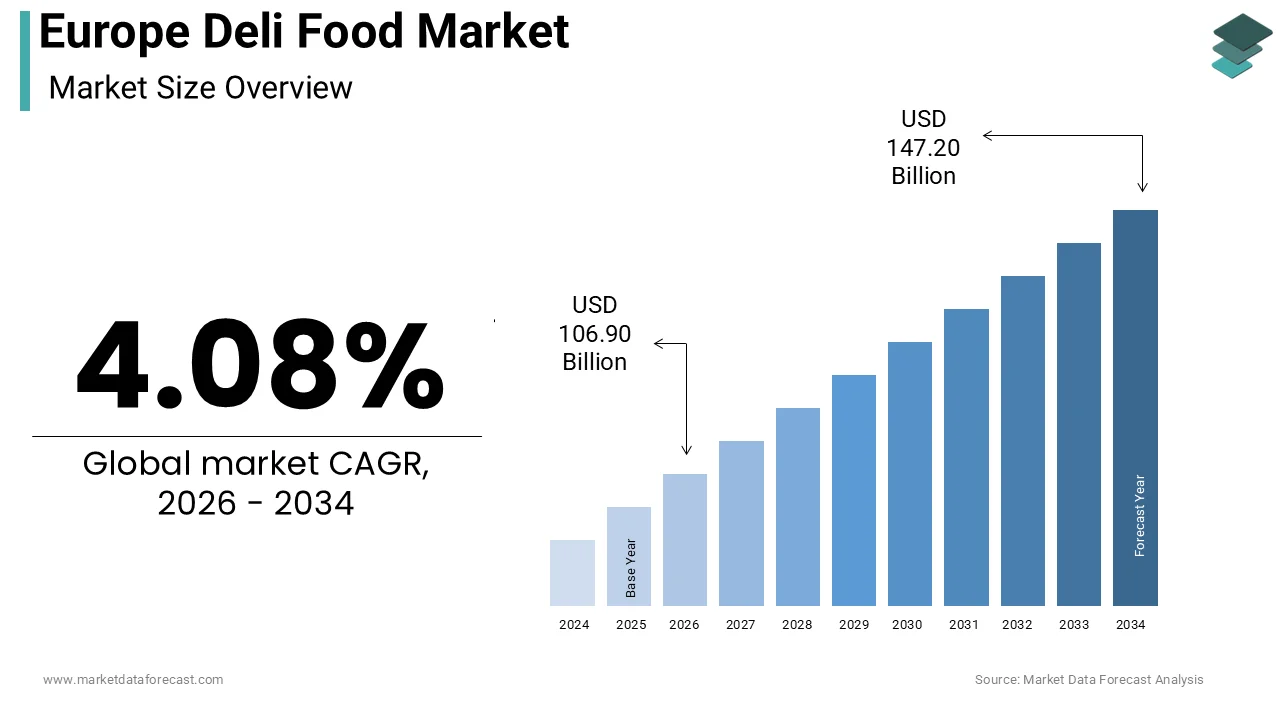
Deli food encompasses a diverse array of prepared food items, including sliced meats, artisanal cheeses, salads, and ready-to-eat meals that are typically sold over the counter or in pre-packaged formats within retail and food service environments. This sector represents a critical intersection of culinary tradition and modern convenience, catering to consumers who seek high-quality fresh options without the time commitment of home preparation. The significance of this market is underscored by shifting dietary patterns across the continent, where fresh and minimally processed foods are increasingly preferred over heavily preserved alternatives. As per data from Eurostat, household expenditure on food and non-alcoholic beverages in Europe has shown a consistent upward trend with a notable shift toward premium and convenience categories in recent years. The European Food Safety Authority emphasizes that consumer trust in food origin and safety remains paramount, driving demand for deli products with transparent supply chains and clear labeling. Furthermore, the rise of single-person households and dual-income families has altered consumption habits significantly. According to the European Commission, the share of one-person households in the European Union has increased, creating a robust demand for portion-controlled and ready-to-consume deli items.
MARKET DRIVERS
Rising Demand for Convenience Amidst Changing Lifestyles
The accelerating pace of modern life and the consequent erosion of time available for meal preparation are majorly propelling the growth of the European deli food market. As urbanization intensifies and work hours extend, consumers increasingly prioritize solutions that offer immediate sustenance without compromising on nutritional quality or taste. As per the Organisation for Economic Cooperation and Development, working hours in several Western European nations remain high, leaving limited windows for cooking from scratch during weekdays. This temporal constraint drives a substantial shift toward ready-to-eat deli salads, sliced meats, and prepared meals that can be consumed immediately or with minimal heating. According to the European Institute for Gender Equality, the increasing participation of women in the workforce has further diminished the traditional availability of time for domestic meal preparation, which is reinforcing the reliance on convenient food options. Retailers have responded by expanding their deli counters and introducing extensive ranges of grab-and-go items located near store entrances for quick access. As per the European Retail Roundtable, sales of fresh prepared foods in supermarkets have grown faster compared to other grocery categories, reflecting this behavioral pivot. The convergence of busy professional schedules, smaller household sizes, and the desire for fresh yet effortless dining experiences ensures that convenience remains a dominant force shaping the trajectory of the deli market.
Growing Consumer Preference for Fresh and Minimally Processed Foods
A profound shift in consumer consciousness regarding health and wellness has established a strong preference for fresh and minimally processed deli items over ultra-processed alternatives, which is acting as a significant driver of the regional market. European consumers are becoming increasingly discerning about ingredient lists, seeking products free from artificial preservatives, colors, and excessive sodium, which are often associated with packaged shelf-stable foods. As per the European Consumer Organisation, many respondents stated that they actively avoid foods with long lists of unrecognizable ingredients, favoring fresh deli counter options where provenance and composition are transparent. This health-oriented mindset is supported by public health campaigns across the European Union that promote balanced diets rich in fresh proteins and vegetables. As per the World Health Organization Regional Office for Europe, reducing the intake of processed meats and increasing consumption of fresh options is a key recommendation for preventing non-communicable diseases, which is influencing purchasing decisions at the retail level. Consequently, deli departments are witnessing a surge in demand for organic, grass-fed, and locally sourced meats and cheeses that align with these clean-label expectations. Retailers are adapting by highlighting the freshness and local origin of their deli offerings, often providing detailed information about farmers and production methods. This alignment with health trends and the desire for transparency fuels sustained growth in the fresh deli segment.
MARKET RESTRAINTS
Stringent Food Safety Regulations and Compliance Costs
The rigorous regulatory framework governing food safety and hygiene in Europe imposes substantial operational burdens and costs on deli food producers and retailers, which significantly hamper the growth of the European deli food market. The European Union maintains some of the strictest food safety standards globally, requiring meticulous tracking, temperature control, and hygiene protocols from farm to fork to prevent foodborne illnesses. As per the European Food Safety Authority, businesses must implement comprehensive Hazard Analysis and Critical Control Points systems, which demand continuous monitoring, documentation, and staff training. These compliance requirements necessitate significant investment in specialized equipment, testing laboratories, and quality assurance personnel, which can be particularly challenging for small and medium-sized enterprises operating on thin margins. The General Food Law Regulation mandates full traceability of all food ingredients, forcing suppliers to maintain detailed records that add administrative complexity and cost to the supply chain. As per the European Small Business Alliance, regulatory compliance costs disproportionately affect smaller deli operators who lack the economies of scale to absorb these expenses efficiently. Furthermore, any breach of these stringent regulations can result in severe penalties, product recalls, and reputational damage that can be catastrophic for businesses. The constant need to adapt to evolving safety standards and the high cost of maintaining compliance create barriers to entry and limit the agility of market participants to innovate or expand rapidly.
Volatility in Raw Material Prices and Supply Chain Disruptions
The instability of raw material costs and the fragility of supply chains are further inhibiting the expansion of the deli food market in Europe. The sector relies heavily on agricultural inputs such as meat, dairy, and fresh produce, the prices of which are highly susceptible to fluctuations driven by climate change, geopolitical tensions, and disease outbreaks. As per the European Commission's Joint Research Centre, extreme weather events have increasingly disrupted agricultural yields across the continent, leading to sporadic shortages and sharp price spikes for key ingredients like vegetables and grains used in deli salads and sides. The outbreak of animal diseases such as African Swine Fever has previously decimated pig populations in several member states, causing dramatic increases in pork prices, which directly impact the cost structure of sliced meat products. Additionally, logistical bottlenecks and rising energy costs for transportation and refrigeration further exacerbate the financial pressure on deli operators. As per the European Central Bank, food inflation has reached historic highs in recent years, eroding consumer purchasing power and forcing retailers to either absorb costs or pass them on to customers, potentially dampening demand. This unpredictability in input costs makes long-term planning difficult and squeezes profit margins, which restrains the ability of companies to invest in expansion or promotional activities.
MARKET OPPORTUNITIES
Expansion of Plant-Based and Alternative Protein Offerings
The burgeoning demand for plant-based diets offers a promising opportunity for the European deli food market. As awareness of the environmental impact of animal agriculture and the health benefits of plant-centric nutrition rises, there is a surging interest in vegetarian and vegan deli alternatives such as plant-based slices, dairy-free cheeses, and vegetable-based salads. As per the Good Food Institute Europe, retail sales of plant-based foods in Europe have grown, with the deli category identified as a key area for innovation and expansion. Consumers are increasingly seeking familiar deli experiences without animal products, driving retailers to diversify their counters with high-quality meat and dairy substitutes that mimic the taste and texture of traditional items. The European Vegetarian Union notes that the number of flexitarians has increased, creating a vast addressable market for these alternatives. Manufacturers are responding by developing sophisticated recipes using legumes, nuts, and grains to create premium plant-based deli products that appeal to both vegans and omnivores. By integrating these innovative options into their core offerings, deli providers can tap into new revenue streams and align with the sustainability values that are increasingly defining European consumer behavior.
Integration of Digital Technologies and Direct-to-Consumer Models
The adoption of digital technologies and the development of direct-to-consumer delivery channels offer a significant avenue for the regional market growth. The proliferation of smartphones and high-speed internet has reshaped shopping habits, with consumers expecting seamless online ordering and rapid delivery options for fresh food items. As per Eurostat, the number of Europeans ordering food or groceries online has increased, indicating a robust shift toward digital procurement of perishable goods. Deli retailers can leverage this trend by launching dedicated mobile applications and partnering with third-party delivery platforms to offer fresh prepared meals directly to homes and offices, bypassing traditional brick-and-mortar limitations. The use of data analytics allows businesses to personalize offers, predict demand patterns, and optimize inventory management, reducing waste and improving efficiency. Furthermore, digital platforms enable transparent communication of product origins and nutritional information, addressing the consumer's desire for transparency. The European Retail Forum highlights that omnichannel strategies, which integrate physical stores with digital capabilities, are becoming essential for competitiveness. By embracing these technological advancements, deli operators can expand their reach beyond local neighbourhoods, cater to the convenience needs of digital natives, and build loyal customer bases through personalized and efficient service experiences.
MARKET CHALLENGES
Intense Pressure from Private Label Brands and Price Competition
The escalating dominance of private label brands and the resultant price wars present a formidable challenge to the European deli food market. Retailers across Europe have aggressively expanded their own label ranges in the deli category, offering products that closely mimic national brands but at significantly lower price points, appealing to cost-conscious consumers facing economic uncertainty. As per the European Brand Institute, private label penetration in the fresh food sector has reached high levels in many European countries, with retailers leveraging their control over shelf space and supply chains to undercut branded competitors. These dynamic forces established brands to either reduce prices, thereby compressing margins, or invest heavily in marketing to justify premium pricing, which is increasingly difficult in a value-driven market. Independent deli counters face similar pressures as consumers trade down to cheaper pre-packaged alternatives offered by supermarket chains. The European Commission has observed that inflationary pressures have heightened price sensitivity among shoppers, which is making them more willing to switch to private labels for everyday items. This intense competition limits the ability of players to invest in innovation or quality improvements, as resources are diverted to survive price battles. The relentless drive for lower costs threatens to commoditize the deli category, potentially compromising product quality and diversity in the long run.
Complexities in Managing Short Shelf Life and Food Waste
The inherent perishability of deli food products creates a persistent operational challenge related to inventory management and the generation of food waste, which carries both economic and environmental repercussions. Deli items such as sliced meats, fresh salads, and soft cheeses have very short shelf lives, requiring precise demand forecasting and rapid turnover to prevent spoilage before sale. As per the European Environment Agency, the retail and food service sectors are significant contributors to food waste in Europe, with fresh prepared foods representing a substantial portion of discarded items due to their limited longevity. Inaccurate predictions of consumer demand can lead to overstocking and subsequent disposal of unsold goods, resulting in direct financial losses and increased disposal costs for businesses. Furthermore, strict regulations regarding the sale of expired food prevent retailers from donating or selling products past their use-by date, exacerbating the waste issue. The Farm to Fork Strategy of the European Union sets ambitious targets for reducing food waste, placing additional pressure on companies to implement effective mitigation strategies. Balancing the need to keep shelves fully stocked to meet customer expectations with the imperative to minimize waste requires sophisticated logistics and real-time data capabilities that many operators struggle to master. This delicate balancing act remains a critical hurdle for the efficient and sustainable operation of the deli food market.
REPORT COVERAGE
| REPORT METRIC | DETAILS |
| Market Size Available | 2025 to 2034 |
| Base Year | 2025 |
| Forecast Period | 2026 to 2034 |
| CAGR | 4.08% |
| Segments Covered | By Type, And Region |
| Various Analyses Covered | Global, Regional & Country Level Analysis; Segment-Level Analysis; DROC, PESTLE Analysis; Porter’s Five Forces Analysis; Competitive Landscape; Analyst Overview of Investment Opportunities |
| Regions Covered | UK, France, Spain, Germany, Italy, Russia, Sweden, Denmark, Switzerland, Netherlands, Turkey, and the Czech Republic |
| Market Leaders Profiled | Hormel Foods Corporation, Kraft Foods Group Inc., Samworth Brothers Ltd., Tyson Foods Inc., Waitrose Ltd., JBS S.A., BRF S.A., Astral Foods Ltd., Sisters Food Group, and Wm Morrison Supermarkets Plc |
SEGMENTAL ANALYSIS
By Type Insights
The meat segment dominated the market by commanding the leading share of 36.3% of the European market in 2025. The dominance of the meat segment in the European market is majorly driven by the deep-rooted culinary traditions of charcuterie and cured meats across the continent and the cultural significance of high-quality sliced meats in daily European diets, particularly in countries like Germany, Spain, and Italy, where cold cuts are staples of breakfast and lunch. The robust consumption of traditional cured products such as ham, salami, and sausages that are integral to social gatherings and everyday meals is also contributing to the dominance of the meat segment in the European deli food market. As per the European Commission, the meat sector remains the largest component of animal product consumption in the EU. The innovation in premium and organic meat offerings that has revitalized the category by appealing to health-conscious consumers who seek high-protein options without artificial additives is also aiding the expansion of the meat segment. According to the European Consumer Organisation, a growing preference for locally sourced and ethically produced meats is prompting retailers to expand their premium deli meat counters. Furthermore, the versatility of deli meats in sandwich preparation and ready-to-eat meals ensures consistent demand across both retail and food service channels. The combination of cultural heritage, product innovation, and dietary reliance on protein secures the meat segment in its position as the market leader.
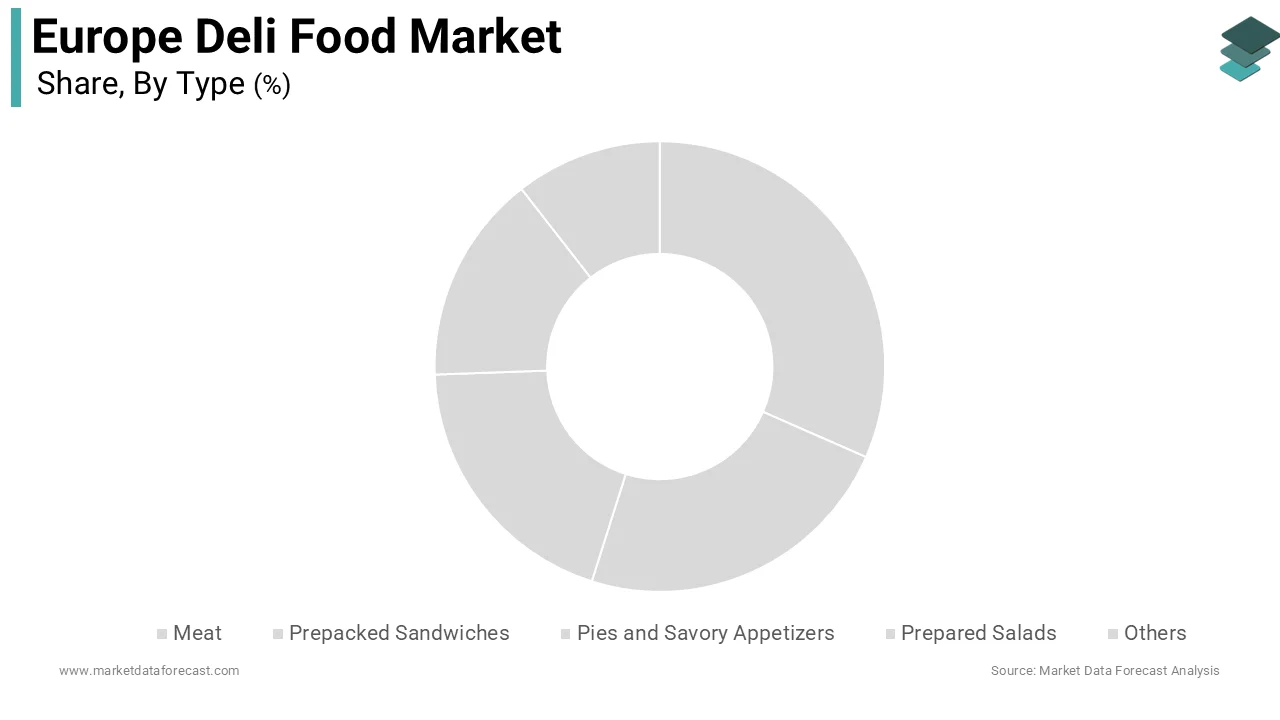
On the other side, the prepared salads segment is projected to be the fastest growing category in the Europe deli food market and record a CAGR of 8.5% over the forecast period in this regional market. The intensifying consumer shift toward healthier, plant-forward diets, the increasing demand for convenient and low-calorie meal solutions, and the rising prevalence of health consciousness and lifestyle diseases that have prompted Europeans to reduce their intake of heavy carbohydrates and processed meats in favor of fresh vegetable-based options are propelling the expansion of the prepared salads segment in the European market. As per the World Health Organization Regional Office for Europe, non-communicable diseases linked to poor diet are a leading concern, driving public health campaigns that encourage increased fruit and vegetable consumption. This has directly translated into surging sales of ready-to-eat salads, grain bowls, and vegetable mixes available at deli counters. The second critical driver is the busy urban lifestyle, which necessitates quick, nutritious meal options that require no preparation time. As per Eurostat, the number of single-person households and dual-income families continues to rise, creating a demographic that heavily relies on grab-and-go fresh foods. Retailers are responding by diversifying their salad offerings to include exotic ingredients, superfoods, and customizable options that cater to vegan and gluten-free diets. The convergence of health trends, demographic shifts, and product variety propels the prepared salads segment to the forefront of market expansion.
REGIONAL ANALYSIS
Germany Deli Food Market Analysis
Germany dominated the deli food market in Europe with 23.2% of the regional market share in 2025. The dominance of Germany in the European market can be credited to its profound cultural affinity for bread, cold cuts, and convenience foods. The German market in this region is characterized by a dense network of bakeries and butcher shops that serve as primary outlets for fresh deli items alongside modern supermarket counters. A primary driving factor is the traditional "Abendbrot" or evening bread culture, where sliced meats, cheeses, and pickles form the cornerstone of the daily dinner ritual for millions of households. As per the Federal Ministry of Food and Agriculture, Germany remains one of the largest consumers of sausage and cold cuts globally. Another critical driver is the strong presence of discount supermarket chains like Aldi and Lidl, which have elevated the quality and variety of their in-store deli sections to compete with traditional butchers. As per the Federal Statistical Office of Germany, convenience food sales have increased as working hours remain long and dual-income households become the norm, driving demand for ready-to-eat options. Furthermore, the growing trend toward organic and regional products has led to a proliferation of premium deli lines that cater to discerning consumers willing to pay for quality.
United Kingdom Deli Food Market Analysis
The United Kingdom accounted for a prominent share of the European deli food market in 2025 due to a vibrant ready-to-eat culture and a strong emphasis on fresh sandwiches and meal deals. The UK market here is defined by the ubiquity of the "meal deal" concept offered by major grocery chains and convenience stores, which bundles a sandwich, snack, and drink at a value price, driving immense volume for the deli category. The fast-paced urban lifestyle in cities like London and Manchester, where office workers rely heavily on pre-packed sandwiches and prepared salads for quick lunches are further propelling the UK market expansion. As per the Office for National Statistics, eating out and takeaway purchases have increased, with convenience stores seeing a surge in footfall during lunch hours. The second major driver is the rising popularity of healthy eating and flexitarian diets, which have spurred innovation in plant-based deli options and protein-rich salads. As per the British Retail Consortium, sales of fresh prepared foods have grown faster compared to other grocery categories. Additionally, the influence of diverse international cuisines has expanded the range of deli offerings to include wraps, sushi, and ethnic salads, attracting a broader consumer base.
France Deli Food Market Analysis
France occupied a prominent position in the Europe deli food market in 2025. The world-renowned gastronomic heritage and a strong preference for high-quality artisanal products are driving the French market expansion. The French market in this region is marked by the enduring importance of local bakeries, cheese shops, and charcuteries, which act as community hubs for purchasing fresh deli items daily. A major driving factor is the cultural expectation of freshness and quality, where French consumers prioritize locally sourced meats, cheeses, and prepared dishes over mass-produced alternatives. As per the French Ministry of Agriculture, the country has one of the highest densities of artisanal food shops in Europe. The second significant driver is the tradition of the "apéritif" and casual dining, which drives demand for savory appetizers, pies, and high-end cold cuts for social gatherings. As per the National Institute of Statistics and Economic Studies, household expenditure on high-quality food products remains resilient even during economic downturns. Furthermore, the government's support for local agriculture and protected designation of origin labels reinforces consumer trust in French deli products.
Italy Deli Food Market Analysis
Italy is anticipated to account for a notable share of the European deli food market during the forecast period, owing to a unique demand profile driven by its rich tradition of cured meats, cheeses, and antipasti. The market status is defined by the integration of deli items into daily meals and the strong presence of specialized delicatessens known as "gastronomie" alongside modern retail formats. A primary driving factor is the deep-rooted culture of aperitivo and antipasto, where sliced prosciutto, salami, mozzarella, and marinated vegetables are essential components of social dining and family meals. As per the Italian National Institute of Statistics, consumption of traditional cured meats and cheeses remains high, with Italy being one of the largest producers and consumers of these products. The second crucial driver is the tourism industry, which boosts demand for high-quality, authentic deli products as visitors seek genuine Italian culinary experiences. As per the Italian Association of Food Industries, exports of Italian deli products also influence domestic consumption patterns by reinforcing the global reputation of Italian quality. Additionally, the growing trend toward organic and sustainable farming has led to an increase in niche deli offerings that appeal to environmentally conscious consumers.
Spain Deli Food Market Analysis
Spain is predicted to witness a healthy CAGR in the European deli food market over the forecast period. The iconic tapas culture of Spain and a strong preference for fresh, flavourful cured meats and cheeses are driving the Spanish market growth. The Spanish market is marked by the social nature of food consumption, where deli items are central to the tradition of sharing small plates in bars and homes. A key driving factor is the widespread practice of tapeo or going for tapas, which drives consistent demand for high-quality sliced ham, chorizo, Manchego cheese, and various prepared seafood salads. As per the Spanish Ministry of Agriculture, Fisheries and Food, Spain is the leading producer of Iberian ham globally. The second major driver is the changing lifestyle patterns in urban areas where busy professionals increasingly rely on ready-to-eat deli options for quick meals while maintaining a preference for fresh ingredients. As per the National Statistics Institute of Spain, the number of single-person households has increased, correlating with higher purchases of portion-controlled deli items. Furthermore, the strong export market for Spanish deli products reinforces domestic production capabilities and quality standards.
COMPETITION OVERVIEW
The competition in the Europe Deli Food Market is characterized by a fragmented landscape comprising large multinational corporations, strong regional cooperatives, and numerous small artisanal producers. Major players compete intensely on product quality, brand reputation, and innovation in health-conscious and sustainable offerings to capture discerning consumers. The rise of private label brands by leading supermarket chains has intensified price pressure and forced national brands to differentiate through premiumization and unique flavor profiles. Retailers are increasingly controlling the deli counter experience by offering exclusive ranges and enhancing in-store preparation services to drive footfall. Consolidation activities are frequent as larger entities acquire smaller competitors to gain market share and operational efficiencies. The market also sees fierce rivalry in the plant-based segment, where traditional meat processors and new entrants vie for dominance. Regulatory compliance and supply chain transparency have become critical competitive factors as consumers demand greater accountability. This dynamic environment requires continuous adaptation and strategic agility from all participants to sustain growth and profitability amidst shifting dietary trends and economic uncertainties.
KEY MARKET PLAYERS
A few major players of the Europe deli food market include
- Hormel Foods Corporation
- Kraft Foods Group Inc
- Samworth Brothers Ltd
- Tyson Foods Inc
- Waitrose Ltd
- JBS S.A
- BRF S.A
- Astral Foods Ltd
- Sisters Food Group
- Wm Morrison Supermarkets Plc
Top Strategies Used by Key Market Participants
Key players in the Europe Deli Food Market primarily employ product innovation and diversification strategies to cater to evolving consumer preferences for healthy and convenient options. Companies frequently engage in strategic acquisitions of niche and artisanal brands to expand their portfolios and gain access to specialized production capabilities or regional distribution networks. Another prevalent strategy involves heavy investment in sustainable sourcing and eco-friendly packaging to align with growing environmental consciousness among European shoppers. Market participants also focus on strengthening their supply chain resilience through vertical integration and digital technologies to ensure consistent quality and reduce waste. Additionally, firms are increasingly leveraging data analytics to personalize marketing efforts and optimize inventory management based on real-time consumer demand patterns. These approaches enable companies to maintain competitiveness and drive growth in a dynamic and highly regulated market environment.
Leading Players in the Europe Deli Food Market
- Campofrío Food Group stands as a leading force in the European deli sector with a strong presence in cured meats and ready-to-eat solutions. The company contributes significantly to the global market by exporting its premium Iberian products and innovative snack formats to over one hundred countries. Recently, Campofrío has focused on expanding its portfolio of healthy and sustainable options by launching new lines of reduced-sodium and organic meats to meet evolving consumer demands. The firm actively invests in digital transformation to enhance supply chain efficiency and customer engagement through personalized marketing campaigns. Their strategic partnerships with local farmers ensure high-quality raw materials while supporting regional economies. Campofrío continues to strengthen its market position by acquiring niche brands that complement its core offerings and by modernizing production facilities to increase capacity and reduce environmental impact. These initiatives demonstrate their commitment to innovation and sustainability in the competitive global food landscape.
- Nestlé S.A. leverages its vast global resources to maintain a prominent position in the Europe deli food market through diverse brands specializing in prepared meals and culinary ingredients. The company contributes to the global sector by integrating advanced food safety standards and nutritional expertise into its deli product lines across multiple continents. Recently, Nestlé has accelerated its shift toward plant-based alternatives by introducing new vegetarian and vegan deli slices and salads under its Garden Gourmet brand to capture the growing flexitarian demographic. The firm actively collaborates with startups and research institutions to develop novel protein sources and improve the texture of meat substitutes. Their recent acquisitions of specialty food companies have expanded their portfolio of artisanal and gourmet deli items. Nestlé also focuses on sustainable packaging initiatives to reduce plastic waste associated with pre-packaged deli products. These strategic moves reinforce their leadership in providing convenient, healthy, and environmentally responsible food solutions to consumers worldwide.
- Arla Foods amba operates as a major player in the European deli market with a specialized focus on fresh dairy products, including cheeses and creamy spreads. The cooperative structure of the company ensures direct involvement of thousands of farmers in the value chain, contributing to high-quality and traceable dairy inputs for the global market. Recently, Arla has strengthened its position by launching innovative cheese ranges tailored for snacking and cooking, which appeal to busy consumers seeking convenient yet nutritious options. The firm actively promotes sustainability through its climate check program, which monitors and reduces carbon emissions across its production processes. Their expansion into new geographic markets and partnerships with retail chains have increased the availability of Arla deli products globally. Arla also invests heavily in research to develop lactose-free and high-protein dairy solutions that cater to specific dietary needs. These efforts highlight their dedication to delivering superior dairy experiences while maintaining a strong commitment to farmer welfare and environmental stewardship.
MARKET SEGMENTATION
This research report on the Europe deli food market has been segmented and sub-segmented based on type & region.
By Type
- Meat
- Prepacked Sandwiches
- Pies and Savory Appetizers
- Prepared Salads
- Others
By Region
- UK
- France
- Spain
- Germany
- Italy
- Russia
- Sweden
- Denmark
- Switzerland
- Netherlands
- Turkey
- Czech Republic
- Rest of Europe