- Product Description Description
- Table of Contents TOC
- List of Table & Figure LOT
- Get Free Sample PDF Sample PDF
Market Size, 2025
$2.23 BnMarket Estimate, 2026
$2.50 BnMarket Forecast, 2034
$6.26 BnCAGR, 2026–2034
12.15%Executive Summary: Europe Dietary Fibers Market
- Market Scope: Comprehensive Europe dietary fibers market analysis covering fiber types, sources, application segments, regional leadership frameworks, key industry players, and emerging functional food and regulatory trends.
- Market Valuation: Valued at USD 2.23 billion (2025), estimated at USD 2.50 billion (2026), and projected to reach USD 6.26 billion by 2034, registering a robust CAGR of 12.15% (2026–2034).
- Primary Growth Drivers: Persistent deficiencies in daily fiber intake across European populations (averaging well below WHO recommendations), European Food Safety Authority (EFSA) endorsements of health claims for fibers like beta-glucan and inulin, and the Farm to Fork Strategy promoting fiber-rich, plant-based diets.
Key Market Segment Metrics (2026–2034)
| Category | Leading Segment (2025 Position) | Fastest-Growing Segment |
|---|---|---|
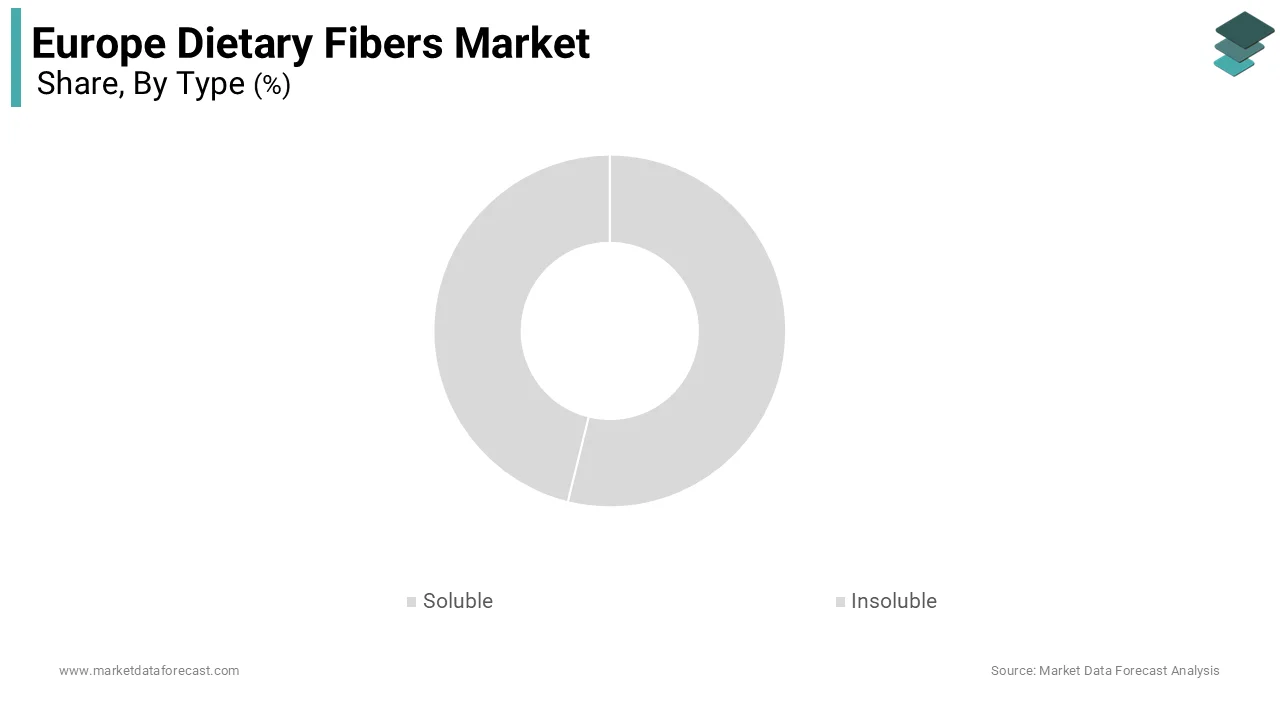
| By Fiber Type & Source | Soluble fiber (accounted for 56.5% regional share in 2025); Cereals & grains led by source (47.4%) | "Other crops" segment including chicory and pea fiber (fastest-growing source with a CAGR of 8.84%) |
| By Application | Functional food & beverages (held largest share at 65.5% in 2025) | Pharmaceuticals segment (expanding at a CAGR of 11.5%) |
| By Region / Country | Germany (leads the region with a 26.2% share of total market revenue in 2025) | Wider European functional food and plant-based nutrition corridors |
Major Market Players & Market Structure
Market Structure: Highly competitive European functional ingredients landscape featuring major global and regional participants competing on EFSA-backed health claims, capacity expansions, solubility optimizations, and carbon-neutral processing facilities.
Key Companies: Ingredion Inc, Grain Processing Corporation, Lonza Group Ltd, E.I Dupont De Nemours & Company, Grain Millers Inc, Roquette Freres S.A, Sas Nexira Inc, Novus International Inc, BENEO GmbH, Tereos Group, and Cosucra Groupe Warcoing SA.
Europe Dietary Fibers Market Size
The Europe dietary fibers market size was calculated to be USD 2.23 billion in 2025 and is anticipated to be worth USD 6.26 billion by 2034, growing from USD 2.50 billion in 2026 at a CAGR of 12.15% during the forecast period.

Dietary fibers include functional ingredients derived from plant sources such as chicory, wheat, oats, peas, and sugar beet, incorporated into food, beverages, supplements, and clinical nutrition to support digestive health, glycemic control, and cardiovascular wellness. Unlike generic fiber, dietary fibers in the European context are strictly defined under EFSA guidelines as carbohydrate polymers with three or more monomeric units that resist digestion and absorption in the small intestine. The market operates within a highly regulated nutritional and health claims framework where only fibers with scientifically substantiated benefits, such as beta-glucan for cholesterol reduction or inulin for calcium absorption, can carry authorized health messaging. As per the European Food Safety Authority, more than 70% of European adults consume less than the recommended 25 grams of fiber per day, with national surveys in Germany and Spain indicating average intakes of just 18 and 16 grams, respectively. Concurrently, the European Commission’s Farm to Fork Strategy promotes fiber‑rich plant‑based diets as part of its sustainable food system transformation, while the Horizon Europe program has allocated more than 90 million euros since 2022 to research on prebiotic fibers and gut microbiome modulation. This confluence of public health gaps, regulatory precision, and policy‑driven nutritional guidance defines a market where dietary fiber is not merely an additive but a scientifically validated pillar of preventive health.
MARKET DRIVERS
Persistent Deficiency in Daily Fiber Intake Across European Populations
A significant and sustained shortfall in dietary fiber consumption among European adults is majorly propelling the growth of the European dietary fibers market. According to the European Nutrition and Health Survey conducted under the EU Menu Programme, average daily fiber intake across 22 member states stands at only 19.4 grams, which is well below the World Health Organization’s recommended minimum of 25 grams. National data reveals even starker gaps. As per the French Agency for Food, Environmental and Occupational Health, 82% of adults consumed less than 20 grams per day in 2024, while the UK National Diet and Nutrition Survey found that only 9% of the population meets fiber guidelines. This deficiency correlates with rising rates of constipation, diverticular disease, and metabolic disorders. In response, public health agencies such as Germany’s Federal Centre for Nutrition have integrated fiber fortification into national dietary strategies, which is encouraging manufacturers to enrich breads, cereals, and dairy products with wheat bran, oat fiber, and inulin. The European Society of Clinical Nutrition and Metabolism further endorses fiber supplementation in elderly and clinical populations, creating consistent demand for clean-label, soluble, and fermentable fibers that align with both physiological need and regulatory acceptability.
Regulatory Endorsement of Specific Fiber Health Claims by EFSA
The European Food Safety Authority’s rigorous yet enabling framework for health claims has catalysed innovation and consumer trust in scientifically validated dietary fibers, which is further boosting the expansion of the European dietary fibers market. As per EFSA’s Article 13 and 14 evaluations, only fibers with robust clinical evidence receive authorization for specific health messaging. Notably, oat and barley beta-glucans are permitted to claim cholesterol‑lowering effects at daily intakes of 3 grams, while inulin and oligofructose may reference improved calcium absorption and gut health. According to the European Commission’s EU Register of Nutrition and Health Claims, more than 35 fiber‑related claims are currently authorized, providing manufacturers with legally compliant marketing pathways. A 2024 market audit by the European Specialist Dietary Food Association revealed that products bearing EFSA‑approved fiber claims achieve 28% higher sales velocity in supermarkets across France, Italy, and the Netherlands. Furthermore, clinical nutrition producers leverage these claims in medical foods for diabetes and irritable bowel syndrome, where fiber functionality is therapeutic rather than supplementary. This regulatory clarity transforms dietary fiber from a commodity into a value‑added, claim‑driven ingredient, reinforcing its integration into functional foods, beverages, and specialized nutrition across the continent.
MARKET RESTRAINTS
Stringent EFSA Requirements Limiting Health Claim Substantiation for Novel Fibers
The European Food Safety Authority’s high evidentiary bar for health claim approval presents a significant barrier for emerging or non‑traditional dietary fibers. EFSA mandates randomized controlled trials demonstrating cause‑and‑effect relationships between specific fiber intake and health outcomes, which is a process that typically costs over 2 million euros and takes three to five years to complete. As per EFSA’s 2024 Annual Report on Health Claims, only two new fiber‑related claims were authorized in the past five years, while 87 applications were rejected due to insufficient clinical data. Fibers such as resistant starch type 4, polydextrose, and certain algal polysaccharides remain ineligible for specific health messaging despite promising preclinical results. This regulatory bottleneck discourages investment in novel fiber development and confines innovation to a narrow set of EFSA‑recognized ingredients, such as inulin, beta-glucan, and psyllium. Consequently, product differentiation becomes challenging, and manufacturers often resort to vague terms such as “source of fiber” without functional benefits, reducing consumer appeal and market expansion potential for next‑generation fibers.
Sensory and Functional Limitations in Food and Beverage Applications
Many dietary fibers impart undesirable sensory characteristics that hinder their incorporation into palatable consumer products, which further hinders the growth of the European dietary fibers market. As documented by the German Institute of Food Technology, wheat bran and pea fiber can reduce consumer acceptability in low‑fat yogurts by up to 40% due to chalky mouthfeel, while inulin at concentrations above 8% induces excessive sweetness and digestive discomfort in sensitive individuals. These challenges are particularly acute in clear beverages, bakery goods, and infant formulas, where texture and taste neutrality are critical. As per the European Federation of Food Science and Technology, formulation failures due to fiber‑induced instability accounted for 22% of new product development setbacks in the functional food sector in 2024. Although enzymatic modification and particle size reduction can mitigate some issues, these processes increase cost and may compromise fiber integrity or fermentability. Without advanced delivery systems or neutral‑taste soluble fibers, manufacturers face trade‑offs between nutritional benefit and consumer experience, limiting the breadth and appeal of fiber‑enriched offerings across mainstream categories.
MARKET OPPORTUNITIES
Integration of Dietary Fibers into Plant‑Based and Sustainable Food Innovation
Europe’s accelerating shift toward plant‑based diets presents a strategic opportunity for dietary fibers as functional and nutritional enhancers in meat and dairy alternatives. As per the European Plant-Based Foods Association, retail sales of plant‑based products reached 7.2 billion euros in 2024, with fiber content increasingly cited as a key purchase driver among health‑conscious consumers. Unlike animal‑derived foods, plant‑based formulations often lack natural fiber, creating a gap that manufacturers are addressing through strategic fortification. Oat and pea fibers are now standard in vegan sausages and nuggets to improve water binding, texture, and satiety, while chicory inulin enhances creaminess in dairy‑free yogurts without added sugars. The European Commission’s 2023 Sustainable Food System Framework explicitly encourages fiber enrichment in plant‑based products to improve nutritional equivalence with conventional counterparts. Furthermore, fibers sourced from upcycled streams are gaining traction under the EU Circular Economy Action Plan. Companies such as BENEO and Cosucra are commercializing these side streams into clean-label fibers, aligning nutritional value with sustainability credentials and meeting dual consumer demands for health and environmental responsibility.
Expansion into Medical and Clinical Nutrition for Metabolic and Gut Health Management
Dietary fibers are increasingly deployed as active ingredients in medical nutrition to manage chronic conditions such as type 2 diabetes, obesity, and irritable bowel syndrome, which is another promising opportunity in the European dietary fibers market. As per the European Association for the Study of Diabetes, medical foods containing viscous fibers such as beta-glucan and guar gum are recommended as first‑line nutritional interventions to reduce postprandial glucose spikes by up to 35%. Similarly, the European Society of Neurogastroenterology and Motility endorses specific prebiotic fibers for modulating gut microbiota in IBS patients, with more than 60% of clinical nutrition prescriptions in Germany and Sweden now including such fibers. The EU’s Horizon Europe program funded the Fiber4Health consortium in 2024 with 28 million euros to develop personalized fiber blends for metabolic syndrome based on individual microbiome profiles. With national health systems increasingly reimbursing medical nutrition under disease management programs, dietary fibers are transitioning from general wellness ingredients to evidence‑based therapeutic tools—opening a high‑value, clinically validated segment with minimal consumer skepticism and strong professional endorsement.
MARKET CHALLENGES
Price Volatility and Supply Chain Constraints for Key Raw Materials
The Europe dietary fiber market faces high cost and availability pressures due to dependence on agricultural commodities subject to climate and geopolitical risks. Chicory root experienced a 32% price surge in 2023 following droughts in Belgium and the Netherlands, which together supply more than 60% of Europe’s chicory, as reported by the European Bureau of Agricultural Raw Materials. Similarly, wheat bran prices fluctuated by 27% in 2024 due to Black Sea export disruptions affecting global grain markets. These volatilities directly impact fiber producers’ margins, particularly for commodity fibers such as oat and pea, where price sensitivity is high among food manufacturers. As per the European Feed and Food Ingredients Association, 45% of fiber formulators absorbed cost increases in 2023 rather than passing them to customers, compressing profitability. Furthermore, the shift toward non‑GMO and organic certification further tightens supply, as organic chicory and oats occupy less than 5% of arable land in key producing regions. Without diversified sourcing or vertical integration, the market remains vulnerable to external shocks that can disrupt product consistency and affordability.
Consumer Confusion and Misinformation Around Fiber Types and Benefits
Despite growing awareness of fiber’s importance, European consumers remain confused about the differences between fiber types, optimal intake levels, and physiological effects, which is also challenging the expansion of the European dietary fibers market. As per a 2024 pan‑European survey by the European Consumer Organisation, 61% of respondents could not distinguish between soluble and insoluble fibers, while 48% believed all fibers cause bloating. This misinformation is amplified by inconsistent labeling; products may list “dietary fiber” without specifying source or functionality, leading to skepticism about efficacy. Social media narratives further muddy the waters, with some wellness influencers promoting unproven “super fibers” while discouraging traditional sources such as wheat bran. The German Federal Institute for Risk Assessment issued a public clarification in 2024 to counter viral claims that inulin harms gut health, underscoring the need for authoritative communication. Without coordinated public health campaigns and standardized front‑of‑pack labeling that clarifies fiber type, dose, and benefit, consumer trust remains fragmented. This knowledge gap limits the market’s ability to command premium pricing for scientifically backed fibers and slows the adoption of innovative formulations beyond niche health enthusiast segments.
REPORT COVERAGE
| REPORT METRIC | DETAILS |
| Market Size Available | 2025 to 2034 |
| Base Year | 2025 |
| Forecast Period | 2026 to 2034 |
| CAGR | 12.15% |
| Segments Covered | By Type, Source, Application, And Region |
| Various Analyses Covered | Global, Regional & Country Level Analysis; Segment-Level Analysis; DROC, PESTLE Analysis; Porter’s Five Forces Analysis; Competitive Landscape; Analyst Overview of Investment Opportunities |
| Regions Covered | UK, France, Spain, Germany, Italy, Russia, Sweden, Denmark, Switzerland, Netherlands, Turkey, and the Czech Republic |
| Market Leaders Profiled | Ingredion Inc, Grain Processing Corporation, Lonza Group Ltd, E.I Dupont De Nemours & Company, Grain Millers Inc, Roquette Freres S.A, Sas Nexira Inc, and Novus International Inc |
SEGMENTAL ANALYSIS
By Type Insights
The soluble fiber segment accounted for 56.5% of the regional market share in 2025. Soluble fiber dominates the European market primarily due to its robust scientific backing and regulatory recognition for specific health benefits under the European Food Safety Authority framework. As per EFSA’s EU Register of Nutrition and Health Claims, only soluble fibers such as beta-glucan from oats and barley, inulin, and oligofructose have received authorized claims for lowering blood cholesterol, improving calcium absorption, and supporting gut health. The beta-glucan claim requires a daily intake of 3 grams and has driven widespread fortification of breakfast cereals, yogurts, and beverages across Western Europe. As per a 2024 audit by the French Agency for Food, Environmental and Occupational Health, more than 70% of new functional food launches in France contained soluble fibers with EFSA‑approved messaging. Furthermore, clinical guidelines from the European Atherosclerosis Society recommend soluble fiber as a first‑line dietary intervention for dyslipidemia, with trials showing LDL reductions of 5 to 7%. This integration into medical and public health protocols ensures consistent demand from both consumer and clinical nutrition sectors, cementing soluble fiber’s leadership position.
By Source Insights
By source, the cereals & grains segment led the market by capturing 47.4% of the regional market share in 2025. Cereals and grains dominate the dietary fiber market due to Europe’s well‑established cereal production infrastructure and the centrality of wheat, oats, and barley in daily diets. As per Eurostat, the European Union harvested more than 290 million metric tons of cereals in 2024, with wheat alone accounting for 120 million tons, providing a vast and consistent source of bran and beta-glucan. The European Commission’s Common Agricultural Policy actively supports cereal valorization through co‑products such as wheat bran, which is a byproduct of flour milling that would otherwise be underutilized. National dietary guidelines in Germany, Italy, and Spain explicitly promote whole grain consumption, with Germany’s Federal Centre for Nutrition recommending three servings of whole grains daily. This policy alignment ensures that cereal‑derived fibers are naturally embedded in breads, breakfast cereals, and pasta, which is the backbone of European food culture. Furthermore, the EU’s mandatory whole grain labeling pilot in Denmark and Finland has increased consumer recognition of grain‑based fiber sources, driving demand for transparent and familiar ingredients over novel isolates.
The Other crops segment is the fastest growing source category and is estimated to witness a CAGR of 8.84% over the forecast period, owing to the unique functional and sustainability attributes of non‑cereal fibers, particularly chicory inulin and pea fiber. Chicory root yields a highly soluble prebiotic fiber that enhances calcium absorption and supports gut health with EFSA‑approved claims. As per the European Organic Farming Federation, organic chicory acreage increased by 22% in 2024 to meet demand from premium dairy and supplement brands. Simultaneously, pea fiber derived from protein isolate production waste streams has gained traction as a clean-label insoluble fiber that improves water binding in meat analogs without off flavors. Companies such as Cosucra and Roquette are commercializing these side streams under EU Circular Economy Action Plan incentives, reducing waste and enhancing resource efficiency. This alignment with both nutritional science and environmental policy positions “Other Crops” as a high‑growth frontier for next‑generation fiber innovation.
By Application Insights
By application, the functional food and beverages segment dominated the market by holding 65.5% of the regional market share in 2025. Functional food and beverages represent the primary application for dietary fibers in Europe due to strong consumer preference for health benefits delivered through familiar daily consumption formats. As per the European Commission’s consumer attitude survey, 76% of Europeans prefer obtaining nutrients from food rather than supplements, making fortified breads, yogurts, cereals, and drinks the dominant delivery vehicles. National policies reinforce this trend as France’s Nutri‑Score system assigns higher ratings to products with added fiber, while Germany’s Health Claims Compass guides manufacturers on compliant messaging. EFSA’s authorized claims for beta-glucan and inulin have been widely adopted by major brands, as Kellogg’s All Bran and Danone’s Actimel now prominently feature fiber content on packaging. Furthermore, the EU’s revised front‑of‑pack labeling proposal includes fiber as a positive nutrient in nutrient profiling models, incentivizing reformulation. According to the European Food Information Council, more than 12,000 fiber‑enriched food products were launched in Europe between 2020 and 2024, structurally embedding the segment’s dominance in both market dynamics and public health strategy.
The pharmaceuticals segment is likely to grow at a promising CAGR of 11.5% over the forecast period in the European dietary fibers market, owing to the integration of specific dietary fibers into evidence‑based medical nutrition therapy for chronic conditions such as type 2 diabetes, irritable bowel syndrome, and hypercholesterolemia. As per the European Association for the Study of Diabetes, medical foods containing viscous fibers such as guar gum and beta-glucan are recommended as first‑line interventions to reduce postprandial glucose excursions by 25 to 35%. Similarly, the European Society of Neurogastroenterology and Motility endorses partially hydrolyzed guar gum and galactooligosaccharides for IBS management, with more than 60% of gastroenterologists in Germany and Sweden prescribing fiber‑based medical foods. National health systems increasingly reimburse these products under chronic disease management programs—France’s national health insurance covers specific fiber formulations for diabetic patients, while Italy’s regional agencies include them in hospital formularies.
REGIONAL ANALYSIS
Germany Dietary Fibers Market Analysis
Germany led the dietary fibers market in Europe in 2025 by holding 26.2% of the regional market share. The dominance of Germany in the European market is driven by its advanced food industry, strong public health infrastructure, and high consumer awareness of nutritional science. As per the German Federal Centre for Nutrition, more than 80% of adults recognize fiber as essential for digestive health, and 62% actively seek high fiber products. The country’s food manufacturers lead in reformulation, with brands such as Dr. Oetker and Bahlsen integrating wheat bran and oat fiber into mainstream bakery and cereal lines. Germany also hosts major fiber producers, including J. Rettenmaier and BENEO, which supply both domestic and global markets with chicory inulin and oat beta-glucan. The statutory health insurance system supports medical nutrition with partial reimbursement for fiber‑based products in diabetes and IBS management. Furthermore, the German government’s National Reduction and Innovation Strategy mandates fiber fortification in school meals and public catering, ensuring institutional demand. This ecosystem of consumer demand, industrial capability, and policy support solidifies Germany’s leadership in both volume and innovation.
France Dietary Fibers Market Analysis
France commanded the second biggest share of the Europe dietary fibers market in 2025, owing to the strong regulatory influence and integration of fiber into national dietary guidance. According to the French Agency for Food, Environmental and Occupational Health, the average daily fiber intake remains below 18 grams, prompting the government to launch the Fiber Plan 202,5 targeting a 20% increase in consumption through food reformulation and public campaigns. The Nutri‑Score system assigns favorable ratings to products with added fiber, incentivizing manufacturers such as Danone and Lactalis to fortify yogurts and dairy drinks. France is also a major producer of chicory root, particularly in the Nord‑Pas‑de‑Calais region, supplying more than 40% of Europe’s inulin. The national health insurance system covers specific fiber‑based medical foods for metabolic disorders, enhancing clinical adoption. With robust agricultural sourcing, policy alignment, and consumer education, France maintains a balanced and expanding market across functional food and clinical nutrition segments.
United Kingdom Dietary Fibers Market Analysis
The United Kingdom is expected to capture a prominent share of the European dietary fibers market during the forecast period, owing to the proactive public health policies and leadership in sugar reduction initiatives. As per Public Health England, the National Diet and Nutrition Survey reveals that only 13% of adults meet fiber guidelines, creatia ng strong impetus for fortification. The UK’s Sugar Reduction Program has driven widespread use of soluble fibers such as inulin and polydextrose as sugar replacers, with major brands including Kellogg’s and Nestlé achieving 25 to 30% sugar reduction in cereals and yogurts between 2022 and 2024. The National Health Service now includes high fiber diets in its cardiovascular and diabetes prevention pathways, recommending 30 grams daily. Although post‑Brexit, the UK maintains alignment with EU health claim standards through its retained Regulation (EC) No 1924/2006, ensuring continued use of EFSA‑validated messaging. The presence of research institutions such as King’s College London further strengthens scientific credibility and innovation. This combination of policy urgency, industry responsiveness, and academic leadership sustains the UK’s significant market role.
Italy Dietary Fibers Market Analysis
Italy is predicted to grow at a healthy CAGR in the Europe dietary fibers market over the forecast period, owing to its traditional Mediterranean diet and growing adoption of fiber fortification in staple foods. According to the Italian National Institute of Statistics, daily fiber intake averages just 16 grams despite high vegetable consumption, due to low whole-grain use. In response, the Ministry of Health launched the Whole Grain Italy initiative in 2023, promoting fiber‑enriched pasta, bread, and breakfast cereals with support from major producers such as Barilla and Granarolo. Italy is also a key market for clinical fiber applications, with more than 50% of gastroenterologists prescribing inulin‑based medical foods for IBS, as documented by the Italian Society of Gastroenterology. The country’s strong bakery and pasta sectors provide ideal matrices for insoluble wheat bran and resistant starch integration without altering sensory profiles. Additionally, Italian consumers show high trust in natural fiber sources such as citrus and olive pomace, creating opportunities for upcycled ingredients. This blend of culinary tradition, health awareness, and circular economy innovation ensures Italy’s continued relevance in the European fiber landscape.
Netherlands Dietary Fibers Market Analysis
The Netherlands is projected to account for a notable share of the European dietary fibers market during the forecast period due to its advanced agri‑food cluster, leadership in chicory production, and progressive nutrition policies. As per the Dutch Nutrition Centre, the country produces more than 60% of Europe’s chicory root in the Limburg and North Brabant regions, supplying inulin to global markets through companies such as Cosucra. The Netherlands was the first EU country to implement mandatory whole-grain labeling in 2022, requiring clear identification of fiber content on bread and cereal packaging, which is a policy that increased consumer purchases of high-fiber products by 34%, according to Wageningen University. The national dietary guidelines recommend 30 to 40 grams of fiber daily, with strong emphasis on diverse sources including legumes, vegetables, and whole grains. Furthermore, the Dutch government’s Green Deal on Healthy Food encourages food manufacturers to fortify products with fiber as part of public‑private partnerships. With world‑class research institutions, robust agricultural infrastructure, and forward‑looking policies, the Netherlands punches above its population weight as a hub for fiber innovation, production, and consumption in Europe.
COMPETITION OVERVIEW
Competition in the Europe Dietary Fibers Market is defined by a blend of large agro-industrial cooperatives and specialized ingredient innovators competing on scientific credibility, regulatory compliance, and functional performance. The market is highly regulated under EFSA and EU Novel Food frameworks, requiring robust evidence for health claims, which favors companies with established research capabilities and long-standing safety dossiers. Differentiation arises through fiber source purity, solubility, taste neutrality, and alignment with clean label and sustainability trends. While commodity fibers like wheat bran are price sensitive, premium segments such as chicory inulin and pea fiber command value-based pricing due to prebiotic functionality and reformulation benefits. Competition is further intensified by the need for application expertise as fiber performance varies significantly across food matrices from dairy to baked goods to clear beverages. Companies that combine agricultural integration, clinical validation, and sustainability credentials gain preferential access to premium food and clinical nutrition customers. The landscape rewards those who can translate complex nutritional science into practical scalable, and compliant solutions across Europe’s diverse food and health ecosystems.
KEY MARKET PLAYERS
A few major players of the Europe dietary fibers market include
- Ingredion Inc
- Grain Processing Corporation
- Lonza Group Ltd
- E.I Dupont De Nemours & Company
- Grain Millers Inc
- Roquette Freres S.A
- Sas Nexira Inc
- Novus International Inc
Top Strategies Used by the Key Market Participants
Key players in the Europe Dietary Fibers Market focus on vertical integration by controlling raw material sourcing, extraction, and functional modification to ensure quality consistency and supply security. They prioritize scientific validation through clinical trials and EFSA health claim substantiation to differentiate ingredients in a regulated environment. Companies invest in clean label and non-GMO certifications to meet consumer demand for transparent and natural ingredients. Strategic alignment with EU sustainability policies drives innovation in upcycled fibers from agro-industrial byproducts such as sugar beet pulp and citrus waste. Product development emphasizes sensory neutrality, solubility, and multifunctionality to support sugar, fat, and calorie reduction in mainstream food categories. Partnerships with food manufacturers, clinical nutrition firms, and research institutions enhance application expertise and accelerate market adoption across functional food, pharmaceutical, and plant-based segments.
Leading Players in the Market
- BENEO GmbH is a leading European producer of functional fibers with global influence through its chicory root-based inulin and oligofructose branded as Orafti. The company contributes to the global market by pioneering prebiotic fiber science and supplying ingredients that meet EFSA health claim requirements for gut health and calcium absorption. Headquartered in Germany, BENEO leverages its integrated supply chain from Belgian chicory farming to advanced extraction facilities, ensuring consistent quality and traceability. Recently, the company strengthened its position by expanding its Orafti Synergy1 production capacity at its Ore, ye Belgium site to meet rising demand from plant-based dairy and medical nutrition sectors. It also launched a clean-label soluble fiber from rice for gluten-free applications and partnered with European universities to validate personalized fiber dosing based on microbiome profiles, enhancing its scientific credibility and market relevance.
- Tereos Group is a major European agro-industrial cooperative with significant operations in France, Germany, and the Netherlands, producing wheat and pea-based dietary fibers from cereal and legume co-products. The company contributes globally by transforming starch production side streams into high-value insoluble and soluble fibers used in bakery, meat analogs, and pet food. Tereos aligns with EU circular economy principles by valorizing over 1.2 million tons of agricultural residues annually into fiber ingredients. To reinforce its European presence, the company recently upgraded its fiber drying and micronization lines in Vic-sur-Aisne, France, to improve solubility and reduce grittiness in beverage applications. It also obtained organic and non-GMO certifications for its wheat bran portfolio, responding to clean label demand from premium food brands across Western Europe.
- Cosucra Groupe Warcoing SA is aBelgium-basedd specialist in chicory inulin and pea fiber with a strong footprint in European functional food and clinical nutrition markets. The company contributes to the global dietary fibers landscape by offering patented inulin fractions with tailored degrees of polymerization for specific prebiotic and texturizing effects. Cosucra’s fibers carry EFSA-approved health claims and are widely used in dairy infant nutrition and medical foods. Recently, the company enhanced its market position by launching a new range of soluble pea fiber under the brand Nutralys S85, F, designed for neutral taste and high solubility in clear beverages. It also achievecarbon-neutralal certification for its chicory processing facility in Warcoing through renewable energy adoption and waste heat recovery, aligning with EU sustainability mandates and strengthening appeal amongeco-consciouss brand owners.
MARKET SEGMENTATION
This research report on the Europe dietary fibers market has been segmented and sub-segmented based on type, source, application, and region.
By Type
- Soluble
- Insoluble
By Source
- Cereals & Grains
- Fruits & Vegetables
- Other Crops
By Application
- Functional Food & Beverages
- Animal Feed
- Pet Food
- Pharmaceuticals
By Region
- UK
- France
- Spain
- Germany
- Italy
- Russia
- Sweden
- Denmark
- Switzerland
- Netherlands
- Turkey
- Czech Republic
- Rest of Europe