- Product Description Description
- Table of Contents TOC
- List of Table & Figure LOT
- Get Free Sample PDF Sample PDF
Market Size, 2025
$25.24 BnMarket Estimate, 2026
$26.88 BnMarket Forecast, 2034
$44.38 BnCAGR, 2026–2034
6.47%Europe Dry Cleaning Market Size
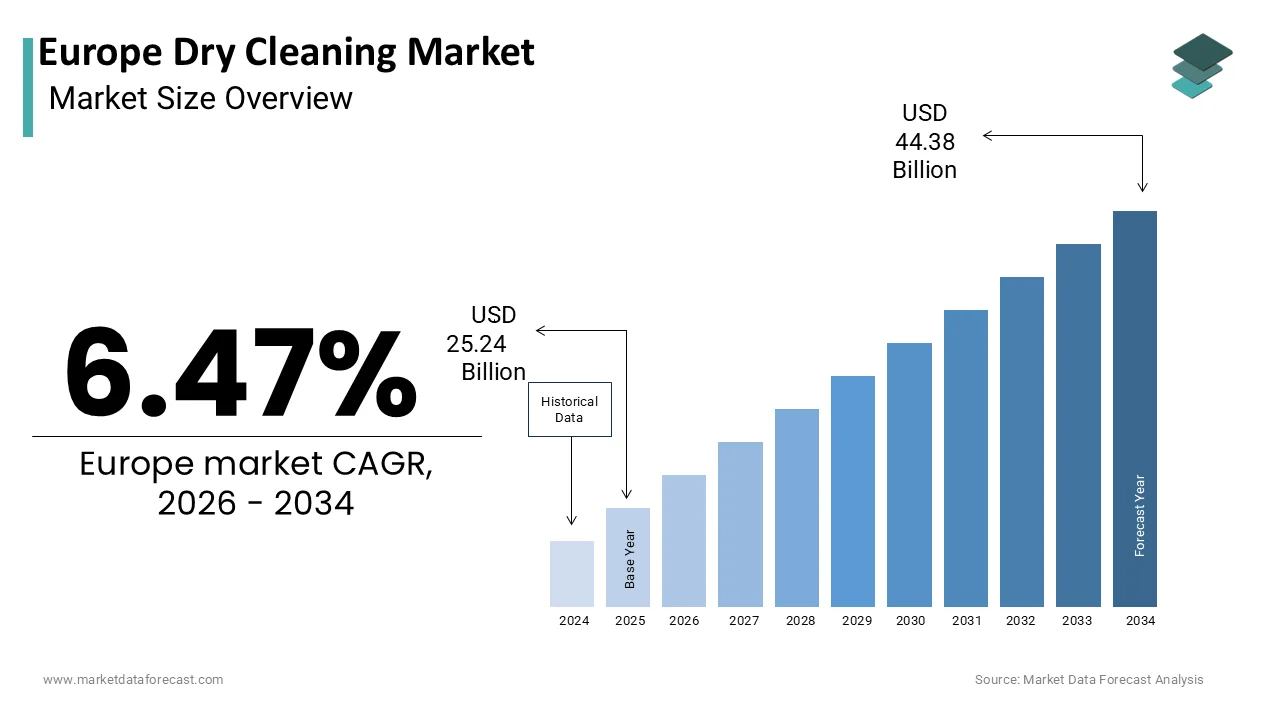
The Europe dry cleaning market was valued at USD 25.24 billion in 2025, is estimated to reach USD 26.88 billion in 2026, and is projected to reach USD 44.38 billion by 2034, growing at a CAGR of 6.47% from 2026 to 2034.
Dry cleaning is dedicated to the cleaning, pressing, and restoration of delicate fabrics and garments that cannot withstand traditional water-based washing. This market relies heavily on chemical solvents, predominantly hydrocarbon and liquid silicone, alongside emerging wet cleaning technologies, to remove stains while preserving textile integrity. The sector serves a dual clientele of individual consumers seeking care for high-value wardrobe items and business-to-business contracts with hospitality and healthcare institutions. As per Eurostat, the average household expenditure on clothing and footwear in the European Union remains substantial, which indicates a large installed base of garments requiring professional maintenance. Furthermore, the European Environment Agency emphasizes the critical shift away from perchloroethylene due to its classification as a hazardous substance, forcing operators to adopt greener alternatives. The density of urban populations in major European metropolises creates a concentrated demand for convenient garment care services. According to the European Commission, the textile strategy aims to make all textile products placed on the EU market more durable and repairable by 2030, which indirectly supports the dry-cleaning sector by extending garment lifecycles. This market functions as an essential component of the circular economy, preventing premature disposal of quality clothing through professional restoration and care services that maintain fabric value and appearance.
MARKET DRIVERS
Rising Prevalence of Premium and Delicate Fabric Consumption
The increasing consumer preference for premium apparel made from delicate natural fibers and complex blends is driving the growth of the Europe dry cleaning market. Modern fashion trends in Europe heavily favor materials such as silk, wool, cashmere, and linen, which require specialized solvent-based cleaning to prevent shrinkage, distortion, or color bleeding. In Europe, the European Apparel and Textile Confederation, the luxury goods sector in Europe continues to expand, with consumers investing significantly in high-quality garments that demand professional aftercare to maintain their aesthetic and structural integrity. The complexity of modern textile manufacturing, which often combines multiple fiber types in a single garment, renders home washing machines inadequate for effective cleaning without causing damage. For instance, a growing percentage of European consumers view professional cleaning as a necessary extension of their investment in expensive clothing. The rise of fast fashion has paradoxically increased the volume of lower-quality items, but the value segment drives the revenue for dry cleaners who possess the expertise to handle sensitive items. Furthermore, the cultural emphasis on presentation in European business and social environments ensures a steady stream of suits, dresses, and formal wear entering the cleaning cycle. This dependency on specialized care for high-value wardrobes sustains the core demand for professional dry-cleaning services across the continent.
Expansion of the Hospitality and Healthcare Sectors
The robust growth and operational requirements of the hospitality and healthcare industries are a significant driver for the business-to-business segment of the European dry cleaning market. Hotels, restaurants, and hospitals generate massive volumes of linens, uniforms, and patient gowns that require rigorous sanitization and professional pressing to meet strict hygiene and presentation standards. As per the European Hotel Association, the occupancy rates in major European tourist destinations have rebounded strongly, which is leading to an increased turnover of bed linens, tablecloths, and staff uniforms that necessitate frequent professional cleaning. In the healthcare sector, regulatory bodies mandate stringent infection control protocols, which make industrial dry cleaning and laundry services essential for processing contaminated textiles safely. As per the statistics from the European Centre for Disease Prevention and Control, the critical role of proper textile manufacturing in preventing hospital-acquired infections is driving hospitals to outsource these tasks to certified professional cleaners. The uniform policies in corporate sectors, aviation, and public transport also contribute to this demand, as organizations seek to maintain an image for their workforce. These institutional clients provide a stable and recurring revenue stream that buffers dry cleaning businesses against seasonal fluctuations in consumer demand. The sheer volume of textiles processed by these sectors ensures that industrial dry-cleaning capabilities remain a vital infrastructure component for the European service economy.
MARKET RESTRAINTS
Stringent Environmental Regulations on Chemical Solvents
The implementation of increasingly rigorous environmental regulations regarding the use and emission of chemical solvents poses a substantial restraint on the European dry cleaning market. Perchloroethylene, historically the most common solvent due to its effectiveness, faces severe restrictions and potential bans across several European nations due to its toxicity and environmental impact. As per the European Chemicals Agency, perchloroethylene is classified as a substance of very great concern, prompting member states to enforce strict exposure limits and mandatory equipment upgrades for existing dry-cleaning shops. Compliance with these regulations requires significant capital investment in closed-loop greatines and advanced filtration systems, which many small independent operators cannot afford. Data from national environmental protection agencies indicates that the cost of upgrading facilities to meet new emission standards has forced numerous small businesses to cease operations or switch to less effective alternatives. The administrative burden of monitoring and reporting solvent usage further strains the resources of small enterprises. Additionally, the push toward completely eliminating certain solvents creates uncertainty regarding the long-term viability of traditional dry-cleaning methods. This regulatory pressure not only increases operational costs but also limits the geographic areas where dry cleaning shops can operate, particularly in residential zones. The transition period creates a fragmented market where compliance disparities affect competitive dynamics and overall service availability.
High Operational Costs and Energy Price Volatility
The susceptibility of the dry-cleaning market to soaring operational costs, particularly energy prices and labor expenses, acts as a significant brake on market growth and profitability. Dry cleaning processes are energy-intensive, requiring substantial electricity and gas for machine operation, heating solvents, and powering pressing equipment. As per Eurostat, energy prices in Europe experienced unprecedented volatility and increases in recent years, severely impacting the margin structures of energy-dependent service businesses. Small and medium-sized dry cleaning enterprises often lack the bargaining power to negotiate favorable utility rates, making them disproportionately vulnerable to price spikes. Furthermore, the sector faces chronic labor shortages and rising minimum wage mandates across the European Union, which elevate the cost of providing labor-intensive services like spotting, finishing, and customer interaction. Industry data suggests that labor and energy together constitute a major portion of total operating expenses, leaving little room for absorption of additional costs without passing them to consumers. When prices rise, price-sensitive consumers may reduce the frequency of professional cleaning or attempt home remedies, leading to a contraction in demand. The combination of fixed high overheads and fluctuating input costs creates a precarious financial environment that discourages new entrants and threatens the survival of marginal operators, thereby restraining the overall expansion of the market.
MARKET OPPORTUNITIES
Adoption of Eco-Friendly Wet Cleaning Technologies
The widespread adoption of professional wet cleaning technologies offers a big opportunity for the European dry cleaning market to align with sustainability goals and capture environmentally conscious consumers. Professional wet cleaning uses water and specialized biodegradable detergents in computer-controlled machines to clean fabrics safely, eliminating the need for hazardous chemical solvents. As per the European Commission, the Green Deal initiative encourages businesses to adopt cleaner production methods, creating a favorable policy environment and potential subsidies for operators transitioning to greeneries. This method appeals to the growing segment of European consumers who prioritize eco-friendly services and suffer from allergies or sensitivities to chemical residues. For instance, wet cleaning reduces air pollution and wastewater contamination significantly compared to traditional solvent-based methods. Operators who invest in wet cleaning can differentiate their brands as sustainable leaders, potentially commanding premium pricing and fostering stronger customer loyalty. The technology has advanced to handle a wider range of fabrics previously thought to require dry cleaning, expanding the addressable market for green cleaners. Furthermore, insurance premiums and regulatory compliance costs are often lower for wet cleaning facilities due to the absence of hazardous chemicals. By embracing this technology, dry cleaning businesses can future-proof their operations against tightening environmental laws while tapping into the lucrative market of green-conscious clientele.
Integration of Digital Platforms and On-Demand Logistics
The integration of digital platforms and on-demand logistics services offers a substantial opportunity for the European dry cleaning market to modernize customer engagement and expand geographical reach. Traditional dry cleaning relies on physical drop-off locations, which can be inconvenient for busy urban professionals, but digital apps and European portals enable seamless scheduling, pickup, and delivery services. As per the European E-commerce Association, the penetration of on-demand service apps has grown exponentially, with consumers increasingly expecting the convenience of having services brought to their doorstep. Dry cleaning companies that partner with logistics providers or develop their own delivery networks can serve a wider radius beyond their immediate neighbourhood, effectively increasing their customer base without opening new physical stores. Data from tech industry reports shows that businesses offering app-based booking and real-time order tracking experience higher customer retention and average order values. This digital transformation allows for dynamic pricing, personalized marketing, and efficient route planning that reduces operational costs. The ability to offer subscription models for regular cleaning services further stabilizes revenue streams. By leveraging technology to remove friction from the customer journey, dry cleaning operators can attract younger demographics who value convenience and digital fluency. This shift transforms the traditional brick-and-mortar model into a hybrid service that competes effectively in the modern gig economy landscape.
MARKET CHALLENGES
Intense Competition from Home Care Innovations
The rapid advancement of home laundry appliances and DIY care products is challenging the expansion of the European dry cleaning market. Modern washing machines now feature specialized cycles for wool, silk, and delicate items, while innovative home dry cleaning kits claim to refresh and de-wrinkle garments effectively without professional intervention. As per the European Consumer Organisation, consumers are increasingly cost-conscious and seek to reduce household expenditures, which is leading them to attempt cleaning delicate items at home despite the risks. Manufacturers of home appliances continuously innovate to mimic professional results, marketing their devices as capable of handling tasks previously reserved for experts. For instance, a steady uptake of premium home laundry solutions that promise gentle care and stain removal. This trend is particularly pronounced among younger consumers who are less accustomed to using traditional dry-cleaning services. The convenience of avoiding travel to a shop and waiting for turnaround time further incentivizes home care. While professional cleaners argue that their expertise prevents damage, the perception gap allows home solutions to capture a share of the low-risk cleaning market. This substitution effect forces dry cleaners to constantly justify their value proposition and educate consumers on the limitations of home care, a challenging task in a saturated information environment.
Shortage of Skilled Labor and Technical Expertise
The acute shortage of skilled labor and technical expertise constitutes a critical challenge for the European dry cleaning market, which is threatening service quality and operational scalability. The profession of dry cleaning requires specific knowledge of fabric types, stain chemistry, and machine operation, yet it struggles to attract younger workers due to perceptions of it being a low-tech or declining industry. As per the European Centre for the Development of Vocational Training, there is a widening skills gap in traditional service sectors, with fewer vocational students enrolling in textile care programs. Experienced technicians are retiring, and the lack of a robust pipeline of trained replacements leaves many shops understaffed or reliant on untrained personnel who may cause garment damage. For instance, errors in cleaning due to a lack of expertise lead to costly claims and reputational damage, discouraging customers from returning. The complexity of handling diverse and evolving textile blends demands continuous training, which is often financially burdensome for small business owners. This labor scarcity limits the ability of dry cleaning chains to expand or even maintain current service levels during peak periods. Without a strategic focus on upskilling and rebranding the profession to attract new talent, the industry faces a potential decline in service standards that could accelerate the shift of customers to alternative care methods.
REPORT COVERAGE
| REPORT METRIC | DETAILS |
| Market Size Available | 2025 to 2034 |
| Base Year | 2025 |
| Forecast Period | 2026 to 2034 |
| Segments Covered | By Application, Service, and Region. |
| Various Analyses Covered | Global, Regional, and Country-Level Analysis, Segment-Level Analysis, Drivers, Restraints, Opportunities, Challenges; PESTLE Analysis; Porter’s Five Forces Analysis, Competitive Landscape, Analyst Overview of Investment Opportunities |
| Countries Covered | UK, France, Spain, Germany, Italy, Russia, Sweden, Denmark, Switzerland, Netherlands, Turkey, Czech Republic, Rest of Europe |
| Market Leaders Profiled | Elis S.A., Johnson Service Group plc, Cintas Corporation, Aramark Corporation, CSC ServiceWorks, Zipjet Ltd., Laundrapp Ltd., Laundryheap Ltd., Pressto, Jeeves of Belgravia, American Dry Cleaning Company, Mulberrys Garment Care |
SEGMENTAL ANALYSIS
By Application Insights
The residential segment led the market by commanding for 66.1% of the European market share in 2025. The dominance of the residential segment in the European market is attributed to the high volume of individual consumers who own premium wardrobe items requiring specialized care that home appliances cannot provide. The cultural emphasis on professional appearance in European business and social settings ensures a consistent demand for cleaning suits, dresses, and delicate fabrics. As per Eurostat, household expenditure on clothing and footwear in the European Union remains robust, with a significant portion of this spending directed toward high-quality garments made from wool, silk, and cashmere that necessitate professional solvent cleaning. Furthermore, the rising disposable income in Western European nations allows consumers to prioritize convenience and garment longevity over cost savings from home washing. As per the data from the European Apparel and Textile Confederation, the luxury fashion market in Europe continues to grow and is directly correlated with increased usage of dry cleaning services to maintain the value of these investments. The density of urban populations in major cities like London, Paris, and Berlin creates a concentrated customer base within ecologically local dry cleaning shops. Additionally, the aging population in Europe often relies on external services for household chores, further bolstering the residential segment. The sheer frequency of regular garment turnover among millions of households solidifies this segment as the primary revenue generator for the regional market.
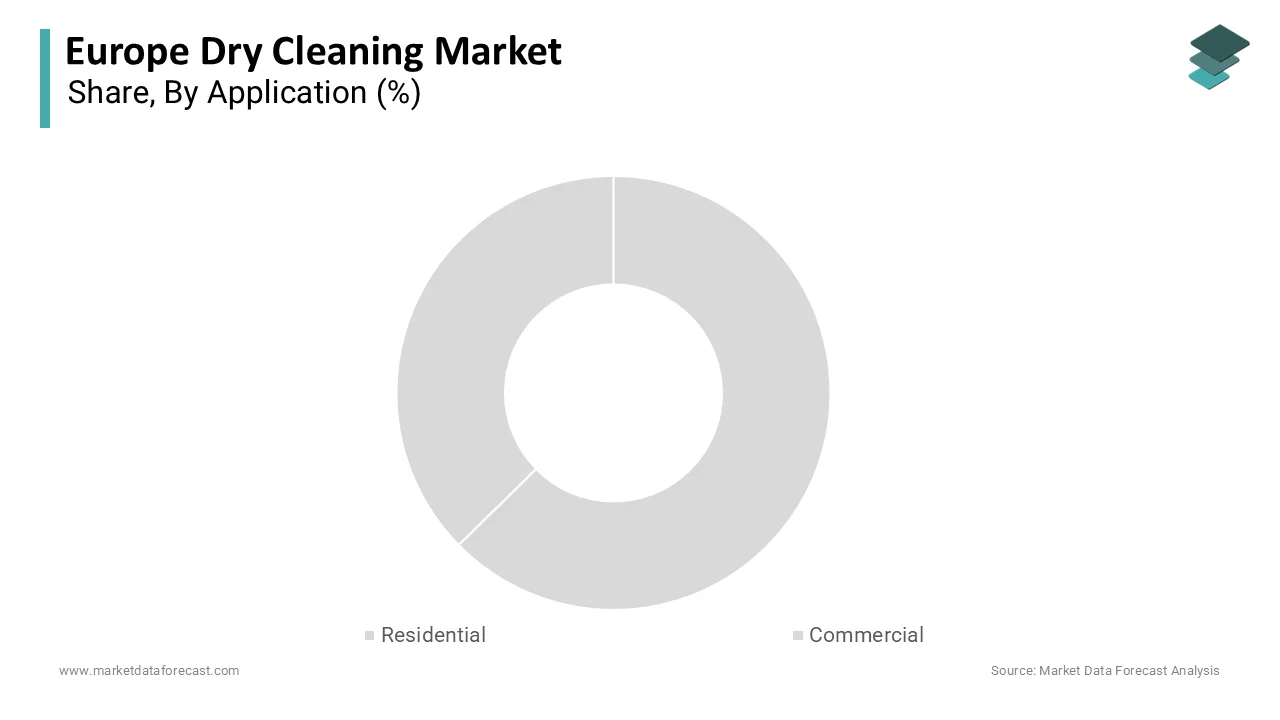
However, the commercial segment is emerging as the fastest-growing application area in the European cleaning market and is expected to record a CAGR of 6.6% over the forecast period, owing to the rigorous hygiene standards and operational scale required by the hospitality, healthcare, and corporate sectors. As per the European Hotel Association, the strong recovery of the tourism industry has led to higher occupancy rates, driving an exponential increase in the volume of linens, uniforms, and tablecloths that require professional cleaning and sanitization. Hospitals and clinics are also tightening infection control protocols, mandating the use of certified industrial cleaning services for patient gowns and staff uniforms to prevent cross-contamination. As per the statistics from the European Centre for Disease Prevention and Control, the critical role of professional textile processing in healthcare safety is prompting more facilities to outsource their laundry needs to specialized providers. The corporate sector contributes to this growth through uniform policies in aviation, retail, and public transport, where maintaining a pristine brand image is essential. Unlike the residential segment, which can be seasonal or discretionary, commercial contracts offer stable, high-volume recurring revenue that attracts investment in large-scale industrial cleaning facilities. The trend toward outsourcing non-core activities allows businesses to focus on their primary operations while ensuring compliance with health and safety regulations, which is propelling the commercial segment to the forefront of market expansion.
By Service Insights
The dry cleaning service segment dominated the market by holding 55.7% of the European market share in 2025 due to its unique ability to clean delicate fabrics without water damage. This service remains indispensable for maintaining the structural integrity and appearance of garments made from natural fibers and complex blends that shrink or distort in traditional washing machines. As per the European Chemicals Agency, despite regulatory pressures on solvents, the industry has successfully transitioned to safer alternatives like hydrocarbon and liquid silicone, preserving the core value proposition of dry cleaning. The prevalence of formal wear and business attire in European culture ensures a steady stream of customers seeking professional stain removal and pressing services that home kits cannot replicate. For instance, a significant majority of consumers still trust professional dry cleaners for high-value items such as wedding dresses, suits, and designer coats. The technical expertise required to handle diverse fabric types and stubborn stains creates a barrier to entry that protects the market share of established professional providers. Furthermore, the integration of finishing services like steaming and pressing adds value that distinguishes professional dry cleaning from simple laundry. The enduring consumer perception that dry cleaning extends the life of expensive clothing reinforces its dominance. As long as fashion trends favor delicate materials and complex constructions, the demand for specialized solvent-based cleaning will remain the cornerstone of the market.
On the other side, the duvet and bulk item cleaning service segment is the fastest-growing segment within the European dry cleaning market and is estimated to witness a CAGR of 7.1% over the forecast period, owing to the increasing consumer awareness of hygiene and the practical difficulty of cleaning large bedding items in standard home European machines. As per the European Allergy Research Foundation, there is a growing recognition of the role that dust mites and allergens in bedding play in respiratory issues, which is prompting households to seek professional deep cleaning solutions more frequently. Modern duvets filled with down, feathers, or specialized synthetic fibers often carry care labels that explicitly recommend or require professional cleaning to prevent clumping and damage. For instance, while drum sizes are increasing, many large comforters and king-size duvets still exceed the capacity of average household machines. The rise of the "wellness" lifestyle in Europe has elevated the importance of sleep hygiene, which is leading consumers to treat bedding cleaning as a regular maintenance task rather than a rare occurrence. Professional cleaners offer specialized equipment that can thoroughly rinse and dry bulky items to ensure they remain fluffy and hygienic. Additionally, the convenience of pickup and delivery services makes it easier for customers to outsource this cumbersome task. As health consciousness rises and living spaces in urban areas remain compact, the demand for professional bulk item cleaning will continue to surge.
COUNTRY LEVEL ANALYSIS
Germany Dry Cleaning Market Analysis
Germany led the dry cleaning market in Europe in 2025 with 22.9% of the regional market share. The dominance of Germany in the European market can be credited to its strong industrial base and stringent environmental regulations. The country serves as a hub for advanced cleaning technologies, with many manufacturers of eco-friendly dry cleaning machines and solvents based within its borders. As per the German Federal Environment Agency, the strict enforcement of solvent emission laws has accelerated the adoption of closed-loop systems and wet cleaning technologies, setting a high standard for the rest of Europe. The robust manufacturing and automotive sectors in Germany generate significant demand for industrial uniform cleaning, while the affluent consumer base supports a thriving residential market for luxury garment care. Statistics from the German Statistical Office show that household spending on personal services remains high, reflecting a cultural willingness to pay for quality and convenience. The presence of numerous small and medium-sized enterprises in the service sector ensures widespread availability of dry cleaning shops across urban and rural areas. Furthermore, Germany's leadership in chemical research facilitates the development of safer and more effective cleaning agents, reinforcing its market position. The combination of regulatory rigor, technological innovation, and economic strength ensures Germany maintains its top spot, acting as a benchmark for sustainable practices in the industry.
United Kingdom Dry Cleaning Market Analysis
The United Kingdom held a promising share of the European dry cleaning market in 2025 due to its vibrant fashion industry and dense urban population. London, as a global fashion capital, generates immense demand for professional garment care among designers, retailers, and stylish consumers who frequently wear high-end clothing. As per the British Fashion Council, the luxury retail sector in the UK contributes billions to the economy, creating a direct correlation with the need for specialized cleaning services to maintain these valuable assets. The high concentration of corporate offices and financial institutions in cities like London and Manchester fuels the demand for business attire cleaning and corporate uniform services. Data from the UK Office for National Statistics indicates that the service sector dominates the economy, with personal care services seeing steady growth despite economic fluctuations. The prevalence of rental housing and smaller living spaces in major UK cities limits the feasibility of owning large home laundry appliances, encouraging reliance on external services. Additionally, the busy lifestyle of urban professionals drives the popularity of on-demand pickup and delivery models offered by modern dry cleaners. The UK's dynamic retail environment and strong service culture cement its status as a critical market for both traditional and innovative dry cleaning solutions.
France Dry Cleaning Market Analysis
France is anticipated to register a prominent CAGR in the European dry cleaning market during the forecast period, owing to its world-renowned luxury goods sector and booming tourism industry. The country is home to many of the world's most prestigious fashion houses, which not only produce elaborate garments requiring expert care but also set trends that influence consumer behavior nationwide. As per the French Ministry of Economy, the luxury goods industry is a pillar of the national economy, driving consistent demand for high-quality dry cleaning services to preserve the integrity of silk, leather, and embroidered items. The tourism sector also plays a crucial role, with hotels and restaurants in Paris and the French Riviera requiring extensive linen and uniform cleaning to meet the expectations of international visitors. Statistics from the French National Institute of Statistics and Economic Studies highlight the significant contribution of hospitality to GDP, which translates into substantial B2B contracts for industrial laundry and dry cleaning firms. The French consumer's strong appreciation for aesthetics and personal presentation further sustains the residential market. Moreover, government initiatives supporting artisanal businesses help preserve the network of independent dry cleaners that offer personalized service. This unique blend of luxury heritage, tourism volume, and cultural values ensures France remains a key player in the regional market.
Italy Dry Cleaning Market Analysis
Italy is expected to exhibit a healthy CAGR in the European dry cleaning market during the forecast period due to its deep-rooted textile tradition and strong focus on style and quality. The country is a global leader in textile production, particularly in regions like Tuscany and Europe, where the presence of high-quality fabric manufacturers creates a natural ecosystem for professional garment care. As per the Italian National Institute of Statistics, the fashion and textile industries are vital economic drivers, fostering a consumer base that is highly knowledgeable about fabric care and willing to invest in professional services. The culture of "la bella figura" emphasizes impeccable appearance, driving frequent visits to dry cleaners for suits, dresses, and outerwear. Data from the Italian Fashion System indicates that domestic consumption of luxury apparel remains strong, supporting a network of specialized cleaners capable of handling delicate Italian designs. The hospitality sector, bolstered by Italy's status as a top tourist destination, also contributes significantly to the demand for linen and uniform cleaning. Furthermore, the prevalence of small family-owned businesses in the service sector ensures a personalized approach to customer care that resonates with local preferences. The synergy between textile production, cultural values, and tourism sustains Italy's prominent position in the market.
Spain Dry Cleaning Market Analysis
Spain is estimated to hold a notable share of the European dry cleaning market over the forecast period, owing to its massive hospitality industry and growing urban service sector. The country attracts millions of tourists annually, leading to high occupancy rates in hotels and restaurants that require constant professional cleaning of linens, towels, and staff uniforms. As per the Spanish National Statistics Institute, the tourism sector accounts for a significant portion of GDP, creating a robust B2B market for industrial dry cleaning and laundry services. The warm climate in many parts of Spain encourages frequent clothing changes and the use of light, delicate fabrics that often require professional care. Data from the Spanish Confederation of Business Organizations highlights the resilience of the service sector, with personal care services seeing steady growth in major cities like Madrid and Barcelona. The increasing number of dual-income households has reduced the time available for domestic chores, boosting demand for convenient laundry and dry cleaning solutions. Additionally, the modernization of the retail sector and the expansion of international fashion brands in Spain have raised consumer expectations for garment maintenance. The combination of tourism volume, climatic factors, and changing lifestyle patterns positions Spain as a dynamic and growing market within the European landscape.
COMPETITIVE LANDSCAPE
The competition in the European dry cleaning market is highly fragmented and characterized by a mix of large multinational franchises, regional chains, and numerous independent local operators vying for market share. Established brands leverage their reputation for quality and consistency to attract premium customers while smaller independents compete on personalized service and neighbourhood convenience. The rise of on-demand digital platforms has intensified rivalry by lowering entry barriers for aggregators who connect customers with local cleaners without owning physical assets. Price competition remains fierce, especially in the residential segment, where consumers are sensitive to cost fluctuations driven by energy and labor expenses. Differentiation increasingly depends on adopting green technologies and offering value-added services,s such as alterations and shoe repair, to create comprehensive care hubs. Regulatory compliance regarding solvent emissions acts as a significant barrier to entry, favoring larger players with capital for equipment upgrades. The battle for skilled labor further complicates the landscape as experienced technicians are scarce and highly sought after. Companies that successfully integrate sustainability,ustainability digital convenience, and specialized expertise are best positioned to thrive in this dynamic and challenging environment.
KEY MARKET PLAYERS
Some of the companies that are playing a dominating role in the global europe dry cleaning market include
- Elis S.A.
- Johnson Service Group plc
- Cintas Corporation
- Aramark Corporation
- CSC ServiceWorks
- Zipjet Ltd.
- Laundrapp Ltd.
- Laundryheap Ltd.
- Pressto
- Jeeves of Belgravia
- American Dry Cleaning Company
- Mulberrys Garment Care
TOP LEADING PLAYERS IN THE MARKET
- Johnson Cleaners stands as a premier independent family-owned operator with a significant footprint across the United Kingdom and expanding influence in Europe. The company contributes to the global market by setting high standards for customer service excellence and integrating advanced,d eco-friendly cleaning technologies into daily operations. Recently, Ly Johnson Cleaners has strengthened its market position by investing heavily in state-of-the-art hydrocarbon machines that reduce environmental impact while maintaining superior fabric care quality. The firm also launched a comprehensive digital platform allowing customers to schedule pickups and track orders in real time, enhancing convenience for busy urban residents. Their commitment to training staff in specialized stain removal techniques ensures consistent quality that builds strong brand loyalty. By focusing on sustainable practices and digital transformation, Johnson Cleaners differentiates itself from larger chains and maintains a competitive edge in the premium service segment. This strategic focus on quality and innovation solidifies their reputation as a leader in professional garment care services throughout the region.
- Martinizing Dry Cleaning operates as a globally recognized franchise brand with a strong presence in Europe through licensed partners who adhere to strict operational protocols. The company contributes to the international market by pioneering the use of liquid silicone cleaning technology,y which offers a gentle yet effective alternative to traditional solvents. Martinizing recently strengthened its European foothold by launching targeted marketing campaigns emphasizing health safety e, ty and fabric longevity to attract environmentally conscious consumers. The brand has also expanded its B2B services by securing contracts with major hotel chains and corporate offices for uniform and linen management. The IR franchise model allows for rapid scalability while maintaining consistent service quality across diverse locations. By continuously updating their equipment to meet evolving environmental regulations, N Ss Martinizing ensures compliance and operational efficiency. The company focuses on building community trust through local engagement and transparent pricing structures. These efforts reinforce their status as a reliable and forward-thinking provider in the competitive European dry cleaning landscape.
- Laporte Cleaners is a distinguished French enterprise known for its expertise in handling high-end luxury garments and delicate textiles for discerning clientele across Europe. The company contributes to the global market by developing proprietary cleaning methods specifically designed for haute couture and rare fabrics that require exceptional care. Laporte recently strengthened its market position by partnering with leading fashion houses to become their recommended care provider, ensuring brand integrity for luxury items post-purchase. The firm has invested in advanced spotting laboratories where skilled technicians use microscopic analysis to treat complex stains without damaging fibers. Their expansion strategy includes opening flagship stores in key fashion capitals that offer concierge services and same-day turnaround for urgent needs. Laporte also emphasizes sustainability by implementing water recycling systems and using biodegradable detergents in their wet cleaning processes. By combining artisanal craftsmanship with modern technology, Ogy Laporte Cleaners maintains its reputation as the go-to specialist for luxury garment maintenance in Europe.
TOP STRATEGIES USED BY THE KEY MARKET PARTICIPANTS
Key players in the European dry cleaning market primarily focus on ads, opting for eco-friendly technologies such as liquid silicone and professional wet cleaning to comply with stringent environmental regulations and appeal to green consumers. Companies are increasingly investing in digital transformation by developing mobile applications and online platforms that enable seamless booking, tracking, and delivery services for enhanced customer convenience. Expanding service portfolios to include specialized offerings like leather restoration wedding dress preservation and altercations allows firms to increase aver, age tran,saction values and customer loyalty. Strategic partnerships with hospitality groups and corporate entities secure stable high-volume business-to-business contracts that provide a revenue stream. Models are widely utilized to achieve rapid geographic expansion while minimizing capital expenditure for the parent company. Additionally, operators are upgrading to energy-efficient machinery to reduce utility costs and improve profit margins in response to rising energy prices. These combined strategies ensure sustainability, compliance,e operational efficiency, and sustained growth in a competitive service sector.
MARKET SEGMENTATION
This research report on the europe dry cleaning market is segmented and sub-segmented into the following categories.
By Application
- Residential
- Commercial
By Service
- Dry Cleaning Services
- Laundry Services
- Duvet & Bulk Item Cleaning
By Country
- Germany
- United Kingdom
- France
- Italy
- Spain
- Rest of Europe