- Product Description Description
- Table of Contents TOC
- List of Table & Figure LOT
- Get Free Sample PDF Sample PDF
Market Size, 2025
$9.75 BnMarket Estimate, 2026
$10.33 BnMarket Forecast, 2034
$16.35 BnCAGR, 2026–2034
5.91%Europe Dyes Market Report Summary
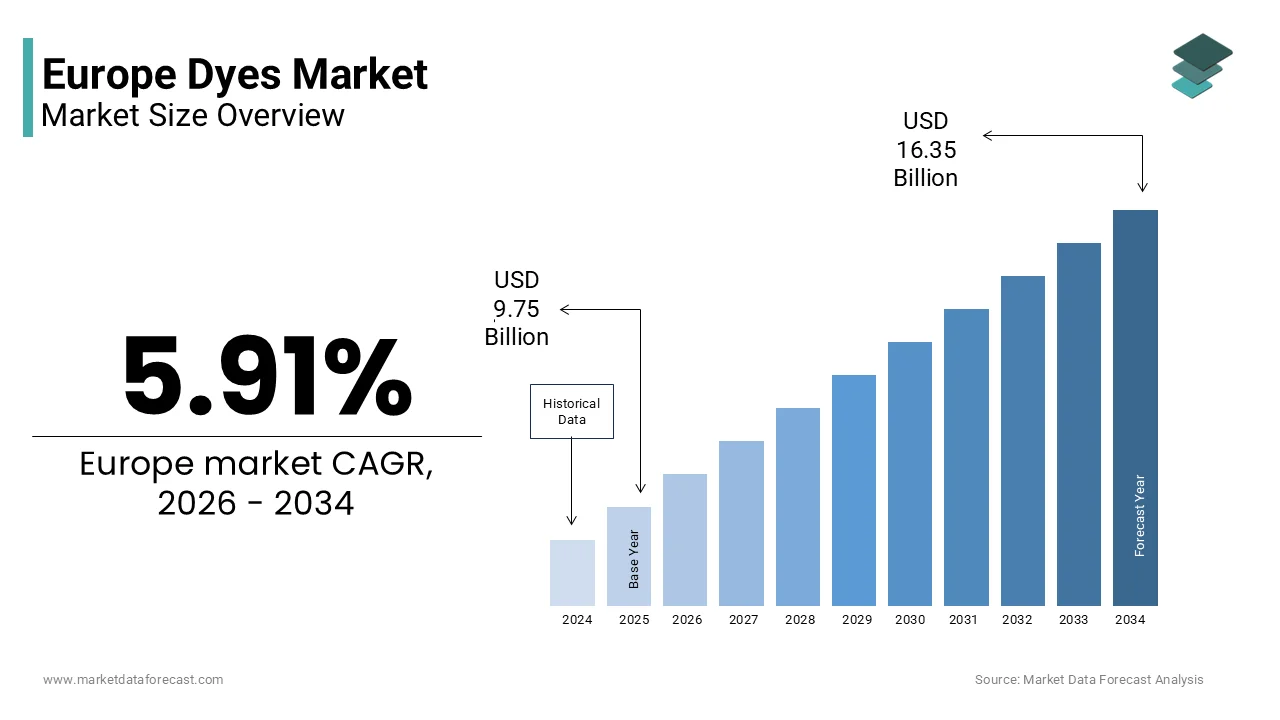
The Europe dyes market was valued at USD 9.75 billion in 2025, is estimated to reach USD 10.33 billion in 2026, and is projected to reach USD 16.35 billion by 2034, growing at a CAGR of 5.91% during the forecast period. Market growth is driven by increasing demand from the textile industry, rising applications in packaging and printing, and expanding industrial manufacturing activities. Dyes are widely used to impart color and functional properties to textiles, plastics, paper, leather, and coatings. The growing emphasis on sustainable and high performance dye solutions is further supporting steady market growth across Europe.
Key Market Trends
- Rising demand from textile and fashion industries is driving market growth.
- Increasing applications in printing, packaging, and industrial manufacturing are boosting demand.
- Growing preference for sustainable and eco friendly dye solutions is supporting market expansion.
- Expansion of technical textiles and specialty fabric production is enhancing product adoption.
- Innovation in high performance and low impact dye technologies is influencing market development.
Segmental Insights
- Based on type, the dyes segment held a dominant share of the Europe dyes market in 2025. This dominance is attributed to their essential role in coloring substrates at a molecular level across multiple industries.
- Based on end user, the textiles segment accounted for 45.6% of the Europe dyes market share in 2025, driven by Europe’s strong fashion industry, technical textile manufacturing, and premium fabric production.
Regional Insights
- The Europe dyes market is experiencing steady growth across key countries, supported by strong industrial infrastructure and textile manufacturing activities.
- Germany was the leading contributor, accounting for 22.3% of the Europe dyes market share in 2025, driven by advanced chemical manufacturing capabilities, established industrial base, and strong research and development activities.
Competitive Landscape
The Europe dyes market is highly competitive, with key players focusing on sustainable dye technologies, specialty product development, and expansion of industrial applications to strengthen their market position. Companies are investing in environmentally friendly formulations, advanced color technologies, and strategic collaborations. Prominent players in the Europe dyes market include BASF SE, Huntsman Corporation, DyStar Group, Clariant AG, Archroma, Kiri Industries Limited, Synthesia, a.s., Atul Ltd., Zhejiang Longsheng Group Co., Ltd., Colourtex Industries Private Limited, RUDOLF GROUP, KRONOS Worldwide, Inc., Yorkshire Group, Sarex Chemicals, CHT Group, D.K. Corporation, Cromatos, DYE+CHEM EUROPE GmbH, and Jet Dyes and Chemicals.
Europe Dyes Market Size
The Europe dyes market size was valued at USD 9.75 billion in 2025 and is projected to reach USD 16.35 billion by 2034 from USD 10.33 billion in 2026, growing at a CAGR of 5.91%.
The dyes are colorants utilized primarily in the textile leather paper and plastic industries. These substances are classified into reactive acid direct and disperse dyes based on their chemical structure and application method. In 2024, the European chemical industry produced approximately 530 billion euros worth of products as per Eurostat. Textile manufacturing, which remains a significant consumer of dyes employed over 1.7 million people, across the European Union according to Euratex. The shift towards sustainable production methods has prompted manufacturers to innovate with bio based and low impact dyes. Water consumption in the textile dyeing process averages 100 liters per kilogram of fabric, as stated by the European Environment Agency. This high-water usage drives the need for efficient dye formulations that require less rinsing. The regulatory framework under REACH continues to influence the availability of certain synthetic dyes containing hazardous substances. The presence of major chemical producers in Germany, France, and Italy, facilitates advanced research and development in dye technology. These nations contribute significantly to the global export of high value specialty dyes.
MARKET DRIVERS
Revival of the European Textile Manufacturing Sector
The resurgence of domestic textile production is also elevating the growth of the Europe dyes market. Nearshoring trends have gained momentum as brands seek to reduce supply chain vulnerabilities and carbon footprints associated with long distance logistics. This economic activity generates substantial demand for high quality dyes that meet specific aesthetic and durability standards. Luxury fashion houses located in Italy and France prioritize vibrant and long lasting colors which necessitates the use of premium reactive and acid dyes. The shift towards fast fashion alternatives that emphasize quality over quantity also supports this trend. Consumers are increasingly willing to pay for garments produced locally with transparent supply chains. This preference boosts the utilization of specialized dyes that offer superior color fastness and environmental compliance. Additionally, the growth of technical textiles for automotive and medical applications drives demand for high performance dyes. The alignment of manufacturing processes with circular economy principles further incentivizes the adoption of efficient dyeing technologies.
Stringent Environmental Regulations Driving Innovation
The strict environmental laws to develop safer and more sustainable products is also boosting the growth of the Europe dyes market. The Registration Evaluation Authorization and Restriction of Chemicals regulation restricts the use of substances harmful to human health and the environment. This regulatory pressure has led to the phase out of azo dyes that release carcinogenic amines. Compliance with these regulations drives investment in research and development for eco-friendly alternatives. Bio based dyes derived from natural sources, such as plants and microorganisms are gaining traction due to their lower toxicity. The textile industry aims to reduce its environmental impact by adopting dyes that require less water and energy during application. The European Union’s Green Deal targets a 55% reduction in greenhouse gas emissions by 2030, which influences industrial processes. Dye manufacturers are responding by creating formulations that operate at lower temperatures and pH levels. This innovation reduces energy consumption and lowers the overall carbon footprint of the dyeing process. Furthermore, the demand for recyclable textiles encourages the use of dyes that do not interfere with fiber recycling processes. Companies that adhere to these standards gain a competitive advantage in the market. The push for transparency in supply chains also favors suppliers who can provide detailed environmental product declarations.
MARKET RESTRAINTS
High Costs of Raw Materials and Energy
The volatility in raw material and energy prices is hindering the growth of the Europe dyes market. Many dye precursors are derived from petrochemical feedstocks, whose prices fluctuate globally. In 2024, the average price of crude oil remained around 82 USD per barrel, as reported by the U.S. Energy Information Administration. These fluctuations directly impact the production costs of synthetic dyes. Additionally, Europe faces higher energy costs compared to other regions due to its reliance on imported natural gas. This increase squeezes profit margins for dye manufacturers who struggle to pass on costs to price sensitive customers. The textile industry which operates on thin margins is particularly vulnerable to these price hikes. Small and medium sized dye producers face greater challenges in absorbing these costs compared to larger integrated companies. The high cost of compliance with environmental regulations further adds to the financial burden. Investment in wastewater treatment facilities and emission control systems requires substantial capital expenditure. Consequently, some production has shifted to regions with lower operational costs.
Presence of Hazardous Substances in Traditional Dyes
The continued use of hazardous substances in traditional dyeing processes is also declining the growth of the Europe dyes market. Certain synthetic dyes contain heavy metals and toxic compounds that pose risks to human health and ecosystems. The discharge of untreated dye effluents into water bodies causes severe pollution and affects aquatic life. Regulatory bodies are tightening limits on the concentration of harmful substances in wastewater. The Zero Pollution Action Plan aims to reduce water pollution by 50% by 2030, which imposes stricter controls on industrial discharges. Manufacturers must invest in advanced treatment technologies to remove color and toxins from effluent. These technologies are expensive to install and maintain adding to operational costs. Consumer awareness regarding the environmental impact of fashion choices is also rising. Brands are under pressure to ensure their supply chains are free from hazardous chemicals. This demand drives the adoption of certified safe dyes but limits the market for conventional products. The transition away from toxic dyes requires time and technical expertise which smaller players may lack.
MARKET OPPORTUNITIES
Expansion of Digital Printing Technologies
The digital printing by offering flexibility and sustainability advantages is setting up the new opportunities for the growth of the Europe dyes market. This technology allows for precise application of dyes reducing waste and water consumption significantly. Europe is a leading adopter of this technology due to its strong design heritage and demand for customized products. Digital printing eliminates the need for screens and plates, which reduces setup time and material usage. It enables short run production, which aligns with the trend towards personalized fashion and rapid prototyping. The use of inkjet dyes allows for vibrant colors and complex patterns that are difficult to achieve with traditional methods. This adoption rate indicates a strong shift in manufacturing preferences. Digital printing also supports on demand production models which reduce inventory waste. Brands can produce items only after receiving orders minimizing overproduction. This efficiency appeals to environmentally conscious consumers and retailers. The technology also facilitates faster time to market allowing designers to respond quickly to trends. Dye manufacturers are developing specialized ink formulations that offer better color brilliance and fixation. These innovations enhance the quality of printed fabrics and expand application possibilities.
Growing Demand for Bio Based and Natural Dyes
The increasing consumer preference for natural and organic products drives demand for bio-based dyes is ascribed to escalate the growth of the Europe dyes market. These dyes are derived from renewable resources, such as plants, insects, and minerals by offering a sustainable alternative to synthetic counterparts. European consumers are increasingly aware of the environmental and health impacts of synthetic chemicals. This awareness fuels demand for clothing made with natural dyes that are biodegradable and non-toxic. Major fashion brands are launching collections featuring naturally dyed garments to appeal to eco conscious shoppers. These initiatives promote the use of dyes extracted from indigo madder and weld among others. Research institutions are working to improve the color fastness and scalability of natural dyeing processes. Innovations in extraction techniques and mordanting agents enhance the performance of bio based dyes. Government subsidies for sustainable agriculture also support the cultivation of dye crops. Farmers are encouraged to grow plants used for dye production providing additional income sources. This integration of agriculture and textile industries strengthens the supply chain for natural dyes.
MARKET CHALLENGES
Complexity of Supply Chain Logistics
The supply chain disruptions are affecting availability, and pricing is acting as a major barrier for the expansion of the Europe dyes market. The industry relies on global sourcing of raw materials many of which originate in Asia. Geopolitical tensions and trade disputes can interrupt these supply lines causing delays and cost increases. These disruptions impact the timely delivery of dye precursors and finished products. Manufacturers face difficulties in maintaining consistent inventory levels leading to production bottlenecks. The reliance on single source suppliers for key intermediates increases vulnerability to shocks. Any disruption in these sources can halt production lines and affect customer commitments. Logistics costs have risen due to fuel price increases and container shortages. These higher costs erode profit margins and complicate pricing strategies. The complexity of managing multiple suppliers and transport modes requires sophisticated logistics management. Small and medium enterprises often lack the resources to implement such systems effectively. This disparity creates a competitive disadvantage for smaller players. The industry is exploring nearshoring options to reduce dependency on distant suppliers. However, establishing local supply chains takes time and investment.
Technical Limitations of Eco Friendly Alternatives
The technical limitations of eco-friendly alternatives is also a challenge for the growth of the Europe dyes market. Many bio-based and low impact dyes exhibit inferior color fastness and brightness compared to synthetic counterparts. In 2024, only 10% of industrial dye applications used fully bio based alternatives due to performance issues as per the European Confederation of Linen and Hemp. Manufacturers struggle to achieve the same vibrancy and durability with natural dyes. The variability in natural raw materials also affects consistency in color output. Each batch of plant extract may yield slightly different shades requiring careful adjustment. Synthetic dyes offer predictable results and a wide range of colors that are difficult to replicate naturally. The development of high performance eco-friendly dyes requires extensive research and testing. This process is time consuming and expensive delaying market entry. Additionally, some green dyes require specific processing conditions that differ from standard practices. Retooling production lines to accommodate these differences involves significant capital investment. Smaller dye houses may find these upgrades prohibitive. The lack of standardized testing methods for eco-friendly dyes also creates confusion. Buyers may hesitate to switch without clear performance benchmarks.
REPORT COVERAGE
| REPORT METRIC | DETAILS |
| Market Size Available | 2025 to 2034 |
| Base Year | 2025 |
| Forecast Period | 2026 to 2034 |
| CAGR | 5.91% |
| Segments Covered | By Type, End User, and Region |
| Various Analyses Covered | Global, Regional, & Country Level Analysis; Segment-Level Analysis; DROC, PESTLE Analysis; Porter’s Five Forces Analysis; Competitive Landscape; Analyst Overview of Investment Opportunities |
| Regions Covered | UK, France, Spain, Germany, Italy, Russia, Sweden, Denmark, Switzerland, Netherlands, Turkey, and the Czech Republic |
| Market Leaders Profiled | Metso Corporation, Sandvik AB, Terex Corporation, FLSmidth & Co. A/S, Thyssenkrupp AG, Astec Industries Inc., Weir Group PLC, McCloskey International, Kleemann GmbH, and Powerscreen |
SEGMENTAL ANALYSIS
By Type Insights
The dyes constitute leading segment was accounted in holding a dominant share of the Europe dyes market in 2025 due to their fundamental role in coloring substrates at a molecular level. The growth of the segment is driven by the extensive application of dyes in the textile industry, which remains a cornerstone of European manufacturing. This substantial economic output necessitates a continuous and large volume supply of reactive acid and disperse dyes for fabric coloration. The presence of luxury fashion hubs in Italy and France that further amplifies demand for specialized dyes that offer unique shades and durability. These regions prioritize aesthetic excellence, which drives the consumption of premium dye formulations. Additionally, the technical textile sector, which includes automotive interiors and medical fabrics relies heavily on dyes for functional coloration. Each vehicle requires dyed fabrics for seats carpets and interior trim creating steady industrial demand. The ability of dyes to bond chemically with natural and synthetic fibers makes them indispensable for diverse applications. Regulatory standards for color consistency and safety in consumer goods also favor established dye technologies. Manufacturers have developed advanced dyeing processes that reduce water and energy usage aligning with sustainability goals. This adaptability ensures that dyes remain the preferred choice for coloration across multiple industries.
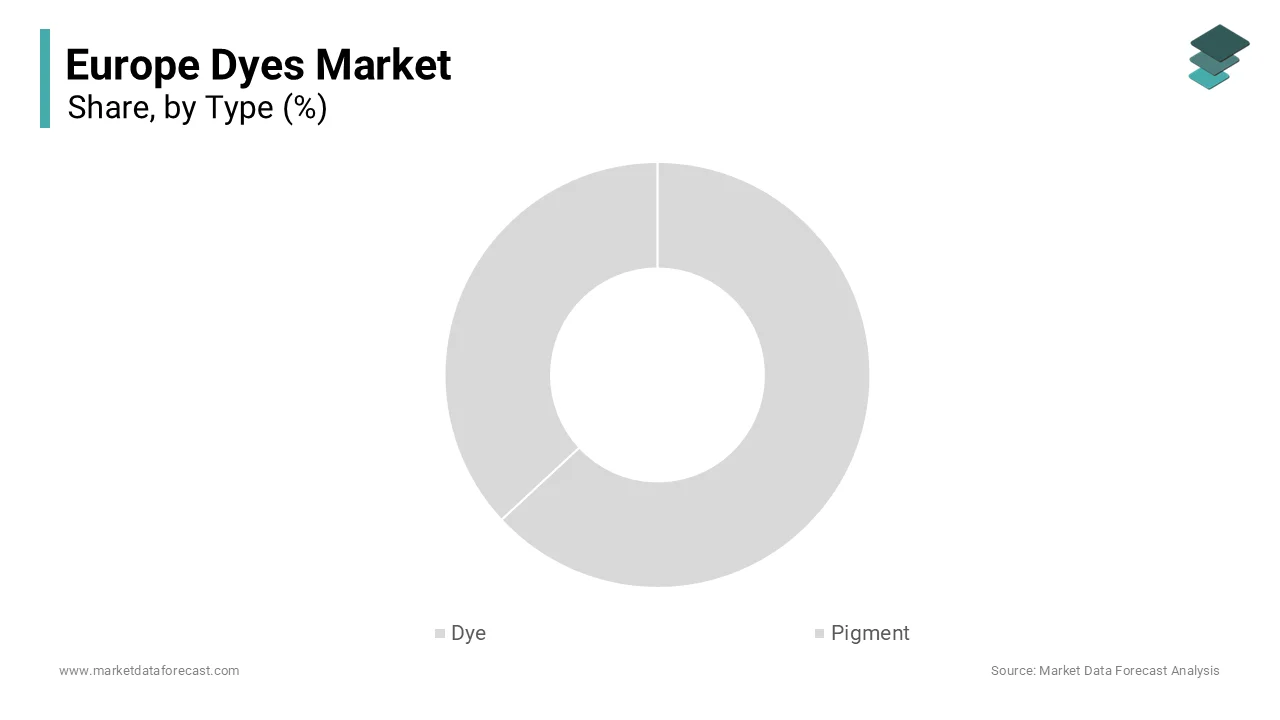
The pigments segment is likely to grow at a fastest CAGR of 4.8% from 2026 to 2034 by increasing demand from the paints and coatings and plastics industries. Pigments offer superior opacity and weather resistance compared to dyes by making them ideal for exterior applications. Construction activities across Europe require durable coatings for buildings and infrastructure, which rely on inorganic pigments for longevity. The renovation wave initiated by the European Union aims to improve energy efficiency in buildings boosting demand for protective coatings. These coatings utilize pigments to provide UV protection and aesthetic appeal. The plastics industry also contributes to this growth as manufacturers seek colored polymers for packaging and automotive components. A significant portion of these plastics is colored using masterbatches containing pigments. The shift towards lightweight vehicles increases the use of colored plastic parts replacing metal. Pigments provide the necessary thermal stability for processing these materials. Innovations in nano pigments offer enhanced performance characteristics such as improved dispersion and color strength. These advancements open new applications in high tech industries. Environmental regulations favor pigments that do not leach into the environment unlike some soluble dyes.
By End User Insights
The textiles segment was the largest by holding 45.6% of the Europe dyes market share in 2025 due to the region’s strong heritage in fashion and technical fabric production. The European Union imported approximately 4.5 million tons of textiles in 2024, according to Eurostat. This massive inflow and domestic production create a consistent demand for dyeing services. Reactive dyes are extensively used for cotton and viscose fabrics, which are popular in European fashion. The luxury sector in countries like Italy and France demands high quality dyeing that ensures vibrant colors and excellent wash fastness. These requirements drive the consumption of premium dye products. Additionally, the rise of sustainable fashion encourages the use of eco-friendly dyes that meet strict environmental standards. Brands are increasingly transparent about their supply chains pushing manufacturers to adopt cleaner dyeing technologies. The technical textile sector also supports this dominance with applications in automotive healthcare and agriculture. Car interiors require dyed fabrics that withstand wear and tear while maintaining aesthetic appeal. The medical sector uses dyed nonwovens for surgical gowns and drapes. These specialized applications require dyes with specific properties such as antimicrobial activity. The integration of digital printing in textile manufacturing further boosts dye usage by enabling customized designs.
The paints and coatings segment is swiftly emerging at an anticipated CAGR of 5.2% throughout the forecast period. The growth of the segment is driven by the robust construction activities and infrastructure development across the region. This investment fuels demand for architectural coatings that protect and beautify buildings. Decorative paints utilize both dyes and pigments to achieve desired colors and finishes. The European Green Deal promotes energy efficient buildings leading to increased renovation projects. These renovations require fresh coats of paint boosting material consumption. Industrial coatings also contribute to this growth as manufacturers seek protective layers for machinery and structures. Corrosion resistant coatings are essential for maintaining infrastructure in harsh environments. The automotive refinish market adds to this demand as vehicle owners seek personalized colors. Water based coatings are gaining popularity due to regulatory restrictions on volatile organic compounds. These formulations require specialized dyes and pigments that perform well in aqueous systems.. Smart coatings that change color with temperature or light are also entering the market. These advanced products rely on sophisticated colorants.
REGIONAL ANALYSIS
Germany Dyes Market Analysis
Germany was the largest contributor in the Europe dyes market by holding 22.3% of the share in 2025. The country’s robust chemical industry provides a strong foundation for dye production and consumption. Germany is home to major chemical companies that lead in innovation and sustainability. These vehicles require dyed interiors and coated exteriors. The construction sector also contributes with high demand for architectural and industrial coatings. Germany’s strict environmental regulations drive the adoption of eco-friendly dyes. The country invests heavily in research and development for sustainable colorants. Recycling initiatives promote the use of dyes that do not hinder material recovery. The presence of skilled labor and advanced manufacturing facilities supports high quality production. Trade links with other European nations facilitate export of specialty dyes. Government policies support the transition to a circular economy influencing market dynamics. Companies in Germany are leaders in digital printing technologies for textiles. This innovation reduces water usage and waste. The focus on precision and quality ensures that German dyes meet global standards. Economic stability and industrial strength maintain Germany’s leading position. Challenges include high energy costs which impact production expenses.
Italy Dyes Market Analysis
Italy dyes market held 15.6% of the share in 2025 with its luxury fashion and textile industries, which drive high demand for premium dyes. Italy is a global leader in wool and silk processing requiring specialized acid and reactive dyes. The textile district of Prato and other regions process millions of tons of fabric annually. The fashion industry’s emphasis on color trends and quality necessitates innovative dye solutions. Italy produced over 600000 tons of textiles in 2024, as per the Italian Textile Machinery Manufacturers Association. This production volume sustains a steady demand for colorants. The leather industry also contributes significantly with Italy being a top producer of finished leather. Leather dyeing requires specific dyes that offer deep penetration and uniformity. Environmental regulations in Italy are stringent prompting investments in wastewater treatment. Companies are adopting closed loop systems to recycle water and dyes. The design heritage of Italy influences global color preferences. Collaborations between dye manufacturers and designers lead to exclusive shades. The tourism sector boosts demand for hospitality textiles which require durable dyes. Export markets for Italian fashion goods extend the reach of its dye consumption. Small and medium enterprises dominate the sector offering flexibility and customization.
France Dyes Market Analysis
France dyes market growth is likely to have prominent growth opportunities with the strong presence in luxury fashion and cosmetics drives demand for high quality colorants. Paris is a global fashion capital influencing trends and requiring vibrant durable dyes. The textile industry in France focuses on high end fabrics including linen and silk. Linen dyeing presents specific challenges that require specialized reactive dyes. The cosmetics industry also utilizes dyes for makeup and hair care products. Strict safety regulations govern these applications ensuring consumer protection. The construction sector in France is active with renovation projects supported by government incentives. The automotive industry contributes with manufacturers like Renault and Peugeot requiring dyed components. France is a leader in sustainable chemistry promoting bio-based dyes. Research institutions collaborate with industry to develop eco friendly alternatives. The cultural emphasis on aesthetics drives innovation in color technology. Export of French fashion and beauty products extends the impact of its dye market. Regulatory compliance is a priority with companies adhering to REACH standards.
United Kingdom Dyes Market Analysis
The United Kingdom dyes market growth is likely to grow with the influence dye demand particularly in wool and technical fabrics. This workforce supports production of garments and home textiles. The construction sector is recovering post pandemic boosting demand for paints and coatings. Infrastructure projects require protective coatings for bridges and buildings. Universities and private firms collaborate on bio-based colorants. The focus on sustainability drives adoption of low impact dyes. Digital printing is gaining popularity for custom fashion items. This technology reduces waste and inventory risks. The retail sector’s shift towards online sales influences packaging colors. E commerce requires durable printed materials. These services drive demand for consistent high quality colors. Trade agreements with non-EU countries open new export opportunities. Challenges include supply chain disruptions and labor shortages.
Spain Dyes Market Analysis
Spain dyes market growth is likely to grow with the strong textile manufacturing base, particularly in Catalonia and Valencia. Spain is a major producer of knitwear and home textiles requiring large volumes of reactive and disperse dyes. This export orientation requires competitive and high quality dyeing services. The tourism sector boosts demand for hospitality textiles, which need durable colors. These projects utilize paints and coatings for interior and exterior finishes. Spain’s climate favors outdoor coatings that resist UV degradation. The automotive sector contributes with manufacturing plants producing vehicles for export. These vehicles require dyed interiors and coated bodies. Environmental regulations are becoming stricter prompting investments in cleaner technologies. Wastewater treatment is a priority for textile mills. Companies are adopting waterless dyeing techniques to conserve resources.
Netherlands Dyes Market Analysis
The Netherlands dyes market growth is likely to have a steady growth with the presence of logistical hub for chemical distribution in Europe. Rotterdam port facilitates import and export of raw materials and finished dyes. This volume includes significant amounts of dyes and pigments. The construction sector is active with sustainable building projects. These projects utilize eco-friendly coatings and paints. The fashion industry although smaller focuses on sustainable and innovative materials. Research institutions in the Netherlands lead in bio-based dye development. Collaborations between universities and industry drive innovation. The circular economy model is widely adopted promoting recycling. Dyes that support recyclability are in high demand. The port infrastructure ensures efficient supply chain management. This efficiency reduces costs and lead times. The focus on sustainability aligns with national goals. Digitalization of supply chains enhances transparency.
Turkey Dyes Market Analysis
Turkey dyes market growth is esteemed to grow with the massive textile industry producing garments for global brands. This production requires substantial quantities of dyes for cotton and synthetic fabrics. The proximity to Europe allows for quick delivery and responsive supply chains. The automotive industry in Turkey is growing with increased vehicle production. These vehicles require dyed components and coatings. The construction sector is active with urban development projects. These projects utilize paints and coatings for residential and commercial buildings. Turkey produces its own dyes reducing dependency on imports. Local manufacturers compete on price and quality. Environmental regulations are tightening prompting upgrades in treatment facilities. Investments in sustainable technologies are increasing. The currency fluctuation impacts import costs of raw materials. However, export revenues help balance these effects. Turkey’s role as a manufacturing hub ensures steady dye demand. Innovation in digital printing is expanding.
COMPETITIVE LANDSCAPE
The competitive landscape of the Europe dyes market is characterized by intense rivalry among established chemical giants and specialized niche players. Major corporations leverage their scale and integrated operations to maintain cost leadership while investing heavily in sustainability initiatives. Innovation in dye chemistry drives competition as companies seek to develop eco friendly alternatives that meet strict regulatory standards. The shift towards circular economy models has intensified the race for bio based and recyclable dye solutions. Regional players focus on customization and technical service to differentiate themselves from global competitors. Price volatility in raw materials forces competitors to optimize operational efficiency and hedge against market fluctuations. Collaborative efforts between dye producers and textile manufacturers are becoming common to create tailored solutions. Regulatory pressures regarding hazardous substances prompt companies to innovate rapidly and adapt their product portfolios. Brand loyalty is increasingly influenced by sustainability credentials and compliance records rather than price alone. This dynamic environment requires continuous investment in research and development to stay ahead of technological curves. Companies must balance cost efficiency with environmental responsibility to remain competitive.
KEY MARKET PLAYERS
The major key players in the Europe dyes market are
- BASF SE
- Huntsman Corporation
- DyStar Group
- Clariant AG
- Archroma
- Kiri Industries Limited
- Synthesia, a.s.
- Atul Ltd.
- Zhejiang Longsheng Group Co., Ltd.
- Colourtex Industries Private Limited
- RUDOLF GROUP
- KRONOS Worldwide, Inc.
- Yorkshire Group
- Sarex Chemicals
- CHT Group (CHT Germany GmbH)
- D.K. Corporation
- Cromatos
- DYE+CHEM EUROPE GmbH
- Jet Dyes and Chemicals
Top Players in Market
- Archroma stands as a pivotal entity in the European dyes landscape specializing in specialty chemicals for textiles and paper. The company focuses on sustainable solutions that reduce water and energy consumption during dyeing processes. Archroma recently expanded its production capabilities in Germany to enhance supply reliability for key European customers. This strategic move ensures consistent availability of high performance reactive and sulfur dyes. The company collaborates closely with fashion brands to develop eco friendly colorants that meet strict regulatory standards. Its EarthColors range utilizes agricultural waste to create bio based shades appealing to environmentally conscious consumers. Archroma invests heavily in research and development to innovate digital printing inks. These efforts strengthen its position as a leader in sustainable textile chemistry. The company’s integrated approach combines product innovation with technical service support. This comprehensive strategy enhances customer loyalty and drives long term growth in the European market.
- Dystar is a major contributor to the Europe dyes market offering a broad portfolio of textile dyes and pigments. The company emphasizes digitalization and sustainability to meet evolving industry demands. Dystar has implemented advanced data analytics tools to optimize dyeing processes for efficiency and consistency. This technology helps manufacturers reduce waste and improve color accuracy significantly. The company recently launched new low impact reactive dyes that require less salt and water. These innovations align with European environmental regulations and consumer preferences for green products. Dystar collaborates with machinery manufacturers to integrate its dyes into digital printing systems. This partnership expands application possibilities and supports the shift towards on demand production. The company also focuses on supply chain transparency ensuring responsible sourcing of raw materials. Its commitment to safety and compliance builds trust with European clients. Dystar’s global network facilitates rapid response to market changes and customer needs.
- Kiri Industries has established a strong presence in the European dyes market through its focus on quality and reliability. The company produces a wide range of reactive and direct dyes used in textile processing. Kiri recently invested in upgrading its manufacturing facilities to meet European environmental standards. These upgrades include advanced wastewater treatment systems that minimize ecological impact. The company collaborates with European distributors to ensure timely delivery and technical support. Kiri focuses on developing cost effective dye solutions that do not compromise on performance. Its product portfolio includes specialized dyes for cotton and blended fabrics. The company participates in industry trade shows to showcase its latest innovations. Kiri emphasizes customer education by providing training on efficient dyeing techniques. This approach helps clients optimize their operations and reduce costs. The company’s commitment to sustainability is evident in its adoption of cleaner production methods. Kiri continues to expand its research capabilities to develop new dye formulations. These efforts strengthen its reputation as a reliable supplier in Europe. The company’s strategic focus on quality and service drives its market growth.
Top Strategies Used by Key Market Participants
Key players in the Europe dyes market primarily focus on sustainability driven innovation to comply with stringent environmental regulations. Companies invest heavily in research and development to create bio based and low impact dyes that reduce water and energy usage. Strategic partnerships with textile manufacturers facilitate the integration of digital printing technologies which offer greater flexibility and reduced waste. Expansion of production capacities in key locations ensures supply chain resilience and faster delivery to customers. Mergers and acquisitions enable firms to acquire specialized technologies and broaden their product portfolios effectively. Digitalization of supply chains enhances transparency and allows for real time monitoring of inventory and logistics. Companies also prioritize customer education and technical support to help clients adopt sustainable dyeing practices. Compliance with REACH regulations is a central strategy to maintain market access and build trust. Investment in wastewater treatment technologies demonstrates commitment to environmental stewardship. These strategies collectively drive competitiveness and long term growth in the European market.
MARKET SEGMENTATION
This research report on the Europe dyes market has been segmented and sub-segmented based on the following categories.
By Type
- Dye
- Pigment
By End User
- Paints & coatings
- Textile
- Printing link
- Plastic
- Others
By Country
- Germany
- UK
- France
- Italy
- Spain