- Product Description Description
- Table of Contents TOC
- List of Table & Figure LOT
- Get Free Sample PDF Sample PDF
Market Size, 2025
$0.50 BnMarket Estimate, 2026
$0.53 BnMarket Forecast, 2034
$0.82 BnCAGR, 2026–2034
5.67%Executive Summary: Europe Egg Replacers Market
- Market Scope: Comprehensive regional analysis of the European egg replacers market covering ingredient sources, product formats, industrial end-user segments, EU allergen regulations, and precision fermentation innovations.
- Market Valuation: Valued at USD 1.30 billion (2025), estimated at USD 1.42 billion (2026), and projected to reach USD 2.87 billion by 2034, registering a robust CAGR of 9.2% (2026–2034).
- Primary Growth Drivers: Rising vegan and flexitarian demographics seeking animal-free alternatives, stringent EU allergen labeling regulations compelling reformulation in industrial baking, and increasing sustainability mandates aligned with Farm to Fork objectives. Key opportunities are backed by fermentation-derived protein functionality and clean-label formulation integration.
Key Market Segment Metrics (2026–2034)
| Category | Leading Segment (2025 Position) | Fastest-Growing Segment |
|---|---|---|
| By Ingredient Type & Format | Plant-Based Replacers (dominated with a 58.3% share) & Liquid Formats (captured 52.7% share) | Fermentation-Derived Proteins (CAGR of 12.4%) & Powdered Variants (expanding rapidly for dry mix integration) |
| By End User & Channel | Industrial Bakeries (led end-user segments with 64.8% share in 2025) | QSR and Foodservice Integrations (gaining traction for menu diversification) |
| By Region / Country | Germany (occupied 24.6% of the regional market in 2025 supported by food tech infrastructure and high vegan penetration) | France (anticipated to witness the fastest national growth at a CAGR of 10.8% through 2034) |
Major Market Players & Market Structure
Market Structure: Highly competitive European food science and plant-based protein landscape featuring major multinational corporations and specialized biotech startups competing intensely on precision fermentation capacity, Novel Food approvals, and lifecycle carbon footprint validation.
Key Companies: Cargill Incorporated, ADM Company, Kerry Group plc, Ingredion Incorporated, Tate & Lyle PLC, DuPont Nutrition & Biosciences, Corbion N.V., SavorEat Ltd., Clara Foods (now The EVERY Company), and Ener-G Foods Inc.
Europe Egg Replacers Market Size
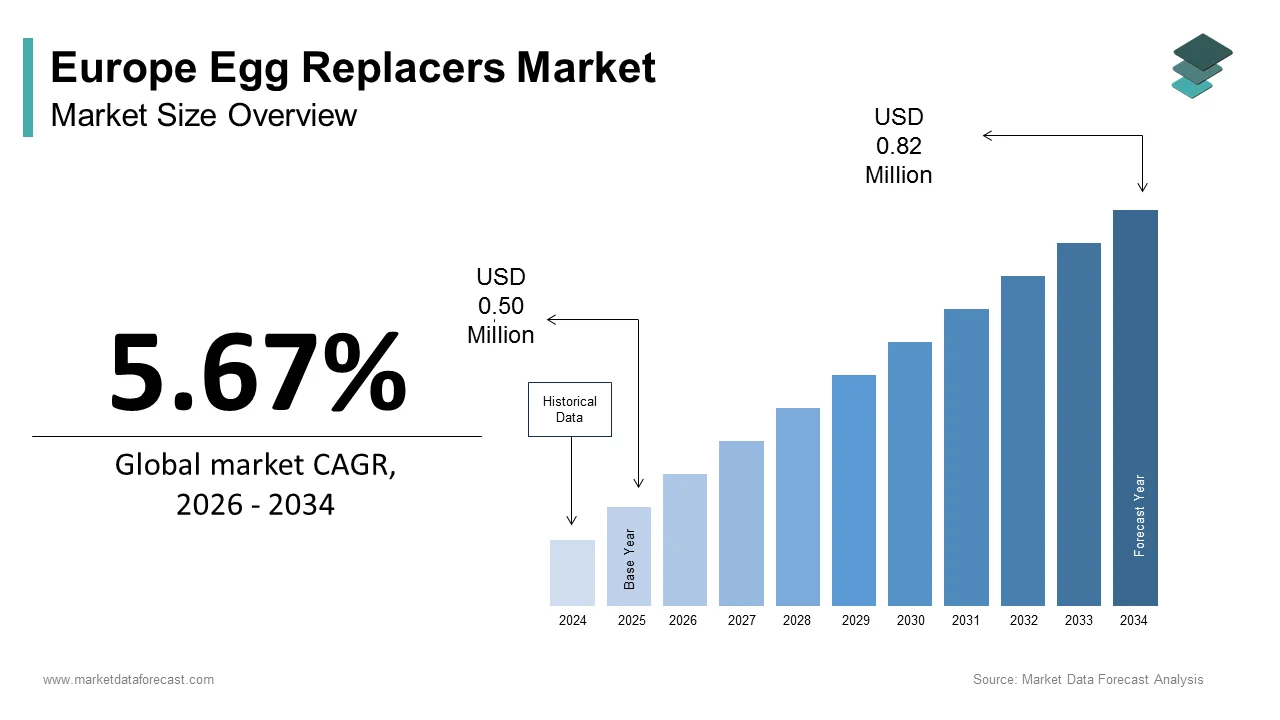
The size of the Europe Egg Replacers Market was expected to be worth USD 0.50 billion in 2025 and is anticipated to be worth USD 0.82 billion by 2034 from USD 0.53 billion in 2026, growing at a CAGR of 5.67% during the forecast period.
An Egg Replacer is a food ingredient or product used in place of eggs to mimic their specific functions in cooking and baking, such as binding, leavening (rising), and providing moisture. These substitutes include starches, legume proteins, hydrocolloids, and fermentation-derived proteins like those from precision fermentation. Unlike generic additives, modern egg replacers in Europe are engineered to meet stringent clean label expectations, allergen-free requirements, and sustainability benchmarks. According to Eurostat, a significant, growing proportion of European consumers are actively reducing their meat consumption and adopting plant-based eating habits, resulting in sustained market demand for animal-free alternatives. Furthermore, European food safety assessments indicate that egg allergy is among the most frequent food allergies in children, which drives a strong demand for safe, egg-free alternatives. The market is also shaped by the EU’s Farm to Fork Strategy, which encourages reduced reliance on intensive animal agriculture. Consequently, egg replacers in Europe function not merely as functional substitutes but as enablers of ethical, inclusive, and environmentally conscious food systems.
MARKET DRIVERS
Rising Prevalence of Egg Allergies and Dietary Restrictions
The incidence of egg allergies is growing, particularly among children, which propels the expansion of the Europe egg replacers market. This trend is a primary driver for egg replacer adoption across European food manufacturing and retail sectors. According to multiple studies, egg allergy is one of the most common food allergies in young children, ranking second only to cow's milk in prevalence. Mandatory EU regulations require that egg content be clearly highlighted in ingredient lists, which prompts food manufacturers to innovate and develop allergen-free alternatives. Major food manufacturers in Europe have made significant commitments to switch to cage-free egg sources to improve animal welfare standards in response to consumer demand. School meal programs in countries like Sweden and Germany now mandate egg-free options, creating institutional demand for reliable binders like chickpea flour and methylcellulose. Research suggests that a significant number of parents of children with food allergies are actively looking for allergen-free, clearly labeled products, which is shaping purchasing habits across food categories. This health-driven imperative ensures consistent innovation and formulation shifts toward safe, functional, and compliant egg replacers across the European food landscape.
Expansion of Plant-Based and Vegan Food Innovation
The region’s accelerating shift toward plant-based diets is significantly amplifying the growth of the Europe egg replacers market. These high-performance alternatives are increasingly sought after in mainstream food production. Data indicates that over one-third of Europeans are reducing their meat consumption, identifying as flexitarian, vegetarian, or vegan. This cultural shift is reflected in product development. The European plant-based sector is expanding, supported by industry and regulatory efforts to introduce diverse, innovative, and functional food alternatives. Companies like Oatly and Alpro use potato starch and pea protein isolates to mimic egg functionality in cakes and custards, while startups such as The EVERY Company leverage precision fermentation to produce animal-free egg proteins. Retailers like Carrefour and Tesco have introduced dedicated vegan bakery sections, all relying on advanced replacers to ensure a consistent rise and crumb structure. Driven by the EU’s Green Deal to diversify protein sources, egg alternatives are becoming vital for brands to meet ethical consumer demands without sacrificing sensory quality or processing efficiency. These ingredients support sustainable, plant-based, and functional food development in line with circular economy goals.
MARKET RESTRAINTS
Consumer Skepticism Toward Highly Processed Ingredients
Strong consumer preference for clean label and minimally processed ingredients often conflicts with the technical complexity of functional substitutes, which is a significant restraint in the Europe egg replacers market. Many effective egg replacers, such as methylcellulose, xanthan gum, or modified starches, are perceived as artificial or industrial by European shoppers. A significant portion of consumers in France and Germany often avoid products containing E-numbered additives, treating them with suspicion even when they serve functional purposes, according to sources. This skepticism limits formulators’ options. Aquafaba and flaxseed work well in home baking. However, they lack consistency at an industrial scale. According to research, European consumers are increasingly skeptical of "free-from" claims, such as "egg-free," if the product's ingredient list contains long or unrecognizable components, demanding greater transparency. Consequently, manufacturers face a trade-off between functionality and label transparency, often resulting in compromised texture or higher costs when using whole food alternatives. Market penetration for clean label replacements will remain restricted to niche segments until they achieve cost and performance parity.
Regulatory Ambiguity Around Novel Protein Sources
Evolving and inconsistent regulatory pathways for novel ingredients, particularly those derived from precision fermentation or cellular agriculture, are limiting the expansion of the Europe egg replacers market. Emerging yeast and fungal proteins must navigate a lengthy novel food approval process under EU Regulation 2015/2283, unlike established plant-based options like soy or chickpea. According to studies, the average approval process for novel foods in the European Union significantly exceeds the statutory timeframe, creating substantial delays for market commercialization. As of 2025, precision fermentation-derived egg proteins developed by various startups have secured safety recognition in the United States, while similar products continue to move through the European Union’s lengthy authorization process. This regulatory lag disadvantages European food innovators and discourages investment in next-generation replacers. Furthermore, the lack of harmonized definitions for terms like “vegan” or “egg-free” across member states creates labeling confusion. German food authorities and courts frequently enforce strict definitions for traditional animal-based products, creating legal ambiguities for the labeling of plant-based alternatives that mimic the naming of traditional counterparts. Technological advancement and market diversification within the egg replacer sector will remain stalled until the EU clarifies its novel food assessments and marketing standards.
MARKET OPPORTUNITIES
Integration of Egg Replacers in Clean Label Bakery Innovation
The convergence of clean label trends and advanced plant protein technology offers a transformative opportunity for the Europe egg replacers market. This is particularly relevant for the region’s bakery sector. Innovations in pulse and cereal protein isolation now enable functional performance without synthetic additives. Companies like Roquette and Ingredion have developed pea and rice protein blends that provide emulsification and volume comparable to eggs in muffins and cookies, using only recognizable ingredients. Puratos is expanding its portfolio of plant-based egg alternatives, focusing on using faba bean and fiber combinations to improve the texture of vegan bakery products. Retailers like Edeka and Sainsbury’s are actively seeking such solutions to meet their 2030 plant-based product targets. EIT Food is funding multiple collaborative projects focused on developing sustainable, clean-label texturizing ingredients to replace conventional, functional ingredients in the food system. The demand for clean-label, high-performance plant-based alternatives is driving significant growth in the bakery sector, shifting these ingredients from niche to mainstream.
Growth of Sustainable and Climate-Conscious Food Procurement
The EU’s policy push toward sustainable food systems is creating high-impact prospects for low-footprint egg replacers in public and private procurement. This is expected to boost the growth of the Europe egg replacers market. Under the Farm to Fork Strategy, the European Commission aims to reduce the environmental impact of food production, with animal agriculture identified as a key emissions source. Scientific literature indicates that plant-based proteins, such as pea protein, have a significantly lower carbon footprint compared to animal-derived protein sources like eggs. This disparity is driving institutional change. The City of Copenhagen is implementing a strategy to reduce the carbon footprint of municipal catering through increased plant-rich meals and organic food sourcing, driving adoption of sustainable food options. Similarly, major global catering companies are committing to increasing plant-forward options on their menus as part of their sustainability goals to reduce the environmental impact of their food services. Startups like Evolved by Nature offer silk fibroin-based replacers with water usage lower than eggs, appealing to ESG-focused brands. The significant economic volume of EU public procurement is increasingly being used to drive sustainable food choices, positioning lower-carbon alternatives as a key component of climate-aligned catering strategies.
MARKET CHALLENGES
Fragmented Technical Performance Across Applications
The lack of universal functionality across diverse food applications is a major challenge in the Europe egg replacers market. This forces manufacturers to use multiple replacers or accept quality compromises. Eggs perform over a dozen distinct roles, foaming in meringues, binding in burgers, and gelling in custards, and no single substitute replicates all functions. According to research, food developers frequently find that egg replacers have limited effectiveness, often restricting their functionality to only a few specific product applications. For instance, flaxseed excels in dense breads but fails in light sponge cakes, while starches provide structure but lack emulsification. This limitation increases R&D costs and complicates supply chains. Furthermore, achieving the functional performance of eggs in cake formulations requires extensive, multi-ingredient testing, rather than relying on a single, readily available substitute. Technical fragmentation will hinder the adoption of complex products, such as croissants, quiches, and angel food cakes, until versatile, universal solutions emerge, restricting market growth to simpler formulations.
Price Parity and Cost Volatility of Plant-Based Inputs
The persistent cost premium of high-performance substitutes and volatility in raw material prices cause economic headwinds and constrain the expansion of the Europe egg replacers market. Conventional egg prices in the EU have increased significantly, widening the cost gap with functional plant-based replacers, which remain more expensive than conventional alternatives, based on European Commission and market analysis data. This price gap is especially challenging for mass market bakery and pasta producers operating on thin margins. Moreover, climate events and export restrictions affect input stability. Drought conditions in European growing regions have negatively impacted chickpea yields, leading to increased costs for processed chickpea products like aquafaba, according to sources. Small and medium food enterprises, which represent almost all EU food processors according to Eurostat, generally have less capacity to manage ingredient price volatility compared to larger competitors. The expansion of vertical integration and long-term contracts notwithstanding, the scarcity of affordable, reliable substitutes continues to limit widespread adoption in price-sensitive categories, posing a structural obstacle to European market democratization.
REPORT COVERAGE
| REPORT METRIC | DETAILS |
| Market Size Available | 2025 to 2034 |
| Base Year | 2025 |
| Forecast Period | 2026 to 2034 |
| CAGR | 5.67% |
| Segments Covered | By Form, Source, Ingredient, Application, And Region |
| Various Analyses Covered | Global, Regional & Country Level Analysis; Segment-Level Analysis; DROC, PESTLE Analysis; Porter’s Five Forces Analysis; Competitive Landscape; Analyst Overview of Investment Opportunities |
| Regions Covered | UK, France, Spain, Germany, Italy, Russia, Sweden, Denmark, Switzerland, Netherlands, Turkey, and the Czech Republic |
| Market Leaders Profiled | Glanbia Plc, Corbion NV, Ingredion Incorporated, Tate & Lyle Plc, Natural Products, Inc., TerraVia Holdings, Inc., Ener-G Foods, Inc., Puratos Group, Orchard Valley Foods Limited, and Archer Daniels Midland Company. |
SEGMENTAL ANALYSIS
By Form Insights
The dry egg replacers segment dominated the Europe egg replacers market and accounted for a substantial share in 2025. The dominance of the segment is driven by its logistical and operational advantages in industrial food production. Dry powders such as pea protein isolate, potato starch, and methylcellulose offer extended shelf life without refrigeration, significantly reducing storage and transportation costs. Large-scale European bakery and pasta manufacturers in key markets often prefer dry ingredient replacers due to their ease of handling and compatibility with automated, industrial-scale production lines. Additionally, dry formats eliminate microbial risks associated with moisture, aligning with the European Food Safety Authority’s stringent hygiene guidelines for allergen-free facilities. Retailers like Carrefour and Edeka also favor dry mixes for home baking kits, citing consumer preference for pantry-stable, non-perishable ingredients. The ability to precisely dose and pre-blend dry replacers into flour bases ensures consistent performance across batches, making them indispensable for mass market food processors prioritizing efficiency, safety, and cost control.
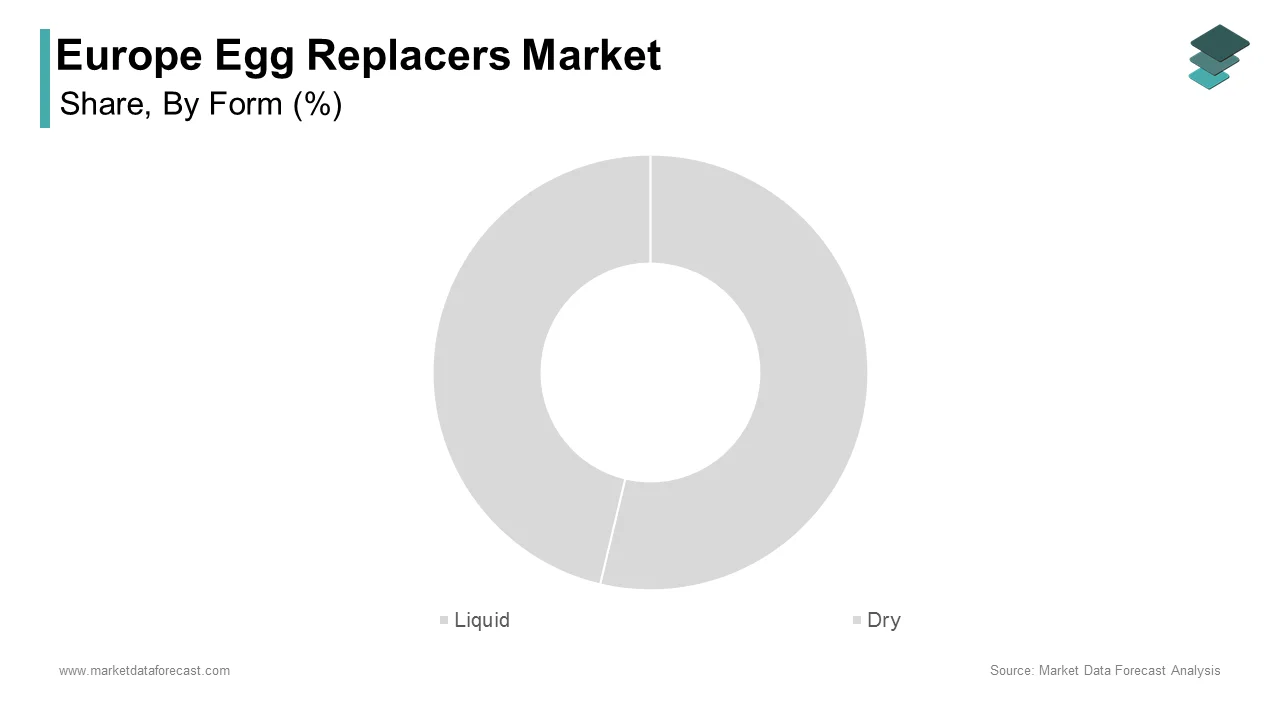
The liquid egg replacers segment is likely to experience the fastest CAGR of 9.3% during the forecast period due to demand for ready-to-use solutions in artisanal food production and clean label applications. Unlike dry powders, liquid formats such as aquafaba, flaxseed gel, and fermented plant proteins deliver immediate functionality without rehydration, preserving delicate textures in meringues, custards, and sponge cakes. Small and medium-sized bakeries across Southern Europe are increasingly transitioning to liquid plant-based alternatives to maintain the integrity of traditional recipes while eliminating the need for complex ingredient adjustments. This trend aligns with initiatives aimed at sustainability in the food sector. Premium pastry chefs increasingly use silk fibroin and algal protein liquids supplied by startups like Evolved by Nature, which achieve foam stability comparable to egg whites in blind taste tests. The rise of plant-based cafés further amplifies demand for pourable, user-friendly alternatives that integrate seamlessly into cold preparations like dressings and mousses. The convergence of better refrigerated logistics and a consumer bias toward liquid-based freshness has positioned this segment as the leader for high-end, sensory-driven applications.
By Source Insights
The plant-based egg replacers segment held the majority share of the Europe egg replacers market in 2025. The supremacy of the segment is attributed to strong alignment with consumer ethics, regulatory frameworks, and supply chain transparency. Legumes, cereals, and tubers, including chickpeas, peas, oats, and potatoes, serve as primary sources due to their functional proteins, starches, and widespread non-GMO status. The European plant-based food market is experiencing rapid growth driven by consumer demand and retailer clean-label initiatives, prompting increased innovation in plant-derived ingredient replacements. Major brands like Oatly and Alpro rely on oat and pea proteins to mimic egg functionality in cakes and sauces, while school meal programs in Sweden and Germany require allergen-free, plant-only formulations. "EFSA underlines that, even when adopting plant-based diets, maintaining stringent hygiene protocols is mandatory to prevent foodborne diseases, as risks exist regardless of the source of food. Furthermore, the EU’s Farm to Fork Strategy actively promotes plant protein diversification, providing policy tailwinds. This convergence of health, sustainability, and regulatory support ensures plant-based replacers remain the undisputed standard in Europe’s egg substitution ecosystem.
The microbial and fermentation-derived egg replacers segment is on the rise and is expected to be the fastest-growing segment in the market by witnessing a CAGR of 24.1% over the forecast period. These proteins, produced by engineered yeast or fungi expressing egg white proteins like ovalbumen, offer molecularly identical functionality without animal involvement. Companies utilizing precision fermentation are developing egg-alternative proteins that offer similar culinary functionalities, such as foaming and emulsifying, while potentially requiring significantly lower land and water resources compared to traditional poultry farming. Food technology companies are piloting fermentation-derived proteins in baked goods, aiming to replicate the volume and structure provided by traditional eggs. EU Novel Food approval remains pending for several candidates. However, strategic partnerships with Unilever and Nestlé signal strong industry confidence. Increased European Union funding through programs like Horizon Europe is supporting innovation in alternative proteins, aiding the development of ingredients designed to replace animal-based proteins in high-performance applications where plant-based alternatives currently fail.
By Ingredient Insights
The starch-based egg replacers segment was the largest in the Europe egg replacers market and captured a 38.2% share in 2025. The leading position of the segment is supported by the widespread availability, low cost, and functional versatility of starches derived from potato, tapioca, corn, and wheat. Starches provide critical binding and moisture retention in baked goods, mimicking the egg’s role in maintaining crumb structure and shelf life. Campden BRI notes that various starches, including modified potato starch, are valuable in vegan baking for their ability to replace eggs and dairy while maintaining a neutral flavor profile. Additionally, food-grade starches are authorized as safe additives under EU regulations and are frequently used in the industry to simplify allergen labeling for gluten-free or allergy-friendly products. Retailers like Tesco and Lidl mandate starch-based systems for private-label vegan bakery lines to ensure cost efficiency and supply chain stability. The integration of enzymatically modified starches has further enhanced performance, enabling better volume and texture in gluten-free and egg-free products. This combination of affordability, regulatory acceptance, and technical reliability ensures starch remains the foundational ingredient in Europe’s egg replacer formulations.
The algal flour segment is expected to exhibit a noteworthy CAGR of 18.7% from 2026 to 2034. The rapid growth of the segment is propelled by its unique functional profile and sustainability credentials. Derived from whole algae, this ingredient provides natural emulsification, fat replacement, and moisture binding, properties that closely mimic egg yolk in sauces, dressings, and rich baked goods. Algal flour provides a healthier lipid profile and improved texture for food products, attracting consumer interest. Sales of this ingredient to European manufacturers for vegan sauces have increased, driven by product reformulation efforts. Besides, the ingredient offers a significantly lower water footprint compared to traditional egg-based alternatives, supporting environmental sustainability goals. Additionally, algal flour is non-allergenic, non-GMO, and produced in closed photobioreactors, ensuring consistent quality and traceability. Rising clean label demands and narrowing performance gaps are positioning algal flour as a premium, sensory-critical solution across Europe.
By Application Insights
The bakery and confectionery led the Europe egg replacers market and occupied a share of 54.6% in 2025 because of the high egg dependency in cakes, muffins, cookies, and pastries for structure, rise, and moisture. Industrial bakeries across Europe are increasingly adopting plant-based, egg-free options, driven by rising demand for vegan products. Retailers like Carrefour and Sainsbury’s now dedicate entire bakery sections to vegan products, all relying on advanced replacers to ensure consistent volume and texture. Nestlé has transitioned to using cage-free eggs in its European products to improve animal welfare, alongside expanding its plant-based, dairy-free offerings. The European Commission’s School Fruit Scheme also mandates allergen-free snacks, creating institutional demand for safe, palatable alternatives. The substantial European bakery sector is a major driver for innovation in sustainable ingredient alternatives.
The sauces, dressings, and spreads segment is predicted to witness the highest CAGR of 12.4% between 2026 and 2034. The swift expansion of the segment is fueled by the rapid rise of plant-based condiments and clean-label reformulation. Traditional mayonnaise, aioli, and hollandaise rely heavily on egg yolk for emulsification, creating a significant substitution challenge that is now being met with innovative ingredients like algal flour, faba bean protein, and fermented plant lecithins. Retailers report that vegan mayonnaise sales grew year on year, outpacing conventional variants. The European Food Safety Authority’s strict allergen labeling rules further accelerate reformulation, as even trace egg residues must be declared. Startups like Sir Kensington’s and Remoulade supply EU food service chains with egg-free dressings that maintain creamy texture and shelf stability. The surge in demand for ethical, allergen-friendly, and healthy sauces across Europe makes high-performance, sensory-optimized egg substitutes the fastest-growing sector for innovation.
REGIONAL ANALYSIS
Germany Egg Replacers Market Analysis
Germany dominated the Europe egg replacers market and accounted for a 24.8% share in 2025. This dominance of Germany is driven by an exceptionally high consumer awareness regarding animal welfare and sustainability, which drives widespread adoption across both retail and food service sectors. German consumers are rapidly swapping traditional animal products for plant-based versions as these alternatives become a standard part of the weekly grocery shop. The presence of major ingredient suppliers like Beneo and Martin Bauer facilitates local production of starch andprotein-basedd egg substitutes, reducing reliance on imports. Supermarket chains such as Aldi and Lidl have expanded their private label vegan ranges significantly, making egg replacers accessible to the mass market at competitive price points. Government labeling standards and strict regulations on animal farming have further accelerated the shift toward cruelty-free baking ingredients among conscientious consumers. Nearly half of all people in Germany are now intentionally cutting back on animal products, creating a massive audience for high-quality egg and meat replacements. The robust network of vegan bakeries and restaurants in cities like Berlin and Munich serves as a testing ground for new product formulations before wider European rollout. This unique combination of ethical consumerism and strong industrial capacity ensures Germany remains the undisputed leader in shaping market trends and volume growth.
United Kingdom Egg Replacers Market Analysis
The United Kingdom was the next prominent country in the European egg replacers market and captured a 19.3% in 2025. The expansion of the UK market is supported by rapid innovation in ready-to-eat meals and bakery products, where manufacturers seek clean-label solutions to replace eggs without compromising texture or taste. It demonstrates remarkable agility in integrating these ingredients into mainstream food culture. British retailers like Tesco and Sainsbury have dedicated entire aisles to plant-based living, which has normalized the use of aquafaba and flaxseed-based replacers among everyday shoppers. The Food Standards Agency has supported clear labeling initiatives that help consumers identify vegan-friendly options easily, thereby boosting confidence in alternative ingredients. The number of people in Britain strictly avoiding animal products has climbed past one million, while millions more are experimenting with "meat-free" days. The food service sector, including major coffee chains and fast food outlets, has reformulated popular items like pancakes and muffins to be egg-free, expanding the commercial demand significantly. Startups in London and Manchester are securing substantial venture capital to develop novel fermentation-derived egg proteins that mimic the functional properties of real eggs precisely. This vibrant ecosystem of retail support and culinary experimentation positions the UK as a critical driver of product diversity and market penetration.
France Egg Replacers Market Analysis
France maintains a significant position in the European market. The French market is evolving rapidly as younger generations and urban populations increasingly prioritize health and environmental concerns over conventional recipes. This is despite its strong historical attachment to traditional dairy and egg-based cuisine. French government initiatives under the National Nutrition and Health Program encourage reduced consumption of animal products, which has subtly shifted consumer behavior in supermarkets and school canteens. Major food conglomerates like Danone and Roquette are investing heavily in research to create egg alternatives that satisfy the discerning palates of French consumers who demand high quality and authentic taste profiles. Even in the heart of traditional French baking, city dwellers are increasingly choosing plant-based ingredients for their home-made cakes and pastries. The rise of "vegan patisseries" in major cities has challenged the notion that eggs are indispensable in French baking, proving that high-quality replacers can achieve similar results. Import volumes of chickpea flour and lupin protein have surged as local manufacturers seek raw materials for domestic production lines. This gradual but steady integration of egg replacers into a traditionally conservative food culture suggests a sustainable long-term growth trajectory driven by quality and innovation.
Italy Egg Replacers Market Analysis
Italy experienced a consistent growth in the Europe egg replacers market owing to health considerations and the need for allergen-free solutions. The market status here is unique due to the high prevalence of food allergies and intolerances among the Italian population, which necessitates safe and reliable egg substitutes for home cooking and industrial food production. Italian families are increasingly adopting Mediterranean vegan diets that emphasize legumes and vegetables, naturally aligning with the ingredients used in many egg replacers. The country boasts a thriving network of specialized health food stores and pharmacies that stock premium egg alternative brands catering to specific dietary requirements. Recent surveys reveal that over 30% of Italian consumers actively seek out products labeled as cholesterol-free or suitable for vegans when purchasing baking ingredients. Domestic pasta and bakery manufacturers are experimenting with fava bean and potato protein blends to create egg-free versions of traditional staples without losing their iconic texture. The government has also introduced stricter allergen labeling laws whichaveas increased transparency and trust in alternative ingredient lists. This focus on health safety and the adaptation of traditional recipes to modern dietary needs ensures that Italy remains a significant and resilient market segment.
Netherlands Egg Replacers Market Analysis
The Netherlands is likely to grow notably in the European hierarchy from 2026 to 2034. It leverages its position as a global logistics hub to facilitate the distribution of egg replacers across the continent. The market status is heavily influenced by the powerful Dutch food processing industry, which utilizes large volumes of starch and protein-based ingredients for exported food products. Companies like Avebe and Royal Cosun are world leaders in potato and sugar beet processing, providing key raw materials for the production of cost-effective and functional egg substitutes. The Dutch government actively supports the protein transition through subsidies and innovation clusters aimed at developing sustainable food systems, reducing dependence on animal agriculture. Rotterdam port serves as a critical entry point for imported ingredients such as guar gum and xanthan gum, which are essential components in many commercial egg replacer formulations. Local consumption is also rising as the number of vegetarians and vegans in the Netherlands continues to grow, exceeding 10% of the population in recent census data. The strong collaboration between universities and food tech startups in Wageningen fosters continuous improvement in the functionality and sensory properties of plant-based alternatives. This strategic blend of industrial capacity, logistical advantage, and progressive consumer habits makes the Netherlands a pivotal player in the supply chain and market development.
COMPETITION OVERVIEW
The competition in the Europe egg replacers market is characterized by a dynamic interplay between global ingredient giants, specialized European suppliers, and agile biotech startups. Established players leverage decades of food science expertise and integrated supply chains to offer reliable, scalable plant-based solutions, while emerging firms compete through novel fermentation or cellular agriculture technologies. Intense rivalry centers on clean label compliance, functional performance, and cost efficiency, particularly as manufacturers seek a drop in replacements for complex applications like meringues and custards. Regulatory uncertainty around novel foods creates uneven playing fields, favoring companies with robust regulatory affairs capabilities. Simultaneously, consumer skepticism toward processed ingredients pressures brands to balance functionality with label simplicity. This multifaceted environment rewards technical excellence, regional adaptability, and authentic alignment with Europe’s ethical, health, and sustainability priorities, making the market highly competitive yet rich with opportunity for differentiated innovation rooted in trust and performance.
KEY MARKET PLAYERS
A few major players of the Europe egg replacers market include
- Glanbia Plc
- Corbion NV
- Ingredion Incorporated
- Tate & Lyle Plc
- Natural Products, Inc
- TerraVia Holdings, Inc.
- Ener-G Foods, Inc
- Puratos Group
- Orchard Valley Foods Limited
- Archer Daniels Midland Company
Top Strategies Used by the Key Market Participants
Key players in the Europe egg replacers market pursue several strategic imperatives to navigate consumer expectations and regulatory landscapes. First, they invest in clean-label plant-based proteins and starches that avoid synthetic additives and align with EU non-GMO and allergen-free requirements. Second, they develop application-specific solutions tailored to bakery confectionery and savory segments to ensure functional and sensory parity with eggs. Third, they form strategic partnerships with food manufacturers, retailers, and research institutions to co-create validated formulations and accelerate adoption. Fourth, they expand production capacity for pulse and cereal proteins to secure supply and reduce costs amid rising demand. Fifth, they explore next-generation technologies like precision fermentation to deliver molecularly identical egg proteins while maintaining animal-free credentials. These strategies collectively enable companies to differentiate through performance transparency and sustainability in Europe’s rapidly evolving alternative protein ecosystem.
Leading Players in the Europe Egg Replacers Market
- Ingredion is a global ingredient solutions provider with significant influence in the Europe egg replacers market through its portfolio of plant-based functional proteins and starches. The company leverages its expertise in pulse and cereal science to develop clean-label replacers that mimic egg functionality in bakery, confectionery, and savory applications. It also partnered with major European bakery chains to reformulate vegan products using its NON-GMO certified ingredients. Through collaborations with research institutions like the University of Wageningen, Ingredion advances sensory and textural parity with eggs while aligning with EU sustainability and food safety mandates. These initiatives reinforce its global leadership in plant-based ingredients and strengthen its role as a trusted innovation partner in Europe’s evolving alternative protein landscape.
- Roquette is a French leader in plant-based ingredients, renowned for its NUTRALYS pea protein and specialty starches used extensively as egg replacers across European food manufacturing. The company combines agricultural sourcing from EU farms with advanced bioprocessing to deliver consistent, clean-label solutions for bakery, sauces, and meat analogs. It also introduced its Plant-based Egg Alternative platform featuring tailored blends for muffins, cakes, and dressings, validated in industrial trials with Nestlé and Carrefour. By prioritizing traceability, non-GMO certification, and low environmental impact, Roquette strengthens its position as a cornerstone supplier in Europe’s shift toward sustainable, ethical food systems.
- Puratos is a Belgian innovator in bakery, patisserie, and chocolate ingredients, with deep integration into Europe’s artisanal and industrial baking sectors. The company addresses egg replacement through its Selovery Vegan range, which uses oat fiber, faba bean protein, and enzymatic systems to replicate the egg’s volume and crumb structure in brioche and cakes. It also collaborated with fermentation startups to test precision-derived proteins in premium pastries, achieving sensory parity in blind trials at its Center for Bread Flavour in Belgium. By combining technical support, regional adaptability, and clean label integrity, Puratos empowers European bakers to meet growing consumer demand for vegan, allergen-free, and sustainable baked goods without compromising quality.
MARKET SEGMENTATION
This research report on the Europe Egg replacers market has been segmented and sub-segmented based on form, source, ingredient, application, & region.
By Form
- Liquid
- Dry
By Source
- Plants
- Animals
By Ingredient
- Starch
- Dairy Protein
- Soy-Based Products
- Algal Flour
By Application
- Sauces
- Dressings
- Bakery And Confectionery
- Savories
- Spreads
By Region
- UK
- France
- Spain
- Germany
- Italy
- Russia
- Sweden
- Denmark
- Switzerland
- Netherlands
- Turkey
- Czech Republic
- Rest of Europe