- Product Description Description
- Table of Contents TOC
- List of Table & Figure LOT
- Get Free Sample PDF Sample PDF
Market Size, 2025
$33.05 BnMarket Estimate, 2026
$35.50 BnMarket Forecast, 2034
$62.84 BnCAGR, 2026–2034
7.4%Europe Electroceuticals Market Size, Growth, Trends & Forecast (2026–2034)
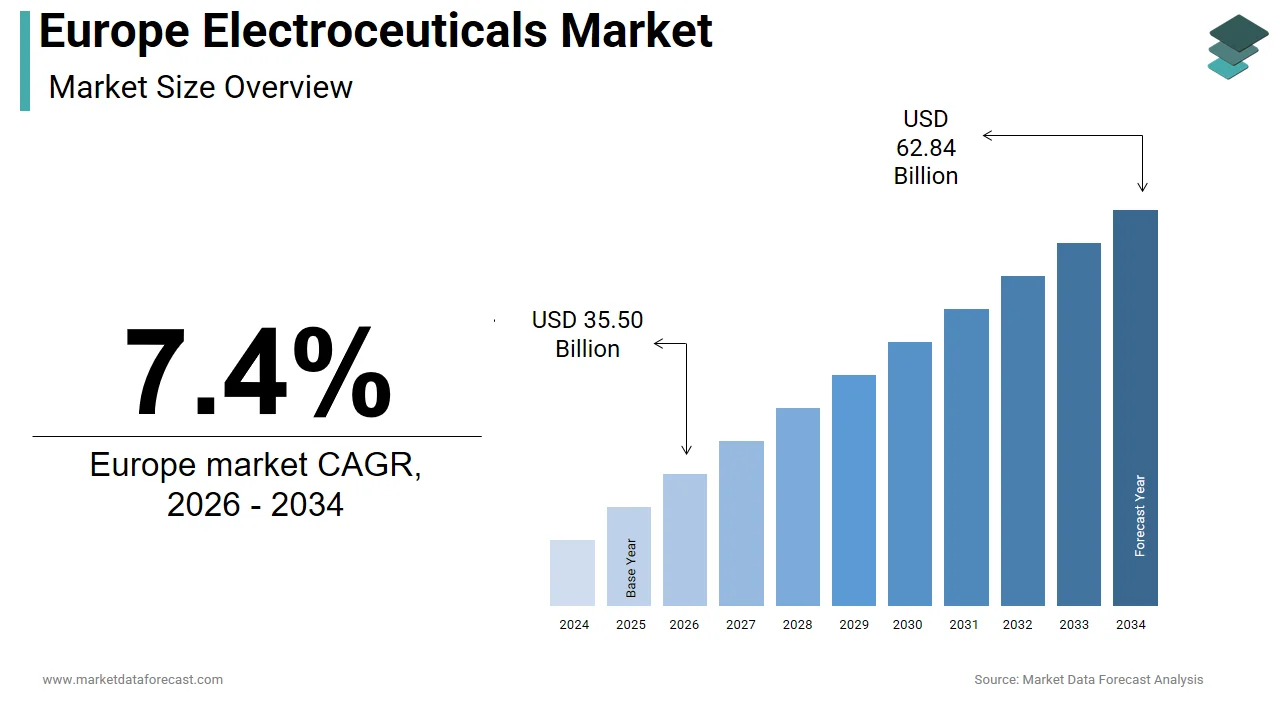
The Europe electroceuticals market size was valued at USD 33.05 billion in 2025, stands at USD 35.50 billion in 2026, and is projected to reach USD 62.84 billion by 2034, growing at a compound annual growth rate (CAGR) of 7.4% from 2026 to 2034. Driven by the rising prevalence of chronic non-communicable diseases, rapid innovations in bioelectronic medicine and neuromodulation, and a growing patient preference for minimally invasive, targeted therapies over long-term pharmaceutical regimens, the market demonstrates widespread expansion across European healthcare systems.
Key Executive Metrics (At-a-Glance)
- 2025 Base Valuation: USD 33.05 Billion
- 2026 Current Valuation: USD 35.50 Billion
- 2034 Forecast Valuation: USD 62.84 Billion
- Compound Annual Growth Rate (CAGR): 7.4% (2026–2034)
- Regional Highlights: Germany commands the regional market with a 22.6% share, backed by a robust healthcare infrastructure, high per capita spending, and active government funding for bioelectronic research.
Core Market Drivers & Growth Triggers
- High Burden of Chronic Conditions: Non-communicable diseases accounting for over 86% of regional deaths, driving demand for non-pharmacological, personalized interventions.
- Neuromodulation Advancements: Breakthroughs in microelectronics, closed-loop systems, and artificial intelligence integration that enhance treatment efficacy and personalization.
Primary Market Restraints & Challenges
- High Costs & Complex Regulations: Intensive preclinical/clinical testing requirements alongside strict MDR and ISO standards that limit market entry for smaller startups.
- Reimbursement & Data Gaps: Inconsistent national reimbursement models and a scarcity of long-term longitudinal clinical data impacting wider patient adoption.
Europe Electroceuticals Market Segmentation Breakdown
| Segment Category | Dominant / Leading Segment | Fastest-Growing Segment |
|---|---|---|
| By Product | Pacemakers (43% share in 2024) | Spinal Cord Stimulators (CAGR: 17.4% through 2033) |
| By Type of Device | Implantable Devices (63.8% share in 2024) | Non-Invasive Devices (CAGR: 14.8% through 2033) |
| By Application | Arrhythmia (51% share in 2024) | Depression (CAGR: 16.2% through 2033) |
| By End User | Hospitals | Research Institutes (CAGR: 13.5%) |
Major Industry Players Profiled
Key medical technology leaders shaping the European electroceuticals market include Medtronic plc, St. Jude Medical, Inc. (Abbott), Boston Scientific Corporation, Cochlear Limited, Sonova Holding AG, LivaNova PLC, Biotronik, Nevro Corporation, Second Sight Medical Products, Inc., and ElectroCore LLC.
Europe Electroceuticals Market Size
The size of the Europe electroceuticals market was valued at USD 33.05 billion in 2025. This market is expected to grow at a CAGR of 7.4% from 2026 to 2034 and be worth USD 62.84 billion by 2034 from USD 35.50 billion in 2026.
Electroceuticals is the part of medical technology that involves the use of bioelectronic devices to modulate electrical signals in the body for therapeutic purposes. Unlike traditional pharmaceuticals, electroceuticals utilize targeted electrical stimulation to treat chronic diseases such as epilepsy, Parkinson’s disease, chronic pain, and inflammatory disorders. These therapies often involve implantable or wearable devices that interact with the nervous system to regulate physiological functions at a neural level.
The European market is witnessing increased interest in electroceutical solutions due to advancements in neuromodulation technologies and growing recognition of their potential in precision medicine. The UK’s National Institute for Health and Care Research has drawn attention to a 30% rise in clinical trials related to bioelectronic medicine over the past three years, signaling strong scientific momentum. Apart from these, according to Germany's Fraunhofer Institute, more than 15 academic institutions across Europe are actively engaged in research on nerve-stimulating implants, underscoring the region's leadership in innovation.
Moreover, patient preference for minimally invasive treatments and reduced dependency on long-term drug regimens is fueling demand for electroceutical alternatives.
MARKET DRIVERS
Rising Prevalence of Chronic Diseases
The rising prevalence of chronic diseases such as diabetes, cardiovascular disorders, chronic pain, and neurological conditions is one of the primary drivers of the Europe Electroceuticals Market. According to the World Health Organization Regional Office for Europe, non-communicable diseases account for over 86% of all deaths in the European Region, highlighting the urgent need for alternative treatment modalities beyond traditional pharmaceuticals.
Electroceutical therapies offer a promising solution by providing targeted, personalized interventions that can reduce symptoms and improve quality of life without the systemic side effects associated with long-term medication use. For instance, deep brain stimulation (DBS) devices have become a standard treatment for advanced Parkinson’s disease, with DBS therapy improved motor function in over 70% of patients who were unresponsive to medication, as per European Parkinson’s Disease Association.
Besides, the increasing burden of obesity and metabolic syndrome has led to a surge in demand for gastric electrical stimulation devices.
Advancements in Bioelectronic Medicine and Neuromodulation Technologies
Rapid advancements in bioelectronic medicine and neuromodulation technologies are playing a pivotal role in expanding the Europe Electroceuticals Market. Innovations in microelectronics, wireless connectivity, and miniaturized implantable devices have enabled precise, real-time modulation of neural circuits, offering novel treatment approaches for a wide range of chronic conditions.
Research conducted by the Swiss Federal Institute of Technology (ETH Zurich) in 2024 demonstrated significant progress in ultra-thin, biodegradable nerve stimulators that dissolve naturally after fulfilling their therapeutic function. This breakthrough has implications for post-surgical pain management, eliminating the need for device removal surgeries and reducing infection risks.
Moreover, the integration of artificial intelligence with electroceutical platforms is enhancing treatment personalization. Germany’s Max Planck Institute also reported success in developing closed-loop spinal cord stimulators for chronic pain management, where stimulation intensity adjusts automatically based on patient-reported pain levels. With such technological strides, the adoption of electroceuticals is poised for substantial expansion across European healthcare systems.
MARKET RESTRAINTS
High Development and Regulatory Costs
The high development and regulatory costs associated with bringing new bioelectronic therapies in the region is major restraint affecting the European electroceuticals Market. Unlike conventional drugs, electroceutical devices require extensive preclinical and clinical testing to ensure safety, efficacy, and biocompatibility processes that are both time-consuming and financially intensive. This financial burden deters smaller biotech startups from entering the field, limiting innovation and slowing down the commercialization of promising technologies.
Moreover, the complexity of device manufacturing and compliance with ISO 13485 and MDR (Medical Device Regulation) standards further escalates production expenses.
Furthermore, reimbursement hurdles pose another obstacle. Many national health systems in Europe lack standardized reimbursement models for electroceutical therapies, making it difficult for hospitals and clinics to adopt these treatments widely.
Limited Long-Term Clinical Data and Patient Acceptance Issues
The limited availability of long-term clinical data and varying levels of patient acceptance regarding implantable or wearable electronic therapies is another significant challenge facing the Europe Electroceuticals Market. While early-stage trials show promise, comprehensive longitudinal studies assessing the durability and safety of electroceutical interventions over decades remain scarce.
Patient hesitancy is another barrier, especially regarding implantable devices. This sentiment is particularly pronounced among older populations suffering from chronic conditions like osteoarthritis and heart failure, where adoption could be most beneficial.
Educational initiatives and increased transparency around device performance are crucial to overcoming these barriers. However, until long-term efficacy and patient confidence align with technological capabilities, market penetration will remain uneven across Europe.
MARKET OPPORTUNITIES
Expansion of Implantable Devices for Autoimmune and Inflammatory Diseases
The expansion of implantable devices for treating autoimmune and inflammatory diseases is one of the most promising opportunities shaping the future of the Europe Electroceuticals Market. Conditions such as rheumatoid arthritis, Crohn’s disease, and lupus are increasingly being explored through bioelectronic interventions that target the body’s inflammatory reflex via nerve stimulation.
A recent research from the Feinstein Institutes for Medical Research, in collaboration with European partners, has demonstrated that vagus nerve stimulation can significantly reduce cytokine levels in patients with rheumatoid arthritis.
These findings have spurred interest from both academia and industry. Moreover, venture capital investment in bioelectronic startups focused on immunomodulation has surged, with over EUR 180 million raised in the first half of 2024 alone, according to data from Dealroom.co. As understanding of the neuro-immune interface deepens, Europe is well-positioned to lead in the development and deployment of electroceutical therapies for previously hard-to-treat inflammatory conditions.
Integration of Electroceuticals with Digital Health Platforms
The convergence of electroceuticals with digital health platforms presents a transformative opportunity for the Europe Electroceuticals Market. As healthcare becomes increasingly digitized, the integration of bioelectronic devices with cloud-based analytics, mobile applications, and AI-powered diagnostics is enabling more personalized and responsive treatment strategies.
In 2024, several European companies and research institutions have made strides in developing smart electroceutical systems that connect wirelessly to smartphones and wearable sensors. For example, the UK-based startup BIOS Health partnered with the University of Edinburgh to launch a closed-loop vagus nerve stimulator that uses machine learning to adapt stimulation parameters in real-time based on patient vitals and symptom reports.
This trend is supported by the growing adoption of e-health initiatives across the continent. The European Commission’s Digital Health and Care Strategy emphasizes interoperability between medical devices and digital infrastructure, encouraging seamless integration of electroceuticals into mainstream telehealth services.
Moreover, the integration of electroceutical data with electronic health records (EHRs) allows for continuous monitoring and remote adjustments by physicians, improving treatment adherence and outcomes.
MARKET CHALLENGES
Ethical and Regulatory Complexities in Neural Modulation
The ethical and regulatory complexities surrounding neural modulation therapies is one of the foremost challenges confronting the Europe Electroceuticals Market. As these treatments involve direct interaction with the nervous system to alter physiological processes, concerns regarding autonomy, informed consent, and unintended cognitive effects have emerged.
Regulatory bodies such as the European Medicines Agency (EMA) and national health authorities are grappling with how to assess the long-term impact of such interventions. Moreover, public perception plays a critical role in adoption. Surveys conducted by the European Observatory on Health Systems and Policies indicated that nearly one-third of surveyed citizens expressed skepticism toward therapies that influence brain function through electrical stimulation, citing fears of manipulation and loss of self-control. Addressing these concerns requires transparent communication, robust ethical frameworks, and multidisciplinary oversight involving neuroscientists, ethicists, and patient advocacy groups.
Interdisciplinary Collaboration and Talent Shortages
The scarcity of interdisciplinary expertise required to advance the field is another pressing challenge in the Europe Electroceuticals Market. Electroceuticals sit at the intersection of neuroscience, biomedical engineering, materials science, and software development disciplines that must converge seamlessly to design effective bioelectronic therapies.
Despite Europe’s strong research infrastructure, there is a noticeable gap in skilled professionals who can bridge clinical needs with technical execution. Universities and research institutions are responding by launching specialized programs in bioelectronic medicine. The University of Oxford and ETH Zurich have introduced joint degree tracks combining neuroscience and electrical engineering, aiming to cultivate a new generation of experts. However, the pace of educational reform lags behind industry demand.
Further, cross-sector collaboration between academia, industry, and healthcare providers remains fragmented. As per a report by the European Institute of Innovation and Technology (EIT Health), only 30% of electroceutical startups in Europe had sustained partnerships with clinical institutions, limiting access to real-world patient data and clinical validation opportunities.
REPORT COVERAGE
| REPORT METRIC | DETAILS |
| Market Size Available | 2025 to 2034 |
| Base Year | 2025 |
| Forecast Period | 2026 to 2034 |
| Segments Covered | By Product, Type Of Device, Application, End User, and Region. |
| Various Analyses Covered | Global, Regional, and Country-Level Analysis, Segment-Level Analysis, Drivers, Restraints, Opportunities, Challenges; PESTLE Analysis; Porter’s Five Forces Analysis, Competitive Landscape, Analyst Overview of Investment Opportunities |
| Countries Covered | UK, France, Spain, Germany, Italy, Russia, Sweden, Denmark, Switzerland, Netherlands, Turkey, the Czech Republic, and the Rest of Europe |
| Market Leaders Profiled | Medtronic plc, St. Jude Medical, Inc., Boston Scientific Corporation, Cochlear Limited, Sonova Holding AG, LivaNova PLC, Biotronik, Nevro Corporation, Second Sight Medical Products, Inc., ElectroCore LLC., and others. |
SEGMENTAL ANALYSIS
By Product Insights
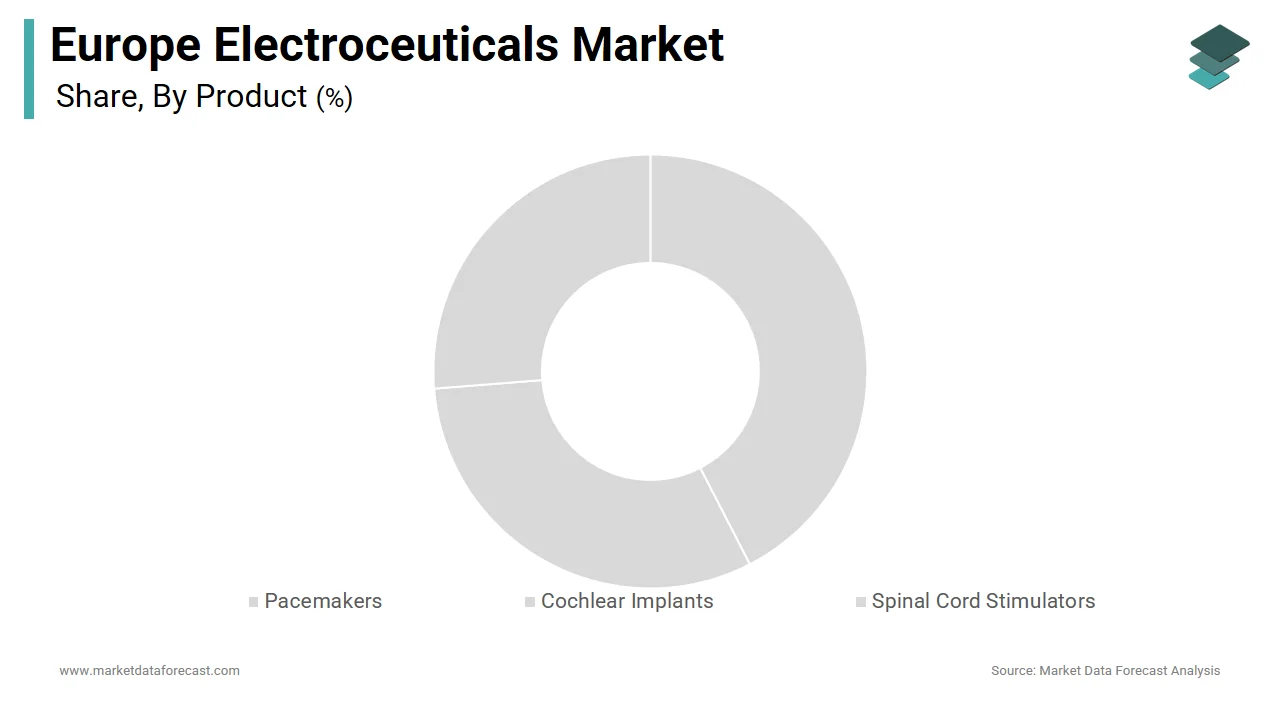
The pacemaker segment commanded the Europe Electroceuticals Market in 2024 by capturing 43% of total revenue. The high prevalence of cardiac arrhythmias and an aging population across the continent is mainly supporting the dominance of the pacemaker segment.
According to the European Society of Cardiology, more than 6 million Europeans suffer from atrial fibrillation, a condition that often necessitates pacemaker implantation to regulate heart rhythm.
Technological advancements have also played a crucial role in sustaining the growth of this segment. The introduction of leadless and MRI-compatible pacemakers has improved patient outcomes and reduced complications associated with traditional models.
Moreover, national healthcare programs across countries like France, the UK, and Sweden actively support early diagnosis and treatment of cardiac disorders, facilitating widespread access to pacemaker therapy. These factors collectively strengthen the segment’s leading position in the market.
The Spinal Cord Stimulators (SCS) segment is projected to grow at the fastest CAGR of 17.4% in the Europe Electroceuticals Market through 2033. Rising incidences of chronic pain and expanding indications for neuromodulation therapies are driving the rapid expansion of the SCS segment.
Chronic pain affects nearly 20% of adults in Europe, according to the European Pain Federation, making it a major public health concern. Traditional pharmacological treatments, particularly opioids, have shown limited efficacy and significant side effects, prompting a shift toward non-pharmacologic alternatives like SCS.
Recent innovations in SCS technology such as high-frequency stimulation and dorsal root ganglion targeting have significantly improved patient response rates. As per a multi-center trial led by the University Hospital Zurich in 2024, newer SCS systems achieved pain relief in over 70% of patients with failed back surgery syndrome, compared to just 45% using older models.
Apart from these, regulatory approvals and reimbursement expansions across several European countries have made these devices more accessible.
By Type of Device Insights
The implantable electroceutical devices segment dominated the Europe Electroceuticals Market by holding an estimated 63.8% of the total value in 2024. Their established use in treating chronic and life-threatening conditions such as cardiac arrhythmias, Parkinson’s disease, and severe chronic pain is largely driving the growth of the implantable electroceutical devices segment. Moreover, the long-term therapeutic benefits offered by implanted neuromodulation devices is also a key driver behind the growth of this segment. Unlike external alternatives, implantables provide continuous, targeted stimulation without requiring daily user intervention.
Furthermore, regulatory frameworks in Europe support the adoption of implantable technologies through well-defined approval pathways and strong post-market surveillance mechanisms. Besides, national health systems across Western Europe offer robust reimbursement for implantable electroceutical therapies.
These factors collectively strengthen the stronghold of implantable devices in the regional market.
The non-invasive electroceutical devices segment is emerging as the fastest-growing segment, expanding at a CAGR of 14.8% through 2033. Increasing consumer preference for outpatient treatments, rising demand for home-based therapies, and technological advancements enabling portable, wearable neuromodulation solutions is surging the swift progress of the non-invasive electroceutical devices segment. Further, the growing acceptance of transcutaneous nerve stimulation (TNS) and cranial electrotherapy stimulation (CES) for managing migraines, depression, and anxiety is another primary driver of this segment.
Moreover, ease of use and minimal risk profile make non-invasive devices particularly attractive to younger patients and those undergoing post-surgical rehabilitation. Regulatory bodies such as the French National Agency for Medicines and Health Products Safety (ANSM) have streamlined approval processes for Class IIa and IIb medical wearables, accelerating time-to-market for innovative products.
By Application Insights
The arrhythmia application segment led the Europe Electroceuticals Market in 2024 by accounting for 51% in 2024. The high prevalence of cardiovascular diseases and the extensive use of implantable cardiac rhythm management devices such as pacemakers and implantable cardioverter-defibrillators (ICDs) is largely attributed to the growth of the arrhythmia application segment.
According to the World Health Organization Regional Office for Europe, cardiovascular diseases remain the leading cause of death in the region, responsible for nearly 45% of all fatalities. Among these, arrhythmias represent a significant portion, particularly in aging populations where atrial fibrillation and bradycardia are common.
Germany leads in device implantation rates. Similarly, France and the UK have well-established electrophysiology departments in major hospitals, ensuring timely diagnosis and treatment of arrhythmias.
Reimbursement policies further support the widespread adoption of electroceutical therapies for arrhythmia. In Spain, the Ministry of Health expanded coverage for ICDs in 2023, benefiting patients with high-risk cardiac conditions.
Ongoing innovation in wireless and leadless pacing technologies is expected to sustain the segment’s leadership, Strengthening its critical role in the broader electroceuticals landscape.
The depression segment is the fastest-growing application area within the Europe Electroceuticals Market and is expanding at a CAGR of 16.2% through 2033. Increasing recognition of mental health disorders and the limitations of conventional pharmacotherapies is mainly propelling the growth of the depression segment.
According to estimates by the European Psychiatric Association, over 50 million Europeans suffer from depression, with nearly one-third failing to respond adequately to antidepressants or psychotherapy. As a result, interest in alternative interventions such as transcranial magnetic stimulation (TMS) and vagus nerve stimulation (VNS) has surged.
As per a 2024 clinical review published by the University of Copenhagen, VNS therapy, originally developed for epilepsy, demonstrated a 35% remission rate in treatment-resistant depression patients after 12 months. These findings have spurred greater investment in bioelectronic approaches to psychiatric disorders.
Moreover, regulatory agencies have been supportive of expanding indications for electroceutical devices. The Italian Medicines Agency (AIFA) included VNS therapy under national coverage guidelines for severe depression in 2023, marking a significant policy shift.
By End User Insights
The hospitals segment constituted the largest end-user in the Europe Electroceuticals Market by capturing a substantial portion of total revenue in 2024. The integration of electroceutical therapies into standard treatment protocols for chronic neurological, cardiac, and pain-related conditions is driving the dominance of hospital segment. Major hospitals across Western Europe, particularly in Germany, France, and the UK, serve as primary centers for the implantation and monitoring of electroceutical devices.
Further, hospital-based procurement ensures compliance with regulatory standards and facilitates access to trained specialists.
Government funding and reimbursement policies further enhance hospital accessibility to these therapies. As hospitals continue to adopt advanced electroceutical platforms, their role as the central hub for deployment remains unchallenged.
The research institutes segment emerging as the fastest-growing end-user segment in the Europe Electroceuticals Market and is expanding at a CAGR of 13.5% during the forecast period. The increasing investments in bioelectronic medicine research and the development of next-generation neuromodulation technologies is fuelling the rise of the research institutes segment.
European academic and research institutions play a pivotal role in advancing electroceutical science. Universities such as ETH Zurich, University College London, and Leiden University Medical Center are conducting pioneering studies on neural circuit modulation for autoimmune diseases, metabolic disorders, and neurodegenerative conditions.
Funding initiatives like the European Union’s Horizon Health Programme to support translational research in bioelectronic medicine.
Collaborations between academia and industry are further accelerating innovation. As research output expands and clinical trials progress, research institutes will continue to drive the evolution of the electroceuticals sector in Europe.
COUNTRY-LEVEL ANALYSIS
Germany Electroceuticals Market Insights
Germany commanded the Europe Electroceuticals Market by accounting for 22.6% of total revenue in 2024. The country's lead position is attributed to its robust healthcare infrastructure, high per capita healthcare expenditure, and strong presence of leading medical device manufacturers.
Germany is a global hub for advanced neuromodulation therapies, particularly in cardiology and neurology. Apart from these, the German Federal Ministry of Education and Research has been actively funding bioelectronic medicine initiatives. In 2024, it allocated EUR 85 million to support research on closed-loop nerve stimulation systems aimed at treating inflammatory and metabolic disorders.
The country also benefits from favorable reimbursement policies. The German Institute for the Hospital Remuneration System (DRG) ensures comprehensive coverage for deep brain stimulation and spinal cord stimulation implants, promoting widespread clinical adoption.
France Electroceuticals Market Insights
France is seeing strong adoption in the Europe Electroceuticals Market and is driven by a combination of government-backed research initiatives, advanced medical infrastructure, and rising demand for non-pharmacological treatment options.
The French healthcare system actively supports the integration of electroceutical therapies, particularly in the fields of cardiology and chronic pain management. The French National Authority for Health (HAS) updated its reimbursement guidelines in 2023 to include expanded coverage for spinal cord stimulators and vagus nerve stimulators, facilitating broader access for patients.
Academic institutions such as Sorbonne University and the Pasteur Institute are at the forefront of bioelectronic research, exploring novel applications in immunomodulation and autonomic regulationMoreover, France is witnessing a surge in startup activity in the neuromodulation space.
UK Electroceuticals Market Insights
The United Kingdom is maintaining a strong presence despite post-Brexit regulatory adjustments and evolving healthcare funding models.
The National Health Service (NHS) plays a central role in driving adoption, particularly in the areas of deep brain stimulation for Parkinson’s disease and spinal cord stimulation for chronic pain.
The UK government has also prioritized bioelectronic medicine through its Life Sciences Vision 2030 initiative, which includes funding for AI-driven electroceutical platforms. Despite challenges related to post-Brexit regulatory alignment, the UK remains a strategic market due to its well-established clinical trial ecosystem and strong private healthcare sector. Companies such as BIOS Health and Emperra are leveraging the UK’s innovation-friendly environment to accelerate product development and commercialization.
Italy Electroceuticals Market Insights
Italy is expanding in the Europe Electroceuticals Market, with growth driven by expanding clinical applications and recent improvements in reimbursement policies for neuromodulation therapies.
The Italian healthcare system has increasingly embraced electroceutical interventions, particularly for chronic pain and movement disorders. According to the Italian Society of Neurology in 2024, deep brain stimulation procedures had increased compared to the previous year, supported by growing availability of specialized centers across major cities like Milan and Rome.
A significant development occurred in 2023 when the Italian Medicines Agency (AIFA) expanded national coverage for vagus nerve stimulators in treatment-resistant depression, marking a turning point for mental health-focused electroceutical applications.
Besides, Italy’s biomedical engineering sector is gaining momentum, with companies like EBNeuro developing next-generation neuromodulation platforms. Academic collaborations between institutions such as the University of Bologna and international partners are further strengthening research capabilities.
Spain Electroceuticals Market Insights
Spain accounts for a notable share of the Europe Electroceuticals Market, with increasing demand driven by an aging population and rising prevalence of chronic diseases such as Parkinson’s, arrhythmias, and chronic pain syndromes.
The Spanish healthcare system has been proactive in adopting electroceutical therapies, particularly in cardiology. In addition to cardiac applications, Spain is seeing growth in neuromodulation for pain management.
Government support is also playing a role in market expansion. With a focus on integrating electroceuticals into mainstream treatment pathways, Spain is steadily strengthening its position in the European market.
COMPETITIVE LANDSCAPE
The competition in the Europe Electroceuticals Market is marked by a dynamic interplay between established medical device giants and emerging biotech startups striving to redefine therapeutic interventions through bioelectronic medicine. While dominant players like Medtronic, Abbott, and Boston Scientific maintain a stronghold through extensive product portfolios, robust distribution networks, and deep-rooted relationships with healthcare institutions, a wave of agile innovators is challenging the status quo with novel, targeted neuromodulation solutions. The market landscape is increasingly shaped by rapid technological advancements, evolving regulatory frameworks, and growing physician acceptance of electroceuticals as viable alternatives to conventional drug-based therapies. Companies are differentiating themselves through enhanced device intelligence, improved patient outcomes, and strategic positioning in high-growth therapeutic areas. Moreover, the convergence of neuroscience, engineering, and digital health is fostering a competitive environment where cross-disciplinary expertise becomes a decisive factor. As investment in bioelectronic research intensifies and new applications emerge, the market is poised for heightened competition, with both incumbents and disruptors vying to lead the next frontier in precision medicine.
KEY MARKET PLAYERS
Key players operating in the Europe electroceuticals market profiled in this report are
Medtronic plc, St. Jude Medical, Inc., Boston Scientific Corporation, Cochlear Limited, Sonova Holding AG, LivaNova PLC, Biotronik, Nevro Corporation, Second Sight Medical Products, Inc., ElectroCore LLC., and others.
TOP LEADING PLAYERS IN THE MARKET
- Abbott is a global leader in medical devices and plays a pivotal role in the Europe Electroceuticals Market through its advanced neuromodulation and cardiac rhythm management solutions. The company's portfolio includes implantable devices such as spinal cord stimulators and pacemakers, designed to treat chronic pain and cardiac arrhythmias. Abbott’s focus on innovation, patient-centric design, and integration of digital health technologies has positioned it as a key player in advancing electroceutical therapies across Europe.
- Medtronic is one of the largest and most influential companies in the electroceuticals space, offering a broad range of implantable and non-invasive neuromodulation systems. In Europe, the company leads in developing cutting-edge technologies for treating neurological disorders, chronic pain, and cardiovascular diseases. Its commitment to clinical research, strategic partnerships with academic institutions, and continuous product development ensures its strong foothold in the European market.
- Boston Scientific is a major contributor to the Europe Electroceuticals Market, particularly in the area of neuromodulation and cardiac rhythm management. The company focuses on delivering innovative, minimally invasive electroceutical therapies that improve patient outcomes and reduce dependency on pharmacological treatments. Its investments in R&D, regulatory engagement, and expansion into emerging therapeutic applications have strengthened its competitive edge in the region.
TOP STRATEGIES USED BY KEY MARKET PARTICIPANTS
Strategic Collaborations and Academic Partnerships Leading players are forging alliances with universities, research institutes, and healthcare providers to accelerate the development and validation of novel electroceutical therapies. These collaborations facilitate access to cutting-edge research, enhance clinical trial capabilities, and support the translation of bioelectronic discoveries into commercial products.
Product Innovation and Technological Integration Companies are investing heavily in next-generation electroceutical devices that incorporate AI, wireless connectivity, and closed-loop stimulation. By integrating smart technologies, manufacturers aim to offer personalized treatment options that adapt in real time to patient needs, enhancing efficacy and user experience.
Expansion into New Therapeutic Areas To diversify their offerings and capture untapped markets, key players are exploring applications beyond traditional indications like cardiac and pain management. Focus areas include mental health, metabolic disorders, and autoimmune conditions, where electroceuticals show promising potential as alternative or adjunct therapies.
RECENT MARKET DEVELOPMENTS
- In February 2024, Abbott launched a next-generation spinal cord stimulator in Germany, featuring adaptive stimulation technology designed to automatically adjust therapy based on patient movement and posture, improving chronic pain management.
- In May 2024, Medtronic announced a strategic partnership with a leading European neuroscience institute to co-develop closed-loop neuromodulation systems aimed at treating depression and epilepsy using real-time neural feedback.
- In July 2024, Boston Scientific expanded its presence in France by opening a dedicated neuromodulation training center, offering hands-on education to clinicians on the latest electroceutical implantation techniques and patient management strategies.
- In September 2024, LivaNova initiated a pilot program in the UK to introduce its latest vagus nerve stimulation therapy for treatment-resistant depression in select NHS hospitals, aiming to demonstrate clinical and cost-effectiveness for broader adoption.
- In November 2024, Biotronik introduced an AI-powered cardiac rhythm management platform in Italy, enabling remote monitoring and predictive analytics for patients with implanted pacemakers and defibrillators, enhancing long-term care efficiency.
MARKET SEGMENTATION
This research report on the Europe electroceuticals market has been segmented and sub-segmented into the following
By Product
- Pacemakers
- Cochlear Implants
- Spinal Cord Stimulators
By Type of Device
- Implantable
- Non-Invasive
By Application
- Arrhythmia
- Depression
- Migraine
By End User
- Hospitals
- Research Institutes
By Country
- UK
- France
- Spain
- Germany
- Italy
- Russia
- Sweden
- Denmark
- Switzerland
- Netherlands
- Turkey
- Czech Republic
- Rest of Europe