- Product Description Description
- Table of Contents TOC
- List of Table & Figure LOT
- Get Free Sample PDF Sample PDF
Market Size, 2025
$5.75 BnMarket Estimate, 2026
$6.11 BnMarket Forecast, 2034
$10 BnCAGR, 2026–2034
6.34%Europe Environmental Testing Market Size, Share, Trends & Forecast (2026–2034)
- Market Scope: Comprehensive regional evaluation of the European environmental testing sector, covering sample mediums (effluent, water, soil/oil, and air), contamination categories (microbiological, organic, heavy metals, residues, and solids), analytical technologies (conventional and rapid), and key European countries including Germany, France, Italy, the UK, Spain, and more.
- Market Valuation: Valued at USD 5.75 billion in 2025, estimated at USD 6.11 billion in 2026, and projected to reach USD 10 billion by 2034, expanding at a steady CAGR of 6.34% from 2026 to 2034.
- Primary Growth Enablers: Stringent European Union environmental regulations (such as the European Green Deal, REACH legislation, and Industrial Emissions Directive) and mounting public health concerns over air pollution and particulate matter exposure.
Key Europe Environmental Testing Segment Metrics (2026–2034)
| Category | Leading Segment Insights | Growth & Structural Highlights |
|---|---|---|
| By Sample | Effluent & Wastewater (held the major market share owing to extensive industrial generation and regulatory discharge monitoring) | Water and air parameters remain foundational as compliance testing requirements expand across urban and manufacturing zones. |
| By Contamination | Organic Contamination (projected to secure a prominent share of the regional market during the forecast period) | Driven by stringent limits on chemical pollutants, pesticides, and industrial solvents under frameworks like EU REACH. |
| By Technology | Rapid Technology (accounted for a major share driven by fast, accurate, and user-friendly on-site diagnostic benefits) | Complementing conventional laboratory techniques to address immediate industrial compliance and emergency response needs. |
| By Country / Region | Germany (dominates the European market backed by a robust industrial base, stringent eco-policies, and high green sector value added) | France and Italy show strong upward trajectories driven by robust investments in renewable energy, waste management, and resource efficiency. |
Major Market Players, Structure & Strategic Landscape
Market Structure: Highly regulated environment characterized by strict compliance standards, high operational costs for small and medium-sized enterprises (SMEs), and widespread reliance on accredited international and regional laboratory networks.
Key Companies: Eurofins Scientific SE, SGS S.A., Bureau Veritas S.A., Agilent Technologies Inc., Intertek Group PLC, ALS Limited, Romer Labs Diagnostic GmbH, AB Sciex LLC, R J Hill Laboratories Ltd., Suburban Testing Labs, and AsureQuality Limited.
Europe Environmental Testing Market Size
The European environmental testing market size was valued at USD 5.75 billion in 2025 and is further expected to reach USD 6.11 billion in 2026, from USD 10 billion by 2034, growing at a CAGR of 6.34% during the forecast period from 2026 to 2034.
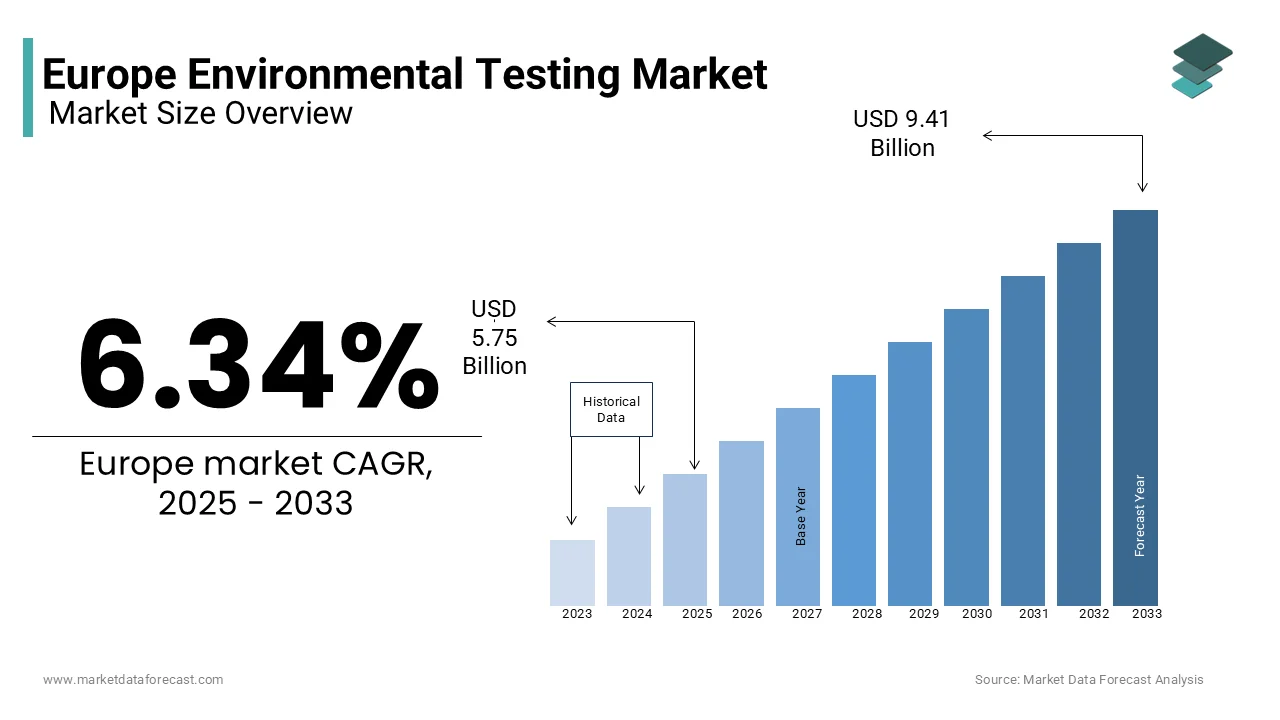
Environmental testing plays a pivotal role in ensuring compliance with stringent regulatory frameworks and safeguarding public health against environmental hazards. According to the European Environment Agency, approximately 75% of surface water bodies in the European Union fail to achieve good ecological status, which necessitates rigorous and continuous monitoring protocols. The implementation of the European Green Deal has further intensified the demand for precise data to track progress toward climate neutrality and zero-pollution goals. As per Eurostat, industrial activities account for nearly 20% of total greenhouse gas emissions in the region, driving the need for accurate emission testing and verification. According to the World Health Organization, air pollution causes over 400,000 premature deaths annually in Europe, highlighting the critical importance of ambient air quality monitoring. Furthermore, the increasing prevalence of microplastics and emerging contaminants in aquatic ecosystems requires advanced detection methodologies. Laboratories are increasingly adopting automated, high-throughput technologies to handle the growing volume of samples generated by mandatory reporting requirements. This shift toward digitalization and real-time monitoring is reshaping the operational landscape of environmental testing providers. The integration of Internet of Things sensors allows for continuous data collection, reducing reliance on sporadic manual sampling. These technological advancements, coupled with heightened regulatory scrutiny position environmental testing as an essential component of sustainable development and corporate responsibility in Europe.
MARKET DRIVERS
Stringent Regulatory Frameworks Mandating Comprehensive Environmental Compliance
The enforcement of rigorous environmental regulations by the European Union propels the European environmental testing market growth. The Water Framework Directive and the Industrial Emissions Directive mandate regular monitoring of pollutants in wastewater and industrial effluents to prevent ecological damage. According to the European Commission, member states are required to monitor over 100 priority substances in water bodies, ensuring that concentrations remain below safe thresholds. This legislative pressure creates a consistent demand for accredited testing services capable of detecting trace levels of heavy metals, pesticides, and pharmaceutical residues. In Germany, the Federal Environment Agency reports that over 50,000 industrial facilities are subject to regular emission inspections, requiring detailed analytical data for compliance certification. Similarly, the REACH regulation mandates extensive testing of chemical substances to assess their impact on human health and the environment before they can be marketed. As per the European Chemicals Agency, more than 20,000 substances have been registered under REACH, each requiring specific toxicity and Eco toxicity evaluations. These regulatory obligations extend to soil contamination assessment, where the Soil Thematic Strategy encourages member states to identify and remediate contaminated sites. As per the Netherlands Ministry of Infrastructure and Water Management, over 30,000 locations require ongoing monitoring due to historical industrial pollution. This legal imperative ensures that environmental testing remains a non-discretionary expense for businesses, thereby sustaining steady market growth regardless of economic fluctuations.
Increasing Industrialization and Urbanization Leading to Higher Pollution Levels
Rapid industrialization and urban expansion across Europe have led to elevated levels of pollution, which is necessitating frequent and detailed environmental assessments to protect public health and ecosystems and contributes to the global market expansion. The concentration of manufacturing activities in regions such as the Ruhr Valley in Germany and Northern Italy results in significant emissions of particulate matter and volatile organic compounds. According to the European Environment Agency, urban areas experience nitrogen dioxide levels that exceed safety limits by up to 40% during peak traffic hours, prompting mandatory air quality monitoring. In Poland, the Ministry of Climate and Environment reports that coal-fired power plants contribute significantly to sulfur dioxide emissions, requiring continuous stack testing to ensure compliance with EU limits. The construction boom in major cities like London and Paris generates substantial dust and noise pollution, which must be monitored to meet local ordinances. As per Eurostat, the urban population in Europe is projected to reach 80% by 2050, increasing the strain on waste management and water treatment infrastructure. This demographic shift drives the need for regular testing of landfill leachate and sewage sludge to prevent groundwater contamination. In Spain, the Ministry for Ecological Transition highlights that coastal tourism increases wastewater discharge by 30% during summer months, requiring enhanced monitoring capacity. These pollution sources create a sustained demand for testing services that can provide accurate, real-time data to inform mitigation strategies and policy decisions.
MARKET RESTRAINTS
High Operational Costs and Complexity of Advanced Analytical Methods
The high operational costs associated with maintaining state-of-the-art laboratories and employing specialized personnel is hampering the Europe environmental testing market. Advanced analytical techniques such as gas chromatography-mass spectrometry and liquid chromatography-tandem mass spectrometry require substantial capital investment and ongoing maintenance. According to the European Association of Testing Certification and Inspection Bodies, the cost of acquiring and validating new equipment can exceed 500,000 euros per instrument, posing a barrier for smaller laboratories. The shortage of skilled analysts further exacerbates costs, as competitive salaries are required to retain talent in a specialized field. In France, the National Institute for Industrial Environment and Risks notes that training a competent environmental analyst takes at least three years, leading to a persistent skills gap. Energy prices in Europe have also surged, impacting laboratory operations which rely heavily on electricity for instrumentation and climate control. As per Eurostat, industrial electricity prices increased by 40% in 2022, forcing many testing firms to raise their service fees. This price sensitivity can deter small and medium enterprises from conducting voluntary testing beyond mandatory requirements. Additionally, the complexity of sample preparation and data interpretation requires rigorous quality assurance protocols, which add to the overall expense. These financial pressures limit the ability of some providers to expand their service offerings or invest in innovation, thereby constraining market growth potential.
Lengthy Accreditation Processes and Regulatory Fragmentation
The lengthy and complex accreditation processes required to operate as an environmental testing laboratory in Europe create significant barriers to entry and operational delays. Laboratories must comply with ISO 17025 standards and obtain accreditation from national bodies, which can take several months to complete. According to the European Cooperation for Accreditation, the variation in interpretation of standards across different member states leads to inconsistencies in approval timelines. In Italy, the Accredia agency reports that the average time for initial accreditation is six to nine months, delaying the ability of new entrants to commence commercial operations. This fragmentation hinders cross-border service provision, as laboratories often need separate accreditations for each country they wish to serve. The United Kingdom Accreditation Service states that post-Brexit adjustments have added further complexity for UK-based labs seeking to operate in the EU market. These bureaucratic hurdles increase administrative burdens and costs for testing providers. Furthermore, frequent updates to regulatory methods require laboratories to constantly revalidate their procedures, which consumes valuable resources. As per the European Commission, harmonization efforts are ongoing, but progress is slow due to differing national priorities. This lack of uniformity discourages consolidation and limits the scalability of testing networks. Companies must navigate a labyrinth of local regulations, which slows down market responsiveness and increases compliance risks.
MARKET OPPORTUNITIES
Integration of Artificial Intelligence and Automated Data Analysis
The integration of artificial intelligence and machine learning into environmental testing workflows is a significant opportunity for the European environmental testing market. AI algorithms can process vast amounts of spectral and chromatographic data faster than human analysts, identifying patterns and anomalies with greater precision. According to the Joint Research Centre of the European Commission, AI-driven models can reduce false-positive rates in pollutant detection by up to 25%, improving the reliability of test results. In Sweden, the Environmental Protection Agency is piloting AI systems that predict pollution spikes based on historical data and weather conditions, allowing for proactive sampling. This predictive capability enables laboratories to optimize resource allocation and reduce unnecessary testing. As per the European Laboratory Automation Group, the adoption of robotic sample handlers combined with AI software can increase throughput by 50% while minimizing human error. Startups in Berlin and Zurich are developing cloud-based platforms that integrate laboratory information management systems with AI analytics, offering real-time insights to clients. These digital solutions allow for remote monitoring and instant reporting, which appeals to industrial clients seeking rapid compliance verification. The ability to analyze complex mixtures of emerging contaminants such as per- and polyfluoroalkyl substances is greatly enhanced by machine learning models. This technological leap positions early adopters as leaders in innovation, attracting high-value contracts from multinational corporations.
Expansion of Testing Services for Emerging Contaminants and Microplastics
The growing awareness of emerging contaminants such as microplastics, pharmaceuticals, and endocrine disruptors offers a lucrative opportunity for the expansion of environmental testing services. Recent studies have highlighted the pervasive presence of these substances in European water bodies and soils, prompting regulatory bodies to consider new monitoring requirements. According to the European Chemicals Agency, over 10,000 tons of microplastics enter European waters annually, necessitating the development of standardized testing methods. The European Standardization Committee is currently working on harmonized protocols for microplastic analysis, which will create a new revenue stream for laboratories equipped with the necessary technology. In Norway, the Institute for Water Research has developed advanced filtration and spectroscopy techniques for detecting nanoplastics, setting a precedent for other nations. According to the World Health Organization, there is an urgent need for data on the health impacts of microplastics, driving government-funded research projects. Pharmaceutical companies are also under pressure to monitor the environmental fate of their products, leading to increased demand for ecotoxicity testing. Laboratories that invest in specialized equipment for these niche analyses can differentiate themselves in a crowded market. The European Union’s Zero Pollution Action Plan explicitly targets these contaminants, ensuring long-term demand for specialized testing services.
MARKET CHALLENGES
Shortage of Skilled Personnel and Technical Expertise
A critical challenge facing the Europe environmental testing market is the acute shortage of skilled personnel capable of operating sophisticated analytical instruments and interpreting complex data. The aging workforce in the sector, combined with a lack of interest among younger graduates in laboratory sciences, has created a significant talent gap. According to the European Federation of Biotechnology, the number of students pursuing degrees in analytical chemistry has declined by 15% over the last decade. In the United Kingdom, the Royal Society of Chemistry reports that 60% of laboratories struggle to recruit qualified analysts, leading to project delays and increased overtime costs. The complexity of modern instrumentation requires continuous training, which many firms cannot afford amidst budget constraints. As per the European Centre for the Development of Vocational Training, there is a mismatch between educational curricula and industry needs, resulting in graduates lacking practical skills. This shortage limits the capacity of laboratories to scale up operations despite growing demand. High turnover rates further exacerbate the problem, as experienced staff move to higher-paying industries such as pharmaceuticals. The lack of standardized training programs across Europe hinders mobility and knowledge sharing. Without a strategic focus on education and vocational training, the industry risks stagnation due to human capital limitations.
Cybersecurity Risks Associated with Digitalization and Remote Monitoring
The increasing digitalization of environmental testing laboratories and the adoption of remote monitoring systems expose the sector to significant cybersecurity risks. As laboratories transition to cloud-based laboratory information management systems and Internet of Things-enabled sensors, they become vulnerable to cyberattacks and data breaches. According to the European Union Agency for Cybersecurity, the number of cyber incidents targeting critical infrastructure, including environmental monitoring networks, has increased by 30% in recent years. A successful attack could compromise the integrity of test results, leading to regulatory non-compliance and reputational damage. In Germany, the Federal Office for Information Security warns that industrial espionage poses a threat to proprietary testing methodologies and client data. As per the International Organization for Standardization, new cybersecurity standards for laboratory operations are being developed, but adoption remains uneven. Small and medium-sized laboratories often lack the resources to implement robust security measures, making them easy targets. The interconnected nature of smart monitoring devices creates multiple entry points for hackers. Data privacy regulations, such as the General Data Protection Regulation, impose strict penalties for breaches, adding financial risk. Ensuring the security of digital infrastructure requires ongoing investment in encryption, firewalls, and staff training, which strains operational budgets.
REPORT COVERAGE
| REPORT METRIC | DETAILS |
| Market Size Available | 2025 to 2034 |
| Base Year | 2025 |
| Forecast Period | 2026 to 2034 |
| CAGR | 6.34% |
| Segments Covered | By Sample, Contamination, Technology, And Country |
| Various Analyses Covered | Regional & Country Level Analysis, Segment-Level Analysis, DROC, PESTLE Analysis, Porter’s Five Forces Analysis, Competitive Landscape, Analyst Overview of Investment Opportunities |
| Regions Covered | UK, France, Spain, Germany, Italy, Russia, Sweden, Denmark, Switzerland, Netherlands, Turkey, the Czech Republicc andthe restt of Europe |
| Market Leaders Profiled | Eurofins Scientific SE, SGS S.A., Bureau Veritas S.A., Agilent Technologies Inc., Intertek Group PLC, ALS Limited, Romer Labs Diagnostic GmbH, AB Sciex LLC, R J Hill Laboratories Ltd., Suburban Testing Labs, and Asure Quality Limited |
SEGMENTAL ANALYSIS
By Sample Insights
The water segment led the market by accounting for the major share of the European market in 2025 due to the critical importance of water quality for public health, industrial processes, and ecological balance. This segment encompasses testing for drinking water, wastewater, surface water, and groundwater, ensuring compliance with stringent EU directives. The dominance of the water segment is further driven by the rigorous enforcement of the European Union Water Framework Directive, which mandates member states to achieve good chemical and ecological status for all water bodies. According to the European Environment Agency, only 40% of surface water bodies in the EU currently meet good ecological status, necessitating extensive monitoring and remediation efforts. The directive requires regular assessment of over 100 priority substances, including heavy metals, pesticides, and industrial chemicals. In Germany, the Federal Environment Agency reports that over 7,000 wastewater treatment plants are subject to continuous discharge monitoring, requiring frequent laboratory analysis. As per the European Commission, member states must submit detailed river basin management plans every six years, which rely heavily on comprehensive data sets generated by environmental testing laboratories. The Urban Wastewater Treatment Directive further compels cities with populations over 2,000 to treat wastewater before discharge, increasing the volume of samples requiring analysis. In France, the Ministry of Ecological Transition states that over 20,000 monitoring points are active across the country to track pollutant levels. These legal obligations create a consistent and high-volume demand for water testing services, making it the largest segment in the market. The need to detect emerging contaminants such as pharmaceuticals and microplastics further expands the scope of required analyses.

However, the air segment is projected to register the highest CAGR of 9.4% over the forecast period in the global market owing to the rising awareness of air pollution health impacts and stricter emission standards for vehicles and industries. The air segment is growing rapidly due to heightened public and governmental concern over the health impacts of air pollution, particularly particulate matter and nitrogen dioxide. According to the World Health Organization, air pollution causes approximately 400,000 premature deaths annually in Europe, prompting urgent action to improve air quality. The revised WHO Global Air Quality Guidelines have set stricter limits for pollutants, which many European cities currently exceed. In Poland, the Ministry of Climate and Environment reports that over 30 cities regularly exceed safe levels of PM2.5, requiring enhanced monitoring networks. As per the European Environment Agency, exposure to fine particulate matter is linked to respiratory and cardiovascular diseases, driving demand for precise ambient air testing. Governments are expanding monitoring stations and deploying low-cost sensors to gather real-time data. In Italy, the National Institute for Environmental Protection and Research has increased the frequency of air quality assessments in urban areas. Public pressure and litigation regarding poor air quality further compel authorities to invest in robust testing infrastructure. This health-driven imperative ensures that air monitoring becomes a priority, leading to increased demand for analytical services capable of detecting trace pollutants.
COUNTRY-LEVEL ANALYSIS
Germany Environmental Testing Market Analysis
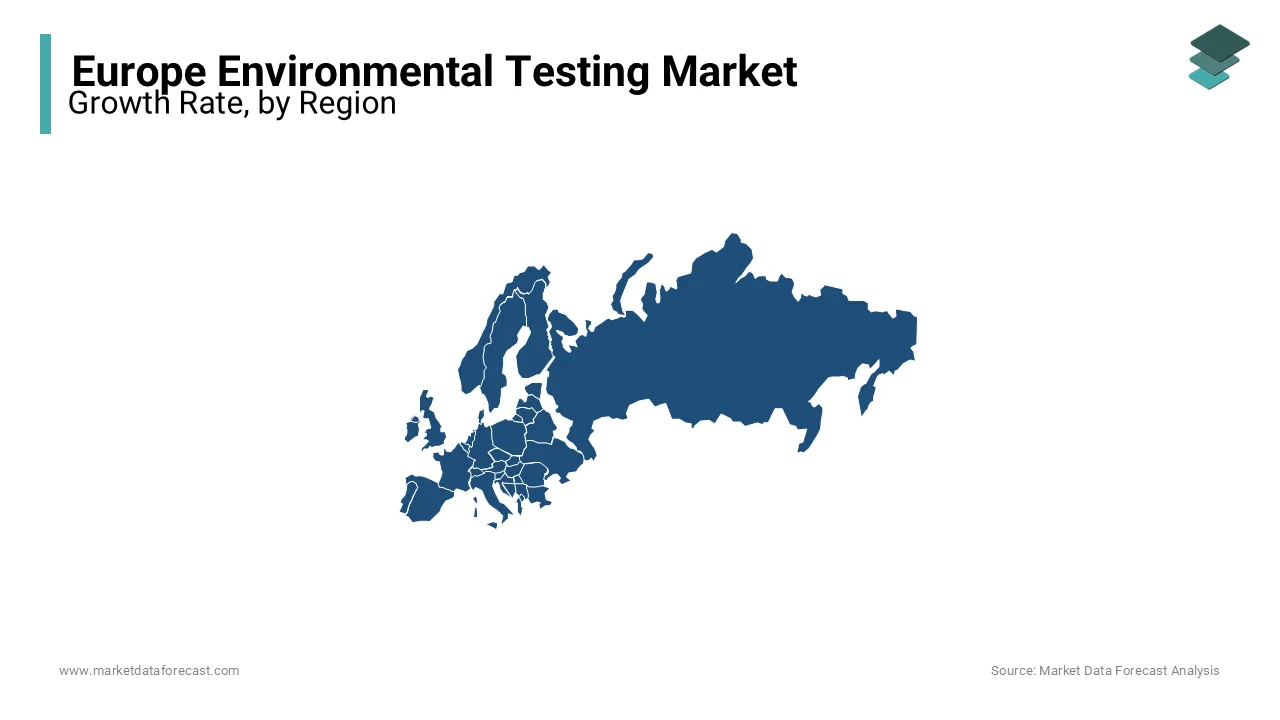
Germany dominated the market in 2025 with 23.5% of the regional market share and is likely to experience robust expansion over the next few years owing to its robust industrial base and stringent environmental regulations enforced by the Federal Environment Agency. According to the German Federal Ministry for the Environment, Nature Conservation and Nuclear Safety, over 50,000 industrial facilities are subject to regular emission monitoring. The country’s leadership in renewable energy and chemical manufacturing drives demand for comprehensive testing services. As per the German Accreditation Body Dakks, thousands of laboratories are accredited to perform environmental analyses. The Energiewende policy necessitates rigorous monitoring of environmental impacts associated with energy transition projects. Germany’s strong emphasis on precision and quality ensures high standards in testing services. The presence of major global testing companies headquartered in the country further strengthens its market position. Local regulations, such as the Federal Immission Control Act, drive continuous demand for air and water testing. The country’s advanced infrastructure supports efficient sample logistics and data management.
France Environmental Testing Market Analysis
France is projected to maintain steady progress supported by continuous green investments and strict nuclear compliance regulations over the next few years. France holds the second-largest share of the market, driven by its nuclear energy sector and extensive agricultural landscape. According to the French Ministry of Ecological Transition, over 100,000 tons of pesticides are used annually, requiring rigorous water and soil testing. The Nuclear Safety Authority mandates continuous environmental monitoring around nuclear facilities. As per the French Accreditation Committee COFRAC, a vast network of laboratories supports these regulatory requirements. The country’s commitment to reducing plastic waste drives testing for microplastics in marine environments. France’s large tourism industry also increases demand for water quality testing in coastal areas. The government’s Green Plan invests heavily in environmental protection initiatives. This policy support sustains steady growth in the testing sector. The presence of major domestic testing firms enhances local capacity. France’s focus on biodiversity protection further expands the scope of environmental assessments.
United Kingdom Environmental Testing Market Analysis
The United Kingdom is expected to experience steady development anchored by post-Brexit regulatory alignment and net-zero initiatives over the next few years. The United Kingdom holds a significant share of the market, despite Brexit, driven by its established regulatory framework and strong service sector. The country’s market status is defined by the Environment Agency’s rigorous enforcement of pollution controls. According to the UK Department for Environment, Food and Rural Affairs, over 20,000 permitted industrial installations require regular environmental monitoring. The post-Brexit regulatory landscape has maintained high standards equivalent to EU directives. As per the United Kingdom Accreditation Service, thousands of laboratories remain accredited for environmental testing. The country’s focus on net-zero emissions drives demand for carbon footprint verification and air quality testing. London’s ultra-low emission zone generates significant data requiring analysis. The UK’s strong financial sector drives demand for ESG consulting services. The separation from EU systems has created some administrative friction, but demand remains robust. The country’s advanced digital infrastructure supports innovative testing solutions. The UK continues to be a hub for environmental technology innovation.
Italy Environmental Testing Market Analysis
Italy is poised for moderate growth propelled by national recovery funds dedicated to upgrading environmental infrastructure over the next few years. Italy holds a notable share of the market, driven by its manufacturing sector and concerns over water quality. The country’s market status is characterized by extensive monitoring of industrial effluents in the Po Valley. According to the Italian Ministry for Ecological Transition, the Po River basin requires continuous assessment due to high pollution levels. The country’s tourism industry drives demand for coastal water testing. As per the Italian Accreditation Body ACCREDIA, a strong network of laboratories supports regulatory compliance. Italy’s historical industrial sites require ongoing soil contamination assessments. The government’s National Recovery and Resilience Plan includes investments in environmental monitoring infrastructure. The country’s agricultural sector contributes to pesticide monitoring needs. Italy’s focus on circular economy principles drives waste characterization testing. The presence of local testing firms ensures widespread service availability. Regulatory enforcement is increasing, improving market discipline.
Spain Environmental Testing Market Analysis
Spain is anticipated to witness accelerated demand propelled by strict water scarcity regulations and EU environmental recovery funding over the next few years. Spain holds a growing share of the market, driven by its agricultural intensity and tourism sector. The country’s market status is defined by the need to monitor water resources in arid regions. According to the Spanish Ministry for Ecological Transition, water scarcity issues necessitate rigorous quality control for reuse applications. The tourism boom increases wastewater treatment loads, requiring enhanced monitoring. As per the Spanish Accreditation Entity ENAC, laboratories are expanding capacity to meet seasonal demand. Spain’s renewable energy projects require environmental impact assessments. The country’s coastal protection efforts drive marine pollution testing. Government initiatives to reduce plastic waste increase testing for microplastics. Spain’s agricultural exports require compliance with international residue standards. The market is benefiting from EU recovery funds directed at environmental protection. Digitalization of monitoring networks is improving data accessibility. Spain’s strategic location makes it a hub for Mediterranean environmental studies.
COMPETITIVE LANDSCAPE
The competition in the Europe environmental testing market is characterized by a mix of large multinational corporations and specialized regional laboratories vying for dominance through quality accreditation and service breadth. Major players leverage their extensive networks and brand recognition to secure contracts with large industrial clients and government agencies. They compete on technical expertise turnaround time and the ability to handle complex regulatory requirements. Regional players gain traction by offering personalized service and deep local knowledge of specific national regulations. The market sees intense rivalry in pricing for routine testing services prompting companies to differentiate through advanced analytics and consulting offerings. Strategic acquisitions are common as firms seek to consolidate market share and expand geographic reach. Innovation in digital tools and automation serves as a key differentiator for leading competitors. The fragmented nature of the market allows niche specialists to thrive in areas like radioactive monitoring or microplastic analysis. Compliance with ISO standards is a baseline requirement making service quality and customer support critical success factors. This dynamic environment drives continuous improvement in technology and operational efficiency.
KEY MARKET PLAYERS
These are some of the notable companies in the European environmental testing market.
- Eurofins Scientific SE
- SGS S.A.
- Bureau Veritas S.A.
- Agilent Technologies Inc.
- Intertek Group PLC
- Eurofins Scientific
- ALS Limited
- Romer Labs Diagnostic GmbH
- AB Sciex LLC
- R J Hill Laboratories Ltd.
- Suburban Testing Labs
- Asure Quality Limited
Top Players In The Market
- SGS SA is a global leader in testing inspection and certification with a strong presence across Europe providing comprehensive environmental testing services. The company offers advanced analytical solutions for water air soil and waste ensuring compliance with stringent EU regulations. Recently SGS expanded its laboratory network in Germany and France to enhance capacity for emerging contaminant analysis such as microplastics and PFAS. The company has also invested in digital platforms that integrate laboratory information management systems with client dashboards for real time data access. These initiatives improve operational efficiency and customer transparency. SGS actively collaborates with regulatory bodies to develop new testing standards reinforcing its authority in the sector. Their commitment to sustainability and innovation strengthens their position as a trusted partner for industries seeking reliable environmental compliance solutions.
- Bureau Veritas is a prominent player in the Europe environmental testing market specializing in quality health safety and environmental services. The company provides extensive testing for industrial emissions wastewater and soil contamination supporting clients in meeting regulatory requirements. Recently Bureau Veritas acquired specialized laboratories in the Netherlands and Italy to broaden its expertise in chemical analysis and environmental consulting. The company has launched new services focused on carbon footprint verification and ESG reporting aligning with the European Green Deal objectives. These strategic moves enhance their ability to offer holistic sustainability solutions. Bureau Veritas also invests in training programs for technicians ensuring high quality service delivery. Their focus on digital transformation and regulatory expertise solidifies their reputation as a key enabler of environmental compliance and corporate responsibility in Europe.
- Eurofins Scientific is a major contributor to the Europe environmental testing market known for its extensive network of specialized laboratories. The company offers precise analytical services for water quality air pollution and soil health catering to diverse industrial and municipal clients. Recently Eurofins expanded its environmental testing capabilities in Spain and Poland by upgrading equipment for high throughput analysis. The company has introduced automated workflows using artificial intelligence to accelerate sample processing and improve data accuracy. These technological advancements reduce turnaround times and enhance service reliability. Eurofins also engages in research partnerships to develop methods for detecting new pollutants such as pharmaceutical residues. Their continuous investment in innovation and geographic expansion strengthens their market position. By providing scalable and accurate testing solutions Eurofins supports clients in navigating complex environmental regulations and achieving sustainability goals.
Top Strategies Used By Key Market Participants
Key players in the Europe environmental testing market primarily employ strategies focused on geographic expansion through acquisitions and technological innovation to strengthen their competitive position. Companies are actively acquiring specialized laboratories to broaden their service portfolios and enter new regional markets. Investment in digitalization including artificial intelligence and automated laboratory systems enhances operational efficiency and data accuracy. Strategic partnerships with regulatory bodies help firms stay ahead of compliance requirements and influence standard development. Diversification into sustainability consulting and ESG reporting services allows companies to offer value added solutions beyond traditional testing. Focus on emerging contaminants such as microplastics and PFAS creates niche opportunities for differentiation. These multifaceted approaches enable participants to address evolving regulatory landscapes while improving customer retention and operational scalability.
MARKET SEGMENTATION
This European environmental testing market research report is segmented and sub-segmented into the following categories.
By Sample
- Effluent
- Water
- Oil
- Air
By Contamination
- Microbiological
- Organic
- Heavy metals
- Residues
- Solids
By Technology
- Conventional
- Rapid
By Country
- UK
- France
- Spain
- Germany
- Italy
- Russia
- Sweden
- Denmark
- Switzerland
- Netherlands
- Turkey
- Czech Republic
- Rest of Europe