- Product Description Description
- Table of Contents TOC
- List of Table & Figure LOT
- Get Free Sample PDF Sample PDF
Market Size, 2025
$13.33 BnMarket Estimate, 2026
$14.21 BnMarket Forecast, 2034
$23.73 BnCAGR, 2026–2034
6.62%Global Environmental Testing Market Size, Share, Trends & Forecast (2026–2034)
- Market Scope: Global evaluation of the environmental testing industry covering contaminant categories (heavy metals and organic pollutants), sample mediums (water and air quality testing), advanced analytical technologies (conventional vs. rapid testing methods), and major regional blocks (North America, Europe, Asia Pacific, Latin America, and Middle East & Africa).
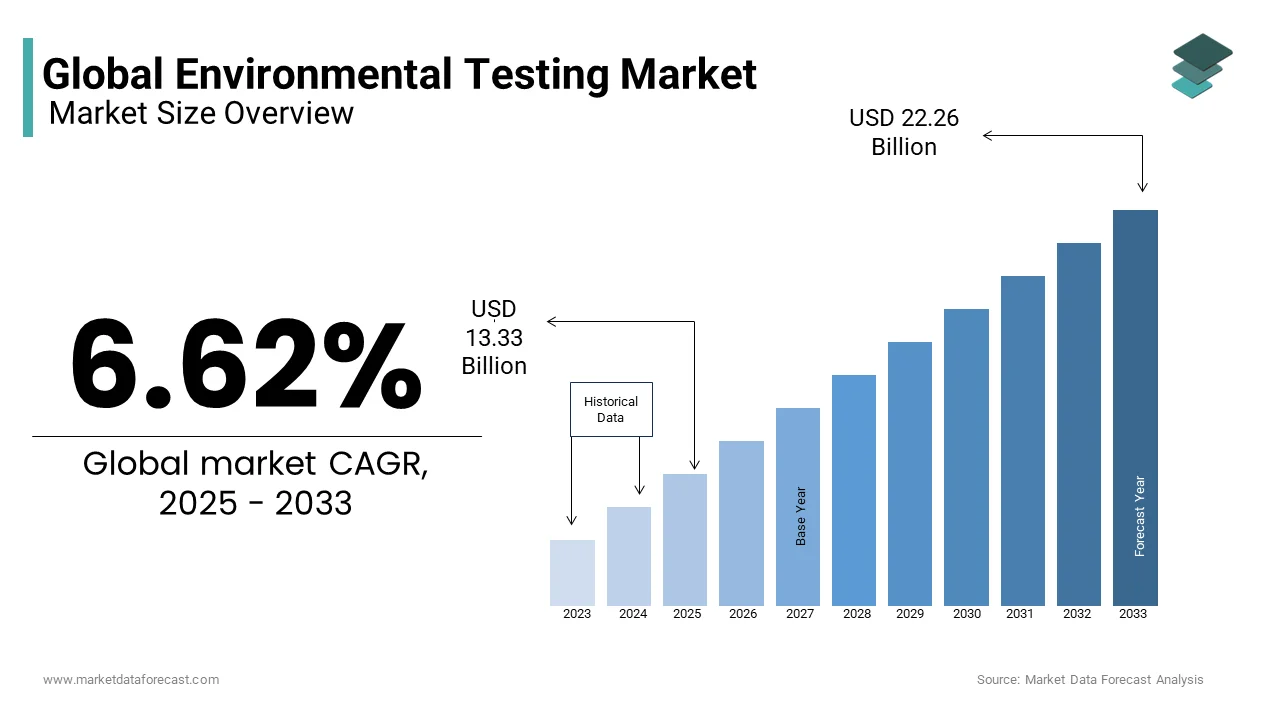
- Market Valuation: Valued at USD 13.33 billion in 2025, estimated at USD 14.21 billion in 2026, and projected to reach USD 23.73 billion by 2034, growing at a steady CAGR of 6.62% from 2026 to 2034.
- Primary Growth Enablers: Strengthening global environmental regulations and enforcement mechanisms, escalating public health concerns linked to environmental contaminants, and corporate integration of ESG (Environmental, Social, and Governance) investment criteria.
Key Global Environmental Testing Segment Metrics (2026–2034)
| Category | Leading Segment Insights | Growth & Structural Highlights |
|---|---|---|
| By Contaminant | Heavy Metals (captured the largest share at 38.3% in 2025 due to persistent toxicity, bioaccumulation, and strict industrial discharge limits for elements like lead, mercury, and arsenic) | Organic Contaminants are projected to register the fastest CAGR of 10.7% (2026–2034), driven by rising concerns over PFAS, pesticides, and industrial solvents. |
| By Sample Medium | Water Testing (led the market with a 42.5% share in 2025, reflecting its core role as an exposure pathway for contaminants and regulatory mandates for public health) | Air Quality Testing is expanding rapidly as the fastest-growing segment at a CAGR of 11.2%, propelled by urbanization, PM2.5 health concerns, and real-time sensor networks. |
| By Technology | Conventional Analytical Methods (accounted for a substantial share in 2025 due to established regulatory acceptance, high accuracy, and legal defensibility) | Rapid Testing Technologies are forecasted to grow at a high 13.4% CAGR, fueled by the demand for immediate, on-site results in emergency response and industrial monitoring. |
Major Market Players, Structure & Strategic Landscape
Market Structure: Hierarchical competitive framework dominated by global testing enterprises leveraging standardized methodologies, digital portals, and blockchain chain-of-custody solutions, alongside specialized regional laboratories focused on local compliance and cost efficiencies.
Key Companies: Eurofins Scientific SE, SGS S.A., Bureau Veritas S.A., Agilent Technologies Inc., Intertek Group PLC, ALS Limited, Romer Labs Diagnostic GmbH, and AB Sciex LLC.
Global Environmental Testing Market Size
The global environmental testing market was valued at USD 13.33 billion in 2025 and is anticipated to reach USD 14.21 billion in 2026 from USD 23.73 billion by 2034, growing at a CAGR of 6.62% during the forecast period from 2026 to 2034.
Current Introduction of the Environmental Testing Market
Environmental Testing refers to the analytical services and methodologies employed to detect, quantif,,y and monitor chemi,cal biological and physical contaminants in air,, water ,soil and biota. These tests serve regulatory compli,,ance public health protection ecological risk assessment and industrial due diligence across sectors including manufacturing energy agriculture and waste management. Testing parameters range from heavy metals and volatile organic compounds to microbial pathogens and microplastics with methodologies spanning chromatography spectrometry polymerase chain reaction and remote sensing. The market’s relevance is intensifying as climate change pollution and resource scarcity converge into systemic environmental risks. According to sources, the combined impact of indoor and outdoor air pollution continues to represent a leading environmental risk to global public health, causing millions of premature deaths annually and necessitating robust air quality monitoring. A significant portion of European water bodies fail to achieve good chemical status, with agricultural pesticides and industrial effluent acting as primary contributors to the contamination. Additionally, massive quantities of plastic waste enter global aquatic ecosystems annually, requiring advanced analytical techniques for microplastic identification and urgent, comprehensive waste management solutions. These realities position environmental testing not merely as a compliance function but as a critical pillar of planetary health surveillance and sustainable governance.
MARKET DRIVERS
Strengthening Global Environmental Regulations and Enforcement Mechanisms
The proliferation and tightening of environmental legislation across jurisdictions constitute a primary driver of the environmental testing market. Regulatory frameworks such as the European Union’s Industrial Emissions Directive the United States Clean Water Act and China’s Environmental Protection Law mandate periodic monitoring of effluents emissions and soil integrity with escalating penalties for non compliance. According to research, in Europe, over 52 000 major industrial and agricultural installations to comply with strict, integrated environmental pollution regulations, which are subject to regular inspections and permitting updates. The U.S. Environmental Protection Agency significantly ramped up on-site inspections and enforcement, resulting in substantial financial penalties and commitments to cleanup actions by companies, with a heavy focus on protecting communities with environmental justice concerns. Similarly, China has intensified nationwide, targeted environmental inspections focusing on chemical plants and wastewater treatment, reflecting a strategic initiative to reduce soil and water pollution through strict enforcement and oversight. These enforcement actions compel industries to invest in third party validated testing to avoid fines operational shutdowns and reputational damage. Furthermore international agreements like the Minamata Convention on Mercury and the Stockholm Convention on Persistent Organic Pollutants necessitate cross border monitoring capabilities. Increasingly stringent regulatory thresholds are driving exponential growth in the demand for sensitive analytical services, ensuring a sustained, long-term testing ecosystem.
Escalating Public Health Concerns Linked to Environmental Contaminants
Mounting scientific evidence linking environmental pollutants to chronic diseases is enabling demand for preventive and forensic environmental testing. This further propels the expansion of the environmental testing market. Airborne particulate matter waterborne nitrates and soil based heavy metals are now recognized as key contributors to respiratory cardiovascular and neurodevelopmental disorders. According to the World Health Organization, environmental lead exposure, particularly from paint, soil, and water, causes substantial, largely preventable, premature mortality worldwide, with children at high risk for irreversible cognitive harm. The Centers for Disease Control and Prevention updated its blood lead reference value, increasing the identification of children with high blood lead levels and triggering earlier intervention to reduce exposure. Following a prolonged water crisis, Flint has achieved nearly complete replacement of municipal lead service lines, though legal action continues regarding the finalization of the project. The European Food Safety Authority and other agencies are addressing the frequent detection of microplastics in bottled water by pushing for standardized monitoring to improve food safety. Communities near industrial zones are also demanding independent soil and groundwater assessments with citizen science initiatives often partnering with accredited labs. This convergence of epidemiological evidence public advocacy and municipal accountability transforms environmental testing from a regulatory obligation into a public health imperative.
MARKET RESTRAINTS
High Cost and Complexity of Advanced Analytical Equipment and Infrastructure
The capital intensity and technical sophistication of modern environmental testing equipment are a significant barrier to the environmental testing market. This is particularly true for small and emerging laboratories. Instruments such as inductively coupled plasma mass spectrometers gas chromatography high resolution mass spectrometry systems and real time polymerase chain reaction platforms routinely cost substantial amount. In developing regions where foreign exchange constraints and import duties inflate prices the barrier is even higher. Additionally these systems require climate controlled facilities uninterrupted power supply and highly trained personnel, resources often unavailable outside major urban centers. Consequently, many regional labs outsource complex analyses to centralized hubs causing delays and data barriers. This infrastructure gap not only limits service accessibility but also impedes regulatory enforcement in remote or low income areas where contamination risks are often highest yet monitoring capacity weakest.
Inconsistent Regulatory Standards and Accreditation Frameworks Across Jurisdictions
The absence of globally harmonized testing protocols and accreditation requirements creates operational inefficiencies and credibility challenges for the environmental testing market. While the International Organization for Standardization offers guidelines such as ISO 17025 for laboratory competence enforcement and interpretation vary significantly by country. According to sources, only a number of countries worldwide maintain mutual recognition agreements for environmental test data meaning results from a lab in Brazil may not be accepted in Germany without revalidation. This fragmentation forces multinational companies to commission duplicate tests for the same site, increasing costs and delaying remediation. In the United States states like California and New York enforce stricter detection limits for contaminants such as 1 4 dioxane than federal EPA standards creating intra national discrepancies. Similarly, the African Union’s lack of a unified environmental testing framework leads to reliance on foreign labs for export compliance raising costs for local industries. These inconsistencies undermine data comparability reduce trust in cross border environmental assessments and complicate international litigation or remediation efforts thereby constraining market scalability and scientific coherence.
MARKET OPPORTUNITIES
Integration of Digital Platforms and Real Time Environmental Monitoring Systems
The convergence of sensor networks cloud computing and artificial intelligence is providing major opportunities for the environmental testing market. This is achieved through continuous and predictive analytics. Unlike traditional lab based spot sampling real time monitoring systems deployed in rivers industrial stacks and urban airsheds generate high frequency data streams that enable dynamic risk response. The use of environmental sensors for monitoring in urban and industrial settings has increased. Openly available satellite data is increasingly being utilized to oversee air and water quality, which helps direct ground-level investigations. The industry is adopting a blended method for environmental assessment that incorporates drone technology for sampling and artificial intelligence for anomaly detection. This integration of technologies is reducing the time necessary for site assessments. Furthermore, blockchain enabled data loggers ensure tamper proof chain of custody, critical for legal defensibility. The synergy of high-accuracy sensors and mature data analytics is changing environmental testing, enabling a shift from reactive compliance to proactive, and data-driven stewardship.
Expansion of Environmental, Social and Governance Investment Criteria
The institutionalization of Environmental Social and Governance ESG metrics by global investors is creating new demand for verified environmental data across corporate supply chains, which is expected to fuel the expansion of the environmental testing market. A growing number of asset managers are committing to net-zero goals and encouraging portfolio companies to increase their environmental performance disclosures. This has elevated environmental testing from a compliance exercise to a strategic risk management tool. European regulations increasingly require external auditing of corporate environmental reports to ensure greater credibility and accountability. Consequently, firms are commissioning baseline assessments of mining sites agricultural holdings and manufacturing units to meet investor expectations. BlackRock emphasizes that climate risk is a significant investment risk and uses various methods to assess the environmental impact of its portfolio companies. Additionally voluntary frameworks like the Science Based Targets initiative require verified Scope 3 emissions data which often entails upstream water and soil testing. This investor driven accountability not only expands testing volume but also raises methodological rigor as data must withstand financial and legal scrutiny thereby opening a high value niche for accredited laboratories.
MARKET CHALLENGES
Shortage of Skilled Environmental Analysts and Technical Personnel
A serious workforce gap in analytical chemistry environmental science and data interpretation is constraining the capacity and reliability of environmental testing services, which in turn challenges the growth of the environmental testing market. The workforce in prominent European laboratory sectors is characterized by a high proportion of individuals approaching retirement. New graduates entering specialized environmental testing roles appear insufficient to replace departing personnel in the European Union. There is a visible gap between the increasing demand for environmental professionals and the current capacity of academic programs to provide specialized training. Educational curricula in the United States may not be fully aligned with the projected expansion of roles within the environmental sciences. The sustainability of the environmental laboratory workforce faces challenges due to a mismatch between professional attrition and the rate of new entries. This deficit is exacerbated by the increasing complexity of testing protocols which now require proficiency in mass spectrometry bioinformatics and geospatial data tools. Laboratories report longer vacancy durations for senior analyst roles as per research. The consequence is delayed reporting compromised data quality and overreliance on automation without human validation. Industry ability to meet regulatory and ESG demands will remain severely limited without synchronized investment in STEM, vocational training, and workforce mobility.
Proliferation of Emerging Contaminants with Undefined Regulatory Thresholds
The rapid emergence of novel pollutants, such as per and polyfluoroalkyl substances pharmaceuticals and personal care products and microplastics, is a scientific and operational challenge for testing laboratories in the environmental testing market. A vast, growing number of distinct PFAS chemical variants exist globally, but international or widespread regulatory limits have only been implemented for a very limited subset. In the absence of standardized methods laboratories must develop in house protocols which vary in sensitivity and reproducibility. The US EPA requires public water systems to monitor for a specific list of PFAS compounds under the fifth Unregulated Contaminant Monitoring Rule (UCMR 5), using validated laboratory analytical methods developed by the agency to detect them in drinking water. Similarly, microplastic identification lacks consensus on particle size thresholds or polymer classification, leading to data incomparability across studies. The European Chemicals Agency indicates that a significant majority of emerging environmental contaminants lack the certified reference materials required for robust, standardized detection and measurement. This scientific uncertainty delays regulatory action while public concern grows creating a high-risk environment where laboratories must balance innovation with defensibility. The lack of harmonized methods and certified reference materials will continue to cause significant deficiencies in reliable contaminant assessment.
REPORT COVERAGE
| REPORT METRIC | DETAILS |
| Market Size Available | 2025 to 2034 |
| Base Year | 2025 |
| Forecast Period | 2026 to 2034 |
| CAGR | 6.62% |
| Segments Covered | By Sample, Contamination, Technology, And Region |
| Various Analyses Covered | Global, Regional & Country Level Analysis, Segment-Level Analysis, DROC, PESTLE Analysis, Porter’s Five Forces Analysis, Competitive Landscape, Analyst Overview on Investment Opportunities |
| Regions Covered | North America, Europe, APAC, Latin America, Middle East & Africa |
| Market Leaders Profiled | Eurofins Scientific SE, SGS S.A., Bureau Veritas S.A., Agilent Technologies Inc., Intertek Group PLC, ALS Limited, Romer Labs Diagnostic GmbH, AB Sciex LLC |
SEGMENTAL ANALYSIS
By Contaminant Insights
The heavy metals segment was the largest segment in the environmental testing market by accounting for a 38.3% share in 2025. The dominance of the heavy metals segment is attributed to the persistent toxicity bioaccumulation and regulatory scrutiny surrounding elements such as lead cadmium mercury arsenic and chromium. Industrial activities including mining smelting electroplating and battery manufacturing release these metals into air water and soil where they persist indefinitely. Environmental exposure to certain heavy metals continues to present significant health risks, with a observed greater susceptibility in younger individuals. Areas affected by past industrial and environmental pollution contain numerous sites that need consistent monitoring, cleanup, and management efforts. Across different regions, agricultural land exhibits elevated metallic contaminant levels, which may affect food safety and farming practices. Regulatory bodies have set rigorous maximum contaminant standards for water quality, mandating frequent testing with sensitive methods. The irreversible health and ecological impacts of heavy metals ensure sustained and non-discretionary demand for accredited analytical services across public and private sectors.
The organic contaminants segment is likely to experience the fastest CAGR of 10.7% from 2026 to 2034 due to heightened concern over per and polyfluoroalkyl substances pesticides pharmaceuticals and industrial solvents that resist degradation and infiltrate ecosystems. The number of chemical compounds in commercial use significantly outpaces those with established regulatory limits globally. Strict new limits for specific water contaminants are prompting broad testing by utilities. Regulatory candidate lists are expanding, especially for organic compounds, which requires more advanced analysis methods. Agricultural runoff is a major contributor to chemical contamination, with certain insecticides commonly detected in waterways and potentially impacting aquatic organisms. The demand for advanced mass spectrometry and metabolite screening is rising across laboratories as detection capabilities improve and regulations tighten.
By Sample Insights
The water testing segment led the environmental testing market by holding a 42.5% share in 2025. The supremacy of the water testing segment is credited to water’s role as a primary exposure pathway for contaminants and its centrality in public health food production and industrial operations. Groundwater surface water drinking water and wastewater all require routine monitoring under national and international mandates. A significant portion of the global population relies on water sources that may contain contaminants linked to serious illnesses. Data regarding water quality in certain regions indicates that a notable percentage of surface water bodies do not meet defined environmental standards, largely attributed to agricultural and industrial runoff. Regulatory frameworks in some jurisdictions mandate that water suppliers frequently monitor for a wide range of regulated substances to maintain safe drinking water standards. Industrial sectors such as pharmaceuticals textiles and food processing also generate complex effluents necessitating pretreatment verification. The universal need for safe water combined with escalating regulatory stringency ensures water remains the cornerstone of environmental testing demand across urban rural and industrial contexts.
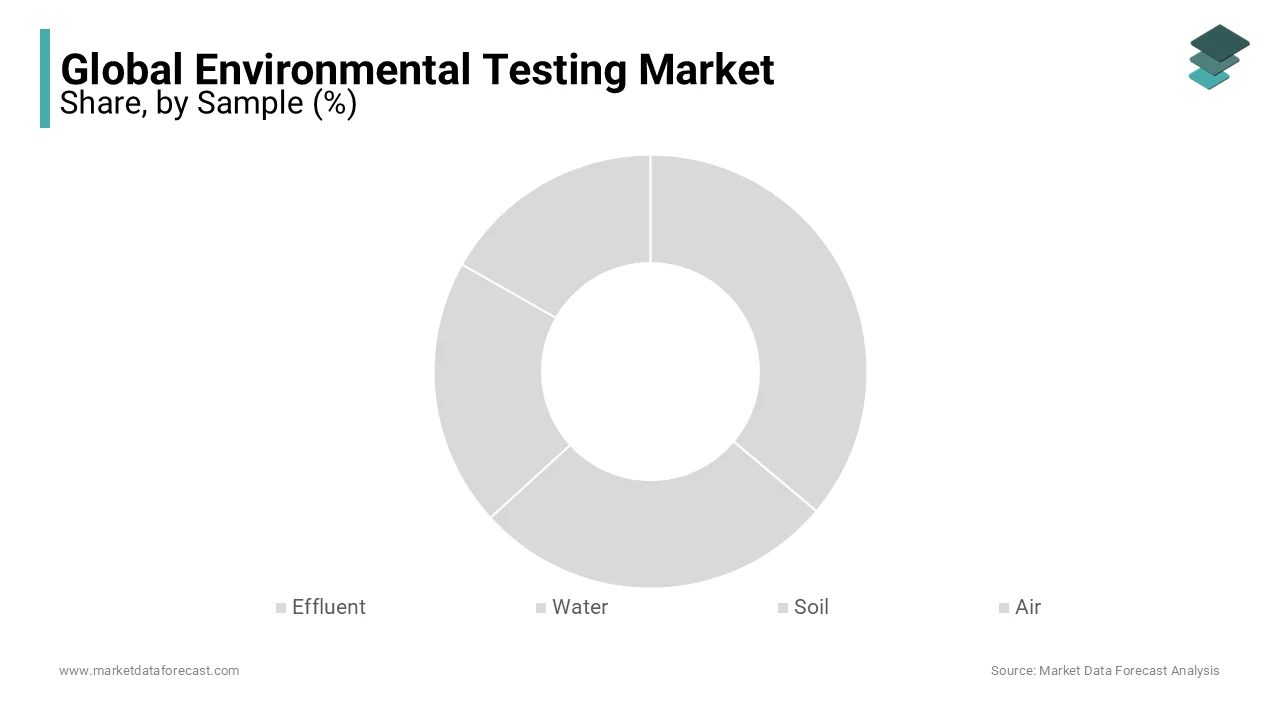
The air quality testing segment is on the rise and is expected to be the fastest growing segment in the market by witnessing a CAGR of 11.2% over the forecast period owing to mounting evidence of air pollution’s health toll urbanization and the global rollout of real time monitoring networks. Fine particulate matter, specifically PM2.5, is recognized as a significant environmental factor contributing to premature mortality on a global scale. Urban areas frequently experience air quality levels that exceed recommended guidelines for fine particulate matter. Regulatory bodies are increasingly adopting stricter air quality standards to manage levels of fine particulate matter, which is leading to an expansion of monitoring networks to measure particulate matter levels. Industrial facilities are also under pressure to report volatile organic compound emissions continuously as mandated by the EU’s Industrial Emissions Directive. Additionally, smart city initiatives in Asia and North America are deploying low cost sensor grids for hyperlocal pollution mapping. These converging public health policy and technological forces are transforming air testing from periodic compliance checks to dynamic public infrastructure.
By Technology Insights
The conventional analytical methods segment dominated the environmental testing market by accounting for a substantial share in 2025. The leading position of the conventional analytical methods segment is driven by regulatory acceptance method validation and high accuracy for quantifying trace contaminants. Many environmental regulations, such as certain EPA methods, often prioritize established, traditional analytical techniques for compliance purposes. A large majority of accredited environmental laboratories worldwide utilize protocols consistent with international standards for official reporting. Conventional, standardized methodologies remain the foundational approach for environmental compliance and enforcement across many regulatory frameworks. These methods provide reproducible data across laboratories enabling legal defensibility in litigation and remediation disputes. Despite longer turnaround times they remain indispensable for compliance with frameworks like the EU Water Framework Directive and the U.S. Resource Conservation and Recovery Act. Furthermore, conventional instruments benefit from decades of refinement resulting in robust performance even in complex matrices like sludge or industrial effluent. Conventional testing remains essential for critical environmental decisions until rapid methods are fully validated.
The rapid testing technologies segment is expected to exhibit a noteworthy CAGR of 13.4% from 2026 to 2034. The rapid growth of the rapid testing technologies segment is propelled by demand for on site immediate results in emergency response industrial hygiene and community monitoring. Technologies such as lateral flow immunoassays portable X ray fluorescence biosensors and real time polymerase chain reaction enable field detection of pathogens heavy metals and organic pollutants within minutes to hours. Public safety organizations are increasingly integrating portable diagnostic tools to identify hazardous substances and environmental contaminants during emergencies. The adoption of on-site testing technology allows response teams to make informed decisions regarding containment and public health risks. Agricultural practices are evolving to include the use of simplified monitoring tools that help manage nutrient application levels. There is a growing emphasis on utilizing immediate feedback mechanisms to mitigate the impact of chemical runoff on local water resources. Technological shifts in both emergency management and farming prioritize the use of accessible, real-time data to address environmental safety concerns. Consumer advocacy is also a catalyst, citizen science groups in India used portable lead testers to expose contamination in Delhi’s school drinking water prompting municipal action. Rapid methods are shifting from niche to mainstream environmental monitoring as regulatory bodies like the European Commission start validating them.
REGIONAL ANALYSIS
North America Market Analysis
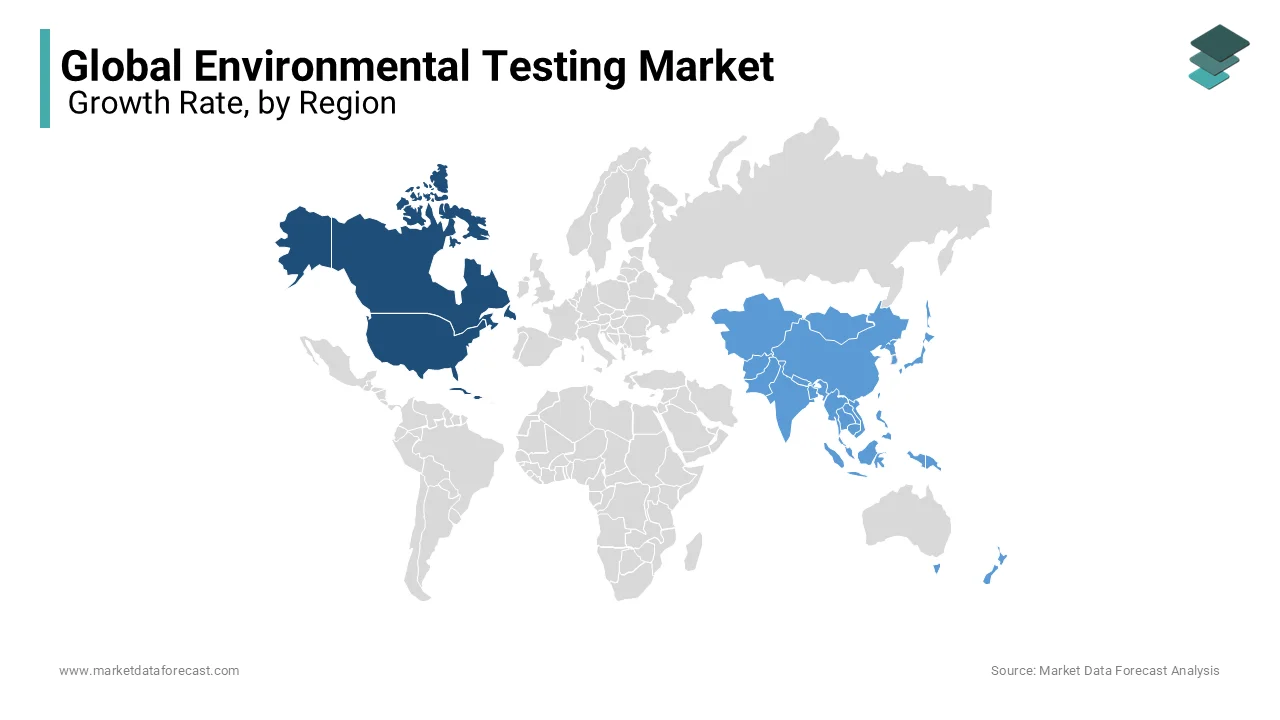
North America was the top performer in the environmental testing market by capturing a 31.6% share in 2025. The supremacy of the North American market is driven by rigorous federal enforcement advanced laboratory infrastructure and proactive state level regulations. Environmental regulatory activity in the United States involves a high volume of annual facility inspections conducted under various federal environmental statutes. State-level initiatives and regulations often impose additional, stricter testing requirements for specific contaminants that exceed federal standards. A large portion of the population relies on public water systems that are subject to routine, ongoing contaminant monitoring. The regulatory landscape in the region is characterized by a combination of federal mandates and proactive state-level environmental protections. The presence of major testing firms like Eurofins and Bureau Veritas alongside a dense network of accredited independent labs ensures high service accessibility. Additionally, investor pressure through ESG disclosure rules and Superfund site remediation obligations sustain consistent demand. The region’s market is characterized by methodological sophistication with widespread adoption of high-resolution mass spectrometry and real time air monitoring networks positioning it as the global benchmark for regulatory-driven environmental analytics.
Europe Market Analysis
Europe was the second largest region in the environmental testing market by accounting for a 28.2% share in 2025. The expansion of the European market is fuelled by its integrated regulatory architecture scientific leadership and public health orientation. The European Union’s REACH Water Framework and Industrial Emissions Directives create a harmonized yet stringent testing mandate across 27 member states. Industrial facilities in Europe are widely subject to integrated pollution prevention controls that require annual environmental audits. There is a notable concentration of accredited environmental laboratories in certain European countries, where key national agencies conduct extensive water and soil analysis. Regulations governing hazardous chemicals have resulted in an increase in the number of compounds requiring mandatory monitoring. These factors combine to create a mature high compliance market where testing is embedded in industrial operations public infrastructure and environmental governance.
Asia Pacific Market Analysis
Asia Pacific is a lucrative region in the global environmental testing market due to rapid industrialization urban pollution crises and evolving regulatory frameworks. China leads regional demand implementing its Action Plan on Prevention and Control of Soil Pollution which mandates testing at over 30 000 industrial sites. Environmental regulatory authorities in China have increased oversight of manufacturing operations, specifically within the chemical and textile sectors. India has implemented stricter, more frequent environmental monitoring requirements for a wide range of industries regarding effluent discharge. Authorities in both regions are placing greater focus on direct monitoring and inspection of industrial pollution sources. Urban air quality is another pressure point, Delhi and Beijing consistently rank among the world’s most polluted cities prompting real time PM2.5 monitoring mandates. Japan and South Korea contribute through advanced technological adoption. Though regulatory enforcement varies the region’s scale of environmental stress and policy modernization ensure robust and accelerating testing demand.
Latin America Market Analysis
Latin America expanded gradually in the global environmental testing market, with Brazil Mexico and Chile leading regulatory development and industrial compliance. Water monitoring across the region is heavily influenced by industrial and agricultural demands, with a focus on both surface and groundwater quality. Environmental regulatory agencies are increasing oversight and inspection activities related to mining operations, particularly regarding heavy metal discharge. There is a heightened emphasis on environmental enforcement, evidenced by the rising application of fines and inspections to ensure compliance. Municipal water suppliers in major urban centers are implementing comprehensive testing protocols to ensure safe, consistent water delivery to large populations. The coexistence of high biodiversity and significant water scarcity in urban areas creates an ongoing demand for stringent water quality testing and regulation. Growing ESG investment in agribusiness and mining further amplifies demand for third party environmental validation.
Middle East and Africa Market Analysis
The Middle East and Africa is anticipated to grow in the global environmental testing market over the forecast period owing to divergent dynamics between Gulf state modernization and Sub Saharan public health urgency. In the United Arab Emirates and Saudi Arabia stringent regulations for desalination plants industrial zones and construction projects drive advanced testing. National environmental authorities are increasing proactive site assessments to align industrial activities with long-term sustainability goals. In contrast, a significant portion of the population in a specific African region faces limited access to safely managed drinking water, leading to persistent health challenges. Regional water management bodies are implementing extensive monitoring systems to manage microbial and chemical safety risks in water supplies. There is a clear disparity in regional water security, with some areas facing,high-volume safety, testing demands while others struggle with basic water access. Kenya and Nigeria are also expanding laboratory accreditation programs with support from the African Union. Though fragmented the region’s market is growing annually propelled by climate vulnerability infrastructure investment and international development partnerships focused on environmental health.
COMPETITIVE LANDSCAPE
The Environmental Testing Market features a hierarchical competitive structure dominated by a few global players supported by a long tail of regional and specialized laboratories. Competition is primarily based on technical accreditation geographic coverage analytical breadth and turnaround reliability rather than price. Multinational firms leverage standardized methodologies global accreditations and digital infrastructure to serve multinational clients requiring consistent data across borders. Meanwhile regional laboratories compete on local regulatory knowledge relationships and cost efficiency particularly in municipal and small industrial segments. The market is experiencing consolidation as large players acquire local labs to fill geographic or technical gaps. Simultaneously the rise of ESG reporting and emerging contaminants like PFAS is raising the scientific bar favoring laboratories with research capabilities and method development expertise. Regulatory fragmentation across countries creates both barriers and opportunities as firms must navigate divergent standards while offering harmonized data solutions. Overall the market rewards scientific excellence operational scale and adaptive innovation.
KEY MARKET PLAYERS
Key players in the environmental testing market include
- Eurofins Scientific SE
- SGS S.A
- Bureau Veritas S.A
- Agilent Technologies Inc
- Intertek Group PLC
- ALS Limited
- Romer Labs Diagnostic GmbH
- AB Sciex LLC
- R J Hill Laboratories Ltd.
- Suburban Testing Labs
- Asure Quality Limited.
Top Players In The Market
- SGS SA headquartered in Switzerland operates as a global leader in environmental testing with laboratories in numerous countries offering comprehensive analysis of air water soil and biota. The company supports regulatory compliance industrial due diligence and ESG reporting across sectors including energy mining and manufacturing. SGS emphasizes methodological rigor scientific transparency and rapid turnaround through its global network of ISO 17025 accredited facilities. It also launched a digital client portal enabling real time access to test results chain of custody documentation and trend analytics. These initiatives reinforce SGS’s role as a trusted partner in evidence based environmental decision making worldwide.
- Eurofins Scientific is a France based multinational renowned for its extensive portfolio of environmental analytical services covering heavy metals organic pollutants microbiological agents and emerging contaminants. The company operates hundreds of laboratories globally with deep expertise in regulatory frameworks across Europe North America and Asia. Eurofins continuously invests in cutting edge instrumentation including advanced chromatography and next generation sequencing for microbial source tracking. It also integrated blockchain technology into its sample tracking system to ensure data integrity for legal and ESG reporting purposes. These innovations position Eurofins at the forefront of scientific and digital transformation in environmental testing.
- Bureau Veritas SA a France headquartered global provider delivers end to end environmental testing and certification services with a strong focus on industrial sustainability and regulatory risk management. The company serves clients in oil and gas chemicals water utilities and construction offering site assessments effluent monitoring and soil contamination studies. Bureau Veritas leverages its international accreditation and local regulatory knowledge to ensure cross border data acceptance. It also partnered with major ESG data platforms to streamline environmental performance reporting for multinational corporations. These actions solidify Bureau Veritas’s position as an integrator of environmental data into broader corporate sustainability strategies.
Top Strategies Used By The Key Market Participants
Key participants in the Environmental Testing Market deploy five core strategies to enhance competitiveness and scalability. First they invest in advanced analytical instrumentation such as high resolution mass spectrometry and real time polymerase chain reaction to detect emerging contaminants at trace levels. Second they expand global laboratory networks with local accreditations to ensure regulatory compliance and data acceptance across jurisdictions. Third they integrate digital platforms for sample tracking data analytics and client reporting to improve transparency and turnaround time. Fourth they develop specialized services for high growth areas including PFAS microplastics and ESG disclosure verification. Fifth they pursue strategic acquisitions of regional labs to access new markets enhance technical capabilities and consolidate fragmented service landscapes. These strategies collectively drive scientific credibility operational efficiency and client trust in a highly regulated and technically demanding sector.
MARKET SEGMENTATION
This research report on the global environmental testing market is segmented and sub-segmented based on sample, Contamination, Technology, and Region.
By Sample
- Effluent
- Water
- Soil
- Air
By Contamination
- Microbiological
- Organic
- Heavy metals
- Residues
- Solids
By Technology
- Conventional
- Rapid
By Region
- North America
- Europe
- Asia Pacific
- Latin America
- Middle East & Africa