- Product Description Description
- Table of Contents TOC
- List of Table & Figure LOT
- Get Free Sample PDF Sample PDF
Market Size, 2025
$4.21 BnMarket Estimate, 2026
$4.43 BnMarket Forecast, 2034
$6.64 BnCAGR, 2026–2034
5.2%Global Water Testing and Analysis Market Size, Share, Trends & Forecast (2026–2034)
- Market Scope: Comprehensive global evaluation of the water testing and analysis industry encompassing instrument types (pH meters, TOC analyzers, benchtop, portable), cross-sector applications (industrial, environmental, municipal), and major country/regional frameworks (China, India, Japan, South Korea, Australia, North America, Europe, Latin America, MEA).
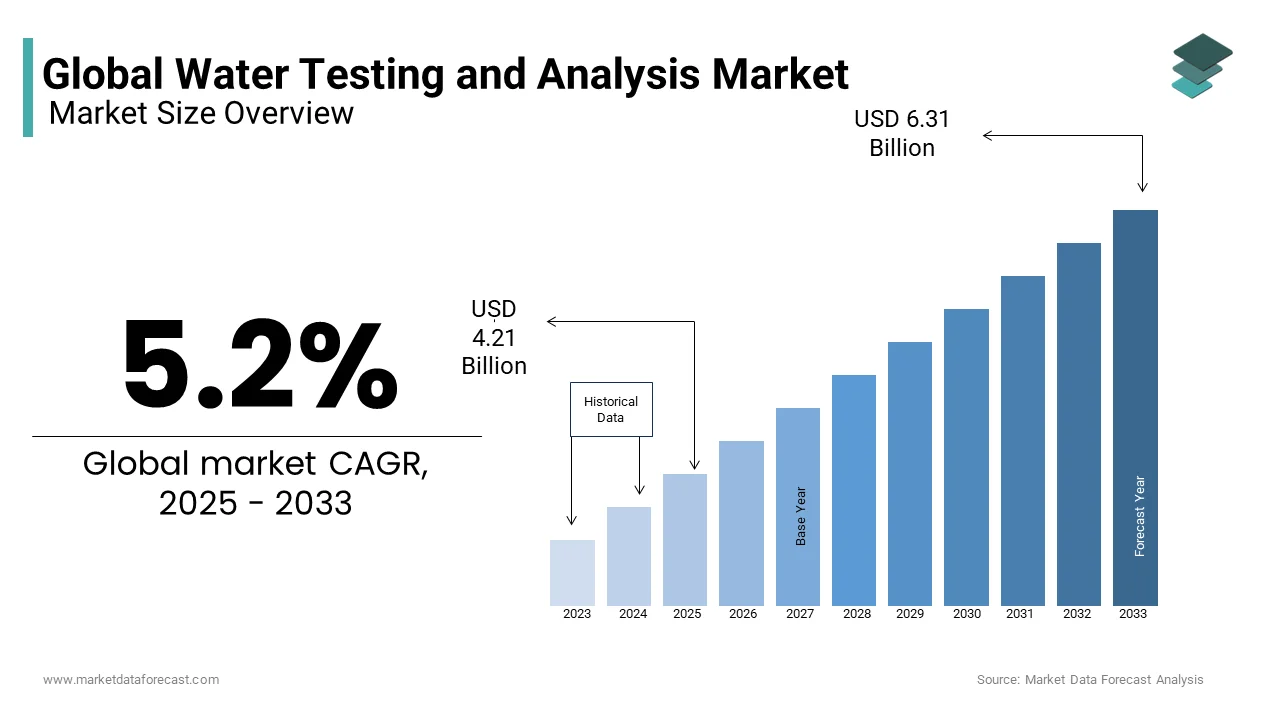
- Market Valuation: Valued at USD 4.21 billion in 2025, estimated at USD 4.43 billion in 2026, and projected to reach USD 6.64 billion by 2034, expanding at a steady CAGR of 5.2% (2026–2034).
- Primary Growth Enablers: Stringent government regulations and compliance mandates for water quality, increasing industrialization and urbanization generating higher effluent volumes, and rapid integration of IoT and real-time monitoring solutions.
Key Global Water Testing Segment Metrics (2026–2034)
| Category | Leading Segment | Fastest-Growing / Key Segment Highlights |
|---|---|---|
| By Product Type | pH Meters (held 33.3% market share in 2025 due to universal regulatory acidity/alkalinity monitoring requirements) & Benchtop Instruments (dominant in stationary labs) | Total Organic Carbon (TOC) Analyzers (7.8% CAGR) & Portable Water Testing Instruments (fastest 8.5% CAGR for on-site real-time field data) |
| By Application | Industrial Water Testing (held 45.3% market share in 2025 driven by strict effluent discharge compliance and corporate ESG goals) | Environmental Water Testing (projected to register a fastest CAGR of 9.2% due to ecosystem health conservation and biodiversity initiatives) |
| By Region / Country | China (held 35.3% of APAC share in 2025 backed by massive industrial reforms and surface water monitoring plans) | India (20.3% share via Jal Jeevan Mission and river cleaning initiatives), Japan, South Korea, and Australia (scaling via advanced tech and ultra-pure water standards) |
Major Market Players, Structure & Strategic Landscape
Market Structure: Highly competitive landscape characterized by established multinational corporations and specialized regional providers competing on technological accuracy, software integration, IoT connectivity, and regulatory compliance solutions.
Key Companies: Thermo Fisher Scientific Inc., Danaher Corporation (Hach), Merck KGaA, General Electric Company, Agilent Technologies Inc., Emerson Electric Co., Honeywell International Inc., Horiba Ltd., ABB Ltd., and Mettler-Toledo International Inc.
Global Water Testing and Analysis Market Size
The global water testing and analysis market was valued at USD 4.21 billion in 2025 and is anticipated to reach USD 4.43 billion in 2026 from USD 6.64 billion by 2034, growing at a CAGR of 5.2% during the forecast period from 2026 to 2034.
MARKET OVERVIEW
The water testing and analysis is scientific procedures and technological solutions designed to evaluate the physical chemical and biological properties of water sources. According to the World Health Organization, approximately 2 billion people globally use a drinking water source contaminated with feces which underscores the urgent necessity for rigorous and widespread water quality monitoring systems. As per the United Nations Educational Scientific and Cultural Organization, water scarcity affects more than 40% of the global population a statistic that drives the need for efficient wastewater treatment and reuse protocols reliant on precise analytical data. The integration of advanced spectroscopy chromatography and microbiological assays allows for the identification of trace pollutants at parts per billion levels. Furthermore, the increasing industrialization in emerging economies has led to higher volumes of industrial effluent requiring stringent testing before discharge. As per the Environmental Protection Agency in the United States alone there are over 150000 public water systems that require regular monitoring to meet federal safety standards.
MARKET DRIVERS
Stringent Government Regulations And Compliance Mandates For Water Quality
The stringent government regulations and compliance mandates for water quality serve is substantially escalating the growth of the Water Testing And Analysis Market. Governments worldwide are implementing stricter limits on contaminants in drinking water and industrial effluents to protect public health and ecosystems. In the European Union, the revised Drinking Water Directive requires member states to monitor for new parameters including endocrine disruptors and microplastics thereby expanding the scope of required testing. All EU member states must ensure that urban wastewater is treated, according to specific standards before being discharged into natural waters which necessitates continuous analytical monitoring. In the United States, the Environmental Protection Agency regularly updates the National Primary Drinking Water Regulations adding new contaminants such as per and polyfluoroalkyl substances PFAS to the list of regulated substances. The exposure to these chemicals even at low levels can lead to adverse health effects prompting utilities to invest in advanced detection methods. Similarly, in Asia countries like China and India have introduced tighter industrial discharge norms under their respective environmental protection laws. The Chinese Ministry of Ecology and Environment has mandated real time monitoring for key polluting industries to ensure compliance with emission standards. These regulatory pressures compel municipalities and industrial facilities to adopt frequent and sophisticated testing protocols driving demand for both laboratory services and portable testing instruments.
Increasing Industrialization And Urbanization Leading To Higher Effluent Volumes
The increasing industrialization and urbanization leading to higher effluent volumes is another major factor accelerating the growth of the water testing and analysis market. As populations migrate to urban centers and industrial activities expand, the volume of wastewater generated increases substantially requiring robust treatment and monitoring infrastructure. According to the United Nations Department of Economic and Social Affairs 68% of the world population is projected to live in urban areas by 2050 placing immense pressure on existing water management systems. Industrial sectors, such as pharmaceuticals textiles and food processing generate complex wastewater streams containing diverse pollutants that require specialized analytical techniques for identification and quantification. In India, for instance the Central Pollution Control Board identifies thousands of heavily polluting industries that must install online effluent monitoring systems to track discharge quality in real time. The textile industry in Bangladesh and Vietnam also faces intense scrutiny from international buyers who require proof of environmentally responsible wastewater management. This demand for transparency and compliance drives the adoption of advanced testing technologies, such as high-performance liquid chromatography and mass spectrometry. Furthermore, the rise of zero liquid discharge initiatives in industries aims to maximize water recycling which necessitates precise monitoring of water quality at every stage of the treatment process.
MARKET RESTRAINTS
High Operational Costs And Capital Investment For Advanced Instrumentation
The high operational costs and capital investment for advanced instrumentation constitute is hampering the growth of the water testing and analysis market. State of the art analytical equipment, such as gas chromatographs, mass spectrometers, and inductively coupled plasma optical emission spectrometers require substantial upfront capital expenditure often exceeding 100000 USD per unit. The maintenance calibration and consumable costs for these instruments add, significantly to the total cost of ownership making them prohibitive for smaller municipalities and developing regions. Many low and middle income countries lack the financial resources to establish fully equipped water quality laboratories resulting in reliance on less accurate or infrequent testing methods. Additionally, the need for highly skilled personnel to operate and interpret data from these complex instruments further increases operational expenses. Training technicians and hiring qualified chemists require ongoing investment in human capital which strains limited budgets. In rural areas of Africa and Southeast Asia the lack of reliable electricity and controlled laboratory environments also hinders the deployment of sensitive electronic equipment. As per the United Nations Childrens Fund nearly half of the global population lacks access to safely managed drinking water services partly due to the inability to afford consistent and comprehensive water quality monitoring.
Complexity Of Sample Collection And Preservation Protocols
The complexity of sample collection and preservation protocols to the accuracy and reliability of results is also hindering the growth of the Water Testing And Analysis Market. Water samples are highly susceptible to changes in composition due to temperature fluctuations exposure to light and biological activity during transport from the site to the laboratory. The specific preservatives and holding times are required for different analytes to prevent degradation or transformation of contaminants. Failure to adhere to these strict protocols can lead to false negatives or inaccurate concentration readings compromising the integrity of the data. The improper sampling techniques are a leading cause of data variability in environmental monitoring programs. In remote or inaccessible locations, such as offshore platforms or deep aquifers obtaining representative samples is logistically challenging and expensive. The need for specialized containers cooling devices and rapid transportation infrastructure adds to the operational burden. In developing regions the lack of standardized sampling procedures and trained field staff exacerbates the issue leading to inconsistent data quality. As per the International Organization for Standardization compliance with sampling standards such as ISO 5667 requires rigorous training and quality assurance measures which are not always available. These logistical and technical challenges can delay decision making and reduce confidence in test results.
MARKET OPPORTUNITIES
Integration Of Internet Of Things And Real Time Monitoring Solutions
The integration of Internet of Things and real time monitoring solutions is to create new opportunities for the growth of the Water Testing And Analysis Market. Traditional laboratory based testing involves time lags between sample collection and result availability, which can delay response to contamination events. IoT enabled sensors allow for continuous monitoring of key water quality parameters such as pH turbidity dissolved oxygen and conductivity providing instant data transmission to central management systems. According to the International Telecommunication Union, the number of connected devices globally is expected to reach 29 billion by 2030, facilitating the widespread deployment of smart water monitoring networks. As per the Smart Water Markets Forum real time data enables predictive maintenance of infrastructure and early detection of leaks or spills reducing water loss and environmental damage. In Singapore, the Public Utilities Board has implemented a comprehensive smart water grid that uses sensors to monitor water quality and flow across the distribution network enhancing efficiency and reliability. The ability to analyze data trends over time allows utilities to optimize treatment processes and reduce chemical usage. Furthermore, regulatory bodies are increasingly accepting data from validated online monitoring systems for compliance reporting reducing the burden of manual sampling. The adoption of artificial intelligence algorithms to interpret sensor data further enhances the value proposition by identifying anomalies and predicting potential issues.
Expansion Of Portable And Point Of Care Testing Devices
The expansion of portable and point of care testing devices, particularly in remote and resource constrained settings is also to create new opportunities for the growth of the water testing and analysis market. Compact handheld devices and test kits enable rapid on-site analysis of water quality eliminating the need for sample transport and laboratory processing. The demand for decentralized water testing solutions is rising as communities and industries seek immediate answers to safety concerns. As per the World Health Organization, point of care testing is crucial for ensuring safe drinking water in emergency situations and rural areas where laboratory infrastructure is absent. Technologies such as colorimetric strips electrochemical sensors and miniaturized spectrometers allow for the detection of bacteria nitrates and heavy metals within minutes. In India the Jal Jeevan Mission aims to provide functional household tap connections to every rural household by 2024 relying on simple testing kits for community level monitoring. The affordability and ease of use of these devices empower local communities and non-technical staff to perform regular checks. Furthermore, the development of smartphone based applications that interface with portable sensors enhances data recording and sharing capabilities.
MARKET CHALLENGES
Detection Of Emerging Contaminants And Microplastics
The detection of emerging contaminants and microplastics is to act as a major barrier for the growth of the Water Testing And Analysis Market. Traditional testing methods are often not designed to identify new classes of pollutants such as pharmaceutical residues personal care products and microplastic particles which are increasingly found in water sources. Emerging contaminants have been detected in surface and groundwater, across the United States but standard regulatory frameworks do not yet require routine monitoring for many of these substances. The analytical methods for detecting microplastics in water are still being standardized making it difficult to compare data across studies and regions. The extremely low concentrations at which these contaminants occur often in the nanogram per liter range require highly sensitive and expensive instrumentation such as tandem mass spectrometry. Furthermore, the complex matrix of wastewater and natural waters can interfere with analysis leading to false positives or negatives. The lack of universally accepted maximum contaminant levels for many emerging substances creates uncertainty for regulators and utilities regarding compliance requirements. As per the Plastic Soup Foundation millions of microplastic particles are released into water bodies daily but current treatment plants are not equipped to remove them efficiently nor are they routinely tested for them. Developing robust cost effective and standardized methods for these new pollutants requires significant research and development investment.
Shortage Of Skilled Professionals And Technical Expertise
The shortage of skilled professionals and technical expertise is also to inhibit the growth of the water testing and analysis market. Accurate water analysis requires specialized knowledge in chemistry biology and instrument operation which is in short supply in many regions. The water utility sector faces an aging workforce with a significant portion of experienced operators and analysts approaching retirement age. As per the research, there is a global gap in STEM education particularly in developing countries where the number of qualified environmental scientists does not meet the demand. The complexity of modern analytical instruments requires continuous training and certification which many organizations struggle to provide due to budget constraints. In rural areas of Africa and Asia the lack of local expertise often leads to reliance on external laboratories causing delays and increased costs. The mismatch between educational outputs and industry needs results in a scarcity of technicians capable of performing advanced water quality assessments. This skills gap affects the quality and reliability of data potentially leading to incorrect conclusions about water safety. Furthermore, the high turnover rate in the industry exacerbates the problem as experienced staff move to higher paying sectors. Addressing this challenge requires coordinated efforts between educational institutions governments and industry stakeholders to develop training programs and incentivize careers in water science.
REPORT COVERAGE
| REPORT METRIC | DETAILS |
| Market Size Available | 2025 to 2034 |
| Base Year | 2025 |
| Forecast Period | 2026 to 2034 |
| CAGR | 5.2% |
| Segments Covered | By Product, Product Type, Application, Region |
| Various Analyses Covered | Global, Regional & Country Level Analysis, Segment-Level Analysis, DROC, PESTLE Analysis, Porter’s Five Forces Analysis, Competitive Landscape, Analyst Overview on Investment Opportunities |
| Regions Covered | North America, Europe, APAC, Latin America, Middle East & Africa |
| Market Leaders Profiled | General Electric Company, Thermo Fisher Scientific, Inc., Agilent Technologies Inc., Emerson Electric Co., Honeywell International Inc., Danaher Corporation, Horiba, Ltd, Abb Ltd, Mettler-Toledo International Inc. |
SEGMENTAL ANALYSIS
By Product Insights
The pH meter segment was the largest by holding 33.3% of the Water Testing And Analysis Market share in 2025 due to the universal regulatory requirement for monitoring acidity and alkalinity across all water usage sectors. pH is a fundamental parameter that influences chemical reactions biological activity and corrosion rates in water systems making it a mandatory test for compliance with environmental and health standards. According to the World Health Organization, the recommended pH range for drinking water is between 6.5 and 8.5 to ensure palatability and prevent pipe corrosion which can leach heavy metals into the supply. As per the United States Environmental Protection Agency the Clean Water Act mandates strict pH limits for industrial discharges to protect aquatic life as most freshwater organisms survive only within a narrow pH range of 6.5 to 9.0. This regulatory ubiquity ensures that every municipal wastewater treatment plant industrial facility and laboratory must possess reliable pH measurement capabilities. The simplicity and cost effectiveness of pH meters compared to other analytical instruments further drive their widespread adoption. In developing nations where water infrastructure is expanding the basic need to monitor pH to prevent infrastructure damage and ensure safety makes it the primary entry point for water quality testing. The continuous need for calibration and replacement of electrodes also contributes to recurring revenue in this segment. Furthermore, pH data is often used as a proxy for overall water quality stability prompting frequent measurements in process control applications.
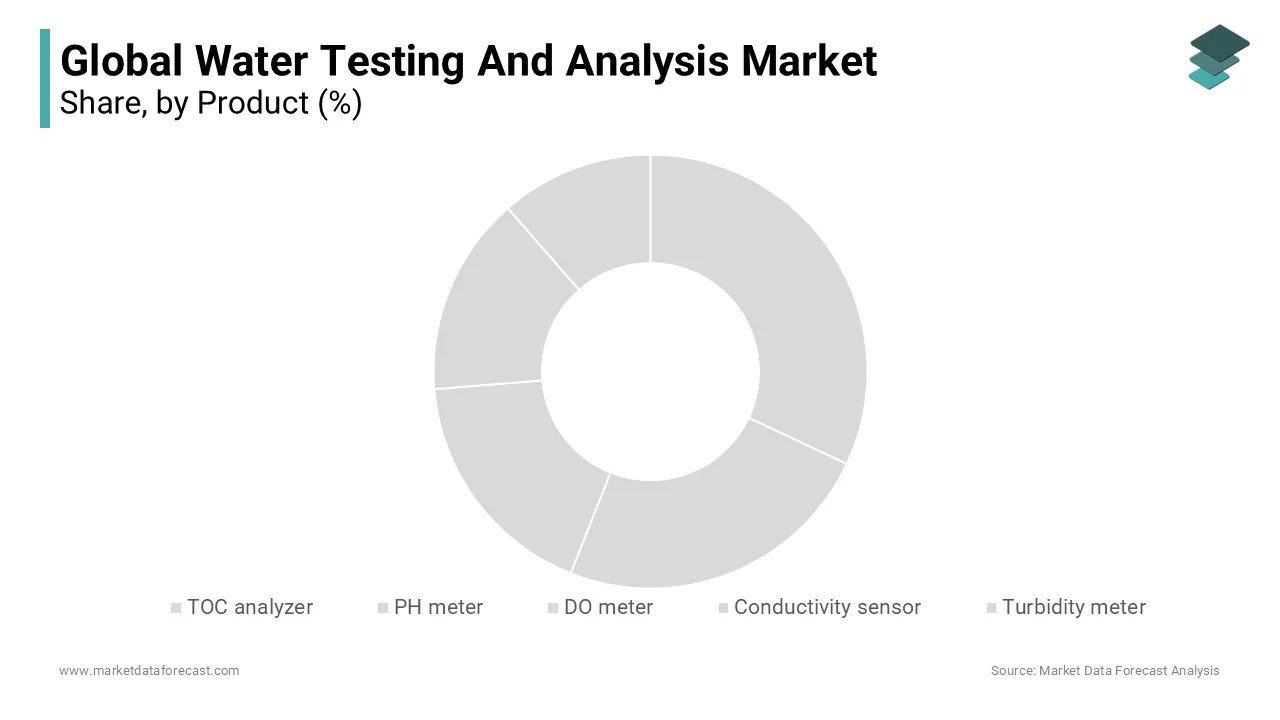
The Total Organic Carbon TOC segment is expected to witness a fastest CAGR of 7.8% from 2026 to 2034 by rising concerns over organic contaminants in drinking water. TOC analysis provides a comprehensive measure of all organic compounds in water serving as a non-specific indicator of water quality and potential contamination. The organic matter in drinking water can react with disinfectants like chlorine to form harmful disinfection by products, such as trihalomethanes which are linked to cancer and other health issues. As per the United States Environmental Protection Agency, the Stage 2 Disinfectants and Disinfection Byproducts Rule requires water utilities to monitor TOC levels to optimize treatment processes and minimize byproduct formation. This regulatory pressure is expanding globally with countries in Europe and Asia adopting similar standards to protect public health. The increasing detection of emerging organic pollutants such as pharmaceuticals and personal care products in water sources has further heightened the need for sensitive TOC monitoring. As per the European Commission the revised Drinking Water Directive emphasizes the removal of organic micro pollutants driving investments in advanced oxidation processes that require TOC verification. Municipalities are upgrading their treatment facilities to include TOC analyzers to ensure compliance and demonstrate safety to consumers.
By Product Insights
The benchtop segment was accounted in holding a dominant share of the Water Testing And Analysis Market in 2025 due to its superior accuracy and multifunctionality in laboratory settings. Benchtop instruments are designed for stationary use in controlled environments allowing for precise calibration and stable measurements that are critical for regulatory compliance and research. The standard methods for water analysis often require the use of laboratory grade equipment to achieve the necessary detection limits and precision for parameters, such as heavy metals and organic compounds. As per the International Organization for Standardization, ISO 17025 accreditation for testing laboratories mandates the use of calibrated and validated instruments which benchtop models readily satisfy due to their robust construction and advanced features. These devices often support multiple probes and parameters enabling comprehensive water quality profiling in a single unit. Universities research institutions and certified commercial laboratories rely on benchtop analyzers for their ability to handle complex samples and provide detailed data logs. The higher throughput capacity of benchtop systems allows laboratories to process large volumes of samples efficiently meeting the demands of municipal monitoring programs and industrial quality control.
The portable segment is projected to register a fastest CAGR of 8.5% during the forecast period with the demand for on-site real time data in remote locations. Portable instruments allow field technicians and environmental scientists to conduct immediate assessments without the delay and potential sample degradation associated with laboratory transport. The field monitoring is essential for capturing transient pollution events, such as stormwater runoff or industrial spills where time sensitive data is crucial for response efforts. The use of portable meters for parameters like pH and dissolved oxygen is mandated in many field sampling protocols to ensure data representativeness. The rugged design and battery operation of portable devices make them suitable for use in challenging environments, such as rivers lakes and offshore platforms. In developing regions where laboratory infrastructure is limited portable testers empower local communities and NGOs to monitor water safety independently. As per the World Health Organization point of care testing is vital for assessing drinking water quality in rural areas lacking piped supplies.
By Application Insights
The industrial segment was accounted in holding 45.3% of the Water Testing And Analysis Market share in 2025 driven by strict effluent discharge regulations and corporate sustainability goals. Manufacturing facilities across sectors, such as chemicals textiles and energy are legally obligated to treat wastewater to specific standards before release to prevent environmental contamination. According to the Organisation for Economic Co-operation and Development, industrial wastewater treatment compliance rates have improved globally due to stricter enforcement of environmental laws such as the European Union Industrial Emissions Directive. Companies are also motivated by environmental social and governance criteria where transparent water management practices enhance brand reputation and investor confidence. The textile industry in Asia for instance faces intense pressure from global brands to verify safe discharge practices through regular testing. As per the Confederation of Indian Industry thousands of industrial units have installed online effluent monitoring systems to comply with national green tribunal orders. The cost of non-compliance including fines and operational shutdowns far exceeds the investment in testing infrastructure. Furthermore, industrial processes often require high purity water for production making intake water testing equally important.
The environmental segment is projected to register a fastest CAGR of 9.2% from 2026 to 2034 by increasing focus on aquatic ecosystem health and biodiversity conservation. Governments and non-governmental organizations are intensifying efforts to monitor rivers lakes and oceans to assess the impact of pollution and climate change on aquatic life. The water pollution is one of the greatest environmental challenges threatening biodiversity and ecosystem services globally. As per the World Wildlife Fund, freshwater species populations have declined by 84% since 1970, highlighting the urgent need for comprehensive water quality monitoring to guide restoration efforts. Environmental agencies are expanding monitoring networks to track parameters, such as nutrients, heavy metals, and emerging contaminants that affect fish and amphibian populations. Citizen science initiatives are also contributing to data collection using simple testing kits to engage communities in conservation. The growing awareness of the interconnection between water quality and ecosystem resilience drives investment in environmental monitoring programs.
COUNTRY ANALYSIS
China Water Testing And Analysis Market Analysis
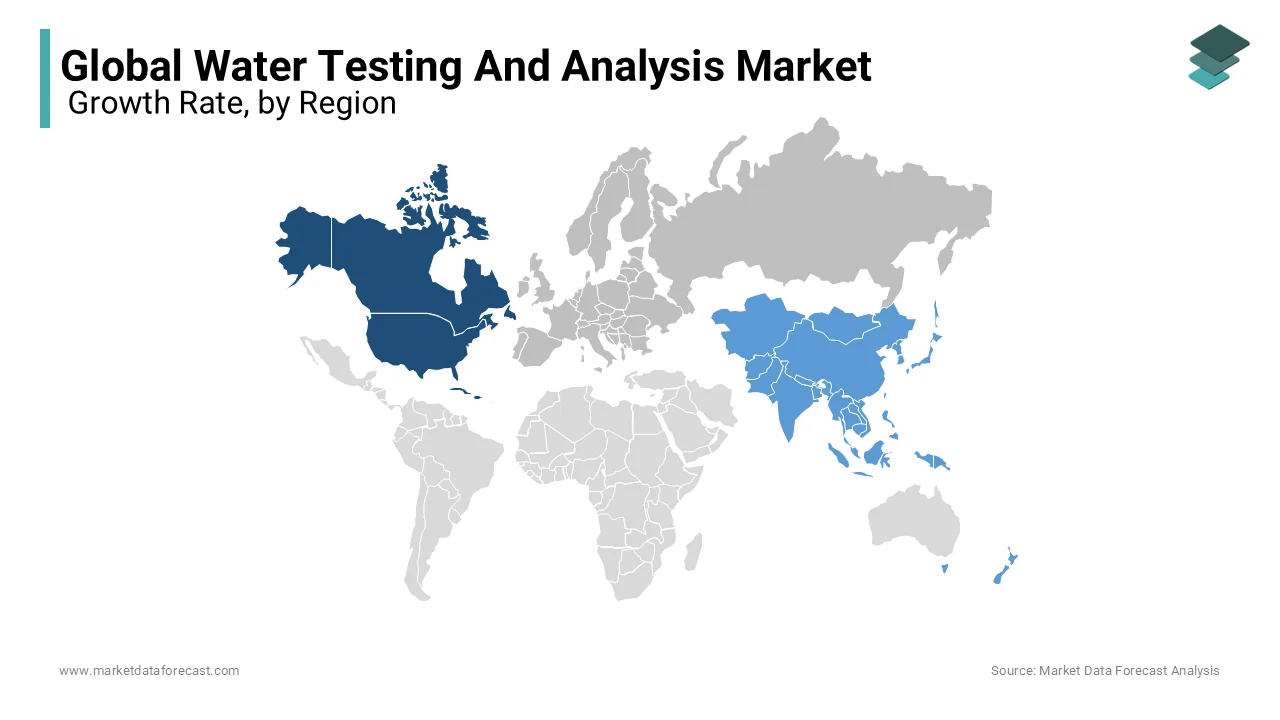
China was the largest contributor in the Asia Pacific Water Testing And Analysis Market by accounting for 35.3% of the share in 2025 with its massive industrial base and stringent environmental reforms. The country has implemented the Water Pollution Prevention and Control Action Plan, which mandates rigorous monitoring of industrial effluents and surface water quality. According to the Ministry of Ecology and Environment of China, over 10000 national control sections for surface water quality are monitored regularly to assess progress towards environmental targets. The investment in environmental protection has grown significantly with a focus on upgrading wastewater treatment infrastructure in urban and rural areas. The rapid expansion of the semiconductor and pharmaceutical industries also drives demand for high purity water testing. The government’s commitment to ecological civilization and green development ensures continued support for water quality monitoring technologies.
India Water Testing And Analysis Market Analysis
India water testing and analysis market held 20.3% of the share in 2025 by extensive government initiatives for river cleaning and rural water supply. The Jal Jeevan Mission aims to provide safe drinking water to every rural household requiring widespread testing at the village level. According to the Ministry of Jal Shakti, millions of water samples are tested annually using field testing kits and laboratories to ensure compliance with safety standards. The industrial clusters are required to install online effluent monitoring systems to track discharge quality in real time. The Namami Gange and other river rejuvenation programs drive demand for environmental monitoring services.
Japan Water Testing And Analysis Market Analysis
Japan water testing and analysis market growth is likely to grow with the high standards for water quality and advanced industrial requirements. The country has strict regulations under the Water Quality Pollution Control Law requiring precise monitoring of industrial and municipal wastewater. According to the Ministry of the Environment of Japan, regular surveys of public water bodies are conducted to maintain environmental standards. As per the Japan Water Works Association, municipal utilities employ advanced analytical techniques to ensure the safety of drinking water supplies. The semiconductor and electronics industries in Japan demand ultra pure water testing supporting the market for high precision instruments. The aging infrastructure also necessitates regular monitoring for leaks and contamination.
South Korea Water Testing And Analysis Market Analysis
South Korea water testing and analysis market growth is likely to have a significant growth with the advanced water management policies and industrial sector. The Four Major Rivers Restoration Project and ongoing water quality improvement initiatives drive demand for environmental monitoring. The comprehensive water quality monitoring networks are operated to assess river and reservoir health. The smart water management systems incorporating real time sensors are being deployed to enhance efficiency. The semiconductor industry in South Korea requires rigorous ultra pure water testing supporting the market for specialized analytical equipment. Public awareness of water safety and government investment in green infrastructure contribute to market growth.
Australia Water Testing And Analysis Market Analysis
Australia water testing and analysis market growth is driven by the water scarcity issues and strict environmental regulations. The country faces frequent droughts making water recycling and desalination critical which require intensive quality monitoring. The national water quality monitoring frameworks ensure consistency in data collection. The mining industry also contributes to demand for water testing to manage tailings and effluent. Urban utilities invest in advanced treatment and monitoring technologies to ensure supply security.
COMPETITIVE LANDSCAPE
The competition in the Water Testing And Analysis Market is characterized by the presence of established multinational corporations and specialized regional providers who compete on technology accuracy and service quality. Leading companies differentiate themselves by offering integrated solutions that combine advanced hardware with sophisticated software platforms for data management and analysis. This holistic approach appeals to customers seeking efficiency and compliance in water monitoring processes. The market sees intense rivalry in terms of innovation with firms continuously launching new portable and automated devices to meet diverse application needs. Strategic acquisitions are common as companies seek to expand their product lines and enter new geographic markets. Local players often compete on price and customized service offerings catering to specific regional regulations and conditions. Regulatory compliance drives much of the competitive dynamics as companies strive to meet increasingly stringent standards globally. Customer support and training also play an important role in maintaining long term relationships.
KEY MARKET PLAYERS
These are some of the market players dominating the global water testing and analysis market.
- General Electric Company
- Thermo Fisher Scientific, Inc
- Agilent Technologies Inc.
- Emerson Electric Co.
- Merck KGaA
- Honeywell International Inc
- Tintometer GmbH
- Danaher Corporation
- Horiba, Ltd
- Abb Ltd
- Mettler-Toledo International Inc
Top Players In The Market
- Thermo Fisher Scientific is a global leader in the water testing and analysis market offering a comprehensive portfolio of instruments reagents and software solutions. The company serves diverse sectors including environmental monitoring industrial quality control and municipal water treatment. Recently Thermo Fisher has strengthened its position by expanding its digital capabilities through the integration of artificial intelligence into its analytical platforms. This innovation allows for real time data analysis and predictive maintenance enhancing operational efficiency for clients. The company also invests heavily in research and development to create more sensitive and portable testing devices.
- Danaher Corporation contributes significantly to the global water testing market through its subsidiary Hach which is renowned for precision water quality analysis solutions. The company provides a wide range of handheld portable and benchtop instruments along with chemical reagents for various parameters. Danaher has recently focused on enhancing its digital ecosystem by launching connected devices that enable remote monitoring and data management. This strategic move supports utilities and industries in achieving greater transparency and efficiency in water management. The company also emphasizes customer training and support services to ensure optimal use of its technologies. Through continuous innovation and strategic acquisitions Danaher expands its technological footprint and service capabilities. Their dedication to solving complex water challenges helps customers meet stringent regulatory standards while optimizing resource usage. This approach maintains their competitive edge and drives growth in the global market.
- Merck KGaA plays a vital role in the global water testing and analysis market by providing high quality test kits sensors and digital solutions. The company focuses on delivering reliable and easy to use products for both laboratory and field applications. Recently Merck has strengthened its market position by advancing its digital water platform which integrates hardware with cloud based analytics. This initiative enables users to visualize trends and manage compliance more effectively. The company also collaborates with industry partners to develop customized solutions for specific applications such as pharmaceutical and food beverage sectors. Merck prioritizes sustainability by offering eco friendly testing options and reducing waste in their operations. Their strong emphasis on innovation and customer centricity ensures they remain a preferred choice for professionals seeking accurate and efficient water analysis tools globally.
Top Strategies Used By Key Market Participants
Key players in the Water Testing And Analysis Market primarily employ strategies focused on technological innovation and strategic partnerships to enhance their competitive position. Companies are increasingly integrating Internet of Things sensors and artificial intelligence into their devices to offer real time monitoring and predictive analytics. This digital transformation allows for proactive maintenance and improved decision making for clients. Additionally, manufacturers are expanding their product portfolios through acquisitions of specialized firms to broaden their technological capabilities and geographic reach. Sustainability is another major strategy with firms developing eco-friendly reagents and energy efficient instruments to align with global environmental goals. Educational initiatives and technical support services are also prioritized to build customer loyalty and ensure proper usage of complex equipment. These combined efforts enable key participants to address evolving regulatory requirements and customer needs while driving market growth and differentiation in a competitive landscape.
MARKET SEGMENTATION
This research report on the global water testing and analysis market is segmented and sub-segmented based on Product, Product Type, Application, and Region.
By Product
- TOC analyzer
- PH meter
- DO meter
- Conductivity sensor
- Turbidity meter
- Other products
By Product Type
- Portable
- Handheld
- Benchtop
- others
By Application
- Laboratory
- Industrial
- Environmental
- Government
- other applications
By Region
- North America
- Europe
- Asia-Pacific
- Latin America
- Middle East and Africa