- Product Description Description
- Table of Contents TOC
- List of Table & Figure LOT
- Get Free Sample PDF Sample PDF
Market Size, 2025
$1.18 BnMarket Estimate, 2026
$1.23 BnMarket Forecast, 2034
$1.68 BnCAGR, 2026–2034
3.99%Europe Ethyl Acetate Market Size, Growth, Trends & Forecast (2026–2034)
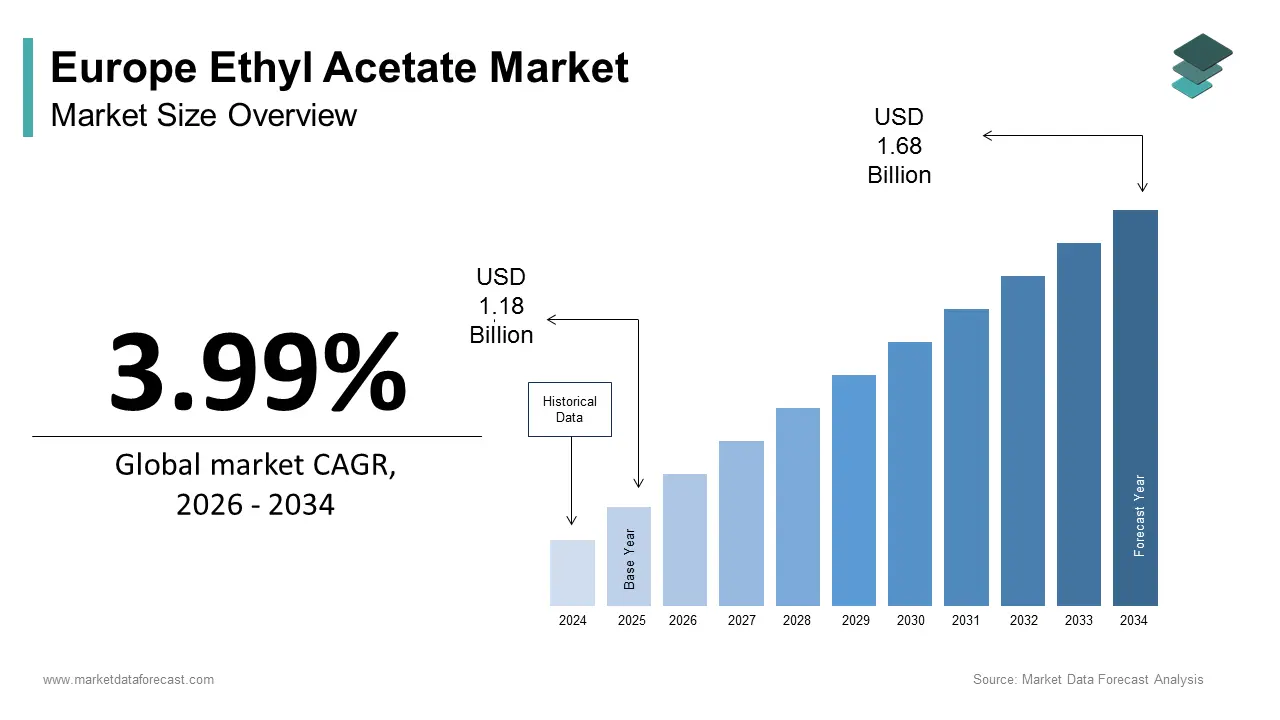
The Europe ethyl acetate market size was calculated to be USD 1.18 billion in 2025, is anticipated to reach USD 1.23 billion in 2026, and is projected to be worth USD 1.68 billion by 2034, growing at a CAGR of 3.99% during the forecast period from 2026 to 2034. Driven by sustainability mandates, circular economy initiatives, and strict regulatory standards under the European Union, the market continues to expand across industrial, pharmaceutical, and packaging sectors.
Key Executive Metrics (At-a-Glance)
- 2025 Base Valuation: USD 1.18 Billion
- 2026 Current Valuation: USD 1.23 Billion
- 2034 Forecast Valuation: USD 1.68 Billion
- Compound Annual Growth Rate (CAGR): 3.99% (2026–2034)
- Dominant Purity Grade Segment: Industrial and Coatings Grade (64.5% share in 2025)
- Fastest-Growing Purity Grade Segment: Pharmaceutical GMP Grade (CAGR of 9.8%)
- Dominant Application Segment: Paints and Coatings (58.7% share in 2025)
- Fastest-Growing Application Segment: Flexible-Packaging Inks (CAGR of 7.2%)
- Dominant End Use Industry Segment: Artificial Leather (22.3% share in 2025)
- Fastest-Growing End Use Industry Segment: Electronics Cleaning (CAGR of 11.3%)
- Dominant Regional Market: Germany (26.7% share in 2025)
Core Market Drivers
- Bio-Based Production Expansion: The European Green Deal and decarbonization agendas are accelerating the shift toward renewable ethanol and bio-acetic acid feedstock routes.
- High Purity Standards: Stringent European Pharmacopoeia and food contact regulations are driving steady demand for high-grade extraction and purification solvents.
Primary Market Restraints & Challenges
- Feedstock Price Volatility: Price instability in upstream acetic acid and ethanol markets creates profit margin pressures for producers.
- VOC & Emission Controls: Strict limits under the Industrial Emissions Directive require heavy capital expenditure for advanced abatement technology.
Europe Ethyl Acetate Market Classification Breakdown
| Segment Category | Largest Segment | Fastest-Growing Segment |
|---|---|---|
| By Purity Grade | Industrial/Coatings Grade (64.5% share) | Pharmaceutical/GMP Grade (CAGR of 9.8%) |
| By Application | Paints and Coatings (58.7% share) | Flexible-Packaging Inks (CAGR of 7.2%) |
| By End Use Industry | Artificial Leather (22.3% share) | Electronics Cleaning (CAGR of 11.3%) |
| By Region | Germany (26.7% share) | Netherlands & Italy (Logistics & Specialized Manufacturing) |
Major Industry Players Profiled
Key market participants include BASF SE, INEOS Group, Celanese Corporation, Arkema S.A., Eastman Chemical Company, LyondellBasell Industries, Solvay S.A., Dow Inc., SABIC, Jubilant Ingrevia Limited, Godavari Biorefineries Ltd., Sekab Group, Synthomer plc, Versalis S.p.A., and Alco Group.
Europe Ethyl Acetate Market Size
The Europe ethyl acetate market size was calculated to be USD 1.18 billion in 2025 and is anticipated to be worth USD 1.68 billion by 2034, growing from USD 1.23 billion in 2026 at a CAGR of 3.99% during the forecast period.
Ethyl acetate is a colourless ester solvent widely employed across coatings, inks, adhesives, and pharmaceutical formulations due to its favourable evaporation rate, low toxicity, and biodegradability. In Europe, its production and usage are deeply interwoven with regional industrial policy, environmental regulation, and circular economy ambitions. The European Union’s REACH framework and associated Commission Directives set strict occupational safety standards for ethyl acetate, enforcing maximum concentration limits over both short-term and eight-hour working periods to protect worker health. A high volume of the ethyl acetate consumed within Europe is produced internally through the esterification of acetic acid and ethanol, with a growing industry transition toward utilizing bio-based raw materials rather than petrochemical counterparts. The European Union maintains a robust, integrated chemical infrastructure that supports the domestic production of key precursors like acetic acid, which are essential for producing downstream materials such as ethyl acetate, despite overall decreases in chemical manufacturing volume. Meanwhile, the European pulp and paper sector, represented by CEPI, experienced a notable production rebound in 2024, driven strongly by packaging materials and improved sustainability metrics, signaling a recovery after a significant downturn in previous years. These structural linkages define ethyl acetate not as a standalone commodity but as a critical node in Europe’s low volatility solvent ecosystem shaped by sustainability imperatives and industrial interdependence.
MARKET DRIVERS
Expansion of Bio-Based Ethyl Acetate Production Aligned with EU Green Deal Objectives
The European Union’s decarbonization agenda is accelerating the adoption of bio-based ethyl acetate and ultimately contributing to the growth of the Europe ethyl acetate market. It is produced using renewable ethanol and bio-acetic acid. Under the European Green Deal, the EU aims for a 55 percent net reduction in greenhouse gas emissions by 2030 compared to 1990 levels, as stated by the European Commission. This target has prompted chemical producers to decouple solvent manufacturing from fossil naphtha. Following the expansion of sustainable product portfolios, chemical companies are launching bio-based solvent production, such as ethyl acetate derived from renewable agricultural feedstocks, which offers a significantly lower carbon footprint compared to traditional fossil-based routes. Similarly, in early 2024, major chemical suppliers began delivering certified bio-based products, such as ethyl acetate from renewable feedstock, to European customers, driven by mass balance sustainability certification. The market for bio-based solvents is expected to expand, as industries increasingly shift toward renewable alternatives to achieve corporate sustainability targets and enhance the environmental profile of their formulations. This shift is further reinforced by the EU Taxonomy for Sustainable Activities, which grants favorable financing terms to projects demonstrating renewable carbon content. Ethyl acetate producers leveraging bio-based pathways are gaining a competitive edge in sustainability-focused markets, such as organic cosmetics and green inks, driven by tightening Scope 3 regulatory pressures.
Growth in Pharmaceutical and Food Grade Applications Driven by Stringent Purity Standards
Ethyl acetate’s role as a preferred extraction and purification solvent in the continent’s pharmaceutical and food industries continues to drive high purity demand and expansion of the Europe ethyl acetate market. The European Pharmacopoeia classifies ethyl acetate as a low-toxicity, Class 3 residual solvent, allowing for specified, higher permissible limits in active pharmaceutical ingredients. A significant portion of recently approved new chemical entities in the European pharmaceutical sector incorporates ethyl acetate during process development steps, such as crystallization or chromatography. The European food industry extensively utilizes ethyl acetate for processing applications, including the decaffeination of coffee and the extraction of flavor compounds. Strict regulatory frameworks governing food flavorings necessitate rigorous impurity controls, driving producers to invest in advanced distillation and molecular sieve technologies. Major producers are upgrading purification infrastructure to achieve higher purity levels suitable for direct food contact applications. This convergence of regulatory compliance and functional performance ensures sustained demand from high-value segments where solvent quality directly impacts product safety and consumer trust.
MARKET RESTRAINTS
Volatility in Acetic Acid and Ethanol Feedstock Pricing
Persistent cost instability hampers the Europe ethyl acetate market. This instability is due to fluctuations in its two primary feedstocks, acetic acid and ethanol. Acetic acid prices in Europe experienced a significant upward shift driven by unexpected disruptions at key methanol-based production facilities in Germany and the Netherlands. Methanol market conditions are directly impacted by volatility in natural gas prices, with the TTF hub experiencing notable fluctuations in average day-ahead costs. Bio-ethanol prices have faced upward pressure due to agricultural policy changes, specifically regarding the planned reduction of food-crop-based biofuels. Changes in environmental policies have reduced the available supply of ethanol for chemical applications, influencing its overall market value. Since ethyl acetate manufacturing is highly integrated with these inputs, any supply disruption or regulatory change cascades directly into production economics. Unlike commodity solvents with diversified feedstock options, ethyl acetate’s synthesis route offers limited substitution flexibility, thereby amplifying exposure to upstream volatility and constraining margin stability for producers.
Stringent Air Emission and VOC Control Regulations Under Industrial Emissions Directive
Regulatory framework in the region imposes significant operational constraints on ethyl acetate handling through volatile organic compound emission controls that act as a serious impediment to the Europe ethyl acetate market expansion. Industrial facilities using certain solvents are required to adopt advanced emission control technologies due to environmental regulations. A wide range of installations, including those in the paint and printing sectors, must meet high abatement efficiency standards. Compliance with these standards often necessitates significant capital investment in abatement technology. Localized regulations may impose additional restrictions on fugitive emissions, requiring continuous monitoring. Increased costs associated with solvent compliance are leading formulators to explore alternatives like water-based or high-solids formulations. A shift towards these alternatives in specific applications has led to a decline in demand for certain traditional solvents. Consequently, regulatory compliance acts as a structural brake on ethyl acetate consumption despite its favorable toxicological profile.
MARKET OPPORTUNITIES
Rising Demand for Sustainable Solvents in Green Printing and Packaging
The transformation of Europe’s printing and packaging sector toward sustainability opens new potential for ethyl acetate, especially in flexographic and gravure applications, which is likely to promote the growth of the Europe ethyl acetate market. New European regulations on packaging waste are promoting industry changes toward materials and substances aimed at improved recyclability and lower environmental effects. Certain solvent types are increasingly employed in printing inks due to their rapid biodegradation properties and minimal environmental persistence. A notable number of European flexible packaging converters are moving to specific solvent-based ink systems to meet corporate sustainability goals and new packaging mandates. Paper manufacturing sites are gradually including solvent declaration requirements for incoming materials, with particular solvents preferred in environmental reviews. Producers have responded by certifying their grades under the EcoLabel and Cradle to Cradle frameworks, enhancing marketability. This alignment with circular packaging goals positions ethyl acetate as a solvent of choice in a sector undergoing profound regulatory and consumer-driven change.
Development of Integrated Bio Refineries for On-Site Ethyl Acetate Synthesis
The emergence of integrated biorefineries across the region creates a strong path to produce ethyl acetate as a co-product within circular bioprocessing hubs, which provides fresh prospects for the expansion of the Europe ethyl acetate market. Facilities such as Lantmännen’s bio ethanol plant in Sweden and Global Bioenergies’ isobutene unit in Germany are piloting side stream valorization, where fermentation off gases and intermediate esters are converted into high-purity ethyl acetate. Efforts are underway to demonstrate a continuous production process for ethyl acetate using sugars derived from lignocellulosic biomass. This approach seeks to utilize localized feedstock to minimize transportation-related emissions and integrates with existing purification infrastructure, which may lower the required capital investment. The project aims to achieve a high yield of chemical output per unit of glucose input. European funding initiatives are highlighting polygeneration approaches that utilize this type of chemical production to promote carbon circularity, recognizing ethyl acetate as a high-value, drop-in chemical that can be used within existing formulations. These refineries boost supply reliability and offer traceable, low-carbon solvent streams by incorporating agricultural and waste valorization chains, addressing the need for Scope 3 emission reductions in the electronics and cosmetics industries.
MARKET CHALLENGES
Intensifying Competition from Alternative Oxygenated Solvents
Ethyl acetate faces mounting substitution pressure from newer oxygenated solvents such as methyl isobutyl ketone and propylene carbonate, which offer superior performance in niche applications, and thereby limit the growth of the Europe ethyl acetate market. Propylene carbonate is gaining increased adoption in the European electronics cleaning sector, driven by its favorable dielectric stability and high-boiling, residue-free drying characteristics. Similarly, in high solids coatings, formulators are increasingly adopting diacetone alcohol, which provides better resin solubility at lower VOC levels, a key advantage under tightening emission norms. Driven by stringent environmental regulations and the push for sustainability, European paint manufacturers are actively reformulating product lines to adopt more sustainable, lower-VOC solvent alternatives. This shift is particularly pronounced in automotive refinish coatings, where drying time and gloss retention are critical. Ethyl acetate maintains cost competitiveness, yet its performance limitations in high-end applications leave it exposed in premium segments where quality overrides cost concerns. Failure to continuously improve formulation compatibility will erode our share in demanding technical markets.
Geopolitical Disruptions in Acetic Acid Supply Chains
The region’s ethyl acetate production is increasingly exposed to geopolitical instability affecting acetic acid supply, particularly from key exporting regions, which further constrains the expansion of the Europe ethyl acetate market. European ethyl acetate production relies on imported acetic acid from key international suppliers. Maritime logistics for transporting these raw materials have experienced significant disruption due to regional crises in the Red Sea. Freight rates for key shipping routes connecting production areas have risen substantially due to logistical challenges. Concurrently, US acetic acid exports faced curtailment due to Department of Commerce export controls on technology linked to methanol carbonylation processes, impacting global trade flows. These disruptions forced European ethyl acetate producers to rely on spot market purchases. Unlike integrated players with captive acetic acid units, independent solvent blenders experienced margin compression and delivery delays. This supply chain fragility underscores a strategic vulnerability as Europe’s ethyl acetate sector remains partially dependent on extra-regional inputs susceptible to trade policy shifts and logistical bottlenecks beyond continental control.
REPORT COVERAGE
| REPORT METRIC | DETAILS |
| Market Size Available | 2025 to 2034 |
| Base Year | 2025 |
| Forecast Period | 2026 to 2034 |
| CAGR | 3.99% |
| Segments Covered | By Purity Grade, Application, End Use Industry, And Region |
| Various Analyses Covered | Global, Regional & Country Level Analysis; Segment-Level Analysis; DROC, PESTLE Analysis; Porter’s Five Forces Analysis; Competitive Landscape; Analyst Overview of Investment Opportunities |
| Regions Covered | UK, France, Spain, Germany, Italy, Russia, Sweden, Denmark, Switzerland, Netherlands, Turkey, and the Czech Republic |
| Market Leaders Profiled | BASF SE, INEOS Group, Celanese Corporation, Arkema S.A., Eastman Chemical Company, LyondellBasell Industries, Solvay S.A., Dow Inc., SABIC, Jubilant Ingrevia Limited, Godavari Biorefineries Ltd., Sekab Group, Synthomer plc, Versalis S.p.A., Alco Group |
SEGMENTAL ANALYSIS
By Purity Grade Insights
The industrial and coatings grade segment dominated the Europe ethyl acetate market by accounting for a 64.5% share in 2025. The dominance of the industrial and coatings grade segment is attributed to the solvent’s indispensable role in architectural and industrial coatings, where its balanced evaporation rate and solvency power enable uniform film formation and gloss retention. The decorative paints landscape in the European Union maintains substantial volume, with specific solvent-based formulations continuing to utilize ester-based compounds, such as ethyl acetate, to facilitate drying in lacquer applications. The segment’s scale is further amplified by Europe’s robust manufacturing base. A high concentration of coating manufacturers exists within a single European nation, providing, through a dense network of producers, specialized coating solutions for industrial sectors like automotive and metal finishing. Regulatory frameworks such as sustainability certifications for paints in the European market are actively regulating solvent usage levels, often permitting specific percentages by weight based on validated environmental, biodegradability, and performance standards. Unlike higher purity grades, which serve niche applications, industrial grade benefits from cost efficiency and compatibility with existing formulation infrastructure, making it the default choice for high volume solvent-intensive processes across construction and industrial maintenance.
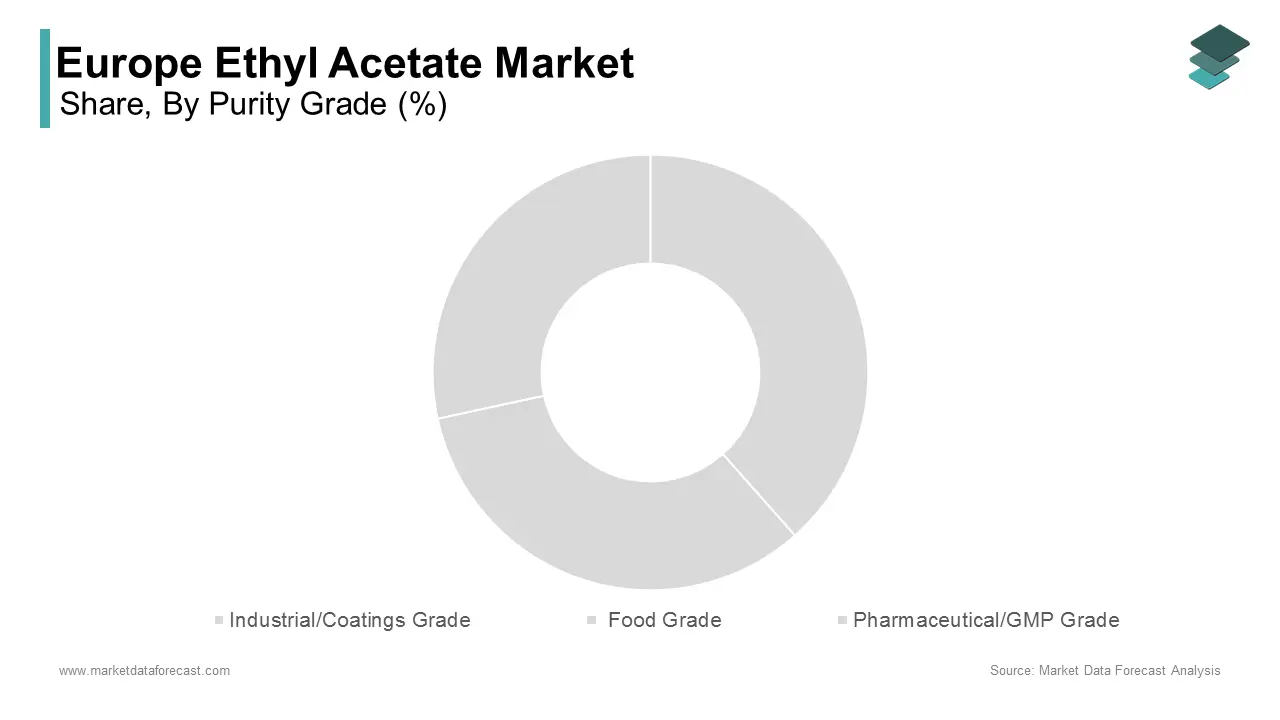
The pharmaceutical GMP grade segment is predicted to witness the highest CAGR of 9.8% from 2026 to 2034 due to Europe’s position as a global leader in active pharmaceutical ingredient manufacturing, which accounted for a portion of worldwide API output. Ethyl acetate is extensively used in chromatographic purification and crystallization due to its low toxicity and ease of removal under vacuum, attributes essential for meeting stringent ICH Q3C guidelines on residual solvents. Regulatory guidelines define acceptable levels for specific solvents like ethyl acetate in final drug products. This regulatory context supports the widespread use of ethyl acetate in synthesizing various therapeutic compounds. Ethyl acetate is frequently used during the synthesis of a significant percentage of recently approved small-molecule drugs. Additionally, the rise of continuous manufacturing, a process endorsed by the EMA to enhance quality control, relies on precise solvent selection, with ethyl acetate favored for its consistent physical properties. Regulatory harmonization under EU GMP Annex 1 further drives demand for certified solvent batches with full traceability from synthesis to packaging, reinforcing growth in this high-value segment.
By Application Insights
The paints and coatings segment was the largest segment in the Europe ethyl acetate market by capturing a 58.7% share in 2025. The supremacy of the paints and coatings segment is credited to ethyl acetate’s unique ability to dissolve nitrocellulose, acrylics, and vinyl resins while providing rapid drying without blushing in high-humidity environments, a major performance factor in Southern Europe. The segment is further bolstered by renovation activity across the European Union, where residential repainting drives a notable share of decorative paint demand, as per research. Industrial maintenance coatings for infrastructure, such as bridges and wind turbines, also rely on ethyl acetate-based formulations due to their adhesion and chemical resistance properties. The German automotive refinish sector accounts for a notable volume of annual coating consumption, based on industry association data. European regulations necessitate that paints contain declarations regarding volatile organic compound content. Ethyl acetate is frequently recognized for a favorable environmental profile due to its relatively brief atmospheric lifespan, according to assessments by environmental agencies. These technical and regulatory advantages entrench ethyl acetate as a cornerstone solvent in Europe’s coatings ecosystem.
The flexible packaging inks segment is estimated to register the fastest CAGR of 7.2% from 2026 to 2034, owing to the EU’s Packaging and Packaging Waste Regulation, which mandates that all packaging be recyclable or compostable by 2030 and restricts hazardous substances in printing inks. Ethyl acetate qualifies as a non-hazardous solvent under CLP Regulation and is readily biodegradable, making it compliant with evolving brand standards from Unilever, Nestlé, and L’Oréal, which collectively source substantial amounts of flexible packaging annually in Europe. Printers in specific European regions are transitioning their ink formulations to alternatives that align with sustainability criteria set by retailers. The selection of this specific solvent is driven by its low odor characteristics and compliance with regulations governing food-contact materials. The increasing production of flexible packaging across Europe is contributing to consistent demand for high-purity solvents that meet performance and safety standards.
By End User Industry Insights
The artificial leather segment led the Europe ethyl acetate market by holding a 22.3% share in 2025. The leading position of the artificial leather segment is driven by ethyl acetate’s role as a primary solvent in polyurethane dispersion casting processes, where it facilitates uniform film formation and controlled evaporation during coagulation. Europe produces millions of square meters of artificial leather annually, with Italy and Spain serving as key manufacturing hubs for automotive upholstery and fashion applications, as per sources. The solvent’s low surface tension enables penetration into nonwoven substrates while its rapid volatility prevents bubble formation, critical for achieving high gloss and texture consistency. Regulatory acceptance further strengthens its position. In contrast to toluene or dimethylformamid,e which face increasing restrictions under the Industrial Emissions Directive, ethyl acetate remains permissible in closed loop systems with significant recovery rates. This combination of performance compliance and process efficiency makes it irreplaceable in high-quality synthetic leather production.
The electronics cleaning segment is anticipated to witness the fastest CAGR of 11.3% over the forecast period. The rapid expansion of the electronics cleaning segment is propelled by the expansion of semiconductor assembly and printed circuit board manufacturing in Eastern Europe, particularly in the Czech Republic and Romania. Ethyl acetate is favored for precision cleaning of flux residues due to its high solvency for rosin-based contaminants, low water solubility, and non-corrosive nature toward copper and gold traces. Unlike chlorinated solvents, which are restricted under the Montreal Protocol, ethyl acetate is exempt from ozone depletion and global warming potential regulations, making it compliant with the EU’s F-Gas Regulation. Additionally, its compatibility with automated cleaning systems and absence of halogenated byproducts reduces wastewater treatment complexity, a critical factor under the EU Water Framework Directive. Europe's pursuit of semiconductor sovereignty through the Chips Act is poised to accelerate demand for ethyl acetate in high-precision manufacturing.
REGIONAL ANALYSIS
Germany Ethyl Acetate Market Analysis
Germany was the top performer in the Europe ethyl acetate market by accounting for a 26.7% share in 2025. The demand for ethyl acetate in Germany is fueled by its integrated chemical cluster centered around Ludwigshafen, Leverkusen, and Marl, where producers like BASF, Evonik, and Dow operate large-scale esterification units. Germany’s coatings, automotive, and pharmaceutical industries collectively consume substantial metric tons annually, with the automotive refinish sector alone requiring thousands of metric tons, as per research. The nation’s stringent enforcement of the Technical Rule for Hazardous Substances. Furthermore, Germany leads in bio-based solvent innovation. Solvay’s Antwerp-derived bio-ethyl acetate is distributed through German logistics hubs to meet EU Taxonomy-aligned procurement. Hence, Germany remains the industrial and regulatory benchmark for ethyl acetate usage in Europe.
Italy Ethyl Acetate Market Analysis
Italy was the second-largest country in the Europe ethyl acetate market by capturing a 17.1% share in 2025. The growth of the Italian market is propelled by its specialized manufacturing sectors, particularly artificial leather, textiles, and printing inks, concentrated in the Emilia Romagna and Veneto regions. Italian synthetic leather production utilizes specific casting techniques with high rates of solvent recovery. The flexible packaging industry in Italy drives demand for compliant printing materials. Public investment initiatives are supporting the modernization of chemical recycling infrastructure and distillation capabilities. Despite challenges in energy costs, Italy’s craftsmanship-driven industrial model and deep integration with luxury fashion and automotive supply chains sustain its pivotal role in the regional ethyl acetate landscape.
France Ethyl Acetate Market Analysis
France is another key player in the Europe ethyl acetate market due to its pharmaceutical and cosmetics sectors, which together represent over 40 percent of national demand. France is home to a portion of Europe’s cosmetic manufacturers, which rely on high-purity ethyl acetate for fragrance extraction and nail polish formulation under ISO GMP standards. Regulatory classifications permit the continued use of ethyl acetate in numerous cosmetic products. The printing industry employs ethyl acetate in ink systems used for paper processing. Government mandates concerning circular solvents are leading to a greater dependency on bio-based or recycled alternatives, prompting industry suppliers to increase the availability of certified sustainable materials. This regulatory foresight positions France as a leader in sustainable solvent transition.
United Kingdom Ethyl Acetate Market Analysis
The United Kingdom grew steadily in the Europe ethyl acetate market. Despite Brexit, the UK remains a key consumer due to its advanced pharmaceutical manufacturing base, which produces a portion of Europe’s branded medicines, as per research. Ethyl acetate is critical in API purification, with facilities in Cheshire and Cambridgeshire operating under MHRA GMP guidelines that require full batch traceability and residual solvent validation. The UK’s paints and coatings sector also contributes significantly, with significant metric tons of decorative paints sold, as per sources. Workplace safety guidelines for solvent handling align with European standards, maintaining consistent protocols for exposure levels. Investment in bio-based production indicates a shift toward alternative, sustainable options within the solvent market. Regional industrial partnerships continue to connect local production capabilities with broader European supply chains. The UK maintains its standing in European markets through scientific precision and industrial strength, even as independent regulation provides greater adaptability.
Netherlands Ethyl Acetate Market Analysis
The Netherlands is likely to expand in the Europe ethyl acetate market from 2026 to 2034 due to its role as a logistics and production hub at the Port of Rotterdam, where companies like INEOS and Shell operate integrated acetic acid and ethanol units feeding downstream esterification. The Netherlands is also Europe’s largest exporter of flexible packaging, shipping millions of metric tons annually to Germany and Belgium, as per sources. This drives consistent demand for ethyl acetate in food-safe ink systems compliant with EFSA guidelines. Additionally, research is exploring biobased methods for producing industrial solvents such as ethyl acetate, aiming to enhance carbon efficiency. Pilot-scale production of renewable chemicals is receiving support through governmental initiatives. Industrial safety regulations are being updated with more stringent demands for managing volatile materials. Mandates concerning transfer systems are in place to decrease fugitive emissions during the handling of chemicals. The Netherlands plays a critical role in facilitating the distribution and innovation of ethyl acetate across Northwest Europe, driven by its advanced infrastructure, circular economy initiatives, and prime location.
COMPETITION OVERVIEW
Competition in the Europe ethyl acetate market is characterized by a blend of established chemical giants, regional specialists, and global players adapting to stringent environmental standards. The market is not driven by price alone but by technical capability, regulatory compliance, and sustainability credentials. Incumbents such as BASF and INEOS benefit from integrated production clusters that provide feedstock security and logistics advantages, while companies like Eastman differentiate through bio-based and circular offerings. Regulatory frameworks, including REACH, the Industrial Emissions Directive, and the EU Taxonomy, exert a strong influence, shaping investment in purification, recovery, and renewable feedstocks. Competition is intensifying in high-purity segments where pharmaceutical and electronics applications demand documented traceability and consistent quality. Meanwhile, in industrial segments, cost efficiency and supply reliability remain paramount. New entrants face high barriers due to capital intensity, regulatory complexity, and the need for established distribution networks, making consolidation and strategic collaboration common competitive tactics.
KEY MARKET PLAYERS
A few major players of the Europe ethyl acetate market include
- BASF SE
- INEOS Group
- Celanese Corporation
- Arkema S.A
- Eastman Chemical Company
- LyondellBasell Industries
- Solvay S.A
- Dow Inc
- SABIC
- Jubilant Ingrevia Limited
- Godavari Biorefineries Ltd
- Sekab Group
- Synthomer plc
- Versalis S.p.A
- Alco Group
Top Strategies Used by the Key Market Participants
Key players in the Europe ethyl acetate market are increasingly adopting vertically integrated production models to secure feedstock supply and control costs in a volatile raw material environment. Companies are investing in bio-based and circular production pathways to comply with EU sustainability regulations and meet customer demands for low-carbon solvents. Strategic partnerships with downstream formulators in printing pharmaceuticals and cosmetics are being leveraged to co-develop application-specific grades and ensure regulatory alignment. Advanced purification and distillation technologies are being deployed to achieve higher purity standards required in GMP and food contact applications. Additionally, firms are implementing solvent recovery and closed-loop recycling systems to reduce emissions, align with the Industrial Emissions Directive, and enhance resource efficiency across the value chain.
Leading Players in the Market
- BASF SE is a German multinational and a cornerstone of the Europe ethyl acetate market through its integrated production at the Ludwigshafen Verbund site. The company supplies high-purity ethyl acetate to pharmaceutical, food, and coatings customers across Europe and globally. BASF leverages its captive acetic acid and ethanol infrastructure to ensure a stable feedstock supply and cost efficiency. BASF also upgraded its distillation units to achieve 99.99% purity for GMP applications, supporting global pharmaceutical clients seeking compliant solvents with full traceability from renewable carbon sources.
- INEOS Group operates major ethyl acetate production facilities in the United Kingdom and Belgium, serving both industrial and specialty segments across Europe. The company is known for its robust logistics network via the Rhine and North Sea corridor,s ensuring reliable delivery to ink and adhesive formulators. INEOS has intensified its focus on circularity by launching a solvent recycling program that reclaims and repurifies used ethyl acetate from printing operations. Its initiative aligns with EU Industrial Emissions Directive requirements and strengthens its position as a sustainability-focused supplier in both European and global markets.
- Eastman Chemical Company has established a strong footprint in the Europe ethyl acetate market through its bio-based and high-purity offerings tailored for cosmetics and electronics cleaning. Although headquartered in the United States, Eastman supplies ethyl acetate from its European distribution hubs in the Netherlands and Germany. The company pioneered the commercialization of ethyl acetate derived from recycled content using its molecular recycling technologies. It's move not only supports the EU’s Green Deal objectives but also differentiates Eastman in premium applications where traceability and carbon footprint are decisive purchasing factors.
MARKET SEGMENTATION
This research report on the Europe ethyl acetate market has been segmented and sub-segmented based on purity grade, application, end-use industry, and region.
By Purity Grade
- Industrial/Coatings Grade
- Food Grade
- Pharmaceutical/GMP Grade
By Application
- Paints and Coatings
- Flexible-Packaging Inks
- Others
By End Use Industry
- Automotive
- Artificial Leather
- Others
By Region
- UK
- France
- Spain
- Germany
- Italy
- Russia
- Sweden
- Denmark
- Switzerland
- Netherlands
- Turkey
- Czech Republic
- Rest of Europe