- Product Description Description
- Table of Contents TOC
- List of Table & Figure LOT
- Get Free Sample PDF Sample PDF
Market Size, 2025
$602.34 MnMarket Estimate, 2026
$623.42 MnMarket Forecast, 2034
$820.93 MnCAGR, 2026–2034
3.50%Europe Feed Mycotoxin Detoxifiers Market Size, Growth, Trends & Forecast (2026–2034)
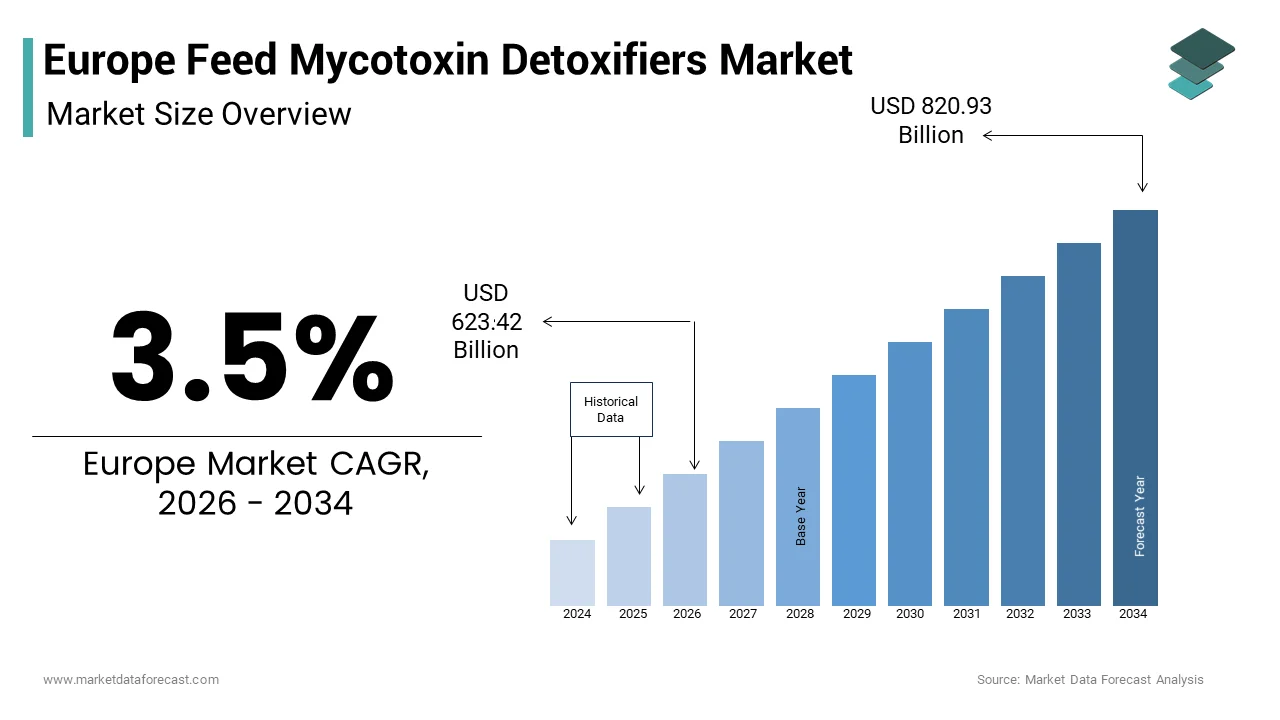
The Europe feed mycotoxin detoxifiers market size was valued at USD 602.34 million in 2025, is anticipated to reach USD 623.42 million in 2026, and is projected to scale up to USD 820.93 million by 2034, registering a compound annual growth rate (CAGR) of 3.50% during the forecast period from 2026 to 2034. Propelled by strict EU food safety regulations (such as Commission Regulation EC 1881/2006 and Regulation (EU) 2023/915), climate change-driven fungal proliferation, rising productivity losses from subclinical mycotoxicosis, and robust livestock sectors in Germany and France, the market continues steady expansion.
Key Executive Metrics (At-a-Glance)
- 2025 Base Valuation: USD 602.34 Million
- 2026 Current Valuation: USD 623.42 Million
- 2034 Forecast Valuation: USD 820.93 Million
- Compound Annual Growth Rate (CAGR): 3.50% (2026–2034)
- Dominant Type Segment: Binders (holding the majority share anchored by regulatory acceptance, cost efficiency, aluminosilicates, bentonite, and yeast cell wall derivatives)
- Fastest-Growing Type Segment: Bio-transformers (projected at a rapid 11.2% CAGR driven by irreversible enzymatic/microbial degradation of diverse mycotoxins like DON and zearalenone)
- Dominant Animal Segment: Poultry (capturing a 34.3% share due to high biological sensitivity to mycotoxins and extensive commercial integration)
- Fastest-Growing Animal Segment: Aquaculture (projected at a high 13.5% CAGR fuelled by plant-based aquafeed shifts and Blue Growth objectives)
- Dominant Country Markets: Germany (23.7% share in 2024 as the EU's top livestock producer and feed manufacturer) and France (19.4% share)
Core Market Drivers
- Stringent EU Legislation: Strict regulatory limits on aflatoxins and Deoxynivalenol (DON) forcing feed mills and integrators to enforce preventive mitigation strategies.
- Economic Impact of Productivity Losses: Subclinical mycotoxicosis impairing nutrient absorption, feed conversion efficiency (FCR), and immunity, creating a financial imperative for protective detoxifiers.
Primary Market Restraints & Challenges
- Limited Efficacy Spectrum: Narrow binding affinity of conventional mineral clays which struggle against polar mycotoxins like DON without high inclusion or multi-mode solutions.
- Climate Change & Fungal Shifts: Rising temperatures, erratic rainfall, and extreme weather expanding fungal contamination (such as Fusarium and Aspergillus flavus) into unexpected regions.
Europe Feed Mycotoxin Detoxifiers Market Segmentation Breakdown
| Segment Category | Largest (Dominant) Sub-Segment | Fastest-Growing Sub-Segment |
|---|---|---|
| By Type | Binders (majority share via aluminosilicates, bentonite, cost efficiency, and EFSA approval frameworks) | Bio-transformers (11.2% CAGR driven by catalytic enzyme/microbial degradation of complex toxins) |
| By Animal | Poultry (34.3% share via acute sensitivity to aflatoxins/DON and intensive integrated production) | Aquaculture (13.5% CAGR powered by alternative plant-based protein aquafeeds and fish farming expansion) |
| By Country | Germany (23.7% share) & France (19.4% share led by massive compound feed output and cereal production) | Spain & Italy (expanding via dual climate exposure, high pork/dairy sensitivity, and digital risk modeling) |
Major Industry Players Profiled
Key enterprises shaping the European feed mycotoxin detoxifiers market include Biomin GmbH (DSM-Firmenich), EW Nutrition GmbH, Kemin Industries, BASF SE, Cargill, Inc., Alltech, Inc., Novozymes A/S, Chr. Hansen Holding A/S, Archer Daniels Midland Company (ADM), Charoen Pokphand Foods Public Company Limited, Nutreco N.V., Evonik Industries AG, and Adisseo France SAS.
Europe Feed Mycotoxin Detoxifiers Market Size
The Europe mycotoxin detoxifiers market size was valued at USD 602.34 million in 2025 and is anticipated to reach USD 623.42 million in 2026 to reach USD 820.93 million by 2034, growing at a CAGR of 3.50% during the forecast period from 2026 to 2034.
Feed mycotoxin detoxifiers are specialized feed additives designed to neutralize or bind harmful mycotoxins, secondary metabolites produced by fungi such as Aspergillus, Fusarium, and Penicillium, that commonly contaminate cereals, oilseeds, and forages used in animal nutrition. In Europe, these detoxifiers include adsorbents like aluminosilicates and activated clays, enzymatic biotransformers, and yeast cell wall derivatives that either sequester toxins in the gut or enzymatically degrade them into non-toxic metabolites. The market is shaped by stringent food safety standards, evolving mycotoxin occurrence patterns, and the economic imperative to safeguard livestock health and productivity. According to sources, high prevalence of mycotoxins in feed drives demand for advanced testing solutions, feed additives (binders/detoxifiers), and precision farming technologies to mitigate contamination risks. As per research, mycotoxin contamination accounted for a significant proportion of all feed safety notifications in 2023. Climate volatility further exacerbates risks. Moreover, the frequency of extreme weather events conducive to fungal growth has risen. These agroclimatic and regulatory realities underscore the critical role of detoxifiers in maintaining feed safety and animal welfare across the region.
MARKET DRIVERS
Stringent EU Regulations on Mycotoxin Limits in Feed and Food Chains
European Union legislation imposes some of the world’s strictest thresholds for mycotoxins in animal feed, which directly drives demand for effective detoxification solutions, and thereby fuels the growth of the Europe feed mycotoxin detoxifiers market. European Union regulations, such as Commission Regulation EC 1881/2006, establish maximum aflatoxin B1 levels in feed for dairy animals. Non-compliance with these limits can lead to feed recalls, import rejection, and significant financial penalties according to the European Commission’s Directorate General for Health and Food Safety. These high stakes compel feed mills and integrators to adopt preventive mitigation strategies, with detoxifiers serving as a critical line of defense. Furthermore, recent EU regulations like Regulation (EU) 2023/915 and its amendments have updated and set maximum levels for established mycotoxins (such as deoxynivalenol (DON), T-2, and HT-2 toxins). National monitoring programs reinforce compliance. Many commercial feed producers use mycotoxin binders as a standard risk management practice, as noted by Germany’s Federal Office of Consumer Protection and Food Safety. This regulatory architecture not only mandates detoxification but also incentivizes investment in high-efficacy, EU-approved products that ensure both animal health and supply chain integrity.
Rising Economic Impact of Mycotoxin-Induced Livestock Productivity Losses
The financial burden of subclinical mycotoxicosis on European livestock operations is a powerful accelerator of the Europe feed mycotoxin detoxifiers market. Even at levels below regulatory thresholds, mycotoxins impair nutrient absorption, suppress immunity, and reduce feed conversion efficiency, leading to significant productivity losses. According to a study, the estimated cost of mycotoxins to the EU agriculture industry has been reported to be in the range of hundreds of millions to billions of US dollars/euros annually. For instance, the EU's maximum allowed level for Deoxynivalenol (DON) in unprocessed cereal grains is 1000 ppb (1.0 mg/kg), which indicates the regulatory concern around this threshold. Also, mycotoxins negatively impact feed conversion ratios (FCR) across livestock species, leading to significant production losses. These quantifiable losses shift detoxifiers from optional additives to essential inputs. Moreover, as per research, the market development trend is a strong push toward advanced mycotoxin testing and mitigation strategies, with increased focus on preventative and control measures. This data-driven integration reflects a broader shift toward precision mycotoxin management in response to tangible economic imperatives.
MARKET RESTRAINTS
Limited Efficacy Spectrum of Conventional Inorganic Binders
The narrow binding capacity of widely used inorganic adsorbents, such as bentonite and hydrated sodium calcium aluminosilicate, is a major restraint in the Europe feed mycotoxin detoxifiers market. These materials effectively sequester aflatoxins but show minimal to no affinity for polar mycotoxins like deoxynivalenol, zearalenone, and fumonisins, precisely the contaminants most prevalent in European cereals. According to research, most conventional mineral clays and commercial adsorbent materials are largely ineffective at binding deoxynivalenol (DON) under simulated gastrointestinal conditions, rendering them inadequate for comprehensive protection. This limitation forces producers to either accept partial risk coverage or invest in more expensive multi-mode solutions. Compounding the issue, some inorganic binders can interfere with nutrient absorption. As per a study, it is a recognized concern in animal nutrition that some mycotoxin-adsorbing agents, such as activated carbon, may also bind essential nutrients, potentially reducing the bioavailability of vitamins like A and E, especially at high inclusion rates. Regulatory scrutiny adds pressure; EFSA requires full dossier submissions for any detoxifier claiming broad-spectrum efficacy, creating high barriers for low-cost alternatives. As a result, many small and mid-sized feed mills remain reliant on suboptimal solutions, constraining overall market effectiveness and animal health outcomes across the region.
High Cost and Regulatory Hurdles for Novel Biological Detoxifiers
Cost barriers and intricate regulatory processes within the region impede the widespread implementation of enzymatic and microbial solutions, which in turn inhibit the expansion of the Europe feed mycotoxins detoxifiers market. This is the situation, even though these methods offer specific degradation of various mycotoxins. Unlike simple adsorbents, biotransforming products must undergo full authorization under Regulation EC 1831/2003 as feed additives, requiring extensive safety, efficacy, and environmental impact dossiers that can exceed 2 million euros in development costs. According to the European Commission's official feed additive information, a limited number of enzymatic mycotoxin detoxifiers have received EU-wide approval, in contrast to the more numerous inorganic binders that are available. This scarcity limits producer choice and keeps prices high. Biological detoxifiers incur higher costs per ton of feed than conventional clays, a point noted by industry data sources. Apart from these, inconsistent interpretation of efficacy data across member states creates market fragmentation; a product approved in Germany may face additional scrutiny in France or Italy. The reliance on currently available, partially effective detoxifiers will persist until a combination of better public funding and improved regulatory harmonization accelerates the transition to advanced alternatives.
MARKET OPPORTUNITIES
Integration of Mycotoxin Risk Management into Digital Feed Formulation Platforms
The digitalization of feed safety protocols through smart formulation software is a significant opportunity in the Europe feed mycotoxin detoxifiers market. Leading feed additive companies and software providers are embedding real-time mycotoxin risk algorithms into platforms used by compounders and integrators. Digital systems are increasingly being used in large feed mills across Germany, France, and the Netherlands to automate the adjustment of detoxifier inclusion rates based on incoming raw material test data from near infrared spectroscopy or lab reports, according to research. For example, if a batch of wheat shows zearalenone levels above 500 ppb, the system recommends a specific enzymatic detoxifier at a calibrated dose. This precision approach minimizes overuse, optimizes cost, and ensures compliance. Moreover, blockchain-enabled traceability links detoxifier usage to farm-level performance data, creating closed-loop feedback for efficacy validation. As per studies, the adoption of these systems is being accelerated by their eligibility for innovation grants under the Common Agricultural Policy. This convergence of feed safety, data analytics, and sustainability reporting is transforming detoxifiers from static additives into dynamic components of intelligent feed management.
Expansion of Detoxifier Use in Alternative Protein and Aquafeed Applications
The growing incorporation of novel feed ingredients, such as insect meal, single cell proteins, and distillers dried grains, creates new prospects for the Europe feed mycotoxin detoxifier market. These alternative protein sources, while sustainable, often carry higher mycotoxin risks due to their production processes or feedstock origins. Mycotoxin contamination is a significant challenge across novel and traditional feed supply chains. According to sources, within the insect protein industry, a substantial portion of product batches have been found to contain detectable mycotoxins, often linked to contaminated substrate materials. Similarly, EU-approved algae and yeast biomass used in aquafeed have shown susceptibility to ochratoxin accumulation under certain cultivation conditions. As per the European Aquaculture Technology and Innovation Platform, mycotoxin contamination is now recognized as the top three barriers to scaling alternative feeds in salmon and seabass farming. This emerging risk profile necessitates tailored detoxification strategies beyond traditional livestock applications. Companies have responded by developing aqua-specific formulations with enhanced solubility and gut stability. Regulatory evolution supports this shift. Authorities have updated guidance for managing mycotoxins in novel feed materials, which includes the implicit endorsement of using detoxifying agents. Diversification within Europe’s feed industry to meet sustainability targets means specialized detoxifiers will be sought after in high-value, niche market segments.
MARKET CHALLENGES
Climate Change Intensifying Mycotoxin Contamination Patterns
The escalating and shifting pattern of fungal contamination driven by climate change is one of the most pressing challenges facing the Europe feed mycotoxin detoxifiers market. Rising temperatures, erratic rainfall, and increased frequency of extreme weather events create ideal conditions for mycotoxin-producing fungi across regions previously considered low risk. According to sources, increased Fusarium prevalence due to changing climate conditions can lead to lower wheat quality, potential crop rejection for food/feed use, and higher costs for sorting and testing, which creates an opportunity for advanced testing and mitigation technologies. Simultaneously, the geographic expansion of Aspergillus flavus into Northern Europe indicates a shifting risk profile for aflatoxin contamination in maize, potentially necessitating new monitoring protocols and agricultural practices in previously unaffected regions, as per sources. This geographic expansion introduces new toxin profiles that legacy detoxifiers may not address. For instance, A significant increase in Aflatoxin B1 levels in German maize would lead to tighter supply chains, increased regulatory scrutiny, and a greater demand for mycotoxin control products (e.g., feed additives, sorting technology) to ensure product safety. Such shifts render static detoxification protocols obsolete and demand region-specific, adaptive solutions. However, the market lacks real-time monitoring infrastructure and flexible product portfolios to respond dynamically, leaving producers vulnerable to emerging contamination threats that outpace current mitigation strategies.
Fragmented Efficacy Validation Standards and Lack of Harmonized Testing Protocols
The absence of standardized efficacy assessment methods across member states also obstructs the expansion of the Europe feed mycotoxin detoxifiers market. This is a serious challenge affecting the credibility and adoption of feed mycotoxin detoxifiers in the region. The absence of a standardized EU testing protocol for binding and degradation, even with the existence of EFSA guidelines, causes variability in product assessment. The ambiguity allows substandard products to enter the market, eroding trust among feed producers. Furthermore, in vivo trials, considered the gold standard, are costly and ethically constrained under EU animal welfare laws, limiting robust validation. The lack of clear EU rules for proving product effectiveness, similar to the OECD's pesticide guidelines, creates opportunities for greenwashing and unreliable product performance, which negatively impacts animal welfare and food safety.
REPORT COVERAGE
| REPORT METRIC | DETAILS |
| Market Size Available | 2025 to 2034 |
| Base Year | 2025 |
| Forecast Period | 2026 to 2034 |
| CAGR | 3.5% |
| Segments Covered | By Type, By Animal, and by Country |
| Various Analyses Covered | Global, Regional, Country-Level Analysis; Segment-Level Analysis, DROC, PESTLE Analysis, Porter’s Five Forces Analysis, Competitive Landscape, Analyst Overview of Investment Opportunities |
| Regions Covered | Germany, the UK, France, Spain, Italy |
| Market Leaders Profiled | BASF S, E Cargill Inc., NC Allte Inc., Inc., Novozym, eA/S Chr. Hansen Hol, A/S Archer Daniels Midland Company, Charoen Pokphand Foods Public Company LimLimitedNtreco N.V., Ev, Evonik Industries AG, A,d DisseoFrance SAS. |
SEGMENTAL ANALYSIS
By Type Insights
The binders segment held the majority share of the Europe feed mycotoxin detoxifiers market in 2024. The growth of the binders segment is driven by their regulatory acceptance, cost efficiency, and long-standing use in commercial feed formulations. These inorganic and organic compounds—primarily aluminosilicates, bentonites, and yeast cell wall derivatives—function by adsorbing mycotoxins in the gastrointestinal tract, preventing systemic absorption. Their dominance is also supported by the European Food Safety Authority’s established evaluation framework for adsorbents, which has led to the approval of many binder products under Regulation EC 1831/2003. Cost remains a decisive factor. Additionally, their compatibility with existing feed milling processes, requiring no adjustments to mixing or pelleting parameters, ensures seamless integration. These practical, economic, and regulatory advantages sustain binders as the backbone of mycotoxin management across European livestock sectors.
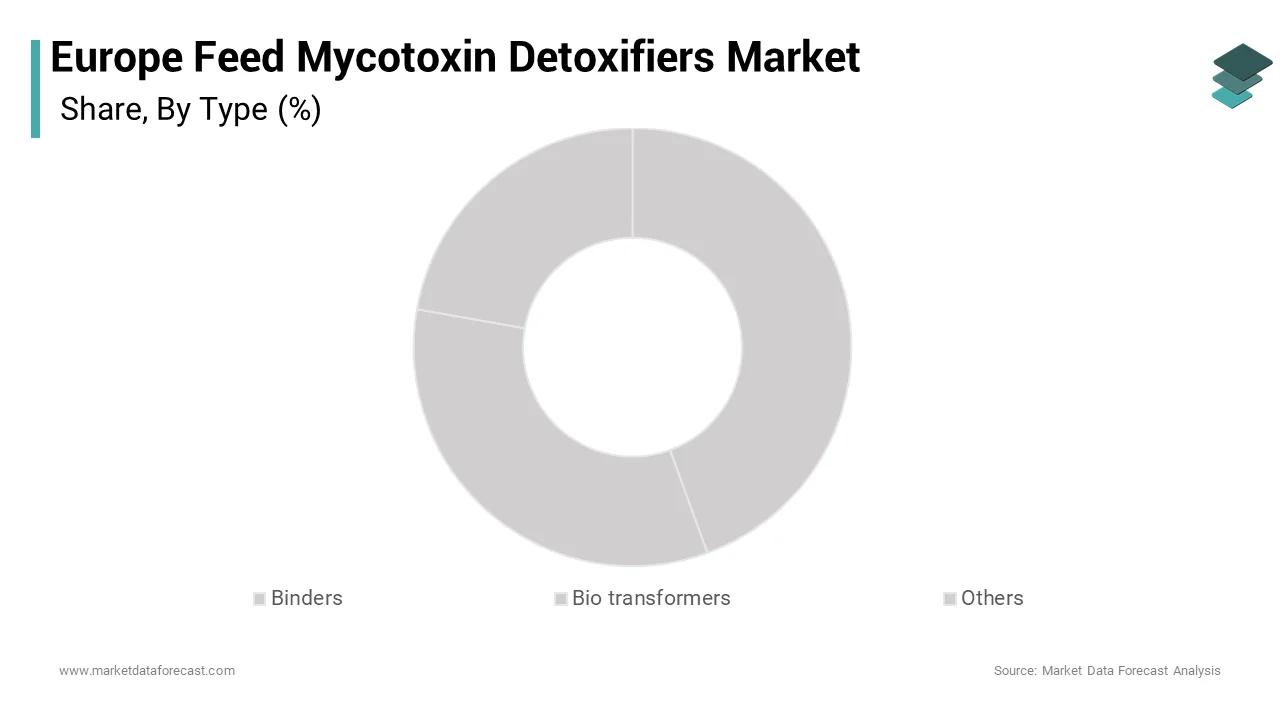
The bio transformers segment is anticipated to witness the fastest CAGR of 11.2% from 2025 to 2033. Unlike binders, these products—comprising specific enzymes, bacteria, or yeast strains—catalytically degrade mycotoxins into non-toxic metabolites, offering irreversible detoxification across a broader spectrum of contaminants, including deoxynivalenol and zearalenone. This functional superiority is gaining traction as mycotoxin profiles shift due to climate change. Regulatory momentum is also building. Leading feed additive companies have invested heavily in fermentation capacity to scale production, which reduces costs. Furthermore, the European Animal Nutrition Association now includes bio-transformers in its best practice guidelines for high-risk feed scenarios. Bio transformers are moving from niche status to mainstream use as manufacturers look for effective alternatives to conventional binding agents.
By Animal Insights
The poultry segment remained prominent in the Europe feed mycotoxin detoxifiers market by occupying a share of 34.3% in 2024. The sector’s high sensitivity to mycotoxin contamination and its economic importance have largely contributed to the prominence of the poultry segment in the regional market. Broilers and layers exhibit pronounced vulnerability to even low levels of deoxynivalenol and aflatoxins, which impair feed intake, weight gain, and eggshell quality. The EU’s ban on antibiotic growth promoters since 2006 has further heightened reliance on feed safety interventions, as mycotoxin-induced immune suppression increases disease susceptibility. Consequently, many commercial poultry integrators in Western Europe now mandate detoxifier inclusion in all feed batches. The sector’s vertical integration also enables rapid adoption, as companies embed detoxifier protocols directly into breeding and nutrition programs. This combination of biological sensitivity, regulatory pressure, and operational cohesion solidifies poultry’s leadership in detoxifier usage.
The aquaculture segment is likely to experience the fastest CAGR of 13.5% during the forecast period. The swift growth of the aquaculture segment is fuelled by the rapid expansion of EU aquafeed production and the increasing use of plant-based protein sources like soy and wheat middlings, which carry higher mycotoxin risks than traditional fishmeal. Salmon and seabass, key species in Norwegian and Mediterranean farming, are particularly susceptible. Regulatory awareness is also rising. The European Food Safety Authority issued its first aquaculture-specific mycotoxin guidance in 2023, recommending detoxifier use when plant ingredients exceed a portion of the diet. Companies have responded by launching detoxifier fortified feed lines. Europe's pursuit of Blue Growth objectives under the Common Fisheries Policy makes feed safety in alternative protein aquafeeds paramount, thereby ensuring sustained demand for specialized solutions to maintain feed quality.
COUNTRY ANALYSIS
Germany Feed Mycotoxin Detoxifiers Market Analysis.
Germany was the top performer in the Europe feed mycotoxin detoxifiers market and held a 23.7% share in 2024. The domination of the German market is primarily driven by its status as the EU’s top livestock producer and feed manufacturer. The country produces substantial tons of compound feed annually, the highest in Europe. Stringent national oversight amplifies demand. Germany also hosts leading additive producers, which drive innovation through R&D investments. The dairy and pig sectors, which account for a portion of German livestock output, are particularly vigilant due to aflatoxin transmission risks into milk and meat. Furthermore, the country’s digital farming initiatives integrate mycotoxin risk scores into feed formulation software used by a share of large integrators. These structural, regulatory, and technological factors establish Germany as the region’s most advanced and responsive market.
Franc: Feed Mycotoxin Detoxifiers Marketket Analysis.
France followed closely in the Europe feed mycotoxin detoxifiers market by accounting for a 19.4% share in 2024. The growth of the French market is propelled by its vast cereal production and intensive poultry and pig farming. As the EU’s largest wheat producer, France faces consistent Fusarium pressure. This contamination directly impacts the poultry sector, which produces millions of broilers yearly. National policy reinforces this trend. Besides, France’s cooperative feed model, dominated by groups, enables rapid deployment of standardized detoxification protocols across thousands of farms. France can maintain its market prominence by proactively using preventative measures, such as mycotoxin-binding agents and advanced bio-transformer technologies, as climate change forecasts indicate an increased risk of fungal contamination in the region.
Spain feed mycotoxin detoxifiers market Analysis.
Spain is also a key player in the Europe feed mycotoxin detoxifiers market, with its dual exposure to both Aspergillus and Fusarium mycotoxins due to hot, dry summers and humid autumns. The country is Europe’s largest pork producer and second largest poultry producer, with millions of pigs and broilers annually. According to studies, aflatoxin B1 was detected in some other maize samples from Andalusia, while deoxynivalenol contaminated a share of northern cereal harvests. This dual threat necessitates multi-mode detoxification strategies. The pig sector is especially sensitive. Spanish integrators require detoxifiers in all sow and finishing feeds to protect reproductive performance and carcass quality. Regulatory enforcement is robust. Spanish producers are stepping up their investment in predictive analytics and next-generation detoxifiers as climate models forecast more intense drought-flood cycles, positioning Spain as a high-risk, high-response market.
Netherlands feed mycotoxin detoxifiers market Analysis.
The Netherlands is moving ahead steadfastly in the Europe feed mycotoxin detoxifiers market, notable for its export-oriented feed industry and leadership in feed safety innovation. Dutch feed mills produce millions of tons annually, with a share exported to neighboring EU countries. This global reach necessitates strict compliance with both EU and international standards, driving early adoption of advanced detoxifiers. The country is also a hub for feed additive R&D. Companies operate state-of-the-art mycotoxin research labs that collaborate with Wageningen University. Furthermore, the Netherlands’ circular agriculture policy promotes the use of co-products like distillers' grains, which carry elevated mycotoxin risks, thereby increasing detoxifier dependency. The Netherlands, with its extensive integrated farm networks and focus on tailored nutrition programs, serves as a key research and development hub for innovative mycotoxin management.
Italy Feed Mycotoxin Detoxifiers Market Analysis
Italy is predicted to expand in the European feed mycotoxin detoxifiers market between 2025 and 203,3, owing to regional mycotoxin variability and a strong dairy and pig sector. Northern Italy’s Po Valley, a maize-growing region, faces recurrent Fusarium outbreaks. Meanwhile, southern regions report rising aflatoxin incidents due to warming trends. Italy’s millions of dairy cows and sows are highly sensitive to these contaminants, as aflatoxin M1 transfers into milk, triggering immediate regulatory action. The country also leads in adopting yeast-based organic binders, favoured for their compatibility with organic livestock systems, which account for a share of Italian dairy farms. Public research institutions like CREA provide real-time mycotoxin forecasting, enabling proactive mitigation. These agronomic, regulatory, and sectoral dynamics sustain Italy’s position as a responsive and evolving market.
COMPETITIVE LANDSCAPE
The Europe mycotoxin detoxifiers market is characterized by a mix of multinational specialty feed additive companies and regional innovators competing on scientific credibility, regulatory compliance, and application expertise. Competition is not primarily price-based but revolves around proven efficacy across diverse mycotoxin profiles, thermal stability during feed processing, and compatibility with sustainability and organic farming standards. Incumbents like Biomin EW Nutrition and Kemin dominate through vertically integrated R&D regulatory dossiers and field validation networks, while smaller players focus on niche segments such as organic binders or oraquaculture-specificc solutions. The implementation of stringent EFSA evaluation criteria has raised quality barriers limiting the entry of substandard products and fostering trust in approved solutions. However, the lack of harmonized efficacy testing protocols creates challenges in objective product comparison. Digital tools for risk prediction and formulation integration are emerging as new competitive differentiators. Overall, the market rewards companies that combine scientific rigor with practical farm-level relevance and responsive regulatory strategy.
KEY MARKET PLAYERS
These are some of the major key players involved in the European feed mycotoxin detoxifier market.
- BASF SE
- Cargill, Inc
- Kemin Industries
- Biomin GmbH (part of DSM-Firmenich)
- Alltech, Inc
- EW Nutrition GmbH
- Novozymes A/S
- Chr. Hansen Holding A/S
- Archer Daniels Midland Company
- Charoen Pokphand Foods Public Company Limited
- Nutreco N.V.
- Evonik Industries AG
- Adisseo France SAS.
Top Players In the Market
- Biomin is a globally recognized innovator in feed mycotoxin risk management with a strong scientific foundation in both binding and biotransformation technologies. The company pioneered the first EU-approved enzymatic mycotoxin detoxifier and continues to lead in research on multi-mycotoxin solutions. In Europe, Biomin collaborates closely with feed mills, integrators, and research institutions to deliver customized detoxification strategies aligned with regional contamination profiles. It also expanded its Mycotoxin Survey Program to cover European countries, providing real-time contamination data to customers. These actions reinforce Biomin’s position as a science-driven partner in safeguarding feed and food safety across the continent and globally.
- EW Nutrition is a German-based leader in natural feed additives with a focused portfolio of mycotoxin binders and gut health solutions. The company emphasizes sustainable sourcing and organic, compliant detoxifiers, catering to Europe’s growing demand for clean-label animal nutrition. Its Master'sorb Gold line, based on modified aluminosilicates and yeast derivatives, is widely used in poultry and dairy sectors across Western and Central Europe. In recent years, EW Nutrition has strengthened its regulatory capabilities to secure approvals for novel binding matrices under the EU feed additives framework. It also initiated field trials in partnership with Swedish dairy cooperatives to validate performance under Nordic climate conditions, deepening its regional relevance and technical credibility.
- Kemin operates globally with a significant footprint in the Europe feed mycotoxin detoxifiers market through its Myco CURB and Toxo product lines. The company integrates mycotoxin management into broader gut health and preservation platforms, offering holistic feed safety solutions. Kemin leverages its extensive application laboratories in Italy and the Netherlands to conduct region-specific efficacy trials and support customer formulation. It also published peer-reviewed research in the Journal of Animal Science demonstrating the efficacy of its polyphenol-enhanced binders against emerging mycotoxins like enniatins. These initiatives reflect Kemin’s strategy of combining product innovation with digital and scientific support to enhance customer value and market penetration.
Top Strategies Used By The Key Market Participants
Key players in the Europe feed mycotoxin detoxifiers market prioritize scientific validation through peer-reviewed research and field trials to substantiate efficacy claims and support regulatory submissions. They invest in production capacity and thermal stability enhancements to ensure compatibility with European feed processing standards such as pelleting and extrusion. Companies actively engage in mycotoxin monitoring programs to provide customers with real-time regional contamination data and risk forecasts. Strategic collaborations with feed mills, veterinarians, and agricultural universities strengthen technical credibility and market access. Product differentiation through multi-mode action—combining binding biotransformation and gut barrier support—is increasingly common. Regulatory compliance under EFSA guidelines remains central, with firms dedicating significant resources to dossier preparation for novel ingredients. These strategies collectively reinforce trust in innovation and responsiveness in a highly science-driven and regulation-intensive market.
MARKET SEGMENTATION
This market research report on the European mycotoxin detoxifier market is segmented and sub-segmented into the following categories.
By Type
- Binders
- Bentonite
- Clays
- Others
- Bio transformers
- Enzymes
- Yeasts
- Others
By Animal
- Ruminant
- Poultry
- Swine
- Aquaculture
- Pets
- Horses
- Others
By Country
- UK
- France
- Spain
- Germany
- Italy
- Russia
- Sweden
- Denmark
- Switzerland
- Netherlands
- Turkey
- Czech Republic
- Rest of Europe