- Product Description Description
- Table of Contents TOC
- List of Table & Figure LOT
- Get Free Sample PDF Sample PDF
Market Size, 2025
$53.82 BnMarket Estimate, 2026
$58.90 BnMarket Forecast, 2034
$121.11 BnCAGR, 2026–2034
9.43%Executive Summary: Europe Fish Feed Market
- Market Scope: Regional analysis of the European fish feed market covering ingredients, additives, end-user categories (fish, molluscs, crustaceans), and country-level breakdowns across major European markets like Norway, Spain, France, the UK, and Denmark.
- Market Valuation: Valued at USD 53.82 billion (2025), estimated at USD 58.90 billion (2026), and projected to reach USD 121.11 billion by 2034, registering a strong CAGR of 9.43% (2026–2034).
- Primary Growth Drivers: Stringent EU sustainability mandates (European Green Deal, Circular Economy Action Plan, Regulation EU 2017/1017) promoting alternative proteins, rising consumer demand for responsibly farmed seafood, and expansion of Recirculating Aquaculture Systems (RAS).
Key Market Segment Metrics (2026–2034)
| Category | Leading Segment / Position | Fastest-Growing Segment |
|---|---|---|
| By Ingredient | Fish Meal (dominated with 28.5% market share in 2025 for unmatched amino acid profile and digestibility) | Additives (projected at an 8.7% CAGR driven by the need to enhance feed efficiency and fish health) |
| By Additive | Vitamins (occupied 32.6% market share in 2025 for essential metabolic function and stress resistance) | Feed Enzymes (expected to exhibit a 9.4% CAGR due to improved nutrient bioavailability and reduced waste) |
| By End-User | Farmed Fish (holds a substantial share led by salmon, trout, sea bass, and sea bream cultivation) | Crustacean Farming (predicted to register the highest 7.9% CAGR due to niche market expansion and diversification) |
| By Country | Norway (led the regional market with 26.4% share in 2025 as the world's largest salmon producer) | Spain, France, and Denmark (driven by Mediterranean aquaculture, regulatory compliance, and R&D innovation) |
Major Market Players & Market Structure
Market Structure: A highly competitive market defined by technical formulation expertise, vertical integration, and tight alignment with European environmental policies rather than price competition alone.
Key Companies: BioMar Group, Nutreco N.V. (Skretting), Cargill, Archer Daniels Midland Company, Ridley Corporation Limited, Avanti Feeds Limited, Purina Animal Nutrition, Biostadt India Limited, Alltech, and Nutriad.
Europe Fish Feed Market Size
The European fish feed market was valued at USD 53.82 billion in 2025 and is anticipated to reach USD 58.90 billion in 2026 from USD 121.11 billion by 2034, growing at a CAGR of 9.43% during the forecast period from 2026 to 2034.
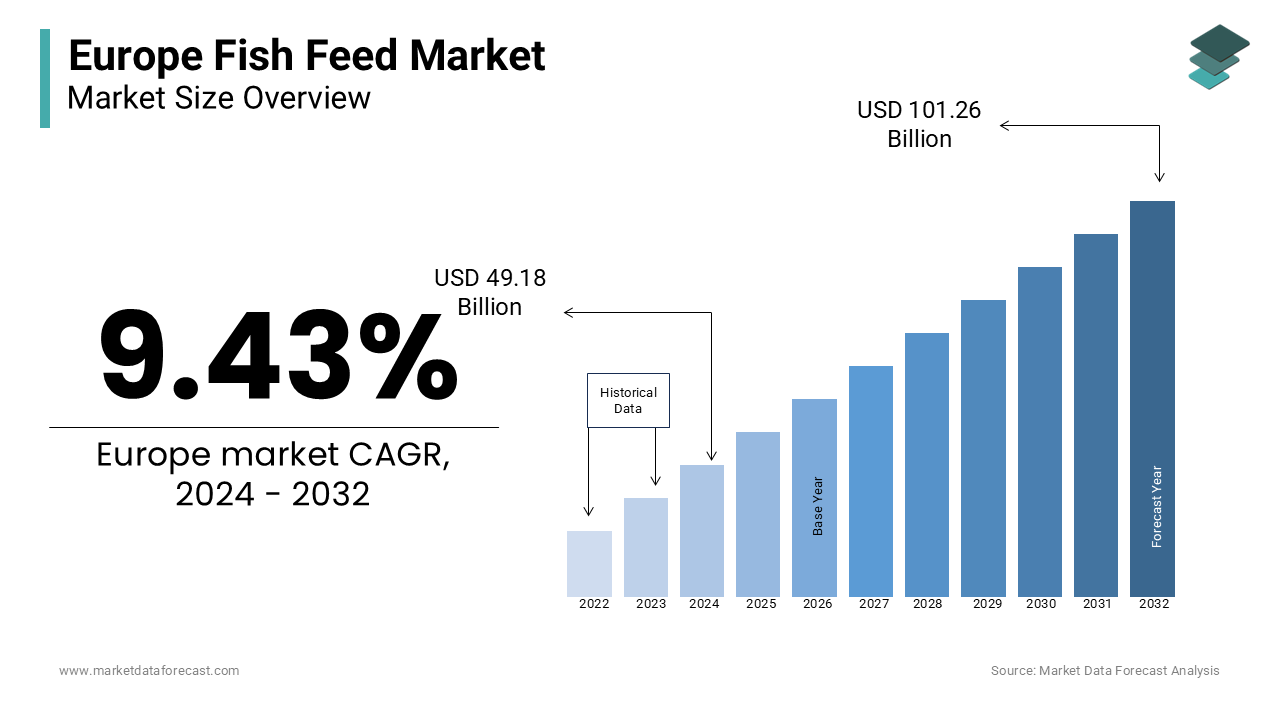
TEuropeanope Fish Feed Market encompasses the production, formulation, and distribution of nutritionally balanced feed products designed to support the health, growth, and sustainability of farmed aquatic species, primarily salmon, trout, sea bass, and sea bream. These feeds are engineered to meet stringent nutritional, environmental, and regulatory standards unique to European aquaculture practices. The market is shaped by ecological imperatives and policy frameworks aimed at reducing pressure on wild fish stocks and marine ecosystems. According to the Food and Agriculture Organization, Europe accounts for a portion of global aquaculture production, with a notable share of farmed fish in the European Union dependent on compound feeds. As per sources, aquaculture contributes a smaller share to the EU’s total agricultural emissions, yet faces intense scrutiny over feed sustainability. This regulatory and environmental context defines the strategic trajectory of theEuropeane Fish Feed Market.
MARKET DRIVERS
Stringent EU Regulations Promote Sustainable and Alternative Protein Inclusion in Fish Feed
European Union legislation is a primary driver of the growth of the fish feed market. This is particularly through mandates that limit reliance on marine-derived ingredients. According to the European Commission, Regulation EU 2017 1017 permits the use of processed animal proteins from poultry and pigs in aquaculture feed, reducing dependence on fishmeal. This policy shift responds to the fact that global fishmeal production has remained stagnant at millions of metric tons annually for over a decade, as per sources. In parallel, the EU’s Circular Economy Action Plan encourages the valorization of by-products from the food industry, leading to increased incorporation of insect meal, algal oil, and single-cell proteins. These regulatory and scientific advancements are compelling feed manufacturers to reformulate products with novel, land-based, and circular ingredients, and thereby driving demand for next-generation sustainable feeds across Europe.
Rising Consumer Demand for Responsibly Farmed Seafood Reinforces Premium Feed Adoption
European consumers increasingly prioritize environmental and ethical attributes when purchasing seafood, which propels the expansion of the European fish feed market. This directly influences aquaculture practices and feed selection. According to studies, a portion of consumers in Germany, France, and the Netherlands consider sustainability certifications such as Aquaculture Stewardship Council or Organic EU labels as decisive factors in seafood purchases. This market sentiment incentivizes fish farmers to adopt certified production systems, which in turn require compliant, high-quality feeds. Furthermore, major retailers like Carrefour and Tesco have committed to sourcing a portion of certified farmed fish, which creates downstream pressure on the entire supply chain. This consumer-driven accountability mechanism ensures sustained uptake of advanced, traceable, and eco-labeled fish feed formulations across the region.
MARKET RESTRAINTS
Volatility in Raw Material Prices Undermines Feed Affordability and Formulation Stability
The cost structure is highly sensitive to fluctuations in key raw materials, particularly plant-based proteins and specialty oils, which restrain the growth of thEuropeanpe fish feed market. This accounts for a portion of total formulation costs. According to Eurostat, the price of soybean meal in the EU surged between 2021 and 2023 due to global supply chain disruptions and competition from the biofuel sector. Similarly, the cost of algae-derived docosahexaenoic acid, a critical omega-3 substitute for fish oil, remains higher than traditional marine sources, as noted by the European Algae Biomass Association. These price instabilities force feed producers to frequently adjust formulations, risking nutritional consistency and fish performance. Small and medium-sized aquaculture operators, which constitute a portion of European fish farms according to research, often lack the purchasing power to hedge against such volatility. Consequently, unpredictable input costs constrain feed accessibility, limit innovation in alternative ingredients, and threaten the economic viability of sustainable aquaculture across the continent.
Stringent Authorization Processes for Novel Feed Ingredients Delay Market Entry
Rigorous regulatory process for approving new feed ingredients significantly slows the commercialization of innovative alternatives, which further holds back the expansion of tEuropeanope fish feed market. According to sources, the average time required to authorize a novel protein source for aquaculture feed exceeds several months, involving extensive safety, efficacy, and environmental impact assessments. This protracted timeline discourages investment in research and development by feed innovators, particularly small biotech firms. Meanwhile, competitors in less-regulated regions gain a first-mover advantage in ingredient commercialization. The EU’s precautionary principle, while ensuring safety, inadvertently stifles agility in feed innovation, which hinders Europe’s ability to rapidly transition toward fully sustainable aquaculture nutrition.
MARKET OPPORTUNITIES
Expansion of Recirculating Aquaculture Systems Drives Demand for Specialized Functional Feeds
The rapid adoption of recirculating aquaculture systems creates new opportunities for the growth of thEuropeanpe fish feed market. This causes a niche yet high growth demand for precision-engineered fish feeds. These closed-loop systems require feeds with low phosphorus and nitrogen excretion profiles to maintain water quality and reduce filtration load. Apart from these, recirculating systems often rear high-value species like sturgeon and eel, which necessitate species-specific nutrient profiles and health-promoting additives such as nucleotides and organic acids. Feed manufacturers who develop tailored formulations for these controlled environments can command premium pricing and secure long-term contracts with technology-driven aquaculture enterprises, which position themselves at the forefront of Europe’s land-based aquaculture revolution.
EU Green Deal Funding Accelerates Commercialization of Low-Impact Feed Ingredients
The European Green Deal is unlocking unprecedented public and private investment for sustainable aquaculture innovations, including next-generation fish feed, which in turn opens potential prospects for the expansion of tEuropeanope fish feed market. According to sources, the European Union is providing major funding to advance the development of sustainable and circular feed solutions within the aquaculture sector. As per studies, several collaborative projects are promoting the use of new protein sources such as yeast and microalgae through pilot production initiatives. According to research, additional public investment is supporting facilities that transform food industry waste into valuable feed ingredients. This policy-driven financial ecosystem not only drives innovation but also aligns private sector R and D with continental sustainability targets by creating fertile ground for scalable and eco-efficient feed solutions.
MARKET CHALLENGES
Limited Domestic Production of Alternative Protein Sources Constricts Supply Chain Resilience
Lack of sufficient domestic production capacity for key alternatives, such as insect meal and single cell proteins, creates barriers for thEuropeanpe fish feed market. Similarly, algal oil production remains largely confined to pilot plants, with lesser metric tons produced annually across the continent, as per studies. This supply deficit forces feed mills to rely on imports or maintain high inventories of conventional ingredients, undermining sustainability goals. Moreover, the absence of integrated value chains, from substrate sourcing to processing, increases logistics complexity and carbon footprint. Europe's ambition to decouple aquaculture feed from marine resources will remain hampered by structural supply-side constraints without coordinated investment in large-scale biorefineries and feed-grade processing infrastructure.
Persistent Knowledge Gaps Among Farmers Hinder Adoption of Advanced Feed Technologies
The limited technical awareness among European aquaculture operators regarding the benefits and handling of next-generation feeds is a significant impediment to thEuropeanpe fish feed market. This knowledge gap leads to conservative feed choices and resistance to premium products, even when economically viable. Extension services remain underfunded. Consequently, innovations such as enzyme-supplemented or probiotic-enriched feeds are underutilized, reducing their potential impact on fish health and environmental performance. Bridging this information asymmetry through targeted education, demonstration farms, and digital advisory tools is essential to unlock the full potential of advanced feed technologies across the diverse European aquaculture landscape.
REPORT COVERAGE
| REPORT METRIC | DETAILS |
| Market Size Available | 2025 to 2034 |
| Base Year | 2025 |
| Forecast Period | 2026 to 2034 |
| CAGR | 9.43% |
| Segments Covered | Basis of ingredient, Additive, Basis of end-user, and Country |
| Various Analyses Covered | Global, Regional & Country Level Analysis, Segment-Level Analysis, DROC, PESTLE Analysis, Porter’s Five Forces Analysis, Competitive Landscape, Analyst Overview of Investment Opportunities |
| Regions Covered | UK, France, Spain, Germany, Italy, Russia, Sweden, Denmark, etc |
| Market Leaders Profiled | Ridley Corporation Limited, Archer Daniels Midland Company, Nutreco N.V., Cargill, Avanti Feeds Limited, Purina Animal Nutrition, Biostadt India Limited, Alltech, Nutriad, and Biomar, among others. |
SEGMENTAL ANALYSIS
By Basis of Ingredients Insights
The fish meal segment was the top performer in the European fish feed market by accounting for 28.5% in 2025. Its unmatched amino acid profile and high digestibility for carnivorous species such as salmon and sea bass have largely contributed to the growth of the fish meal segment. Despite sustainability concerns, its irreplaceable nutritional role sustains demand across intensive aquaculture operations. Apart from these, certification schemes like MarinTrust permit the use of responsibly sourced fish meal in organic aquaculture by preserving its relevance under EU organic regulations. The biological efficacy of fish meal in supporting larval development and immune function ensures its continued dominance in European feed rations, but substitution efforts are ongoing.
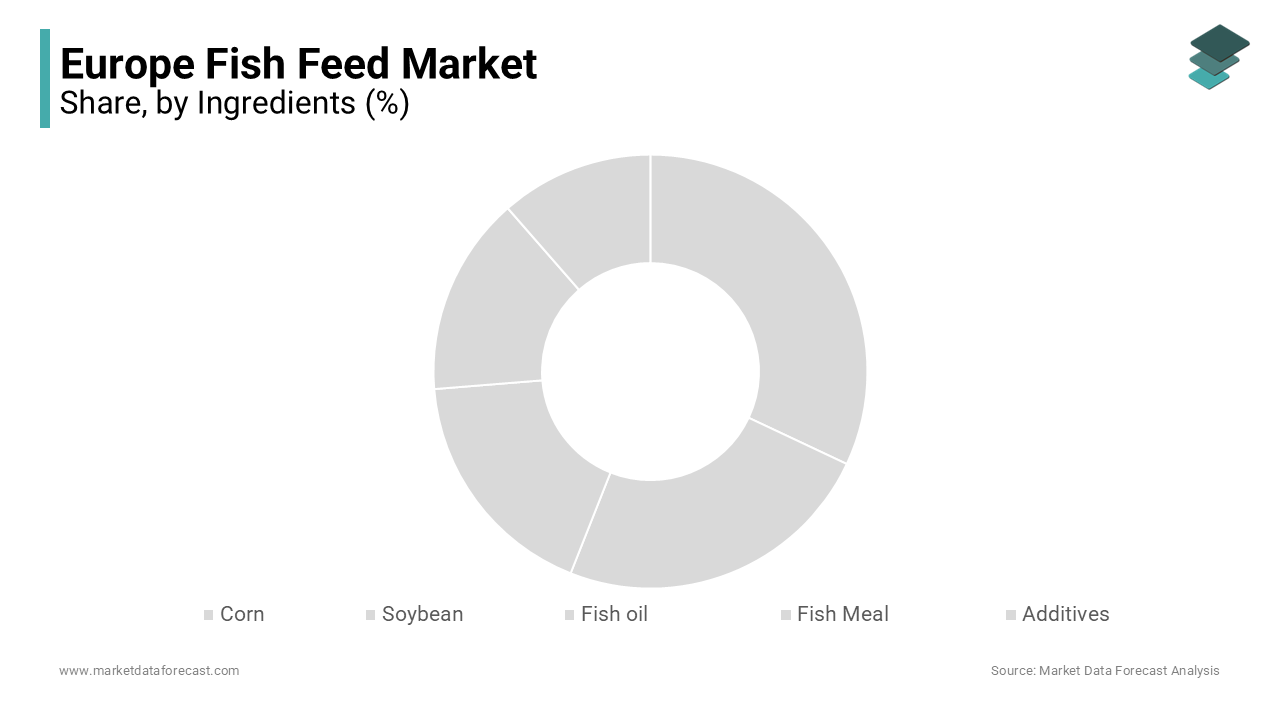
The additives segment is on the rise and is expected to be the fastest-growing segment in the global market by witnessing a CAGR of 8.7% from 2025 to 2033. The rapid growth of the additives segment is driven by the need to enhance feed efficiency, fish health, and environmental performance in the face of ingredient substitution. Plant-based proteins replacing marine ingredients mean that anti-nutritional factors like phytates and lectins necessitate the use of specialized additives. The EU’s prohibition of antibiotic growth promoters since 2006 has also accelerated demand for alternatives like probiotics and immunostimulants, which fall under the broader additives category. The European Green Deal emphasizes reduced nutrient discharge and antibiotic use, making feed additives indispensable tools for sustainable intensification and thereby fueling their rapid market expansion.
By Additives Insights
The vitamins segment led tEuropeanope fish feed market and occupied 32.6% of the global market share in 2025. Their essential role in metabolic function, stress resistance, and reproduction across all farmed species has mainly contributed to the growth of the vitamins segment. Deficiencies in key vitamins such as C, E, and B complex can lead to reduced growth, skeletal deformities, and increased mortality, particularly in high-density farming systems. The European Commission’s guidelines on organic aquaculture explicitly require vitamin supplementation when natural dietary sources are insufficient, further embedding their use in certified production. Besides, climate-induced stressors such as thermal fluctuations in Southern European farms have heightened demand for antioxidant vitamins like E and C to bolster immune responses.
The feed enzymes segment is expected to exhibit a noteworthy CAGR of 9.4% from 2025 to 2033, owing to their critical function in mitigating the limitations of alternative plant-based feed ingredients. Soybean and corn replace fish meal, but their high phytate and fiber content reduces nutrient bioavailability and increases phosphorus discharge into aquatic environments. Regulatory pressure under the EU Water Framework Directive to limit nutrient pollution from aquaculture effluents further incentivizes enzyme use. These biological catalysts not only enhance feed conversion ratios but also align with circular economy goals by maximizing nutrient extraction from non-marine sources, which drives their accelerated adoption.
By End User Insights
The farmed fish segment held a substantial share of the European fish feed market in 2025. The dominance of the farmed fish segment is fuelled by the continent’s focus on high-value finfish species. Salmon, trout, sea bass, and sea bream dominate production, with the European Union producing large metric tons of farmed fish annually, according to studies. Norway, though not an EU member, supplies a significant volume of salmon to European markets, and its feed-intensive production model influences regional demand patterns. In addition, molluscs and crustaceans rely largely on natural productivity or minimal supplementation. The capital-intensive nature of fish farming, coupled with strict EU regulations on feed composition and traceability, ensures consistent and high-volume demand for specialized feeds, which strengthens fish as the dominant end-user segment.
The crustacean farming segment is predicted to witness the highest CAGR of 7.9% during the forecast period, owing to niche market development and technological adaptation. Pilot projects for freshwater prawn and crayfish farming are gaining traction in Spain, Italy, and France, while Europe’s crustacean production remains modest compared to Asia. These species require specialized feeds with higher astaxanthin and chitin content to support molting and pigmentation, creating demand for tailored formulations. Besides, rising consumer interest in premium shellfish and EU support for diversification under the Common Fisheries Policy are encouraging investment. Though starting from a low base, this segment’s growth reflects Europe’s strategic move toward aquaculture diversification and high-value niche production.
COUNTRY ANALYSIS
Norway Fish Feed Market Analysis
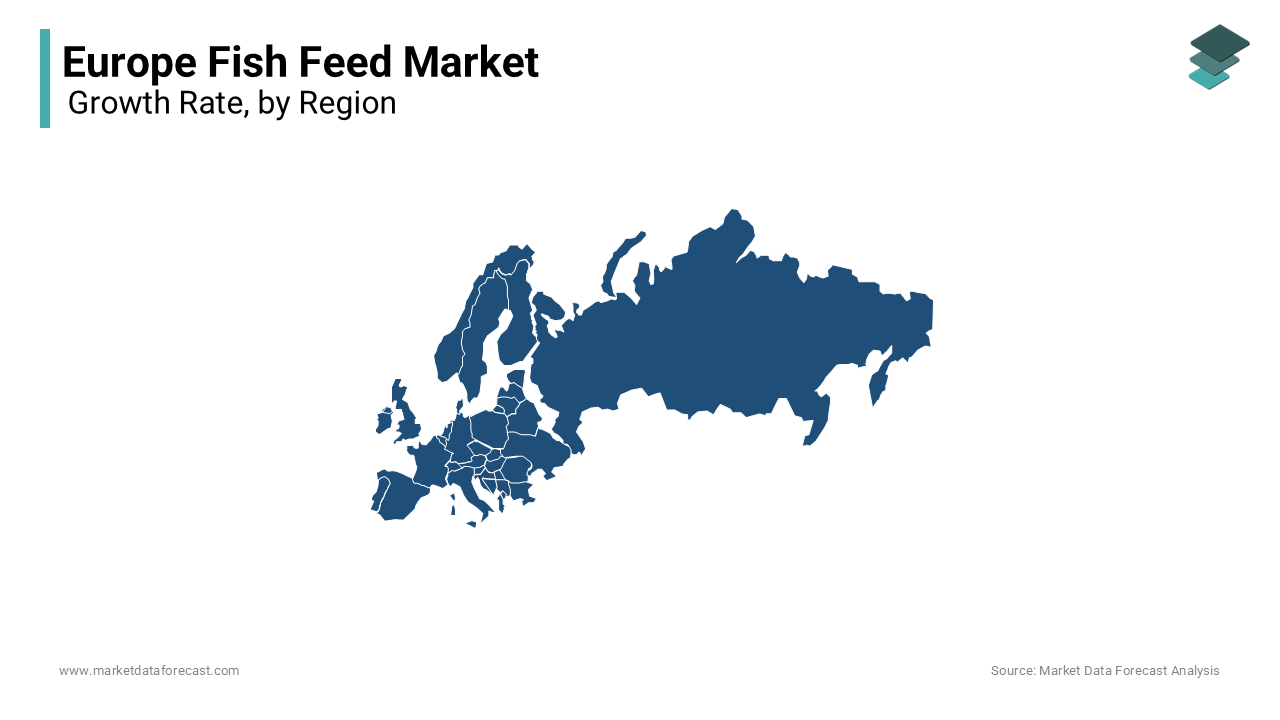
Norway led the European fish feed market by accounting for 26.4% share in 2025. The prominence of Norway is driven by its status as the world’s largest producer of farmed Atlantic salmon. Its deep integration with European supply chains and regulatory alignment make it central to regional dynamics even though it is not an EU member. Norwegian feed producers operate under strict sustainability criteria. Companies have pioneered microalgae and yeast-based omega-3 sources to meet this target. Apart from these, Norway’s National Aquaculture Strategy allocates funds annually for feed innovation by focusing on circular ingredients and reduced environmental impact. This combination of scale, regulation, and R and D investment cements Norway’s dominance in the European fish feed landscape.
Spain Fish Feed Market Analysis
Spain was the second largest in the European fish feed market by capturing 18.2% in 2025. Its extensive Mediterranean aquaculture sector, focused on sea bass and sea bream, propels the growth of Europe. According to research, the country produced notable metric tons of marine fish, supported by more coastal farms. The warm climate enables year-round production but also increases disease pressure, which necessitates feeds enriched with immune boosters and organic acidifiers. Spain is also a leader in recirculating aquaculture adoption, with many inland facilities now operational, demanding low-effluent feeds with high digestibility. EU funding through the Operational Programme for Fisheries has further modernized feed mills, particularly in Valencia and Murcia. These factors position Spain as a dynamic and resilient hub in Southern Europe’s feed market.
France Fish Feed Market Analysis
France remains a key region in the European fish feed market due to its diversified aquaculture base and strong regulatory framework. France maintains a strong aquaculture output across various species, supported by the growing adoption of sustainable farming practices, according to sources. Feed demand in freshwater aquaculture remains significant, with producers increasingly shifting toward plant-based and certified ingredients, as per studies. Regulatory strategies now require all commercial feed types to meet organic or quality certification standards to ensure traceability and environmental responsibility, as per research. Innovative feed formulations using alternative protein sources such as insect meal and microalgae are also gaining validation for large-scale production, according to sources. Apart from these, France hosts major feed producers like Le Gouessant Aquaculture, which supplies across Western Europe. This blend of policy rigor, research collaboration, and production diversity sustains France’s influential market role.
United Kingdom Fish Feed Market Analysis
The United Kingdom expanded gradually in the European fish feed market owing to its salmon farming industry in Scotland and growing interest in inland-based aquaculture. Post Brexit, the UK has maintained alignment with EU feed safety standards through the Animal and Plant Health Agency, ensuring continued market access. Funding initiatives are continuously supporting projects aimed at integrating circular economy principles into feed production systems, as per studies. A rising investment in recirculating systems in England and Wales means demand for specialized feeds is expanding beyond traditional marine sites, reinforcing the UK’s evolving market relevance.
Denmark Market Analysis
Denmark is anticipated to grow in tEuropeanope fish feed market over the forecast period due to its concentration of global feed innovators and advanced recirculating aquaculture systems. Home to BioMar Group, one of the world’s largest aquaculture feed companies, Denmark exports feed formulations to many countries. Denmark’s aquaculture industry places strong emphasis on research, innovation, and advanced feed manufacturing, according to sources. The country’s research collaborations are contributing significantly to the development of improved feed formulations featuring enzymes and probiotics, as per studies. Strict environmental regulations are encouraging the use of more efficient and nutrient-retentive feed solutions, as per research. Ongoing government initiatives are also supporting the creation of sustainable and waste-free aquaculture feed systems, according to sources. This fusion of industrial leadership, regulatory ambition, and scientific excellence ensures Denmark’s outsized contribution to the European fish feed ecosystem.
COMPETITIVE LANDSCAPE
TEuropeanope Fish Feed Market is characterized by intense competition among multinational nutrition companies and specialized regional producers striving to balance performance, sustainability, type, and regulatory compliance. Dominant players differentiate themselves through proprietary formulations, advanced R and D capabilities, and vertically integrated supply chains that ensure ingredient traceability. The market is not price-driven but rather defined by technical service formulation expertise and alignment with EU policies such as the Farm to Fork Strategy and Circular Economy Action Plan. Smaller feed mills face challenges in accessing novel ingredients due to high certification costs and limited scale, yet thrive by serving local species and niche organic segments. Regulatory scrutiny on marine resource use has elevated the importance of innovation in alternative proteins, creating a dynamic where technological leadership determines market influence.
KEY MARKET PLAYERS
- Ridley Corporation Limited
- Archer Daniels Midland Company
- Nutreco N.V
- Cargill
- Avanti Feeds Limited
- Purina Animal Nutrition
- Biostadt India Limited
- Alltech
- Nutriad
- Biomar, among others.
MARKET SEGMENTATION
This research report onthe Europeane fish feed market is segmented and sub-segmented into the following categories.
The Basic Ingredients
- Corn
- Soybean
- Fish oil
- Fish Meal
- Additives
- Others
By Additives
- Vitamins
- Antibiotics
- Amino acids
- Antioxidants
- Feed acidifier
- Feed enzymes
- Others
By End-User
- Fish
- Salmon feed
- Carp feed
- Tilapia feed
- Catfish feed
- Molluscs
- Oyster feed
- Mussel feed
- Crustaceans
- Carb feed
- Shrimp feed
- Others
By Country
- UK
- France
- Spain
- Germany
- Italy
- Russia
- Sweden
- Denmark
- Switzerland
- Netherlands
- Turkey
- Czech Republic
- Rest of Europe