- Product Description Description
- Table of Contents TOC
- List of Table & Figure LOT
- Get Free Sample PDF Sample PDF
Market Size, 2025
$11 BnMarket Estimate, 2026
$11.59 BnMarket Forecast, 2034
$17.61 BnCAGR, 2026–2034
5.37%Europe Fragrance Ingredients Market Size, Growth, Trends & Forecast (2026–2034)
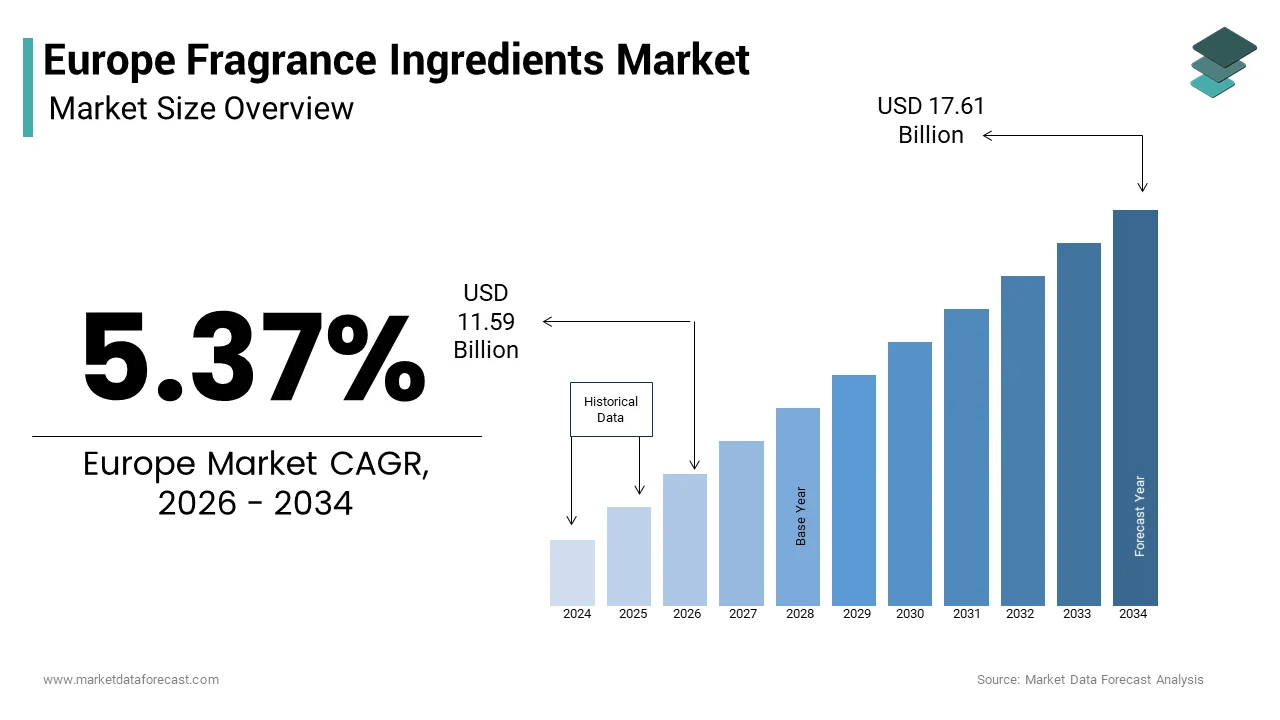
The Europe fragrance ingredients market size was valued at USD 11 billion in 2025, is anticipated to reach USD 11.59 billion in 2026, and is projected to scale up to USD 17.61 billion by 2034, registering a compound annual growth rate (CAGR) of 5.37% during the forecast period from 2026 to 2034. Driven by a surge in demand for natural and organic personal care formulations, clean-label transparency mandates, and a thriving luxury fine fragrance sector, the regional market continues steady expansion.
Key Executive Metrics (At-a-Glance)
- 2025 Base Valuation: USD 11.00 Billion
- 2026 Current Valuation: USD 11.59 Billion
- 2034 Forecast Valuation: USD 17.61 Billion
- Compound Annual Growth Rate (CAGR): 5.37% (2026–2034)
- Dominant Type Segment: Aroma Chemicals (holding the largest market share owing to versatility, cost efficiency, and batch-to-batch consistency)
- Fastest-Growing Type Segment: Essential Oils (surging rapidly via consumer preference for clean-label, plant-derived, and therapeutic botanical extracts)
- Dominant Application Segment: Cosmetics & Toiletries (commanding the largest share through pervasive sensory integration across skincare and personal care)
- Fastest-Growing Application Segment: Fine Fragrances (accelerating via the resurgence of luxury perfumery, independent niche houses, and exclusive signature scents)
- Dominant Regional Country Markets: France & Germany (leading regional consumption backed by historic perfumery capitals like Grasse, advanced R&D centers, and robust chemical industries)
Core Market Drivers
- Clean & Natural Product Preferences: European shoppers actively prioritizing eco-certified botanical formulations, sustainable agriculture, and traceable origin ingredients.
- Ingredient Transparency Mandates: Growing consumer rejection of opaque labeling ("parfum"), driving widespread demand for full disclosure and hypoallergenic safety.
Primary Market Restraints & Challenges
- Regulatory Scrutiny & Supply Volatility: Stringent EU controls on allergenic ingredients requiring costly reformulations, compounded by climate-induced supply shocks for natural botanicals.
Europe Fragrance Ingredients Market Segmentation Breakdown
| Segment Category | Largest (Dominant) Sub-Segment | Fastest-Growing Sub-Segment |
|---|---|---|
| By Type | Aroma Chemicals | Essential Oils |
| By Application | Cosmetics & Toiletries | Fine Fragrances |
| By Country | France & Germany | Italy & Spain |
Major Industry Players Profiled
Key corporations steering the European market include BASF SE, Frutarom Industries Ltd., T. Hasegawa Co. Ltd., Givaudan SA, Firmenich International SA, International Flavors & Fragrances Inc. (IFF), Robertet SA, Mane SA, Symrise AG, and Takasago International Corp.
Europe Fragrance Ingredients Market Size
The Europe fragrance ingredients market size was valued at USD 11 billion in 2025 and is anticipated to reach USD 11.59 billion in 2026 to reach USD 17.61 billion by 2034, growing at a CAGR of 5.37% during the forecast period from 2026 to 2034.
Fragrance ingredients are natural and synthetic aromatic compounds used in fine fragrances, cosmetics, personal care, and household products across the European Union and associated countries. These ingredients include essential oils, isolates, aroma chemicals, and absolutes sourced through distillation, expression, or chemical synthesis. Europe holds a unique position as both a historic birthplace of modern perfumery and a regulatory vanguard for cosmetic safety and sustainability. As per sources, the EU is significantly dependent on imported raw aromatic materials such as essential oils to meet its market demand, with a large volume of global trade flowing through European hubs. According to research, a substantial number of small and medium enterprises (SMEs) constitute the majority of businesses within the EU perfumery and cosmetics sector, which contributes to a diverse and responsive market landscape. This ecosystem operates under evolving consumer expectations, stringent chemical regulations, and mounting pressure for environmental accountability, factors that collectively define the current trajectory of the European fragrance ingredients landscape.
MARKET DRIVERS
Rising Demand for Natural and Organic Personal Care Products
Consumer behavior in the region has progressively favored clean and plant-based formulations, which escalates the growth of the Europe fragrance ingredients market. This directly elevates demand for naturally derived fragrance ingredients. According to a study, a majority of consumers across major European markets like Germany, France, and Spain are actively prioritizing personal care products that are natural or organic. This preference drives formulators to source certified botanical extracts such as linalool from lavender, citronellol from rose geranium, and limonene from citrus peels. The area dedicated to organic farming within the European Union has reached a significant proportion of the total agricultural land. Specific European countries such as France, Italy, and Bulgaria are the leading cultivators of key aromatic crops, which are vital components in natural fragrance production. Moreover, most new fine fragrances introduced in Western Europe now incorporate at least one certified natural raw material in their formulations. This trend not only reinforces the commercial viability of ethically sourced botanicals but also aligns with the European Green Deal’s emphasis on biodiversity and sustainable agriculture, thereby reinforcing long-term demand for traceable, non-synthetic aroma compounds.
Shift Toward Clean Label and Transparency Drives Ingredient Innovation
European consumers are increasingly rejecting opaque labeling practices, particularly the generic term “parfum,” and demanding full ingredient disclosure, which further contributes to the expansion of the Europe fragrance ingredients market. As per a study, consumers in some regions express a strong preference and willingness to invest more in products that offer complete transparency regarding their fragrance ingredients. This transparency mandate compels manufacturers to reformulate using safer, biodegradable, and non-sensitizing molecules.
In response, major players like Firmenich and Givaudan have deployed artificial intelligence platforms to design hypoallergenic fragrance molecules with minimal environmental impact. There has been significant growth in the number of innovative aroma ingredients derived from biological processes, such as fermentation or enzymatic reactions, becoming available in the market. These advances are especially impactful in functional fragrances used in detergents and air care, where performance must coexist with eco-compatibility. Furthermore, forthcoming regulatory changes are encouraging rapid, proactive innovation within the industry to develop safer ingredients across all consumer goods. Consequently, ingredient transparency is no longer a marketing tactic but a core technical and regulatory imperative reshaping sourcing, formulation, and labeling norms across the European fragrance value chain.
MARKET RESTRAINTS
Stringent Regulatory Scrutiny on Allergenic and Synthetic Ingredients
The European Union enforces some of the world’s strictest controls on fragrance substances due to health and environmental concerns, which in turn restricts the growth of the Europe fragrance ingredients market. Cosmetic product labeling includes the individual listing of specific fragrance allergens when their concentration exceeds established thresholds. Certain fragrance ingredients, specifically hydroxyisohexyl 3-cyclohexene carboxaldehyde and atranol, have been reviewed for potential health risks. Due to continued skin sensitization concerns, official guidance suggests implementing further restrictions on these particular ingredients. These measures force brands to reformulate legacy scents or abandon certain olfactory profiles, increasing research and compliance costs. Small and medium enterprises, comprising the vast majority of the sector, are particularly burdened by the need to fund toxicological dossiers and safety evaluations. This regulatory complexity not only stifles creative freedom for perfumers but also narrows the palette of permissible ingredients, ultimately limiting olfactory diversity and slowing product innovation in a market historically defined by its aromatic richness.
Volatile Supply Chains for Botanical Raw Materials
Climate volatility, geopolitical instability, and labor shortages have severely disrupted the supply of essential botanicals, which is another barrier to the Europe fragrance ingredients market. These botanicals form the backbone of Europe’s natural fragrance industry. Extreme weather conditions led to reduced lavender yields. Drought conditions contributed to a drop in the production of rose oil. Export restrictions from key sourcing nations like Madagascar (ylang ylang), India (sandalwood), and Indonesia (patchouli) have further strained access. Distillers experienced increased agricultural input costs, driven by energy and fertilizer price surges. Such instability compromises batch consistency, inflates raw material costs, and jeopardizes the authenticity of signature scents. The slow, capital-intensive move toward vertical integration and synthetic alternatives leaves the market vulnerable to ongoing supply shocks, which destabilize formulation reliability and pricing predictability.
MARKET OPPORTUNITIES
Expansion of Sustainable and Traceable Sourcing Initiatives
Sustainability has evolved from a compliance obligation to a strategic advantage in the region’s fragrance sector, which offers fresh opportunities for the Europe fragrance ingredients market. According to research, cosmetics companies within Europe are increasingly asking their suppliers to provide evidence that botanical ingredients have been harvested sustainably. This demand has catalyzed certified partnerships across the Mediterranean, where aromatic crops like immortelle, bergamot, and clary sage are cultivated under organic or Fair for Life standards. The production of ethically certified ingredients like bergamot is growing significantly in key agricultural regions. A notable increase in fragrance ingredient suppliers in Europe is successfully obtaining ethical certifications. These initiatives align with the EU Deforestation Regulation, which mandates supply chain due diligence for agricultural commodities linked to forest loss. Brands leveraging blockchain-enabled raceability or regenerative farming practices are gaining preferential placement in premium and niche segments. As a result, sustainability is increasingly monetized, translating ethical sourcing into brand equity, consumer trust, and pricing power in Europe’s discerning fragrance markets.
Growth in Niche and Artisanal Fragrance Segments
The rise of independent perfumers and limited-edition scent houses is creating new demand for rare, high-purity, and region-specific fragrance ingredients. As a result, this is predicted to drive the expansion of the Europe fragrance ingredients market. The niche fragrance segment is growing in Western Europe, showing a stronger performance than mass market categories. These artisanal brands prioritize unique olfactory identities, often sourcing single-origin absolutes such as Grasse jasmine, Tuscan iris butter, or Corsican myrtle. This trend supports small-scale distillers and heritage farms that emphasize terroir-driven extraction methods. Such ingredients command significant price premiums and foster deep storytelling around origin and craft. The growing consumer preference for authenticity and emotional resonance is validating the economic importance of artisanal methods. This trend not only underpins the viability of traditional extraction techniques and regional biodiversity but also safeguards Europe's perfumery heritage, creating premium revenue streams for specialized ingredient suppliers.
MARKET CHALLENGES
Intensifying Competition from Synthetic Biology and Alternative Production Methods
Advances in synthetic biology are disrupting traditional sourcing models by offering consistent, scalable, and often cheaper alternatives to natural extracts, which is among the major impediments to the Europe fragrance ingredients market. Bioengineered aroma molecules such as vanillin, nootkatone, and valencene have reached commercial scale within the European market. Production costs for these bioengineered molecules have decreased significantly due to improvements in microbial fermentation processes. The transition, while good for securing the supply chain, poses a risk to conventional farmers. Producers of natural botanical oils, such as lavender and rose farmers, are experiencing pricing pressure as lower-cost synthetic alternatives are widely available. A notable portion of new fragrance formulations in Europe now incorporates at least one bio-manufactured molecule. The tension between innovation and tradition demands coordinated policy support to protect rural livelihoods while embracing technological progress, ensuring Europe’s fragrance heritage is not sacrificed at the altar of efficiency.
Fragmented Regulatory Landscape Across European Markets
Fragrance suppliers face compliance uncertainty because EU regulations like REACH and the Cosmetic Regulation are inconsistently enforced across member states, which hinders the expansion of the Europe fragrance ingredients market. Besides, non-EU European countries such as Switzerland and the United Kingdom maintain divergent chemical inventories and safety thresholds post Brexit, complicating pan-European distribution. The varied approach to disclosing fragrance allergens creates a lack of clarity for consumers. As a result, individuals may feel confused and find it difficult to trust current product labeling practices. For small suppliers lacking legal and regulatory expertise, navigating this patchwork increases operational complexity and market entry barriers. Harmonization efforts remain slow due to differing national priorities and risk assessments, which leaves the industry exposed to legal uncertainty and competitive disadvantage, particularly when competing with less-regulated global markets. Fragmented European fragrance regulations impede innovation and market access.
REPORT COVERAGE
| REPORT METRIC | DETAILS |
| Market Size Available | 2025 to 2034 |
| Base Year | 2025 |
| Forecast Period | 2026 to 2034 |
| CAGR | 5.37% |
| Segments Covered | By Application, Type & Region |
| Various Analyses Covered | Global, Regional & Country Level Analysis, Segment-Level Analysis, DROC, PESTLE Analysis, Porter’s Five Forces Analysis, Competitive Landscape, Analyst Overview on Investment Opportunities |
| Regions Covered | UK, France, Spain, Germany, Italy, Russia, Sweden, Denmark, Switzerland, Netherlands, Turkey, Czech Republic & Rest of Europe |
| Market Leaders Profiled | BASF SE, Frutarom Industries Ltd., T. Hasegawa Co. Ltd., Givaudan SA, Firmenich International SA, International Flavors and Fragrances Inc., Robertet SA, Mane SA, Symrise AG, and Takasago International Corp. |
SEGMENTAL ANALYSIS
By Application Insights
The cosmetics and toiletries segment was the largest share of 42.3% of the Europe fragrance ingredients market in 2025. The leading position of the cosmetics and toiletries segment is credited to the pervasive integration of scented formulations across skincare, haircare, and body care products, driven by consumer expectations for sensory engagement and perceived product efficacy. Consumer preference for fragrance in personal care items is a notable factor in the European market. The scent of products like body lotions, shower gels, and facial mists often influences purchasing decisions. The market is seeing an increase in premium personal care items. Products featuring distinct scent profiles are frequently used as a key element of brand differentiation. Fragrance-enhanced products show strong performance within the cosmetics sector. These items appear to be a valuable component of the general market offerings, potentially outpacing those without added scents in consumer appeal. This sustained product innovation, combined with strong consumer attachment to olfactory experience, ensures the cosmetics and toiletries segment remains the primary consumption channel for fragrance ingredients across the region.
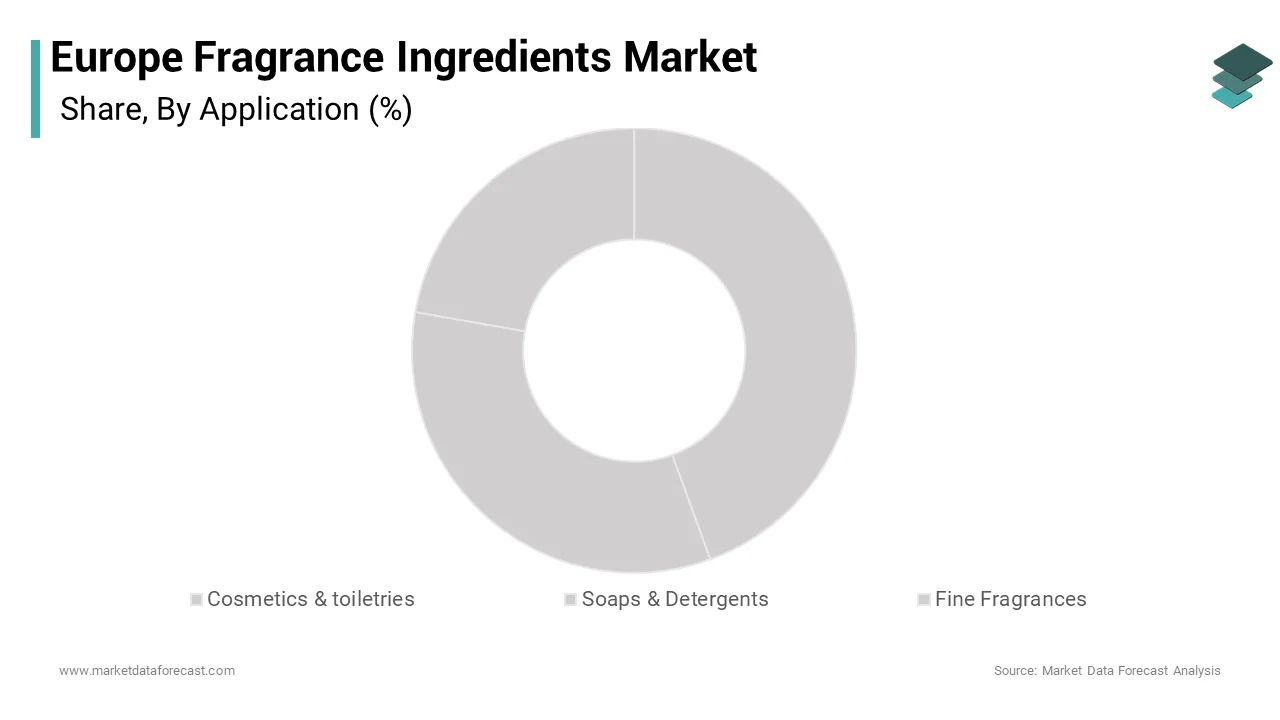
The fine fragrances segment is estimated to register the fastest CAGR of 6.8% from 2025 to 2033. The rapid expansion of the fine fragrances segment is fueled by the resurgence of luxury perfumery and the proliferation of niche and independent scent houses that prioritize complex high quality ingredient compositions. The European market has seen a notable increase in sales of premium and ultra-premium fragrances, driven by strong consumer demand across key markets like France, Germany, and Italy. Younger consumers, particularly those aged 18 to 34, are increasingly investing in unique signature scents and are demonstrating a strong willingness to spend more on bottles that offer exclusivity and emotional resonance. Moreover, the revival of heritage fragrance houses and the storytelling appeal of local sourcing, such as Grasse jasmine or Sicilian bergamot, have strengthened consumer connection to origin-driven formulations. These dynamics, combined with rising disposable incomes post-pandemic recovery and the cultural prestige of European perfumery, collectively propel fine fragrances as the most dynamic growth vector in the application landscape.
By Type Insights
The aroma chemicals segment led the Europe fragrance ingredients market and captured a share of 58.1% in 2024. The dominance of the aroma chemicals segment is propelled by its versatility, cost efficiency, and regulatory compliance advantages over natural extracts. Aroma chemicals such as linalool, coumarin, and vanillin provide consistent olfactory profiles unaffected by climatic variability or agricultural disruption,s, which is critical for mass market product stability. Household and personal care formulations frequently utilize synthetic aroma molecules because they offer consistent results and are less likely to cause allergic reactions when highly purified. Additionally, major fragrance houses, including Givaudan and Symri,se have invested heavily in green chemistry platforms enabling the production of sustainable aroma chemicals from bio-based feedstocks such as sugarcane or corn starch. According to sources, new aroma molecules sourced from biological materials are being introduced into the commercial market. This technological evolution aligns with EU chemical safety frameworks while meeting the industry’s need for scalable and traceable raw material, thereby cementing aroma chemicals as the backbone of modern European fragrance formulation.
The essential oils segment is anticipated to witness the fastest CAGR of 7.4% from 2025 to 2033. The swift growth of the essential oils segment is propelled by heightened consumer demand for plant-derived clean-label ingredients, particularly in natural cosmetics and aromatherapy applications. Retail sales of certified organic personal care products show an increasing trend. Formulations based on essential oils represent a significant portion of this product category. The cultivation of aromatic crops in some countries has expanded. Specific countries have notably increased their certified production of certain aromatic raw materials. Furthermore, the European Green Deal’s Farm to Fork Strategy incentivizes agroecological practices supporting small-scale distillers through subsidies and certification assistance. Essential oils also benefit from their dual functionality, offering both fragrance and therapeutic claims, which resonates strongly with wellness-oriented consumers. This confluence of regulatory support, cultural heritage, and market demand positions essential oils as the most rapidly expanding ingredient type in Europe’s evolving olfactory economy.
COUNTRY ANALYSIS
France Fragrance Ingredients Market Analysis
France maintained the dominant position in the Europe fragrance ingredients market by accounting for a 22.6% share in 2024. The dominance of the French market is credited to its historic perfumery capital, Grasse, which continues to supply high-purity absolutes and concretes to global luxury brands. The national fragrance and flavor sector is a significant part of the economy, with a large proportion of its volume related to raw materials. Regulatory alignment with EU cosmetic directives and strong intellectual property protections for geographical indications such as “Jasmin de Grasse” further enhance France’s competitive edge. Besides, A substantial number of fine fragrance launches in Europe originate from houses based in France, which helps drive consistent demand for premium ingredients within the region. Public investment in green extraction technologies and partnerships between CNRS research labs and private distillers have also accelerated the development of sustainable sourcing models, ensuring France remains at the epicenter of both tradition and innovation in European perfumery.
Germany Fragrance Ingredients Market Analysis
Germany was the second-largest player in the Europe fragrance ingredients market and occupied an 18.3% share in 2024. Its robust chemical industry and high consumer demand for functional fragrances in household and personal care products have contributed to the growth of Germany in the regional market. There is a noticeable demand for scented products such as detergents, air fresheners, and skincare formulations. Consumers are showing a strong preference for hypoallergenic products. A growing number of individuals favor eco-certified scented products. Many consumers actively review ingredient lists before making a purchase decision. This scrutiny has prompted manufacturers like Beiersdorf and Henkel to prioritize transparent and biodegradable aroma systems often sourced from domestic suppliers, adhering to Blue Angel sustainability criteria. Furthermore, Germany hosts key European R and D centers for firms that invest millions of euros annually in fragrance molecule innovation. The nation’s engineering excellence in precision distillation and formulation analytics, combined with stringent quality control standards, solidifies its role as a high-volume,high-compliance hub within the regional fragrance value chain.
Italy Fragrance Ingredients Market Analysis
Italy is another key player in the European fragrance ingredients market because of its rich biodiversity and artisanal extraction heritage, particularly in citrus and floral essences. Italian fragrance demand is amplified by its luxury fashion and cosmetics sector, with brands like Dolce & Gabbana and Acqua di Parma driving a consistent need for region-specific raw materials. Moreover, the government’s National Strategy for Bioeconomy promotes organic citrus farming and traditional distillation cooperatives through tax incentives and EU rural development funds. This blend of agricultural tradition, industrial design, and export orientation ensures Italy remains a critical source of high-value natural ingredients that define Mediterranean olfactory identity in European and global markets.
United Kingdom Fragrance Ingredients Market Analysis
The United Kingdom grew consistently in the Europe fragrance ingredients market, with its dynamic consumer trends and resilient luxury goods sector, despite post-Brexit regulatory complexities. The UK imports a significant amount of fragrance compounds. These imported compounds are largely used in the manufacturing of toiletries and fine fragrances. British consumers show pronounced openness to experimental and gender-neutral scents. London’s status as a global fashion and media capital fosters rapid adoption of new olfactory trends, amplifying demand for novel and customizable ingredient blends. Companies operate advanced formulation labs in the U.S., catering to both domestic and pan-European clients. Although the UK now operates under a distinct chemical regulatory regime separate from REACH, the alignment of its cosmetic safety standards with EU norms minimizes trade friction. This adaptive regulatory environment, combined with strong creative industries, sustains the UK’s influence as a trend-setting high-value fragrance consumption market.
Spain Fragrance Ingredients Market Analysis
Spain is an emerging player in the European fragrance ingredients market due to its extensive cultivation of aromatic plants and growing domestic cosmetics industry. Lavender, rosemary, and thyme are grown in the country. Cultivation of these aromatic plants is a notable activity in the agricultural sector. The raw material is processed to obtain essential oils. Also, these essential oils are predominantly used in the production of personal care and aromatherapy products. The production activity highlights the regional focus on specific types of aromatic crops. There are general indications of production trends in this area of the agricultural market. Spanish consumers increasingly favor Mediterranean-inspired natural scents. The rise of homegrown beauty brands such as Natura Siberica, Spain, and Alqvimia has intensified demand for traceable and ethically sourced raw materials often obtained through cooperatives in Andalusia, Castile-La-Mancha. Additionally, Spain benefits from EU cohesion funds supporting rural projects that combine traditional knowledge with modern distillation techniques. Strategic geographic proximity to North African suppliers also enables efficient import of complementary raw materials like orange blossom and myrrh. These factors collectively position Spain as an emerging hub for sustainable and culturally resonant fragrance ingredient production within Southern Europe.
COMPETITIVE LANDSCAPE
The Europe fragrance ingredients market features intense competition among global innovators and regional specialists, driven by regulatory complexity, consumer demand for transparency, and sustainability imperatives. Leading companies differentiate through proprietary green chemistry platforms, ethical sourcing networks, ks, and digital formulation tools. The market is characterized by continuous R and D investment, strategic acquisitions, and partnerships with agricultural cooperatives to ensure supply chain resilience. Competition also stems from the need to balance olfactory creativity with allergen restrictions under EU cosmetic regulations. Smaller niche suppliers challenge incumbents by emphasizing terroir-driven natural extracts and artisanal extraction methods. This dynamic landscape fosters rapid innovation yet demands agility in compliance formulation and sustainability reporting. Companies that integrate traceability, circularity, and consumer-centric design gain a competitive advantage in Europe’s sophisticated and highly regulated fragrance ecosystem.
KEY MARKET PLAYERS
Some of the major companies leading the Europe market share include \
- BASF SE
- Frutarom Industries Ltd.
- T. Hasegawa Co. Ltd
- Givaudan SA
- Firmenich International SA
- International Flavors
- Fragrances Inc.
- Robertet SA
- Mane SA
- Symrise AG
- Takasago International Corp.
Top Players In The Market
- Firmenich holds a prominent position in the Europe fragrance ingredients market through its extensive portfolio of natural and synthetic aroma molecules and its leadership in sustainable innovation. The company actively collaborates with European agricultural communities to source botanicals under ethical and traceable frameworks. In recent developments, Firmenich integrated artificial intelligence into its fragrance creation platform, enhancing precision in hypoallergenic molecule design. The company also expanded its green chemistry initiatives in France and Switzerland to produce bio-based ingredients aligned with EU regulatory standards. These efforts reinforce its commitment to clean label formulations and strengthen its influence across fragrance person, c,,reand household segments throughout Europe and globally.
- Givaudan is a key contributor to the Europe fragrance ingredients market with deep expertise in natural extraction and synthetic biology. The company operates multiple R and D centers across France er, many and the Netherlands, focusing on sustainable san carbon-neutral production. Recently, Givaudan launched a proprietary digital scent platform that enables real-time consumer feedback integration into fragrance development, accelerating time to market. It also partnered with European organic farms to scale certified lavender and rose oil production. These strategic moves enhance its ability to meet evolving European regulatory expectations while maintaining creative and technical leadership in global perfumery and functional fragrance applications.
- Symrise plays a vital role in the Europe fragrance ingredients market by combining green chemistry with biodiversity conservation. Headquartered in Germany, the company emphasizes traceability and circular economy principles across its supply chain. In recent action,,s Symrise invested in biotechnological fermentation facilities in Holzminden to produce renewable aroma chemicals from agricultural byproducts. It also strengthened collaborations with Mediterranean growers to secure ethically sourced citrus and herbal extracts. AAdditionallySymrise introduced a transparency labeling initiative for its European clclientsntscientsclientsigning with consumer demand for full ingredient disclosure. These initiatives demonstrate its proactive adaptation to Europe’s sustainability mandates while reinforcing its global position in both functional and luxury fragrance segments.
Top Strategies Used By The Key Market Participants
Key players prioritize sustainable sourcing through certified partnerships with European botanical farmers. They invest heavily in biotechnology to develop allergenic aroma molecules using fermentation and enzymatic processes. Companies deploy digital platforms powered by artificial intelligence to accelerate fragrance creation and align with consumer preferences. Strategic expansions of green chemistry production facilities in France, Germany, and Switzerland support compliance with EU chemical regulations. Transparency initiatives, including full ingredient disclosure and blockchain-enabled traceability, are adopted to build consumer trust and meet clean label demands across personal care and fine fragrance applications.
MARKET SEGMENTATION
This research report on the Europe fragrance ingredients market is segmented and sub-segmented into the following categories.
By Application
- Cosmetics & toiletries
- Soaps & Detergents
- Fine Fragrances
By Type
- Aroma chemicals
- Essentials oils
By Country
- UK
- France
- Spain
- Germany
- Italy
- Russia
- Sweden
- Denmark
- Switzerland
- Netherlands
- Turkey
- Czech Republic
- Rest of Europe