Europe Frozen Potatoes Market Size, Share, Trends & Growth Forecast Report By Product (Hash Brown, French Fries, Shapes, Mashed, Sweet Potatoes, Battered/Cooked, Twice Baked, Topped/ Stuffed), End User (Residential And Commercial), And Country (UK, France, Spain, Germany, Italy, Russia, Sweden, Denmark, Switzerland, Netherlands, Turkey, Czech Republic & Rest Of Europe), Industry Analysis From 2026 to 2034
Market Size, 2025
$18.18 BnMarket Estimate, 2026
$18.81 BnMarket Forecast, 2034
$24.73 BnCAGR, 2026–2034
3.48%Europe Frozen Potatoes Market Size
The frozen potatoes market size in Europe was worth USD 18.18 billion in 2025. The European market is anticipated to grow at a CAGR of 3.48% from 2026 to 2034 and be worth USD 18.81 billion in 2026 and USD 24.73 billion by 2034.
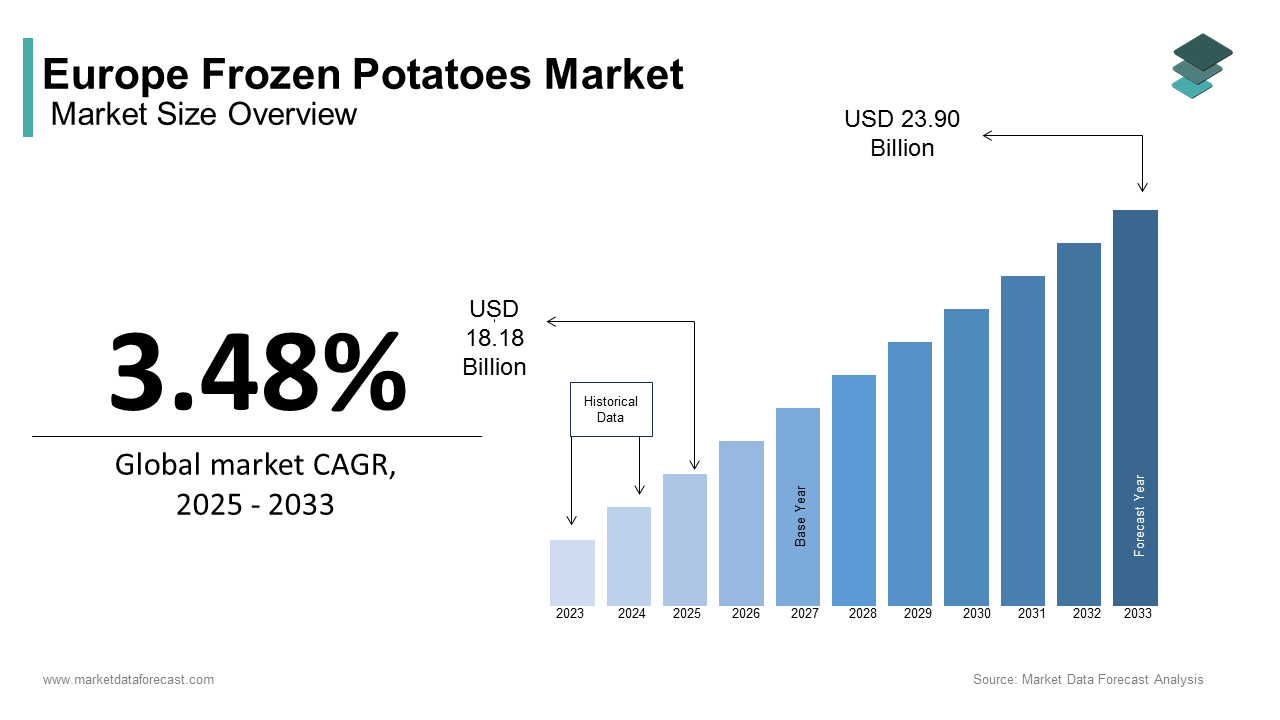
The frozen potatoes are a wide array of pre-processed potato products, including French fries, hash browns, croquettes, and specialty cuts, that are preserved through blast freezing to maintain texture, flavor, and shelf stability. These products serve as essential staples across food service, retail, and institutional channels, offering consistency, labor savings, and year-round availability independent of seasonal harvest cycles. According to Eurostat, the European Union produced over 53 million metric tons of potatoes in 2024, with approximately 30% diverted to industrial processing, much of it destined for freezing. Furthermore, as per the European Commission’s Common Agricultural Policy monitoring unit, over 120,000 hectares of EU farmland are dedicated to starch and processing potato varieties, ensuring a stable raw material base.
MARKET DRIVERS
Labor Shortages in Food Service Driving DemanPre-CookedCooked Solutions
The persistent staffing defin the icits hospitality and quick service restaurant sectors have intensified reliance on frozen potato products that minimize kitchen labor and skill requirements, which is primarily propelling the growth of Europe fpotatotatoes market. According to the European Federation of Food, Agriculture and Tourism Trade Unions, the food service industry faced a shortfall of over 1.2 million workers in 2024, with kitchen roles among the hardest to fill due to demanding conditions and wage competition from logistics and retail. In this context, frozen French fries and hash browns offer significant operational advantages requiring only thawing or brief frying rather than peeling, cutting, blanching, and oil management. A 2024 study by the German Hospitality Association found that restaurants using pre-cut frozen potatoes reback-of-house house preparation time by 38% compared to fresh alternatives. Major chains like McDonald’s and Burger King, which source exclusively frozen potatoes across Europe, report consistent product quality and reduced training needs as key procurement drivers. Even independent pizzerias and cafés now stock frozen croquettes and rosti to maintain menu breadth without expanding staff. This structural shift transforms frozen potatoes fcost-savingsaving measure into a strategic necessity for maintaining service levels amid chronic workforce constraints.
ExpansiPlant-Based Based and Hybrid Menu Offerings Featuring Potato Staples
The increleverageeraged as foundational components in Europe’s rapidly grplant-based based and flexitarian food offerings by extending their relevance beyond traditional side dishes is additionally propelling the growEurope'sEurope frozen potato market. As per the European Vegetarian Union, 32% of Europeans now identify as reducing meat consumption, prompting restaurants and food manufacturers to develop hearty, satisfying vegetarian mains where potatoes provide bulk, texture, and familiarity. Products like frozen potato gnocchi, stuffed croquettes with vegetable fillings, and seasoned wedge blends are now central to vegan and vegetarian menus across urban centers. Retailers have responded decisively, Carrefour and Tesco each launched over 20 new frozen potato SKUs in 2024 featplant-based based seasonings and integrated legume blends. Moreover, the European Institute for Food and Nutrition Sciences notes that potatoes’ neutral flavor profile and high satiety index make them ideal carriers for functional ingredients like pea protein or algae oil.
MARKET RESTRAINTS
Stringent Acrylamide Mitigation Regulations Increasing Production Costs
The European Union’s strict regulatory limits on acry,e with a probable carcinogen formed during high temperature potato processing, impose significant technical and financial burdens on frozen potato manufacturers. The stringent acrylamide mitigation regulations and increasing production arrests are certainly one ofactorsfactor hampering the growth of Europe's frozen potatoes market. As per Commission Regulation (EU) 2017/2158, benchmark levels for French fries are capped at 500 micrograms per kilogram, requiring processors to implement costly mitigation measures throughout the value chain. These include sourcing low sugar potato varieties, precise temperature-controlled storage to prevent cold sweetening, enzymatic treatmentsreal-timel time fryer monitoring systems. According to the European Potato Processors Association, compliance investments averaged 2.3 million euros per facility between 2022 and 2024, disproportionately affecting small and medium enterprises. Furthermore, the European Food Safety Authority mandates annual testing and documentation, increasing administrative overhead. Some processors have reformulated products with alternative coatings or reduced frying times, inadvertently altering taste and crispness, key quality attributes for consumers. While public health benefits are clear, these regulations compress margins and slow innovation for regional brands lacking R&D scale, thereby constraining market dynamism and limiting product diversification.
Consumer Perception of Frozen Foods as Less Nutritious Than Fresh Alternatives
The consumers continue to view frozen potato products as nutritionally inferior to their fresh counterparts by creating a psychological barrier to household ad, whichoption is also limiting the growth of Europe fpotatotatoes market. According to a 2024 pan-European survey by the European Consumer Organisation, 41% of respondents believed frozen potatoes contained added preservatives or lost significant vitamins during processing, despite scientific evidence showing freezing preserves nutrients effectively. This misconception is reinforced by clean label trends that equate “fresh” with “healthy,” even when fresh potatoes require oil-heavy home preparation that increases caloric density. In countries like Italy and France, where culinary tradition emphasizes whole ingredient cooking, frozen potatoes are often relegated to convenience fallbacks rather than primary choices. Retail placement exacerbates this; frozen sections lack the sensory appeal of fresh produce aisles, reducing impulse trial. Although major brands promote non-GMO sourcing and simple ingredient lists, overcoming ingrained perceptions requires sustained education.
MARKET OPPORTUNITIES
Development of Premium Artisanal Frozen Potato Lines for Gourmet Channels
The emergence of premium frozen potato products tailored for gourmet restaurants and specialty retailers is certainly a major factor creating new opportunities for the growth of Europe frozen potato market. Moving beyond standardized shoestring fries, brands now offer hand-cut rustic wedges, heirloom variety pommes dauphinoise, and truffle-infused croquettes that cater to discerning chefs and home cooks. As per the European Fine Food Alliance, over 60% of Michelin-starred restaurants in France, Italy, and Spain now use premium frozen potato bases to ensure consistency while reducing prep labor. Companies like Farm Frites and McCain have launched sub-brands, such as McCain Gourmet and Farm Frites Signature, that feature limited edition cuts, heritage potato varieties like Bintje or Agria, and artisanal seasonings. These products command 30 to 50% price premiums and are marketed through chef partnerships and culinary events. Retailers like Eataly and Waitrose dedicate chilled freezer space to these lines, often with origin storytelling and pairing suggestions.
Integration of Frozen Potatoes into School and Public Institution Menus
The public procurement policies mandating nutritious, locally sourced, and efficiently prepared meals are creating stable institutional demand for certified products, which is additionally elevating the growth of Europe frozen potatoes market. This is expected to escalate new opportunities for the growth of Europe frozen potato market. According to the European Commission’s 2024 update to the EU School Scheme, participating countries must ensure that school meals meet specific nutritional criteria while minimizing kitchen labor, where a balance of frozen potatoes helps achieve this through portion control and consistent cooking times. In Germany, the National School Catering Guidelines explicitly approve the use of frozen French fries and hash browns, provided they meet acrylamide and fat content thresholds. Similarly, France’s EGALIM law requires 50% of food in public canteens to be sustainable, with frozen potatoes from certified EU farms qualifying under traceability provisions. A 2024 evaluation by the Swedish National Food Agency found that schools using pre-portioned frozen potato products reduced food waste by 22% compared to fresh prep. These institutional channels offer volume predictability and brand legitimacy by enabling processors to invest in specialized formulations that align with public health goals while maintaining operational practicality in large scale feeding environments.
MARKET CHALLENGES
Vulnerability to Climate-Induced Volatility in Potato Crop Yields
The growing exposure to climate-related disruptions in raw material supply, threatening cost stability and product consistency, is one of the major challenges for the growth of Europe frozen potatoes market. According to the Joint Research Centre of the European Commission, extreme weather events reduced EU processing potato yields in 2024 compared to the five-year average, with droughts in Southern Europe and floods in Northern regions, simultaneously damaging crops. Unlike table potatoes, processing varieties require specific dry matter content and sugar profiles traits highly sensitive to temperature fluctuations during tuber development. A 2025 risk assessment by the European Insurance and Occupational Pensions Authority identified potato processors as among the most vulnerable agri-food sectors to climate volatility due to narrow input tolerances. Without investment in climate-resilient cultivars and diversified sourcing across latitudes, manufacturers risk periodic shortages, forced reformulations, and price hikes that could dampen demand in cost-conscious food service segments.
Intensifying Competition from Alternative Starchy Vegetable Products
Frozen potato producers confront mounting pressure from innovative starchy alternatives such as frozen cauliflower rice, sweet potato fries, and cassava chips that appeal to low-carb and gluten-free dietary trends. The intensifying competition from alternative starchy vegetable products is also expected to impede the growth of the Europe frozen potatoes market. As per Euromonitor International, sales of non-potato frozen vegetable sides grew by 24% in Europe in 2024, outpacing traditional potato products. Health-conscious consumers in Nordic and Benelux countries increasingly substitute potatoes due to perceived glycemic impact, despite evidence that preparation method matters more than the base ingredient. Retailers amplify this shift; Albert Heijn and Coop now allocate equal freezer space to sweet potato and regular fries, often promoting the former as a “healthier swap.” While potatoes retain cost and scalability advantages, this diversification fragments demand and forces processors to expand portfolios beyond core items, increasing complexity and R&D costs. Unless potato brands successfully reframe their nutritional narrative, emphasizing fiber, potassium, and satiety, they risk gradual erosion in share, especially among younger, diet-trend-influenced demographics.
REPORT COVERAGE
| REPORT METRIC | DETAILS |
| Market Size Available | 2025 to 2034 |
| Base Year | 2025 |
| Forecast Period | 2026 to 2034 |
| CAGR | 3.48% |
| Segments Covered | By Product, End User, And Region |
| Various Analyses Covered | Global, Regional & Country Level Analysis; Segment-Level Analysis; DROC, PESTLE Analysis; Porter’s Five Forces Analysis; Competitive Landscape; Analyst Overview of Investment Opportunities |
| Regions Covered | UK, France, Spain, Germany, Italy, Russia, Sweden, Denmark, Switzerland, Netherlands, Turkey, and the Czech Republic |
| Market Leaders Profiled | McCain Foods, Lamb-Weston, J.R. Simplot Company, Aviko, Bart's Potato Company, Agrarfrost GmbH & Co. KG, Agristo NV, Himalya International Ltd., TaiMei Potato Industry Limited |
SEGMENTAL ANALYSIS
By Product Type Insights
The French fries segment was the largest by holding 58.2% of the Europe Frozen Potatoes market share in 2024, owing to their universal acceptance across food service channels and deep integration into European culinary habits. From Belgian friteries to British fish and chip shops and German snack bars, fries are a cultural staple that transcends national borders. Major chains like McDonald’s, Burger King, and local franchises operate under strict supplier agreements that mandate standardized cut thickness, starch content, and acrylamide compliance requirements, which only industrial frozen processing can reliably meet. McDonald’s Europe sourced over 750,000 metric tons of frozen fries from certified suppliers, such as McCain and Lamb Weston. The segment’s dominance is further reinforced by continuous innovation, such as skin on rustic cuts, truffle oil finishes, and reduced-sodium variants that refresh consumer interest without altering core appeal.
The sweet potatoes segment is projected to grow at the fastest CAGR of 11.7% throughout the forecast period, owing to the rising consumer interest in nutrient-dense, low glycemic alternatives aligned with clean eating and plant-based dietary trends. As per the European Food Information Council, searches for “sweet potato recipes” increased by 42% across EU digital platforms in 2024, reflecting mainstream adoption beyond niche health circles. Retailers have responded aggressively to Tesco and Carrefour, each of which expanded their frozen sweet potato SKUs by over 30% in 2024, offering fries, wedges, and mash formats. Food service operators are also integrating them into menus. Pret A Manger replaced standard fries with sweet potato versions in 70% of its UK and German outlets, citing customer demand for “healthier indulgence.” Nutritional advantages bolster appeal; sweet potatoes provide three times the vitamin A of white potatoes and have a lower glycemic index, as confirmed by the European Journal of Clinical Nutrition.
By End User Insights
The commercial segment accounted for a significant share of the Europe Frozen Potatoes market in 2024, with the structural reliance on pre-processed solutions across restaurants, cafeterias, hotels, and institutional kitchens. Labor shortages remain a critical driver. Agriculture and Tourism Trade Unions, the hospitality sector faced a deficit of over 1.2 million workers in 2024, making labor-intensive fresh potato preparation economically unviable for most operators. Frozen products offer standardized portioning, consistent fry performance, and reduced waste key metrics in high-volume settings. According to the German Hospitality Association, commercial kitchens using frozen potatoes report 35% lower prep time and 22% less food waste compared to fresh alternatives. Quick service restaurants lead adoption, where McDonald’s Europe alone operates over 14,000 outlets, all sourcing exclusively frozen fries under long-term contracts. Beyond chains, schools, hospitals, and corporate canteens increasingly depend on frozen hash browns and mashed potatoes to meet nutritional guidelines while managing tight budgets.
The residential segment is anticipated to witness the fastest CAGR of 8.9% throughout the forecast period, owing to the shifting home cooking behaviors driven by time scarcity, recipe simplification, and the premiumization of convenience. As per Eurostat, dual-income households of EU families have an average weekly cooking time of under five hours. Frozen potato products, particularly gourmet lines like truffle mashed potatoes or stuffed twice-baked skins, offer restaurant-quality results with minimal effort. Retail innovation amplifies appeal, where Waitrose and Eataly launched chef-curated frozen potato ranges in 2024 featuring heritage varieties and artisanal seasonings, commanding 40% price premiums. Social media also plays a role, like TikTok and Instagram, showcasing “easy dinner hacks” with frozen croquettes or seasoned wedges, which generated over 2 billion views in Europe in 2024. Additionally, post pandemic pantry stocking habits persist, with 52% of households maintaining frozen potato inventory as a meal backup, according to a GfK consumer panel. This emergence of convenience, quality, and digital influence transforms frozen potatoes from emergency staples into intentional culinary choices in modern European homes.
REGIONAL ANALYSIS
Germany Frozen Potatoes Market Analysis
Germany was the top performer of the Europe frozen potatoes market share in 2024, with a dense network of food service establishments, strong industrial processing infrastructure, and cultural affinity for potato dishes like kartoffelpuffer and bratkartoffeln. According to the German Federal Ministry of Food and Agriculture, over 1.2 million food businesses operate nationwide, with 85% relying on frozen potato products for consistency and labor efficiency. The country hosts major processing plants for global players like McCain and Farm Frites, benefiting from proximity to Eastern European potato farms. Regulatory compliance is stringent; Germany enforces some of the EU’s strictest acrylamide monitoring protocols, driving investment in cold chain optimization and low sugar variety cultivation. Retail demand is equally robust; discounters like Aldi and Lidl dedicate extensive freezer space to private-label fries and hash browns.
United Kingdom Frozen Potatoes Market Analysis
The United Kingdom frozen potatoes market growth is driven by its iconic fish and chip culture and dynamic quick service restaurant landscape. Despite health campaigns, chips remain a national staple; over 80% of Britons consume them at least once a month, as per the survey. The commercial sector dominates, with more than 10,500 fish and chip shops and 12,000 fast food outlets relying on frozen fries for consistent quality and oil life management. Retail innovation is accelerating premium lines like “skin on chunky chips” and “truffle mash” gained traction in 2024, as home cooks sought restaurant-style meals.
France Frozen Potatoes Market Analysis
France's frozen potatoes market growth is driven by its sophisticated gastronomic standards and regulated school meal programs. While haute cuisine emphasizes fresh ingredients, the reality of mass catering drives frozen potato adoption. Over 7 million children receive school lunches daily, with pommes dauphinoise and frites commonly served in pre-portioned frozen formats compliant with EGAlim nutritional laws. According to France’s Ministry of Agriculture, frozen potato imports rose by 12% in 2024 to meet institutional demand. The commercial sector thrives in bistros and brasseries where consistency is paramount; even Michelin-starred venues use premium frozen bases for foundational elements. Retailers like Carrefour promote “terroir” labeled frozen fries made from Bintje potatoes grown in Nord Pas de Calais, blending convenience with regional pride. France’s unique balance of culinary heritage and pragmatic mass feeding ensures steady, quality-conscious growth in both public and private consumption.
Netherlands Frozen Potatoes Market Analysis
The Netherlands frozen potato market growth is accelerating with its role as a logistics and agricultural powerhouse. The country is Europe’s second-largest potato producer, with over 1.5 million tons annually dedicated to processing, much of it exported as frozen products. According to Statistics Netherlands, Dutch processors export 85% of their frozen output, primarily to Germany, Belgium, and Scandinavia. Domestically, the culture of “patat” runs deep, where over 4,000 snack bars serve fries with mayonnaise, creating consistent commercial demand. Companies like Agristo and Farm Frites operate state-of-the-art facilities near Rotterdam Port, enabling rapid distribution across the continent. The government supports innovation through the Top Sector Agri & Food program, funding R&D in acrylamide reduction and sustainable packaging. High urban density, bicycle-friendly cities, and a strong takeaway culture further reinforce consumption. The Netherlands functions less as an end market and more as a production and export engine, making it indispensable to the European frozen potato supply chain.
Belgium Frozen Potatoes Market Analysis
Belgium's frozen potatoes market growth is likely to grow with the UNESCO-recognized frites culture and high per capita consumption. Belgians consume an estimated 25 kilograms of fries per person annually, the highest in the world, as reported by the Belgian Fry Museum. This cultural obsession translates into dense commercial demand, with over 5,000 friteries operating nationwide, each requiring consistent, high-quality frozen product to maintain double-frying authenticity. Local processors like Farm Frites and Bistro Frites dominate, sourcing from Flemish and Walloon farms and exporting signature thick-cut varieties globally. Regulatory support is strong, with the Wallonia region offering subsidies for potato farmers transitioning to processing varieties, ensuring raw material stability.
United Kingdom Frozen Potatoes Market Analysis
The United Kingdom frozen potatoes market growth is driven by its iconic fish and chip culture and dynamic quick service restaurant landscape. Despite health campaigns, chips remain a national staple; over 80% of Britons consume them at least once a month, as per the survey. The commercial sector dominates, with more than 10,500 fish and chip shops and 12,000 fast food outlets relying on frozen fries for consistent quality and oil life management. Retail innovation is accelerating premium lines like “skin on chunky chips” and “truffle mash” gained traction in 2024, as home cooks sought restaurant-style meals.
France Frozen Potatoes Market Analysis
France's frozen potatoes market growth is its sophisticated gastronomic standards and regulated school meal programs. While haute cuisine emphasizes fresh ingredients, the reality of mass catering drives frozen potato adoption. Over 7 million children receive school lunches daily, with pommes dauphinoise and frites commonly served in pre-portioned frozen formats compliant with EGAlim nutritional laws. According to France’s Ministry of Agriculture, frozen potato imports rose by 12% in 2024 to meet institutional demand. The commercial sector thrives in bistros and brasseries where consistency is paramount; even Michelin-starred venues use premium frozen bases for foundational elements. Retailers like Carrefour promote “terroir” labeled frozen fries made from Bintje potatoes grown in Nord Pas de Calais, blending convenience with regional pride. France’s unique balance of culinary heritage and pragmatic mass feeding ensures steady, quality-conscious growth in both public and private consumption.
Netherlands Frozen Potatoes Market Analysis
The Netherlands frozen potato market growth is accelerating with its role as a logistics and agricultural powerhouse. The country is Europe’s second-largest potato producer, with over 1.5 million tons annually dedicated to processing, much of it exported as frozen products. According to Statistics Netherlands, Dutch processors export 85% of their frozen output, primarily to Germany, Belgium, and Scandinavia. Domestically, the culture of “patat” runs deep, where over 4,000 snack bars serve fries with mayonnaise, creating consistent commercial demand. Companies like Agristo and Farm Frites operate state-of-the-art facilities near Rotterdam Port, enabling rapid distribution across the continent. The government supports innovation through the Top Sector Agri & Food program, funding R&D in acrylamide reduction and sustainable packaging. High urban density, bicycle-friendly cities, and a strong takeaway culture further reinforce consumption. The Netherlands functions less as an end market and more as a production and export engine, making it indispensable to the European frozen potato supply chain.
Belgium Frozen Potatoes Market Analysis
Belgium's frozen potatoes market growth is likely to grow with the UNESCO-recognized frites culture and high per capita consumption. Belgians consume an estimated 25 kilograms of fries per person annually, the highest in the world, as reported by the Belgian Fry Museum. This cultural obsession translates into dense commercial demand, with over 5,000 friteries operating nationwide, each requiring consistent, high-quality frozen product to maintain double-frying authenticity. Local processors like Farm Frites and Bistro Frites dominate, sourcing from Flemish and Walloon farms and exporting signature thick-cut varieties globally. Regulatory support is strong, where the Wallonia region offers subsidies for potato farmers transitioning to processing varieties, ensuring raw material stability.
MARKET SEGMENTATION
This research report on the Europe frozen potatoes market is segmented and sub-segmented based on product type, end user, and region.
By Product Type
- Hash brown
- French fries
- Shapes
- Mashed
- Sweet Potatoes
- Battered/Cooked
- Twice Baked
- Topped/ Stuffed
By End User
- Residential
- Commercial
By Region
- United Kingdom
- Spain
- Germany
- Italy
- France
- Russia
- Sweden
- Denmark
- Switzerland
- Netherlands
- Turkey
- Czech Republic
- Rest Of Europe
Frequently Asked Questions
1. What is driving the growth of the Europe frozen potatoes market?
Market growth is mainly driven by rising demand for convenience foods, expansion of quick-service restaurants (QSRs), and increasing preference for ready-to-cook food products across Europe.
2. Which product segment dominates the Europe frozen potatoes market?
French fries dominate the market due to their high consumption in both household and foodservice sectors.
3. Which end-use segment holds the largest market share?
The commercial segment dominates due to the extensive use of frozen potatoes in hotels, restaurants, and fast-food chains
4. Why are frozen potatoes widely used in Europe?
Frozen potatoes offer longer shelf life, easy storage, and reduced preparation time compared to fresh potatoes.
5. What trends are shaping the Europe frozen potatoes market?
Key trends include increasing demand for ready-to-eat products, innovations in freezing technologies, and growth of organized retail infrastructure.
6. How does urbanization influence the Europe frozen potatoes market?
Urban lifestyles increase demand for ready-to-cook and processed food products, boosting frozen potato consumption.
7. What challenges are faced by the Europe frozen potatoes market?
Increasing consumer preference for fresh food products may restrain market growth.
8. Which types of frozen potato products are commonly used?
Common types include French fries, hash browns, mashed potatoes, wedges, battered or cooked, and topped or stuffed potato products.
9. How is consumer lifestyle change impacting the market?
Busy lifestyles and growing demand for convenient meal solutions are encouraging the adoption of frozen potato products across Europe.
10. What is the future outlook of the Europe frozen potatoes market?
The market is expected to witness steady growth due to increasing investment in cold chain infrastructure and product innovation.
Related Reports
Access the study in MULTIPLE FORMATS
Purchase options starting from
$ 2000
Didn’t find what you’re looking for?
TALK TO OUR ANALYST TEAM
Need something within your budget?
NO WORRIES! WE GOT YOU COVERED!
Call us on: +1 888 702 9696 (U.S Toll Free)
Write to us: sales@marketdataforecast.com